Alaska – Monday, July 29
I stayed in the motel room til 11 – taking advantage of hot water and their good wi-fi service to do some more computer work. I have been falling behind in Alaska with my blog and other emails due to the sporadic timing of being able to get online. But I’m happy to at least have a little service here and there! Before I left, I called the Homer Food Pantry to see what kind of donation would be most helpful, and they said a financial one would be good since they can use it to shop up at a big food bank and get about 5 times as much as I could with the money.
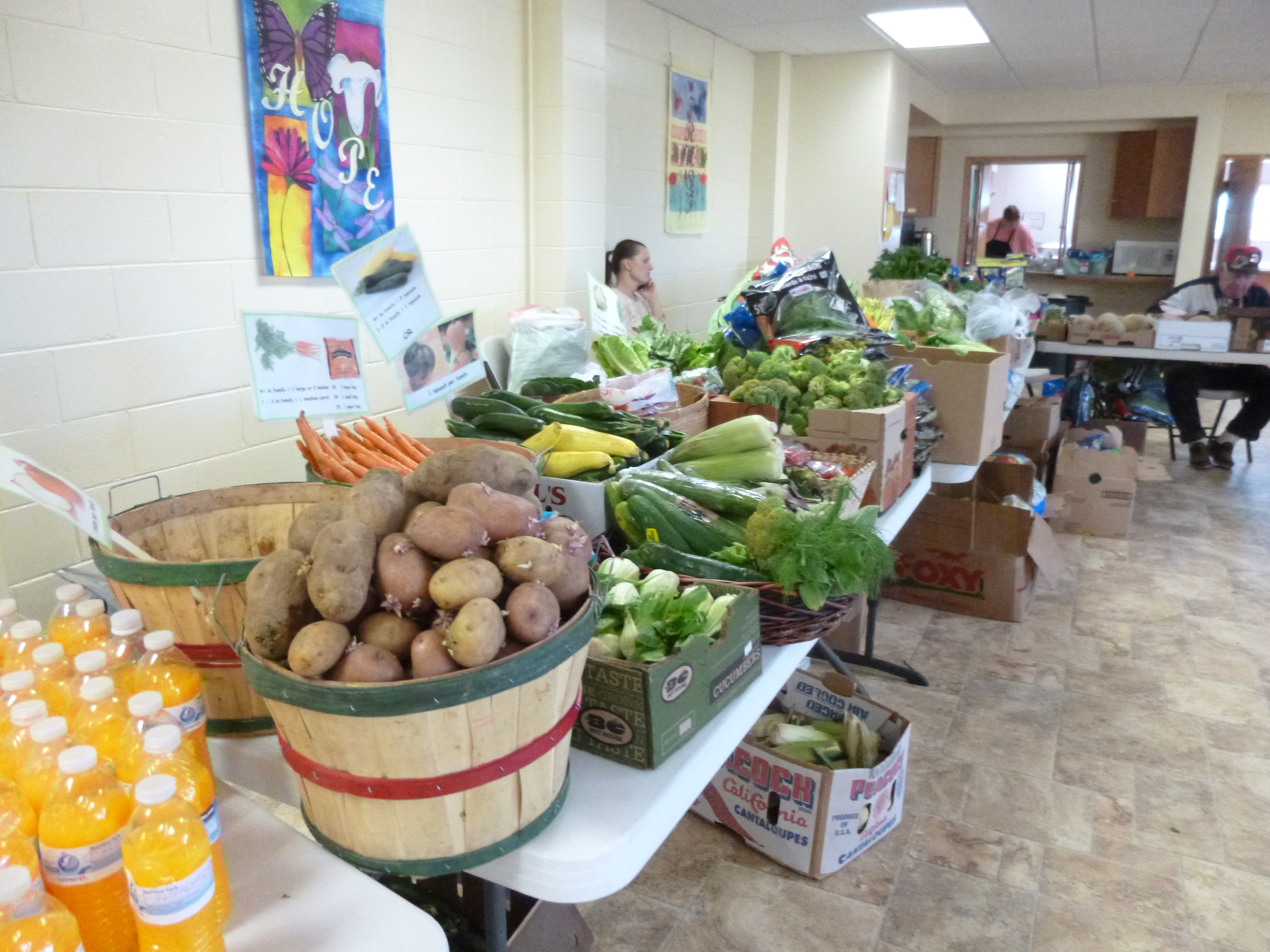
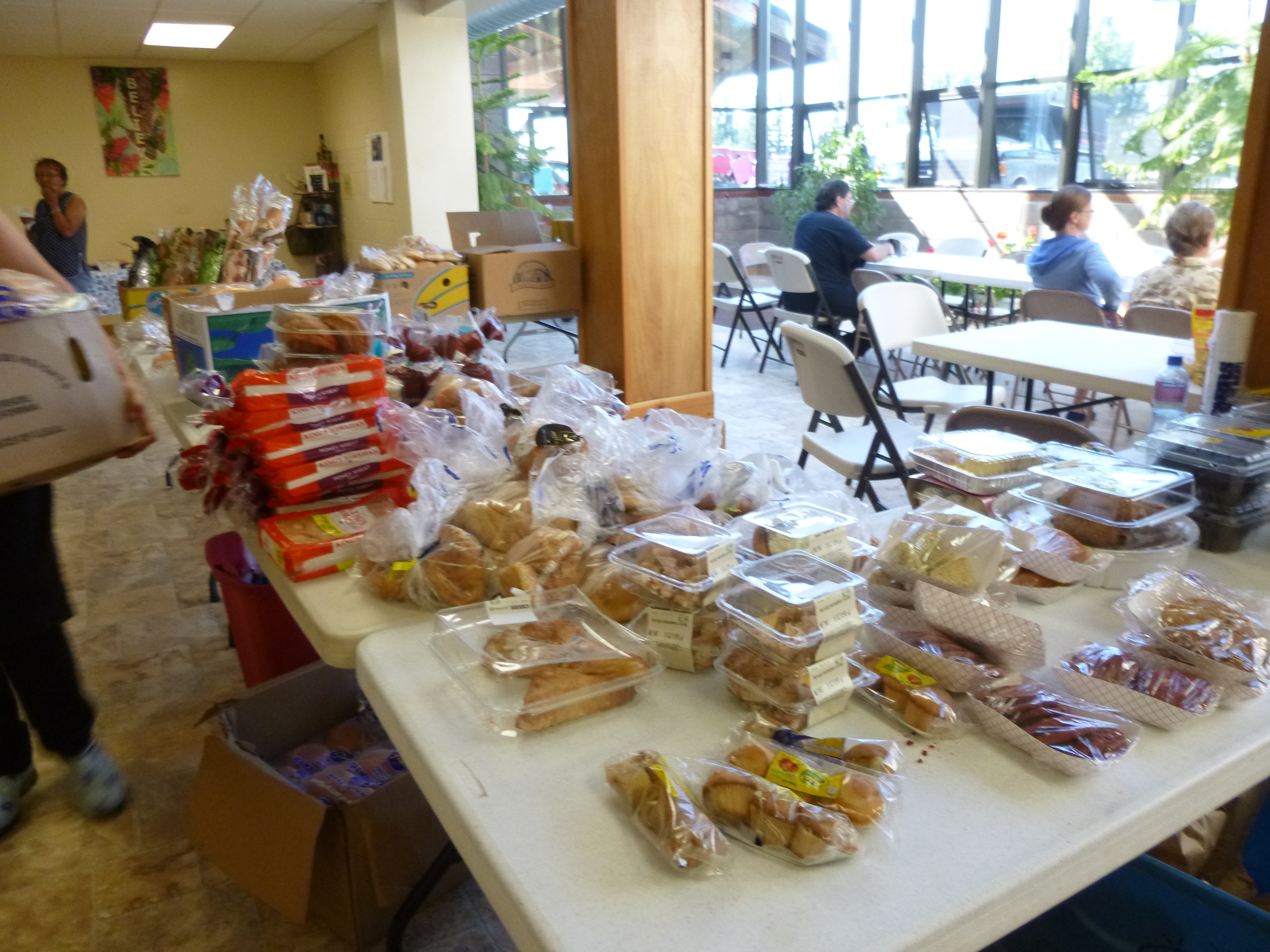
The Homer food pantry is open every Monday, and it seems to be fairly well known in the community. In addition to the big garden up by the approach to the town, lots of people plant an extra row in their gardens so they can donate extra produce to the food pantry. And this time of year, there is tons of good, fresh produce. I arrived at the food pantry shortly before they were due to open for the afternoon. There were a lot of volunteers getting all the different tables set up, and there was even a little lunch for all the people who brought in food, or who would be helping all afternoon. The produce table was practically sagging with the garden bounty that people had brought in – everything from bushels of potatoes to fresh tomatoes and greens of all kinds. Alaskan gardens are very prolific! There was also non-perishable foods, and a bread/dessert table with food donated from local stores, and everything necessary to help needy families get through the next week. It’s a really nice set-up in a church basement, and they’re able to help a lot of people. They also are able to make home deliveries for people who can’t get out and about.
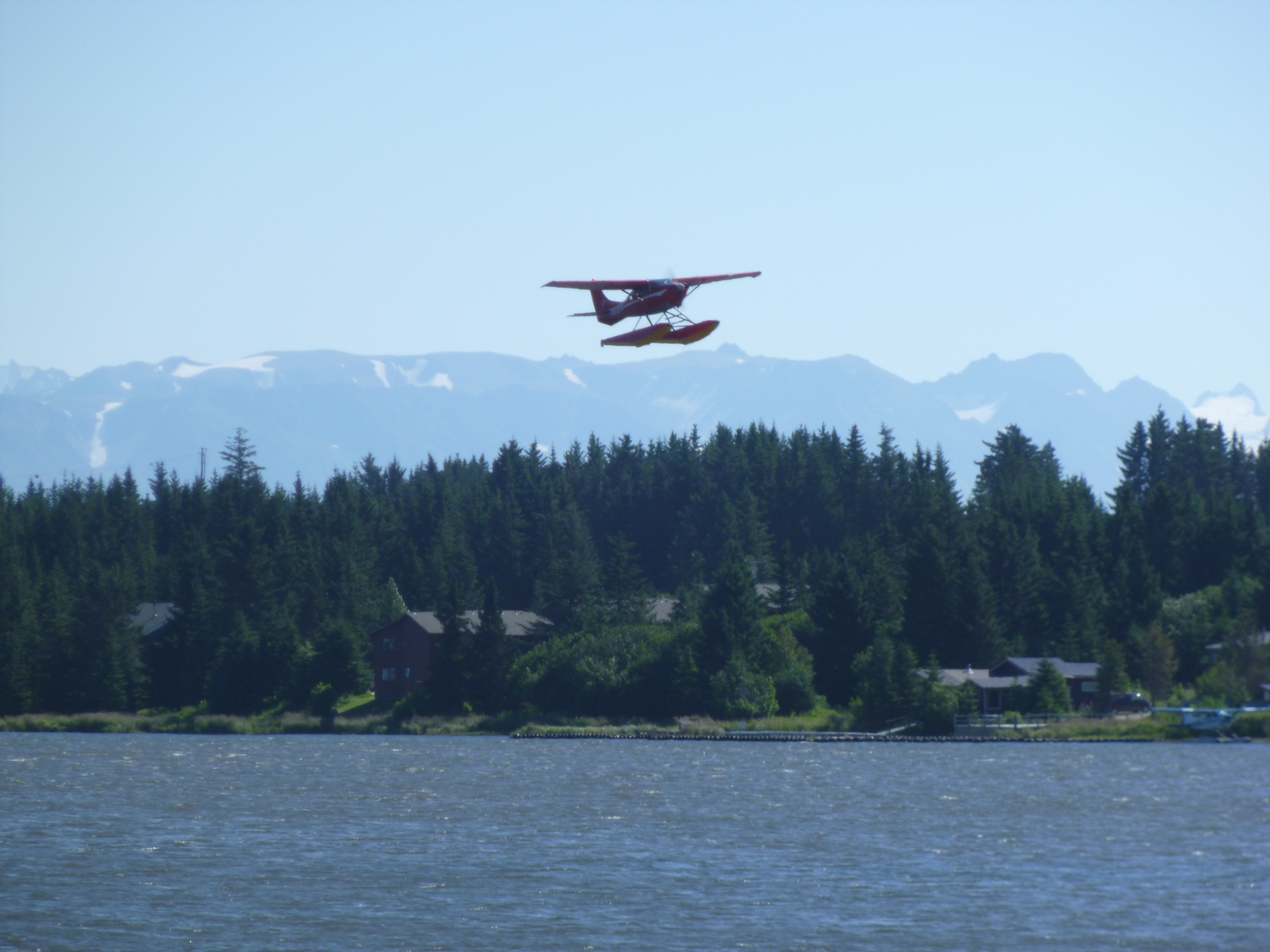
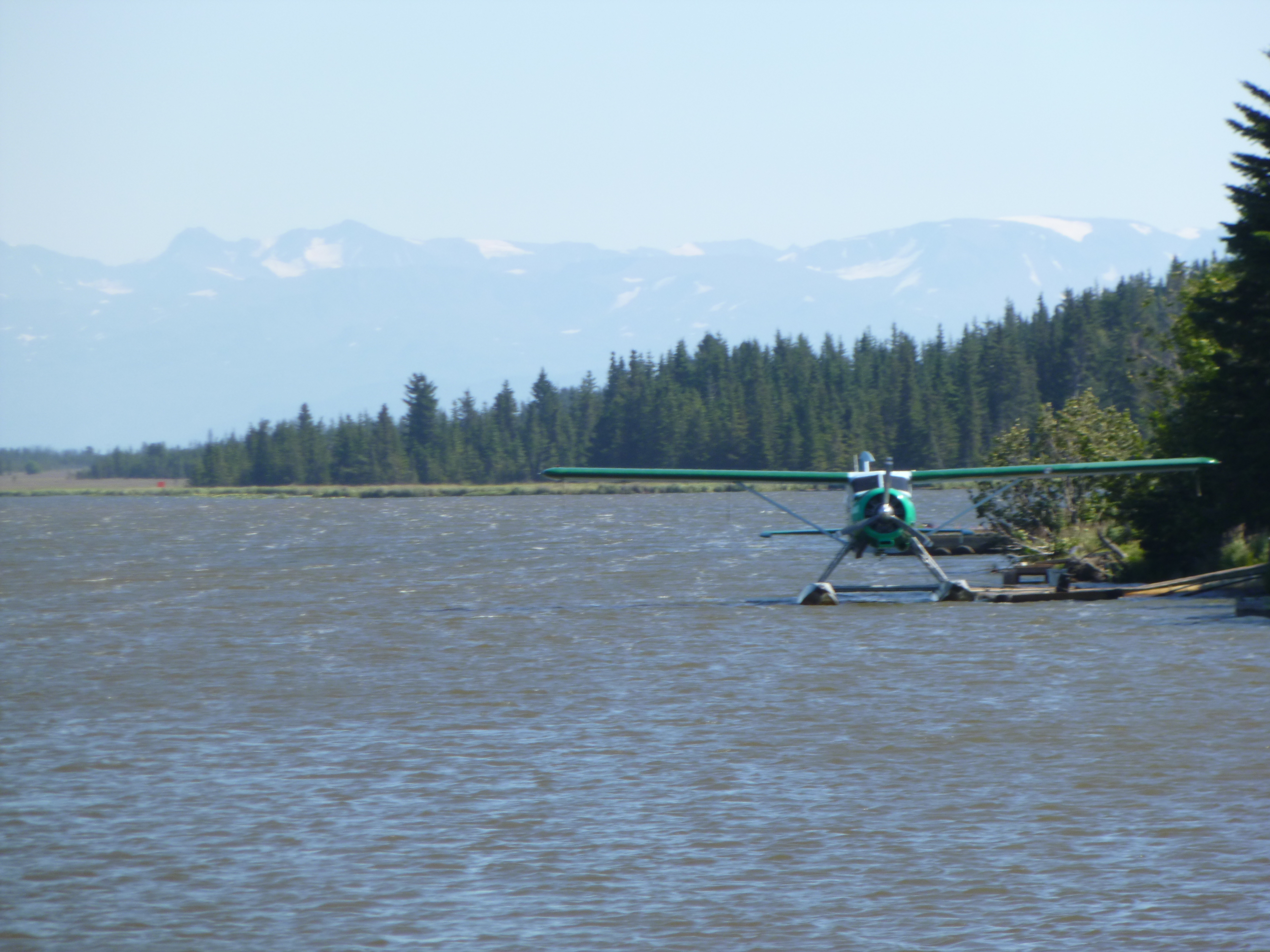
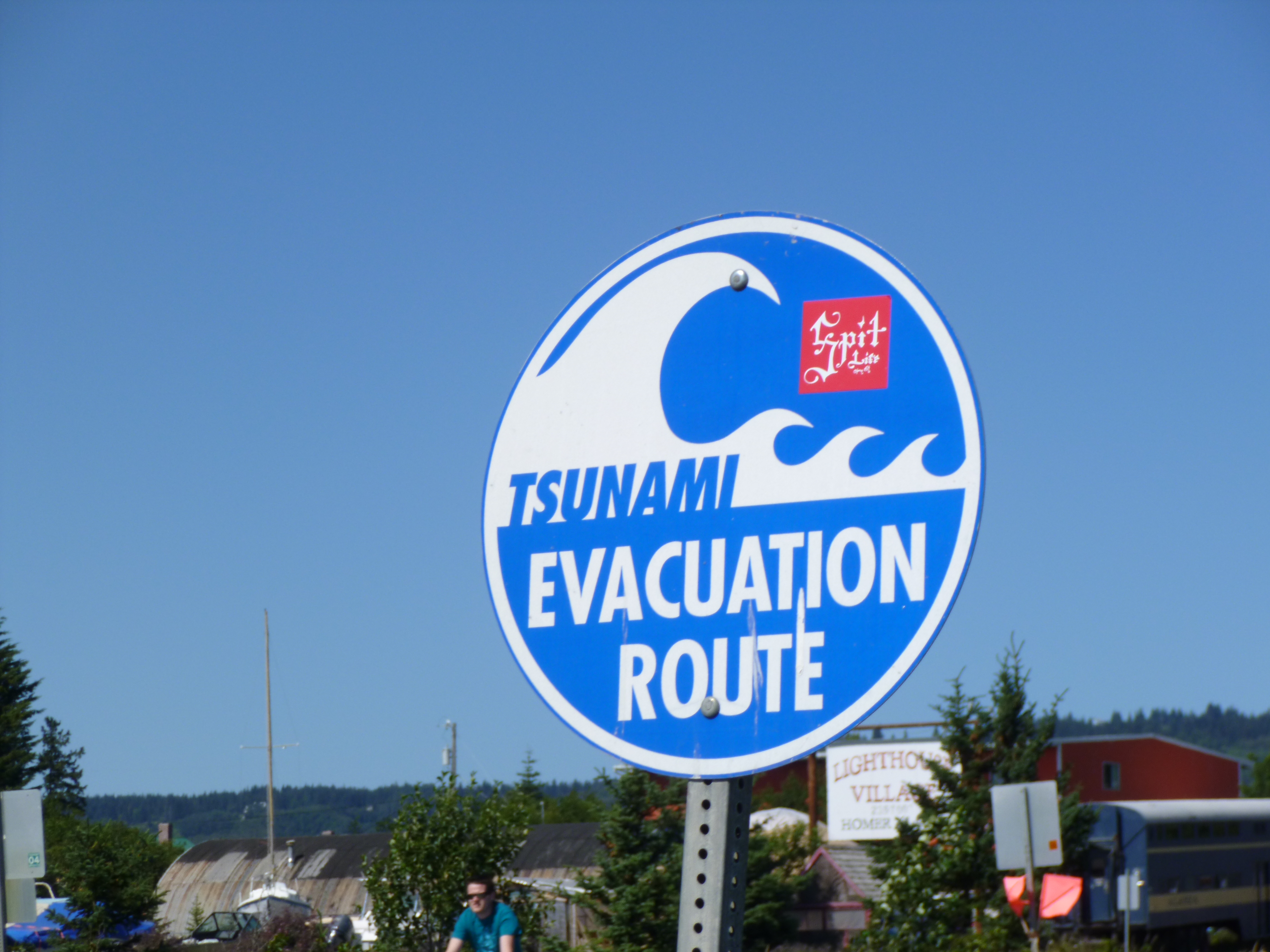
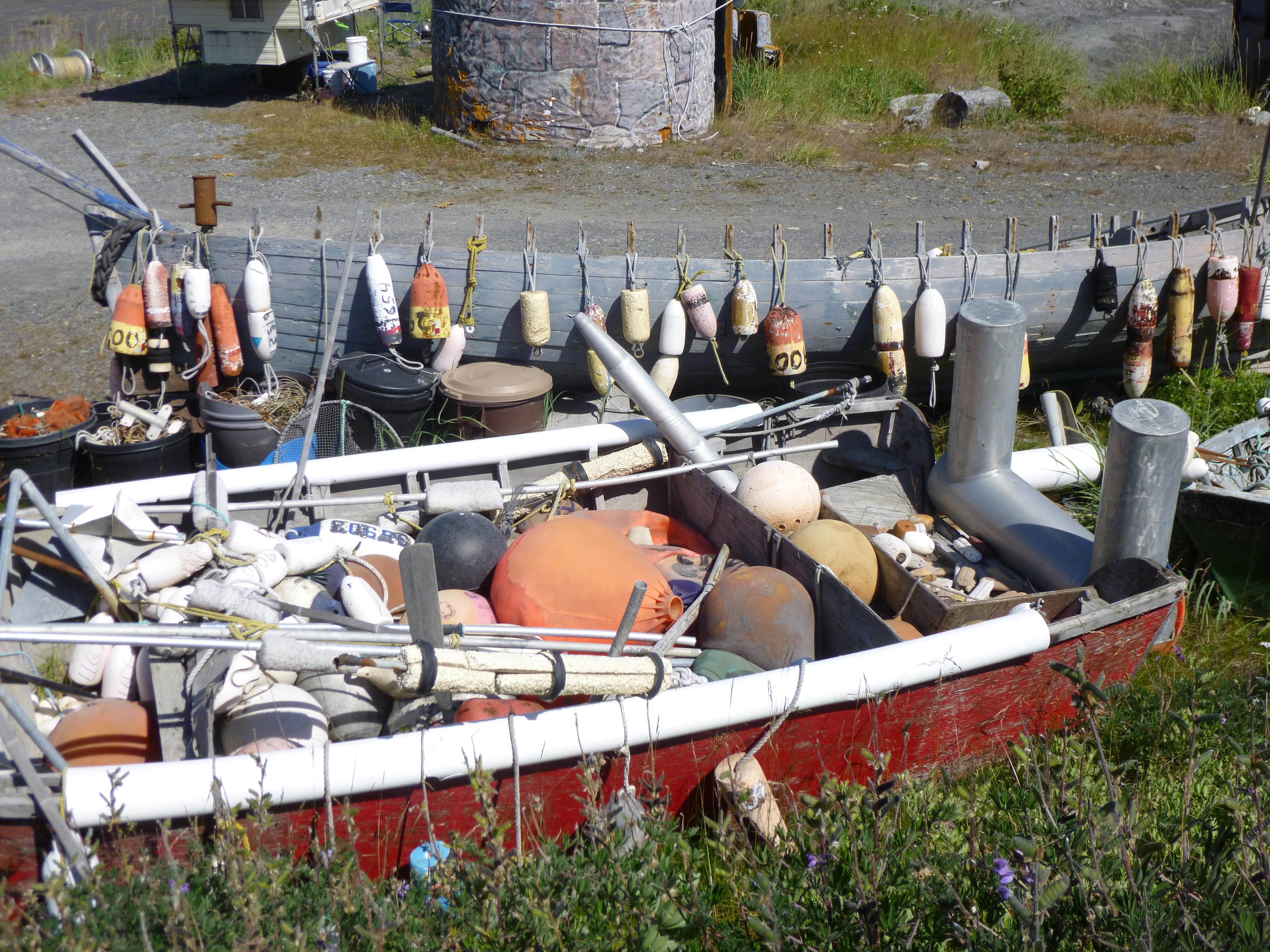
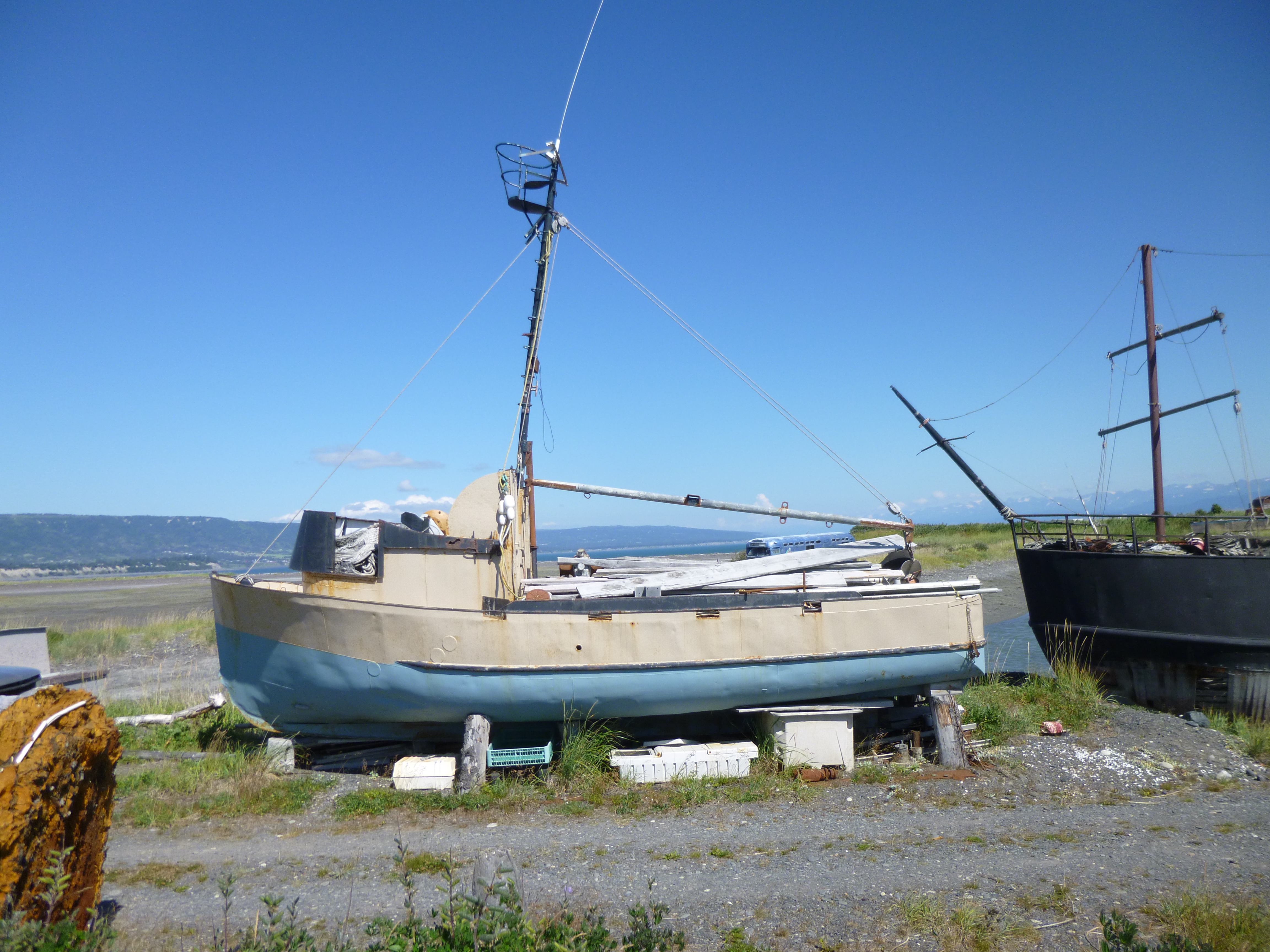
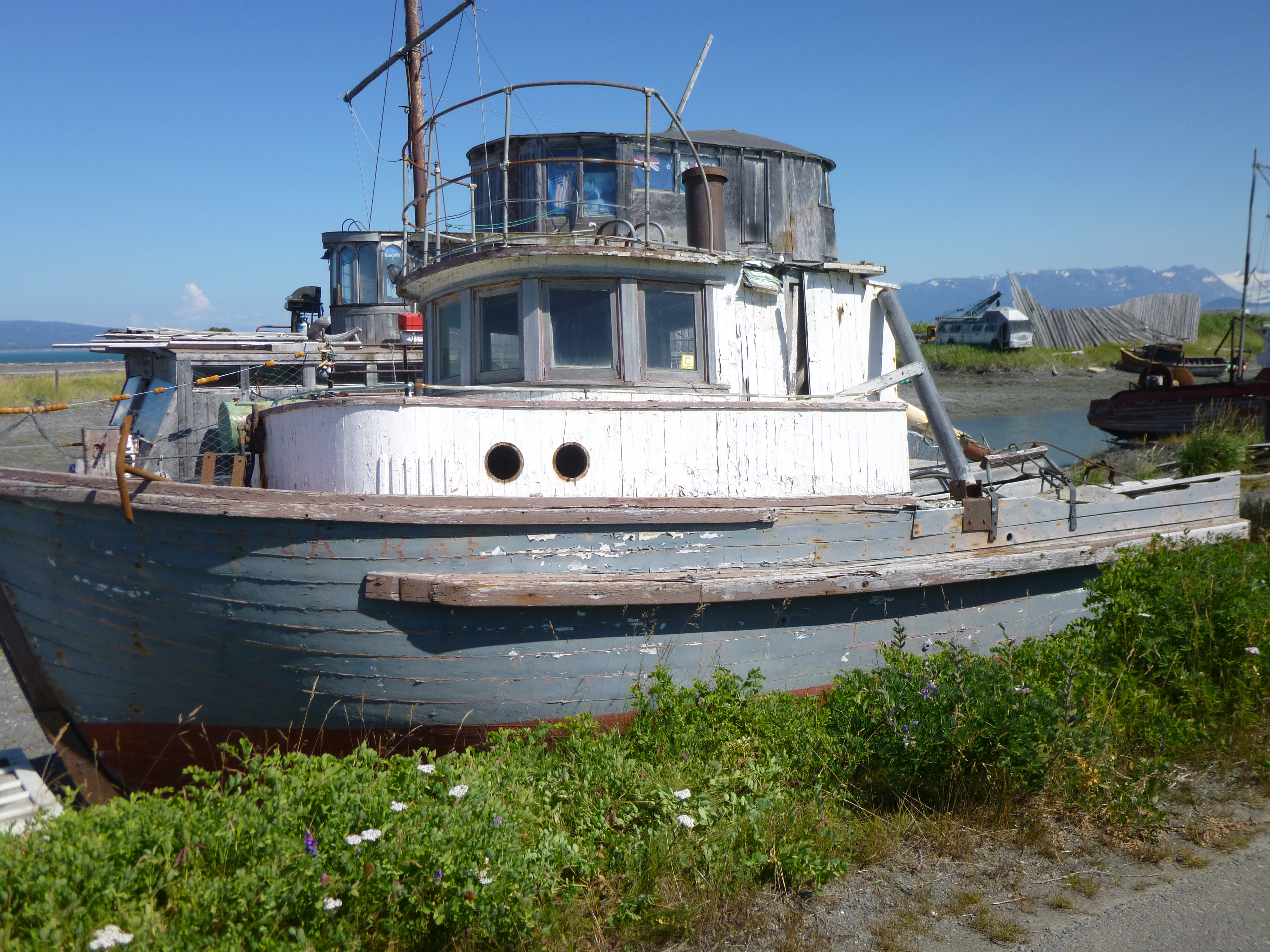
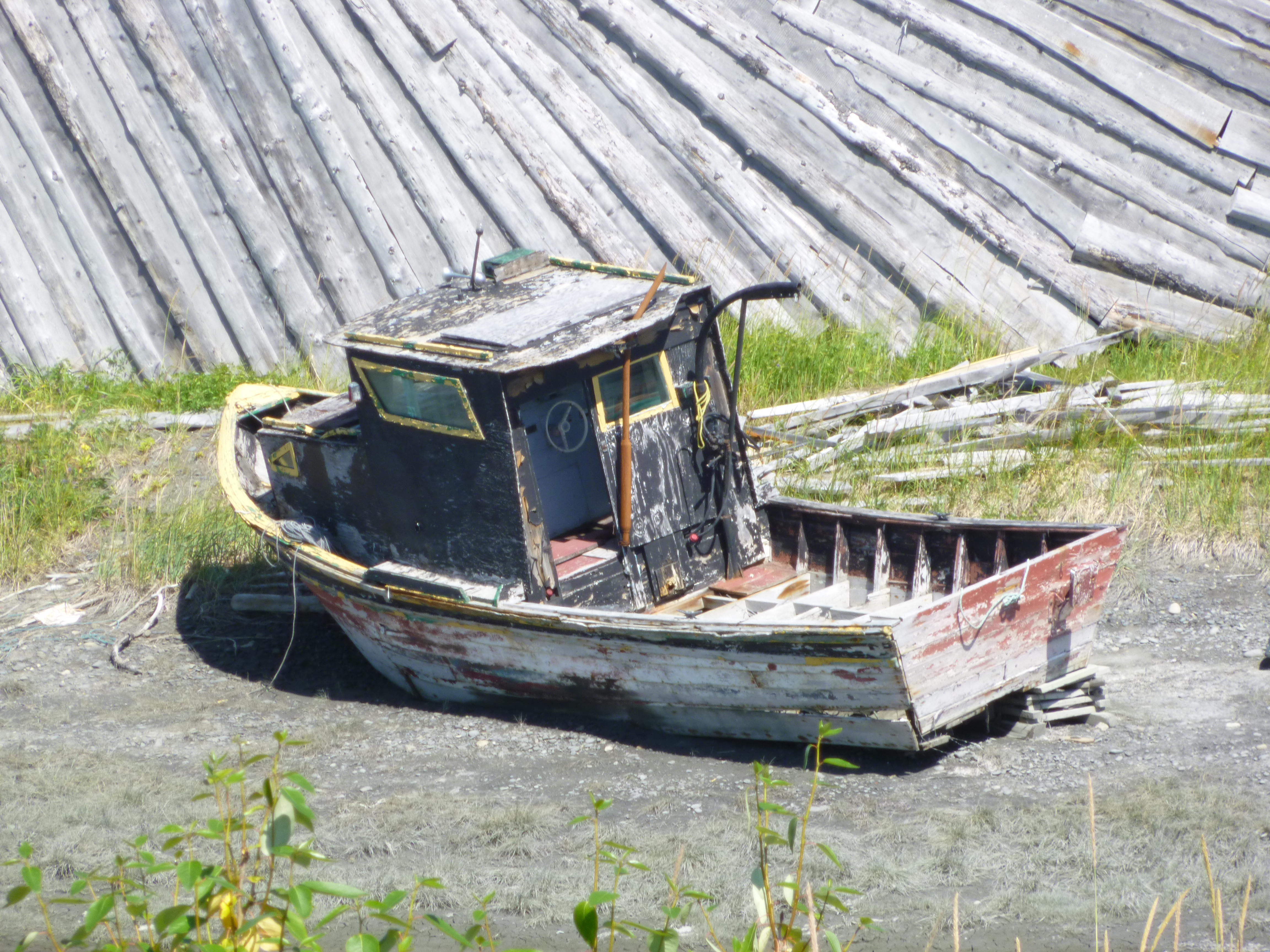
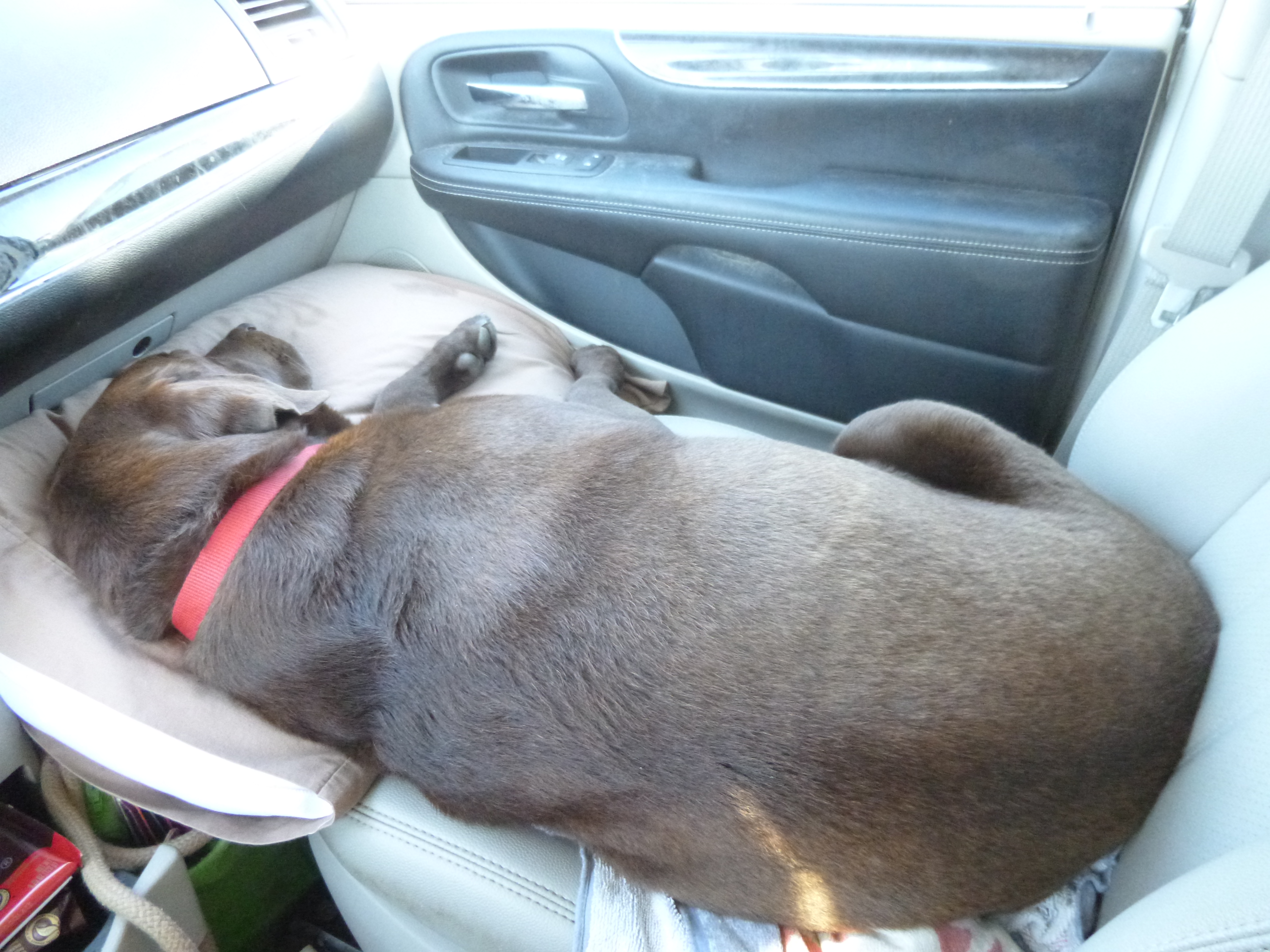
Then Tula and I were off again along the spit for some walking. I walked along the whole “spit” area, passing more sea planes tied up at docks, and taking off. I’m not sure if they’re mostly for sight-seeing tours, or if they’re simply a convenient mode of transportation in this far-flung town. And I passed an old boat graveyard – a bunch of derelict old boats that would have fascinating tales to tell if only they could talk. We covered 4 miles along the water, and then we went to the little town, and watched some more fishing boats coming and going, and did another mile and a half of walking. Tula waited for me in the car during one of the walks, and she has discovered her new pillow really does support her weight and has a comfortable new place to sleep in the van – a spoiled dog! I enjoyed some halibut chowder – the lady only had a half-serving left, and then was sold out, and that was a perfect amount.
Then it was time to say good-bye to Homer and start the drive around the peninsula to Seward. I called ahead to a campground there, and reserved a site, and I also decided since I’ve been very frugal on this trip with all the camping, that I would splurge on a glacier boat trip tomorrow – I can’t leave Alaska without getting out on the water! It would be my Alaskan grand finale. I was able to get a last-minute reservation on the first boat out tomorrow morning. I enjoyed the pretty drive around the peninsula to Seward – hours of driving, and again I was happy for the extended daylight time. I drove for miles along a big river, and there were dozens of people out in the water in waders fly-fishing. Trout, maybe?? Some of the fishermen were so clustered together I wondered how they had room to cast their lines – it’s obviously a very popular fishing spot! The drive south into Seward along the snow-capped mountains is beautiful. We got set up at a busy camp – fishing trips were coming in even late at night, and guides were cleaning fish and hosing down tables and boats at 11pm! Sometimes it’s hard to think about sleep when it’s light out so late!








Alaska – Sunday, July 28
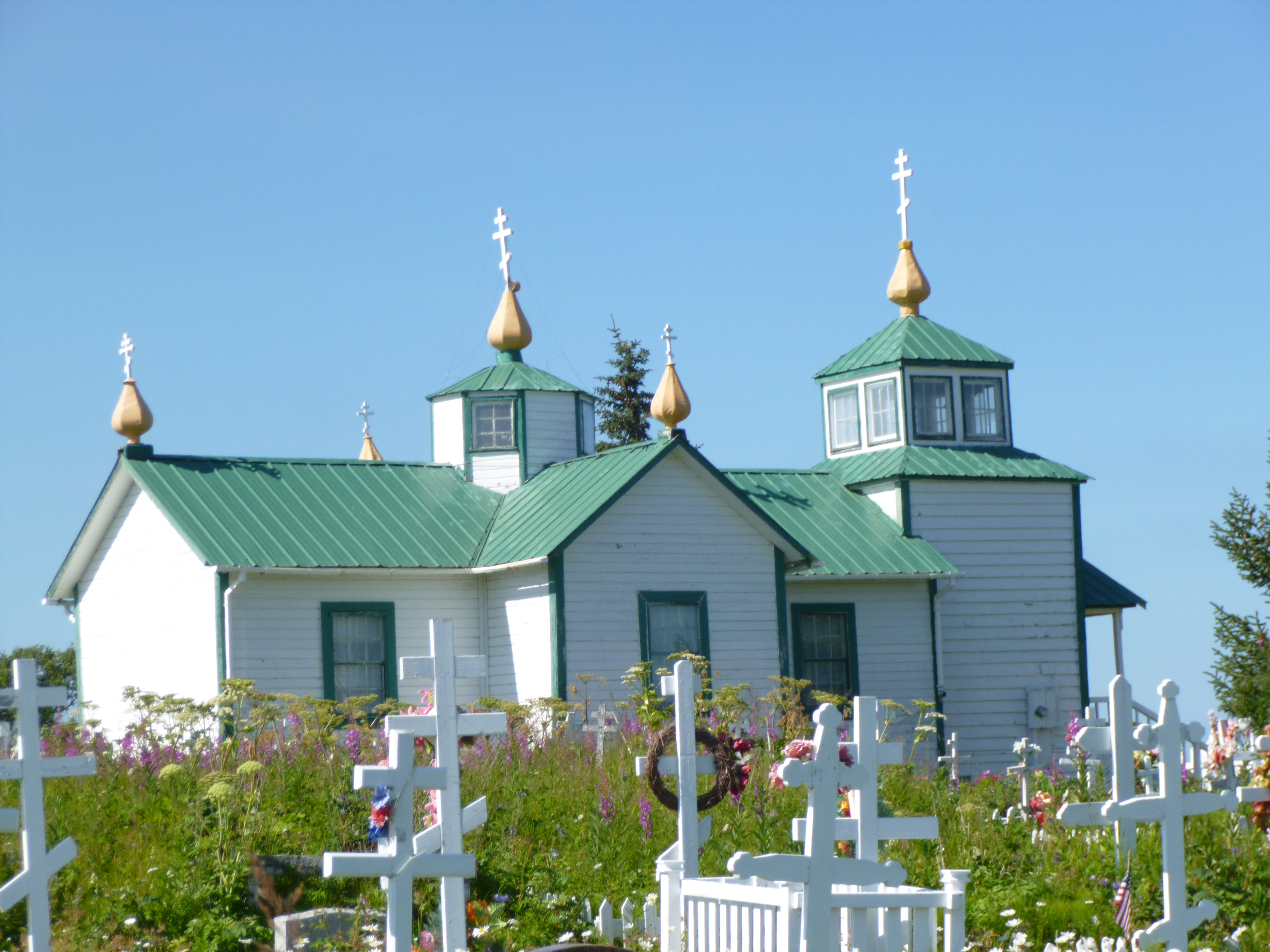
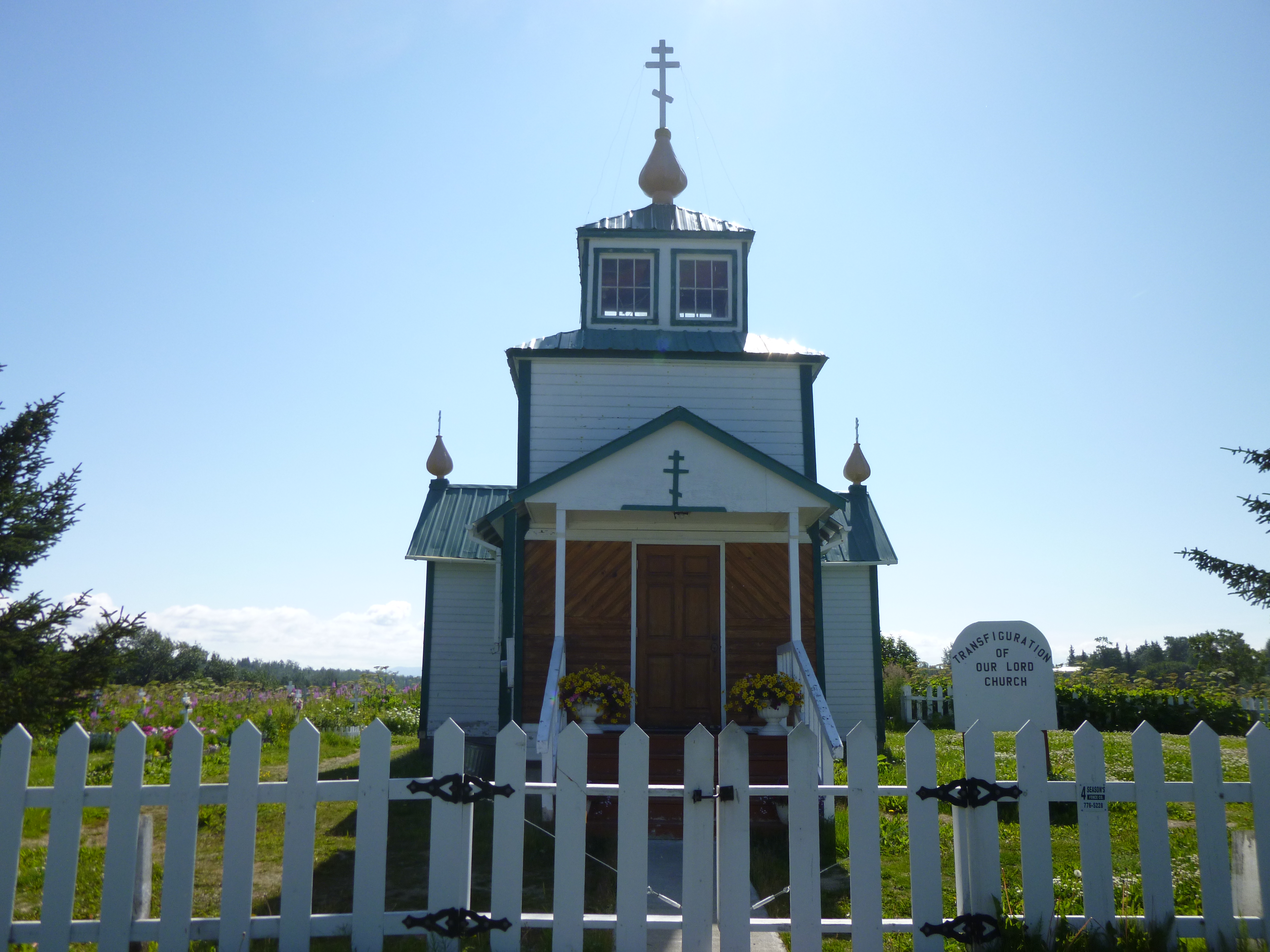
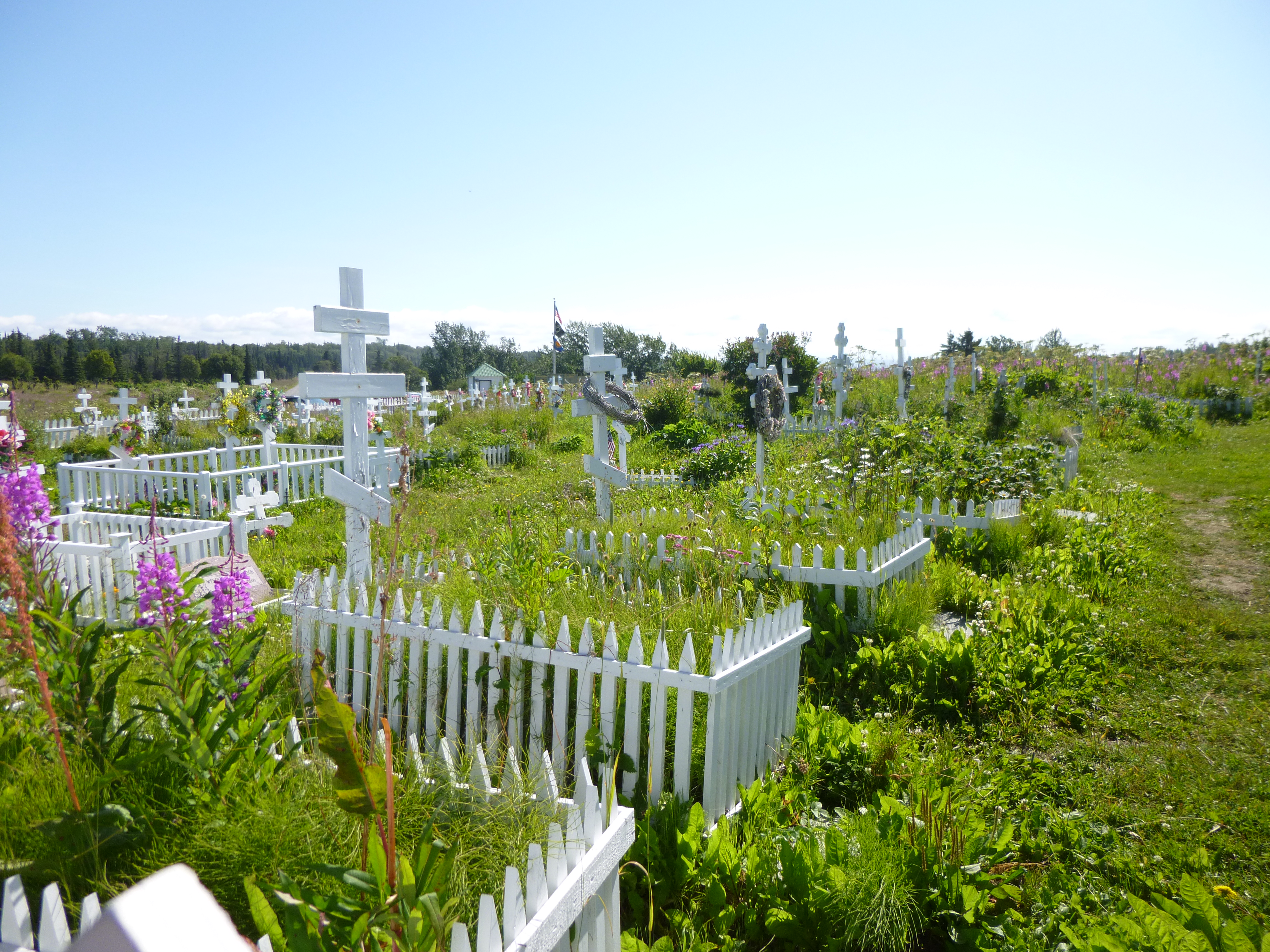
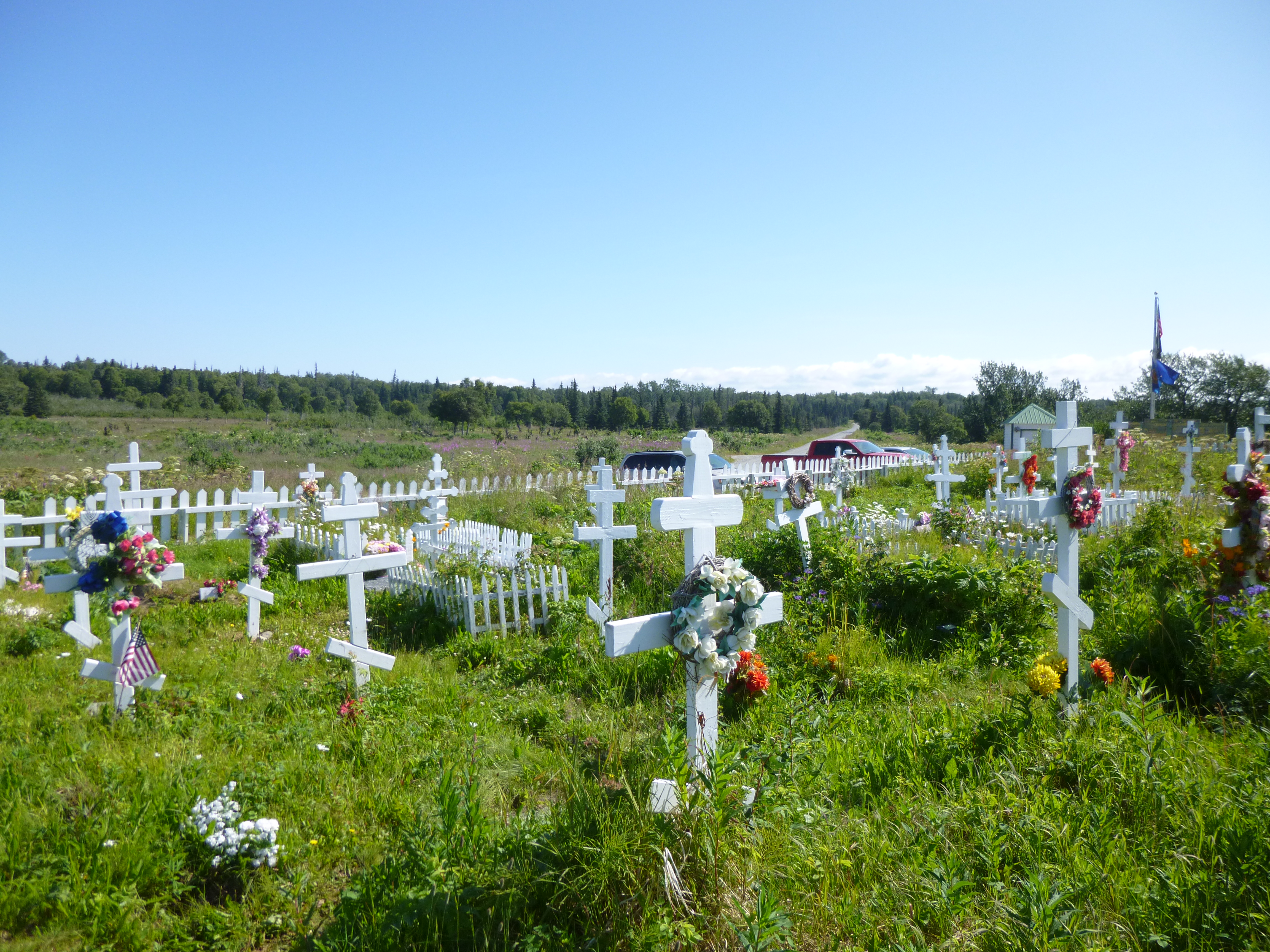
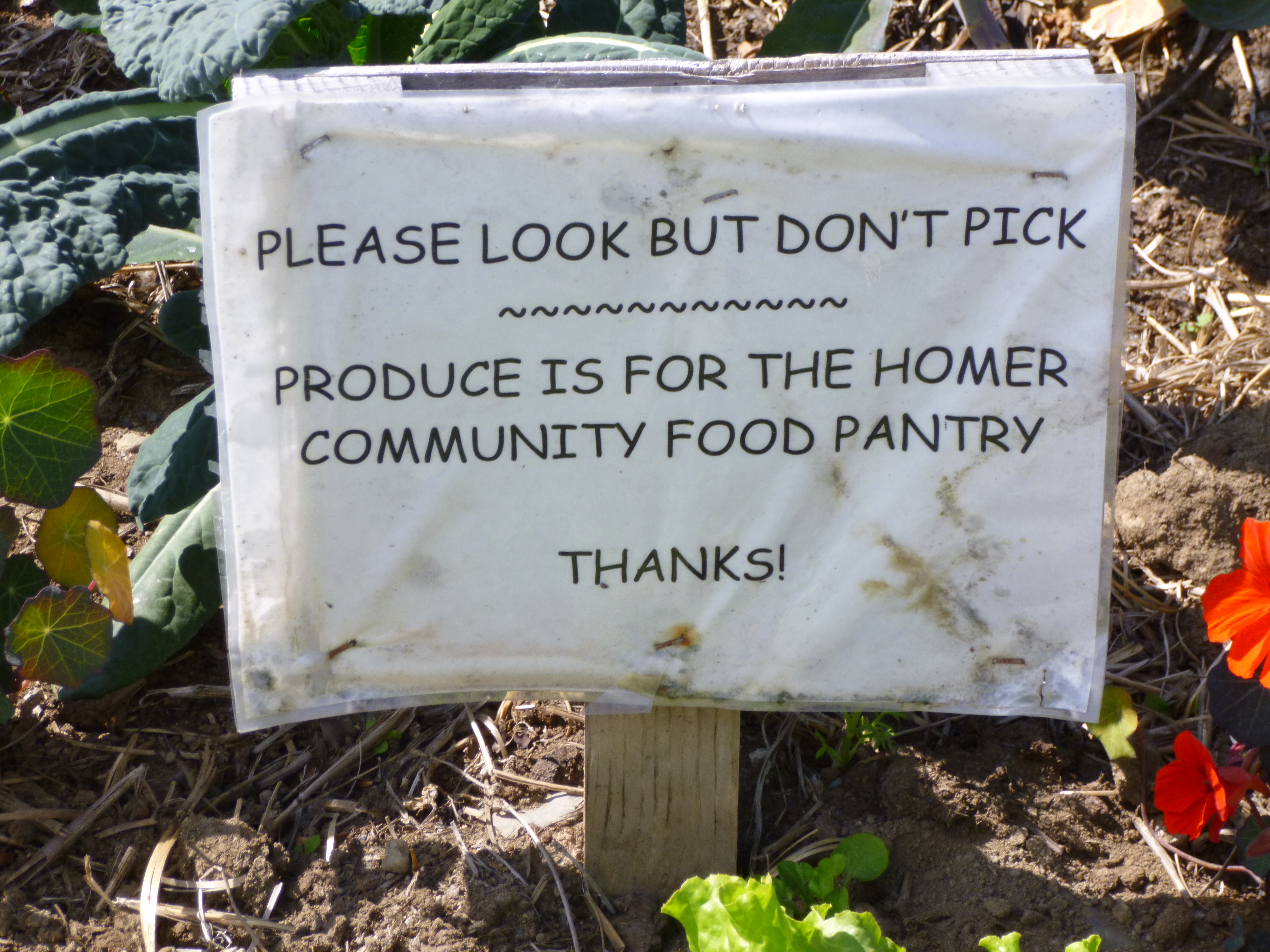
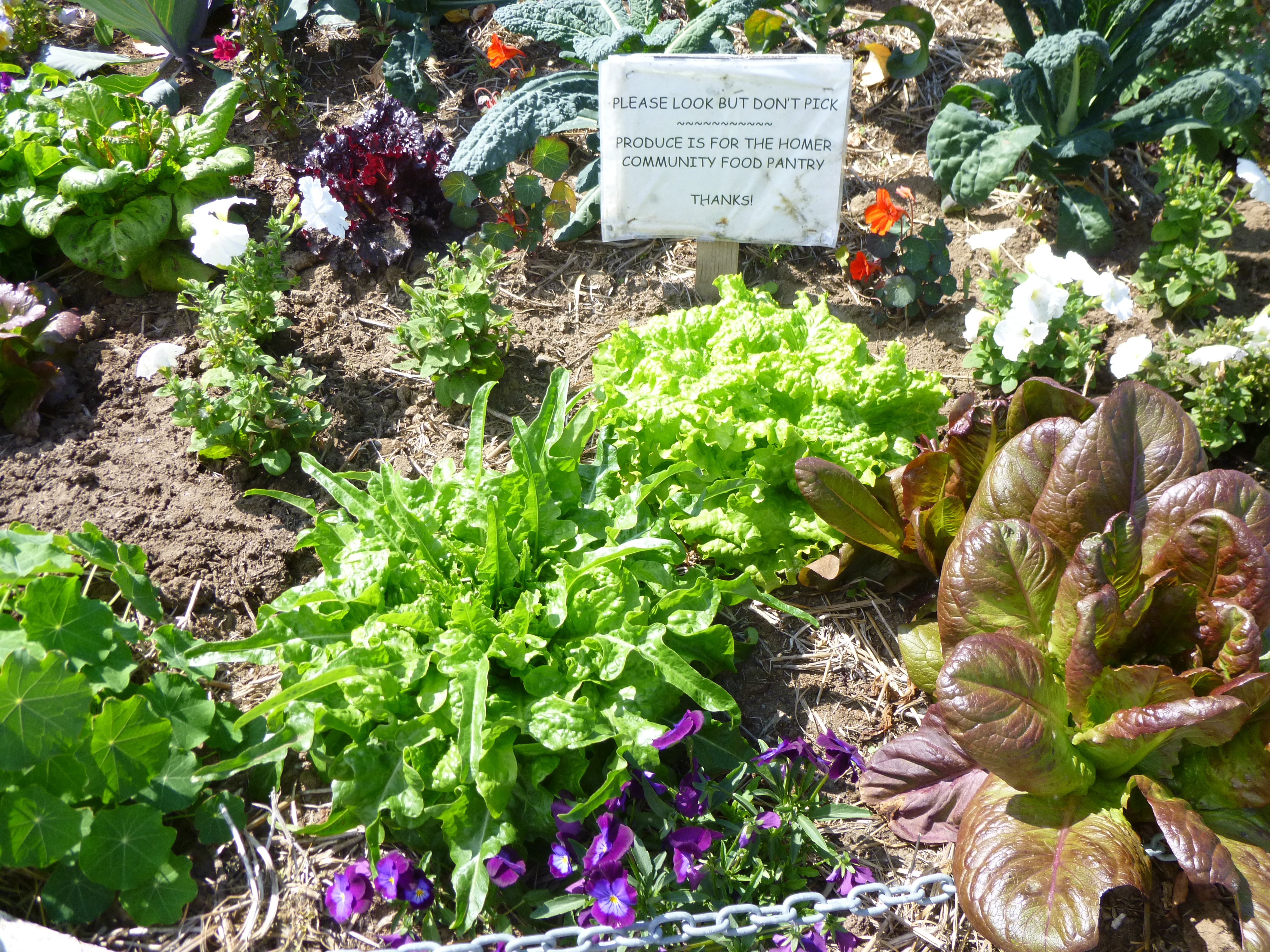
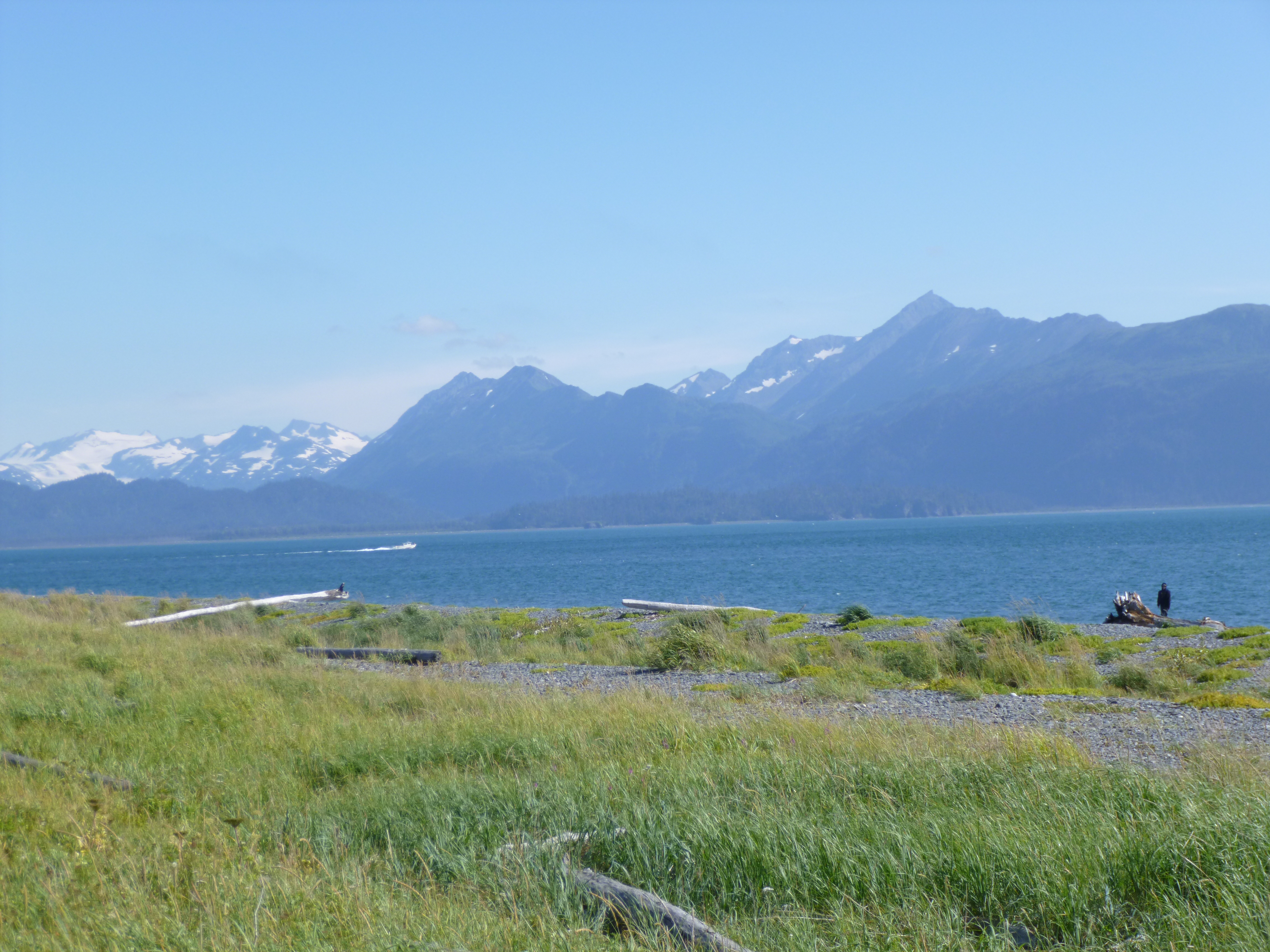
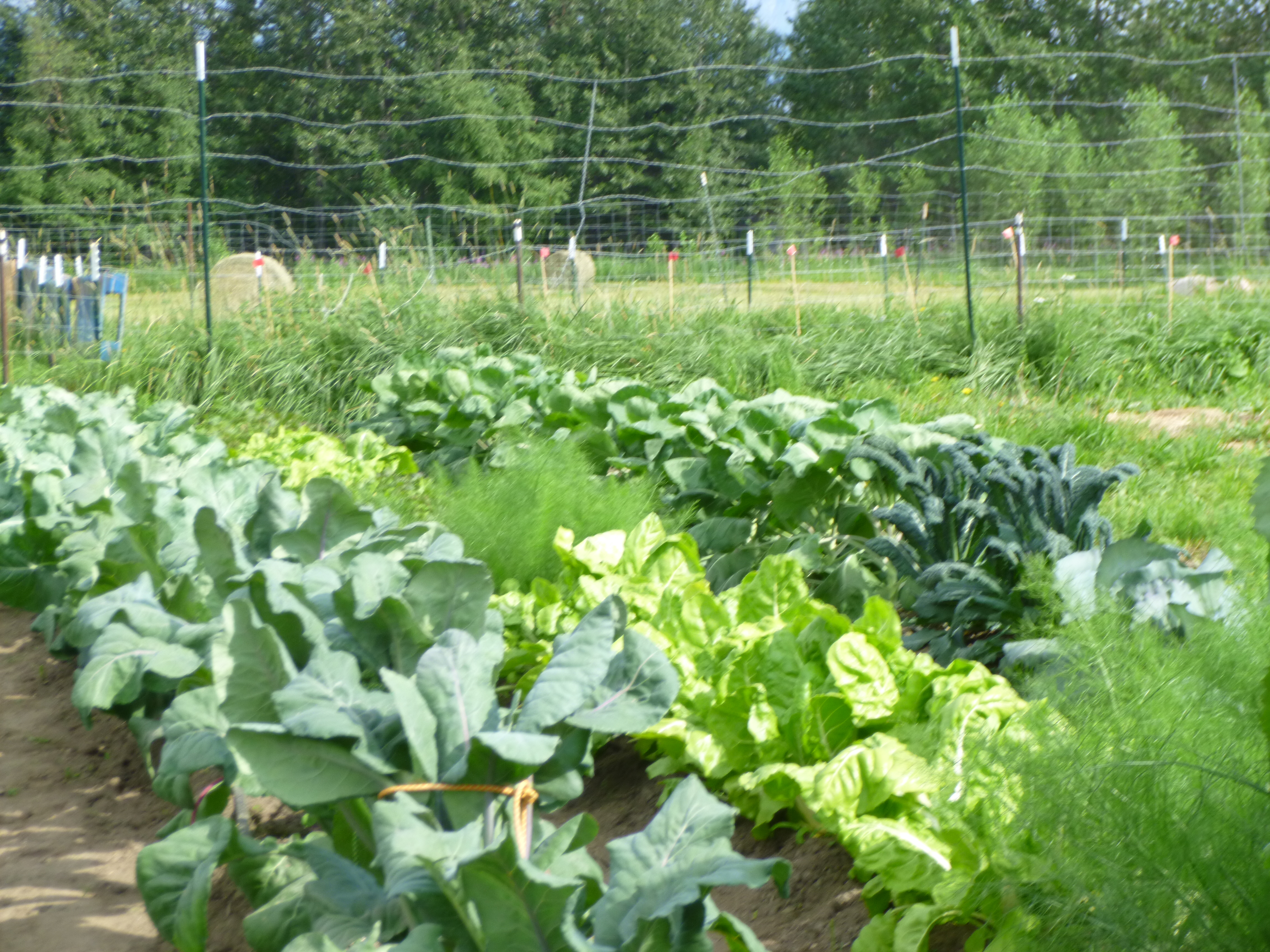
I was able to quickly pack up this morning, and Tula and I headed right out. We continued driving toward Homer, and stopped in a little Russian village called Ninilchik along the way. We took a short walk around part of the town – there wasn’t much to it – and walked around the Russian Orthodox church, and the cemetery, which looked kind of overgrown even though it wasn’t a real old one. There are several small Russian communities in the area – Russia isn’t all that far away as the crow flies! As I was driving, I kept passing through areas of fog – the way it moved almost made it seem like smoke, but there was no burning smell. Then I came to the approach of Homer, and a pulloff high on a hill lets people look down on the town. Homer sits right on the water – in fact, Homer Spit is on a very narrow strip of land that juts way out into the ocean. But the ocean was completely covered by a low-lying layer of fog. It seemed like I was looking down on clouds. I asked someone about this later, and she said it’s been a common occurrence this summer because although it’s been a little warmer than usual, the temperature of the ocean is still only in the mid-40s, so when the cold air by the water meets the warmer-than-usual air above, it often creates a thick layer of fog. The pulloff had some telescopes for people to look across the bays to the surrounding mountains, and there were also a couple of big healthy-looking vegetable gardens – with signs in them asking people not to pick anything, because the garden bounty was destined for the Homer Food Pantry, which was going to be my donation-of-the-day tomorrow, which is the last donation for Alaska.
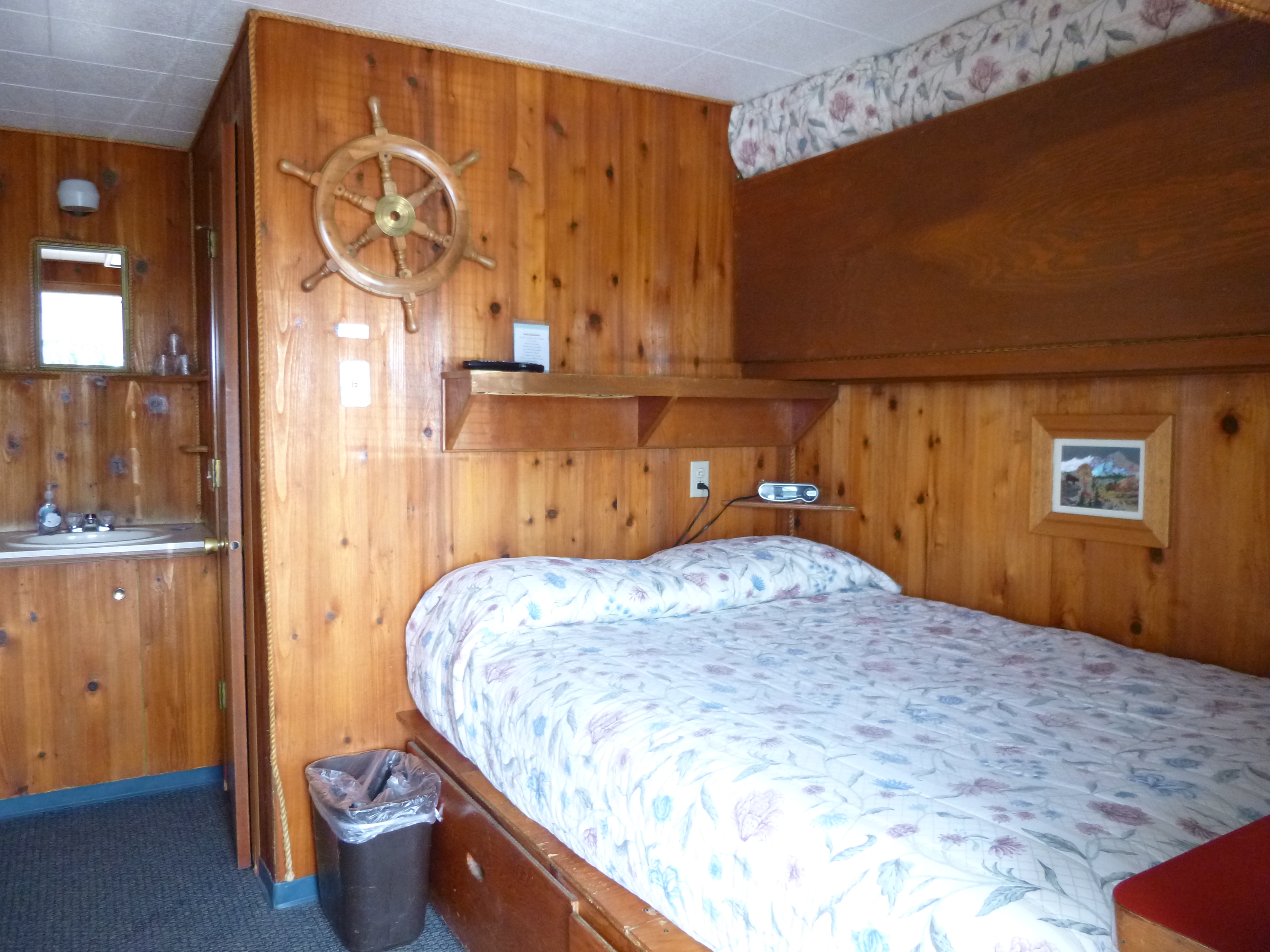
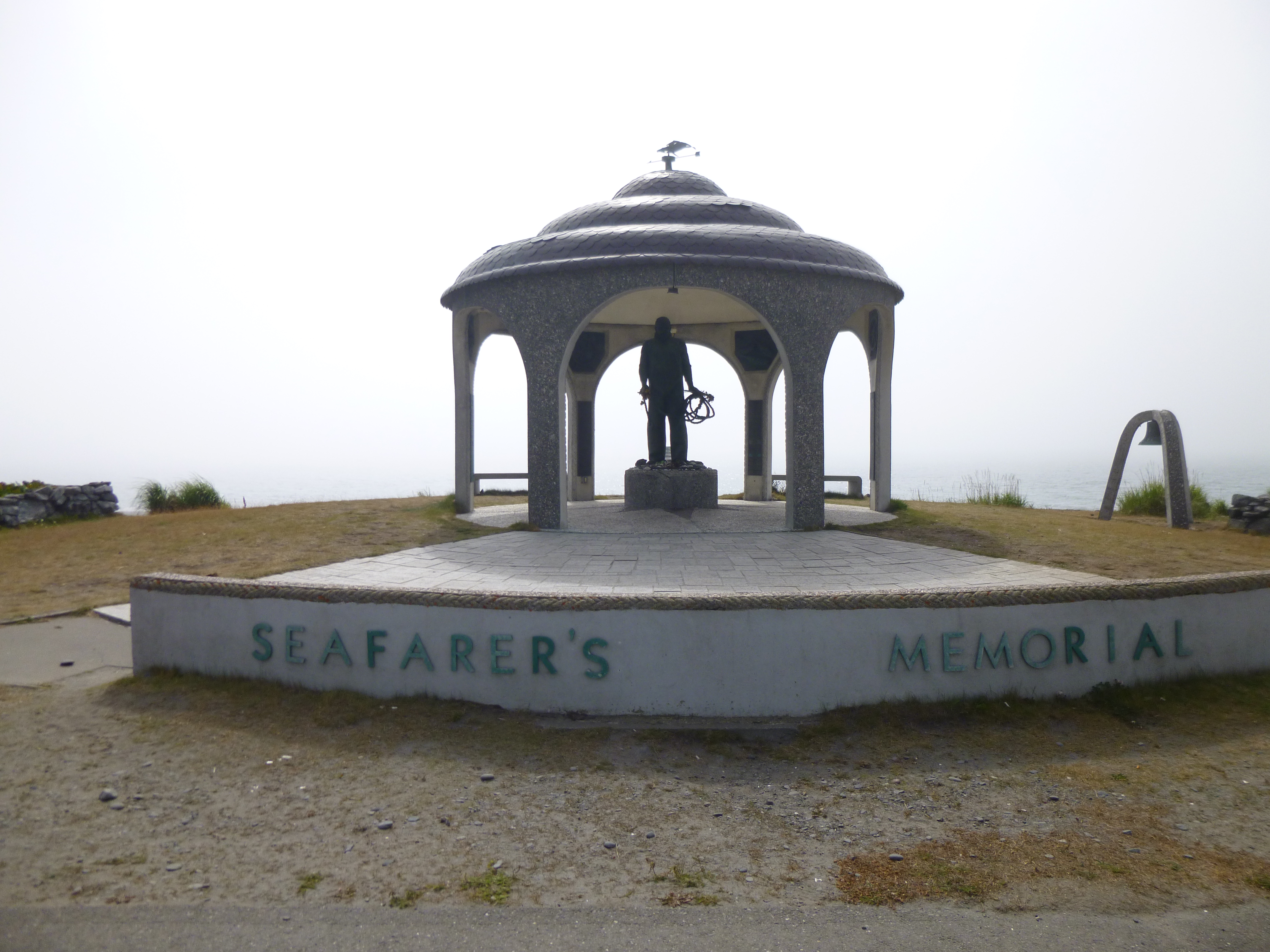
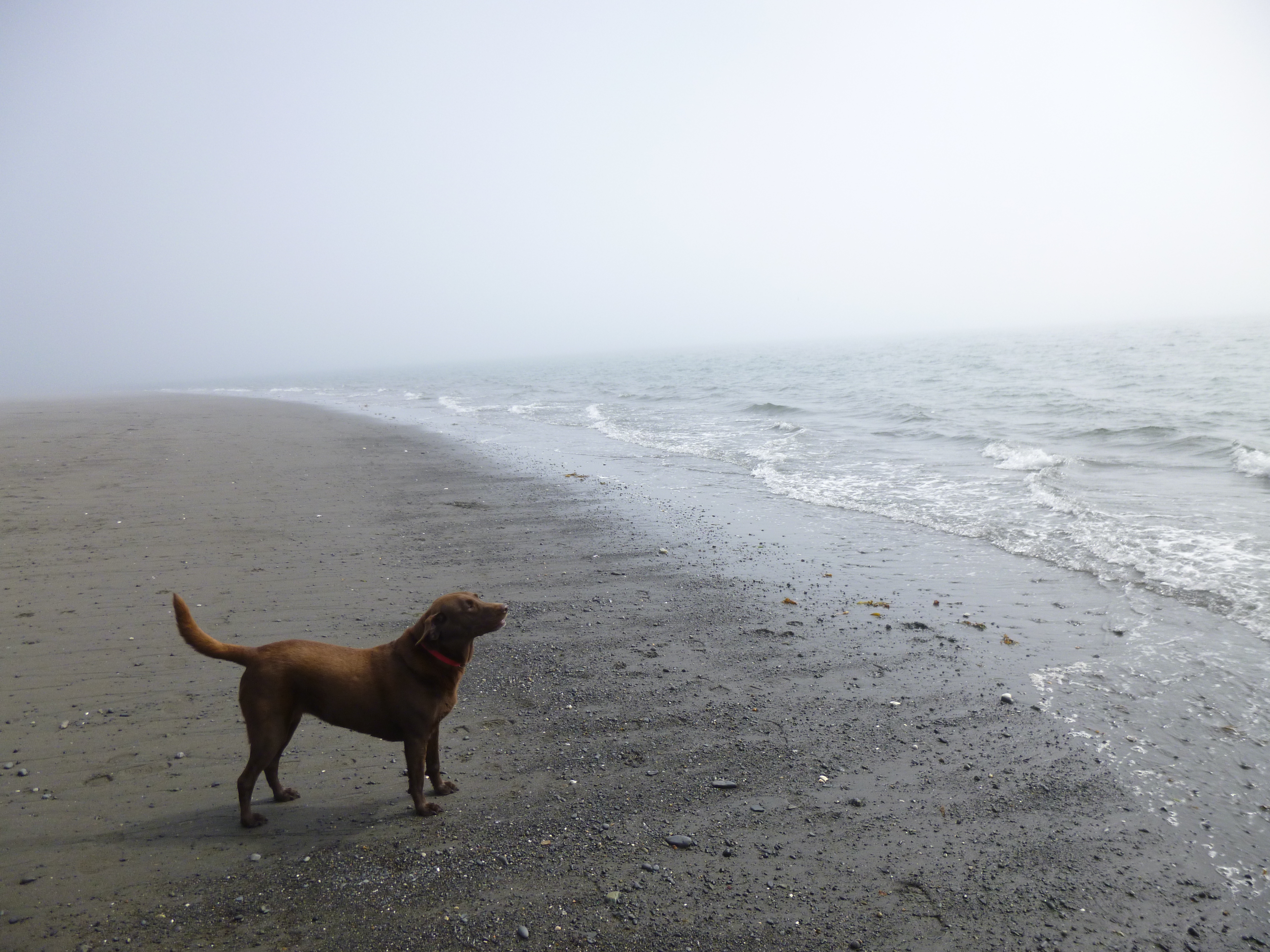
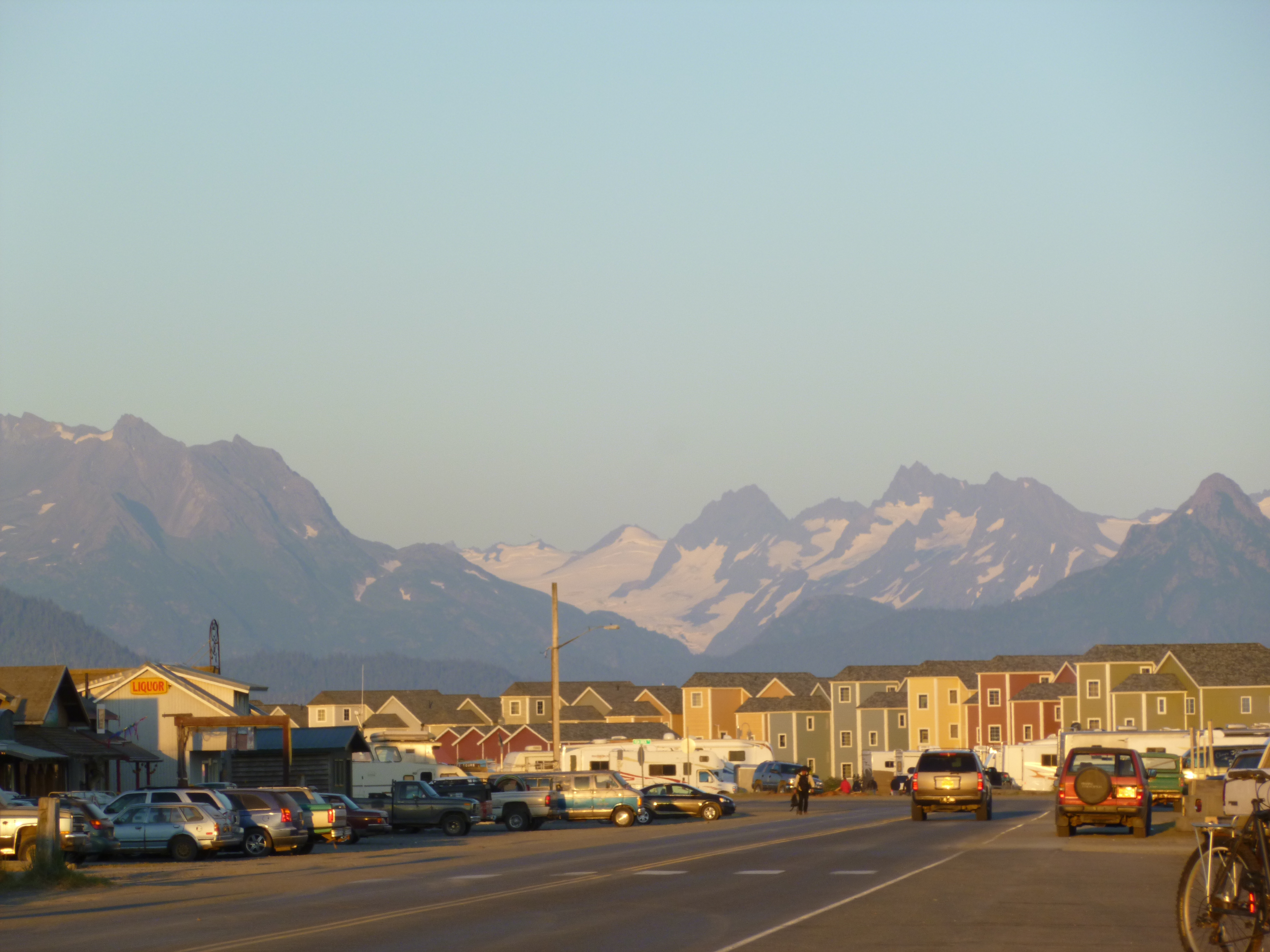
I headed into town and passed the Driftwood Inn, where we had stayed last time, and it was a charming little place with small rooms that were paneled and decorated like a ship captain’s quarters. After camping for 11 days, I was ready for a motel stay and a little extra time to clean up and do some computer work. They had a small room available and it was a wonderfully cozy place to get caught up a bit. But first, Tula and I ventured out to the Homer Spit. We walked a couple miles along the beach, and Tula was enjoying the foggy day – running in and out of the waves, even though it was salt water. There was a nice Seafarer’s Memorial, and a bell off to the side with the inscription “This bell tolls for all the souls set free upon the sea.” I’ve now been to a lot of waterfront places, and there are many memorials to those who have lost their lives at sea, and it still continues to happen. It’s a reminder that no matter how much technology there is, or how smart humans think they are, Mother Nature still has the upper hand.
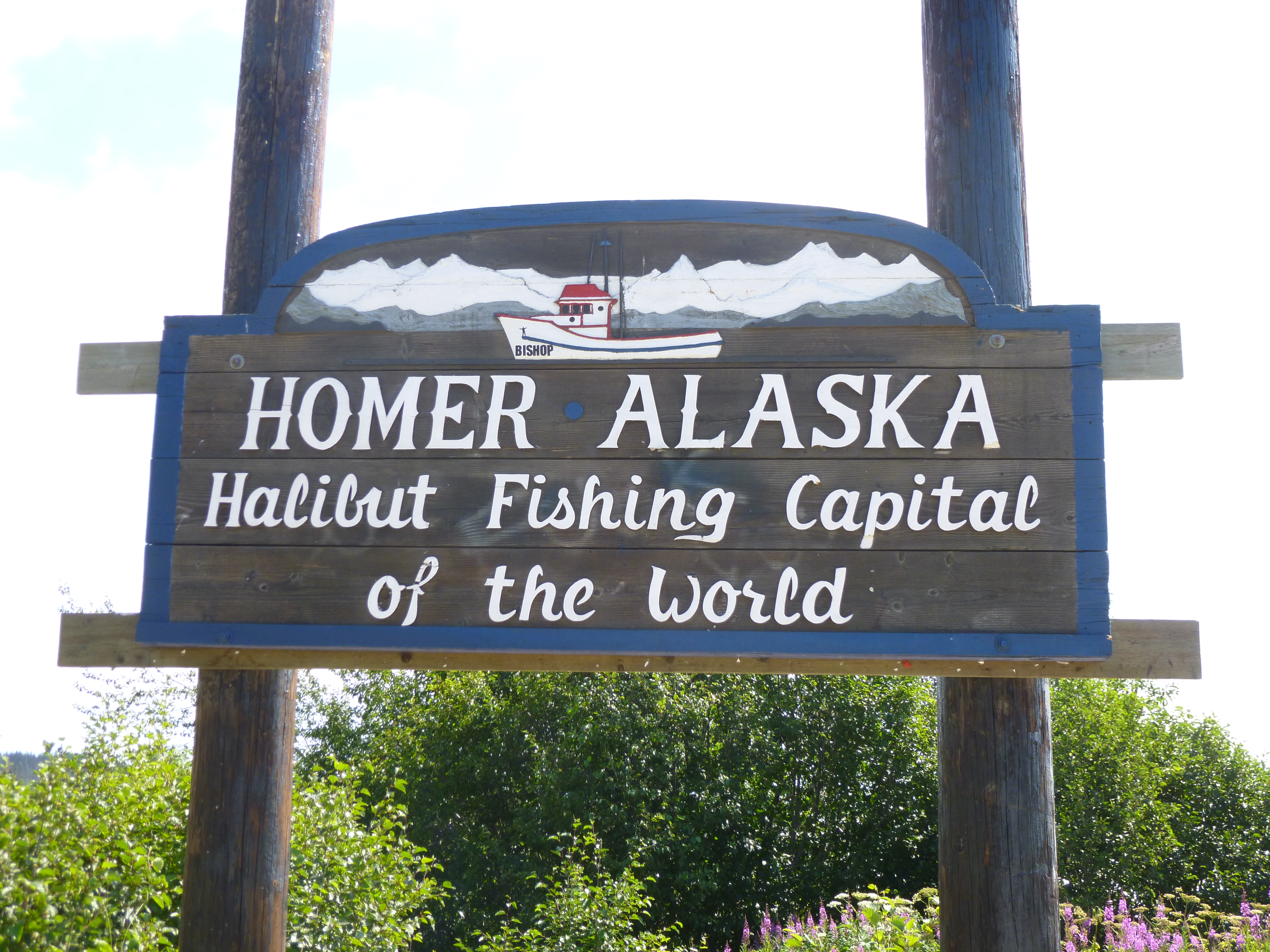
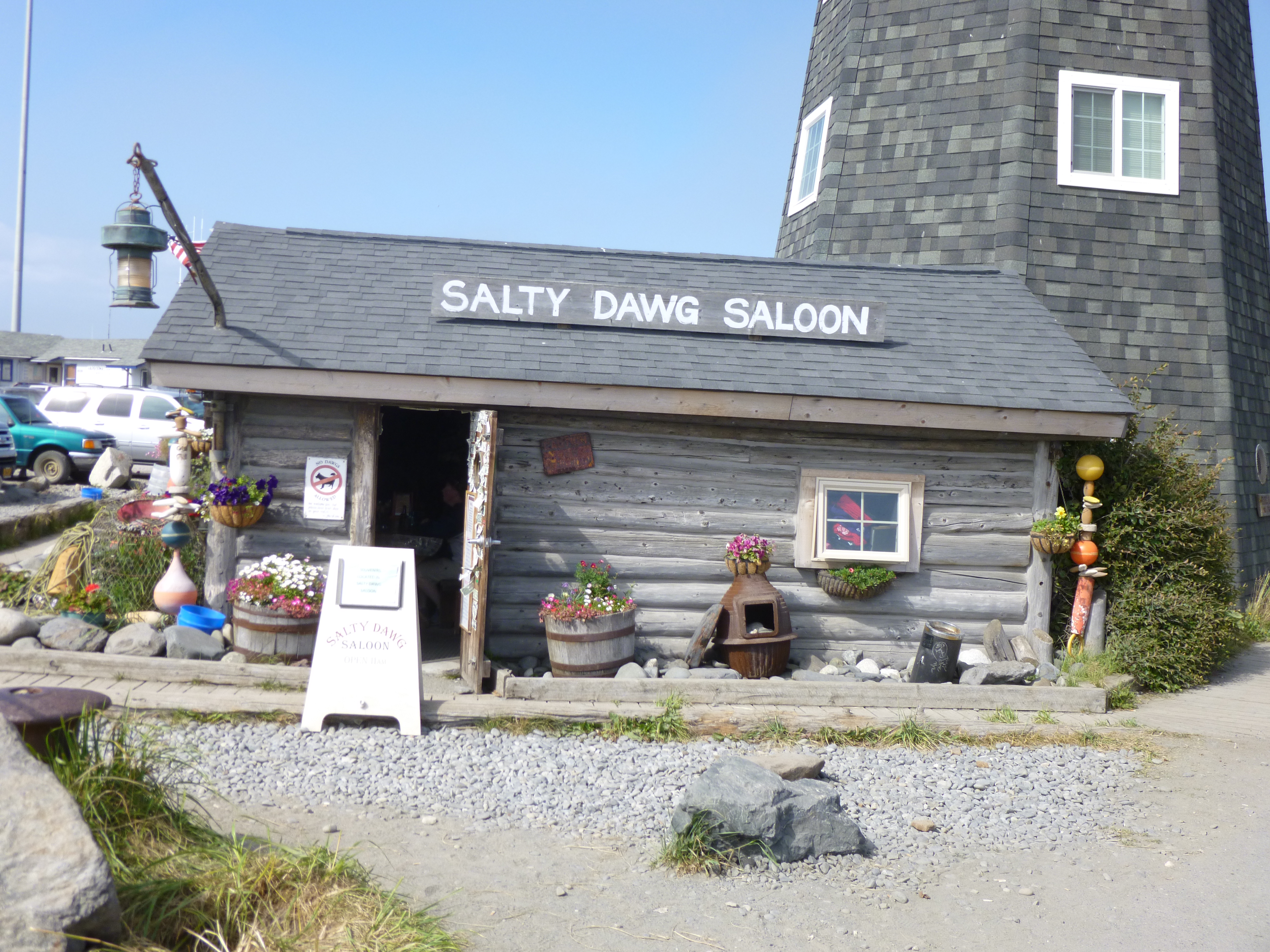
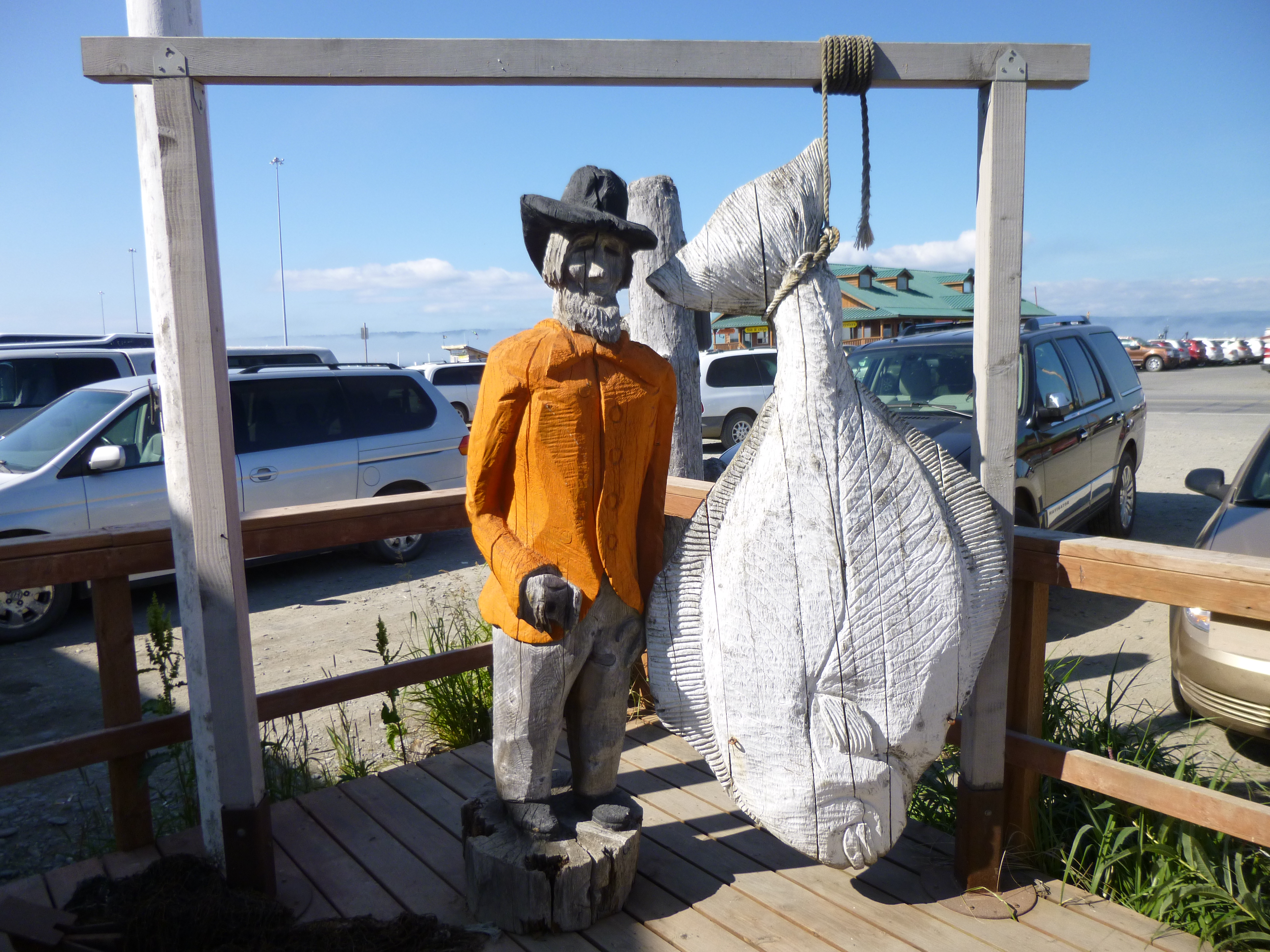
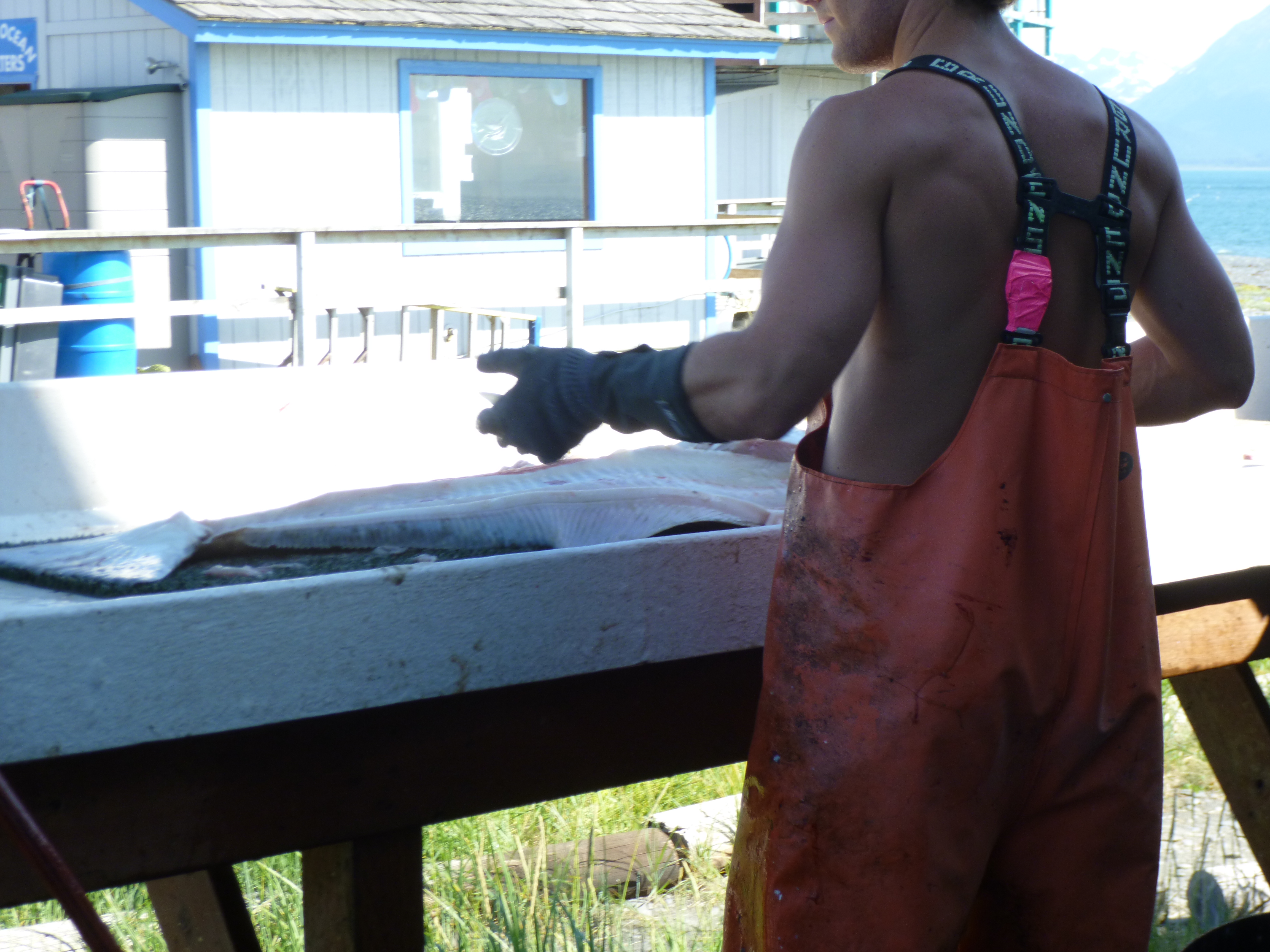
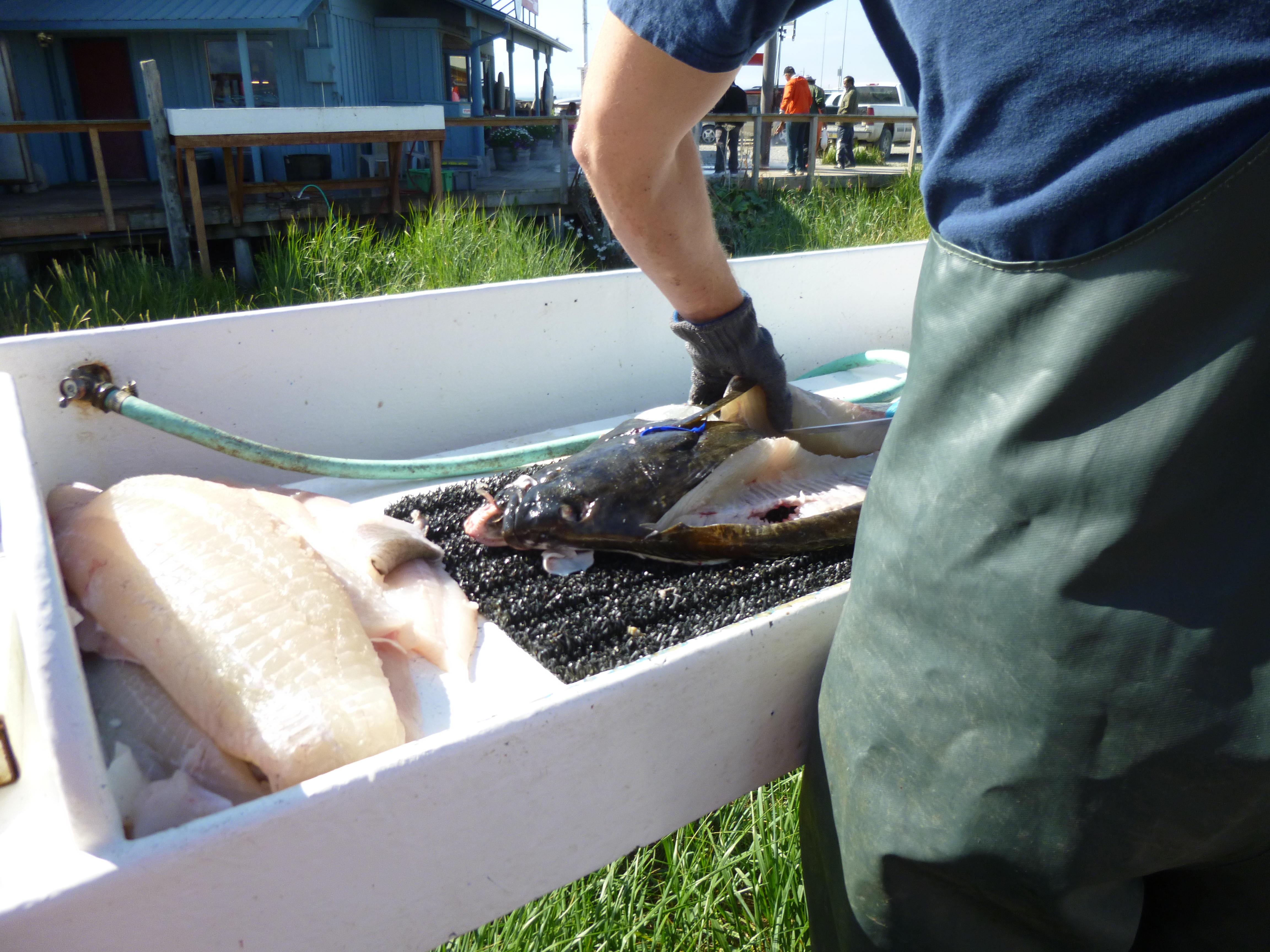
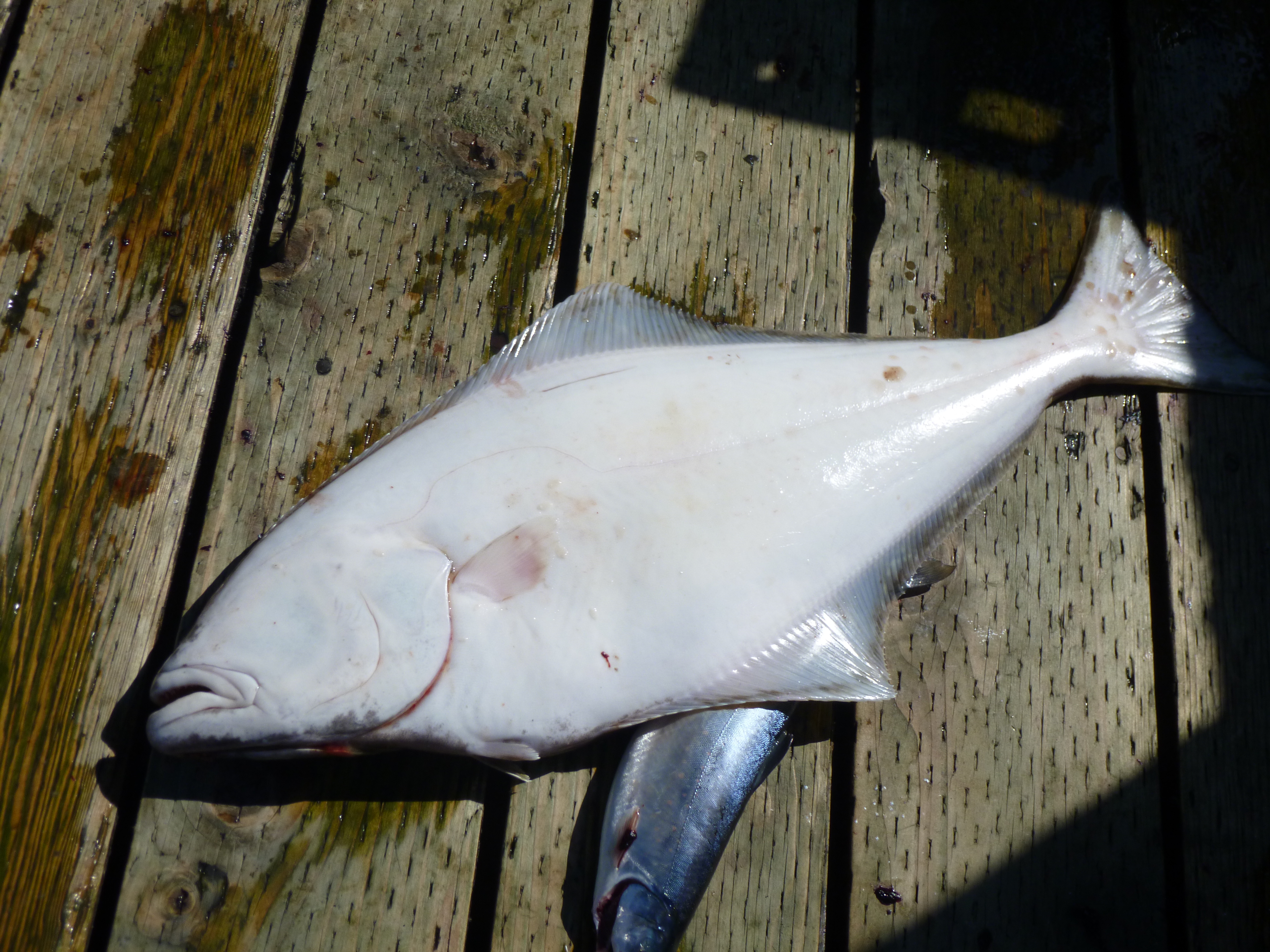
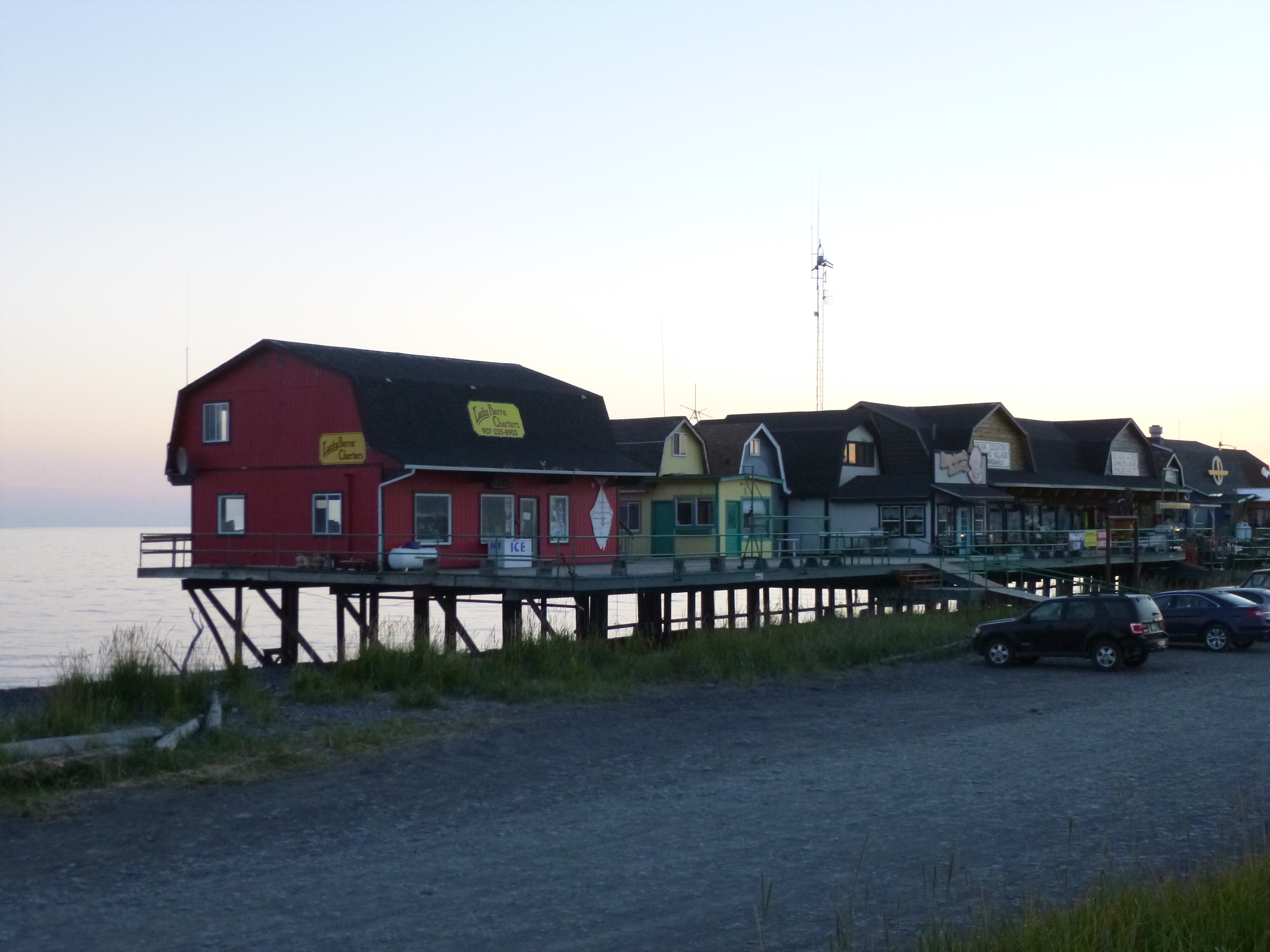
Then we walked up and down the row of shops – old wooden buildings along boardwalks, some of which are on stilts, and many of them are just open for the summer. Homer calls itself either the “halibut fishing capital of the world” or “a quaint little drinking town with a fishing problem”, and the town is full of little fishing charter businesses. It seems like nearly everyone goes out fishing for halibut or salmon. When the charters come back in, the guide cleans the fish right on tables in town, and there are freezer services to take care of freezing and shipping the fresh-caught fish home. Halibut are really weird looking fish – flat and white, with both of its eyes on one side of its head, and just kind of a blank face on the other side. They come in all different sizes, and the guides seem to be able to clean and fillet them with only a few cuts here and there with their knives. And halibut is on all the menus around town, as part of fish and chip dinners, halibut burgers or halibut chowder. I went to a fish and chip place and ordered a dinner to go, and took it back to the motel and did some computer work.
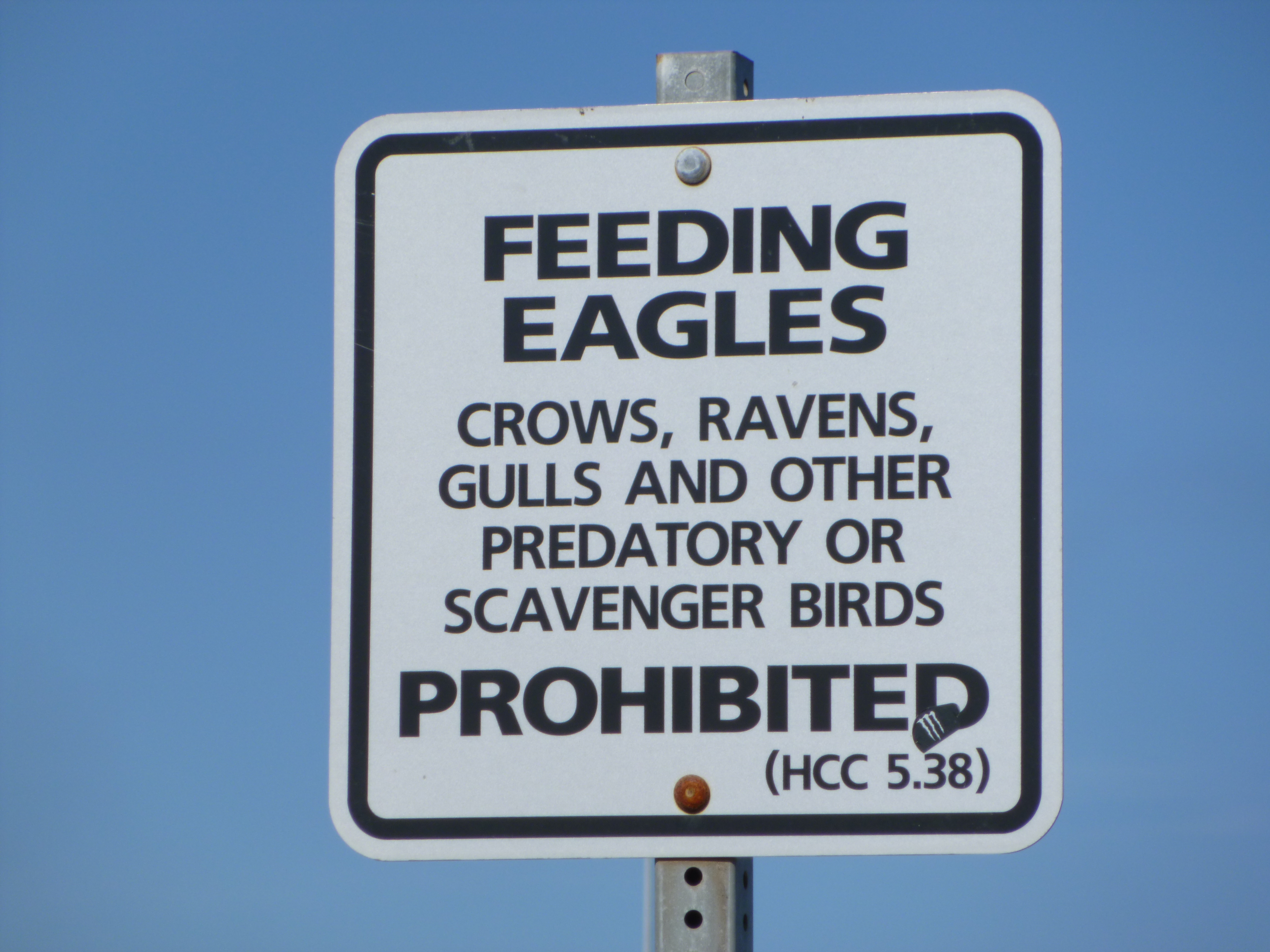
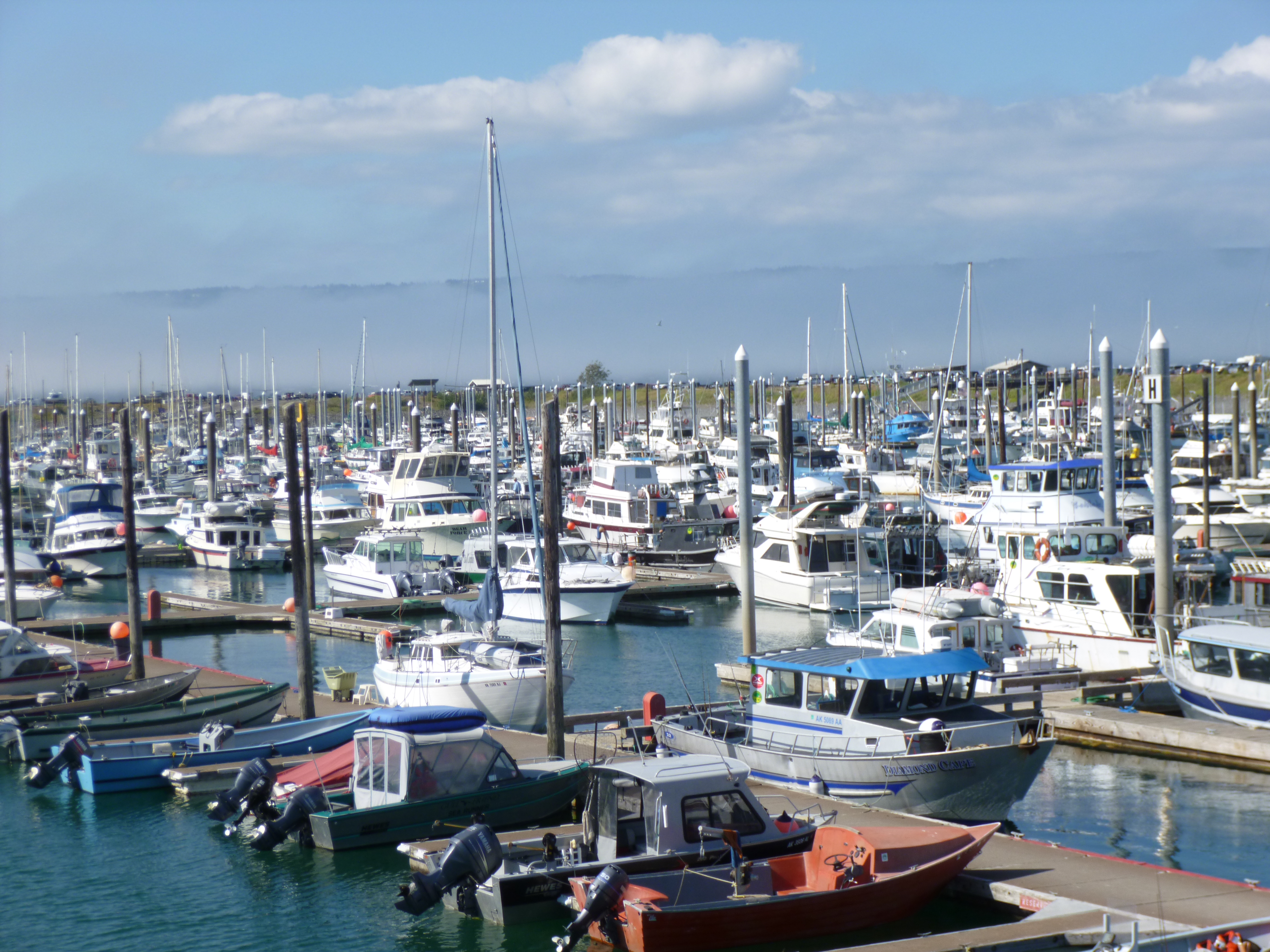
Then, toward evening, we headed out for another walk along the spit. I walked past a bay, and there were numerous sea planes tied up by docks, instead of boats. There were about a half dozen campgrounds along the spit, and I’m guessing most of the people who stay there are in Homer for the fishing. I’m kind of glad I’m not camping tonight, because all the campgrounds were exposed to the wind and weather on the spit, and the campsites were all so close to each other that all the RVs seemed to practically be touching each other. I saw a couple eagles flying overhead – I’ve seen them here and there, but haven’t been able to get any good pictures of them. One campground I passed had a big dumpster that was for fish cleaning waste only, and there were fish-cleaning tables set up by them. Lots of gulls were hovering nearby for juicy morsels, and the eagles probably wanted some of that bounty too. Tula kind of liked the smells around the fish dumpster too – yuck! I wandered over to where the people were cleaning fish, and saw one lady cleaning red salmon with one of the Alaskan ulu knives. The red salmon was literally blood red, and she was wearing a garbage bag pulled over her clothes as a makeshift apron. She told me it had only taken about 6 hours to get all their fish today – she had some pink salmon too. She had a big pile of roe on her table and when I commented on it, she told me if I had a use for it, I could have it – I politely declined! After we had finished our evening walk, I stopped at the local grocery for a few things and headed back to my cozy little room for some more computer work.

















Alaska – Saturday, July 27
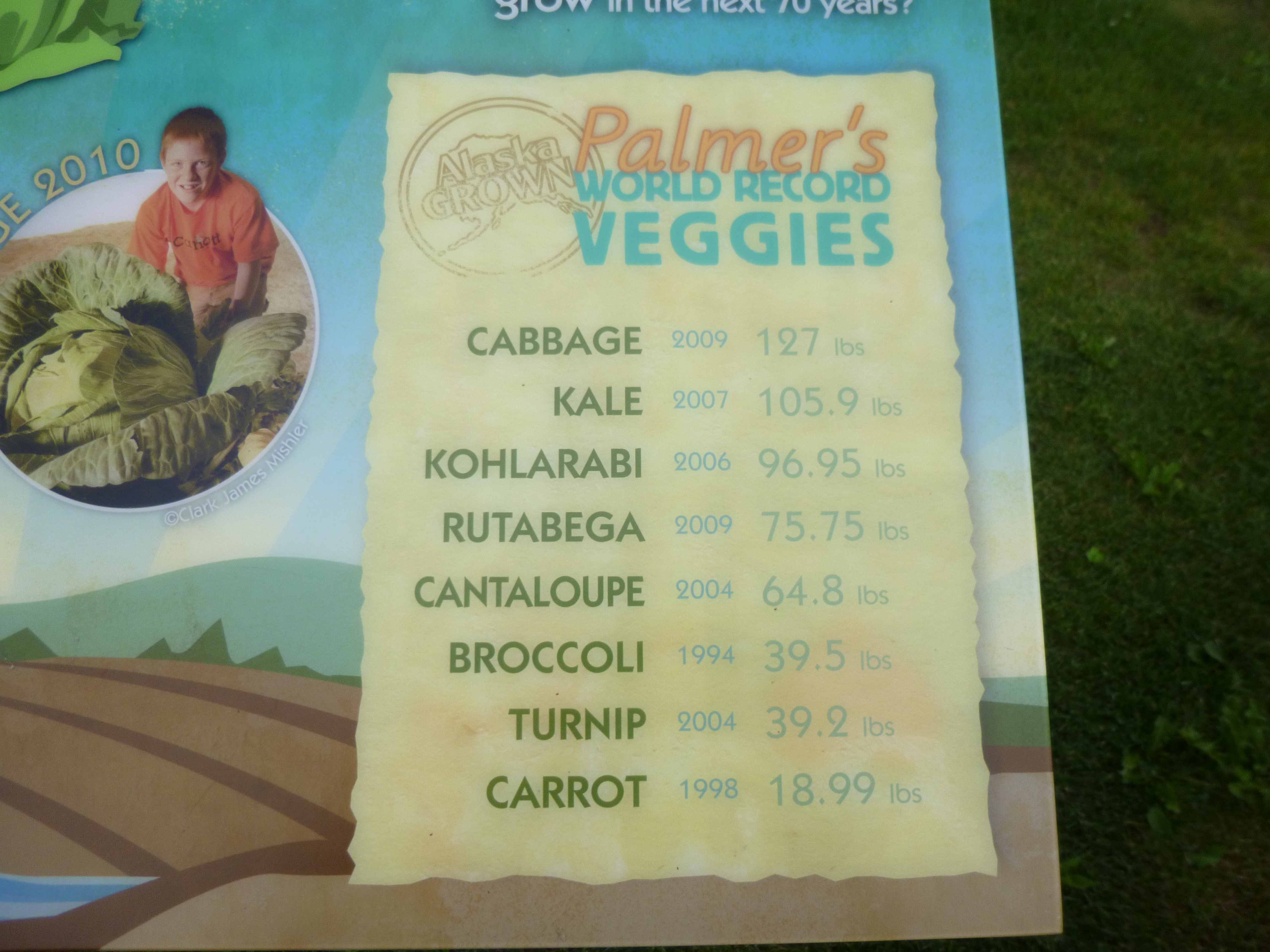
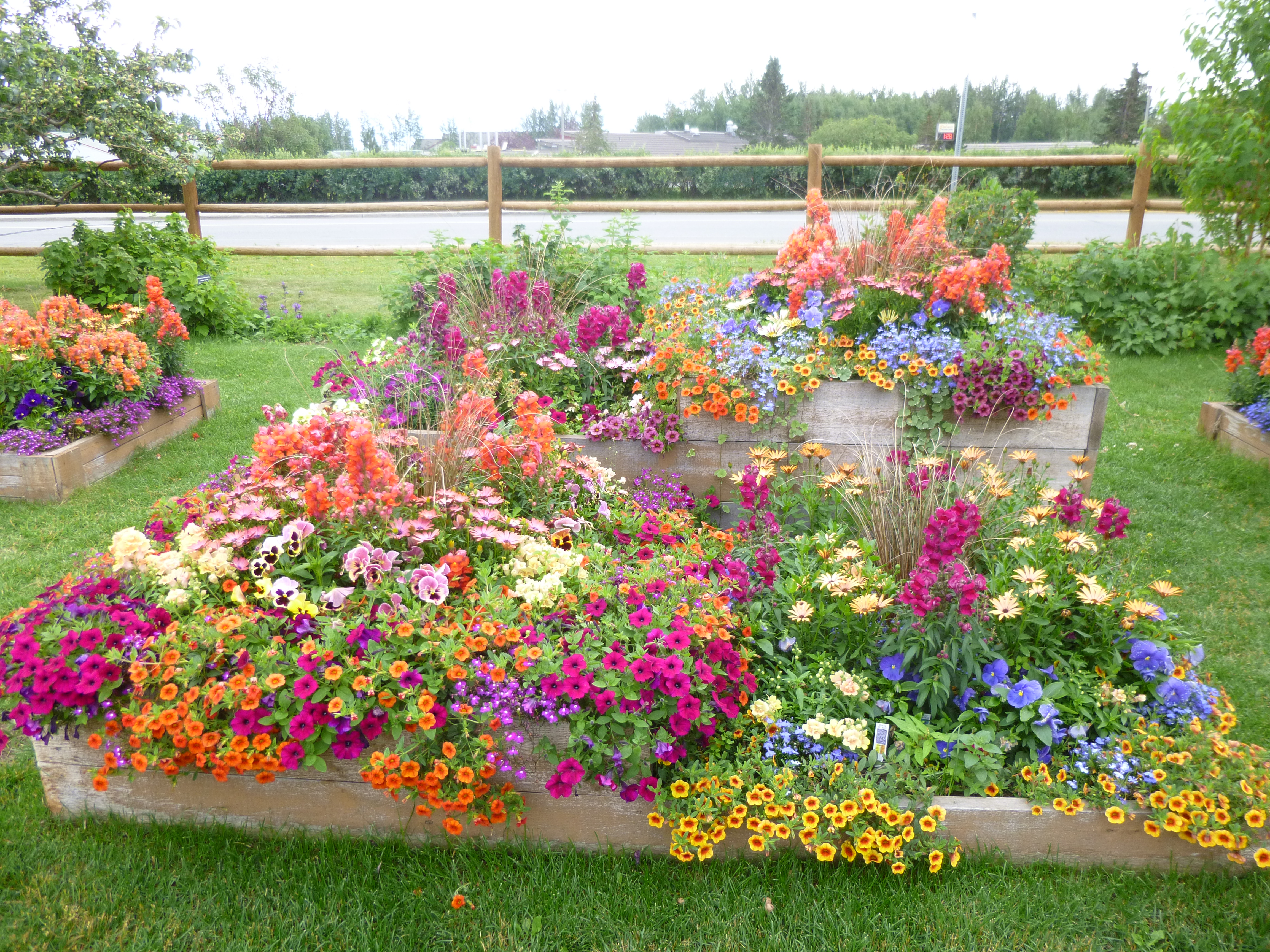
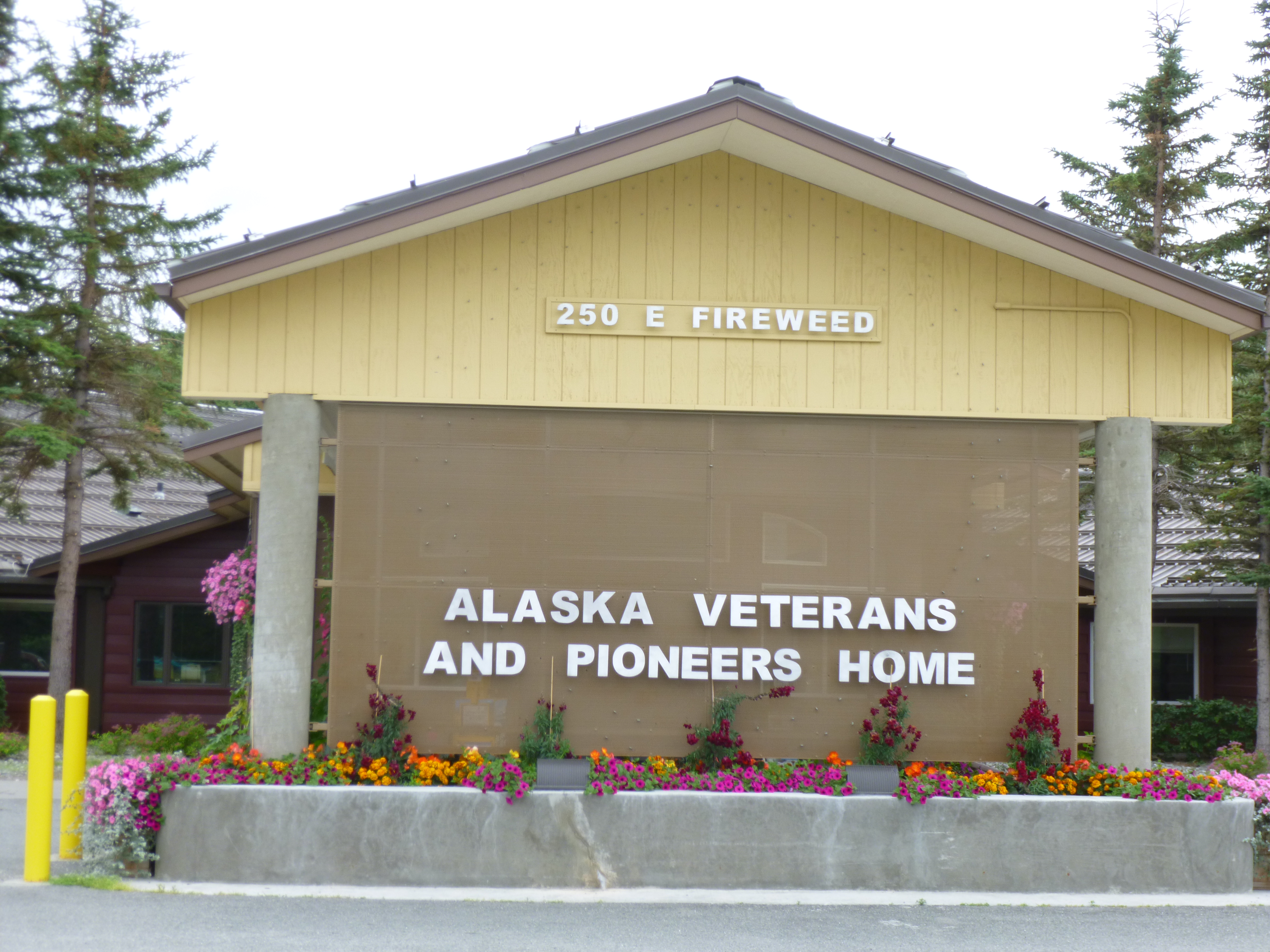
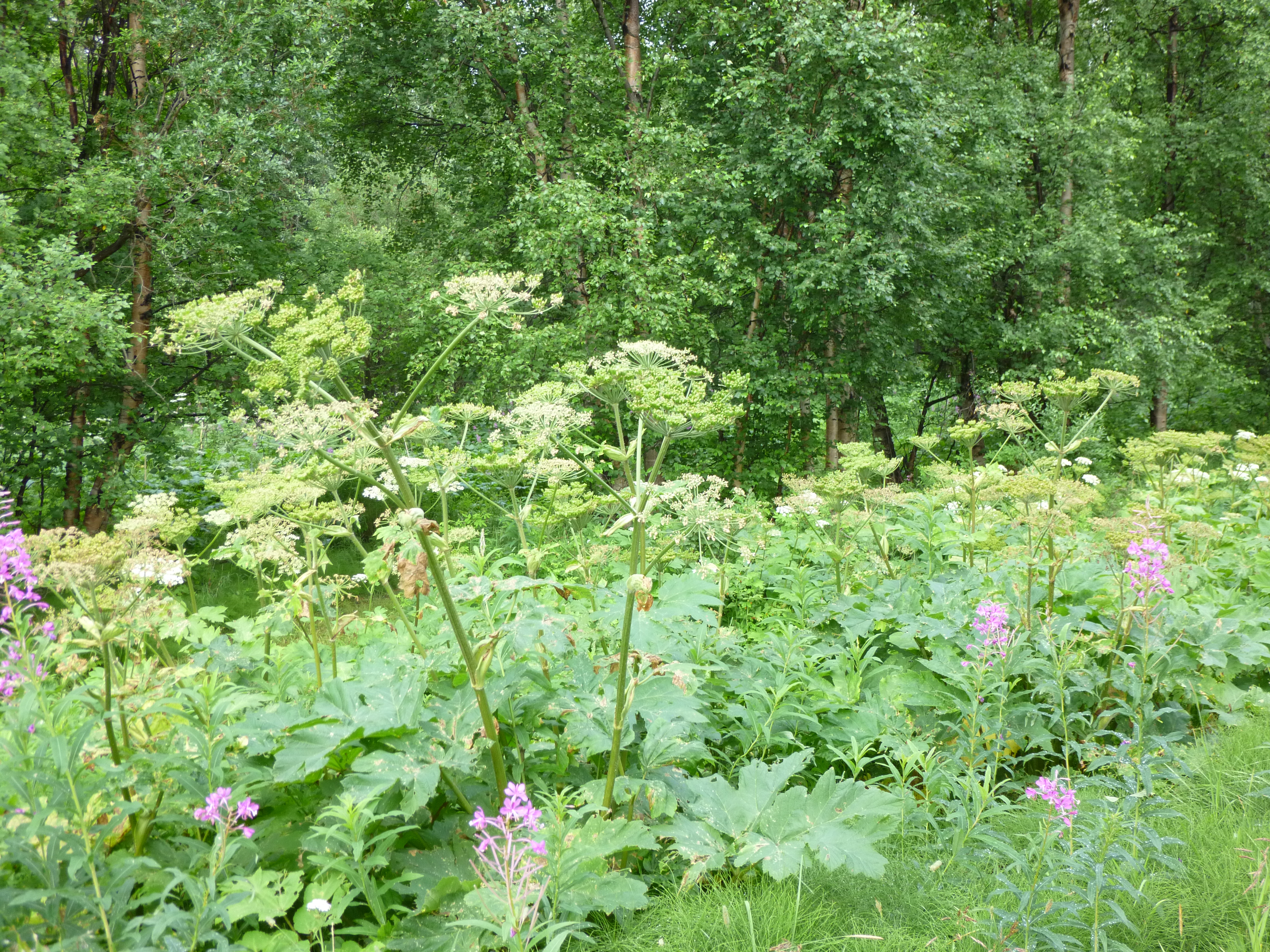
Toni and I headed out for breakfast, and afterwards, while she caught up with some stuff, I headed out for a walk, and covered 3 miles all around Palmer. I wandered through a big garden by the visitor center, and read about the world-record produce that comes out of this valley. The combination of old glacial soil/silt, and 20 hours of summer daylight each day makes perfect growing conditions for record-setting veggies. The Mat-Su valley holds the world record for cabbage (127#), carrots (18.99#), cantaloupe (64.8#), broccoli (39.5#), rutabaga (75.75#) and others. I also walked past the Alaska Veterans and Pioneer Home, which is the only veterans home in Alaska, and it didn’t even become that until 2004, when they went through extensive renovations to turn the pioneer home into a government-approved veterans home. 75% of the beds there are set aside for Alaskan veterans. It seems that a lot of nursing homes in Alaska are called pioneer homes, and it makes me wonder if the oldsters living in them were the Alaskan pioneers since it didn’t even become a state until 1959. After I was finished with my walk, I called the veteran’s home, but since it was Saturday none of the administrative staff was in, so I just drove over and popped my head in to see if I could see anyone, and while I saw a couple nurses helping people in a room down the hall, I didn’t want to disturb them, so I decided to just mail the donation in since I won’t still be in Palmer on Monday.
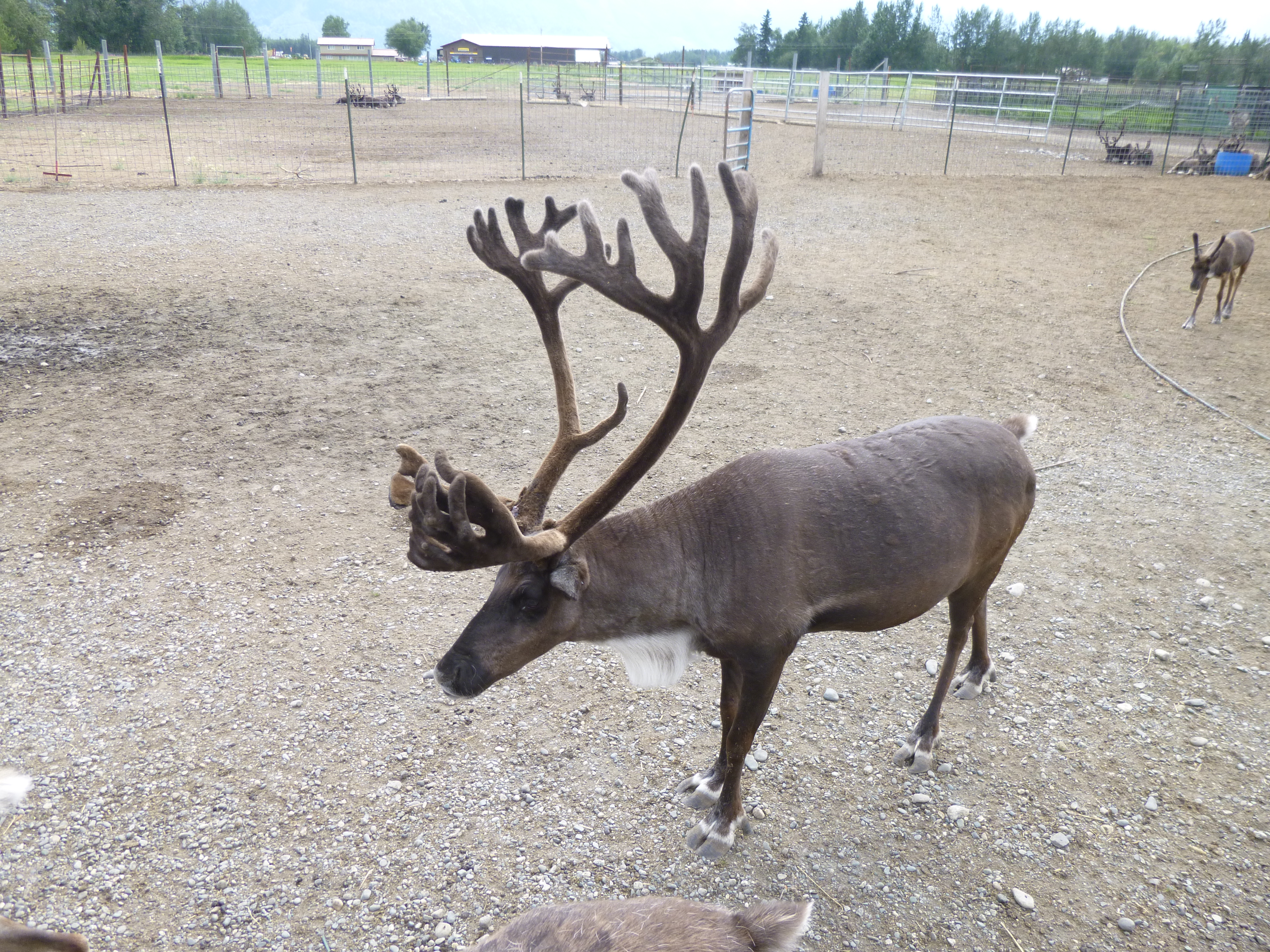
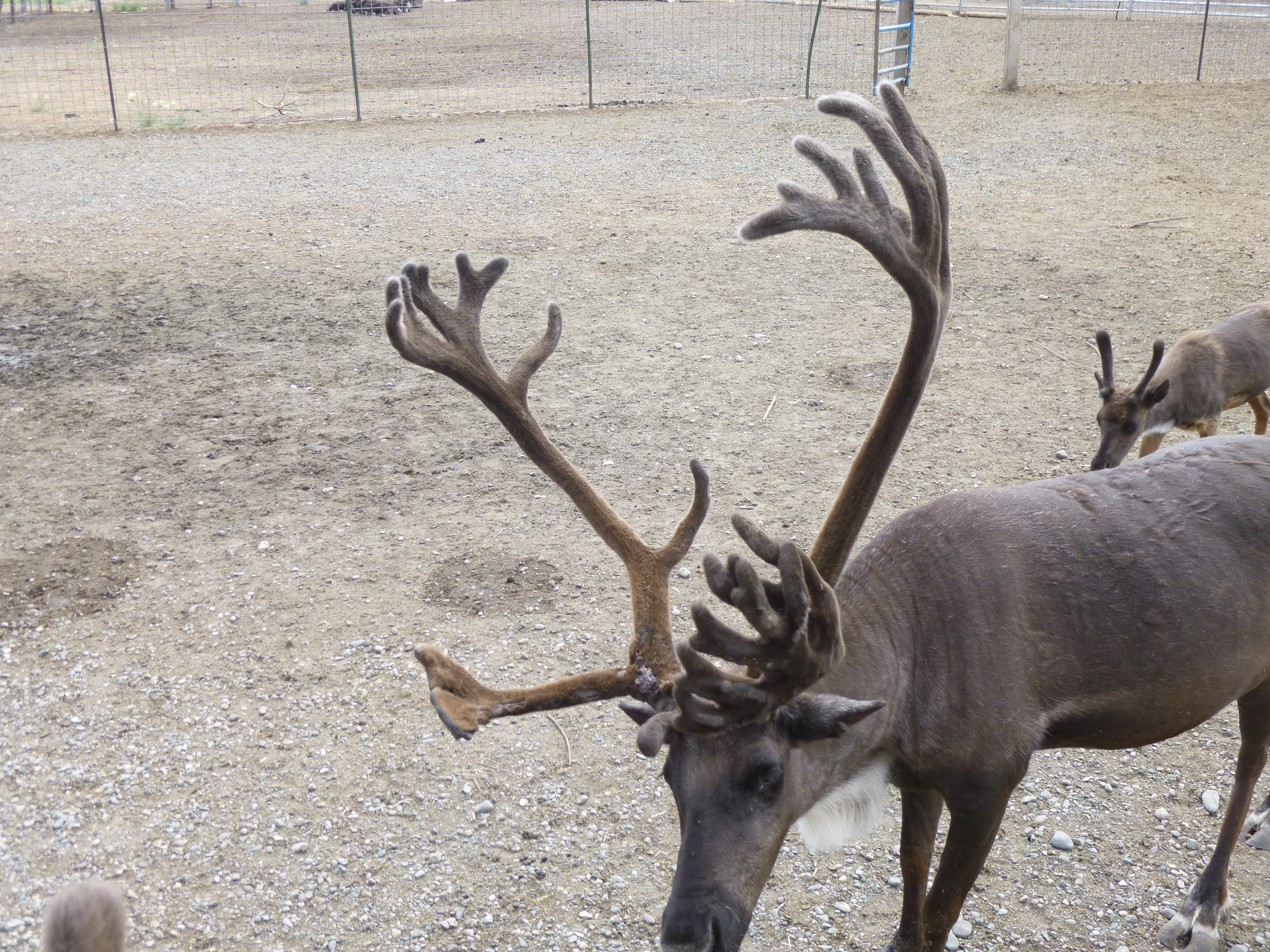
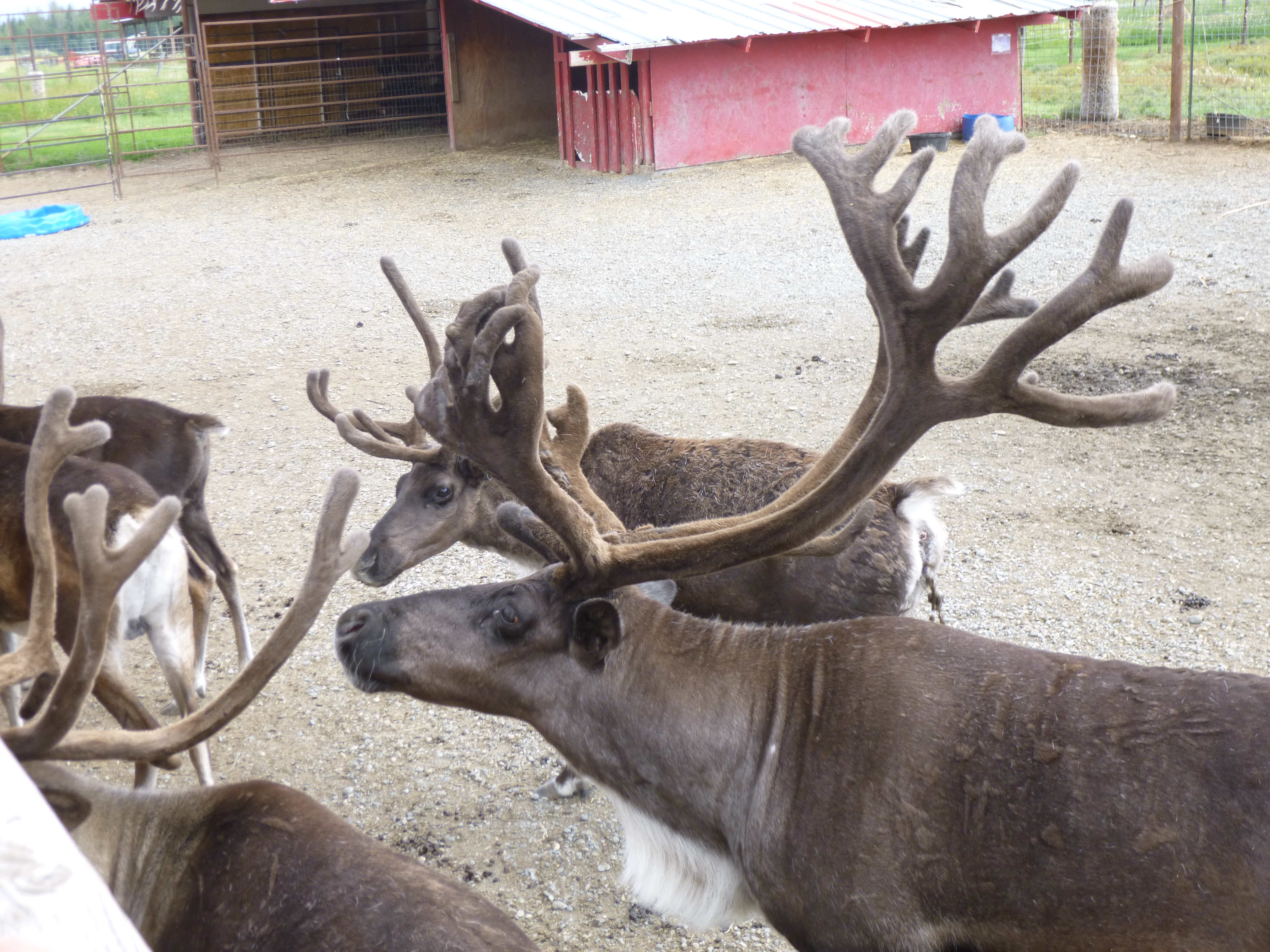
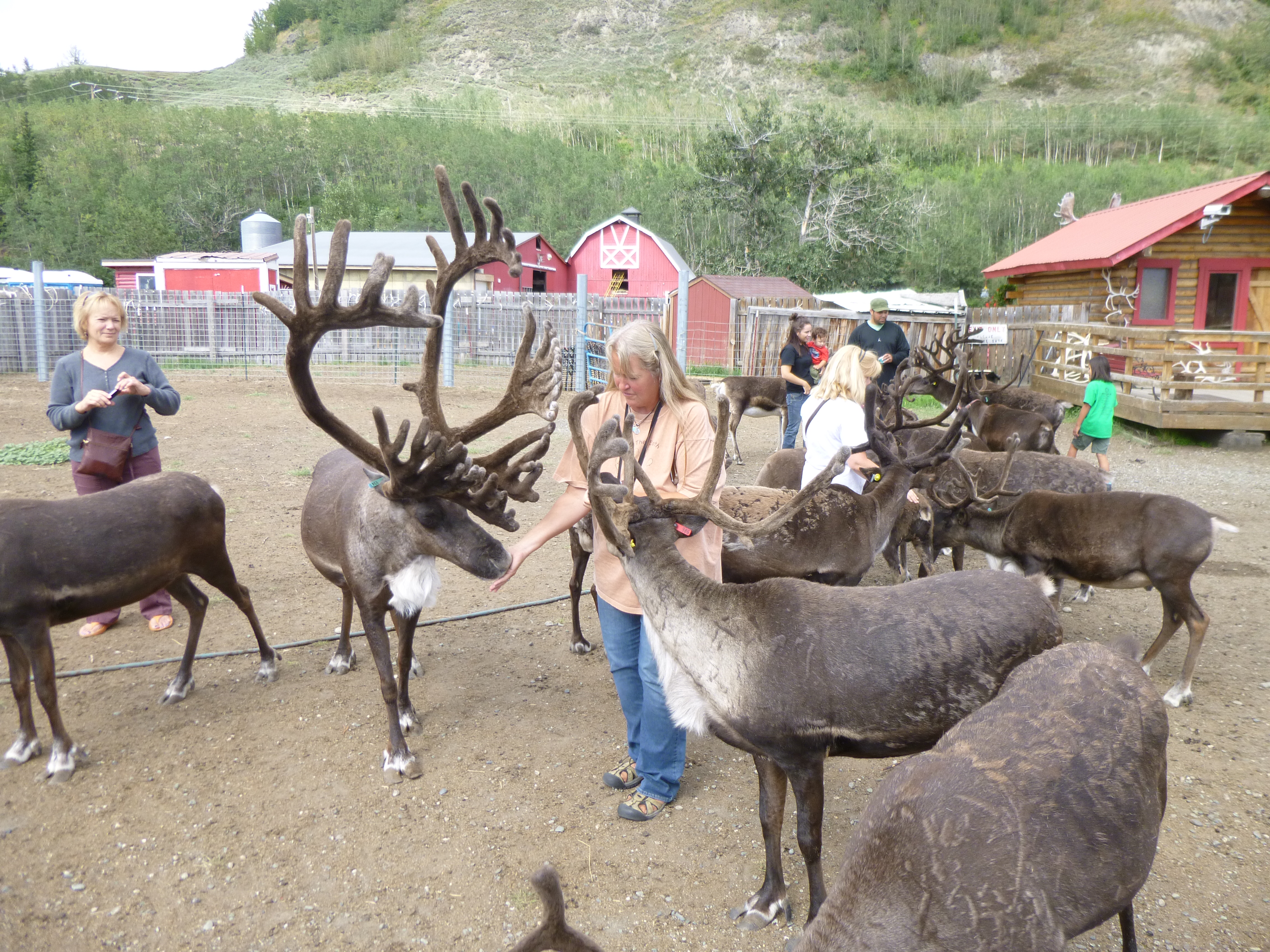
Then I wanted to visit the Reindeer Farm, which wasn’t too far from the musk-ox farm. Toni and John decided they better start getting gear and stuff organized for their multi-day camping trip, so they decided not to come. I enjoyed my visit there. I think what surprised me most was how small the reindeer are (they told us reindeer are just domesticated caribou) and how big some of their antlers are – they seem too big for their bodies! They also look velvety soft, and although we were allowed to go into the paddocks to pet them, we were told to not touch the antlers. At this stage of growth there are a lot of nerve endings in them, and they’re very sensitive. If someone squeezed an antler, it would feel like a human slamming their finger in a car door. We all got little cups of food and scattered out among the herd of reindeer to feed them. They can be quite pushy, and they know exactly what is in the little cups. But they don’t bite – they don’t actually have front teeth. So it was kind of fun to be surrounded by reindeer!
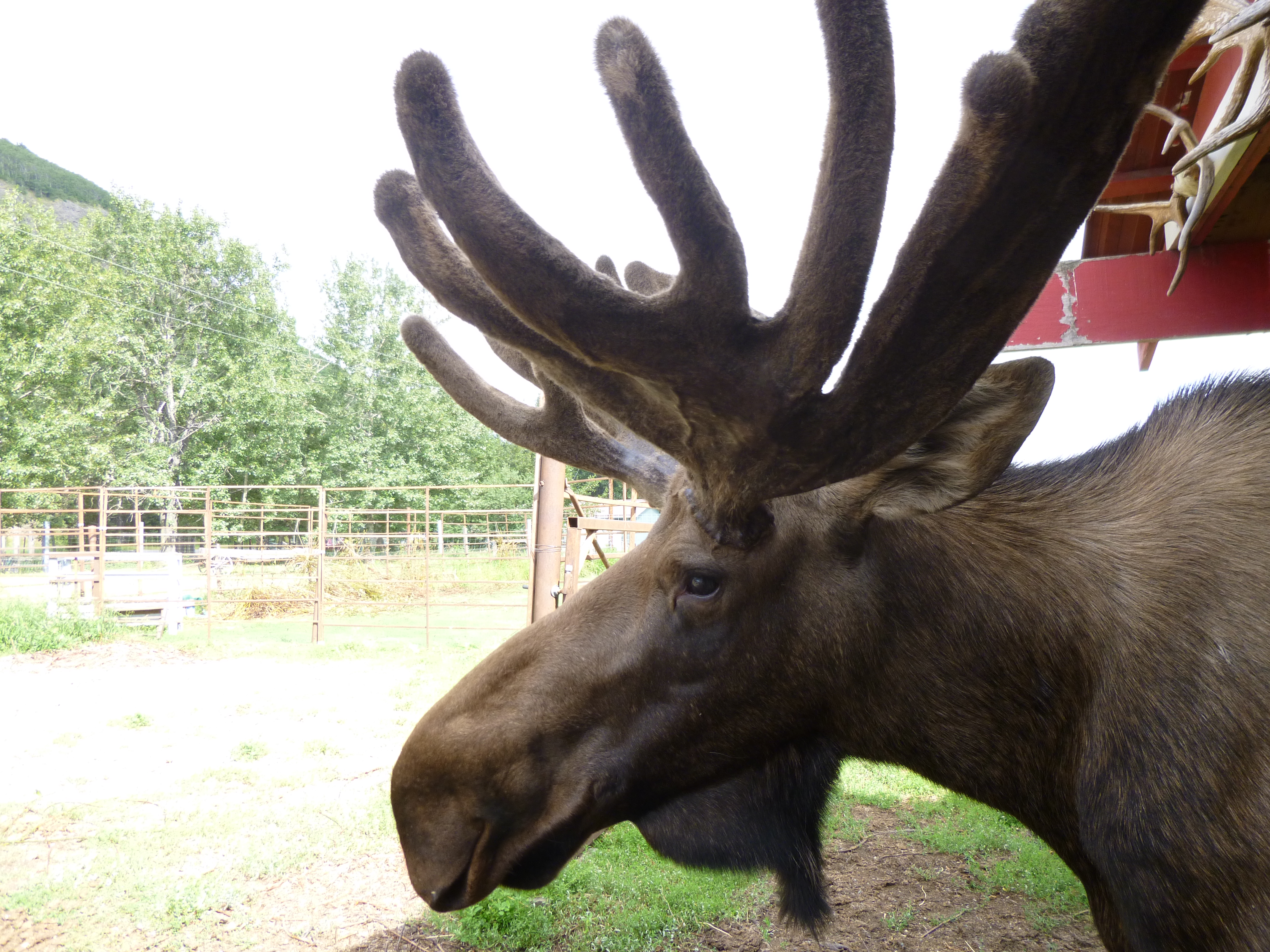
This farm also had a big bull moose and a buffalo on the property. The moose is now 5, and loves bananas. The farm took him in at birth – it seems that his mama gave birth to twins right outside the door of a bar (when it’s time, it’s time!) The moose mama knew this was not a good place to settle in with her calves, and the wildlife people surmise that she left one of the calves behind (hoping it would play dead so it wasn’t killed by something else) while she got the other calf to a safe place. But that took a little while. About an hour after the birth, people started coming out of the bar, and saw this newborn moose calf just laying there – so they were petting it and hugging it, and who knows what else, but they got human smells all over it, and mama couldn’t find him again. He was left there to die (moving and interfering with wildlife in Alaska can involve a pretty stiff fine) until someone didn’t care what the consequences were, and she decided to try to rescue the calf. It was weak from not eating for a few days, but the people at the reindeer farm nursed him back to health, and he’ll always have to stay there (guess he wouldn’t find any bananas in the wilds of Alaska!)
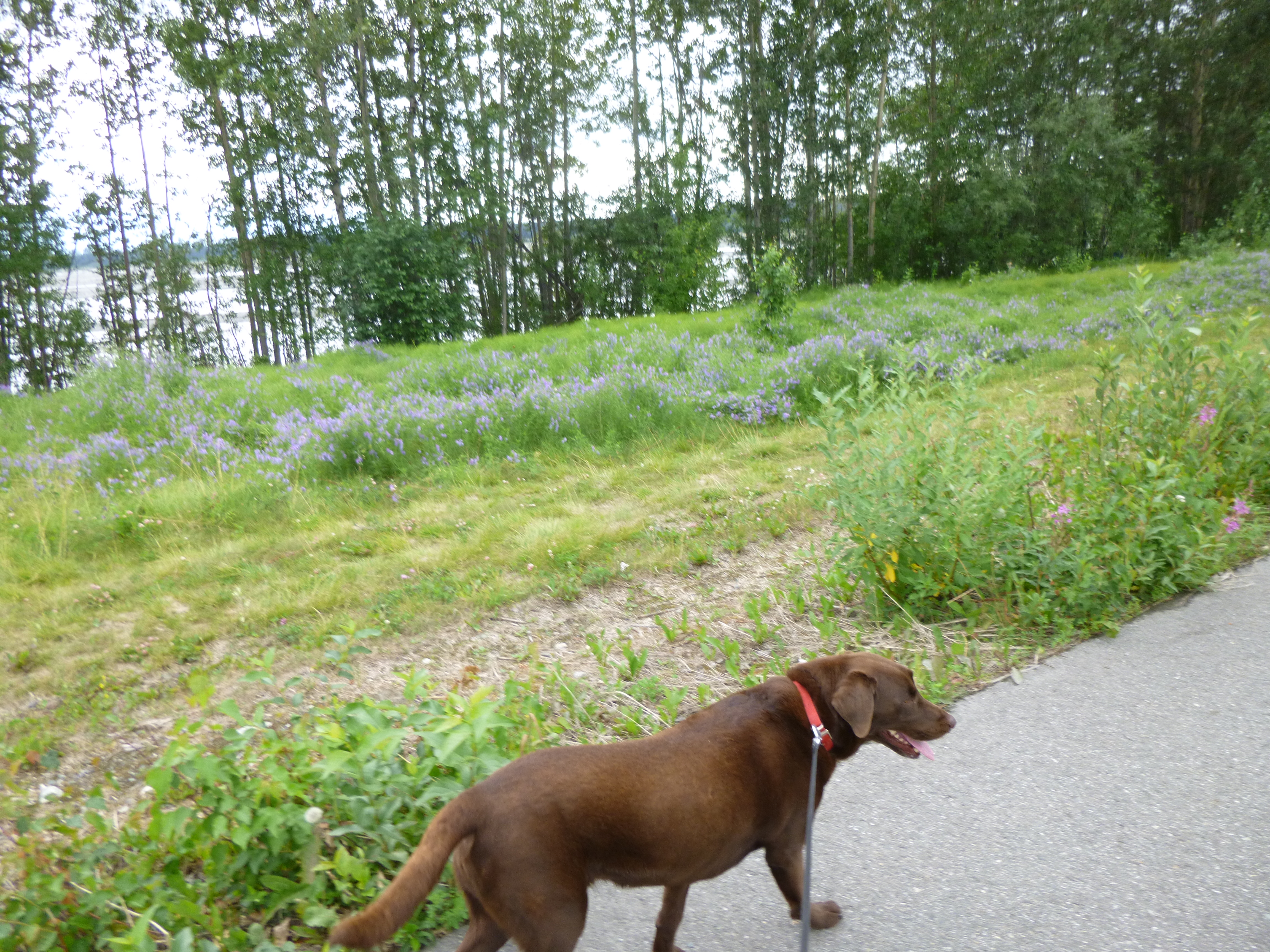
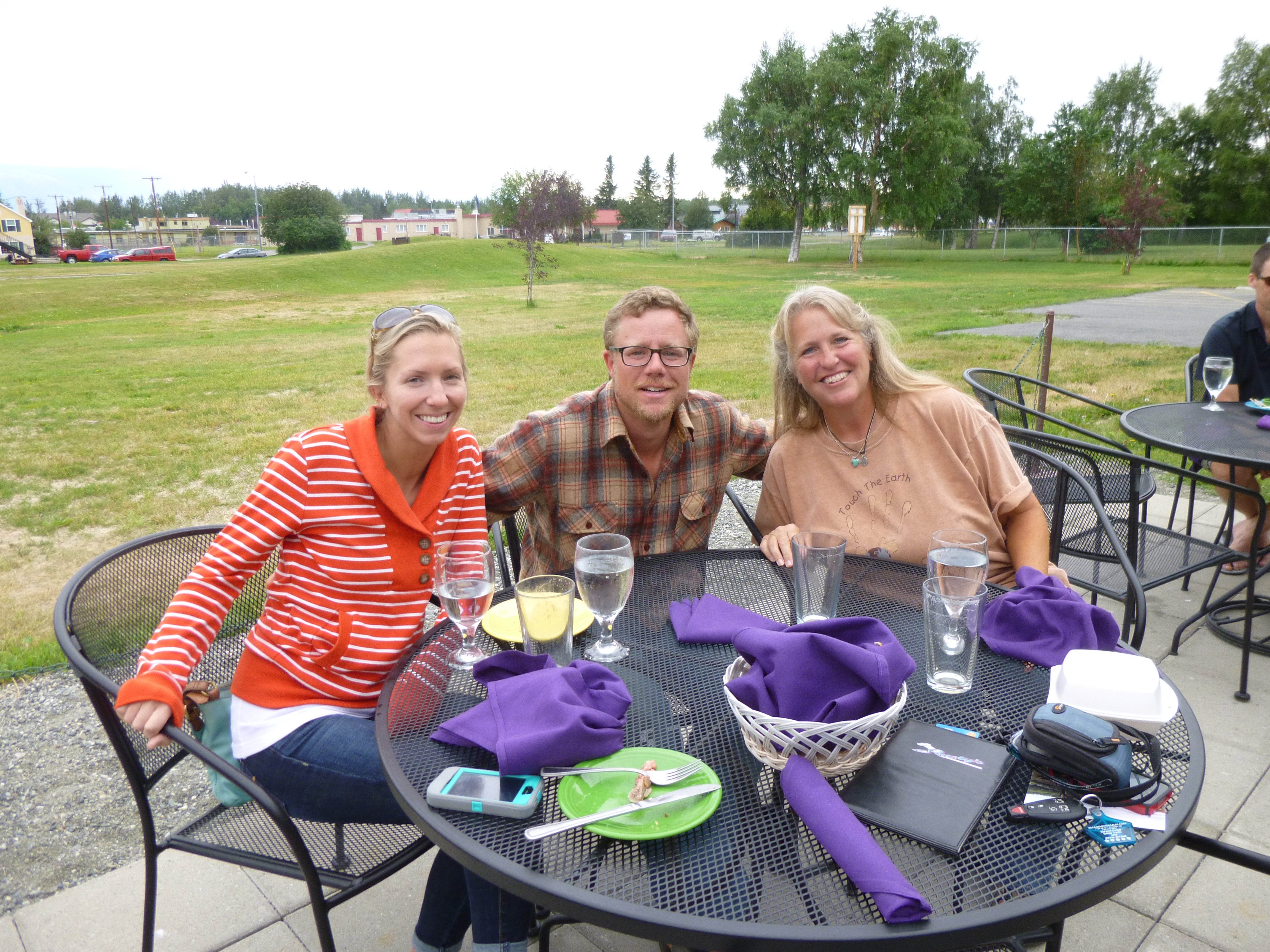
After my visit to the reindeer farm, Tula and I took a mile walk along a river. There are some really wide river beds which are mostly dry; yet there are also lots of rivers flowing fast with snow melt, so I don’t quite understand that. Then I headed back to NOLS and spent a little time with Toni, then she and John and I went out for dinner before we headed in our separate directions. They were heading off for a camping trip in the morning, and I was going to start making my way down to the Kenai Peninsula this evening – saving one of my favorite parts of Alaska for last!
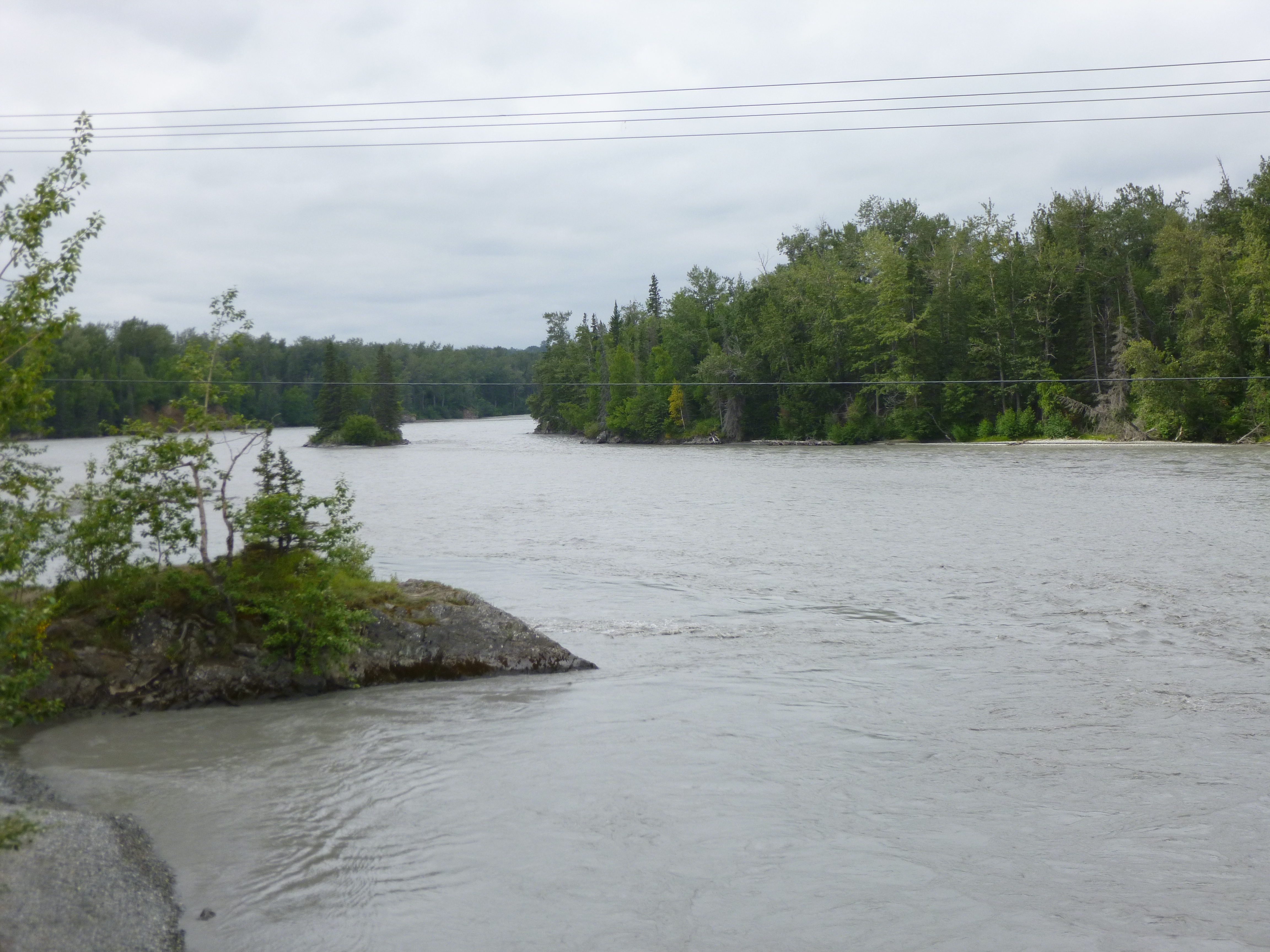
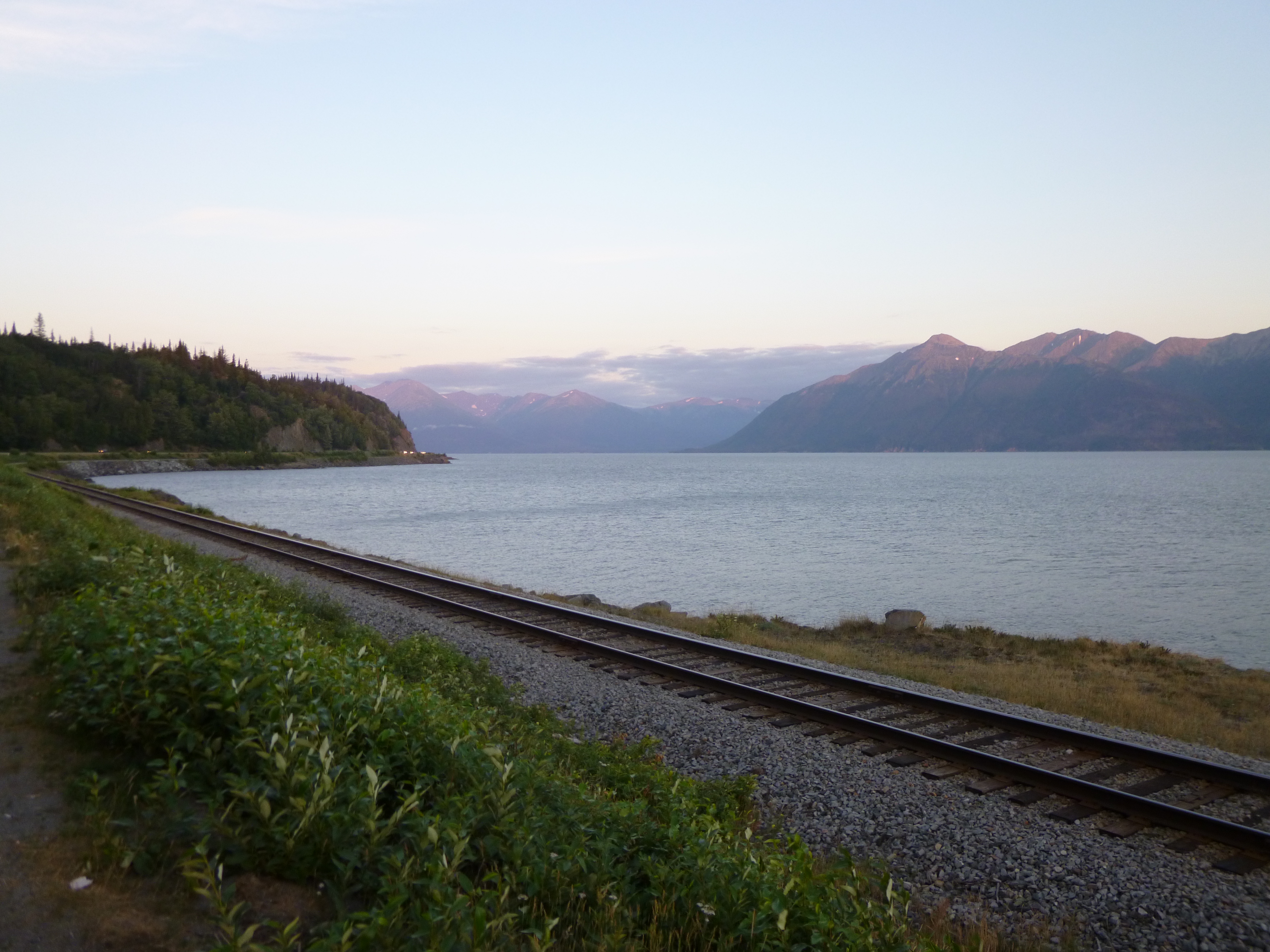
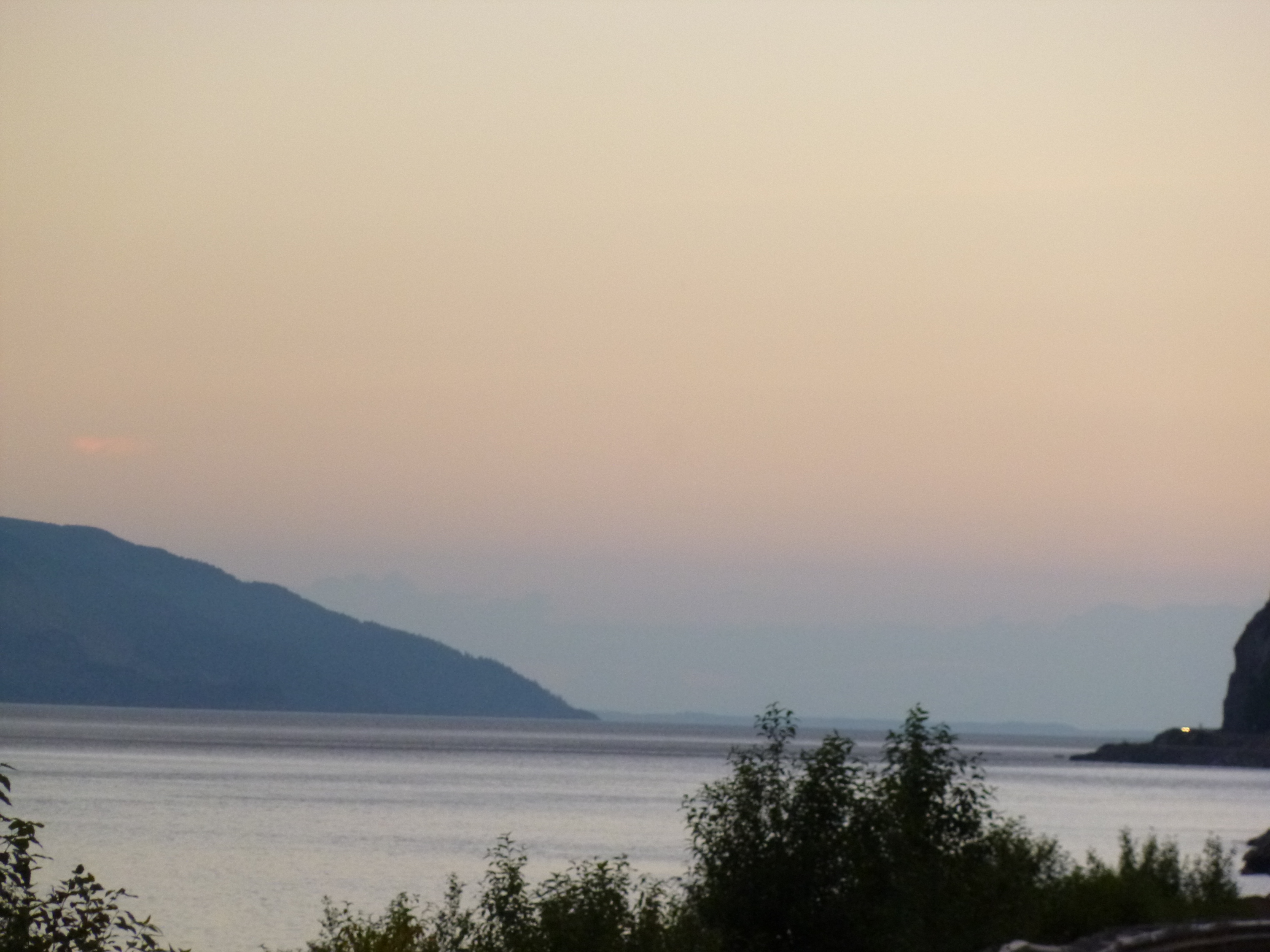
I left Palmer and as I headed through Anchorage I found a pretty neighborhood and park to walk through, and Tula and I covered about 2 1/2 miles. It felt really strange to feel the sun warm on my back at 9:30 at night! There were still some people laying on towels in the park, soaking up the warmth and reading! As it turned out, I walked past the oldest house in Anchorage, and also a vintage car and motor home. Then I continued south, taking the drive along Turnagain Bay, which I love. Turnagain Bay is notable for 2 things – neither of which I’ve seen (and didn’t this trip either). One of them is a “bore tide” – when the tides in the ocean change, the tides in this long narrow bay can sometimes move in at 15mph, and the waters can rise by 6-8 feet in a matter of minutes – there’s no outlet for the rising tides, and the incoming water has to go somewhere, so the effects can often be pretty dramatic. This is also an area where beluga whales are sometimes seen – the white bubble-headed whales which are related to narwhals (it would be sooooo cool to see a narwhal in the wild – but that won’t happen because I don’t ever plan to go diving in the Arctic Ocean!). There were lots of pullouts to stop and admire the views, and it was a gorgeous drive in the pretty evening colors, which linger long after the sun has set. I was headed to Homer, but wouldn’t make it all the way there tonight. I passed a couple campgrounds along the way, but they were small, and full. In the end, I simply stopped in a pretty pullout well off the road – there are frequently 1-2 RVs parked for the night in them, and it seems to be a perfectly acceptable thing to do in Alaska – and it’s free! This is my 3rd free night in a row, and considering I’m extending my Alaska stay by a couple days (I think Alaska deserves a couple extra days because of its size and how long it took to get up here!) I’m staying well within my budget. I’m so grateful I drove up here instead of flying – I wouldn’t have been able to camp at all if I had flown, and that would have changed the whole tone of my visit here. This is my 11th night in a row of camping.









Alaska – Friday, July 26
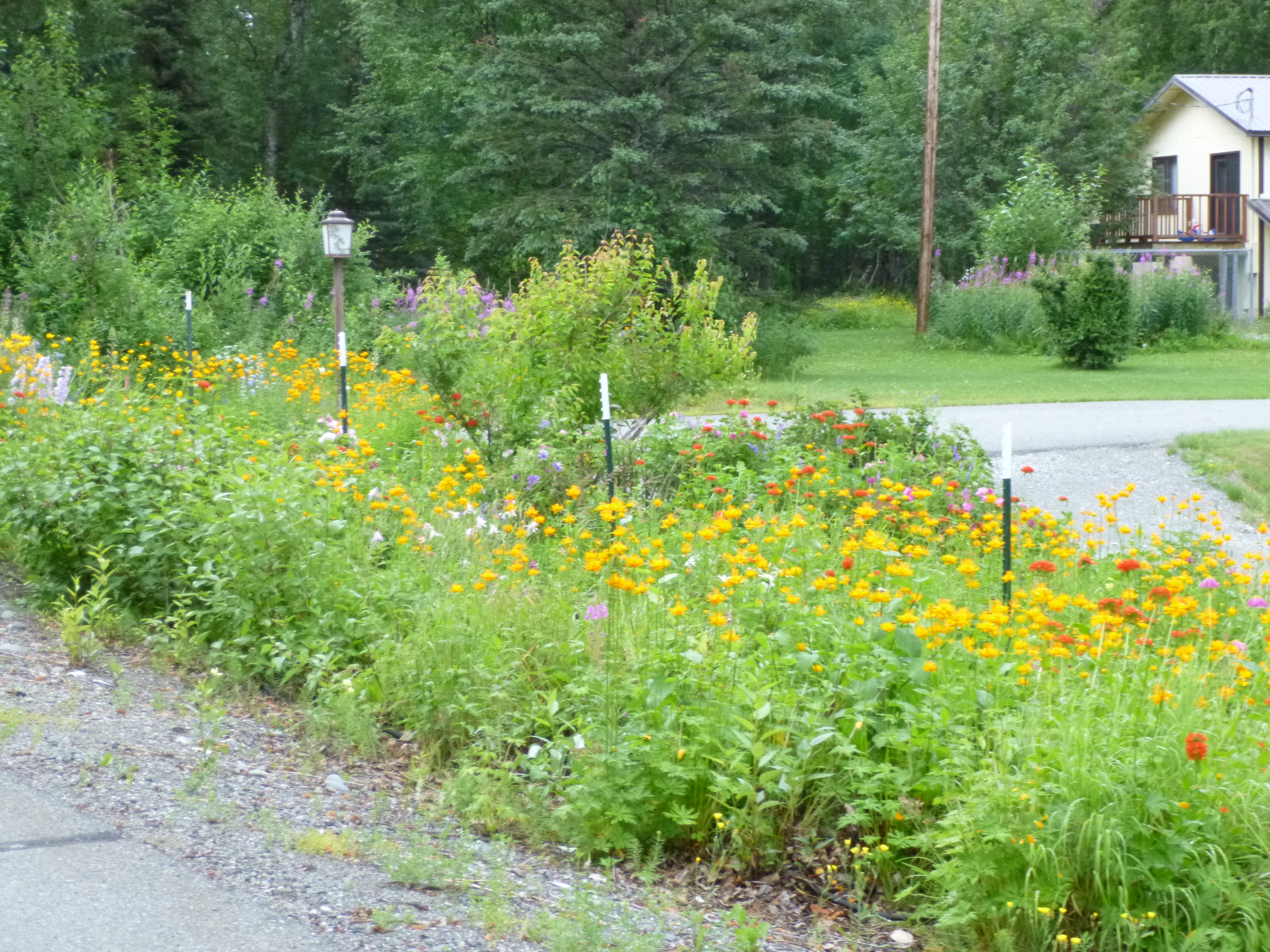
Things were pretty quiet in camp when I got up, so Tula and I headed out for a mile and a half walk on the street across from the NOLS base – through a rural Alaskan neighborhood. We passed a lot of nice log homes, and the flower gardens were all in full bloom, and most everyone had big trucks in the driveways. I can’t quite imagine living up here year-round! People were stirring when I returned, and Toni and John and a couple of his co-leaders and one of the interns and I were going to go out for breakfast, but we were just a bit too poky and it ended up being an early light lunch (complete with yummy desserts!) in Palmer instead. Then we went to the Friday Fling in the local park – a little farmers market/craft booth area that seems to be in the local park every Friday. There was lots of good-looking produce.
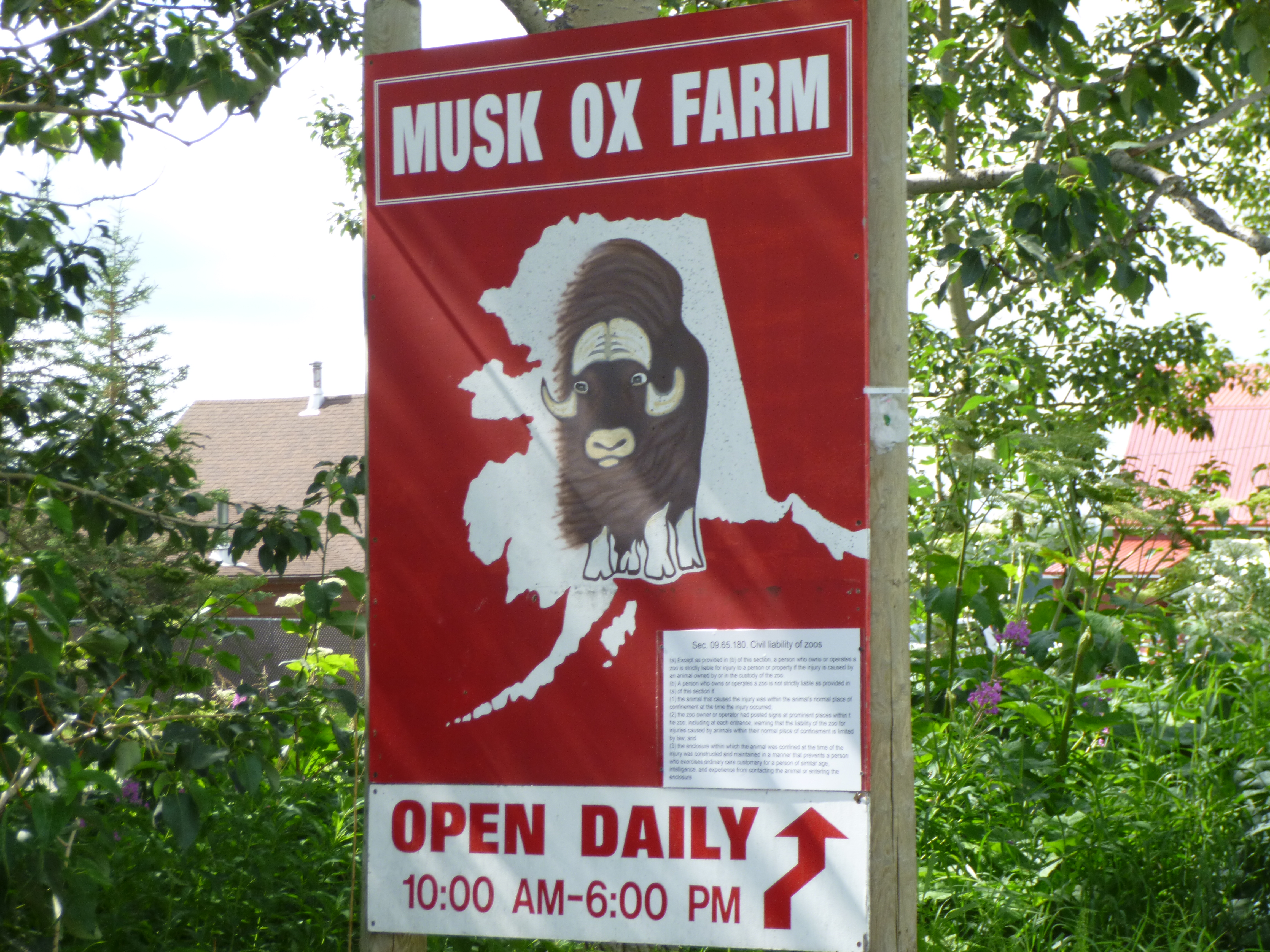
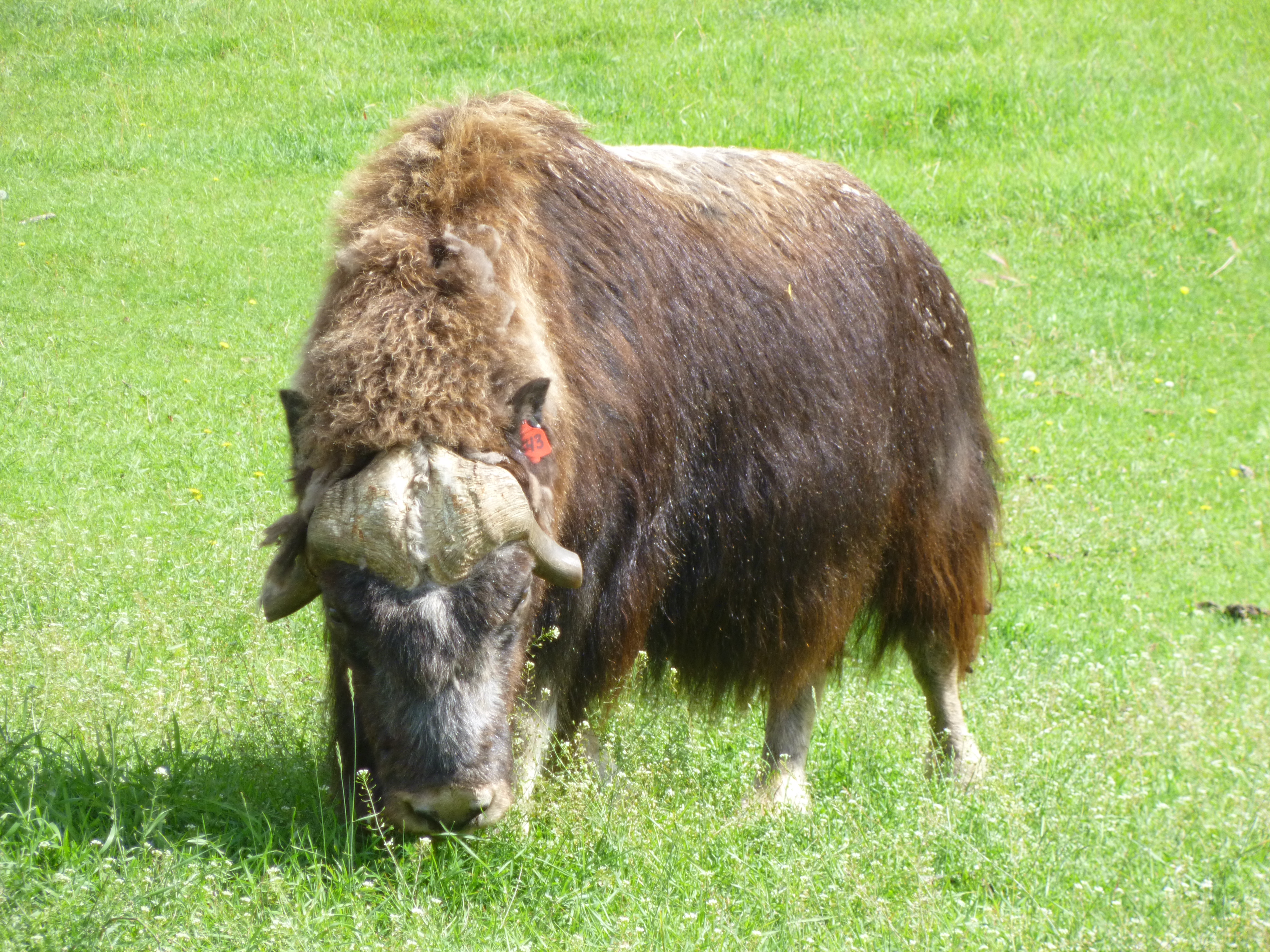
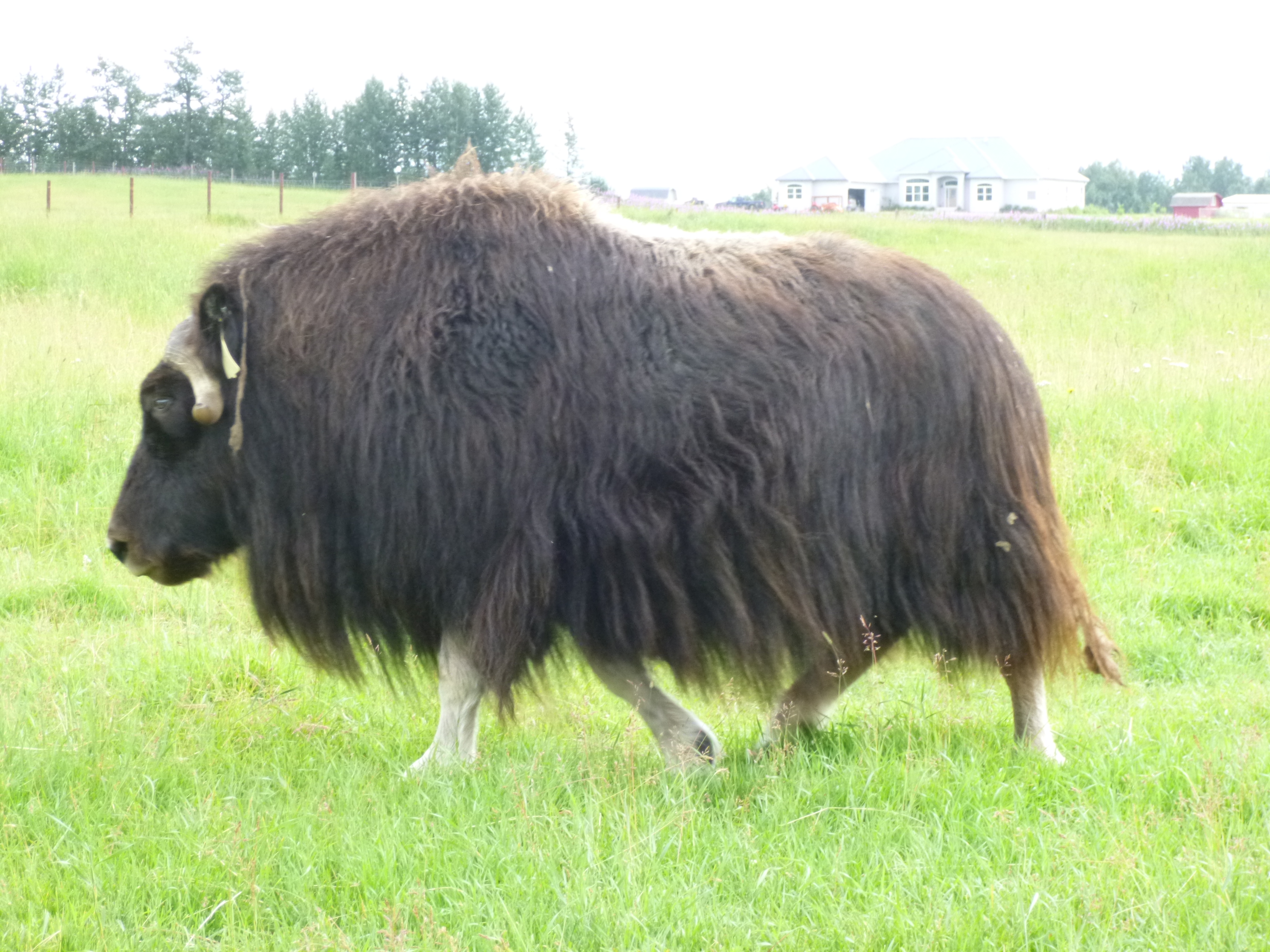
And then 5 of us headed to the musk-ox farm, which was only a couple of miles from the NOLS base, and none of them had visited it. I have been wanting to visit this farm for 6 years – ever since I saw it as we were leaving Alaska in 2007, and we drove by and it wasn’t open. We had seen a couple musk-ox in the wild on that trip up above the Arctic circle, and I had even found some of the qiviut snagged on bushes, which is their warm, soft undercoat. Musk-ox are relics from the Ice Age, and knowing their long-ago ancestors roamed the earth with sabre-tooth tigers and woolly mammoths is pretty amazing. Qiviut is very lightweight, and is 8 times warmer than wool by weight – it’s the finest wool in the world. The farm gathers all the qiviut every spring as the musk-ox are shedding, and great heaps of it is spun into yarn (the qiviut is shipped out for the actual spinning), and the yarn – and resulting products – is expensive to buy. In 2007 I paid $65 for a small ball, and haven’t even knit the scarf because it’s a little scary to work with such expensive yarn! One of the main reasons this musk-ox farm exists in Palmer is to provide qiviut yarn to the women and elders in remote villages, and they knit blankets, hats, scarves, headbands and “smoke rings” (kind of a cowl sort of thing worn around the neck that can be pulled up to cover ears, or mouth and nose, or whole head) to sell – allowing them to work and earn some money while staying in their old villages. The villagers all use their own patterns and designs, and one can tell what village a piece of work comes from by its pattern. Most of what they make is sold in various outlets, despite the expense, so the musk-ox on this farm help provide a sustainable way of life for many northern villages. The qiviut comes in a varity of colors, although most of it seems to be beautiful, soft shades of brown.
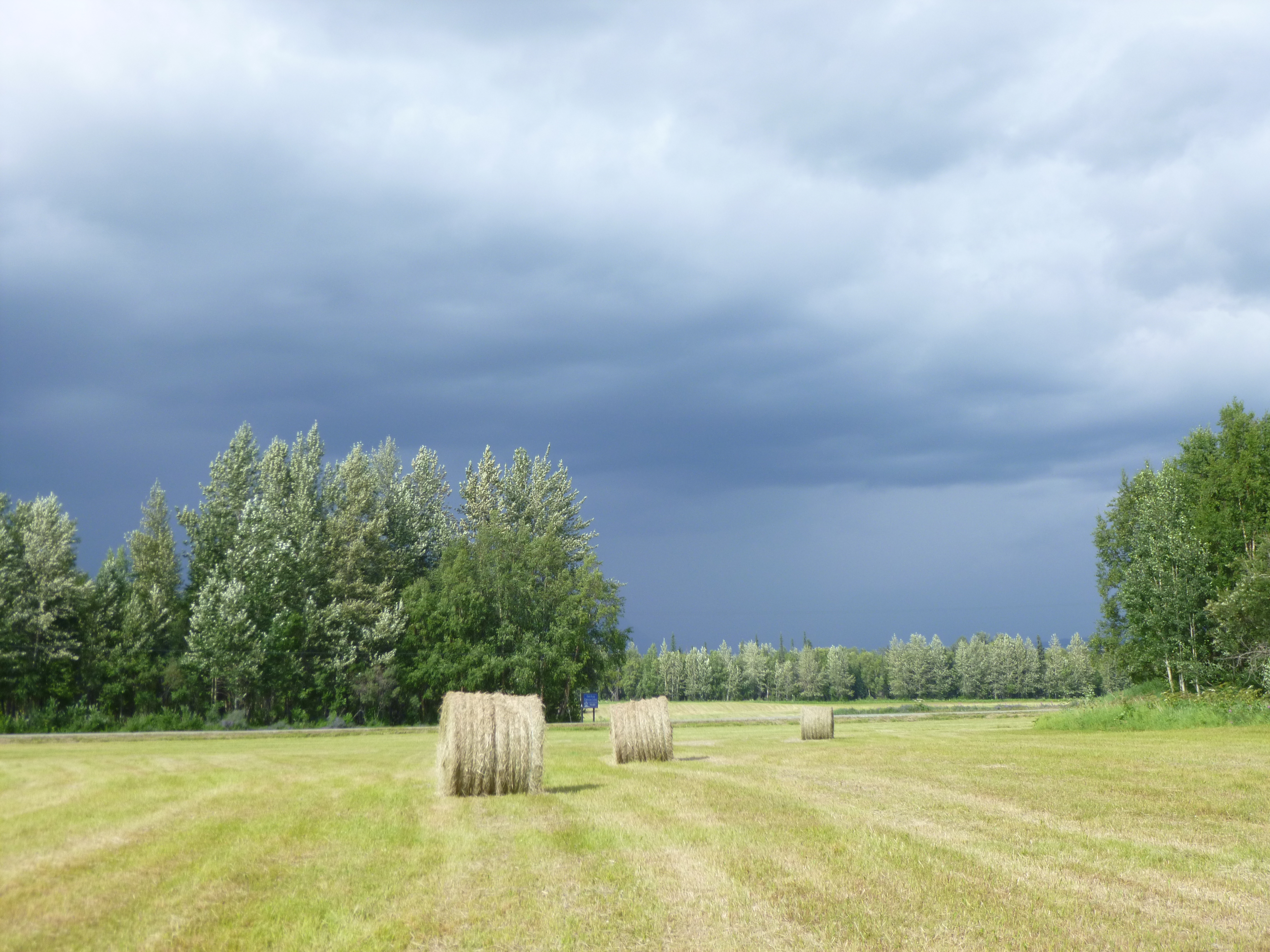
The musk-ox farm was a long-ago dream of a man who originally started a herd in either Vermont or New Hampshire, by corralling a few young ones in Canada and transporting them to New England. But getting enough local hay was an issue, and so was vet care. Ultimately he and the herd relocated to Fairbanks Alaska, and finally to Palmer, which has been an ideal place for a big musk-ox farm. Palmer is in the Mat-Su Valley region of Alaska, an agricultural paradise. Despite the northern location, with 20 hours of daylight in the summer, crops in the valley grow amazingly fast, and big. Hay is grown in large quantities, and it’s nice hay – even the big rolls of it were green and sweet-smelling. So there’s plenty of hay to buy locally, and there’s a vet who is willing to make farm calls to treat musk-ox. The herd is thriving, and there’s 79 of them, including 8-9 babies.
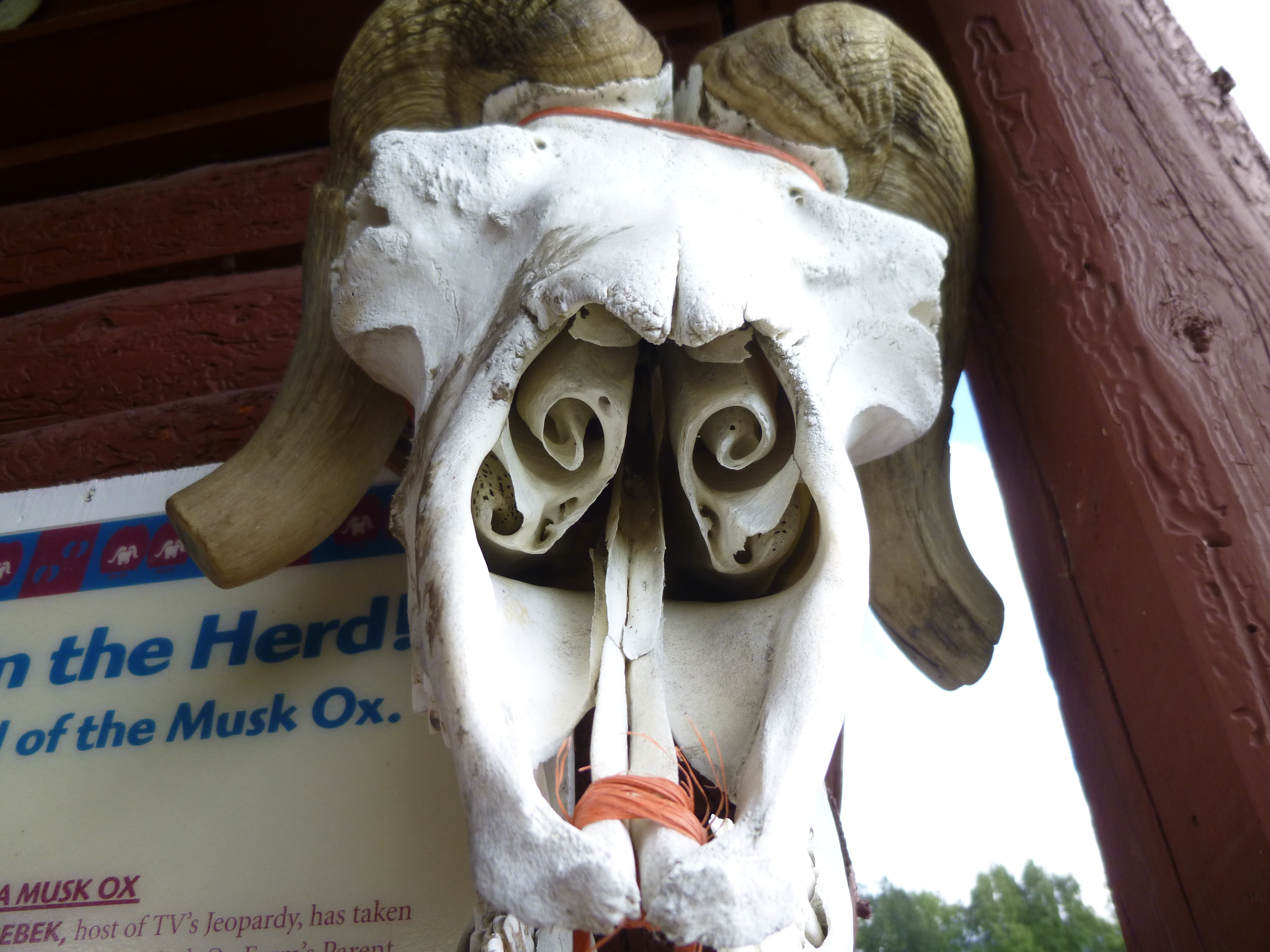
Musk-ox are big, but mostly gentle and peaceful. The Alaska natives call them “oomingmak” – the bearded one. They have very shaggy coats even in the summer, and they seemed a little hot on this 72 degree day. It makes me wonder what they would look like without all that hair! They’re very comfortable in 0 degree weather with all their layers. In fact, over the years their nostrils have evolved into a spiral shape to help warm the air as they breathe it in. The males get a little feisty during breeding season, and they butt heads and over time that’s why their horns have evolved into such a big “helmet” shape – they can build up some speed while running at each other, and they can have quite an impact, and the horns protect their heads. The sharp tips of all the horns have been trimmed to minimize accidental injuries. The babies that we saw were only a few months old, and had already been weaned from their mamas. Musk-ox milk is not very rich or tasty, and mama doesn’t have a lot of patience for nursing calves, frequently wandering away while baby is trying to nurse. So they become independent at a younger age than other mammals. The babies shed their fine undercoat twice during their first year, and the qiviut is collected both times. They looked even shaggier than the adult musk-ox. We also saw the yearlings and 2 year olds. Fencing for the musk-ox needs to be very sturdy, and requires a great deal of maintenance. The farm is open for visitors all summer, and a caretaker lives on the farm in the winter to look after them. And I know they wouldn’t thrive in Michigan – I dismissed that thought quite quickly – to the enormous relief of my neighbors I’m sure!! It was a really fun visit, and we all learned a lot. I wanted to make my donation to them because where else would I ever be able to help feed musk-ox?!? There were several ways to make donations – either by becoming a “herd-helper” or buying raffle tickets for one of 6 hand-knit items. The money goes to help the musk-ox either way, and I decided to try my luck with the raffle tickets. If, on the very slim chance that I would win something, they’ll get another $56 donation. The drawing is later this fall, and there are 5-6 items being raffled off – a blanket (made with over $2000 worth of qiviut yarn), a smoke-ring, headband, scarf and hat.
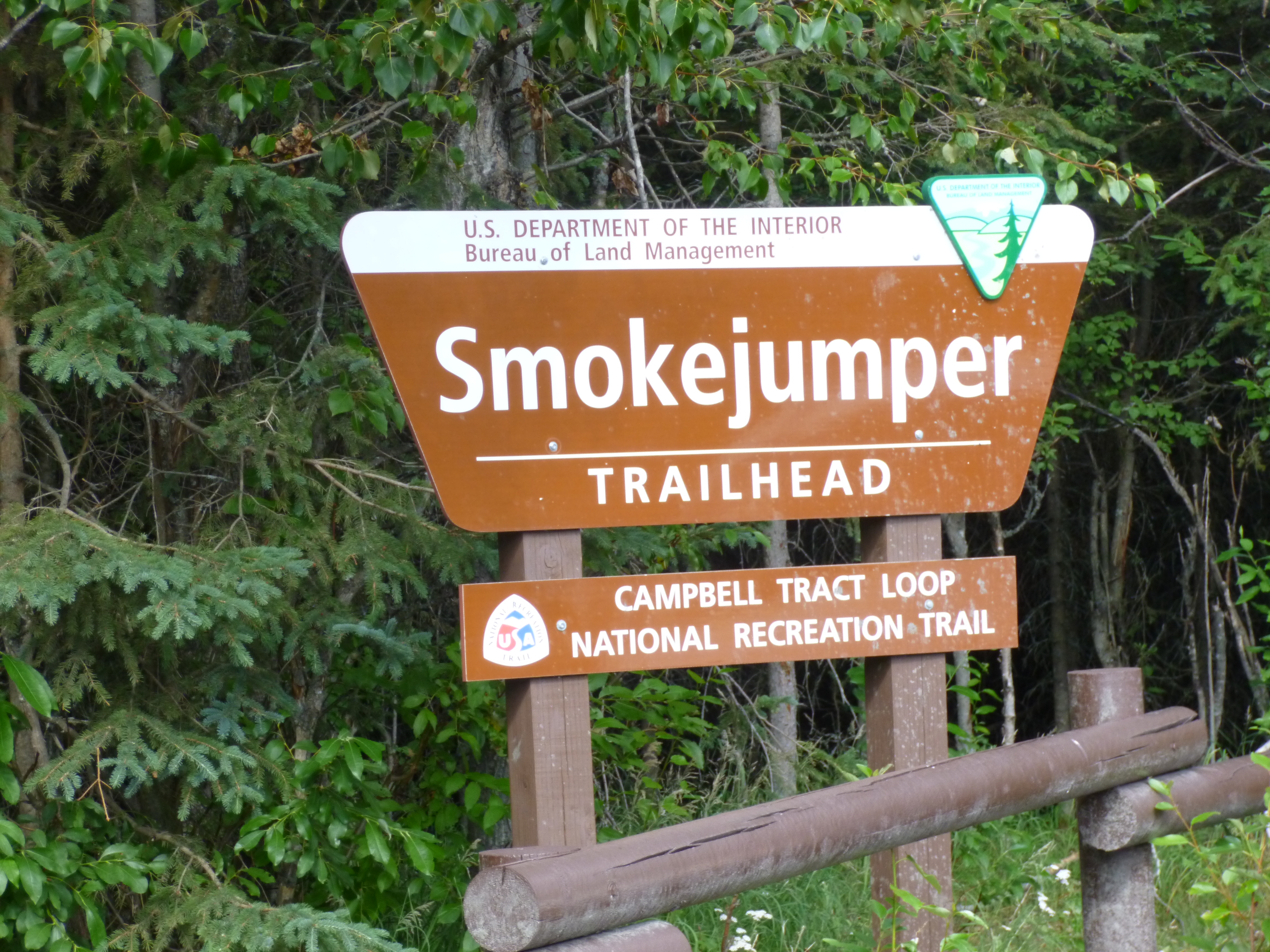
I stayed around a little longer looking at the yarns and things in the gift shop, while the “kids” headed for Anchorage to visit a couple bookstores and go to a park where some music performances were going on. I was going to get some more walking in, and then join them for dinner. I headed for Anchorage, and stumbled across some good inter-connecting trails through the woods outside of town. They had names like Smokejumper Trail, Moose Tracks, Lynx Trail, Coyote Trail, and Tula and I walked nearly 3 miles, and then she waited in the van while I walked almost 2 more. It’s probably one of the few trails I’ll ever walk on where there’s a sign for pedestrians to yield to dogsleds! (No, there were no dogsleds out today!) Then I got a text from Toni letting me know they had ended up at Humpy’s – a well-liked Alaskan alehouse and restaurant. I found them there, and we enjoyed some yummy crab legs for an appetizer, and most of us had halibut and fries; one of their specialties. You have to have halibut in Alaska! It was a nice way to end a good day, and I was happy the young adventurers didn’t seem to mind having a granny in their midst! Then we headed back to Palmer, and I camped in the same spot at the NOLS base. I’ve become used to sleeping in semi-daylight!






Alaska – Thursday, July 25
It didn’t take too long to get packed up this morning, and we continued the slow drive south. At least the spare tire was holding up well – I know one isn’t supposed to drive too far on those, but I had no choice. After a while, I came to another one of the Denali State Parks – this one was known for its southern view of Mt. McKinley. But once again, she was totally hidden by clouds, even though some of the surrounding sky was clear and blue. Tula and I walked on a short trail, and then I drove on to Trapper’s Creek, which didn’t have many buildings, and I didn’t see any tire repair places, so I continued on. I passed through Willow, which had been my unreached destination for last night, and picked up service on my ipad. So I was able to look up tire repair places and read some good reviews about the Midas auto place in Wasilla, which was the next town down. I found them and told them my tire was another victim of the road repairs (they do a LOT of tire repair work) and they told me they would be able to help me, as soon as one of the bays opened up. All of the employees were very pleasant, and they had a nice waiting area, and Tula came in with me. I was expecting a lot of tire damage, and a lot of expense, and in the end, it only cost $26 for them to plug and patch the hole (nothing was stuck in the tire, so they surmise it was a sharp rock) and they said it was as good as new; they put it back on; and they put a little more air in the spare and put that away. And that was that. I was expecting to have to pay for a whole new tire, and was really happy with their prices and their service. If anyone has car problems in Alaska, look up Midas auto repairs in Wasilla!
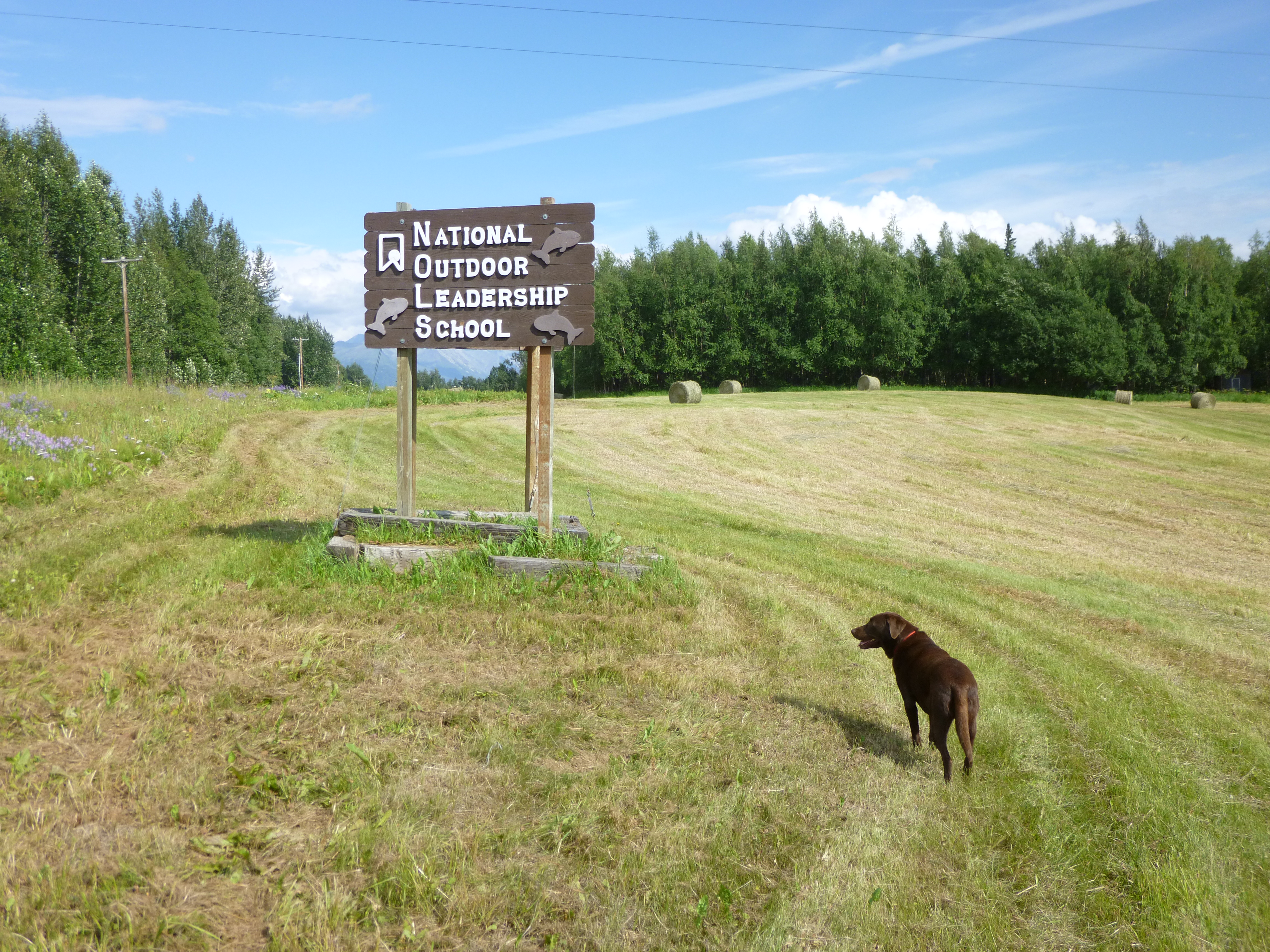
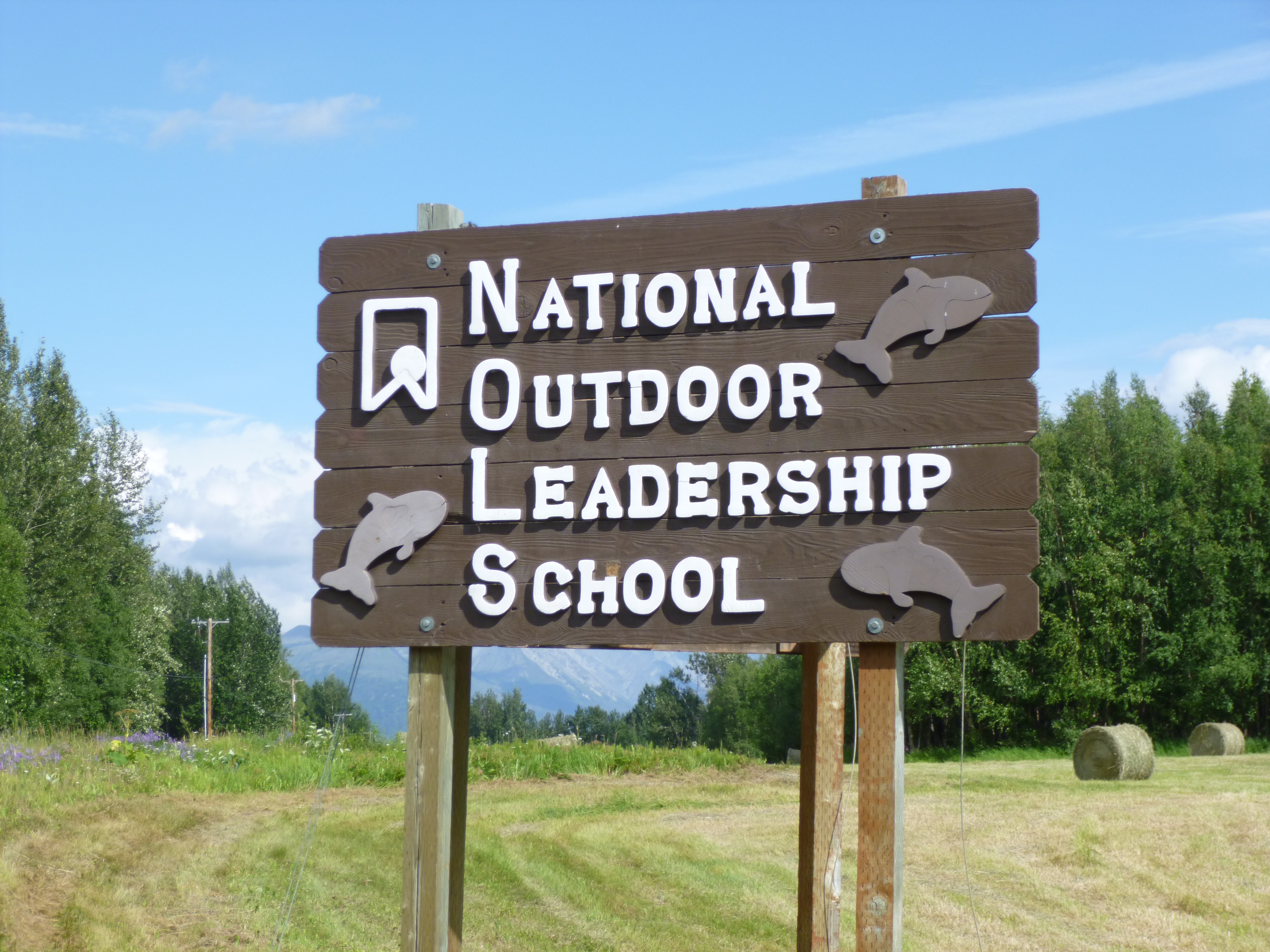
And then I called Toni – she had flown in to Anchorage last night, to meet up with her boyfriend John, who is an instructor for NOLS (National Outdoor Leadership School) and he had just finished several 3-week hiking and paddling courses with his students, and was finishing up his time in Alaska. Toni and I only figured out we were going to be in the same area at the same time a couple weeks ago! She didn’t know my schedule, and last I had heard, she was too busy to squish in a trip to Alaska, even though she really wanted to get up here. When we were talking one day when I was in Wyoming, we figured out that in all of Alaska, my donation place for tomorrow was literally 2 1/2 miles away from Alaska’s NOLS base, and that she was going to be there after all! What were the odds of that! She knew I was running a little late because of the tire problem, but that didn’t affect any plans today. Tula and I took a mile walk by the lake in Wasilla – kids were out swimming, although the water can’t have been very warm!
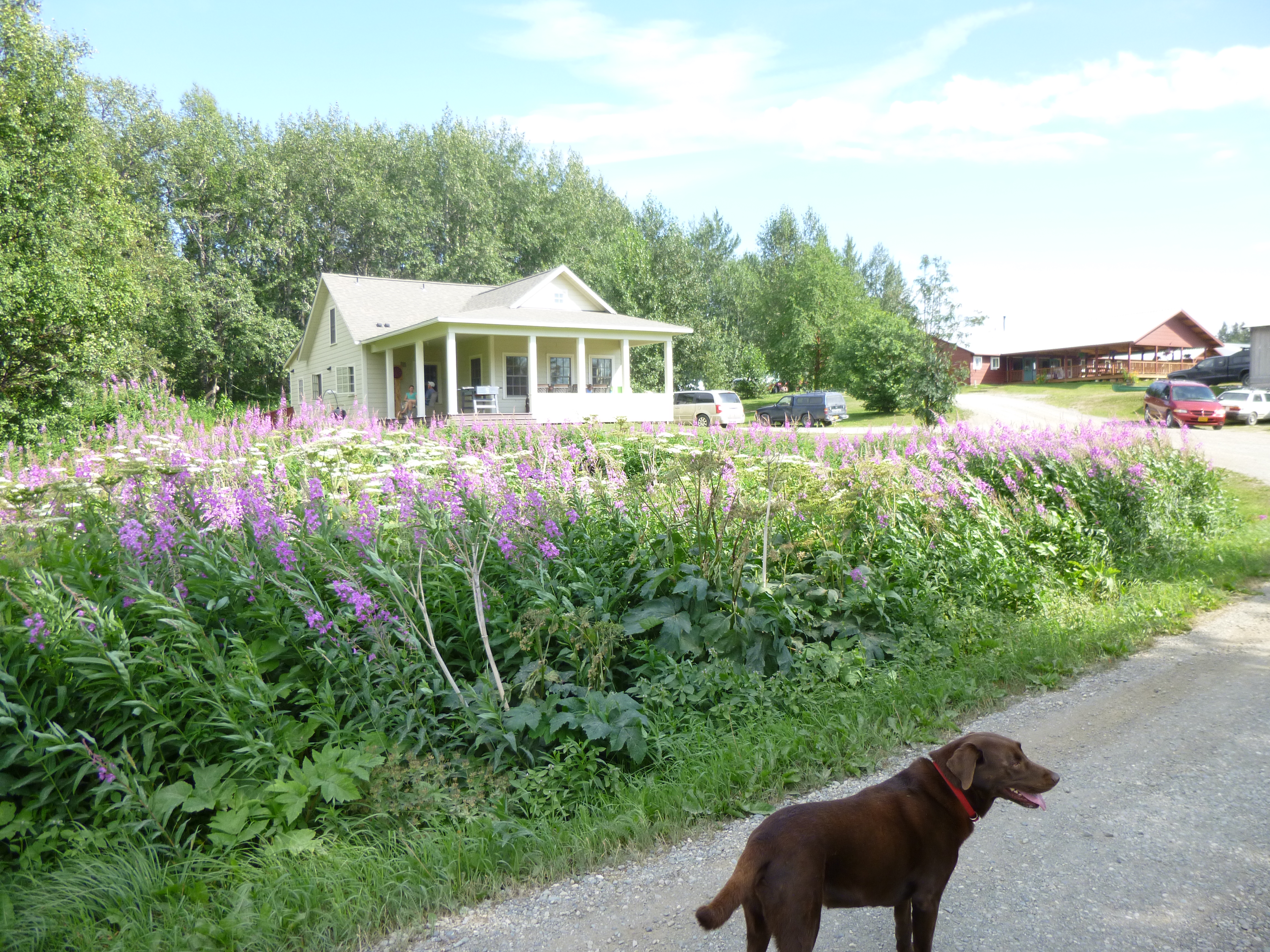
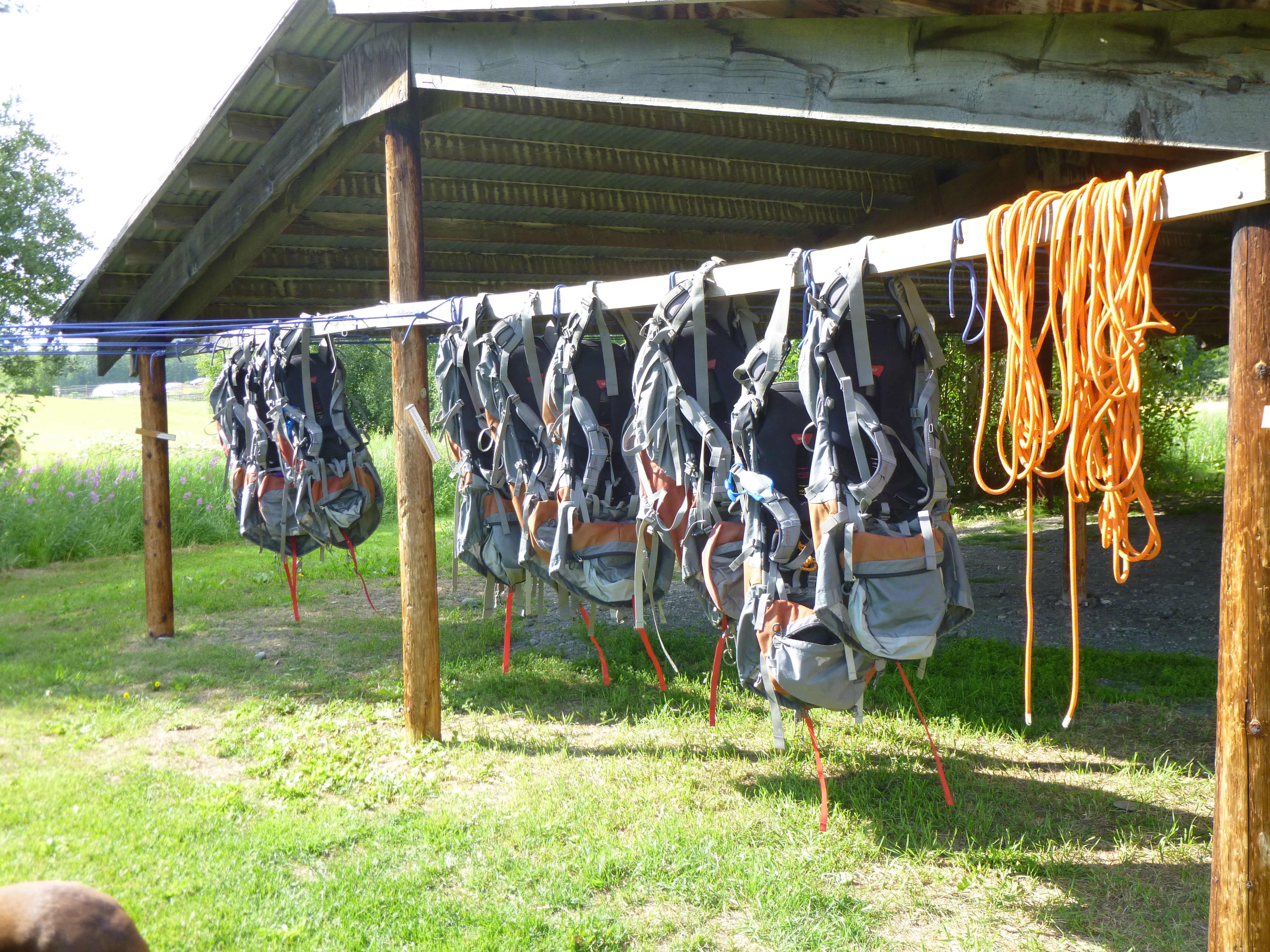
Then we finished the drive to Palmer and I found the NOLS base camp. John took us on a tour – it reminded me of a nice summer camp, but it’s really used as a base for a lot of different trips. Most of the students are college age, and many of them are earning college credit, and the instructors have to know who’s doing what in case they need to tailor any of the courses to the students’ needs. Many of the trips head out into deep wilderness for 3 weeks at a time – the students are not only working on outdoor skills, but teamwork and leadership skills as well. The instructors rotate around between hiking courses, paddling courses and climbing/mountaineering courses. The students have to share in responsibilities for food and gear, and many of them are up here for a whole semester. They might go out for 3 weeks of hiking, then come back to base to switch out equipment for another trip, and after a day or 2, they head out again. There were trips coming in and heading out while I was there, and equipment was sorted and laid out to be cleaned and dried, and tents were always set up to air out, and it was a busy place, with all the people coming in and out. NOLS is headquartered in Wyoming, and has bases in the US, Mexico, South America, Norway, India, New Zealand and Australia. The base in Alaska is only open in the summer; many of the instructors head for Mexico and South America during the winter months. On base, there’s a staff house, and about a dozen sturdy tents set up for instructors to use between trips, a big kitchen and dining hall for the people who are around, sleeping quarters for students before and after trips, a bathhouse, and a gear shed. And there’s numerous buses for transporting groups all around Alaska. They also have a big beautiful vegetable garden, with 8 foot fences to keep the moose out – the cooks make healthy meals with a vegetarian emphasis, and they use all their fresh produce, and eggs from their chickens, and they even raise pigs. When we were out on our tour, Tula and a pig touched noses through the fence – I don’t think she’d seen one before! I asked what all the flowers were used for, and they were edible flowers! It was fun to see the place, and learn more about the programs – I had never heard of NOLS until a few months ago, and in addition to the college students, NOLS does courses for the military, NASA, and corporate groups like Google and Amazon. I was happy to give NOLS my donation for today – they do a lot of good things for their students.
We decided to just stay on base for dinner, and it was okay for me to be there too. Dinner was great – a huge salad from the garden with homemade dressings, some kind of rice and chicken, and green vegetables that I thought was chopped broccoli, but it was something else that was kind of bitter, and we couldn’t quite figure out what it was. There was a big sheet cake for dessert, and we ate outside even though the heavy clouds were threatening rain.
The instructors who had just returned often need 2-3 days to kind of transition back into “normal” daily life, and they’re often short on sleep, so a bunch of them and some of the staff decided to just have a movie night in the staff house, and I was very content to sit in the house with the computer to catch up a bit. I’m falling behind with things with the lack of computer time in Canada and Alaska! And the storm came in – it absolutely poured all evening. I’m behind with my walking today, but I’m not too worried about getting caught up.
Originally I was going to stay in one of the tents, but it turned out to be so muddy and wet back where they were, that I just stayed put and “camped” in one of the little parking areas by the kitchen and dining hall. I was able to get set up between downpours and it was a cozy night.




Alaska – Wednesday, July 24
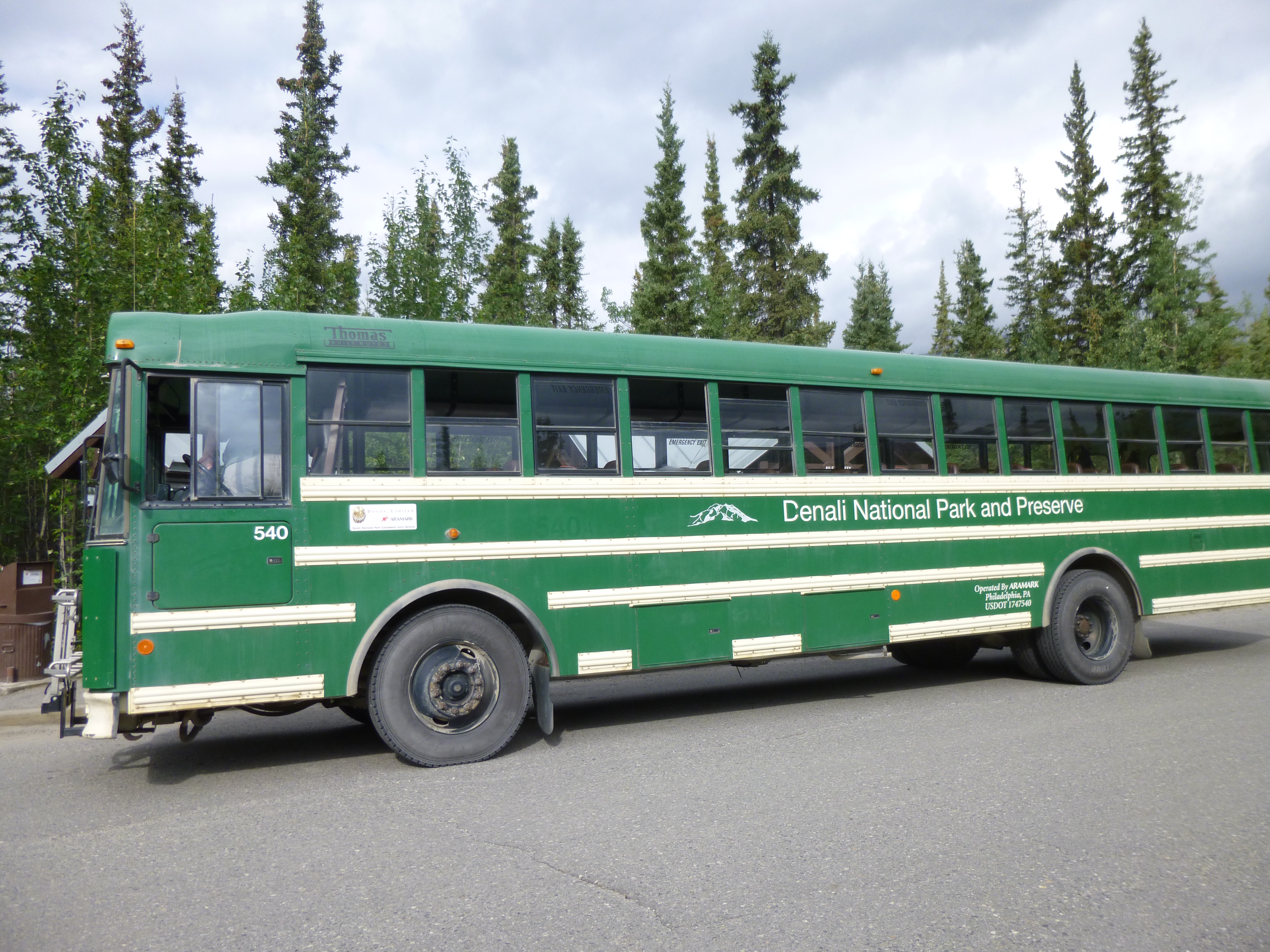
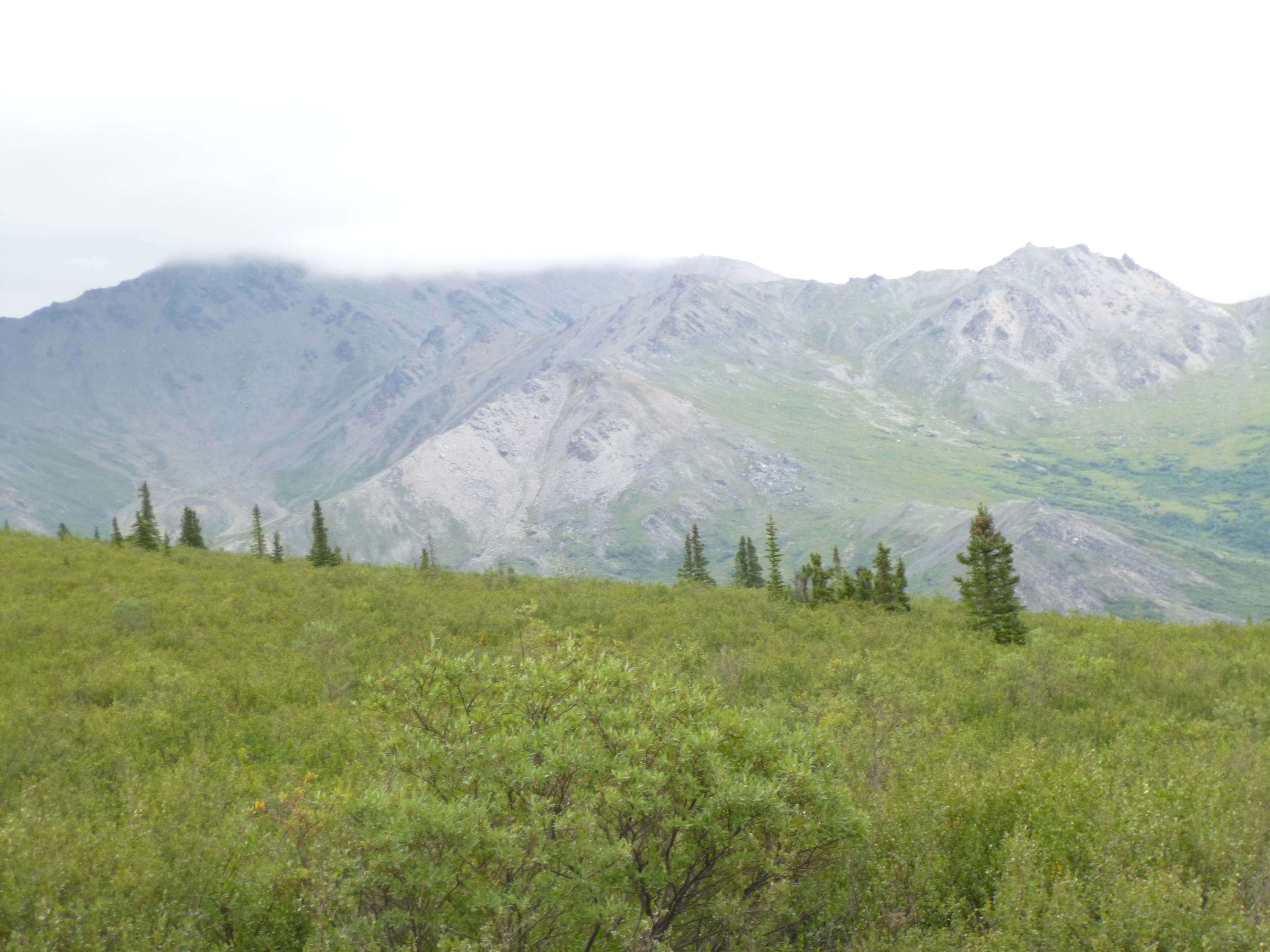
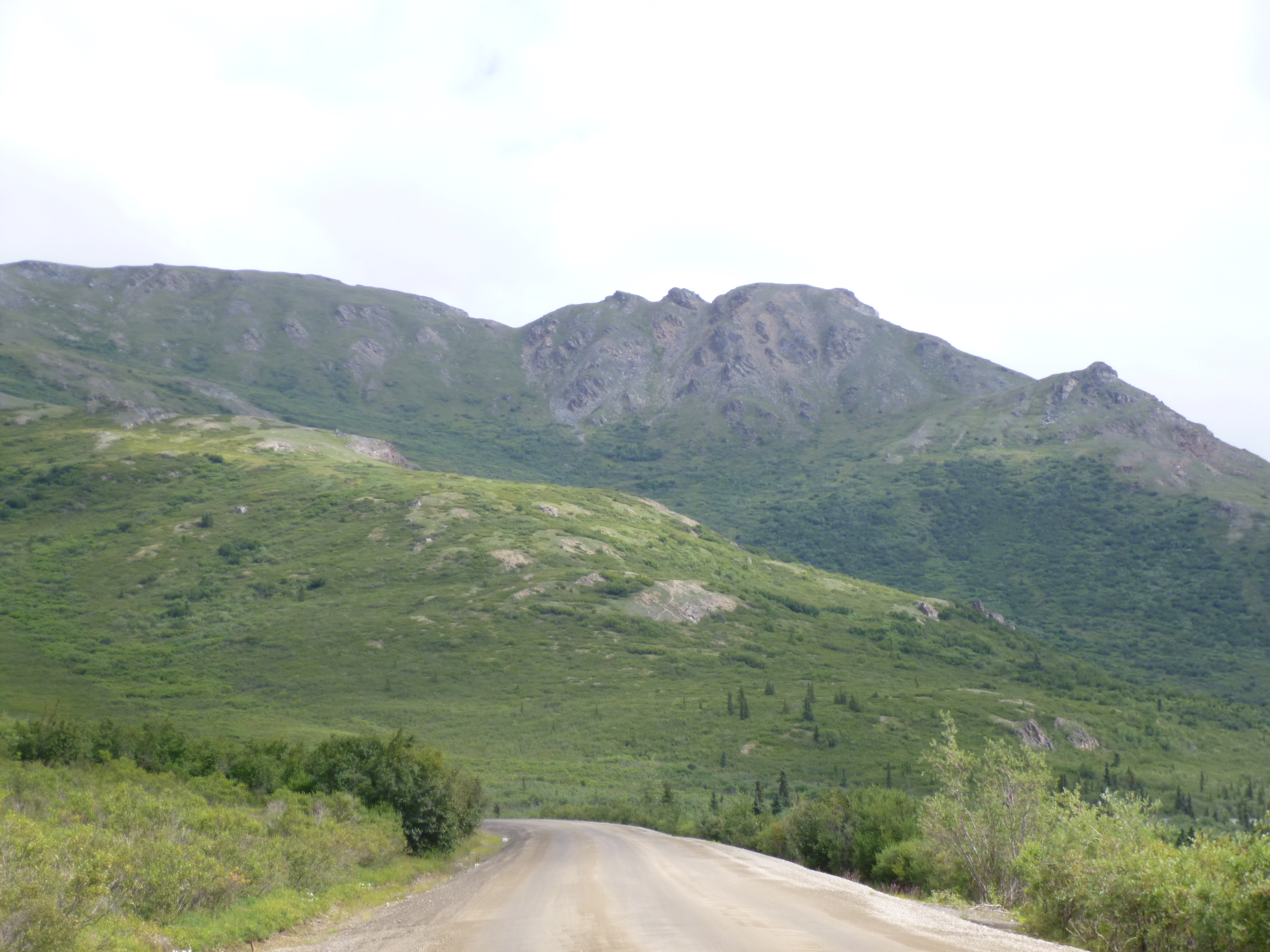
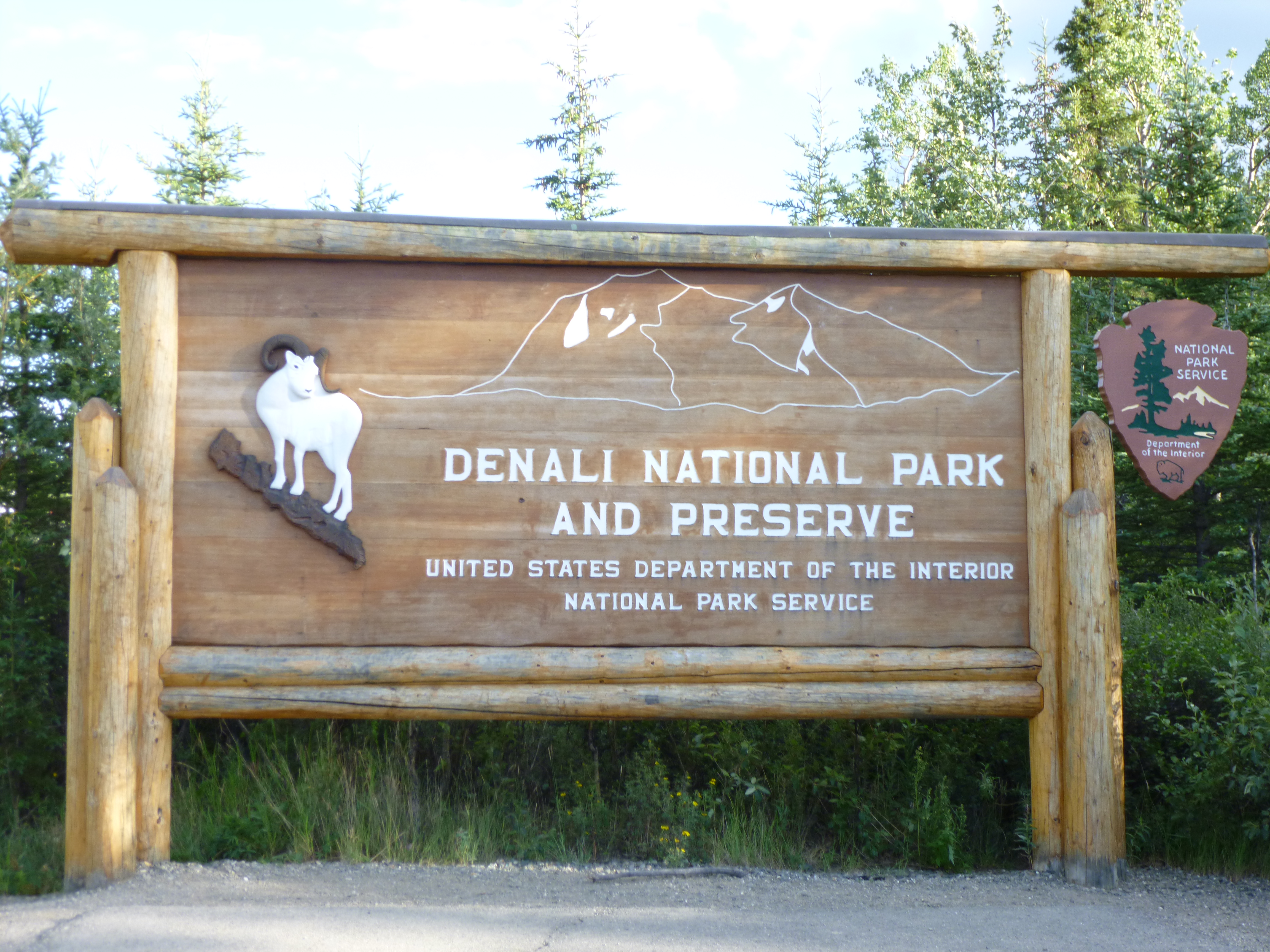
It was a beautiful morning, and after I got packed up, Tula and I took a long walk around the campground area in the woods again. As with many of the bigger national parks which are also a preserve for the wildlife, dogs are not allowed on any trails – only sidewalk areas by the visitor center complex and in the campground. But, I wasn’t planning on any backcountry hikes by myself, and since it was a cool and cloudy day, Tula could wait for me in the car while I did the walking I wanted to do. There is only one road in Denali National Park, and it’s a roughly 80 mile road toward the center of the park – only the first 15 miles or so are accessible by private vehicle; otherwise only the park buses can travel on it – either the wilderness sightseeing buses, or the buses used to transport campers and hikers into the interior. My plan was to drive the first 15 miles that I was allowed, and then continue on foot – using the dirt road as my safe path into the park. I double checked with the rangers to make sure that was okay, and they said they encourage people to do that – it gets them into the park where they can enjoy the peace and quiet and beauty of it all without doing a major backcountry hike. So that’s precisely what I did – I parked the car at the end of the paved road in, and walked 3 more miles into the park on foot. And except for the occasional bus, I was the only person for miles around. It was wonderfully peaceful, and so very quiet – only a shrill cry from a hawk or something now and then. I wasn’t worried about wild animals, because it’s actually pretty open land in that area – no woods on the hills and mountains around me. Mt. McKinley is hidden by clouds and fog 70% of the time (2 days out of 3) and it was very hidden today since it was a cloudy day. It’s such an enormous, massive mountain that it creates its own weather systems, and she did not want to be seen today! Even when it’s sunny in the surrounding areas, the mountain can still be hidden in clouds. The last time we were up here, we had a beautiful cloud-free day, and one doesn’t forget that memory! So I wasn’t too upset to not see it. I was only going to walk a couple miles into the park, but it was so pretty and peaceful, I decided to do 2 1/2 miles, and then 3. So with the 3 miles on the return trip, I covered 6 miles and was gone a couple hours. I’m glad it was a cool day. Tula and I walked around the parking area and down by the river, and then headed back toward the visitor center.
On the way, I saw a sign pointing toward the sled dog kennels, and thought I would go look at them. Apparently they have demonstrations 3 times a day, and I was about 10 minutes late for the one that I could hear (lots of excited barking!) but I couldn’t go any farther down the path since the demonstration was in progress. But there was another one later, and Tula and I headed back to the visitor center complex for another walk in the woods, and a little computer time.
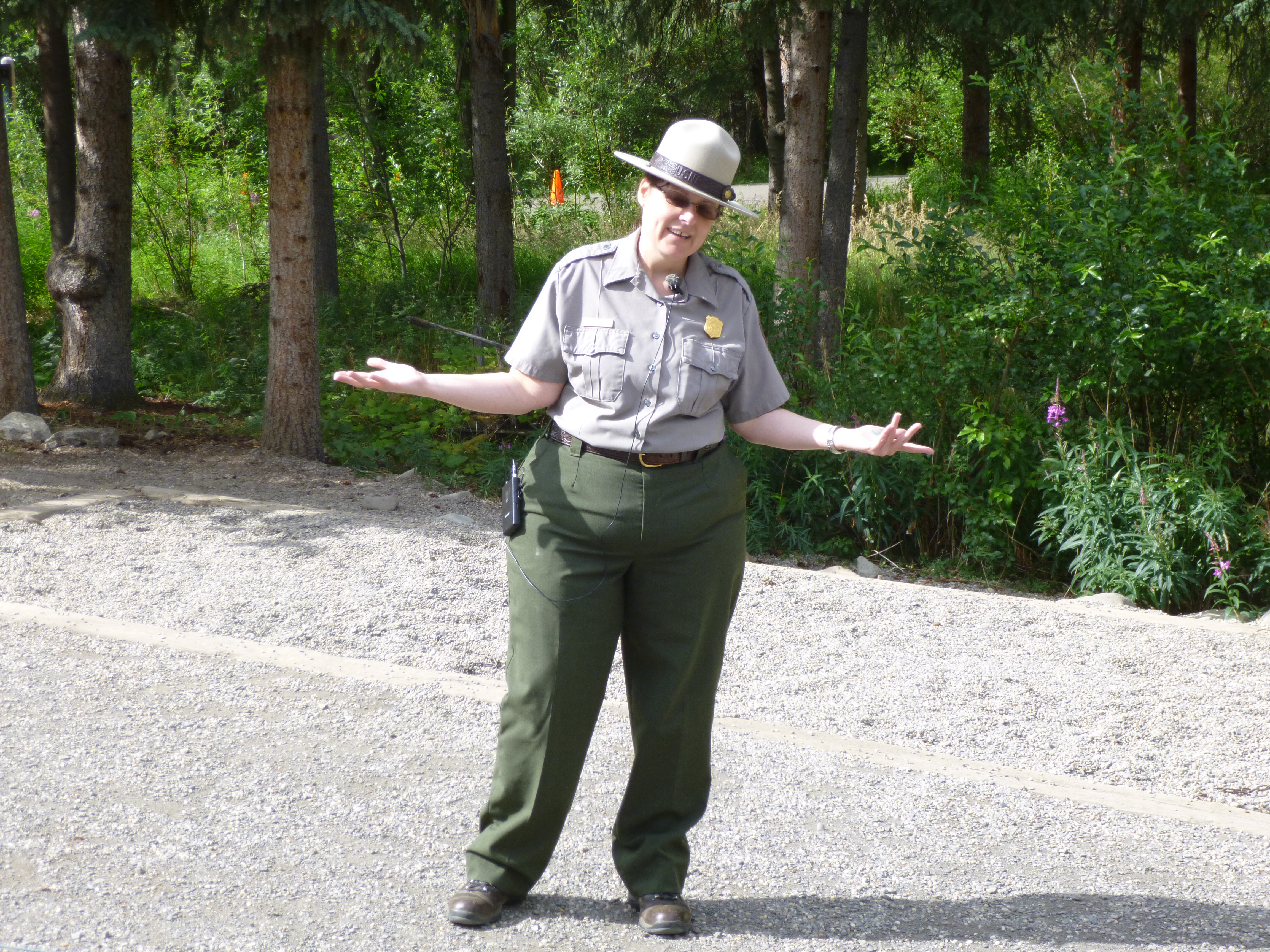
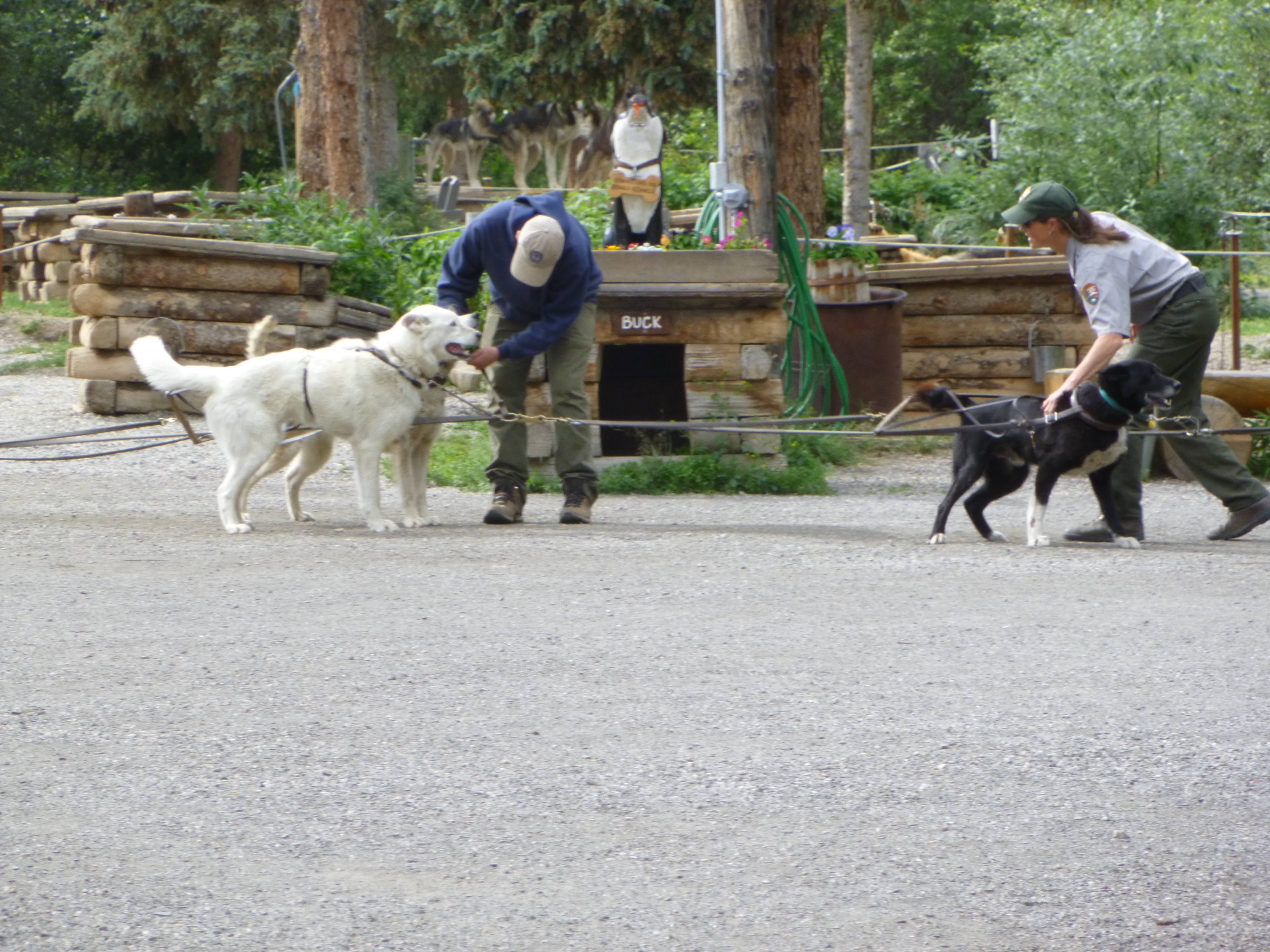
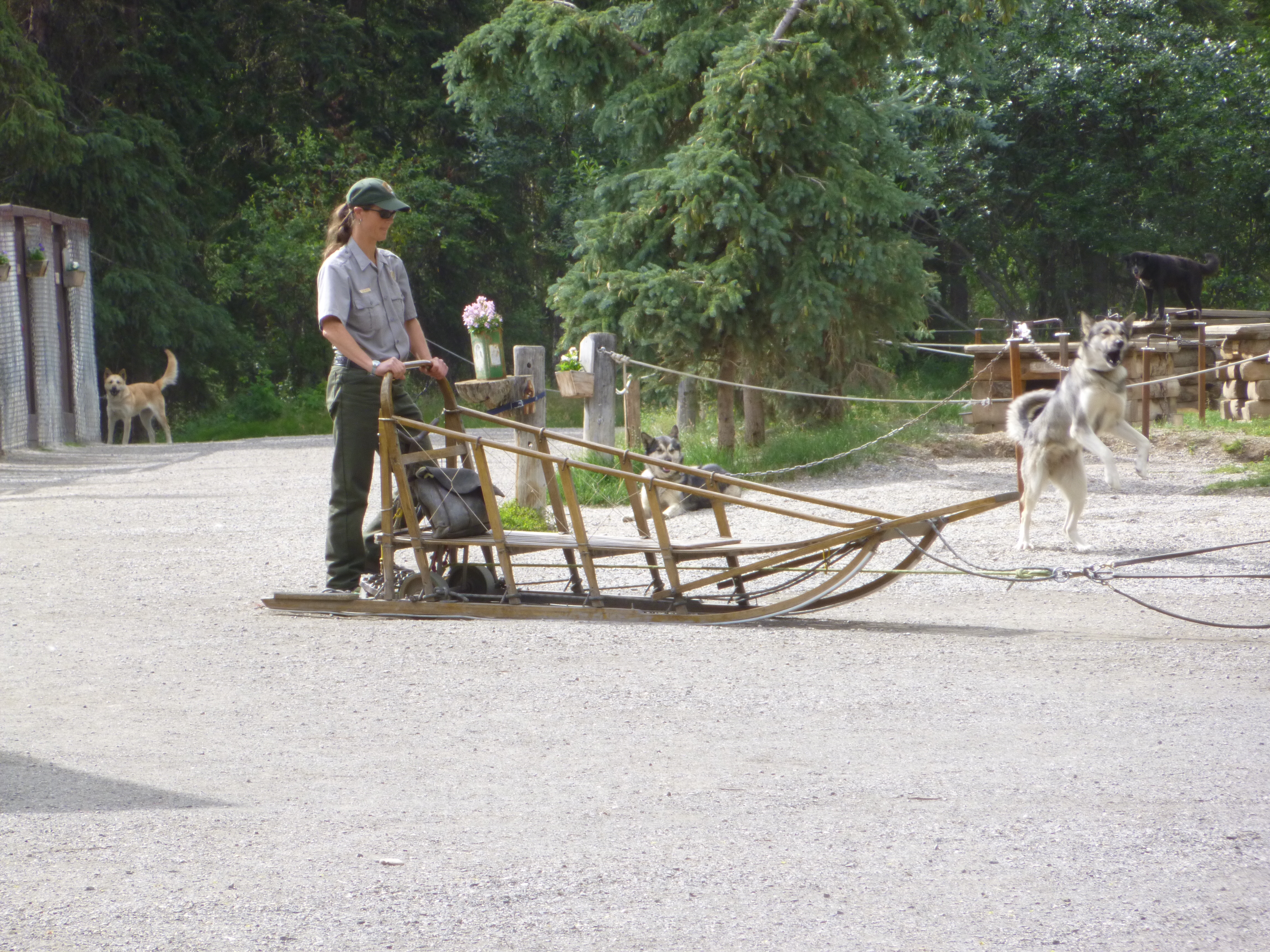
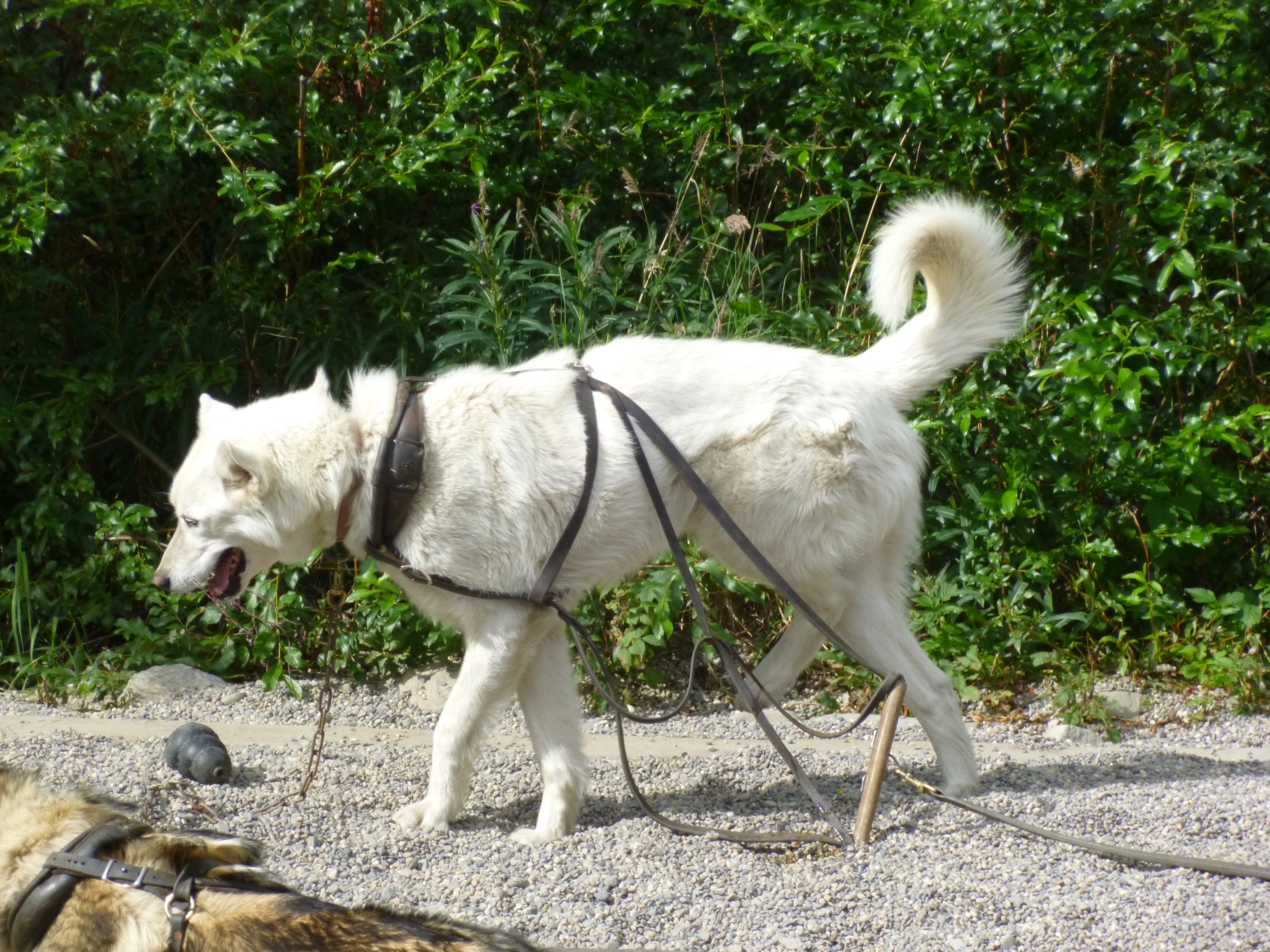
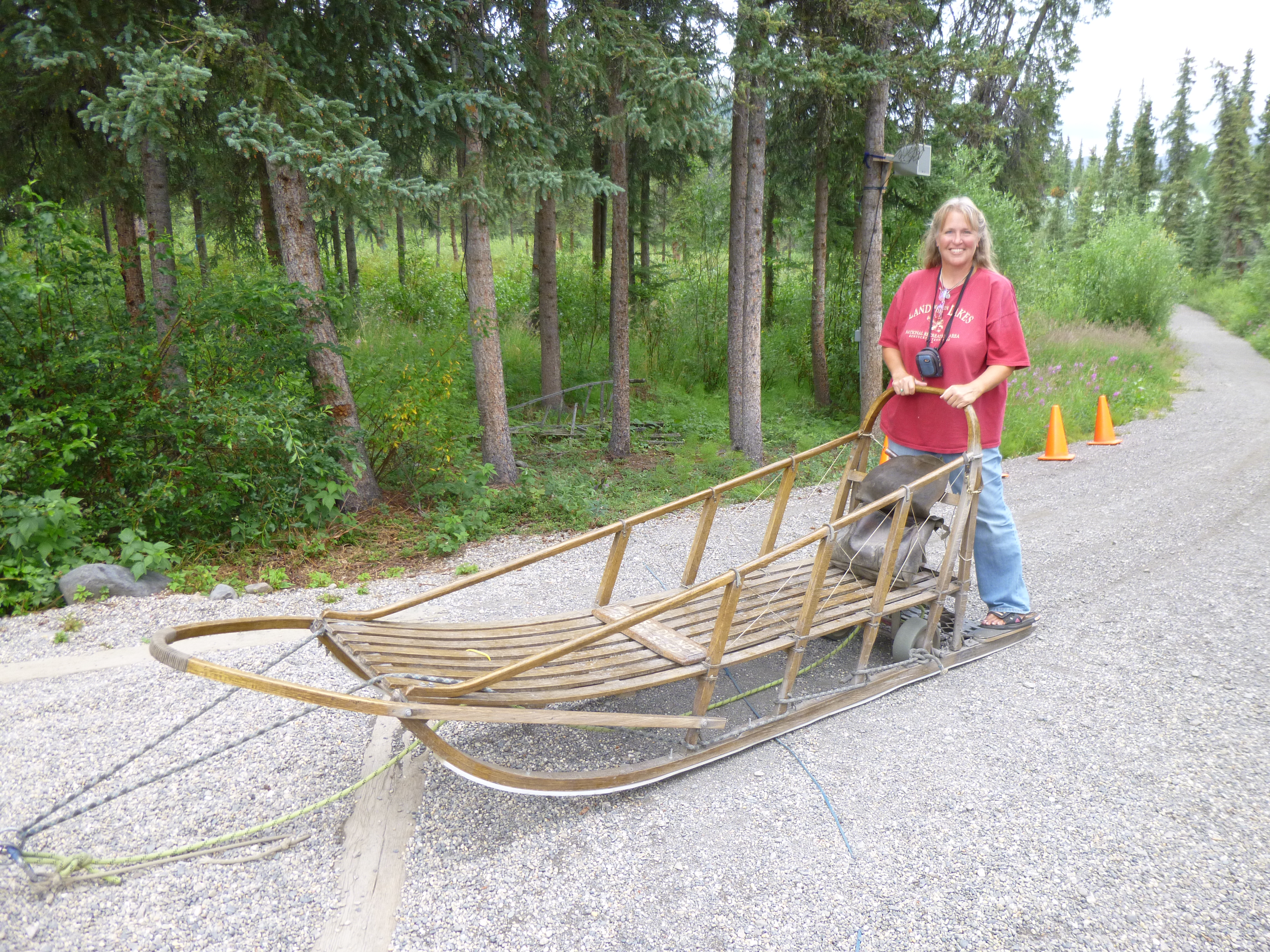
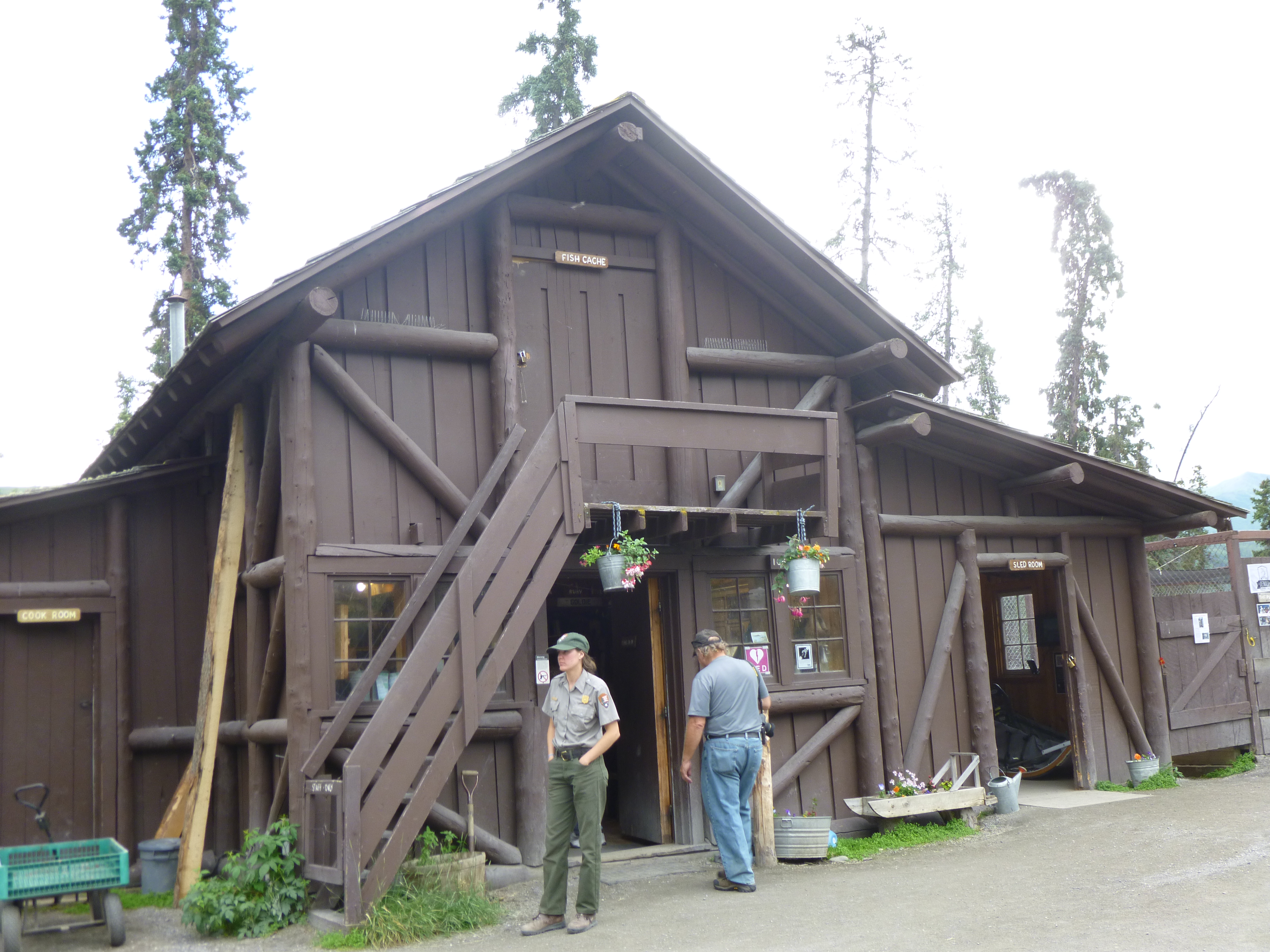
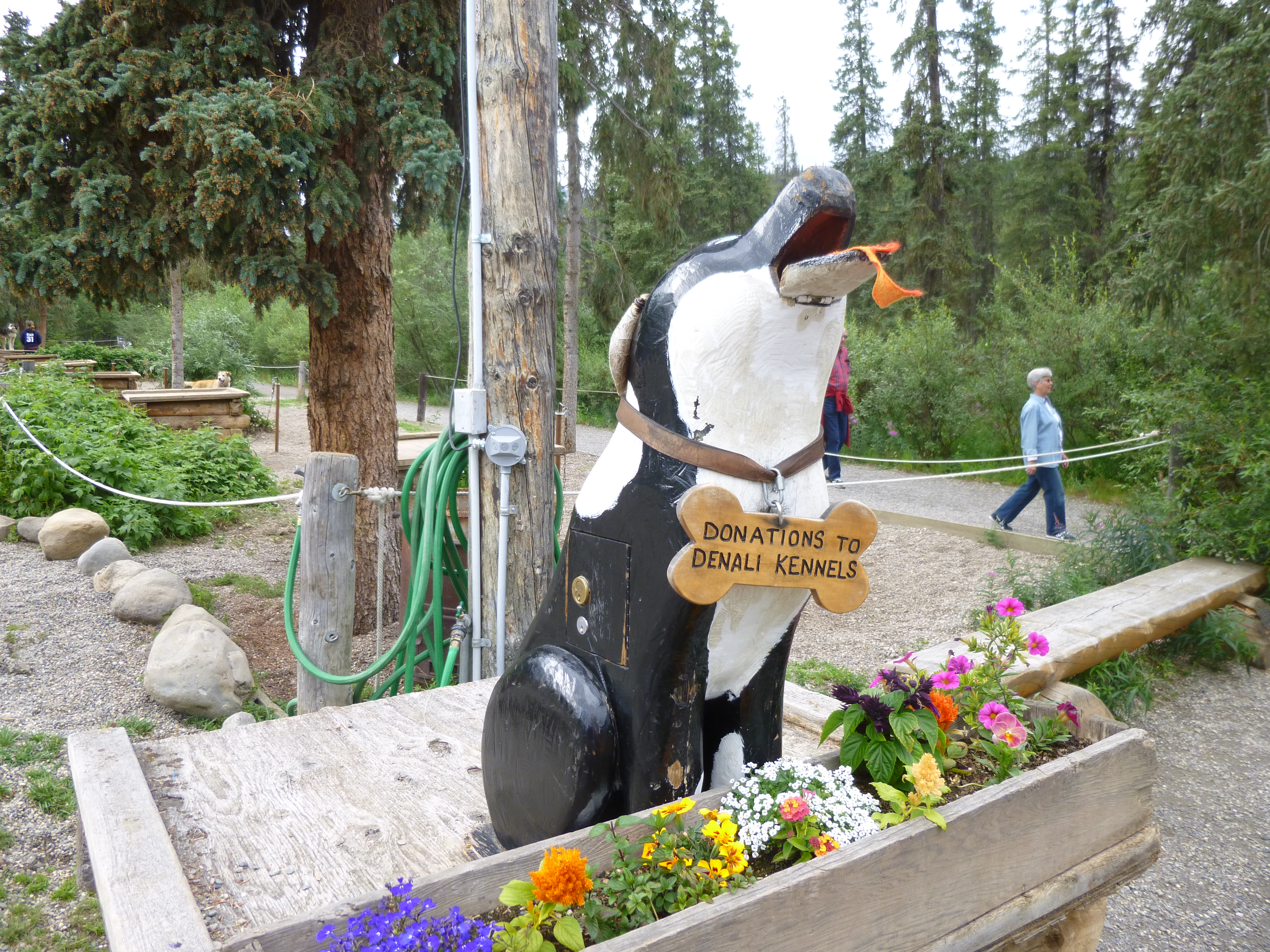
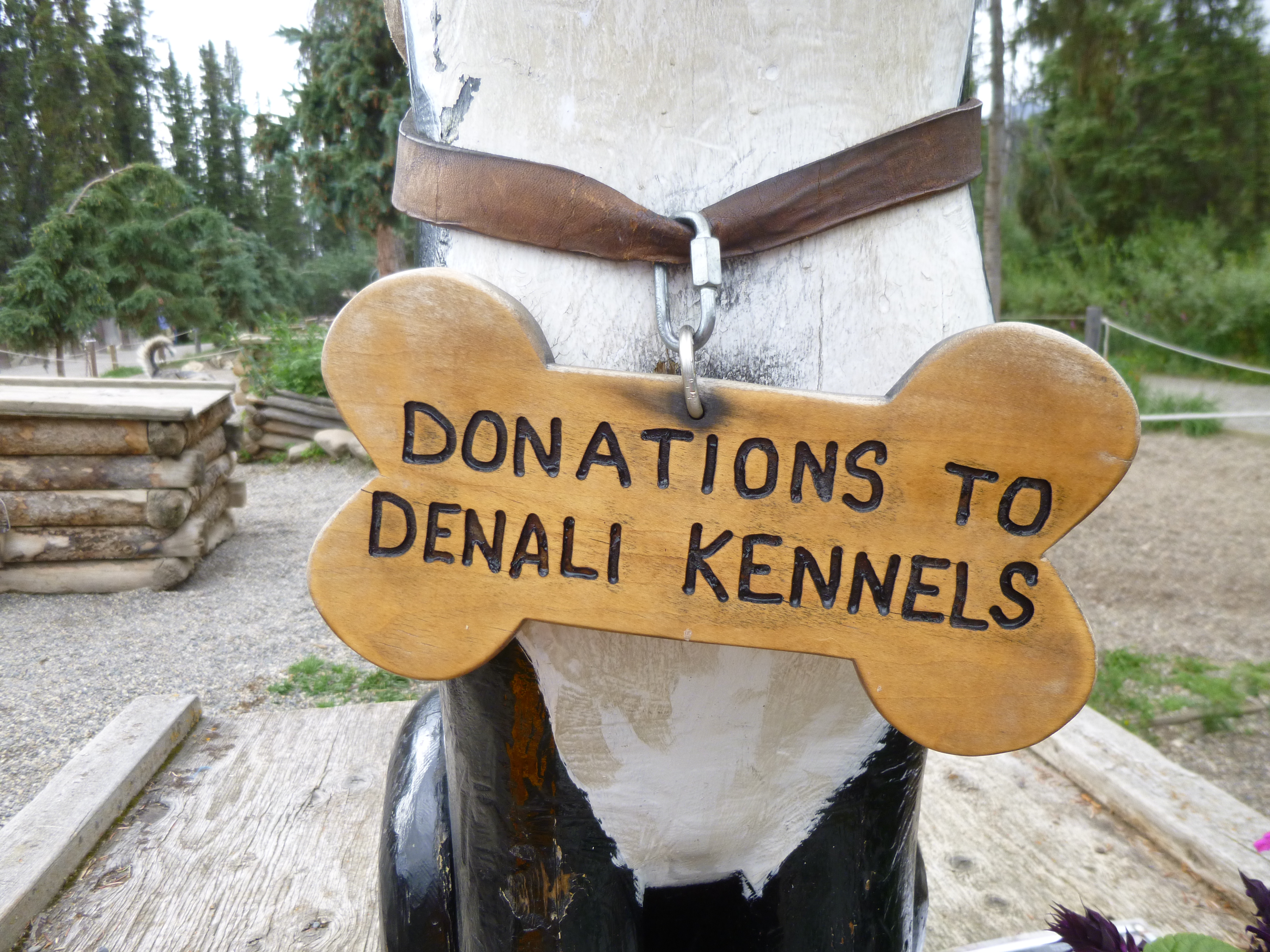
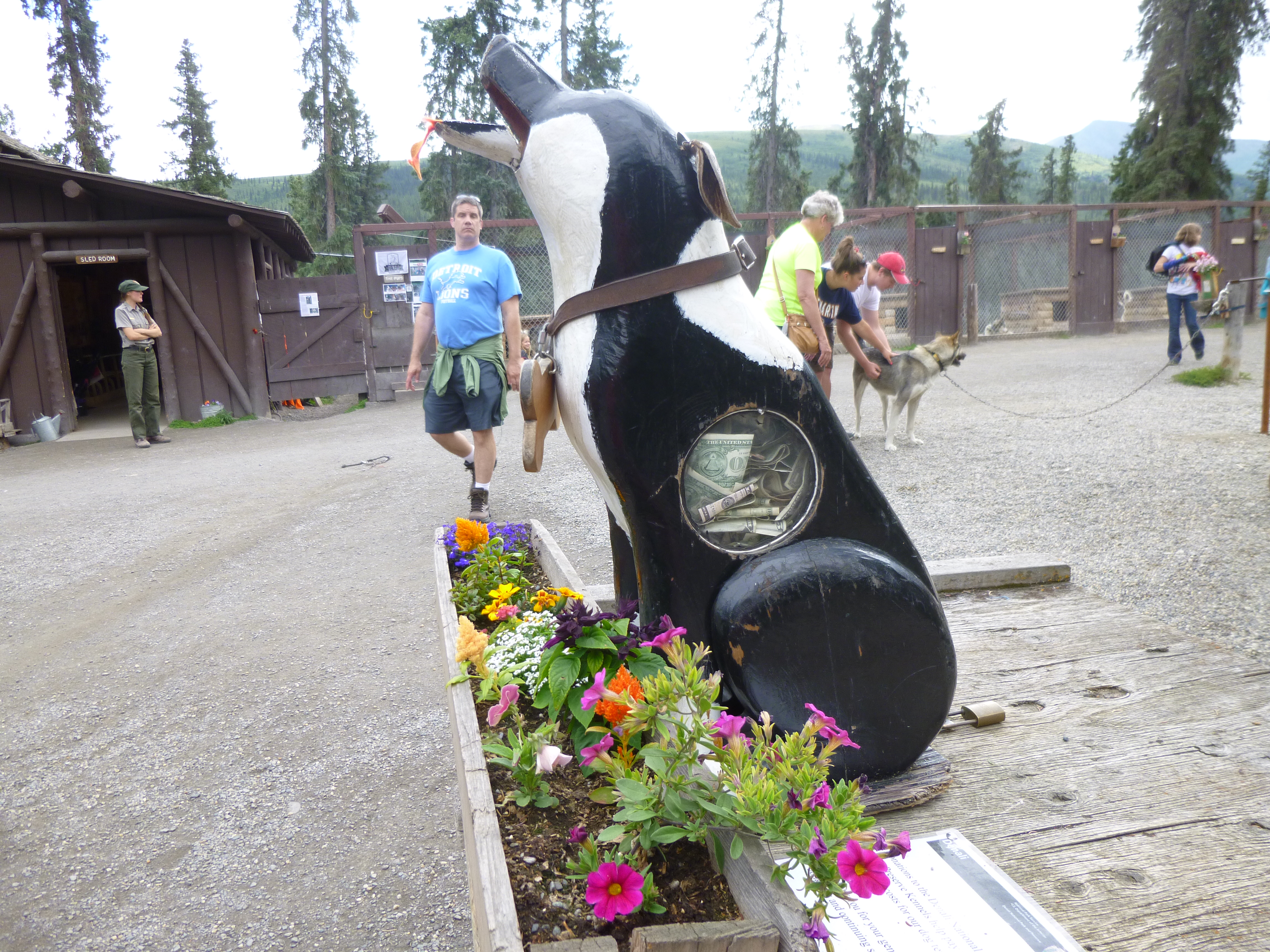
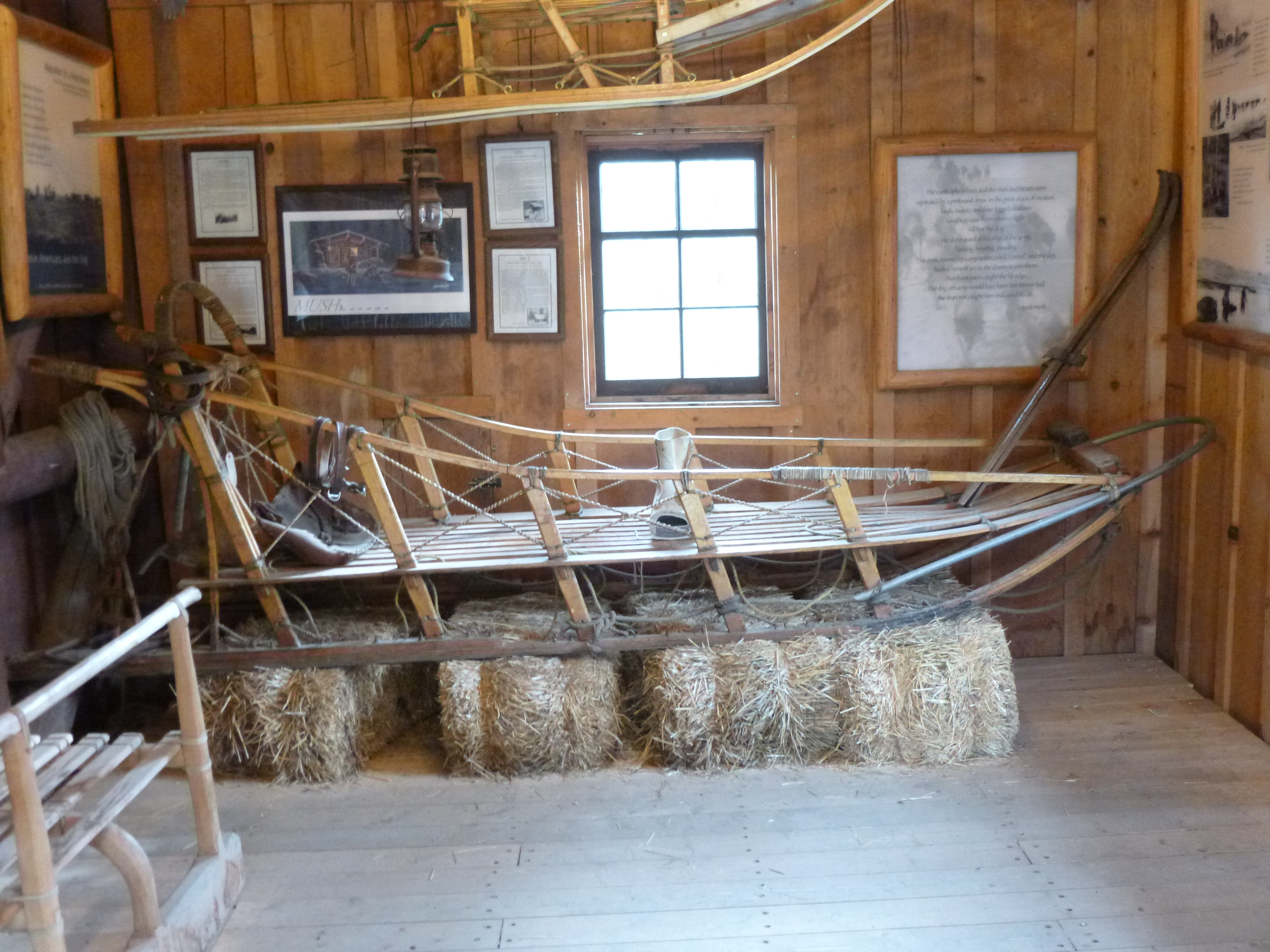
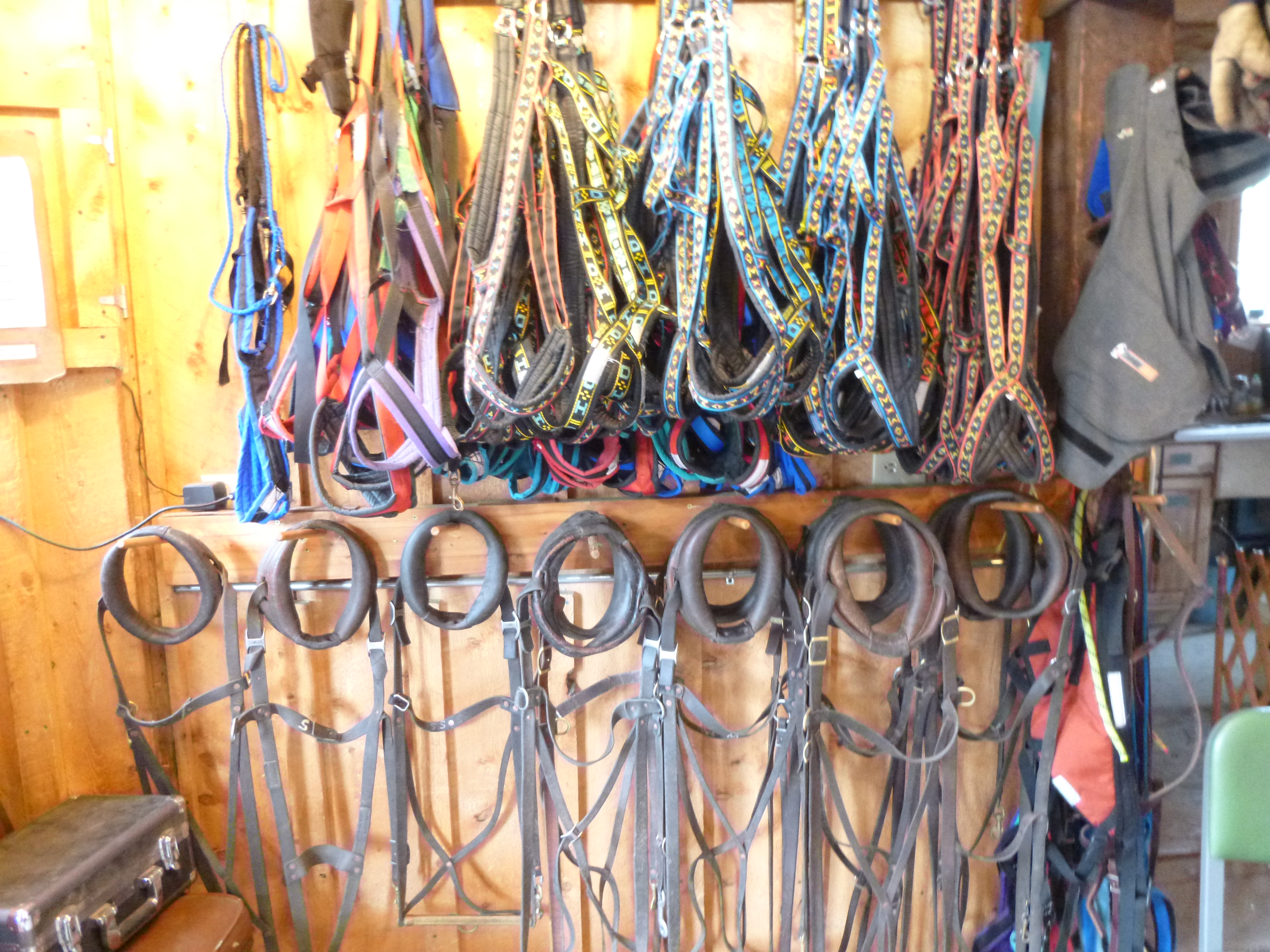
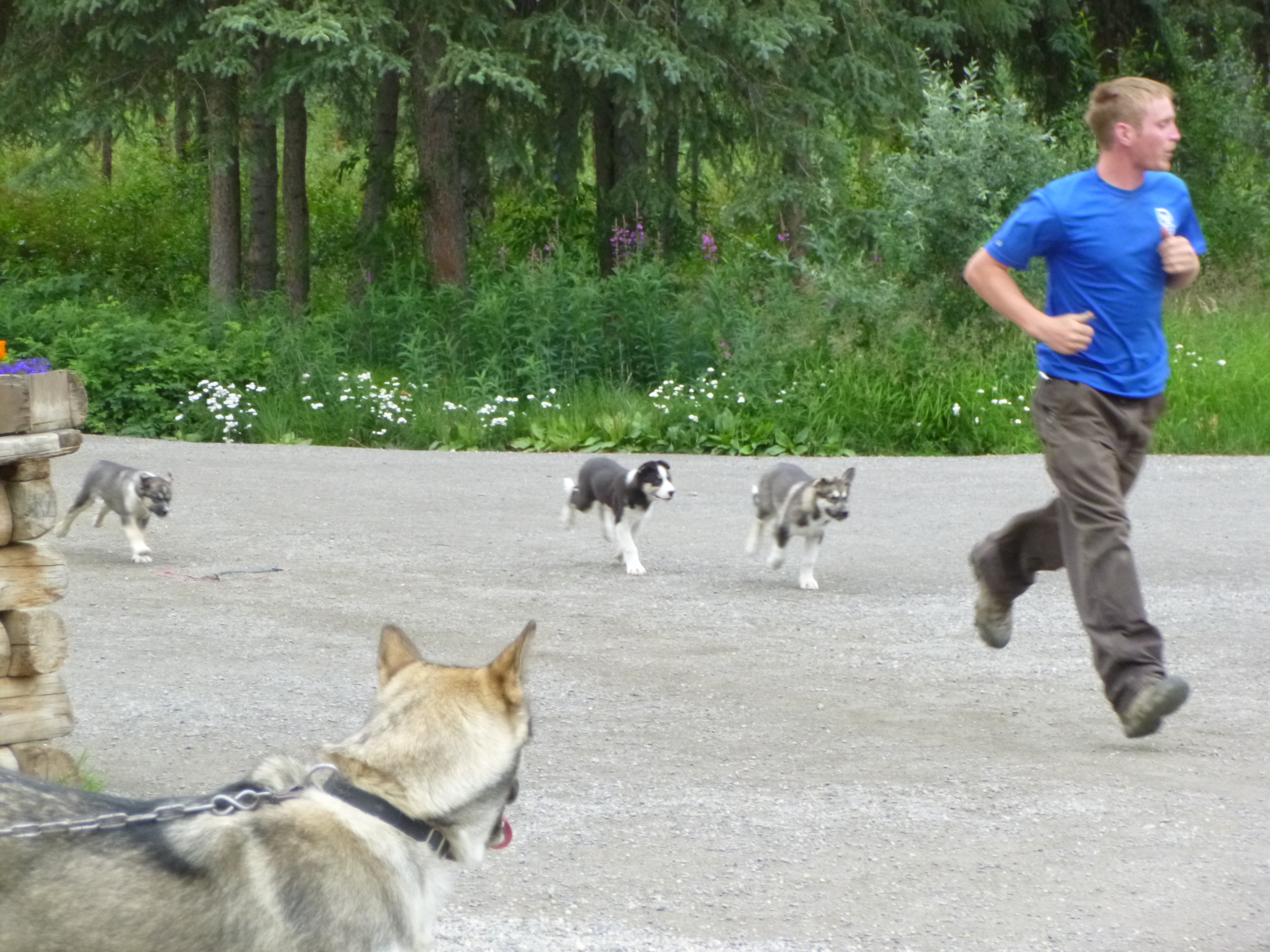
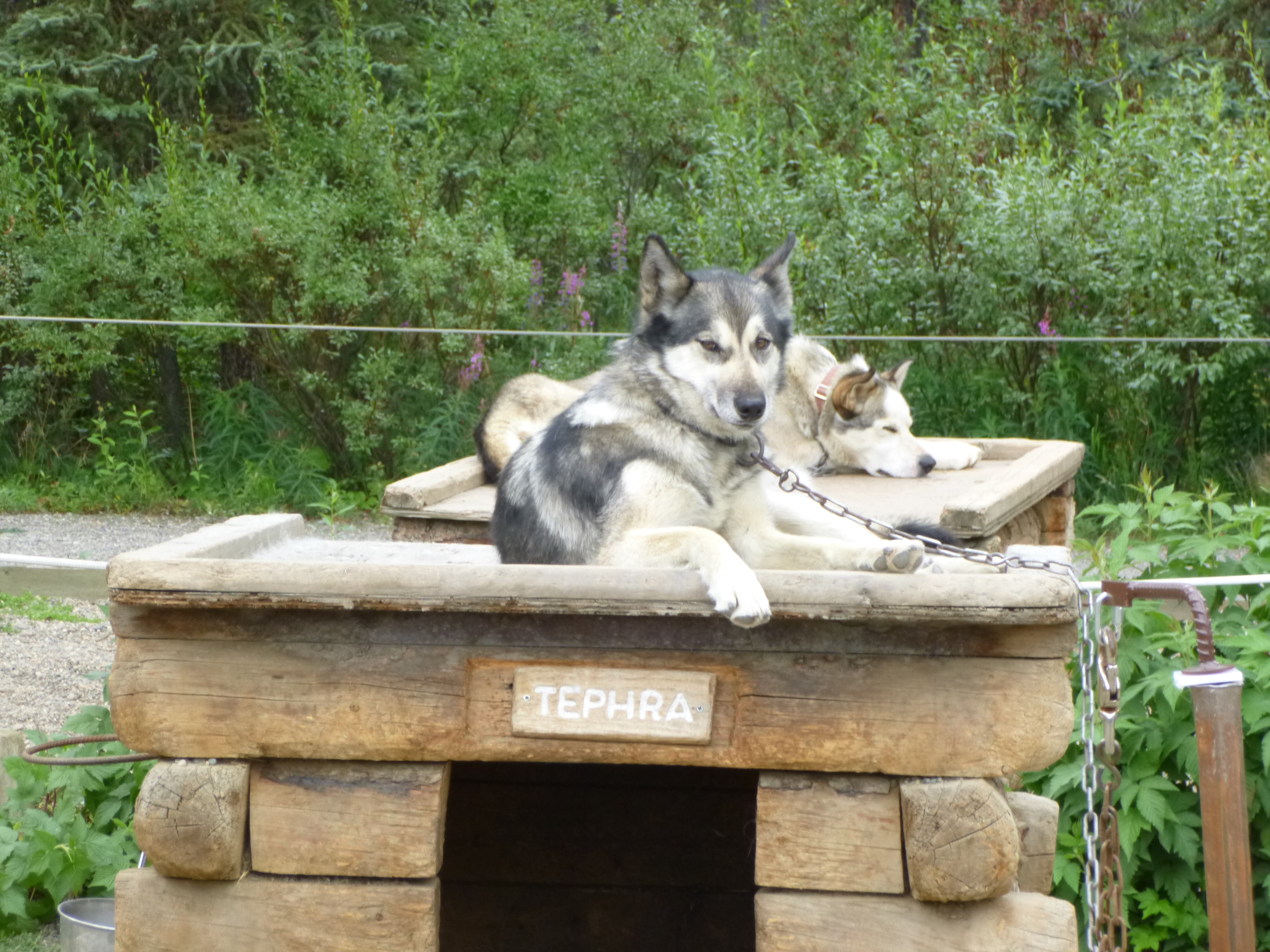
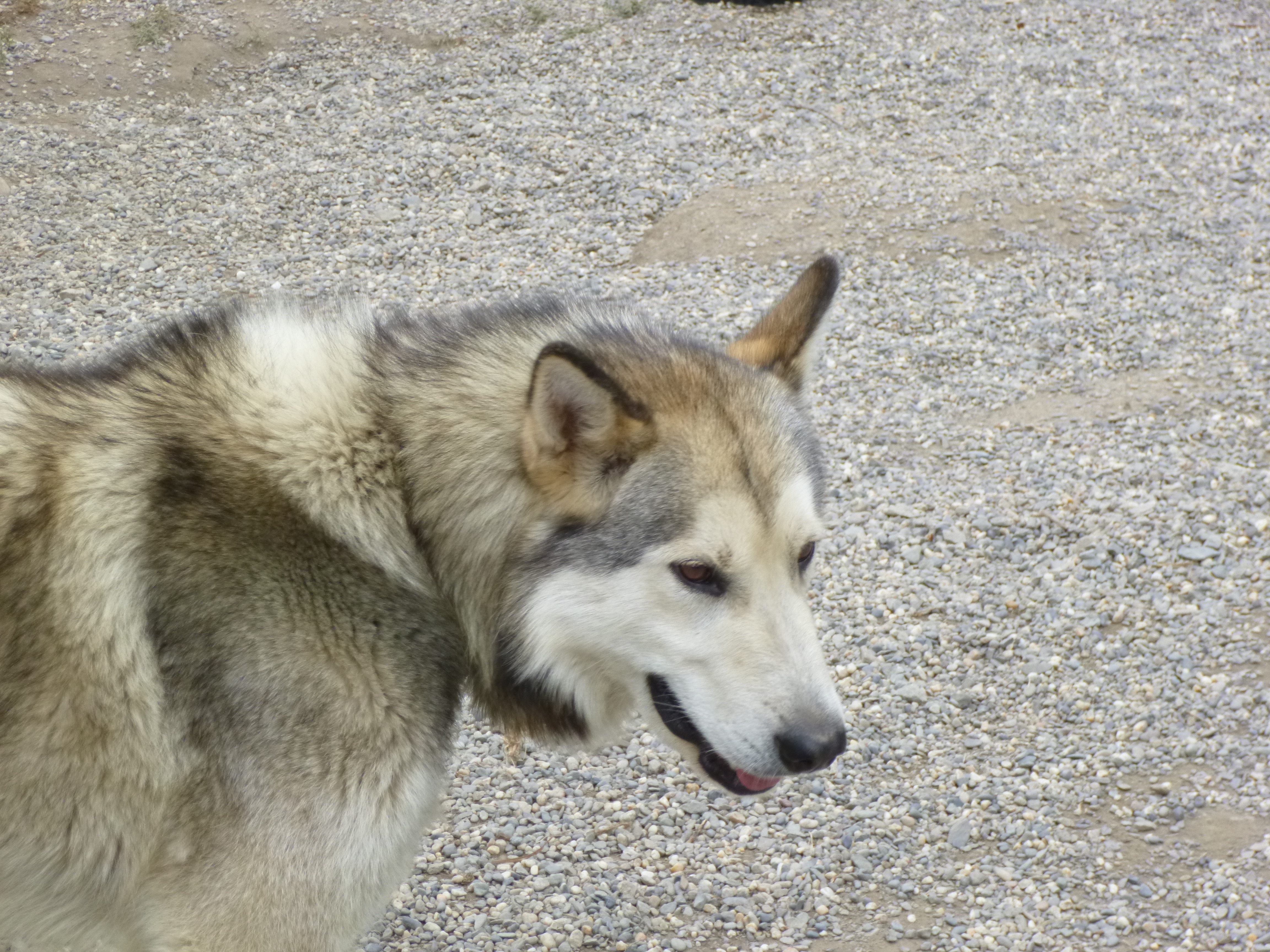
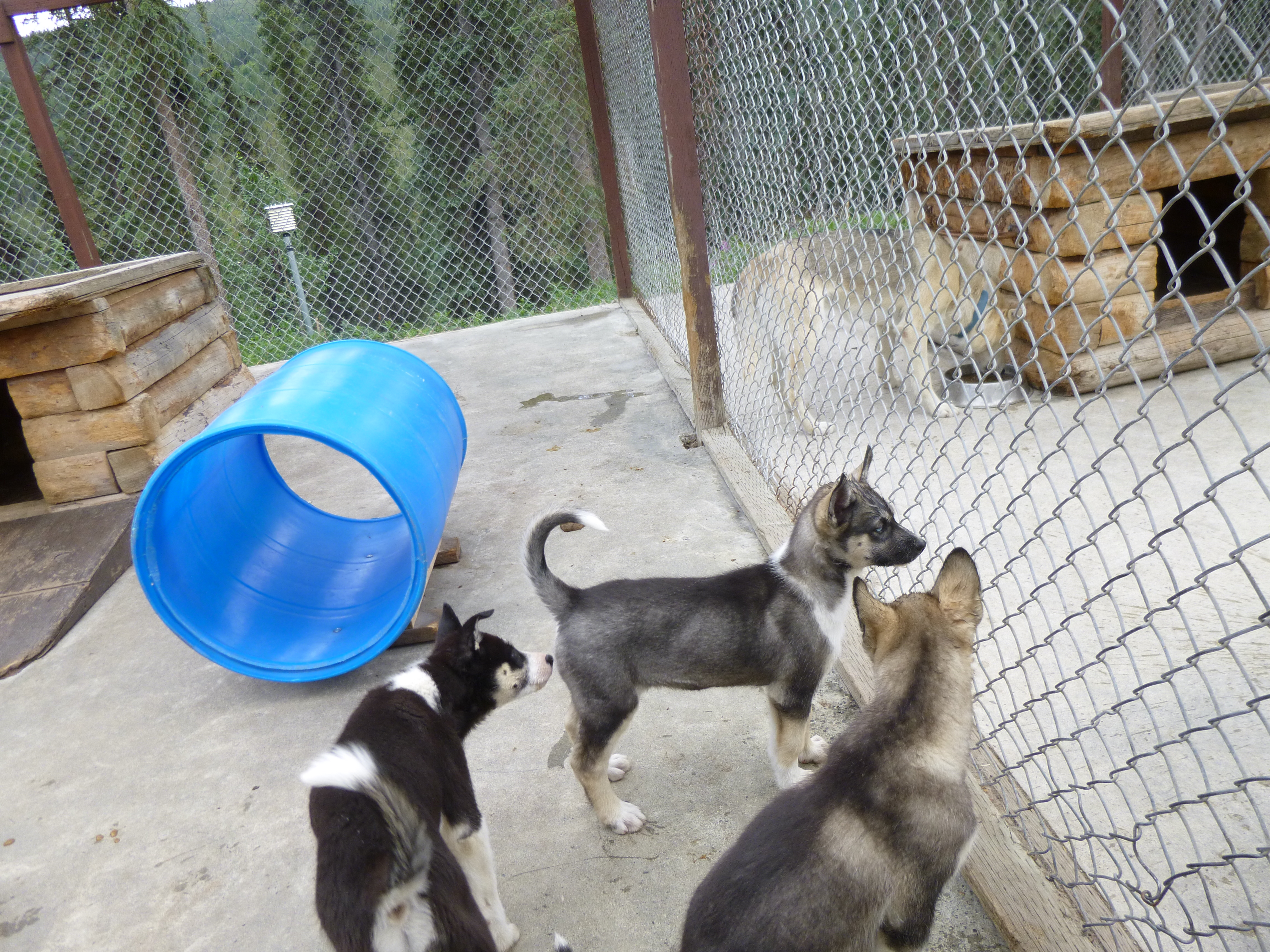
Then I made my way back into the kennel area, overshooting the entrance and nearly missing the start again! It was a really interesting talk and demonstration. The ranger who did the lecture was named Cinnamon (her real name she said – her mother was a hippie!) and she told us there have been working sled dogs at Denali since the park was formed in the 1920s. In fact, it was a musher who was instrumental in setting aside the lands that became Denali National Park. There have been sled dog demonstrations since 1939, except during WWII, when the military put the dogs to work. They currently have several dozen dogs, and do some selective breeding, so there are also have 3 puppies. Last winter the sled dog teams put on 3200 miles – hauling refuse in the winter, hauling freight, and going out on winter patrols and rounds with the rangers, out with clients, and in general earning their keep. They are better suited to the winter climate than many vehicles, which freeze up and break down, and even after a special jeep was introduced in the park after WWII, they reverted back to mostly sled dog use after 4 years of breaking-down jeeps. They eat kibble produced just for them, and enjoy extra “fat balls” in the winter. The dogs (which are not all huskies) each have their own dog house, and they often sit on top of them – they stay out there in summer and winter. The original kennel barn that was built in the ’20s is still in use today to store all the harnesses and equipment – a very well-built structure serving the same purpose it was built for 90 years ago. The kennel staff trains the puppies and are the ones who go out on rounds together – the Bark Rangers go out with the Park Rangers! They harnessed up a team of dogs, and Ranger Cinnamon said the dogs don’t just love their job, they LOOOVE their job! There was a great deal of excited howling and barking and these dogs couldn’t wait to run. The ones left behind (they take turns) seemed to be barking with envy. They only did a short run around about 1/2 mile loop, but they go fast even on the gravel. After the demonstration, I saw Buck, the donation dog, and I knew this had to be my donation of the day. Helping a working sled dog team seemed to be a very appropriate Alaskan thing to do! I hung around the kennel a little bit afterward (we were allowed to pet the dogs, and a dog named Nuna was my favorite) and since I had my own vehicle and didn’t have to jump on the park bus, a small group of us got to watch the dinner time process, which is also an exciting time for the dogs. In fact, the kennel manager put earplugs on since it got so noisy! The puppies go out for run around the same 1/2 mile with one of the volunteers before they eat, and they were so cute – the guy has to run fast to keep ahead of them, but they want to encourage their love of running, and running before mealtimes makes it extra exciting!
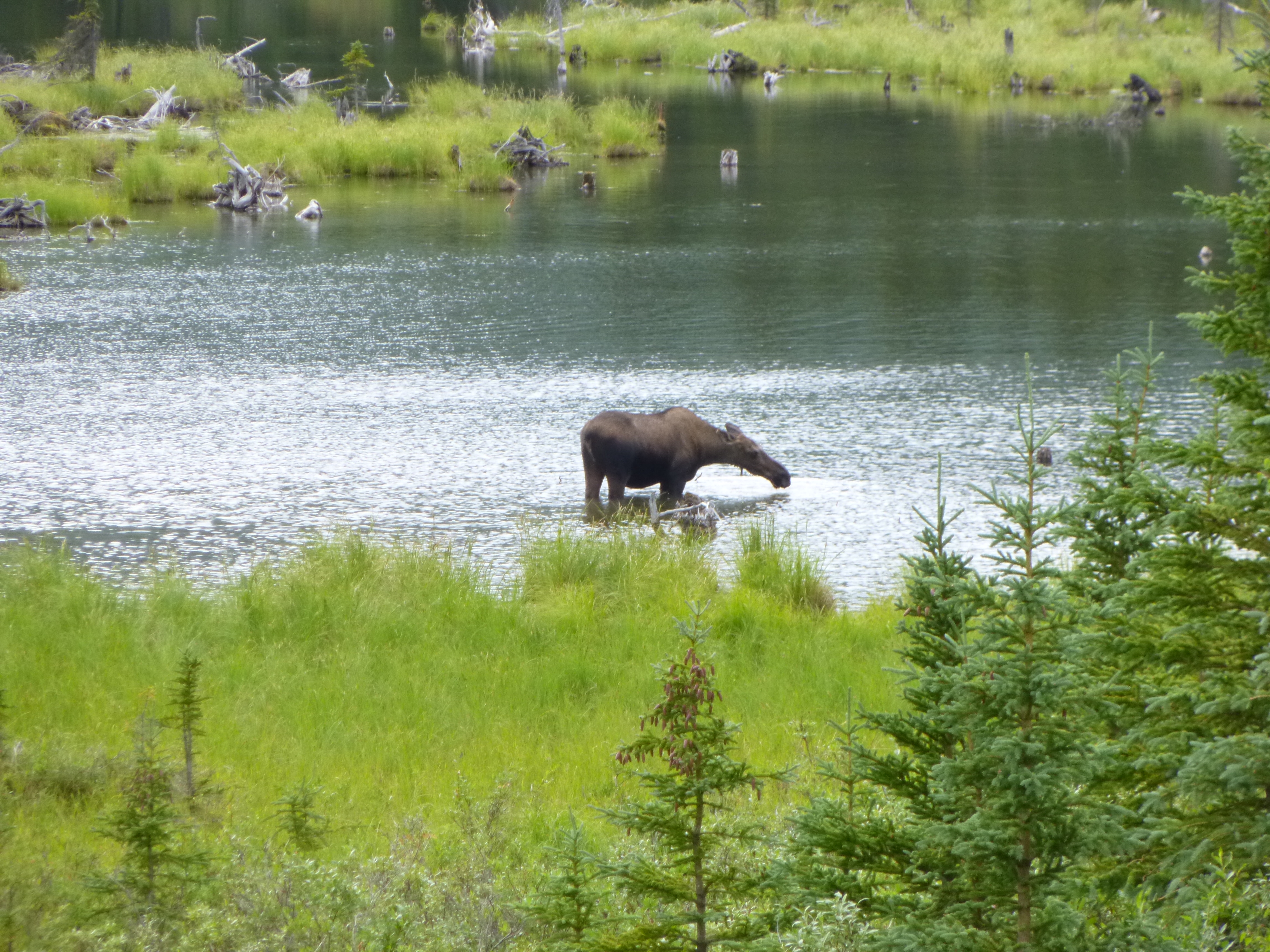
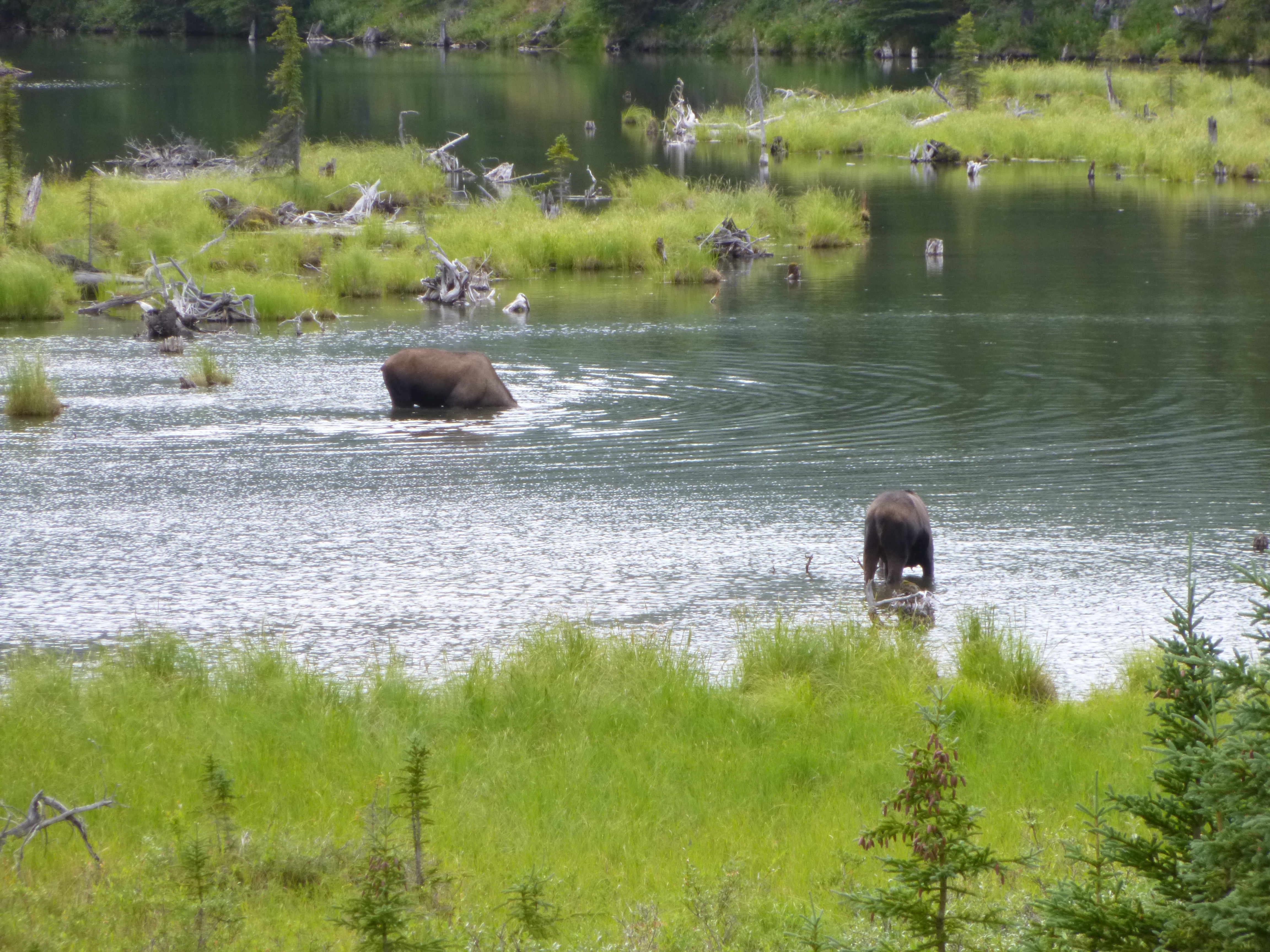
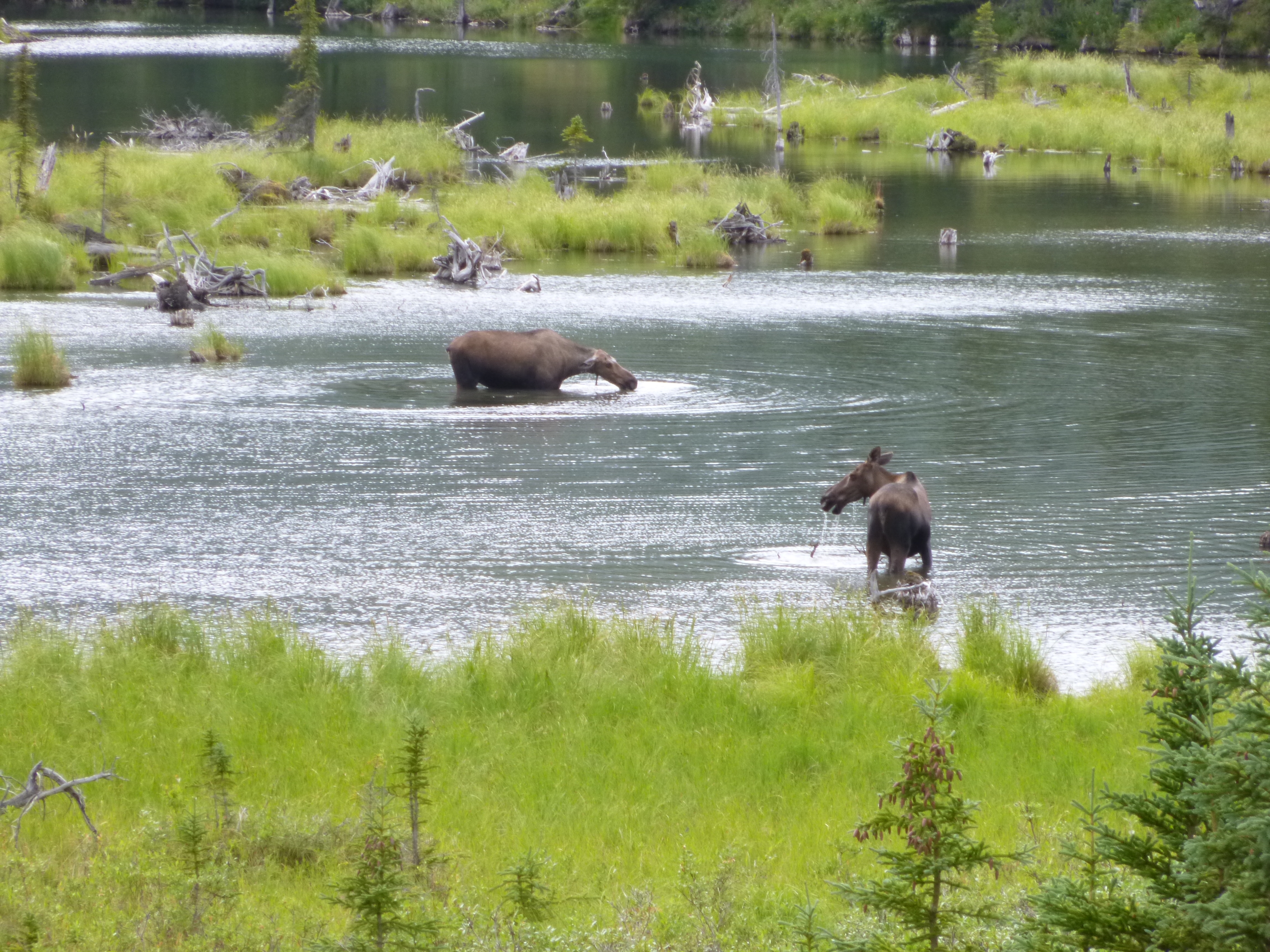
I finally left Denali, after walking 9 1/2 miles today, and drove through the touristy area to get a sub for dinner, and then started to make my way south a bit. I was planning to go about 150-200 miles toward Palmer, and I really enjoy driving in the extended evening light. I saw some cars pulled over after a ways, and there were 2 moose in a pond, munching on the grasses in the bottom. One of them put its head so far under water that it was up to it was up to its shoulders and belly, and looked like it was going to go all the way under!
It got quieter the farther away from Denali I got, but there were still road crews out doing construction and road repair since it was light so late. There was one particularly bad stretch of rocky road, and we had to wait for a pilot car to lead us through the rubble. It was very rocky, and it made me think of the Dalton Highway to Prudhoe Bay where we got a flat tire the last time. Shortly after I got through the construction area, I turned into a pull-off for a pretty mountain view, and took a picture. When I got back in the car, there was a warning light on about one of my tires, so I turned the engine off and looked – HISSSSSSSSSS – the tire was deflating before my very eyes. I must have run over a sharp rock. No one was around at this point, and I was a good 8-10 miles or so from the construction zone. To my surprise, I had phone service, and Triple A was (as always) very nice, but they said they would have to look into my situation and figure out how to help, since I was basically in the middle of nowhere. They promised to not leave me stranded! I knew how to change the tire on my old van, and was purposely avoiding gravel highways with this one to avoid problems, but this van had some extra locking hubcaps or something, and I was going to start reading up on it while I waited. I got the jack out, and the various tools – my spare is up between the front seats, and there was something to assemble (I’m not good at assembling!) to get the spare tire down. I decided to simply wait – I was in a really nice spot on a pulloff and could spend the night if necessary. I was worried if I got partway through the procedure and got stuck that I wouldn’t be able to stay in the van. Triple A called me back in an hour and said help would be on its way in a couple hours – this wasn’t their first call in the area due to the construction. I said I was fine, and that I could wait til morning if necessary. Then they called back again in another 45 minutes or so, and suggested I call 911, just to let them know an older lady (!) was “stranded” by the highway and maybe they could check on me once or twice. I felt kind of bad calling 911 since it wasn’t an emergency, but the dispatcher was really nice, and said there was a trooper near the construction zone and she would send him my way. He arrived pretty soon, and figured as long as he was there that he would change the tire, which he did in short order, but even he had to look at the instructions because he had never seen a spare tire put up the way mine was. After picking everything up, and finding a place to put the muddy flat (Tula’s space), I headed on my way, going kind of slow on my donut spare. By now it was too late to get to the campground I had originally been heading for, so I was lucky to come across one of the Denali State Parks after about 50 miles – a little roadside park where I could “camp” for $10. So although I felt kind of grubby from moving the flat tire around, I was happy to have a good place to stay for the night, and would deal with repairs in the morning. It was midnight by the time I got set up, and it was still daylight – and I took a picture of the van at midnight with no flash. But I’m getting used to sleeping in daylight!















Alaska – Tuesday, July 23
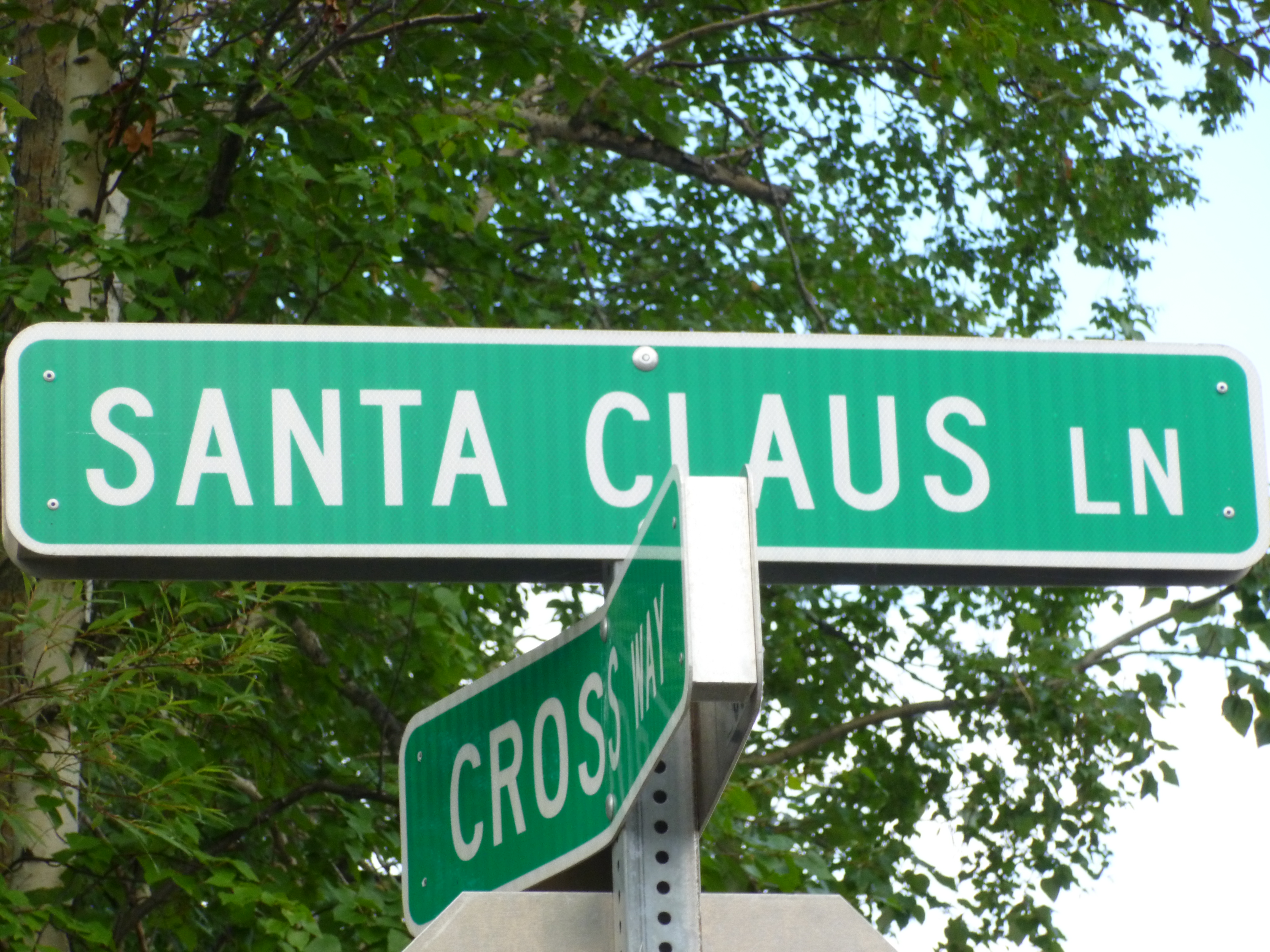
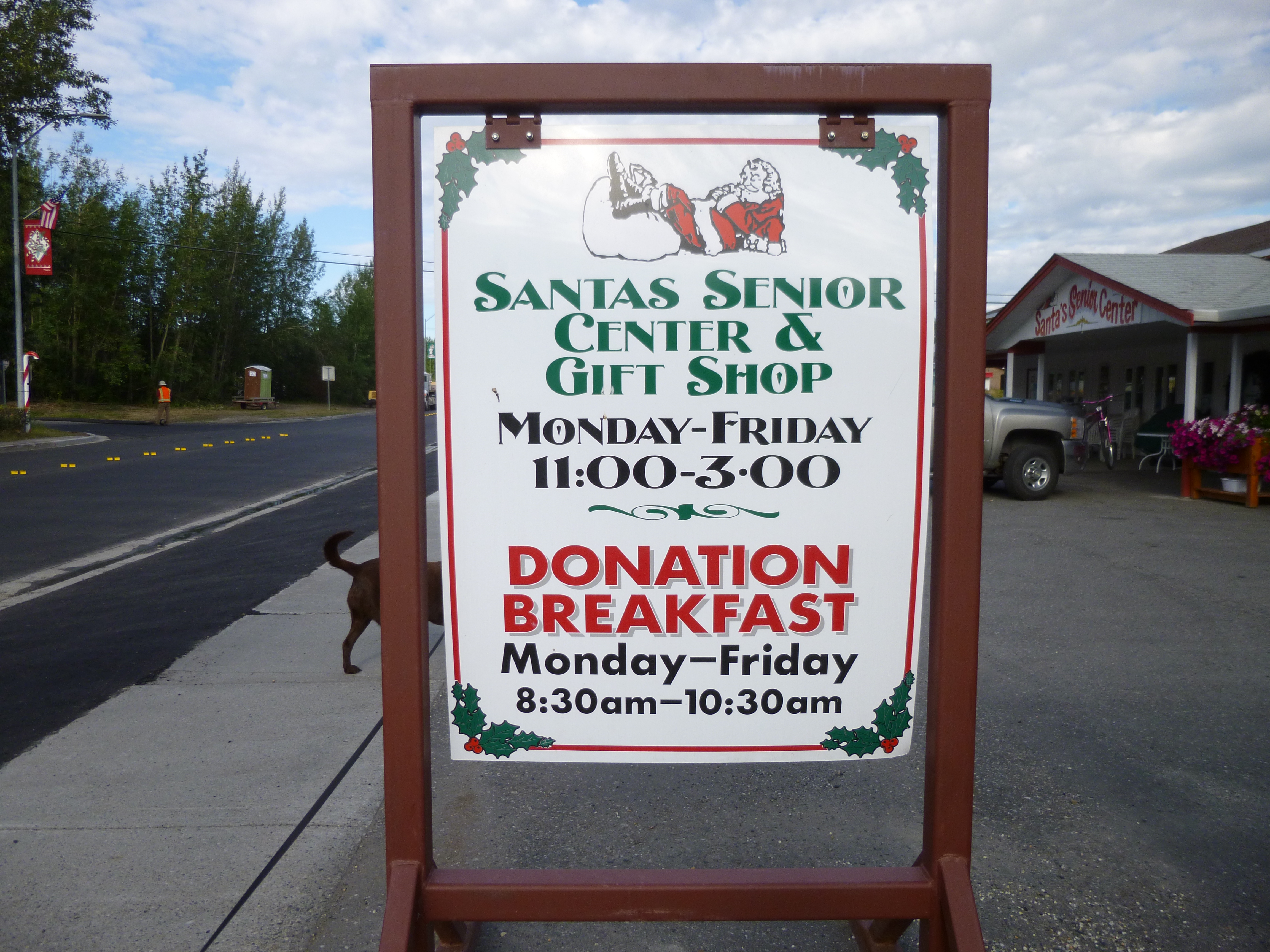
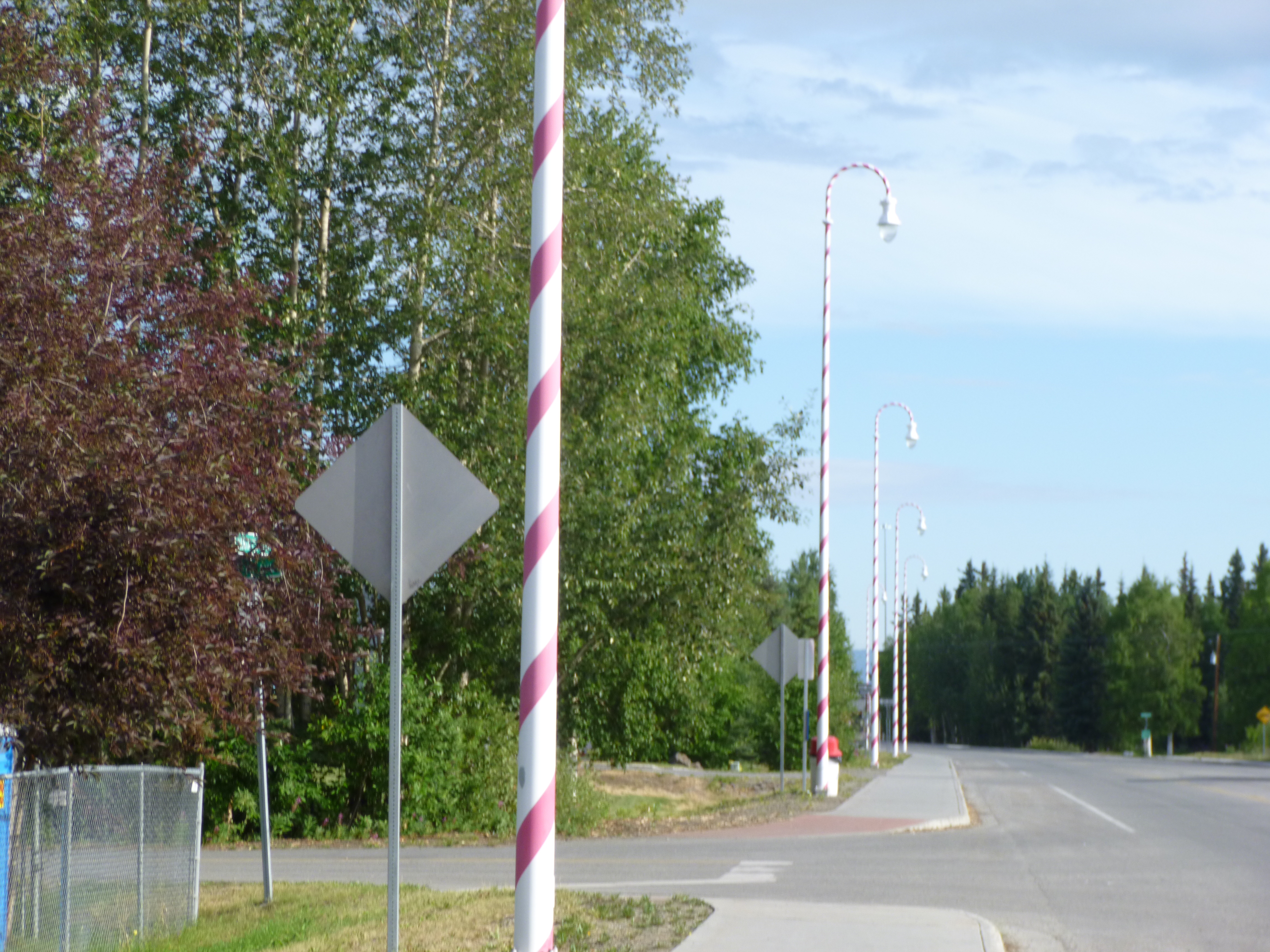
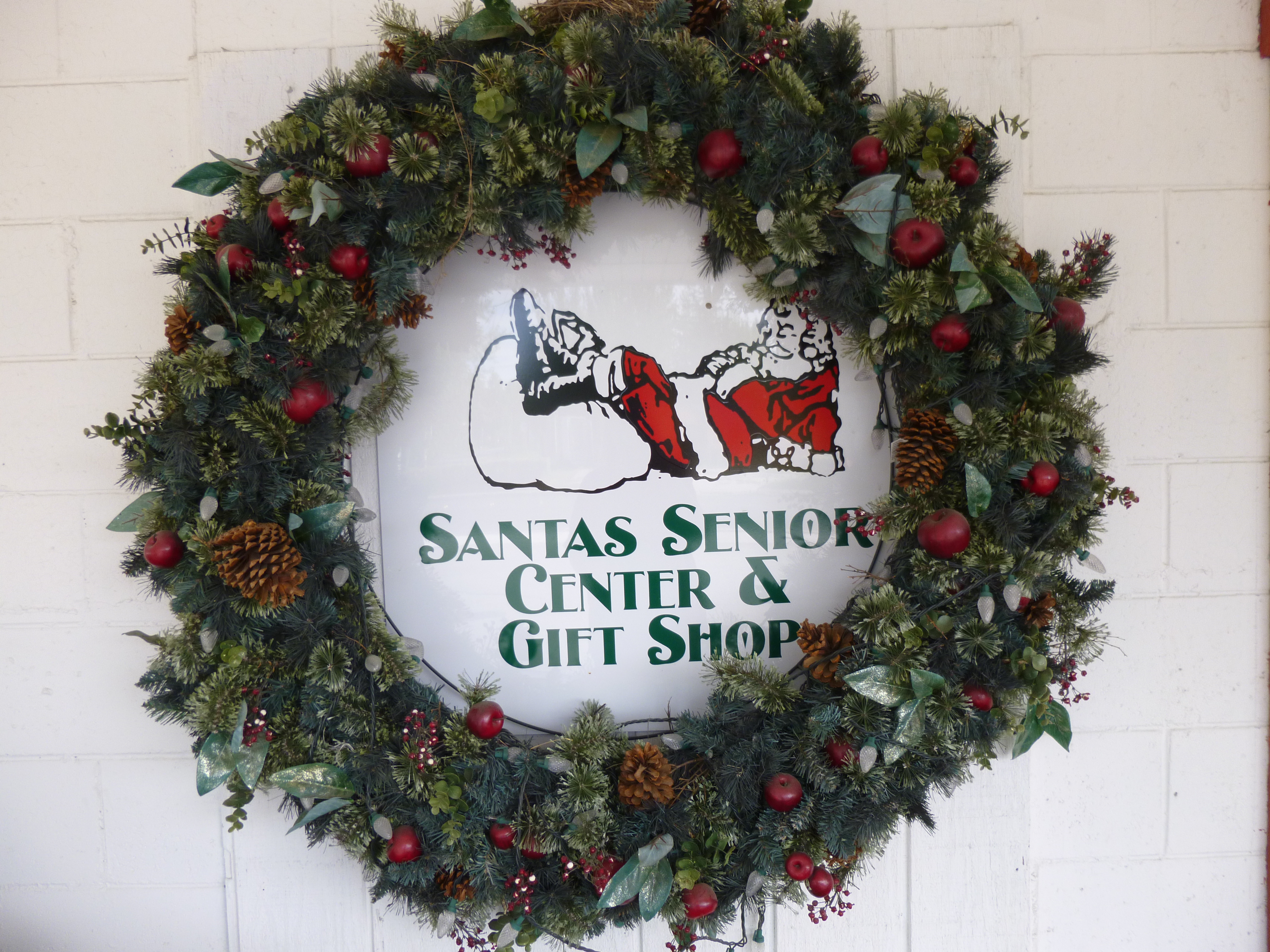
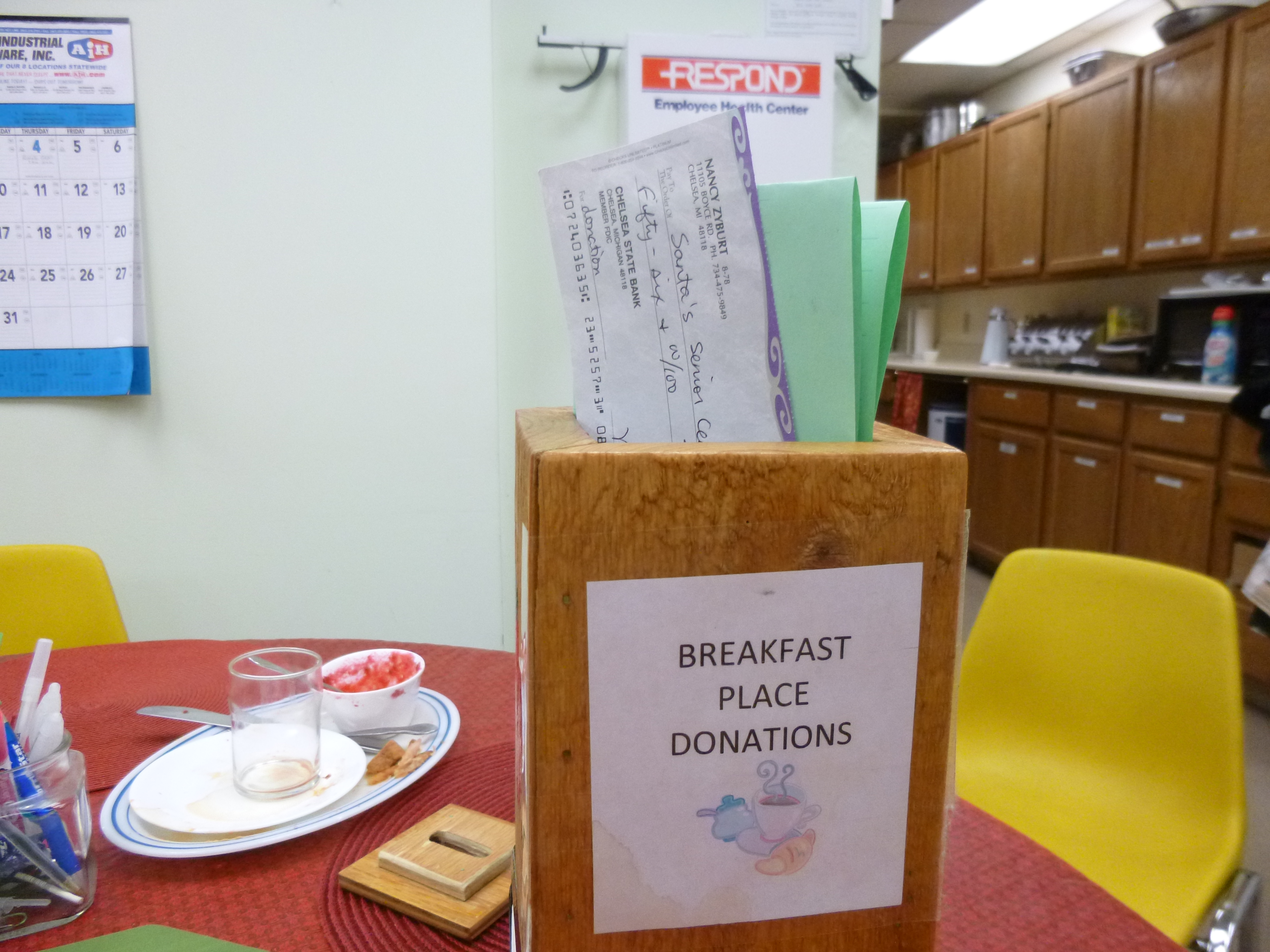
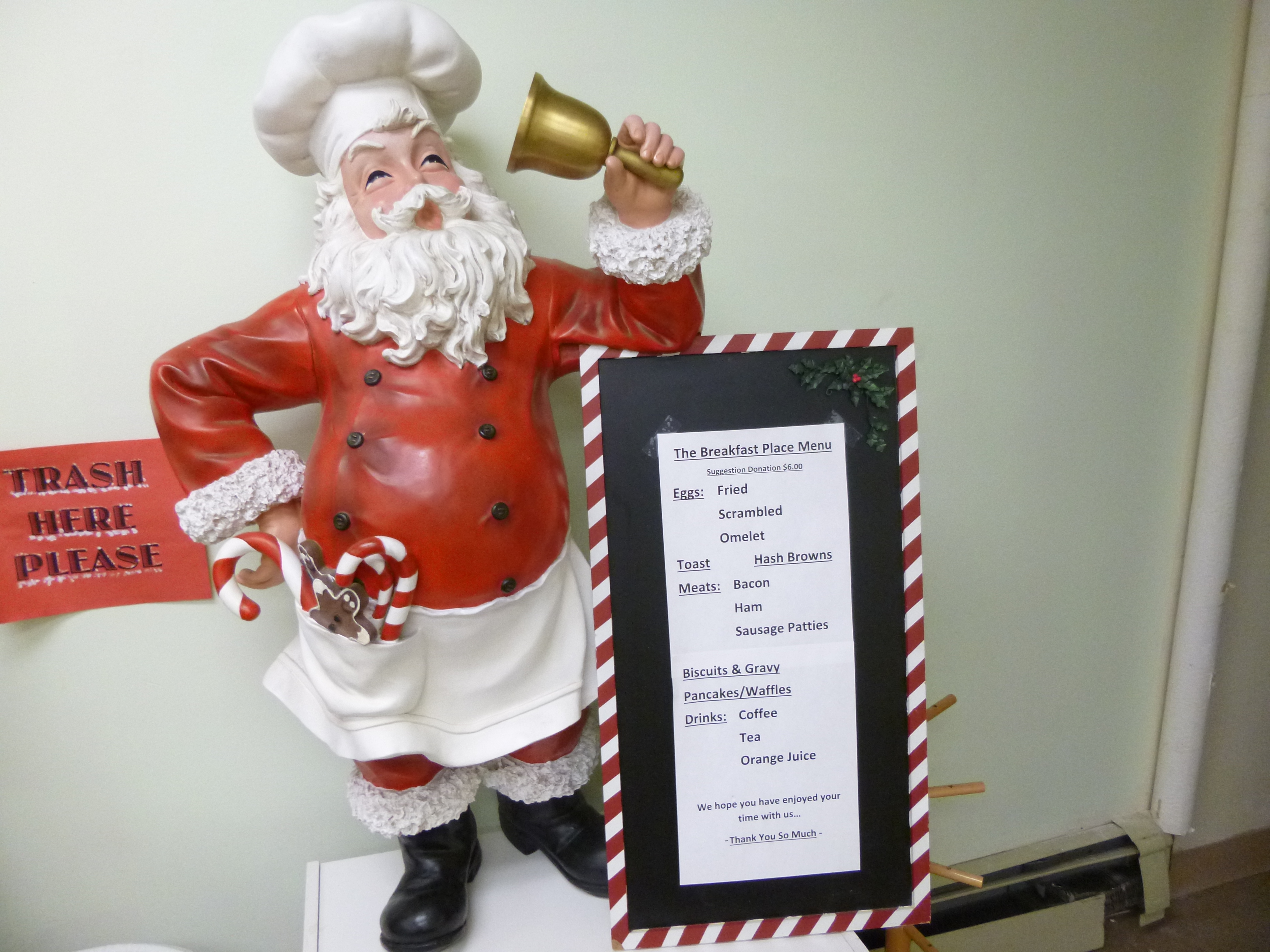
I got our campsite packed up and Tula and I headed out – still northwest in the direction of Fairbanks. The first town we came to was North Pole, and I had to stop. The whole town was kind of Christmas-themed, which might be nice at Christmas, but must get a little old year-round! Even the lampposts are painted white, and have red ribbon around them to look like giant candy canes. The bus shelters consist of a roof supported by 4 candy cane poles. Streets are named Santa Claus Lane, Snowman Lane, Holiday Rd, St Nicholas Dr etc. Tula and I walked about a mile and half, and by then we had covered most of the town. As we made our way to the outskirts of town, by one of the neighborhoods, a big sign caught my eye – Breakfast Donations to support the North Pole Senior Citizen Center! They’re open for breakfast every day and one just makes a donation according to what one orders, and breakfast is prepared fresh. I thought it was a good idea, and I wanted to make a donation in North Pole anyway, so I went in and made my donation, which pleasantly surprised the seniors who were in there. It was a slow morning, so we chatted a bit, mostly about the long cold winters. They said dogs get really really fast about going outside to take care of their business, and if one dresses right, one can get out and do what needs to be done. But it’s not for everyone! They offered to make me a breakfast of course, but I was pretty desperate for some computer time after being in Canada for 4 days, and I had been planning on oatmeal at McDonald’s to use their free wi-fi. And they understood – they got the donation anyway! If they’d had wi-fi service, I would have stayed there. So when I left the senior center, I went to McDonald’s, and spent some time in there getting a little caught up, and researching some donation opportunities, and feeling ready to tackle Alaska!
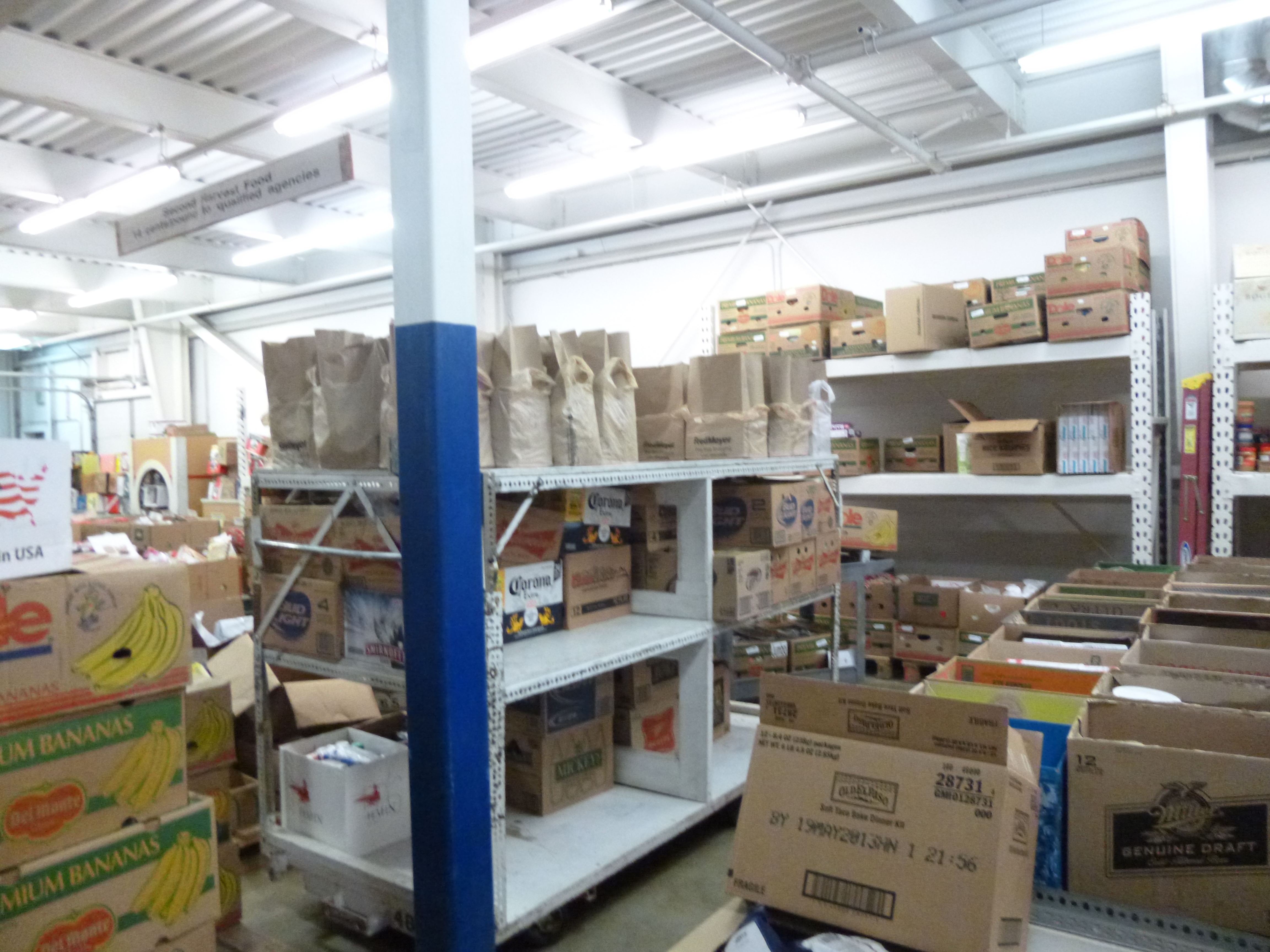
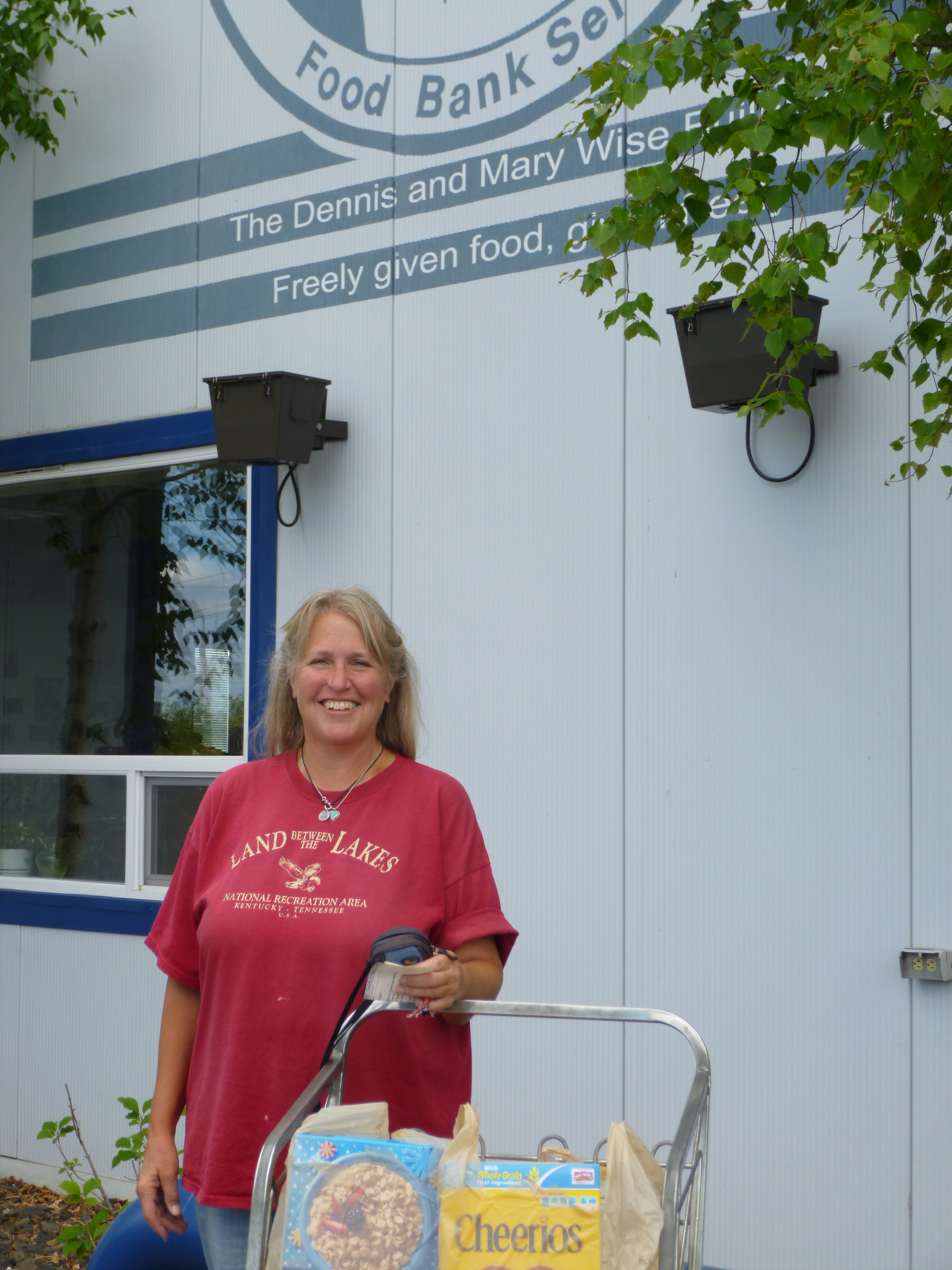
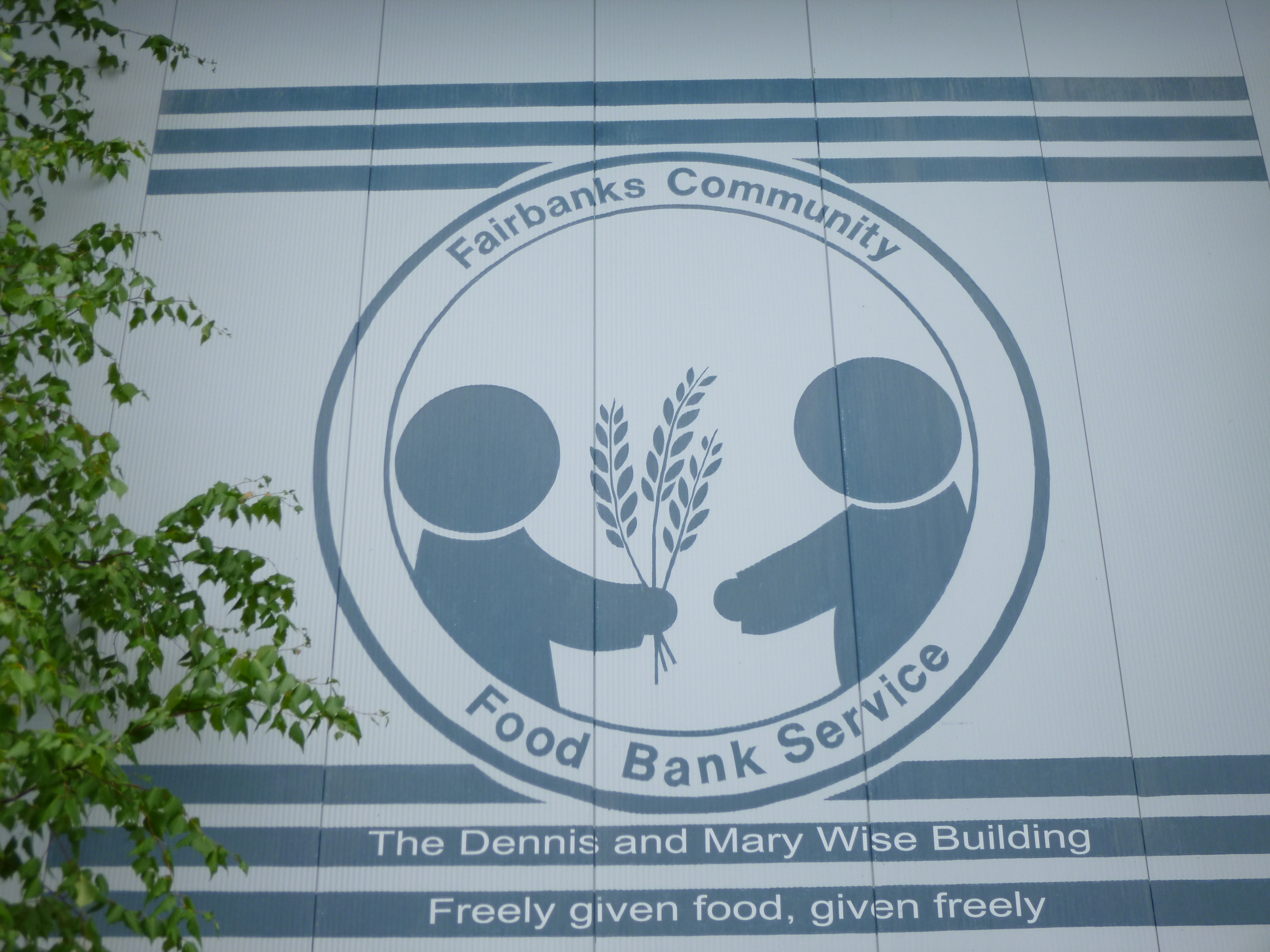
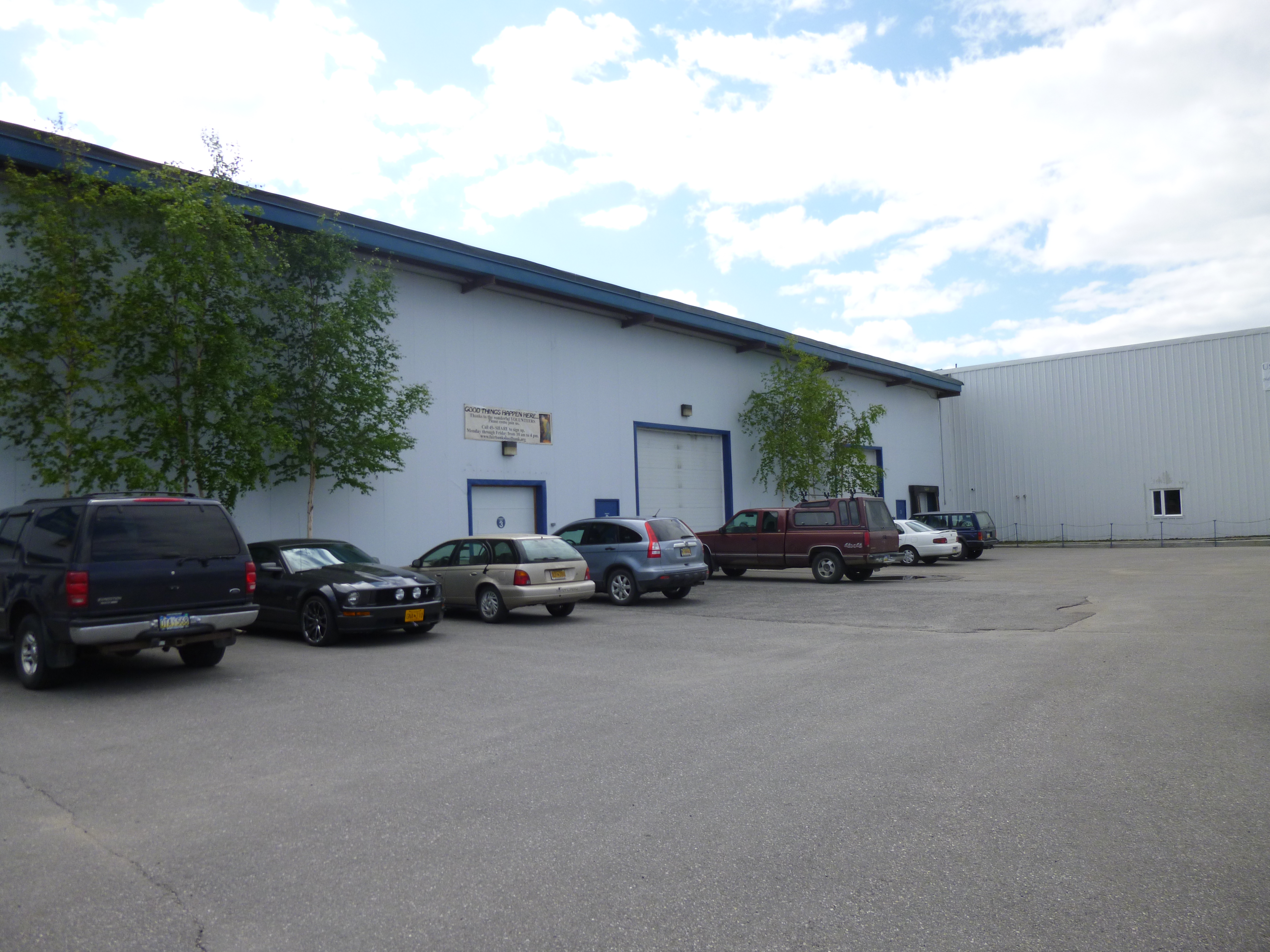
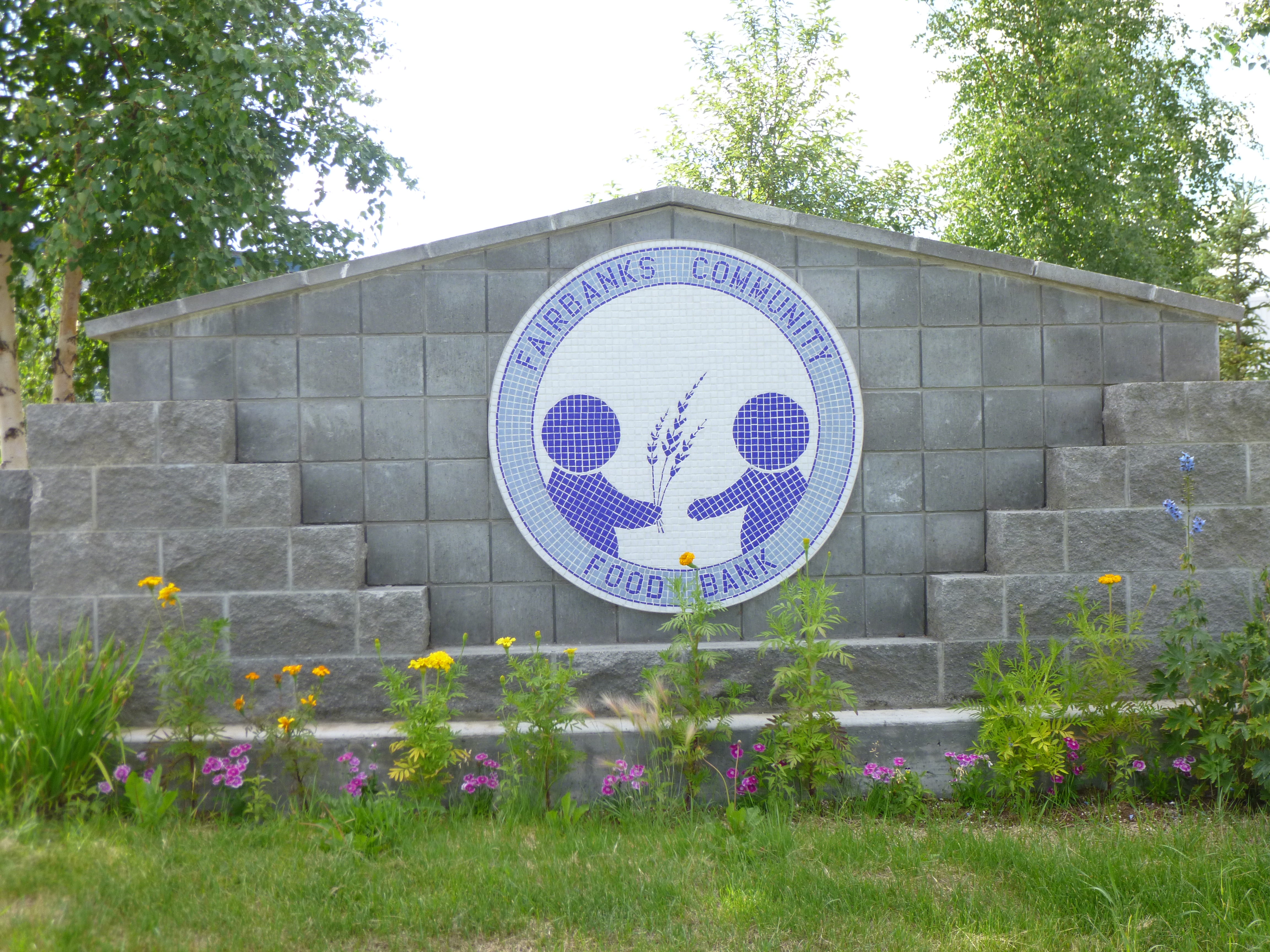
Next I continued the drive to Fairbanks – there isn’t a whole lot of choice with roads in Alaska, but I wanted to get there anyway. I had read about the Fairbanks Foodbank, and had talked with someone there this morning, and she said they could really use cereal and individual packets of oatmeal and granola bars. So I found a grocery store (although I expected high grocery prices, it still surprises me!) and I got as much cereal, oatmeal, and granola bars as I could, then went in search of the foodbank. It’s nice to be able to use my electronic gadgets again. The food bank is a big building – it takes up nearly a city block, and they serve a lot of people, since Fairbanks is the northernmost major city in Alaska. I met a couple ladies and they showed me around – it was a well-organized place, and they supply lots of smaller food pantries. They wanted to take a picture to put my story on their Facebook page, so we went outside for some photos.
And then it was time for more walking. I found a park area where Tula and I got out for another mile and a half. It was a beautiful afternoon and lots of people were out, but I was very surprised to run across a couple very loud arguments between people. This happened several times in Fairbanks – people yelling at each other at the top of their lungs for the whole world to hear, and using very colorful language. I thought maybe their arguments might be more effective if they could expand their vocabulary! There did seem to be a number of young people just hanging around here and there – I’m guessing jobs might be a tough place to come by in Fairbanks. It’s not a big city, and it’s kind of a transient one at times – it’s a supply town for people who live in the remote villages in the north, and it’s also a take-off point for tourists/adventurers traveling beyond the range of most visitors. And it’s near the southern end of the Dalton Highway (the Haul Road) featured on Ice Road Truckers, which we drove the last time we were here, so there are a lot of pipeline workers passing through. So there’s lots of people coming and going, and Fairbanks is a little farther north than a lot of regular tourists come. It seems to be just a little rough around the edges – but it is a frontier town!
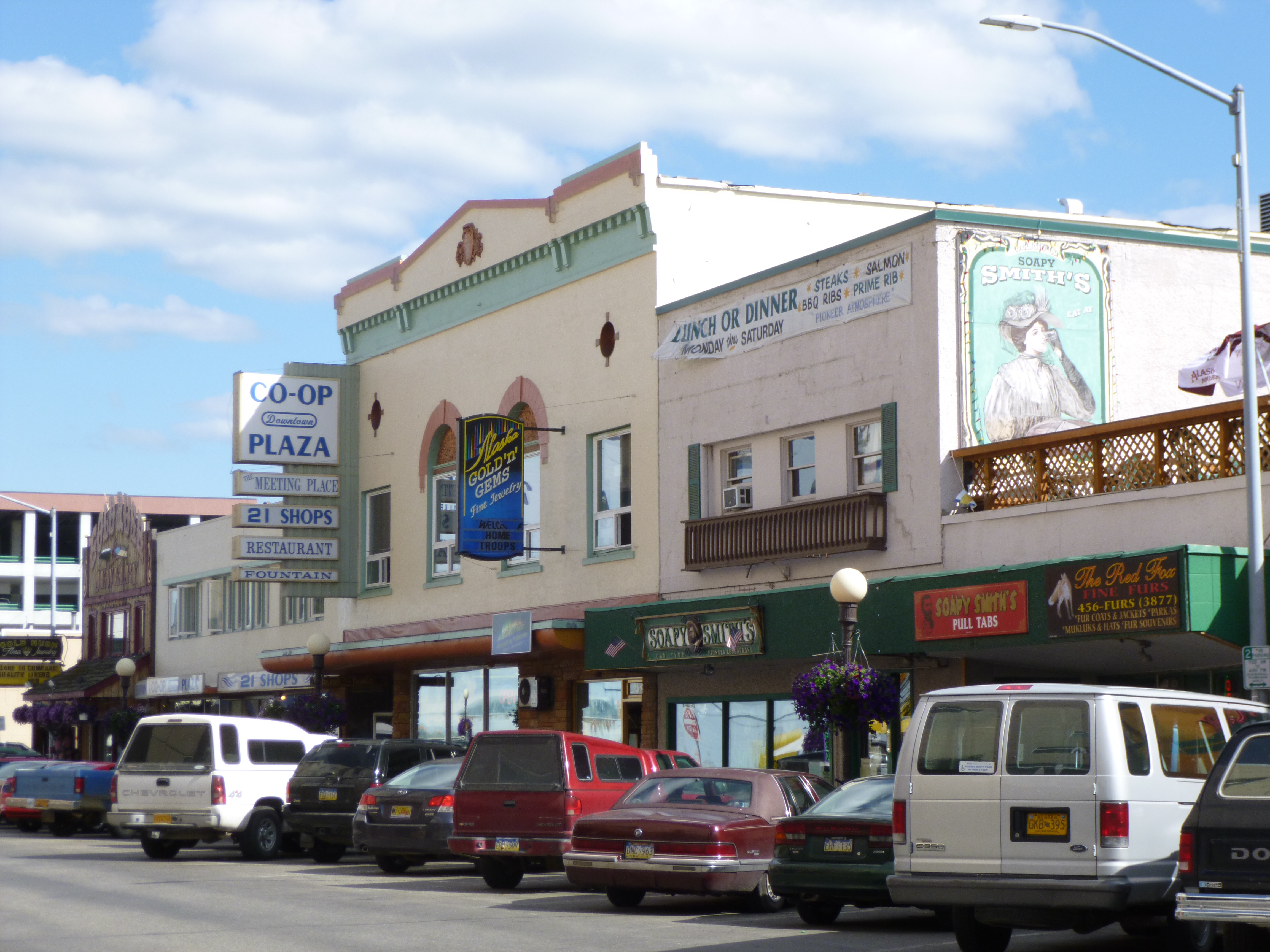
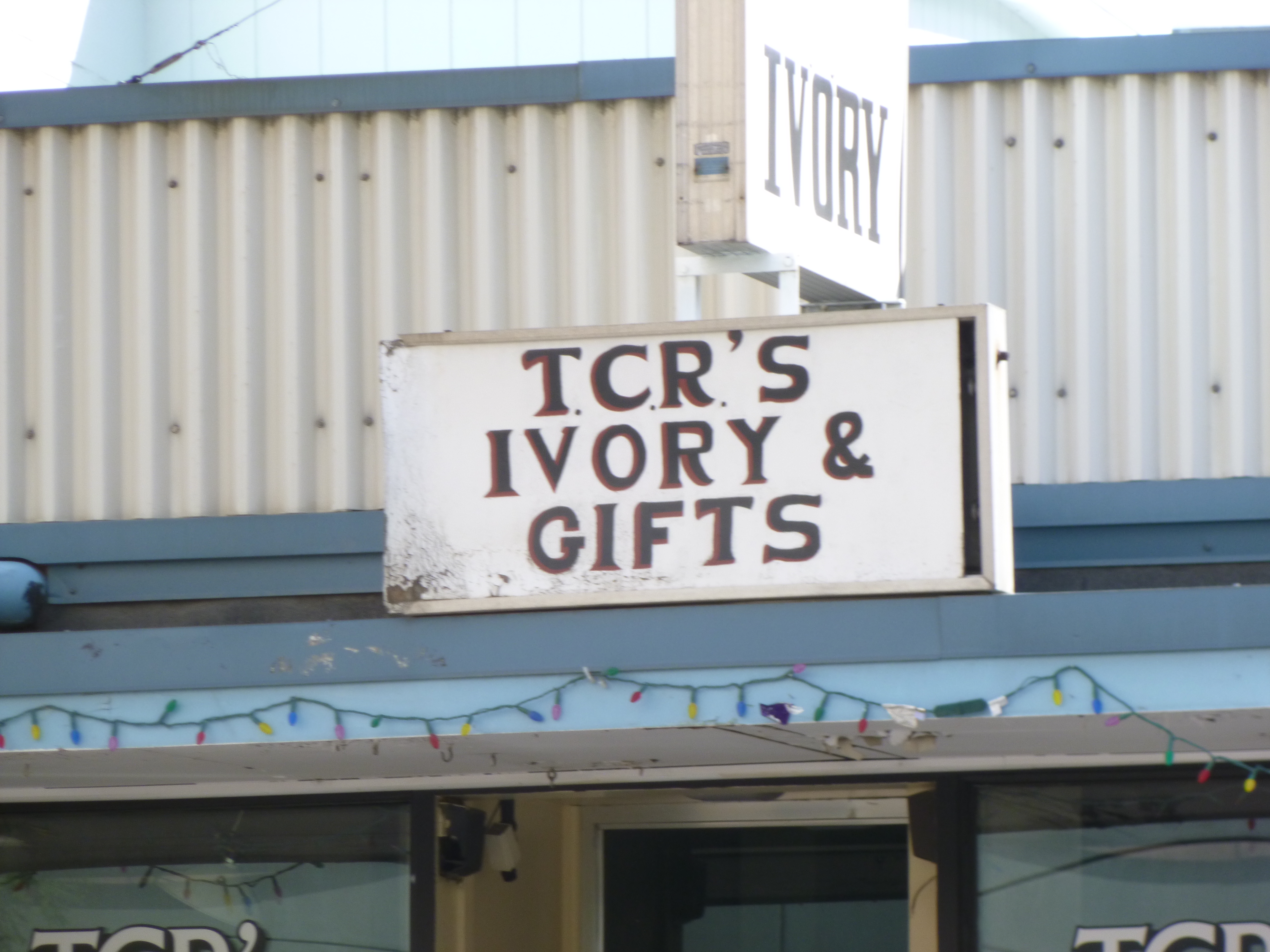
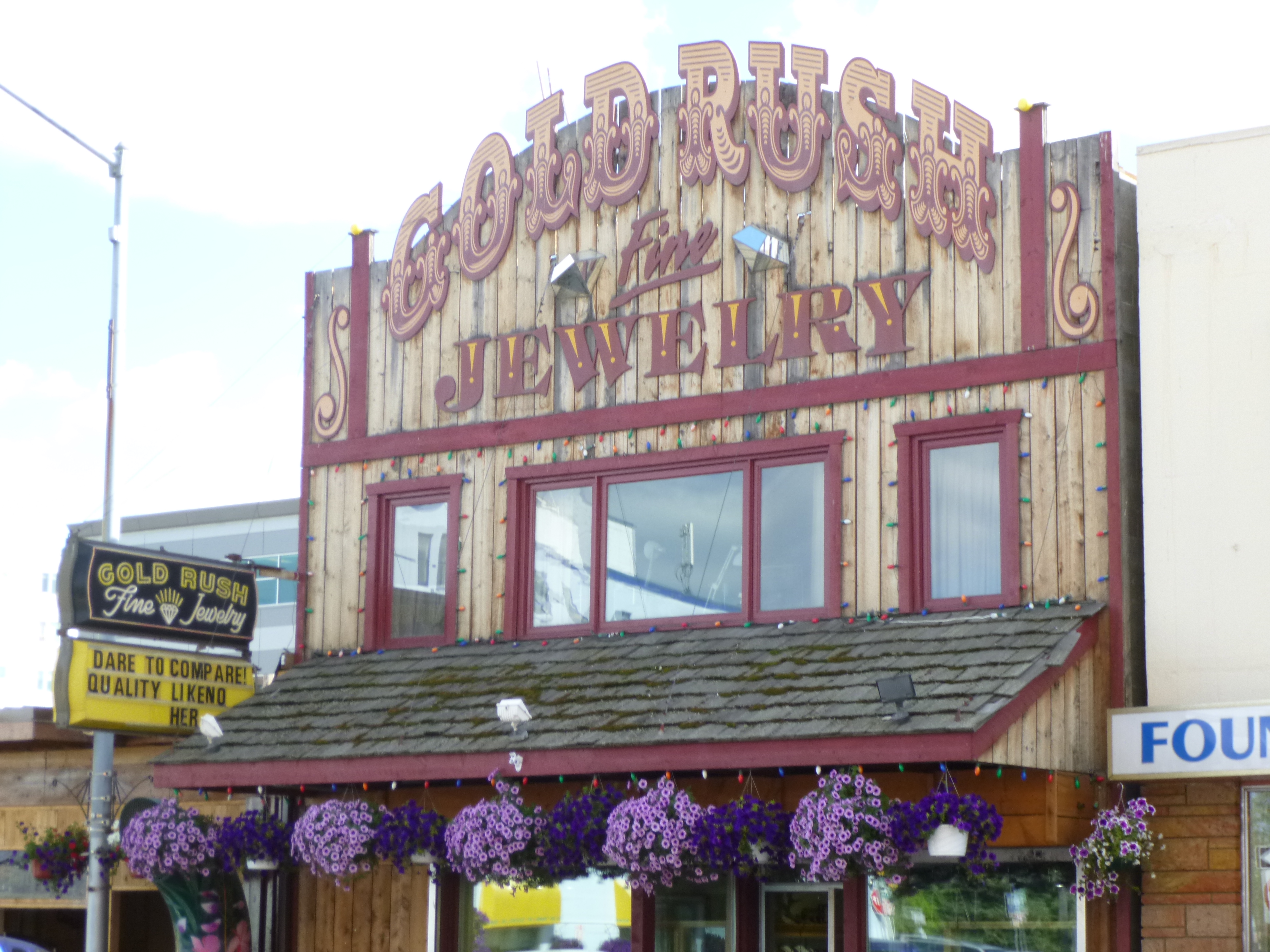
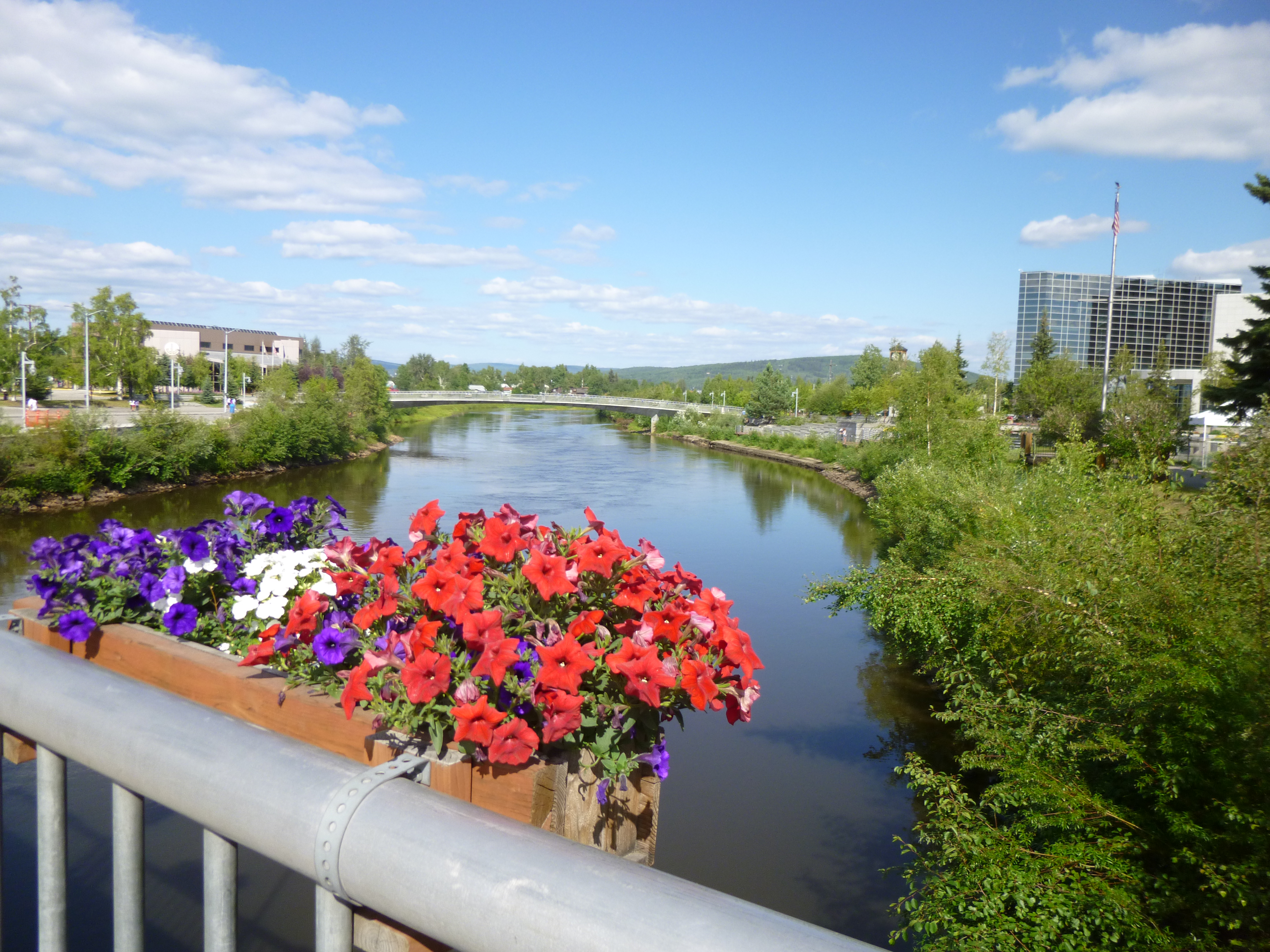
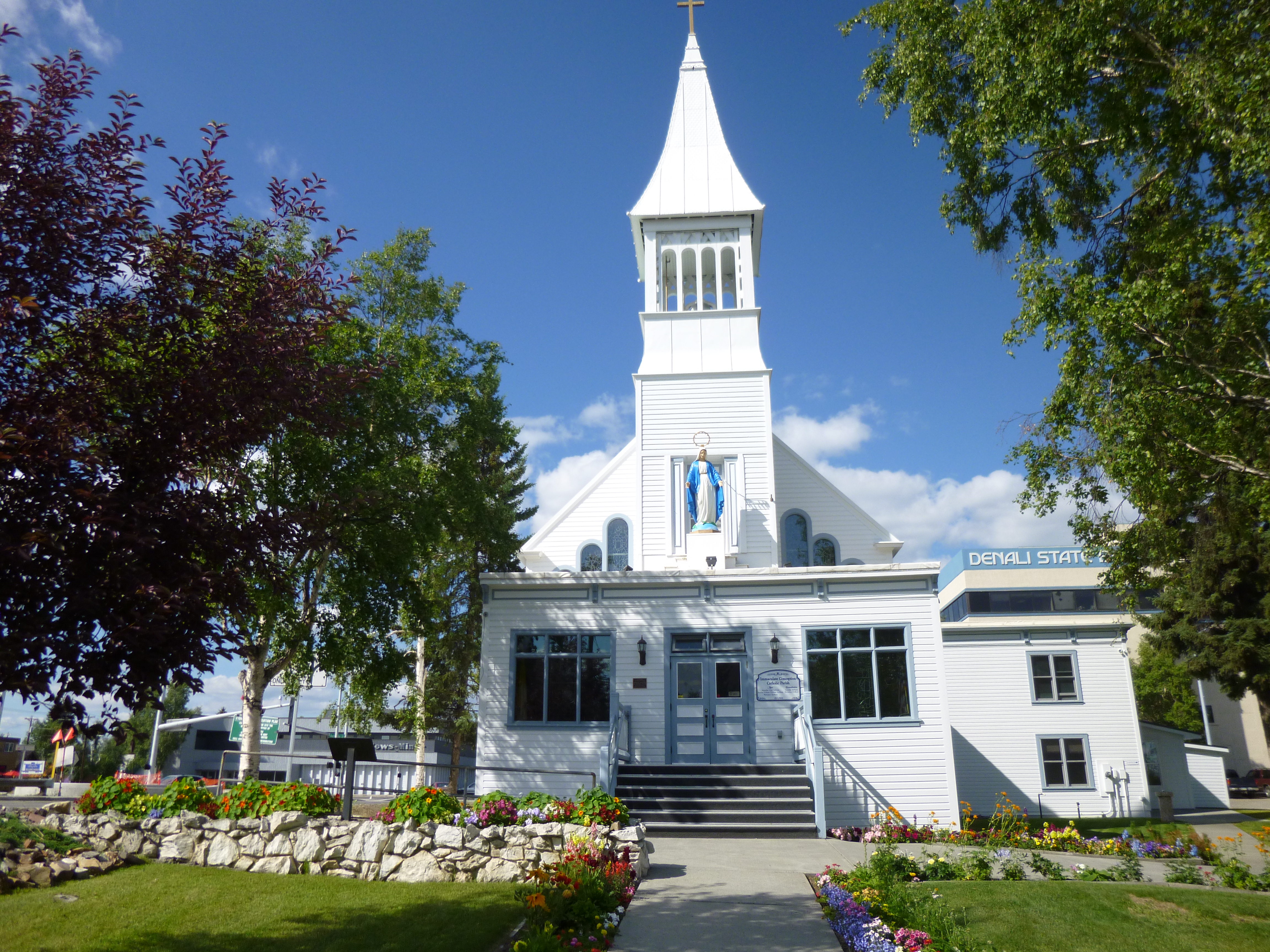
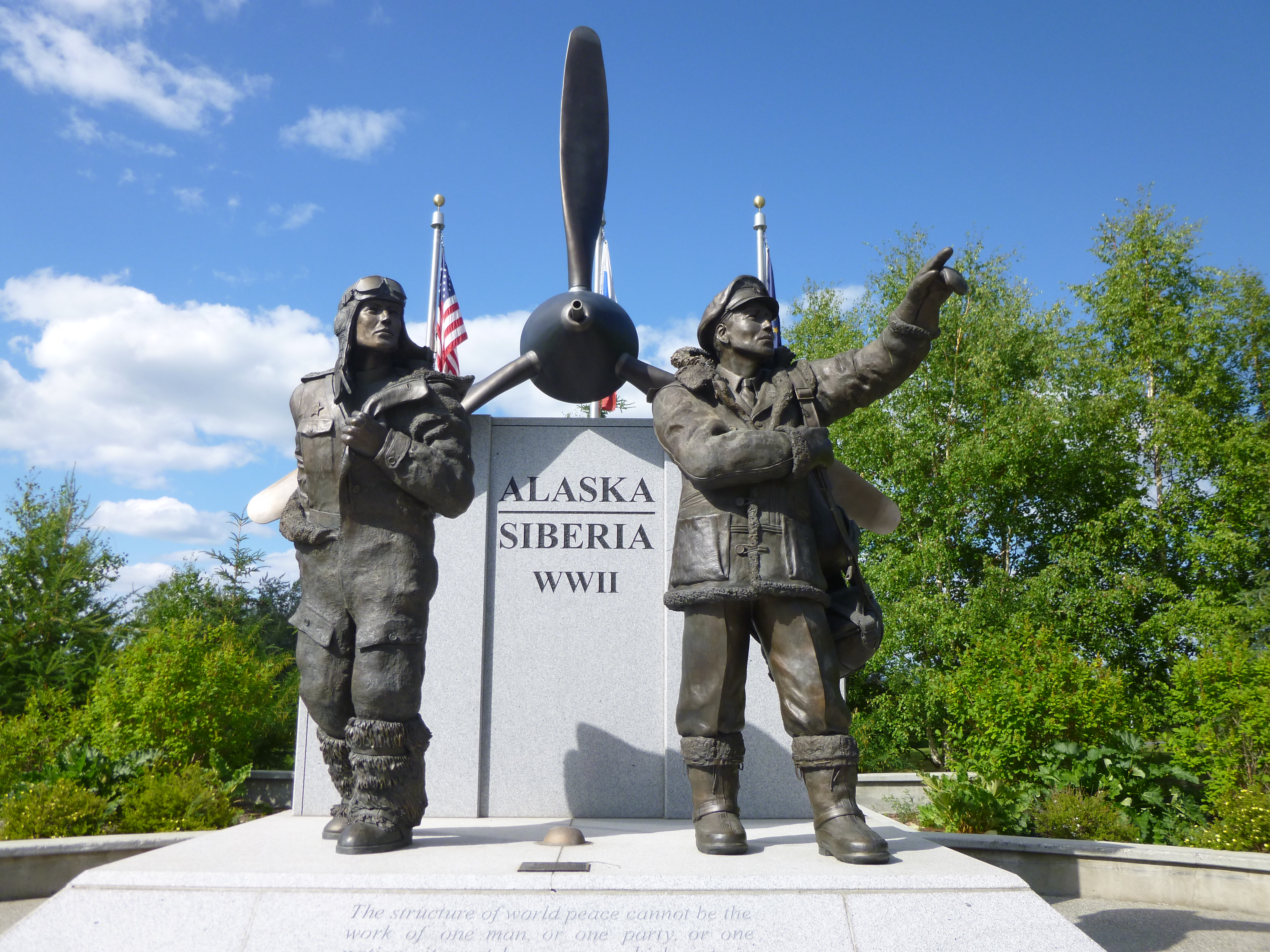
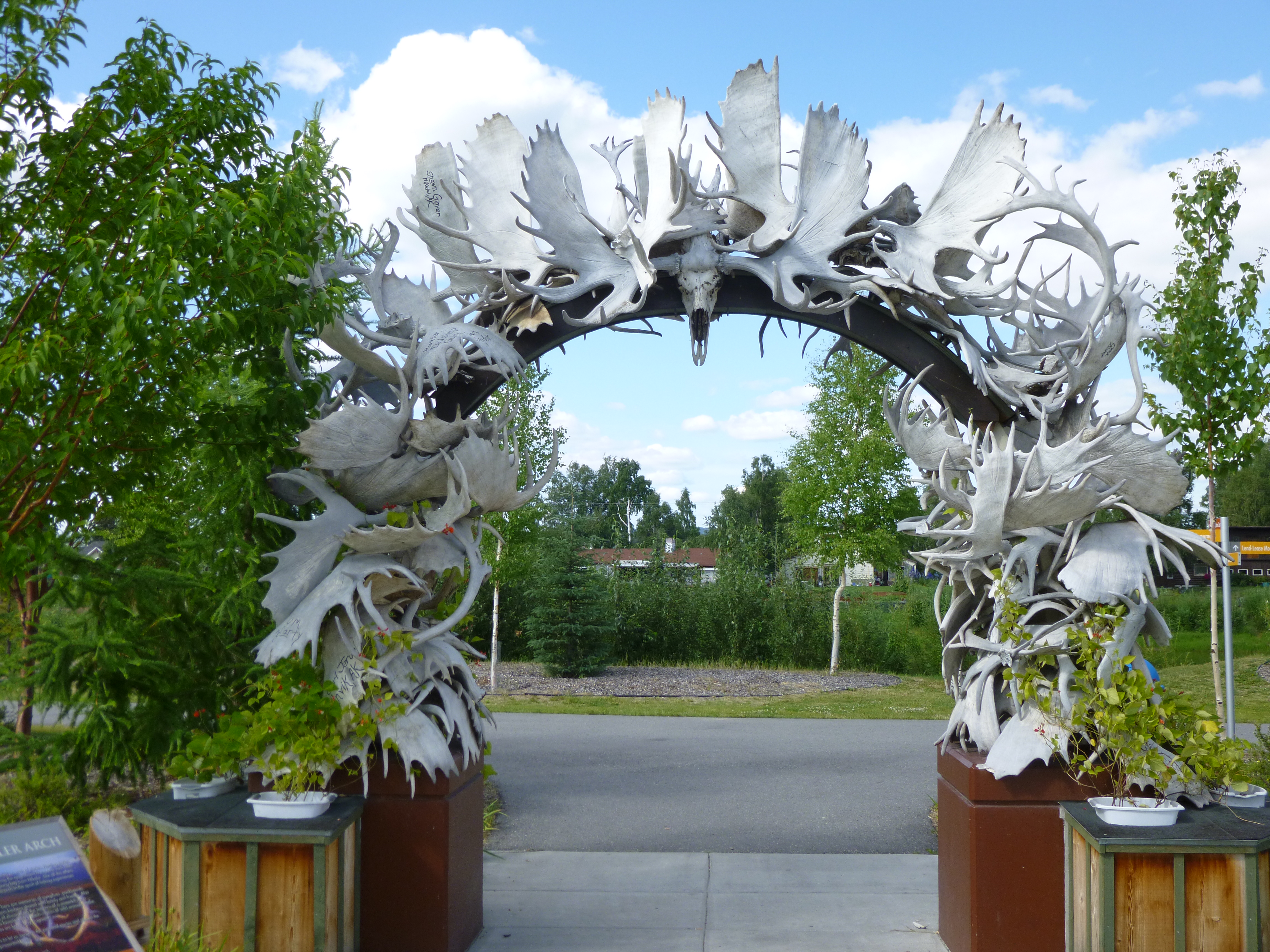
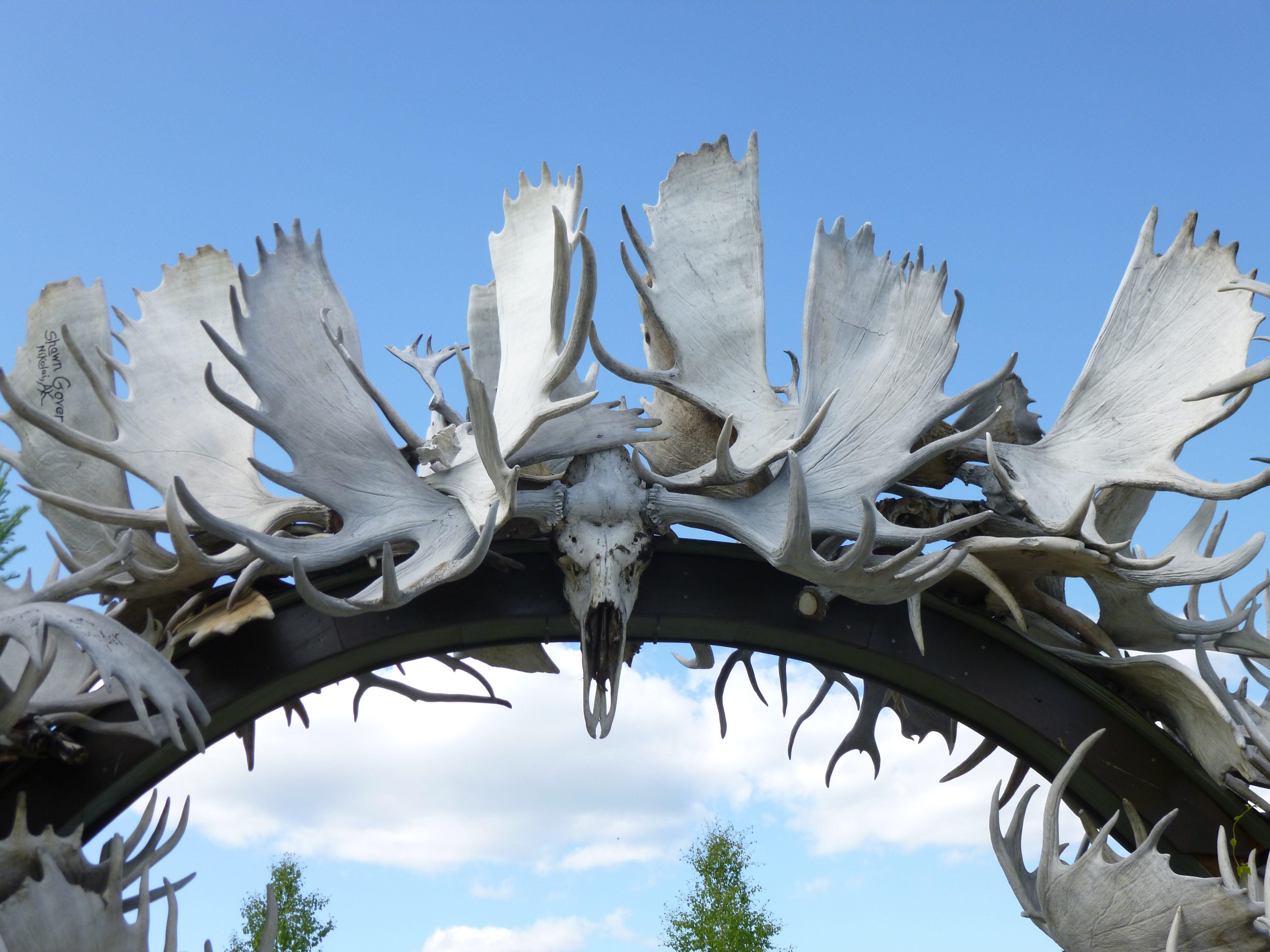
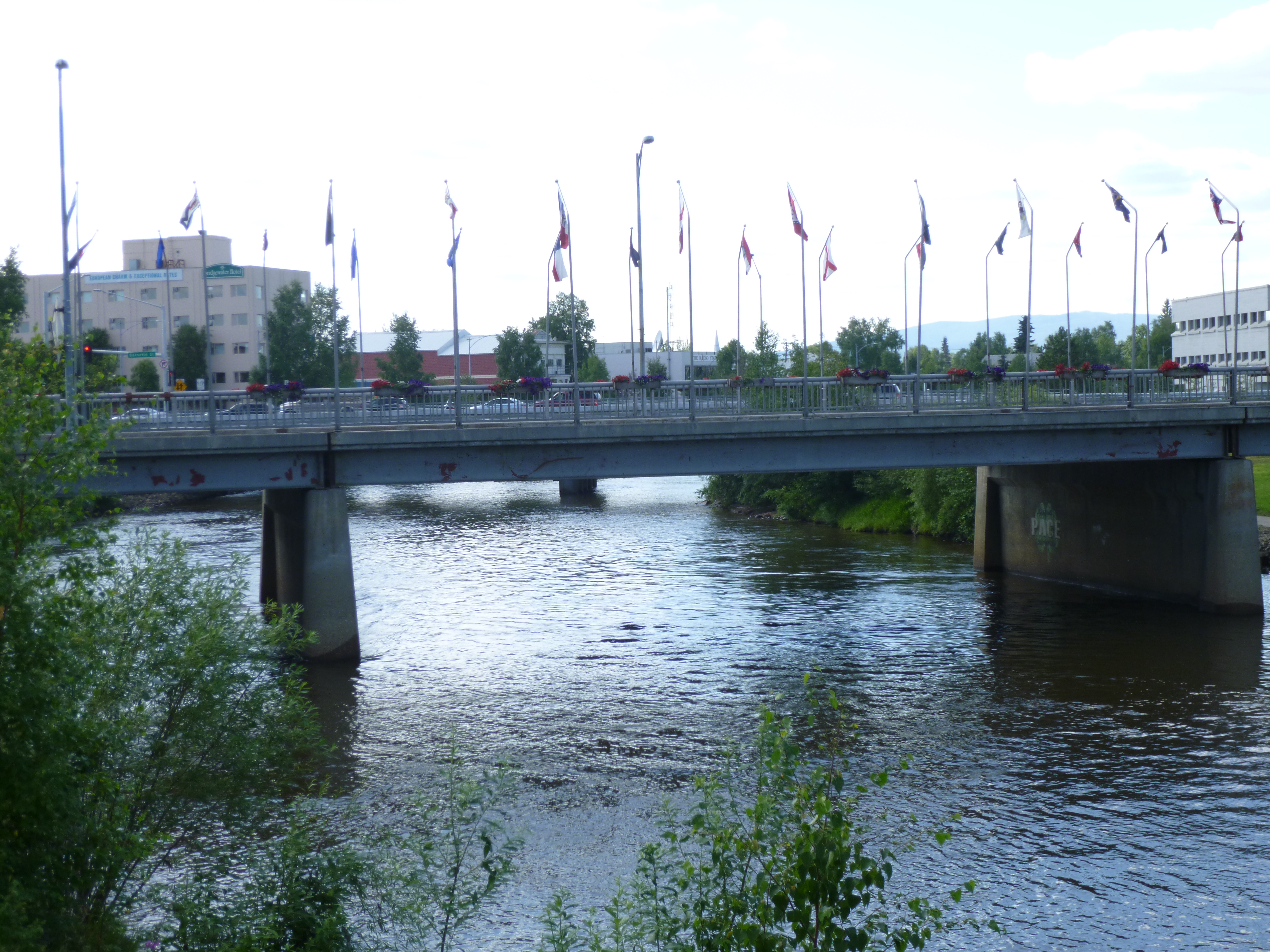
I headed downtown and walked on most of the streets there, covering another 2 1/2 miles. We walked along the Tanana River a ways, and there were some really nice statues and sculptures to enjoy – one was a memorial to the Alaska/Siberia relationship during WWII, and there was a nice Eskimo family sculpture. And there was a cool antler arch made up of over 100 moose and caribou antlers donated by a wide variety of hunters. It sort of symbolized that even though people may be different, and come from different villages and cultures, we should all be able to get along harmoniously.
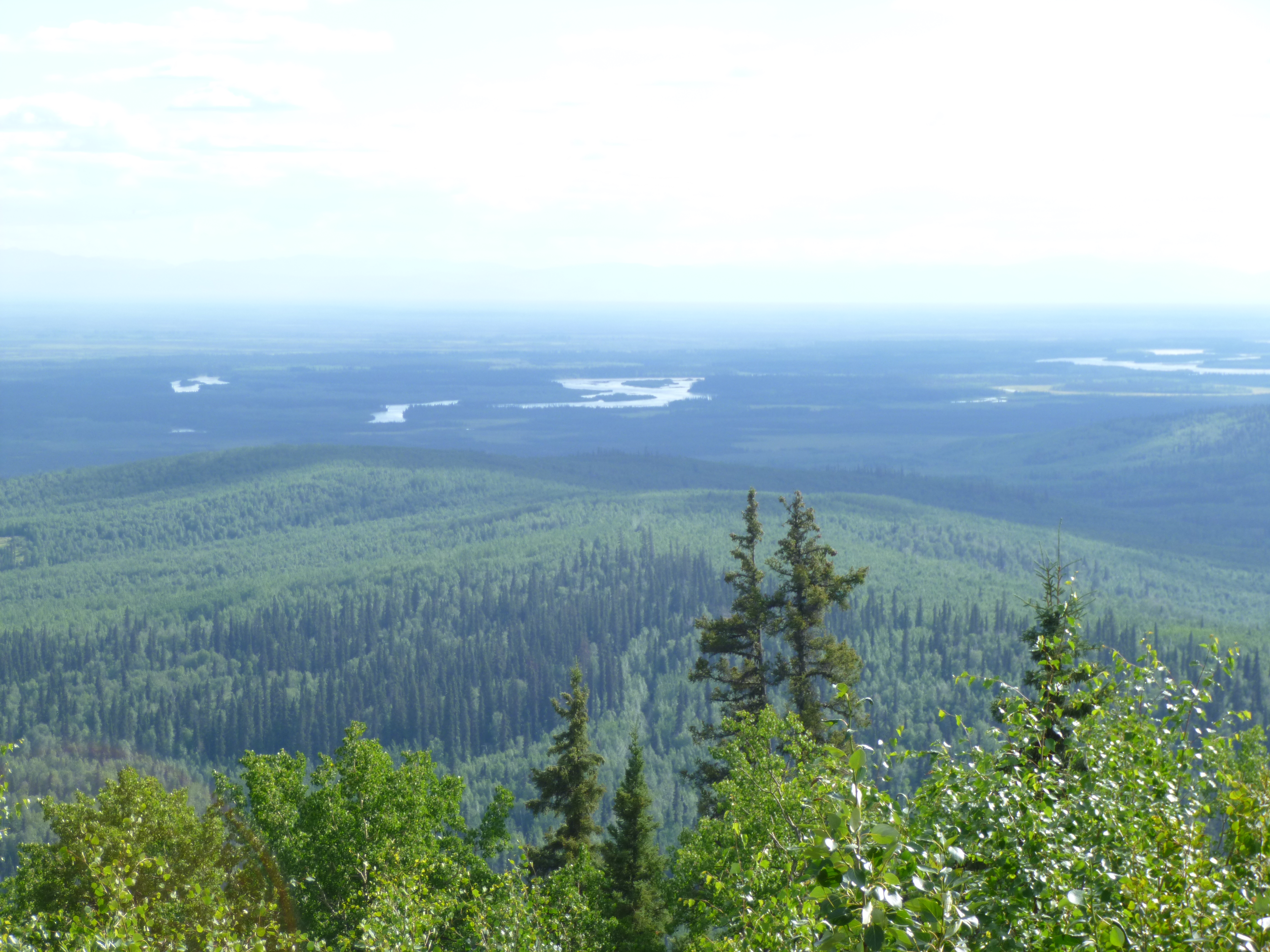
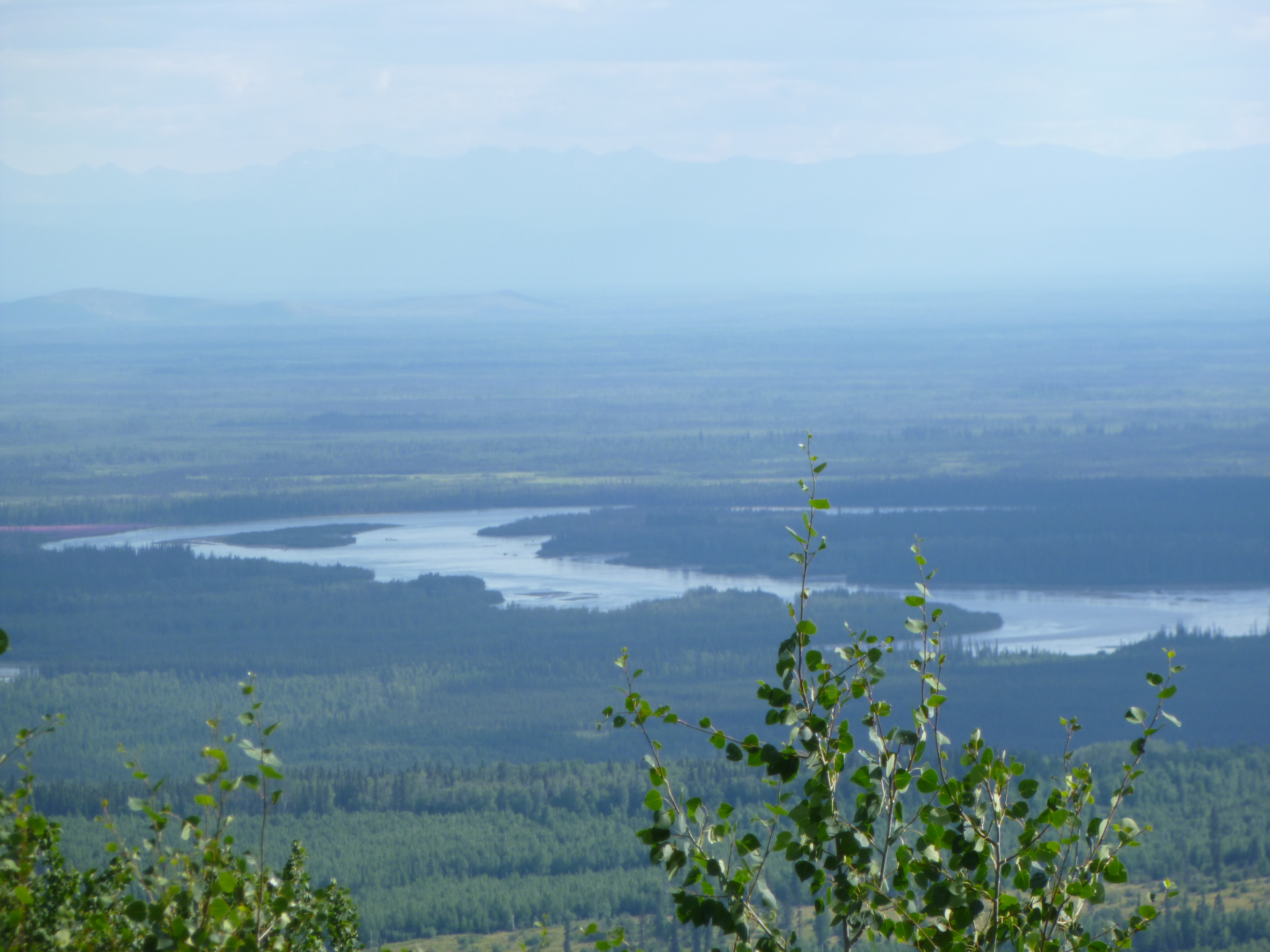
By then it was time to turn the van toward Denali National Park. I had called about a campsite yesterday when I had a better idea of when I might be there, and to my surprise I was able to reserve a space for tonight. I felt really lucky! The person helping me said it’s really hit and miss at the last minute this time of year. It took a couple hours to drive down there – through grand, glorious wide open land – green hills, mountains, forests and rivers as far as the eye can see. It really is awe-inspiring space.
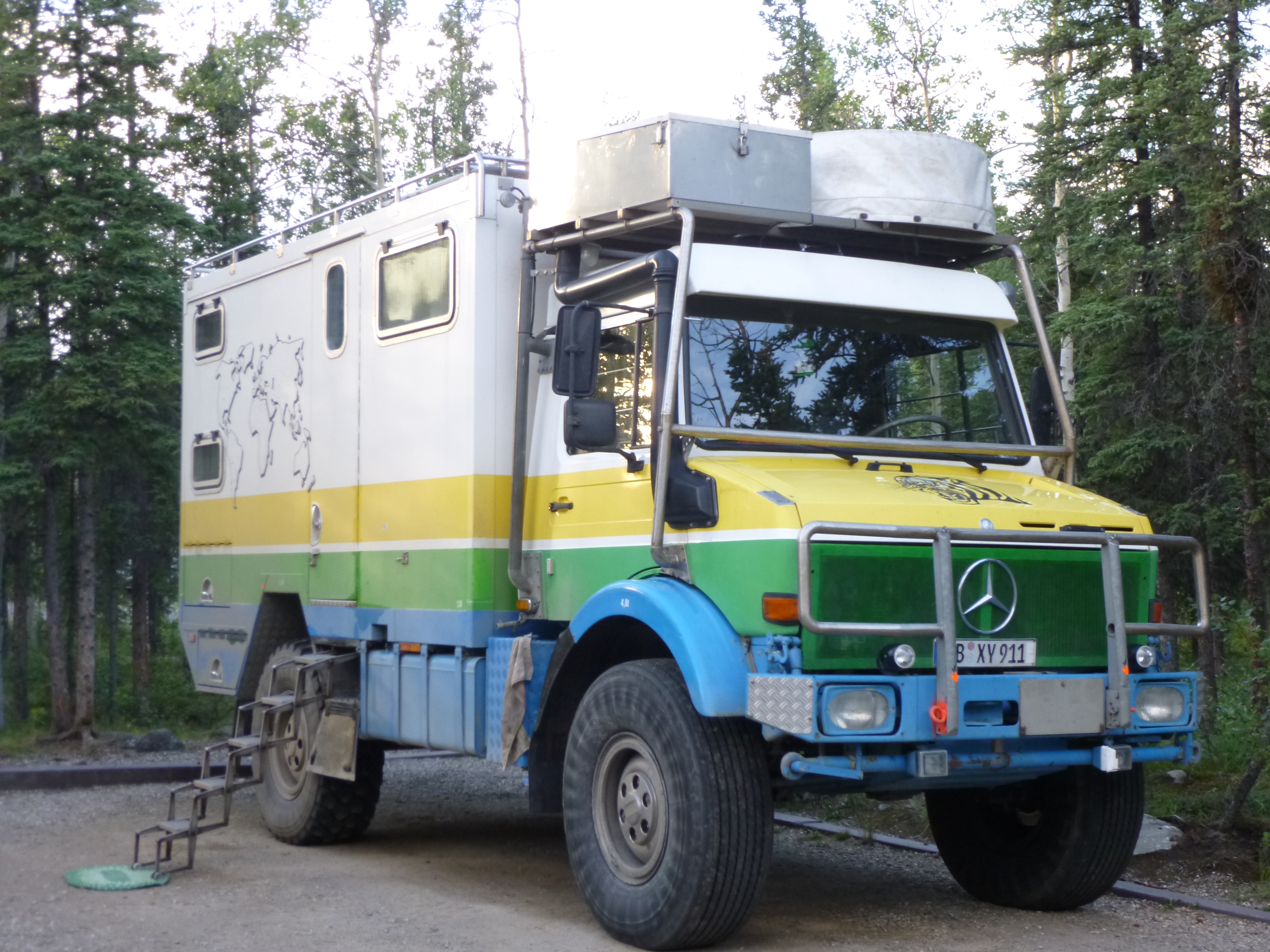
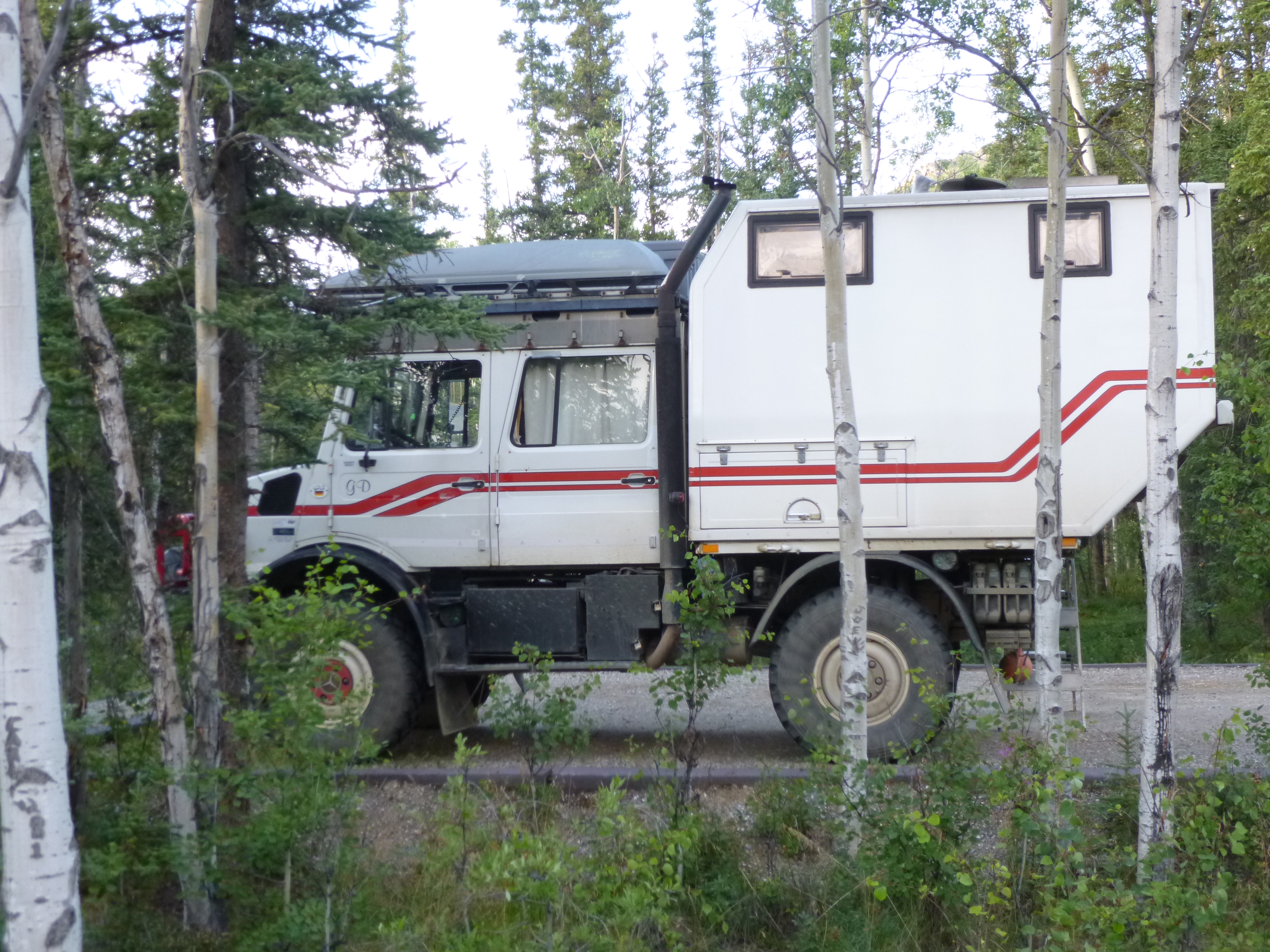
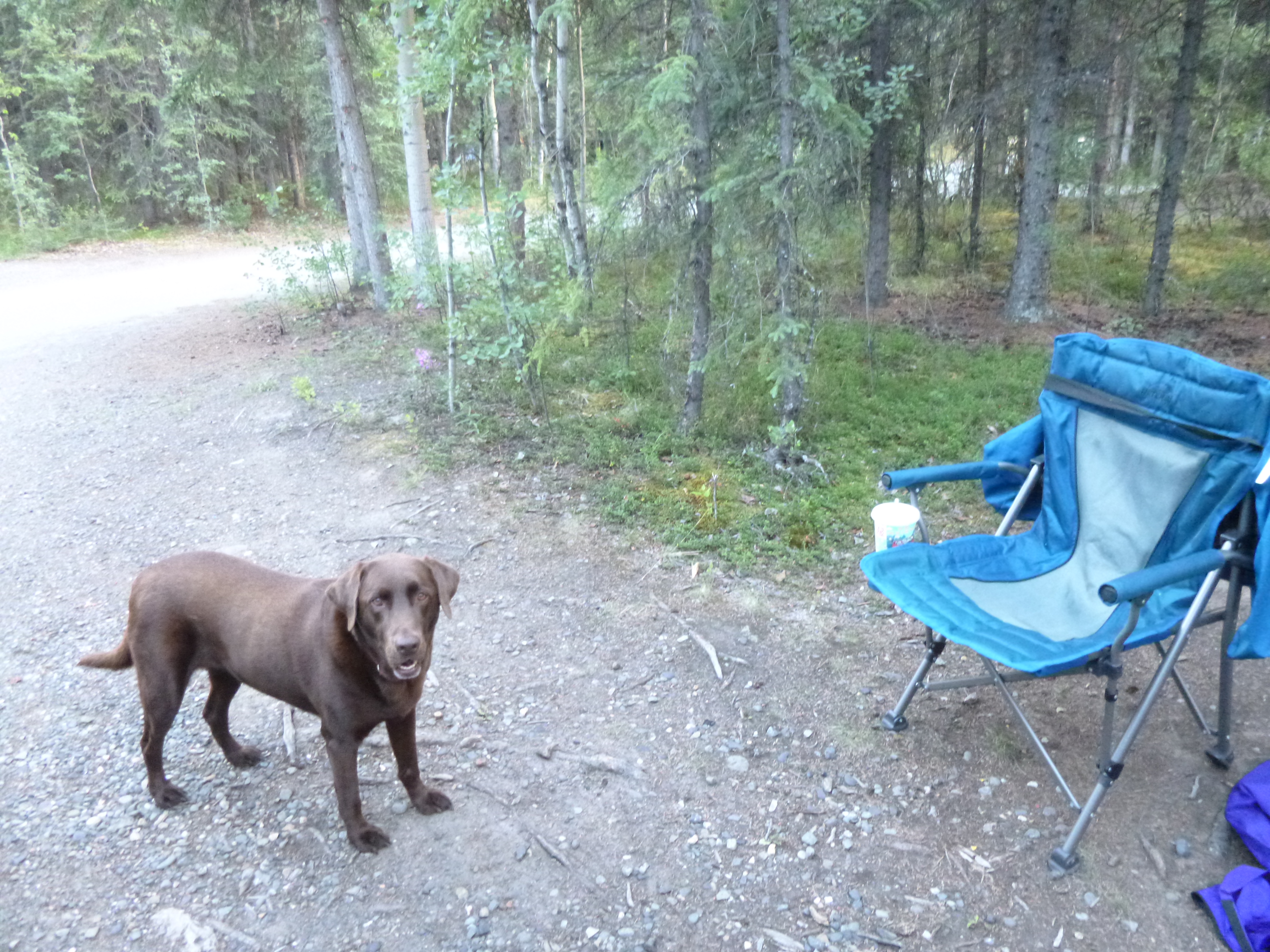
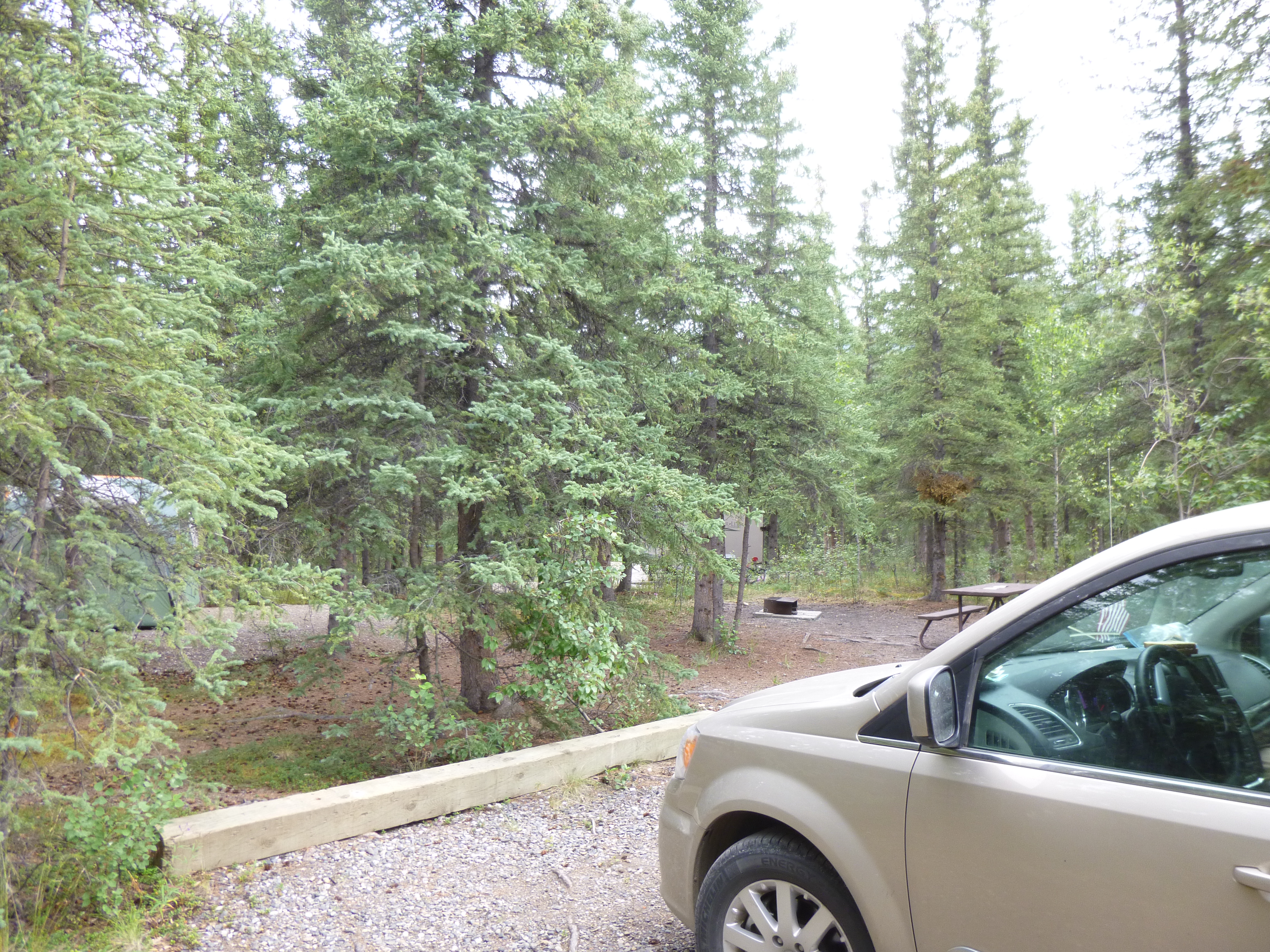
It was still light when I got to Denali and we got checked in and I had my pick of several campsites – they were sold out by now, but at least I wasn’t the last to arrive. I found a campsite I liked and was surprised by how big and spacious they were – all nestled in the pine trees. There were the usual bear precautions about food and all, and once I was set up for the night, Tula and I went on a long walk all around the campground area. When I checked in, I noticed lots of foreign people, both working, and visiting the park. There were lots of young backpacking adventurers getting ready for some backcountry hiking! There were several big loops of campsites through the woods, and we walked around all of them, and I noticed some more unusual-looking foreign RVs. It would be interesting to see what those things are like to drive! When we got back to the campsite, it was still light out even though it was kind of late, so I settled into my comfy chair and caught up with some record-keeping stuff while Tula snoozed on the pine needles. It was such a pretty evening.




Alaska – Monday, July 22
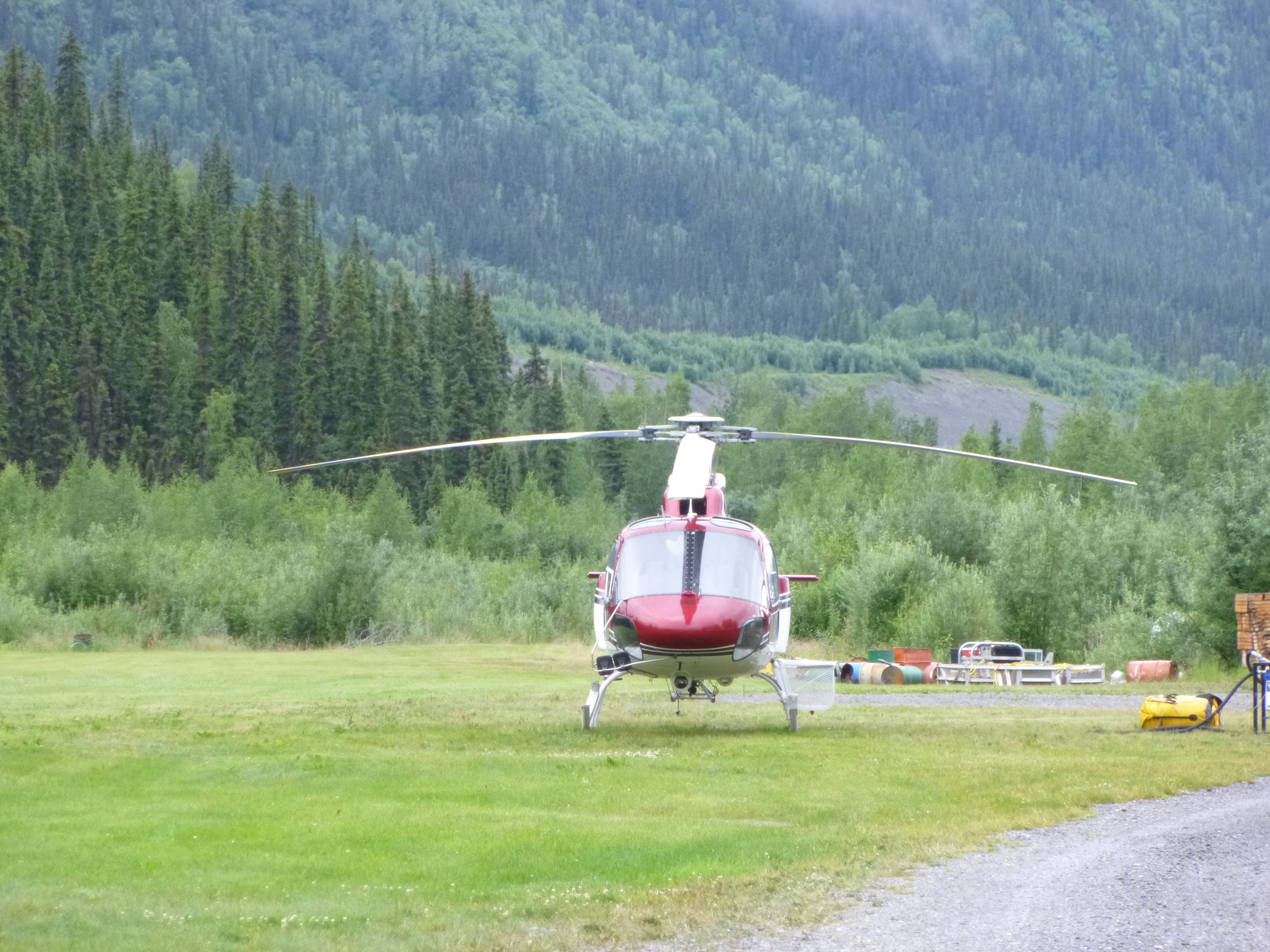
This campground had the best shower facilities that I’ve encountered for a while and it was good to take time to get all cleaned up, and get the van reorganized after some hasty packing during previous rainy days. They had internet access too but I passed on that – I’ve been in Canada long enough! Tula and I took another walk around the interesting campground (why do they need a helicopter?!?) and then got in the car, and it wasn’t long before we finally crossed the border into Alaska! The cars ahead of me were Canadian and they took quite a while to get through and a couple had to pull over for further inspection. The border guard was happy to see a US citizen, and said I was an easy one to deal with! Neither of the border guards wanted to see any paperwork on Tula, which I had handy, but they both said as long as I had the papers, that was good enough for them.
And then I was in wild Alaska – still miles from anywhere. I stopped at the big Alaska sign, and met a young German couple who were going to bike their way through Canada along the exact same route I had just driven. They said they’d already been on the road for 20-21 days from Anchorage, and that made me hope they had made lots of stops along the way, or come the long way through Fairbanks, because if it took them 20 days to get from Anchorage to the border, I don’t see how they’re going to get all they to Calgary, through all the mountains in Jasper and Banff before the snow flies! They had heard a little about road conditions, and asked me about them. I had to tell them there was going to be some rough going here and there for them. They seemed resigned to this – I was merely confirming what they had already heard. I can’t imagine biking all the way through that territory, but they’re young and adventurous!
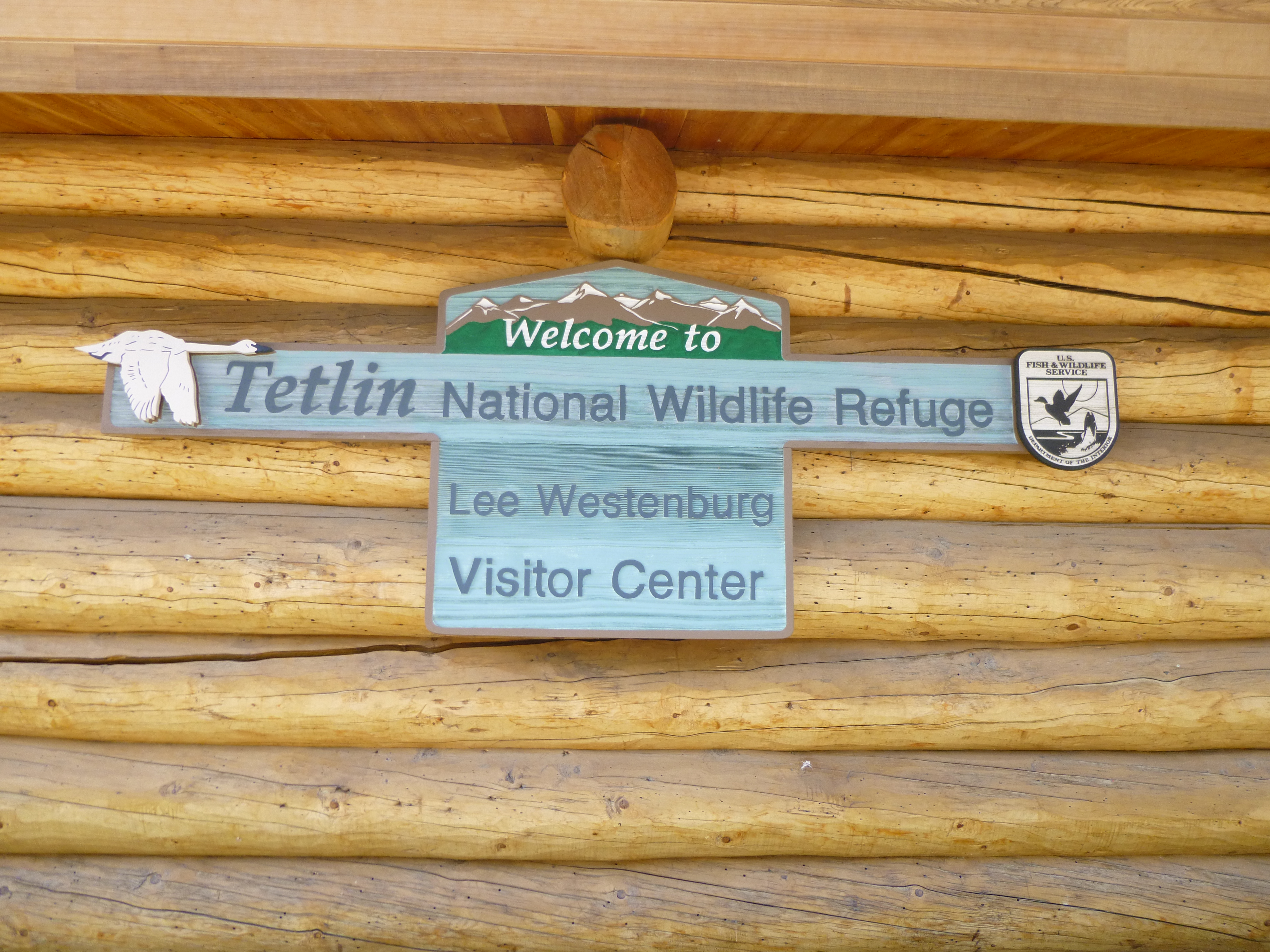
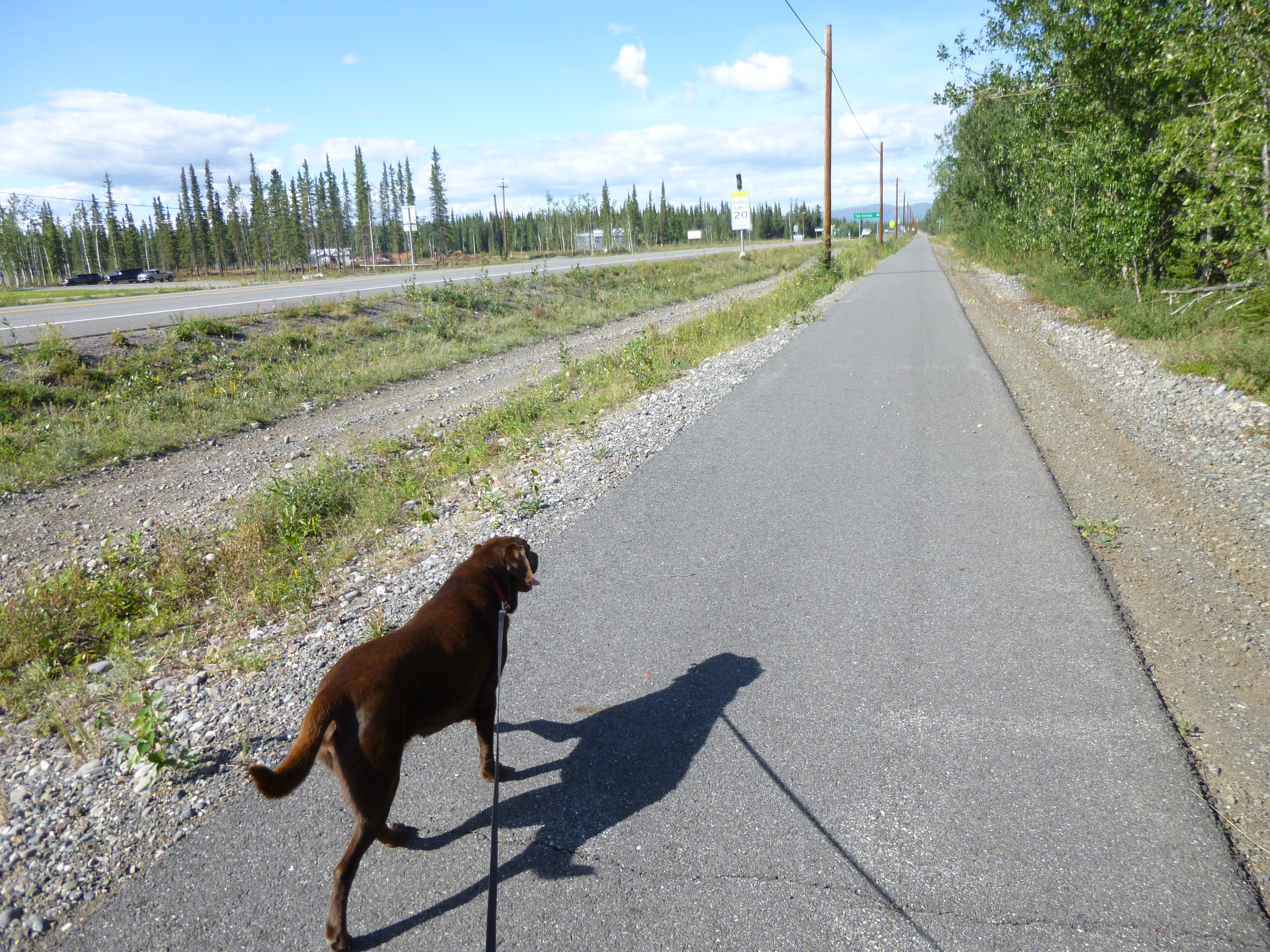
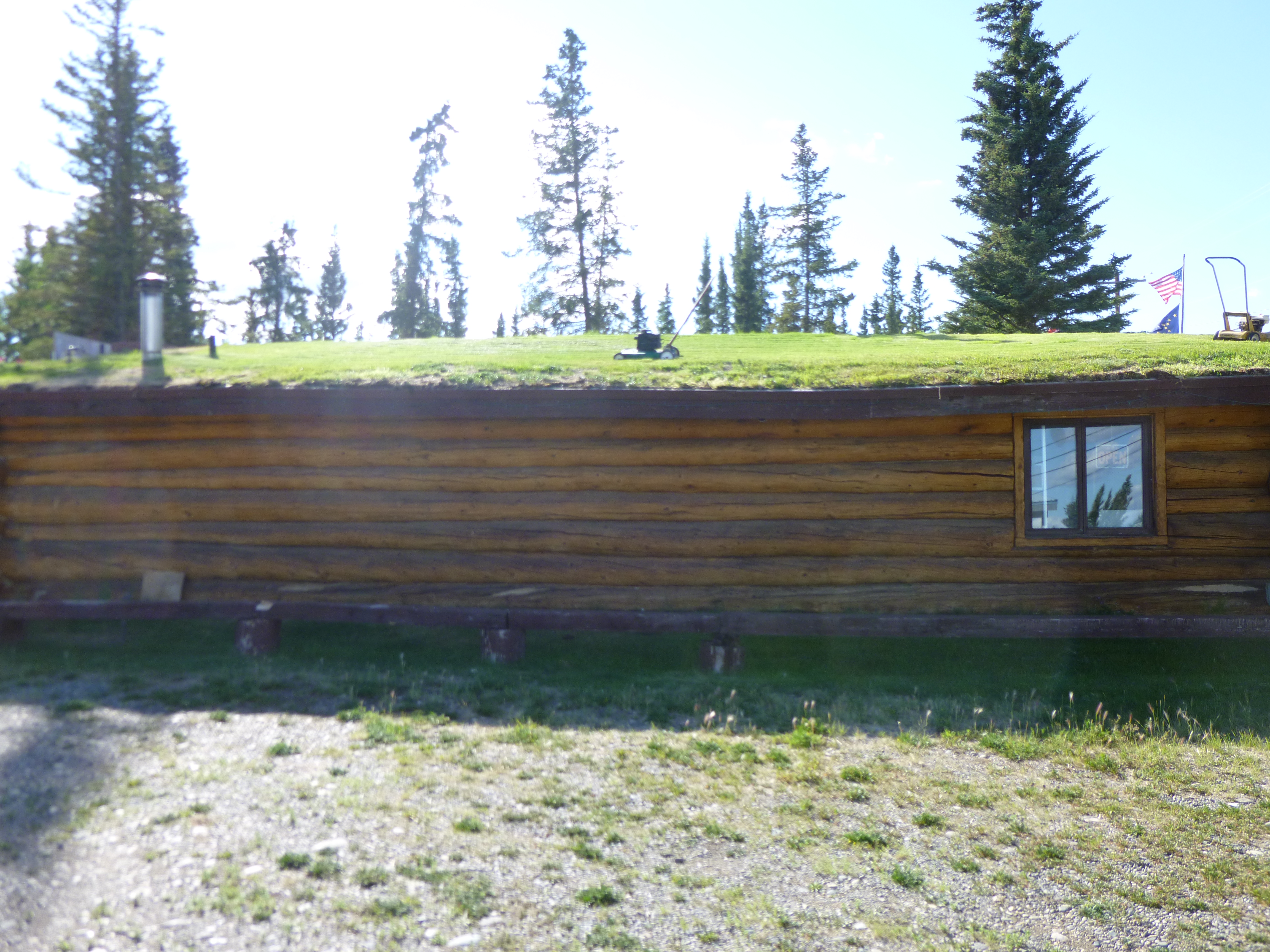
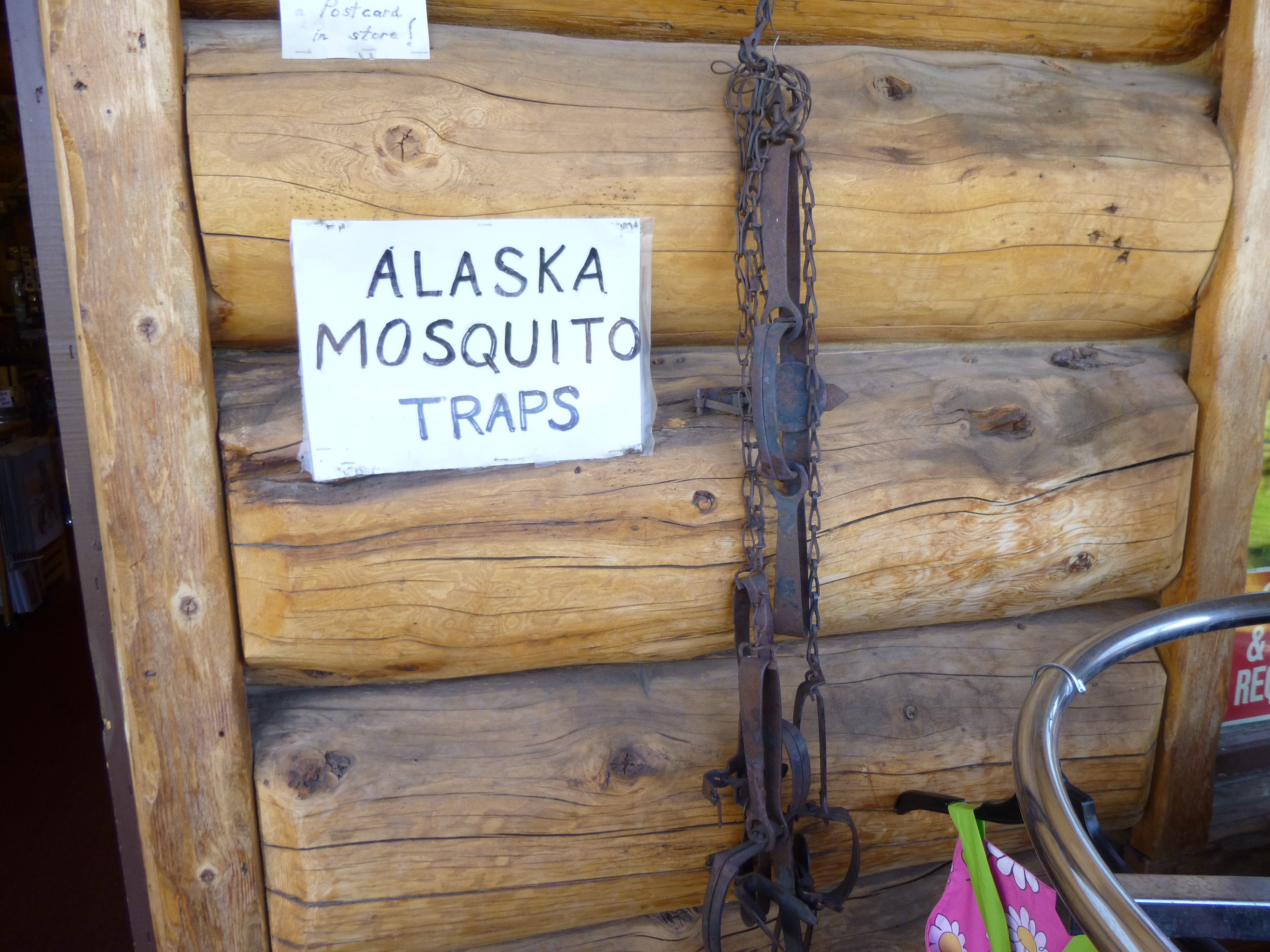
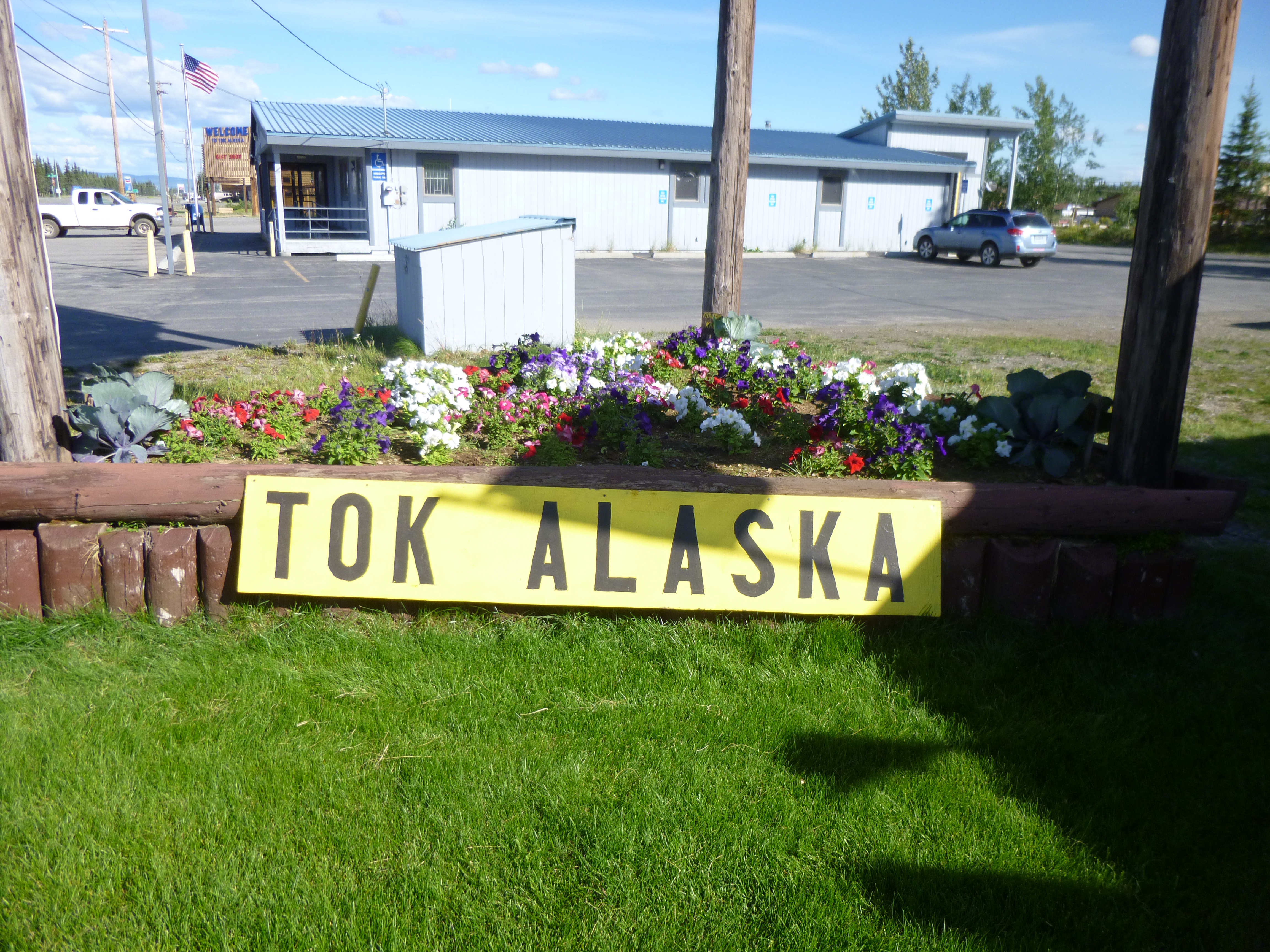
Soon after crossing the border, I came to the pretty visitor center for the Tetlin National Wildlife Refuge, and not only was that a good place to get out and walk a little, but for $1 I got a great campground map for Alaska. Then we continued on an hour or so to Tok, the first town that most people encounter when driving into Alaska. Again, I stopped at the visitor center, and Tula and I got out for a couple miles of walking along some bike trails. It’s not a bg enough place for sidewalks, but they had lots of bike trails along the roads (mostly just one intersection of 2 highways) and after making some phone calls and sending a few texts now that I had service after 4 days, we walked another couple of miles in Tok before heading west. It felt really good to be able to get started on my usual walking for the day. I passed one gift shop that had grass growing on its roof, and later when I went inside for a postcard, they told me they have to mow the grass a couple times a week in the summer, partly because it grows so fast in the summer with 20+ hours of daylight every day, plus they have to keep it watered so it doesn’t become a fire hazard for the rest of the building, which is a log cabin, like many other places in town.
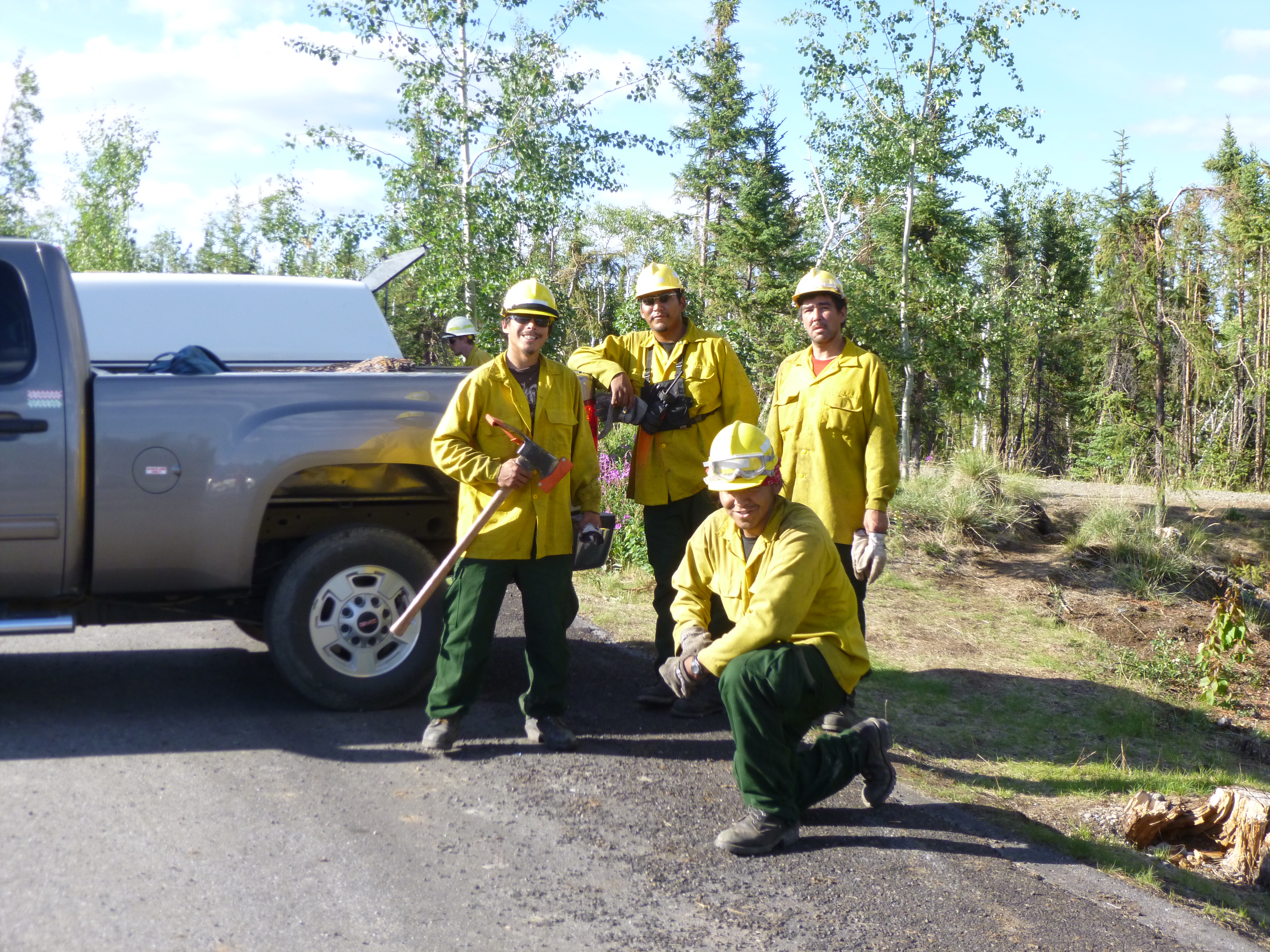
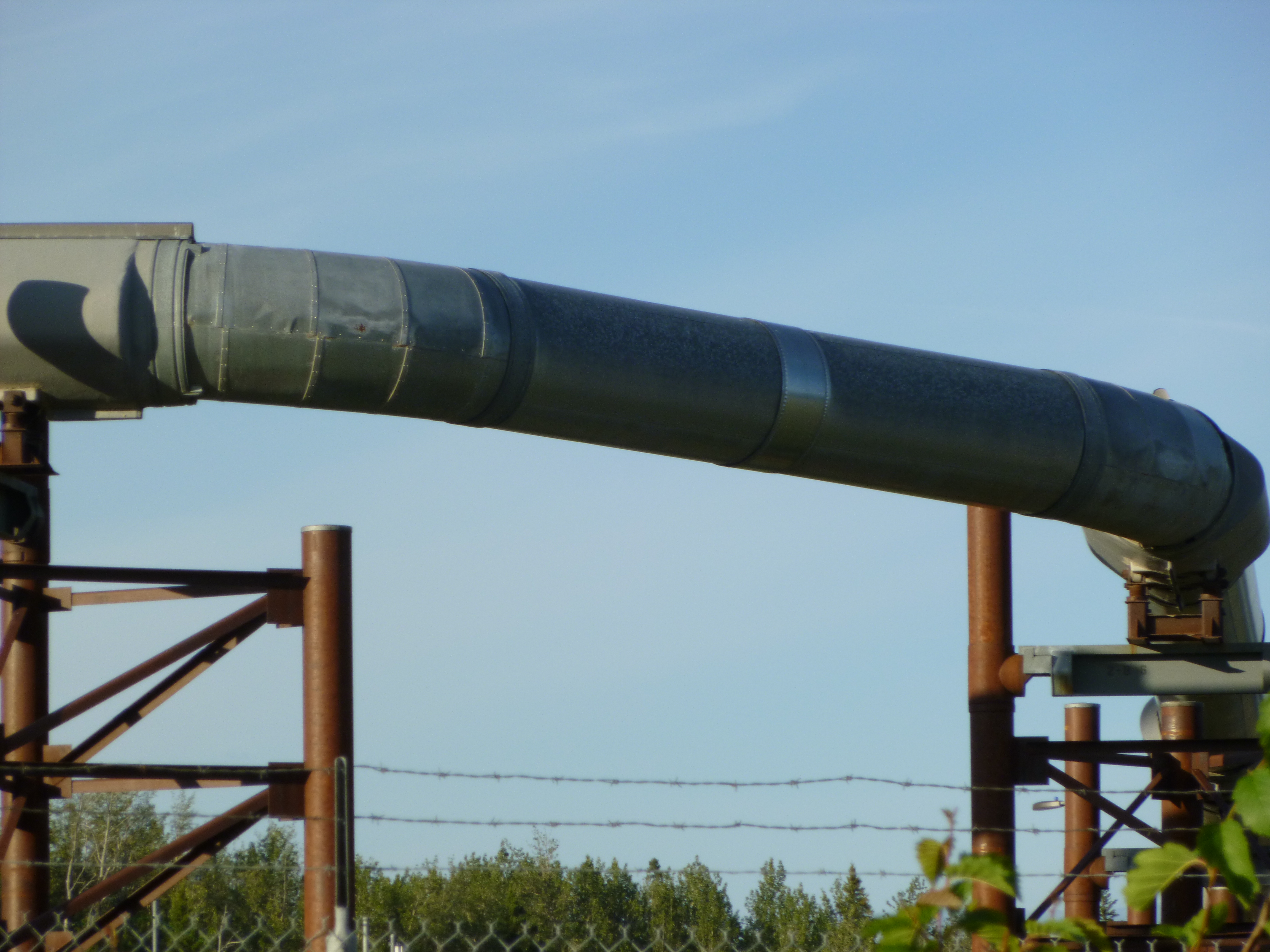
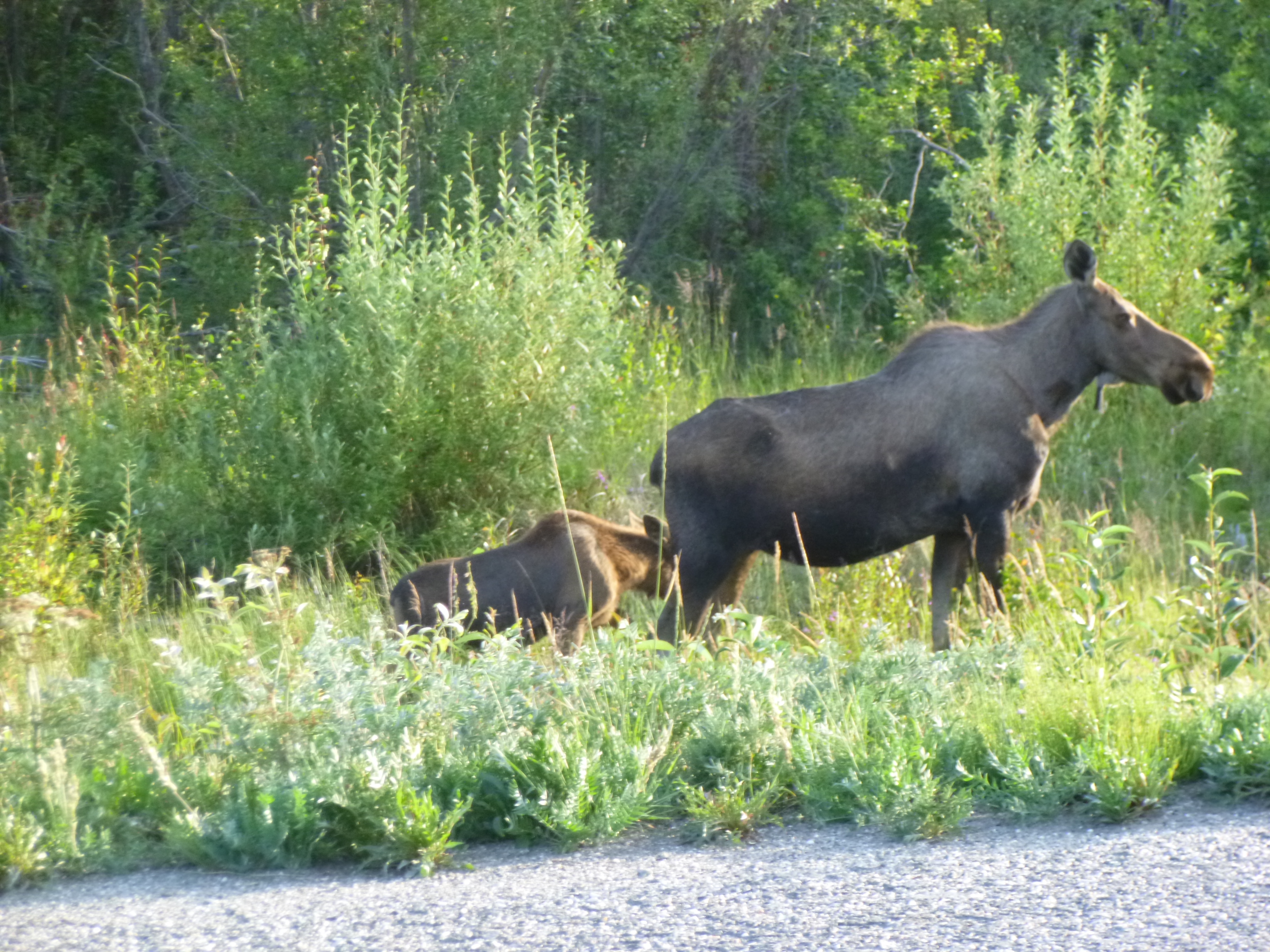
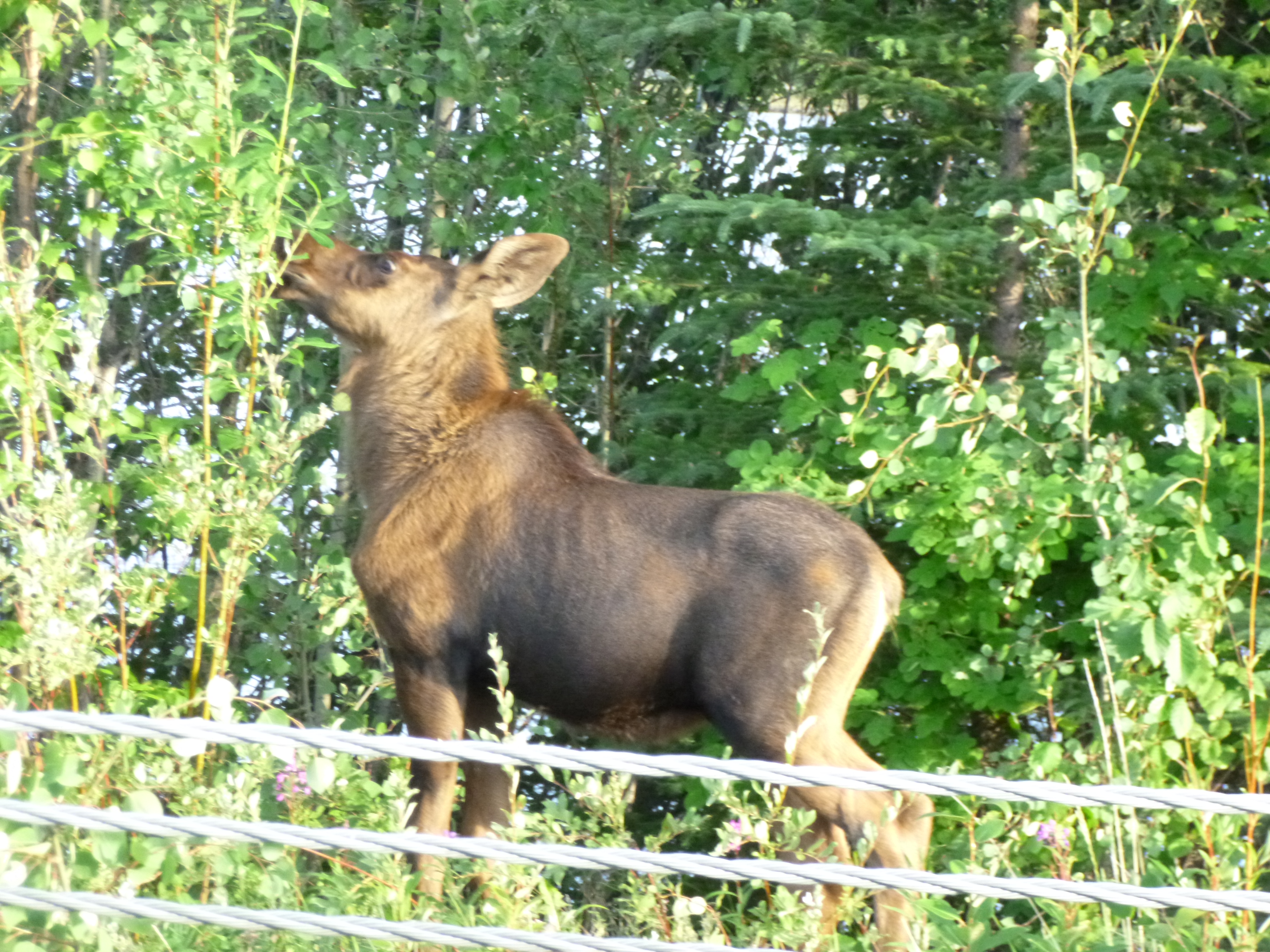
So, with electronic gadgets back in use, and 4 miles of walking done, we headed west, aiming eventually for Fairbanks. About a half hour out of town, I passed a rest area place that was full of sooty fire fighters and about 10 forest service trucks. I was going to stop there anyway, and one of the firefighters walked past the van when I was parking, and I asked them about the fire. They said it had started down by the river, but it was out now, and there was nothing I had to worry about. I was worried there might be some kind of forest fire and maybe I shouldn’t continue, but they said it was perfectly safe. I asked one of them if it was okay to take a picture, and the group of them that was around happily posed for a picture! I continued heading west toward Delta Junction and began to see some moose – mamas out grazing with their calves. I saw some of them close up, and I really like moose, but they are kind of ugly, ungainly creatures! And there were flies and gnats buzzing all around them. The babies were trying to nibble branches and grasses and I got some good close up shots – Tula was intrigued with them and was watching them out the window – I even got a picture of her watching a moose. I also drove by a place where the Alaska pipeline passed through – a bunch of above-ground pipes, carrying the oil across land and rivers. And then there was even a rainbow between a couple of pine trees when there wasn’t even any rain around!
I passed through Delta Junction, and still continued west. I didn’t see any donation opportunities in Tok, and Delta Junction was literally just a highway junction, although there was a little store where I was able to get a good salad for dinner, and since I haven’t had time to do any donation research, I will wait until tomorrow to kick in the donation part of the week. After some more miles, I passed a campground called The Lazy Moose, and even though it was still light enough out to make it seem like it was about 2:00 in the afternoon, I knew it was time to stop, and figured that was as good a place as any. I was a little worried about bugs and mosquitoes, but they didn’t seem to be too horrible, even though the campground was near a river. A walk down by the river was not a good idea though – that’s where the bugs were hanging out! When it was time to call it a day, it seemed like I was just going to take a nap because it was still so light out – and I’m not a napper – so that kind of confuses the brain a bit! But I was really happy to be in Alaska, and was looking forward to kicking the week off in good style tomorrow!











 Canada – Day 4 of drive to Alaska – Sunday, July 21
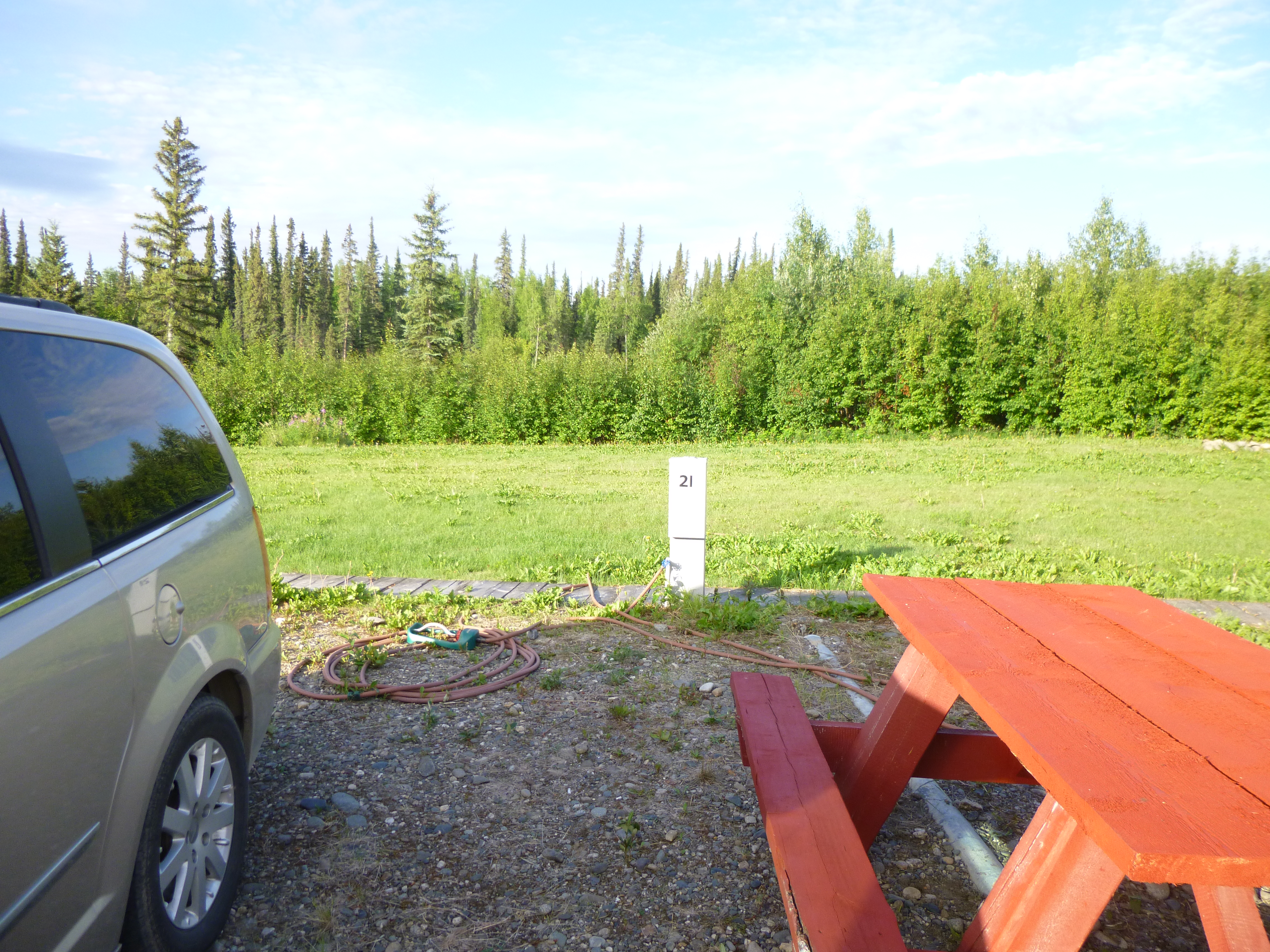
From the looks of the campground parking lot, it looked as if it must have been gently raining nearly all night – there was a thin layer of water on top of the mud everywhere – it looked really slick and messy. I was grateful to have a picnic table to put my bins on while I rearranged things to pack up, and there was nothing I could do about Tula’s feet (or mine for that matter!) – we got a little muddy!
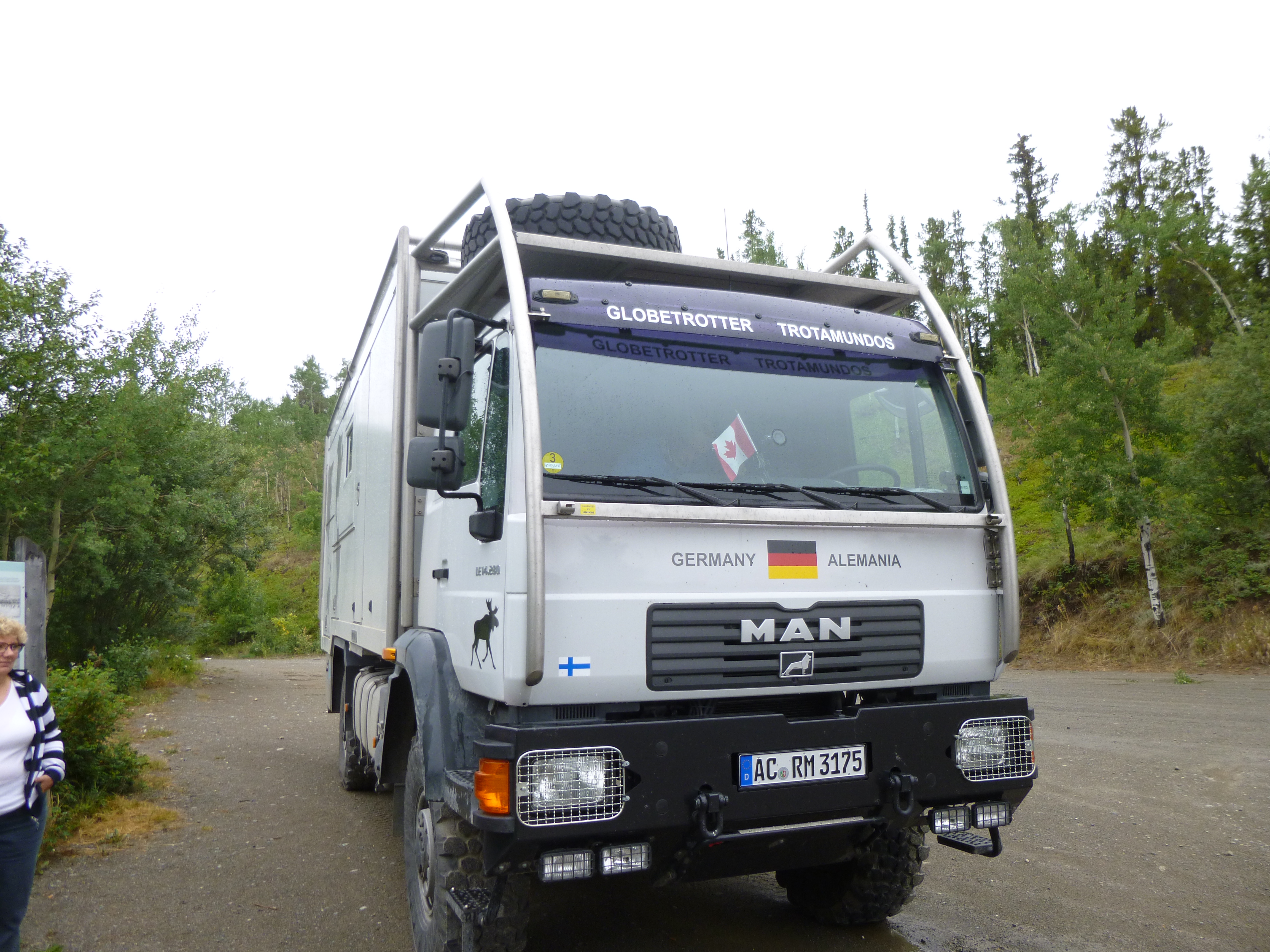
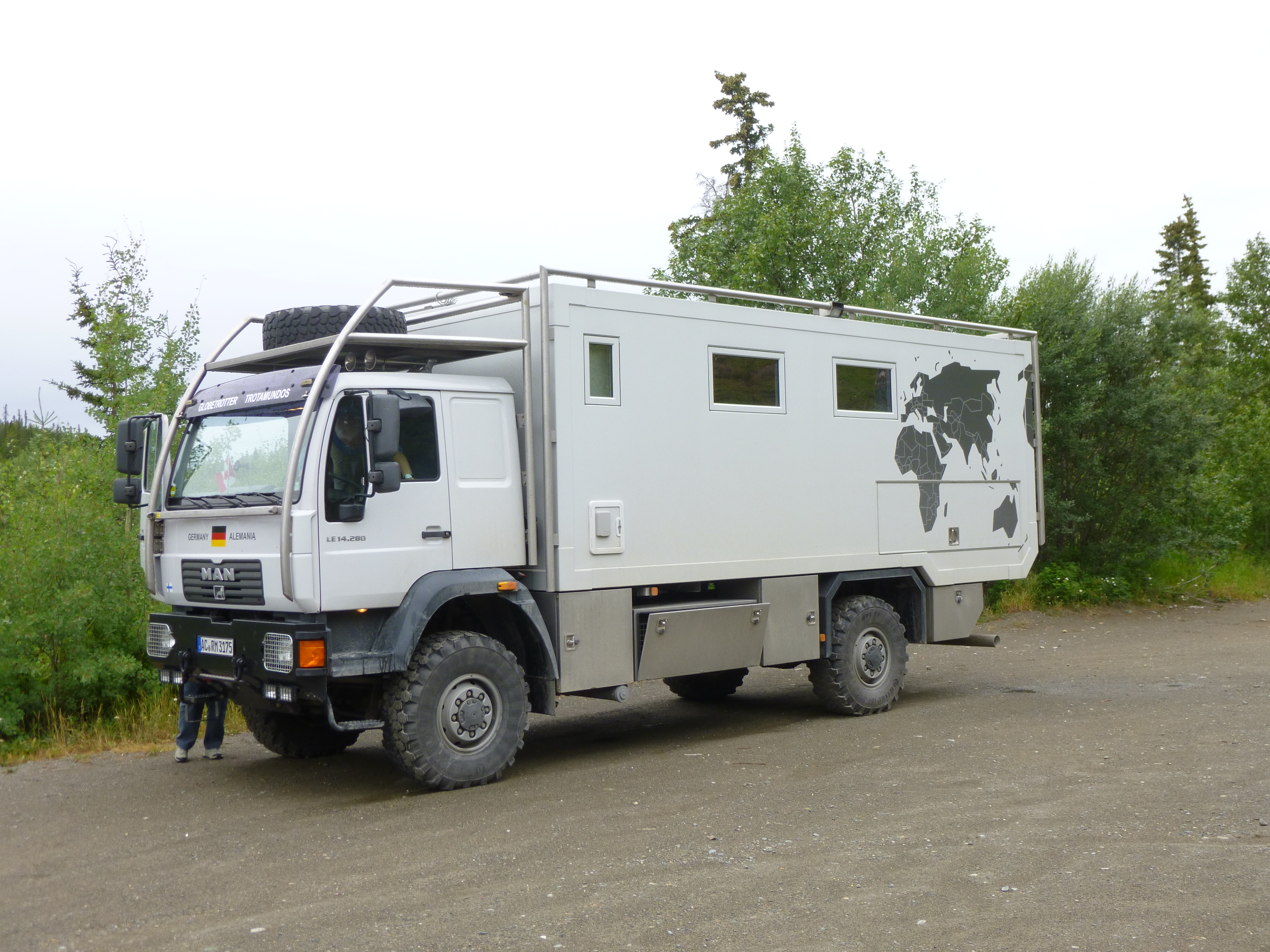
I had about 170 miles to drive to Whitehorse, which looked like a major town in the Yukon. I was going to get the oil changed there, or would have to hang out there if no one could do it on a Sunday – with another 400 miles after Whitehorse of no civilization, I couldn’t take any chances. So we started the muddy drive to Whitehorse. The highway was still kind of rough in places, and all the rain didn’t help. But, the rain finally did let up and things were clearing up. We stopped at a rest area about halfway to Whitehorse, and I saw something that at first glance looked like a garbage truck. But I looked more closely and realized it was one of the strangest RVs I’ve seen – kind of a cross between a garbage truck and a tank! It looked like it could go anywhere. I was walking Tula when I saw an older lady walking toward it, so I asked her if I could take a picture of their vehicle. It turns out she and her husband are German, and they had this rig shipped from Hamburg, Germany to Halifax, Nova Scotia, and they had driven across all the Canadian provinces (something I would enjoy doing – haha!), and were now headed for Alaska. After that visit they were planning to head to the ‘lower 48’ and during the winter months would go to Mexico…or maybe South America! They’re on quite a journey!
I continued along my way, and on the outskirts of Whitehorse, I nearly hit a bear! It walked very purposefully (big strides) right into the road – there was no one in the oncoming lane, so I swerved around the back side of the bear since it looked like it was ready to walk right into my car, and then it stopped dead in the middle of the road to scratch its ear, and I almost hit its hind end! But, no damage done – I did not want to be the third member of my family to hit a bear (son-in-law Josh and sister-in-law Mickey have both hit bears that walked right into them!) After that near-miss, I stopped at the very nice visitor center (they told me it’s not uncommon for bears to scavenge through subdivisions for garbage), and asked about oil-change possibilities on a Sunday. She told me the 2 places that do oil changes and other auto repairs are closed until tomorrow, and definitely recommended I stay put in Whitehorse and not take a chance venturing into the wilderness. And I agreed with her – my first thought was disappointment to have to “waste” a whole afternoon and evening, but at least it looked like a good place to have to kill time. But, I had noticed a Wal-Mart on the map that she gave me, and I headed over there because I know they sometimes have auto repair facilities. And, I was in luck! They could change my oil – I would just have to wait an hour and a half or so while they took care of people ahead of me. And that was fine by me. I shopped a little to replenish some groceries, and walked Tula and had a bite to eat. Tula came into the waiting area in Wal-Mart with me, and laid by my feet while I read – I cannot remember the last time I read in the middle of the afternoon! Lots of people wanted to pet her, and said what a well-behaved dog she is.
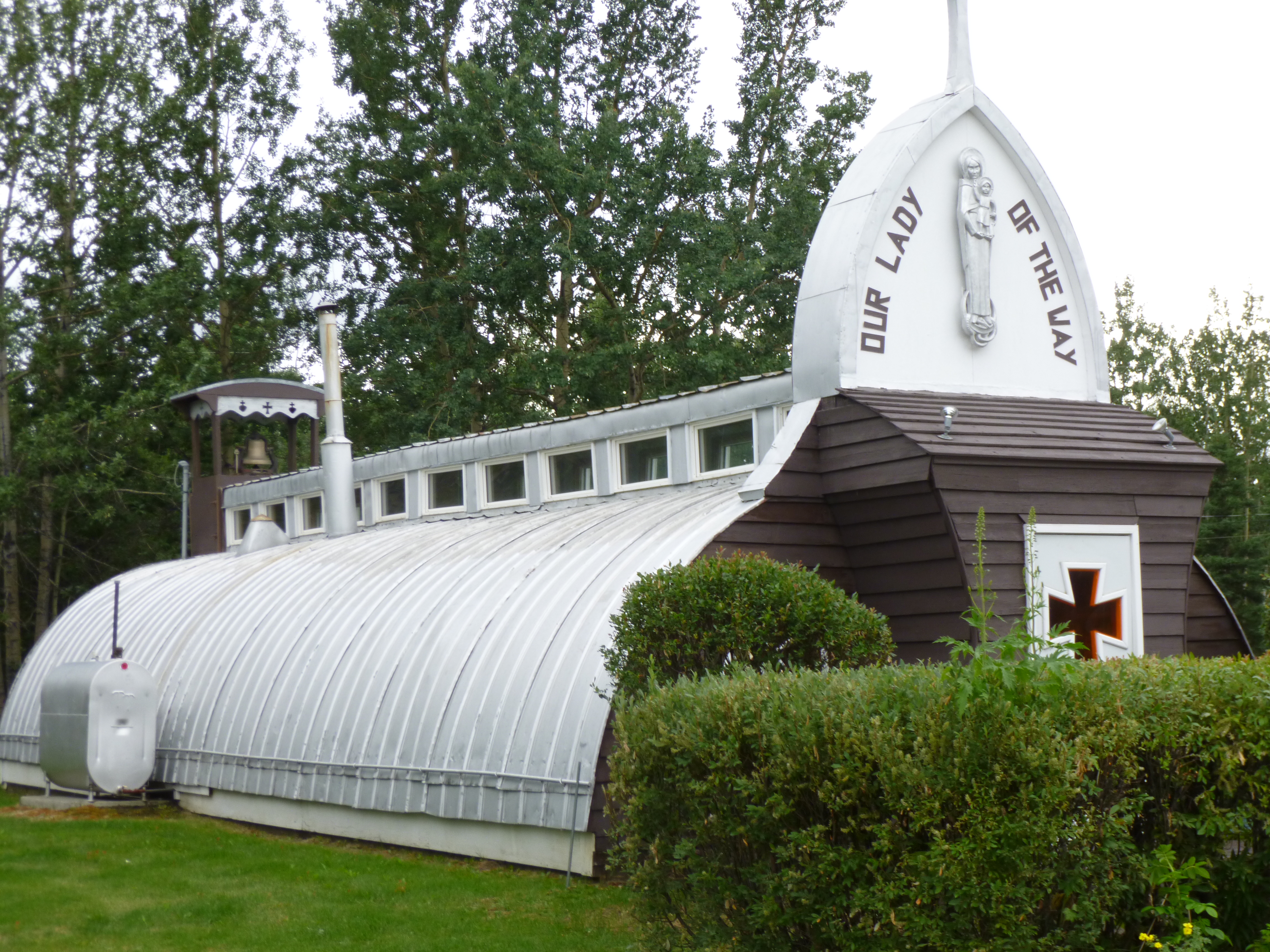
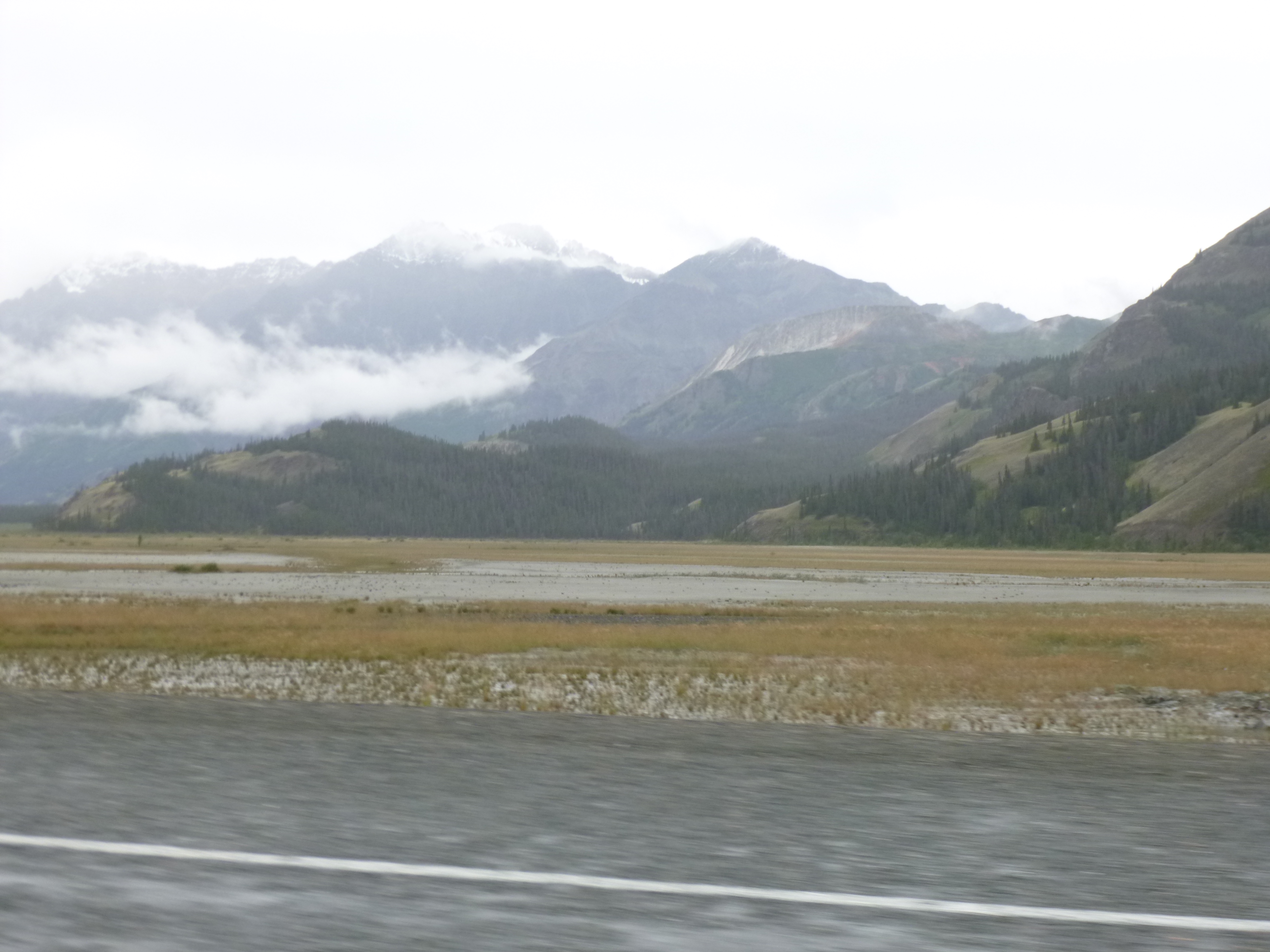
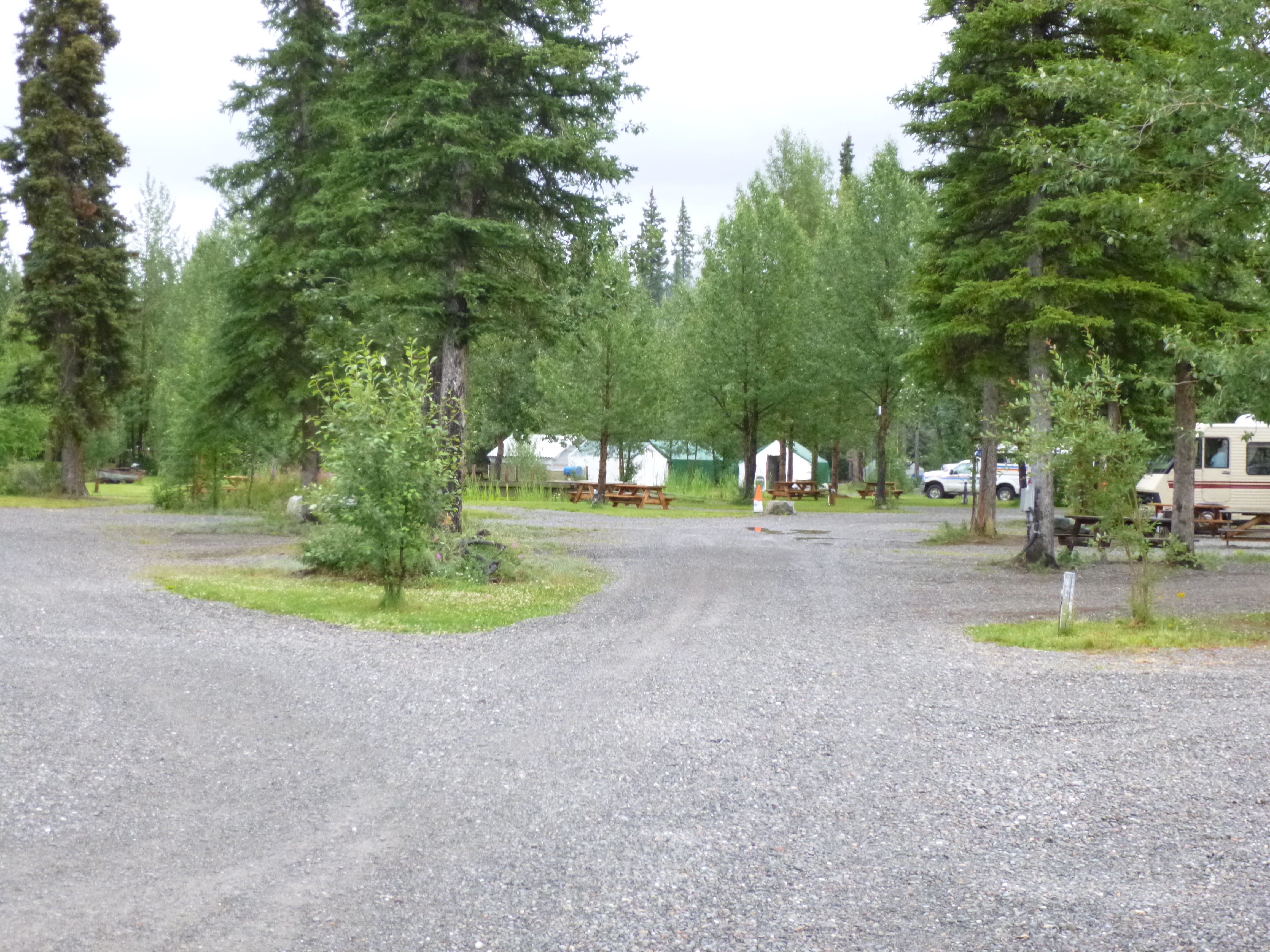
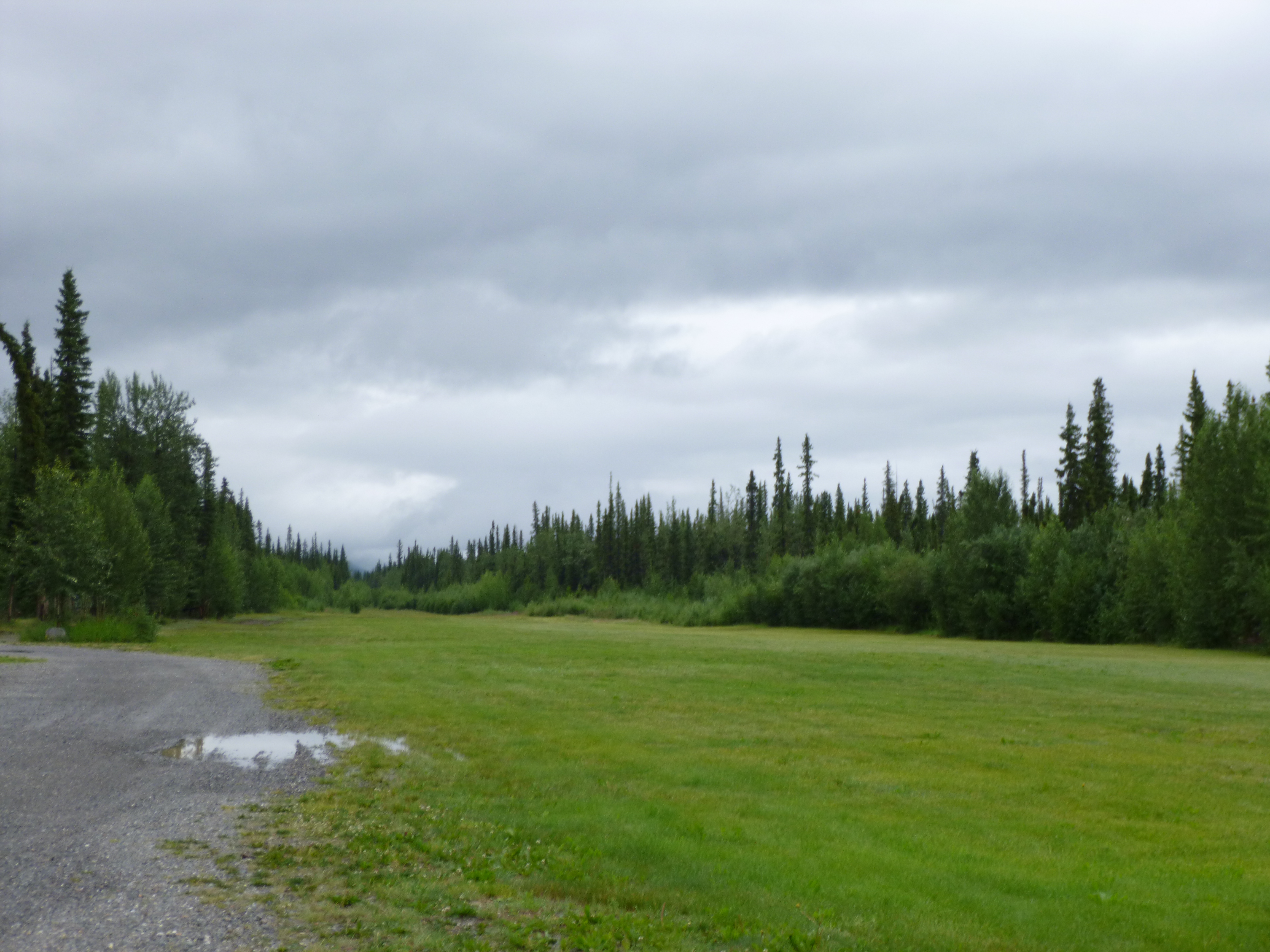
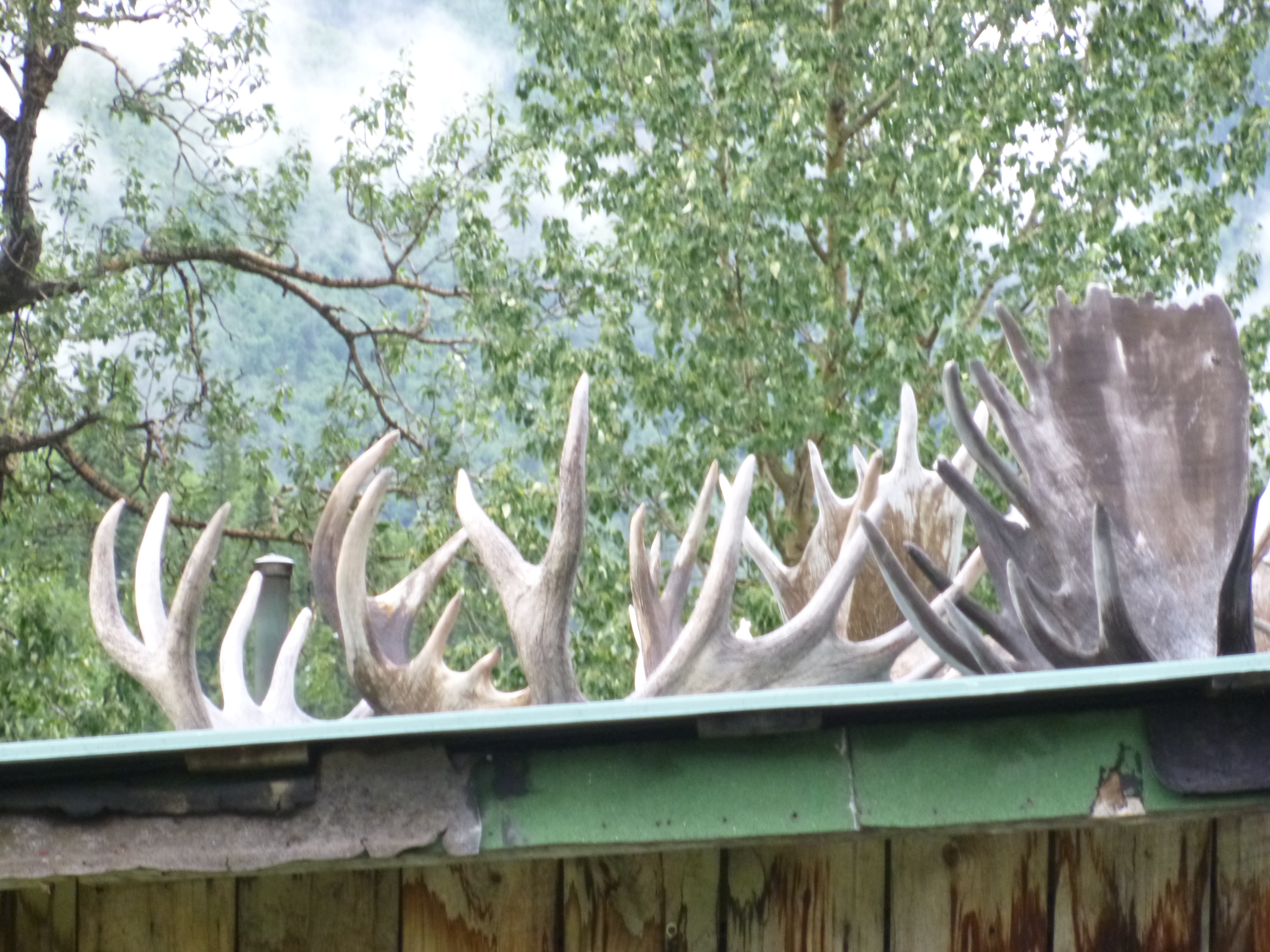
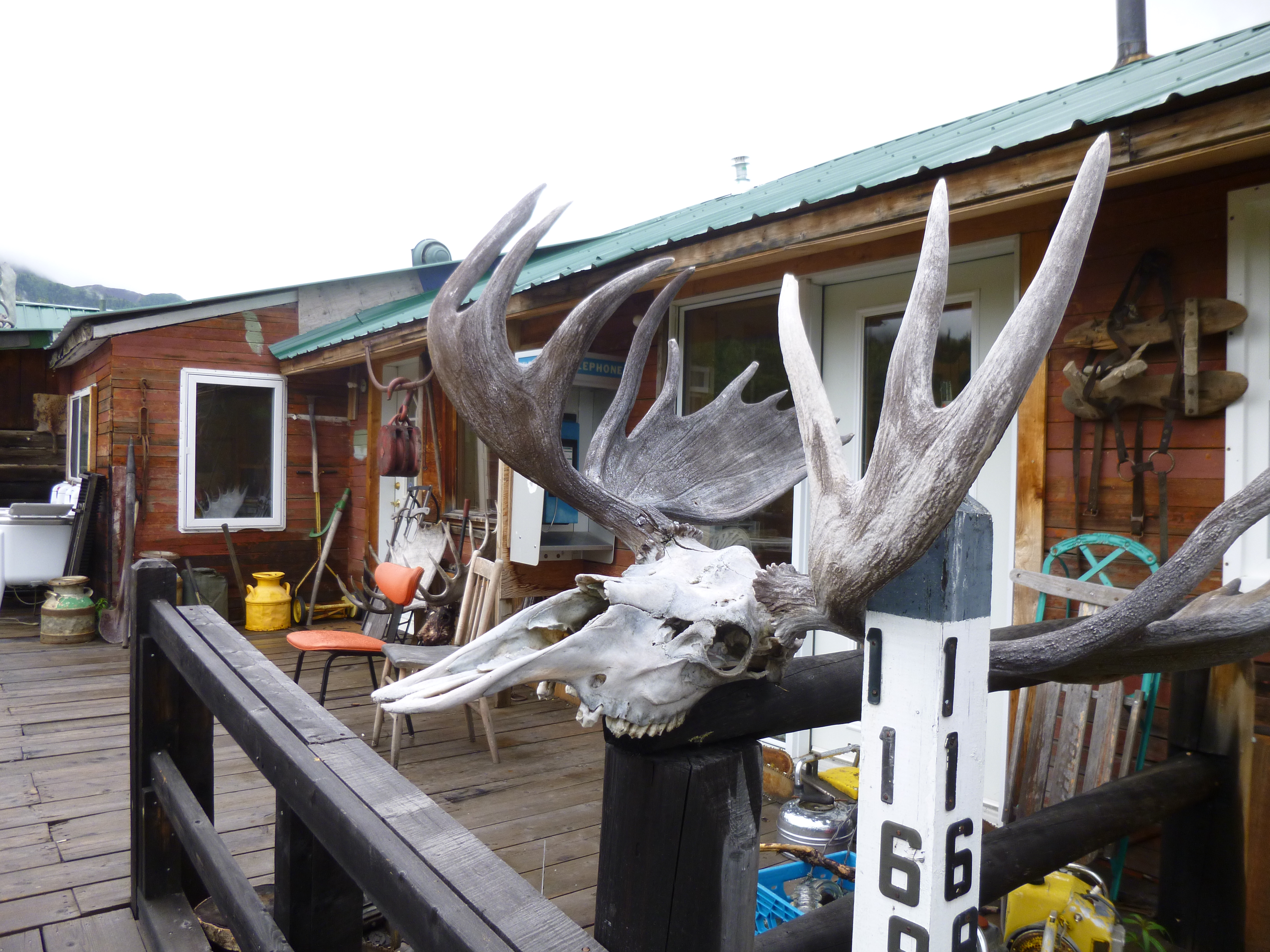
And then I was very happy to be on my way again. I put on another 300 miles or so – listening to CNN and all the media coverage of the royal baby (although reception went in and out), and it was a pretty drive through the huge outdoors – mountains, rivers, and so much space and hardly any vehicles. It tends to make one feel very small and insignificant! I passed a tiny Catholic church that was started in 1954 (by the first Catholic priest in the area) – they didn’t have much money so simply converted an old Quonset hut used during the construction of the Alaska Highway and turned it into a much-photographed church. It was getting to be time to think about stopping somewhere for the night, and all of a sudden I came upon a very green grassy campground – a welcome sight after all the mud. They had campsites available, and I was really happy to settle into a non-muddy place. It was a very self-sufficient place – the owners live right there in a pretty cabin, where the office, and shower/bathroom facilites also are located, and there’s a generator shed to provide all their power, and a grassy airstrip, and a helicopter(!) and countless moose antlers on the roof. Everything was pretty and wood-paneled inside. It was fun to wander around a little after I got set up. It started to rain again after our little walk around, but by then it didn’t matter, and I enjoyed another night being lulled to sleep by the rain on the roof of the van.
Canada – Day 3 driving to Alaska – Saturday, July 20
When I first woke up, it was still so foggy I didn’t want to drive, so I went back to sleep for a little while. Then we got going, and drove a couple hours north to Fort Nelson. I filled up with gas again, and asked about an oil change, and found out no one really does them in town, and most people have it done in Fort St. John – nearly 400 miles away! I’m glad I started looking into this before I really had to. I went into the local IGA and actually found a big salad to put in the cooler for later.
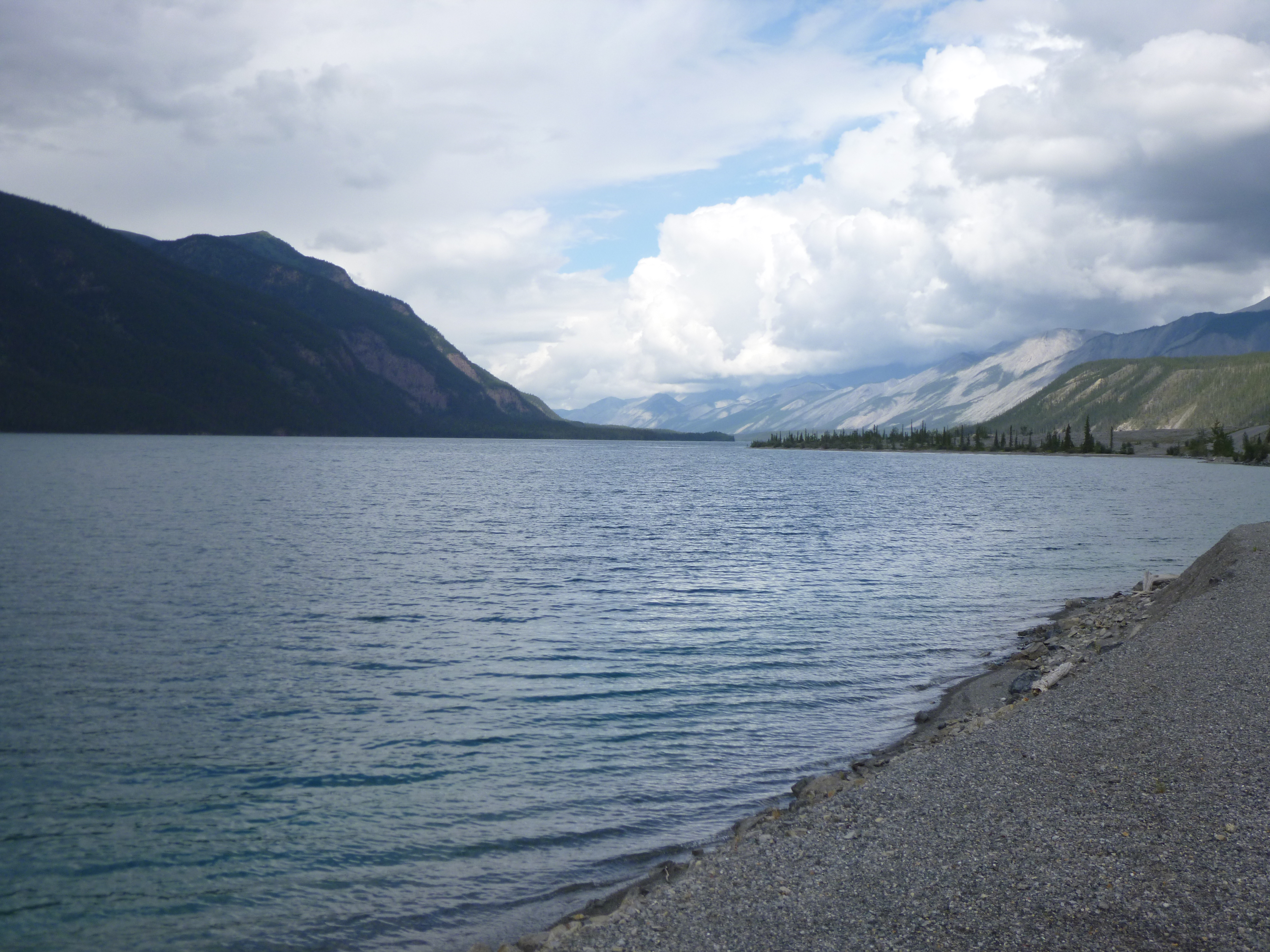
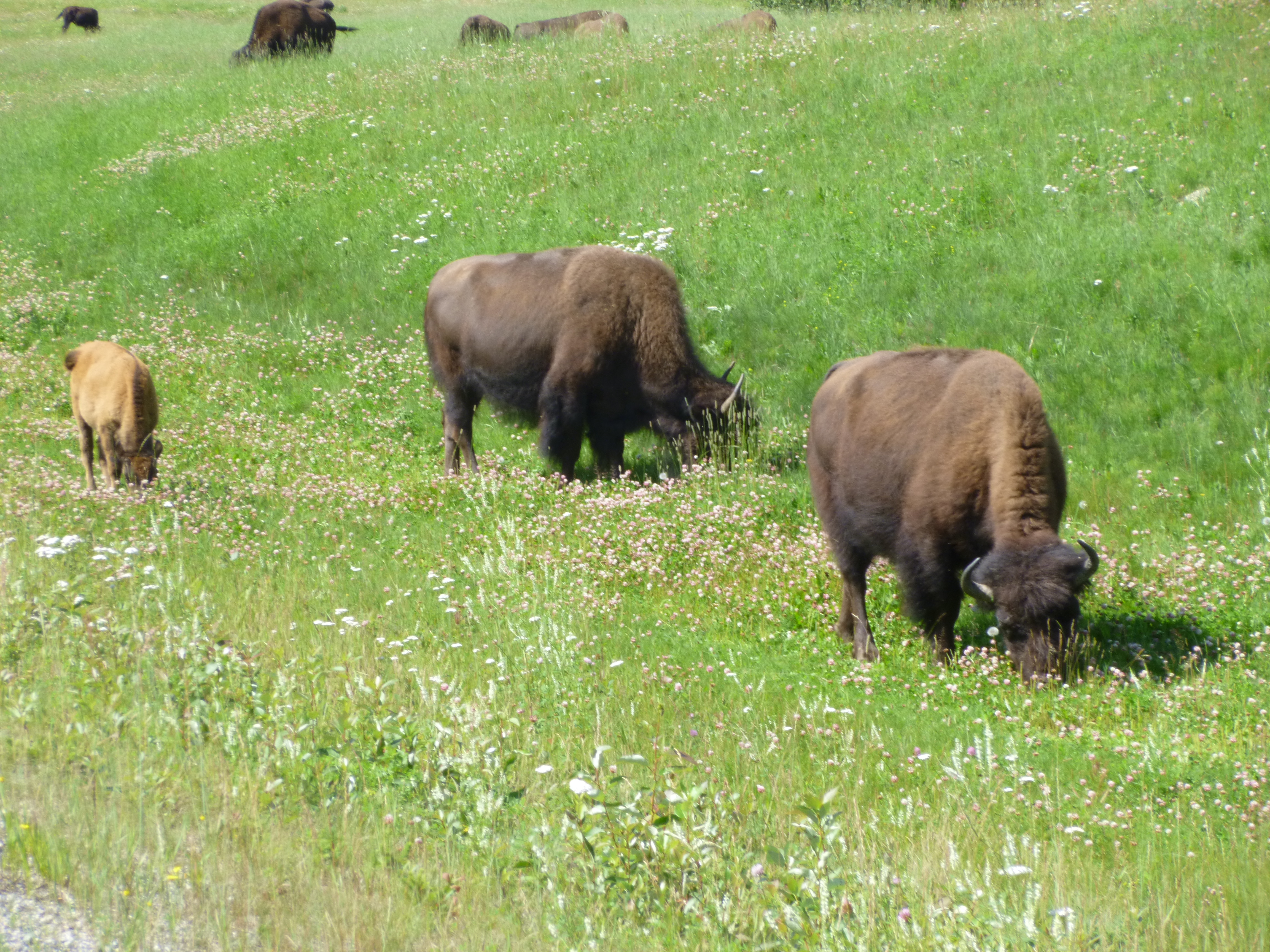
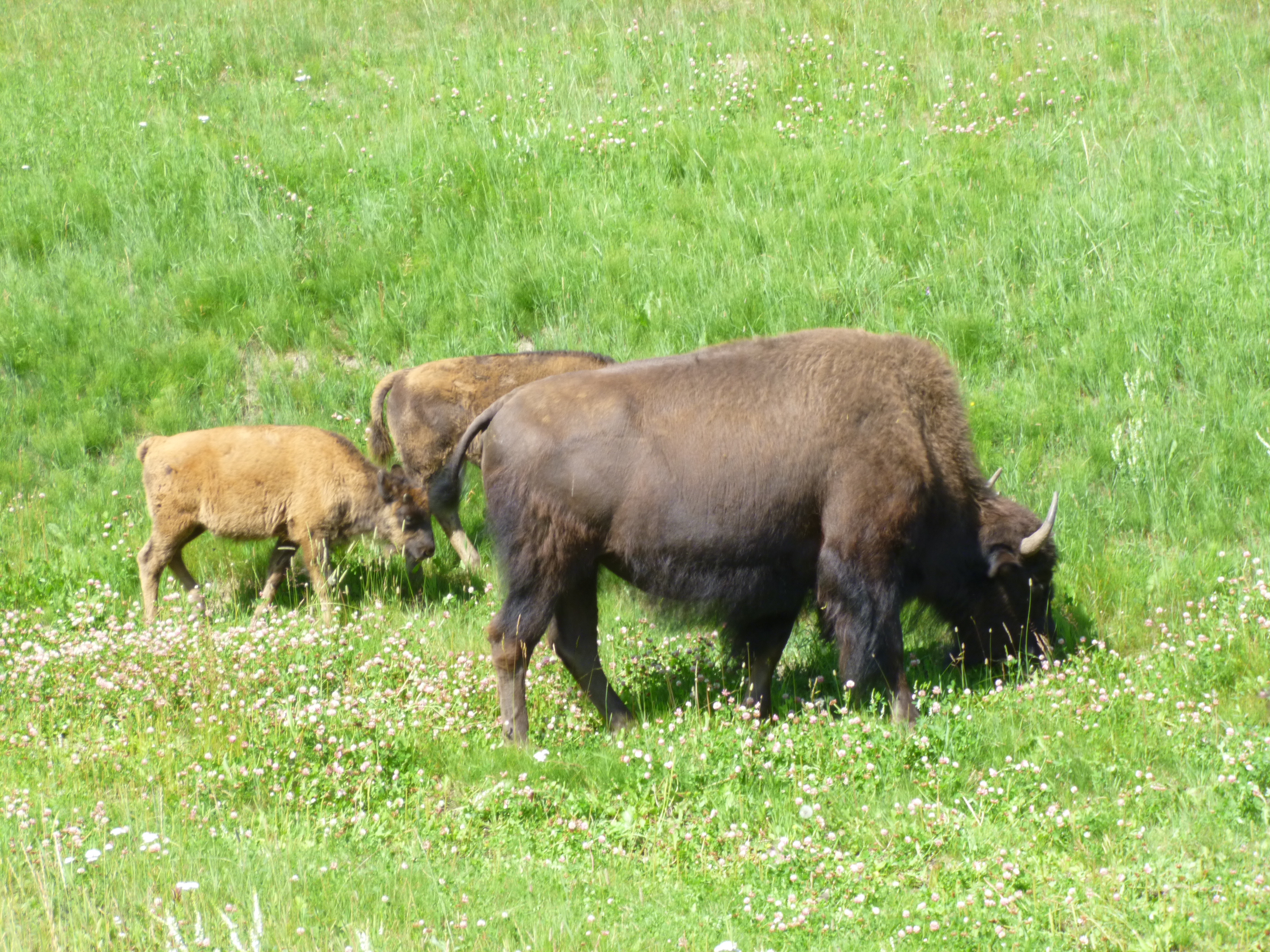
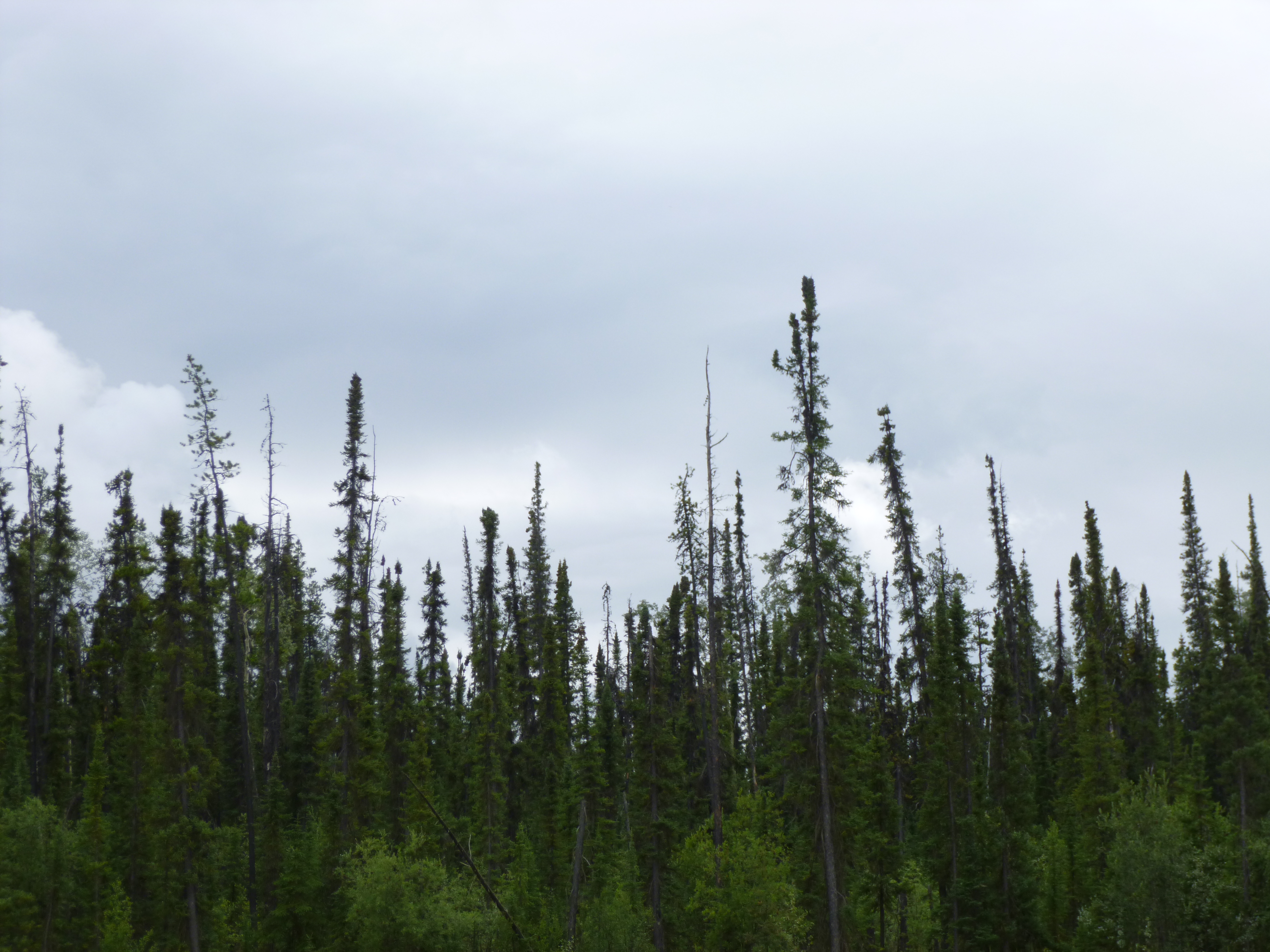
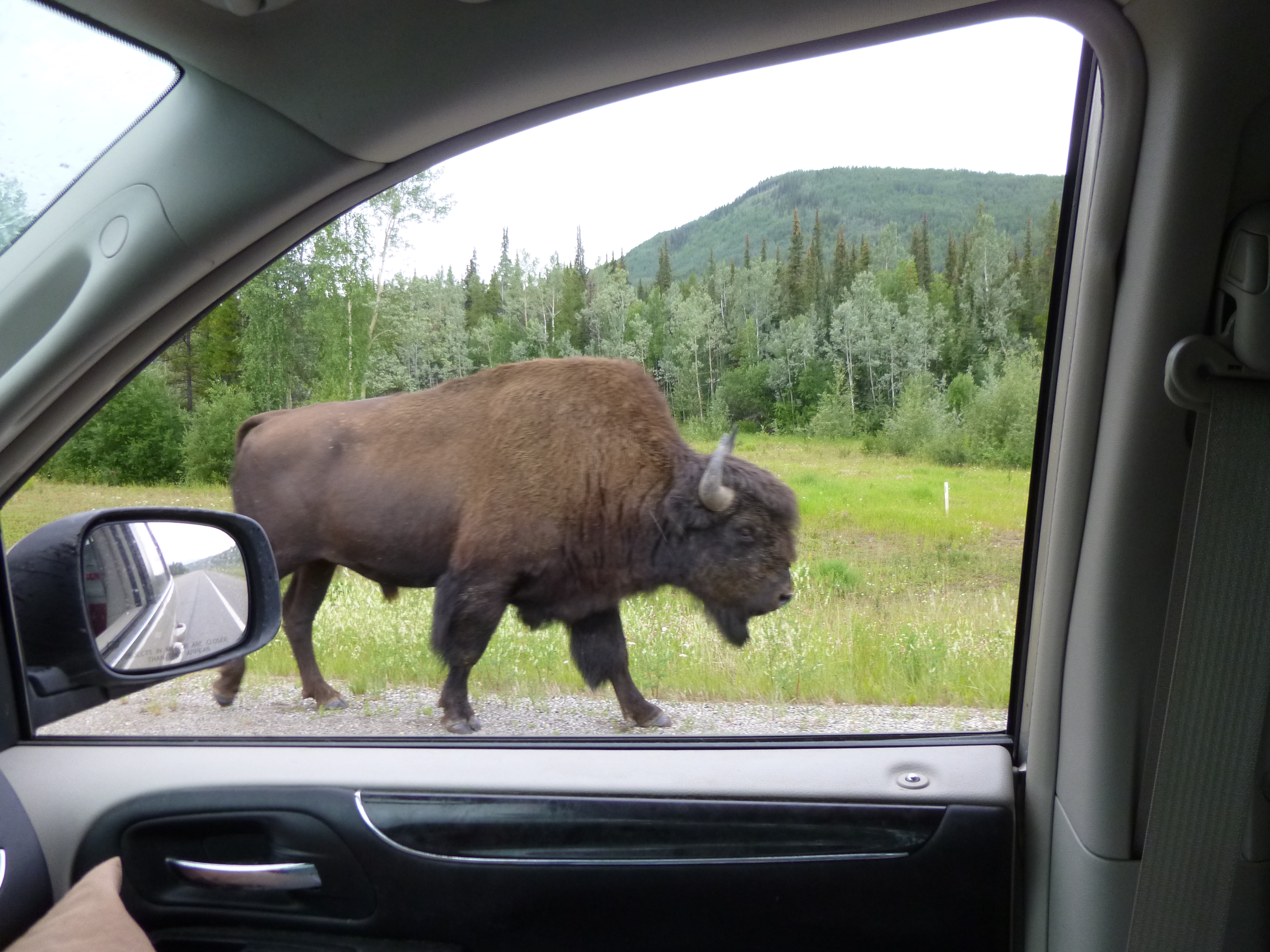
Most of the driving this afternoon was the 500 miles between Fort Nelson and Watson Lake. There was very little civilization between the 2 towns – just wide open space, some mountains and forests, and meadows. I was surprised to see signs cautioning motorists about the buffalo – I had no idea they were this far north. And sure enough, I passed several big herds of them – I like the little cinnamon-colored babies. They don’t pay any attention to traffic of course, and one baby was on the wrong side of the road from its mama, and it made kind of a funny little noise between a grunt and a moo. There were a couple herds of them, and a number of loners miles apart, just laying in the grasses and meadows by the road. At one point, I passed 2 buffalo just kind of plodding along the shoulder, looking like a couple of weary hitch-hikers.
Parts of the Alaska Highway are in pretty rough shape – there is construction work going on in places, and simply signs in other places – when they have warning signs about loose stones, they don’t just mean loose stones, they mean the pavement is totally gone for 10-12 miles. And there would be big patches of pavement missing here and there. I’m sure all the freezing and thawing is tough on any kind of pavement. It rained most of the afternoon, and needless to say, the parts of the road without pavement were a muddy mess, and the van began to look like I’d had some off-road adventures with it. Then the rain would come down so hard that it would clean most of the mud off.
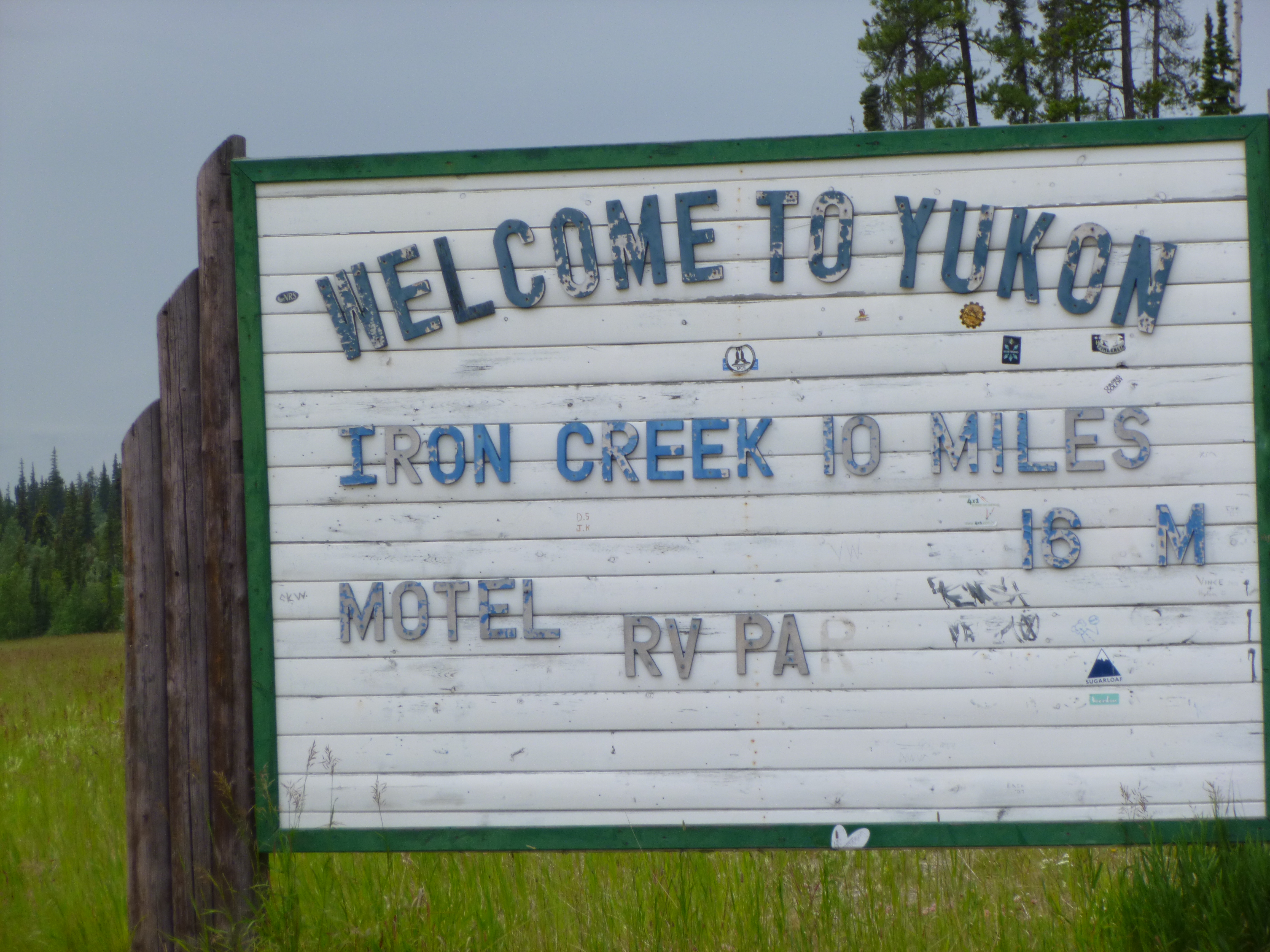
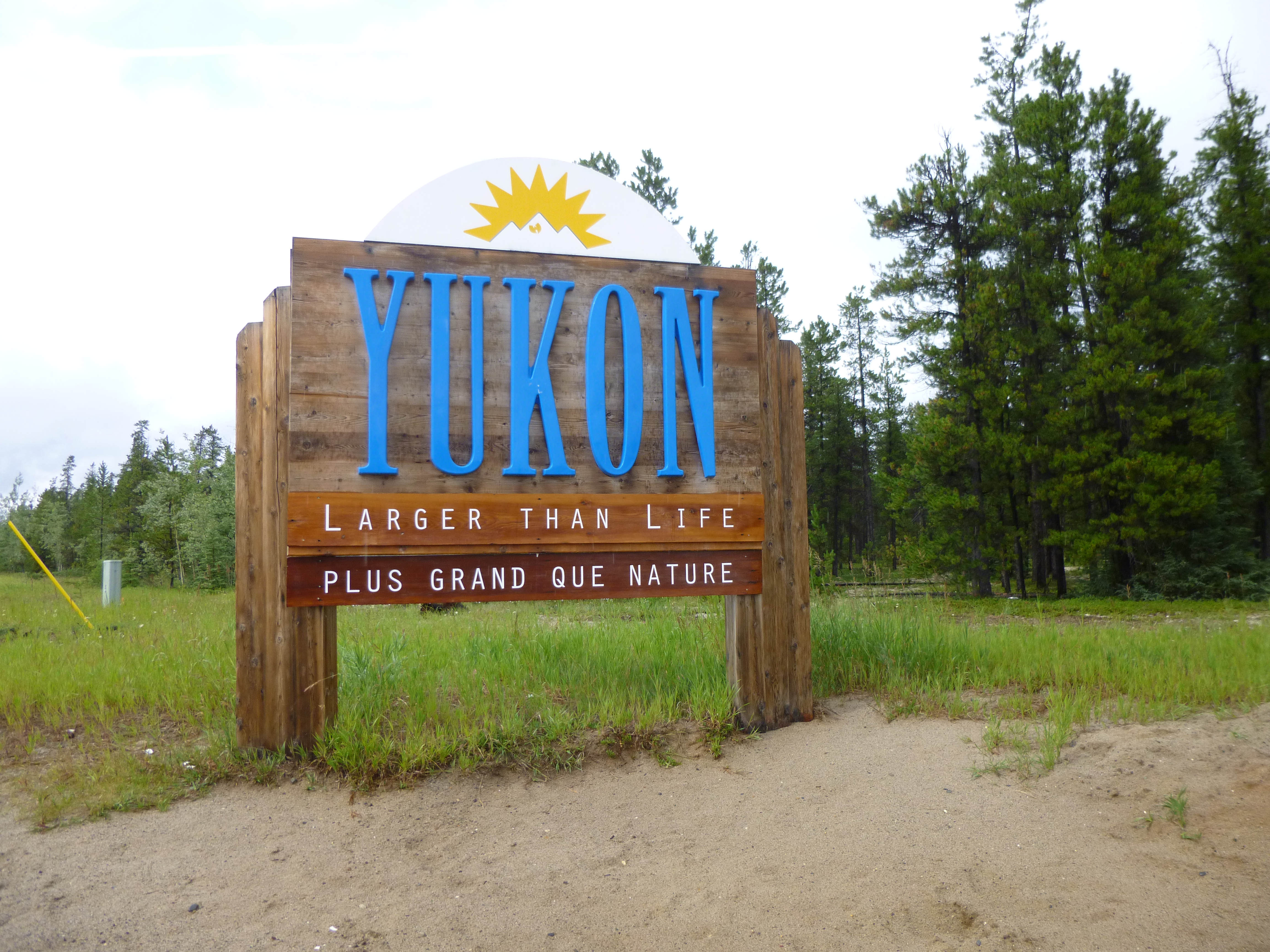
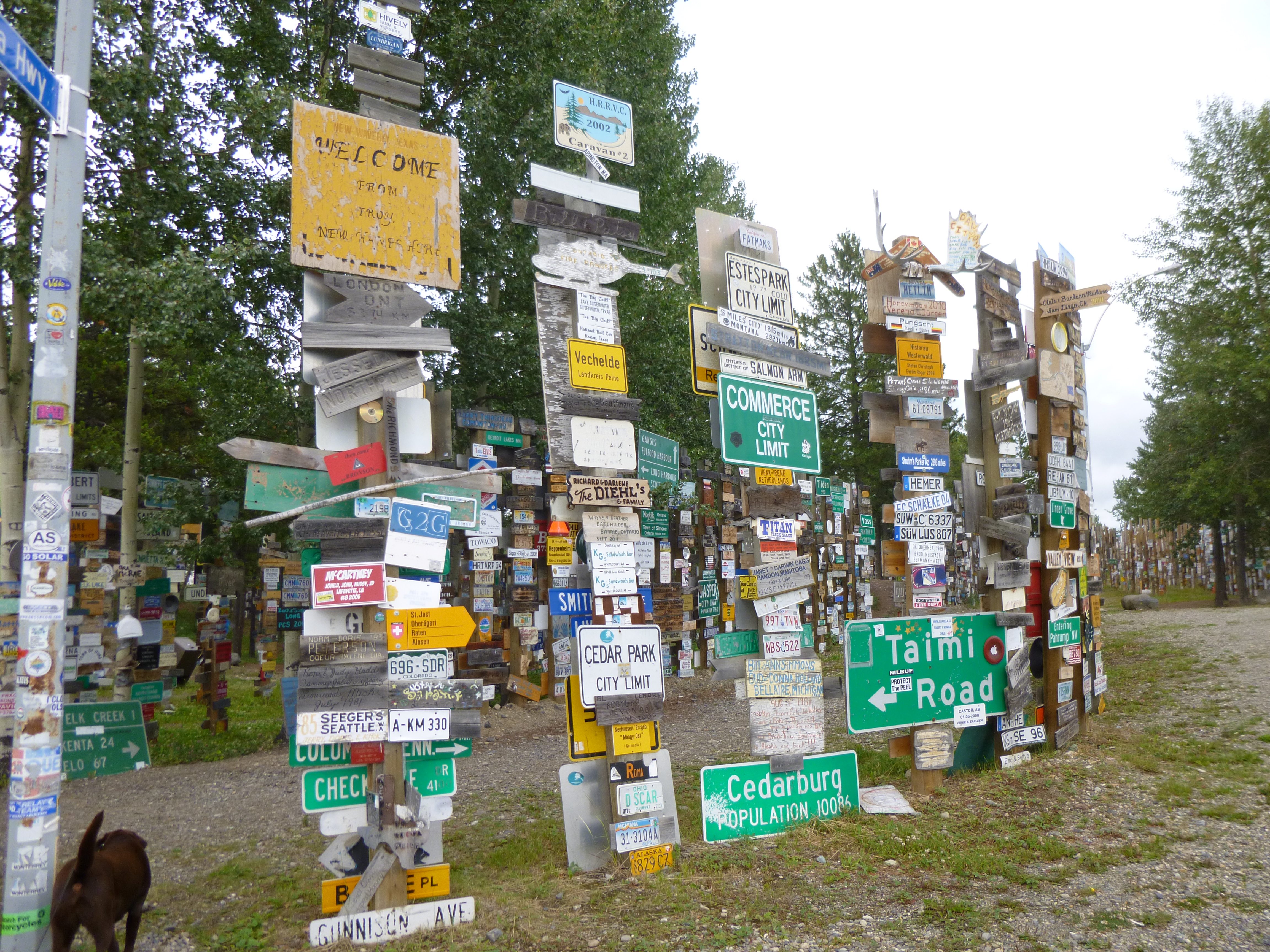
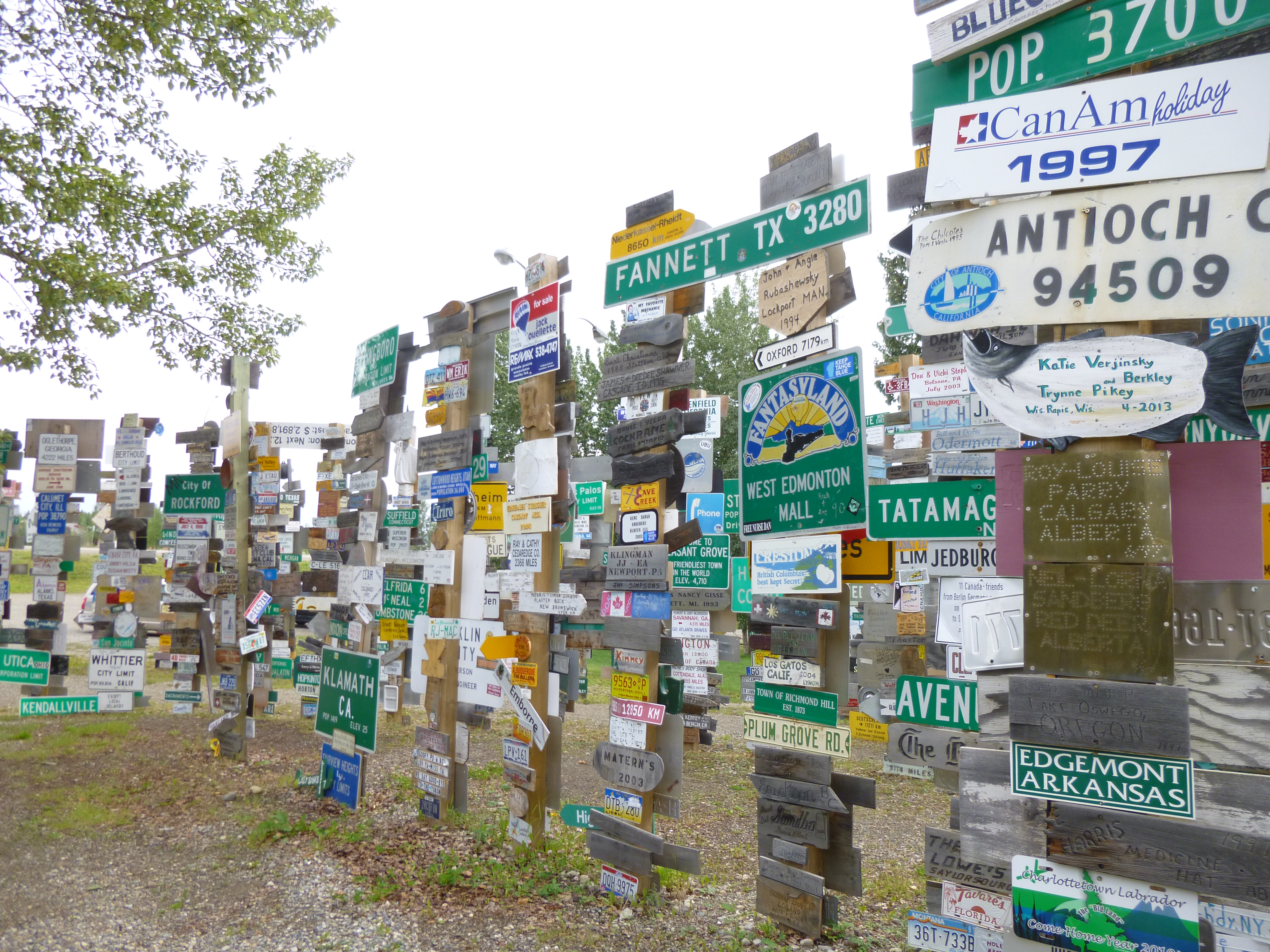
I crossed into the Yukon, and got into Lake Watson in the early evening. There’s a “signpost forest” there – which is made of dozens and dozens of posts holding up street signs and city signs from all over the world. It was kind of fun to walk up and down the rows and see some of the far-flung places that people had brought signs from. It’s funny how something like that gets started – it looks like it’s been around for a long time, and people still add to it.
Even though it was getting later, I was now so far north that it was deceptively light out for the time of day. I wanted to keep driving a little more because it seemed too light to stop. Around 10:00 I got near the town of Teslin, and the rain had temporarily stopped, and I went into the gas station/motel/campground/restaurant to ask about staying in the campground for the night – even though it was a little muddy. She told me I could just park the van out front and stay for free as long as I didn’t block the fuel pumps, but I wanted to be able to set up the air mattress and all, and would have felt funny doing that by the motel porch, so I told her I would prefer to pay for a campsite with a picnic table so I didn’t have to set things in the mud. Once again, I got things set up pretty fast, and they had a nice showerhouse, so I took advantage of that, and it began to rain again. But I really enjoyed falling asleep listening to the rain on the roof of the van, knowing I was warm and dry for the night. But it was very strange to have daylight so late, and I had to cover my eyes to sleep – it never got totally dark.
 expedition56