Guam – Tuesday, February 12
I was at the airport early in the morning to turn in my car, and to have extra time to get my boarding pass and go through security without identification, although at least I had a poor copy of my driver’s license which had been faxed twice!. I had stopped by yesterday to talk with TSA, and I still had the paper with the names of the TSA supervisors who had cleared me in Guam, and they kept that paper and cleared things before I arrived, so it was actually very smooth to get my boarding pass and go through security.
Then I left Saipan behind and made the short flight to Guam for my final day there. It’s funny how my itinerary worked out, with one more day in Guam after my week in Saipan – and it’s exactly what I needed to have time to go get my passport back!
I rented a car for the day, and once I had that, I headed for the town of Dededo to retrieve my passport and license. But the lady wasn’t in! The other people told me she’d been out all morning with the mayor and they weren’t sure when she’d get back. I was a little worried because she does seem to be out of the office a lot. I told them I’d check back in an hour or so. So I decided to use the time to make my final Guam donation, which went to the Alee Shelter – the only women’s shelter on the island. Alee is a nautical word that means ‘shelter from a storm.’ The Alee Shelter is managed by the same Catholic Social Services agency that I had made a food pantry donation to last week – they oversee a number of different support programs. I still had my map, along with the travel directions, so I found my way back and gave them the check – and specified where it should go.
Then I finished knitting the “thank you dishcloth” for the lady in Dededo, and drove back there. She had returned, although was out to lunch now, but had left my purse with one of the other ladies. And sure enough, my passport and drivers license were in there, along with most, but not all, of my credit cards – none of which were good anymore. And my national park pass was there, so that was good. Of course the phone was gone, but they left my iPod in there – it’s so old they didn’t even want it! Not to mention it just has audiobooks on it, not much music. And it was nice to get stuff like my insurance card, and triple A card, and AARP card and everything back. The purse was a little dirty and the wallet had been picked clean – I didn’t want either of them anymore – I just didn’t like the idea of carrying around something that thieves had been pawing through. So I knew I’d have to go to K-Mart to get new ones. Before I left the office, I wrote a thank you note for the lady and left it with the dish cloth (kind of a weird thank you gift, but everyone uses dishcloths, and I happened to have some yarn with me!) And I also left some money for donuts for the maintenance workers who found my things – the office staff assured me they would like that! What a relief to actually have some of these things back!
From there I was able to check into my room – back at the familiar old Days Inn. Then I headed out to do all my walking – I did almost 5 miles along the whole length of the tourist area by the bay and back, and then drove out to the national park place along the ocean to finish it up. I also stopped by the police station to let them know some of my things had indeed been recovered, and went to Kmart for a new purse and wallet. After a bite to eat at the noodle shop, it was time to head back to the hotel and get a little better organized for the long flight to Honolulu tomorrow.
So I wrapped up everything in Guam – all 56 miles of walking (even though a lot of it had been repetitious); and all 7 donations – War in the Pacific National Park, Catholic Social Services food pantry, a meals-on-wheels program, Habitat for Humanity, the Kamalen Karidat soup kitchen, the Rigalu Foundation and the Alee Women’s Shelter.
Once again I learned so much during my time on Guam – an island that now seems familiar despite knowing very little about it when I arrived. I’m not letting the theft color my stay on Guam – I think I found a new strength in myself and I’m glad I was able to carry on! And I met a lot of good people along the way, and all of that leaves good memories.


Saipan – Monday, February 11
Clarissa, who did the interview with me last week, called first thing this morning and invited me to a Philippine dinner tonight for my last night on Saipan – so that’ll be a fun way to end my adventures in the territories! She also told me the article she wrote would be published today and that she’d bring a copy of the newspaper to dinner.
I set out this morning to take care of donations. Over the weekend I had emailed a lady about a 4-H club on Saipan. When I was out walking, I had noticed a big building near Susupe that had a 4-H sign on it. But there was also a farmer’s market sign on the building. I had no idea the 4-H program reached this far, and I thought it would be a fun donation, so I managed to find a contact person. There hadn’t been a response to my email, so I called and tracked her down. It seems most of the 4-H projects are held through schools, and the lady I talked to was honest about nothing happening right now with any 4-H projects, so she didn’t feel it would be right to accept a donation – even if it was for something in the future. I appreciated her honesty, and had something else lined up just in case.
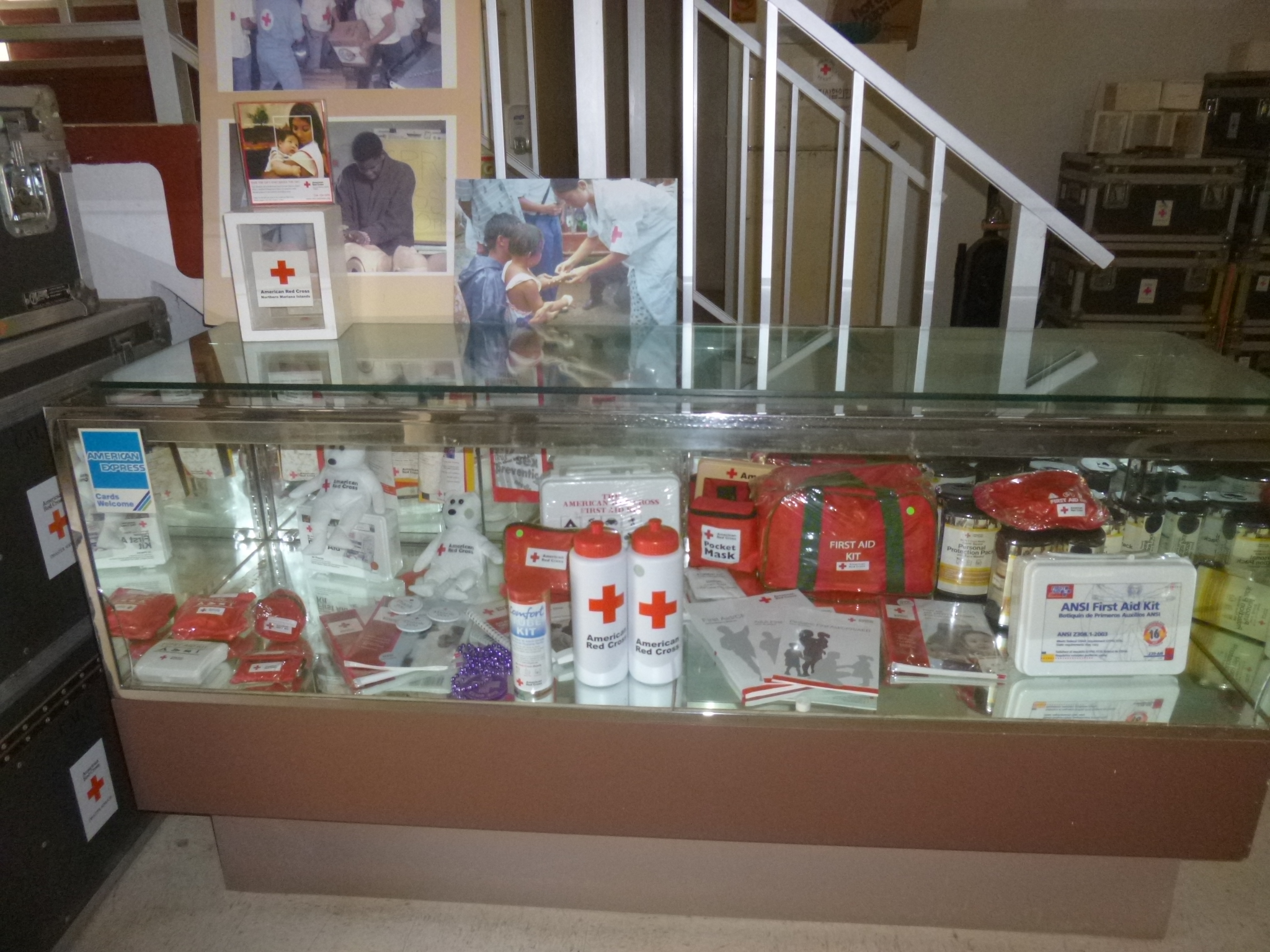
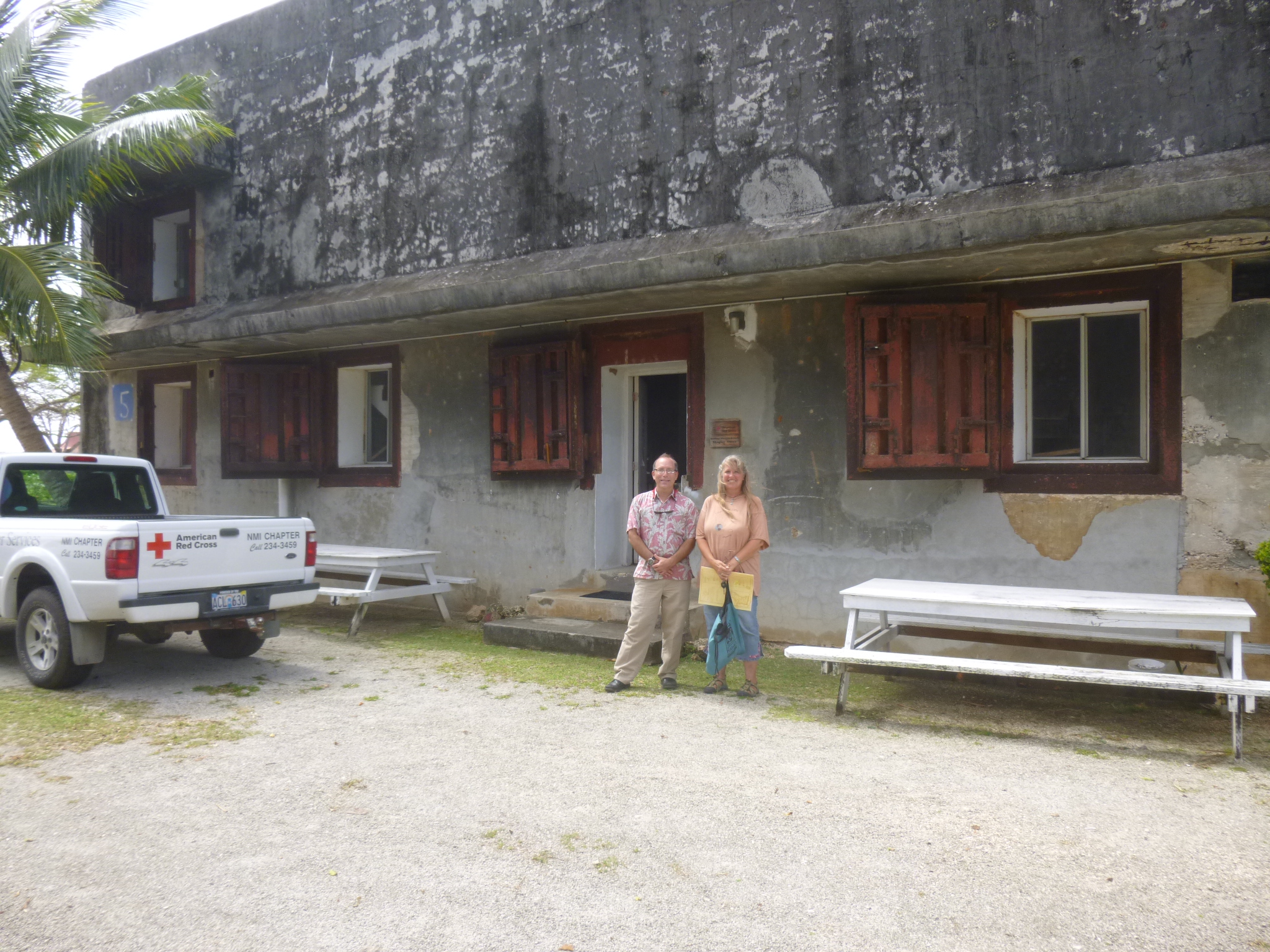
I got in my rental car and drove down to the south end of the island – I had noticed the Red Cross office was by the airport, and that’s where the first donation today went. I found the building, which looks very old, and went inside and met John, the director. He told me that because the building is located in a historic district, they are not allowed to do anything to the outside of the building, but can do what they want inside. There were offices upstairs, and a display case of old interesting Red Cross memorabilia downstairs. Unlike American Samoa, Saipan hasn’t had to cope with a major natural disaster for 8-9 years. But they’re ready for whatever might happen, and in the meantime have other things to organize like swimming lessons and lifesaving classes etc.
After the Red Cross, I drove back to Garapon and found the office for MINA, which stands for Mariana Islands Nature Alliance. This is an organization that Clarissa had suggested – and I was happy to be able to make an environmental donation – overall, I haven’t done as many environmental donations as I thought I would. The lady I met told me more about the program, and how they’re trying to increase community awareness about their rich natural resources, and how to protect and restore them. They get school kids involved with cleanups and are trying to eliminate the use of plastic bags. It was nice talking with her, and she gave me some t-shirts from past events.
Then I drove back up to the north end of the island – I wanted to walk the last bit of the walk up Suicide Hill – to finish where I left off yesterday! I parked at the top, and told the guard I was just going to take a short walk down the hill a ways, and would be back in 20 minutes or so. He had been reading a newspaper, and he looked at me and back at his paper, and recognized my picture in the paper! He asked me to autograph the page – hahaha!!!! I took my short walk and talked with the guard a bit more. I drove around a little bit more – the time on Saipan ended up going really fast. It didn’t seem like it should be time to be packing up. I stopped at the Northern Mariana museum which several people told me I should see and it had been closed yesterday. I was disappointed to see a sign on the door saying they were closed today too due to leaking water from the air conditioning – they needed to make repairs.
I called Annie when I got back – she had asked me to call before I left, so I filled her in on the rest of my weekend. I was finishing up her dish cloth, and she said she had something for me, so we agreed to meet briefly a little later.
Then I returned to the national park one more time to say bye to the rangers. They had been really helpful during the week. I gave my final Saipan donation to Susan, for Friends of the Arts. She is the director, and they present 3 (maybe 4?) shows a year. It sounds like the people on Saipan don’t typically attend a lot of cultural events like that, and Friends of the Arts is trying to change that! And, having owned a dance studio for so long, I’m always happy to support the arts!
From there I walked on the national park trail through the woods and by the ocean, and figured I better go wading in the Philippine Sea while I could. Then back at the hotel, Annie stopped by with a couple of her grandkids. They had used pipe cleaners to make a flower for my hair, and a matching one for Tula’s collar, and one for each of my daughters – so sweet! And Annie gave me a bag with a guardian angel pin, a journal, a pen, a Saipan coffee mug and some bananas and tangerines. Such a nice family!
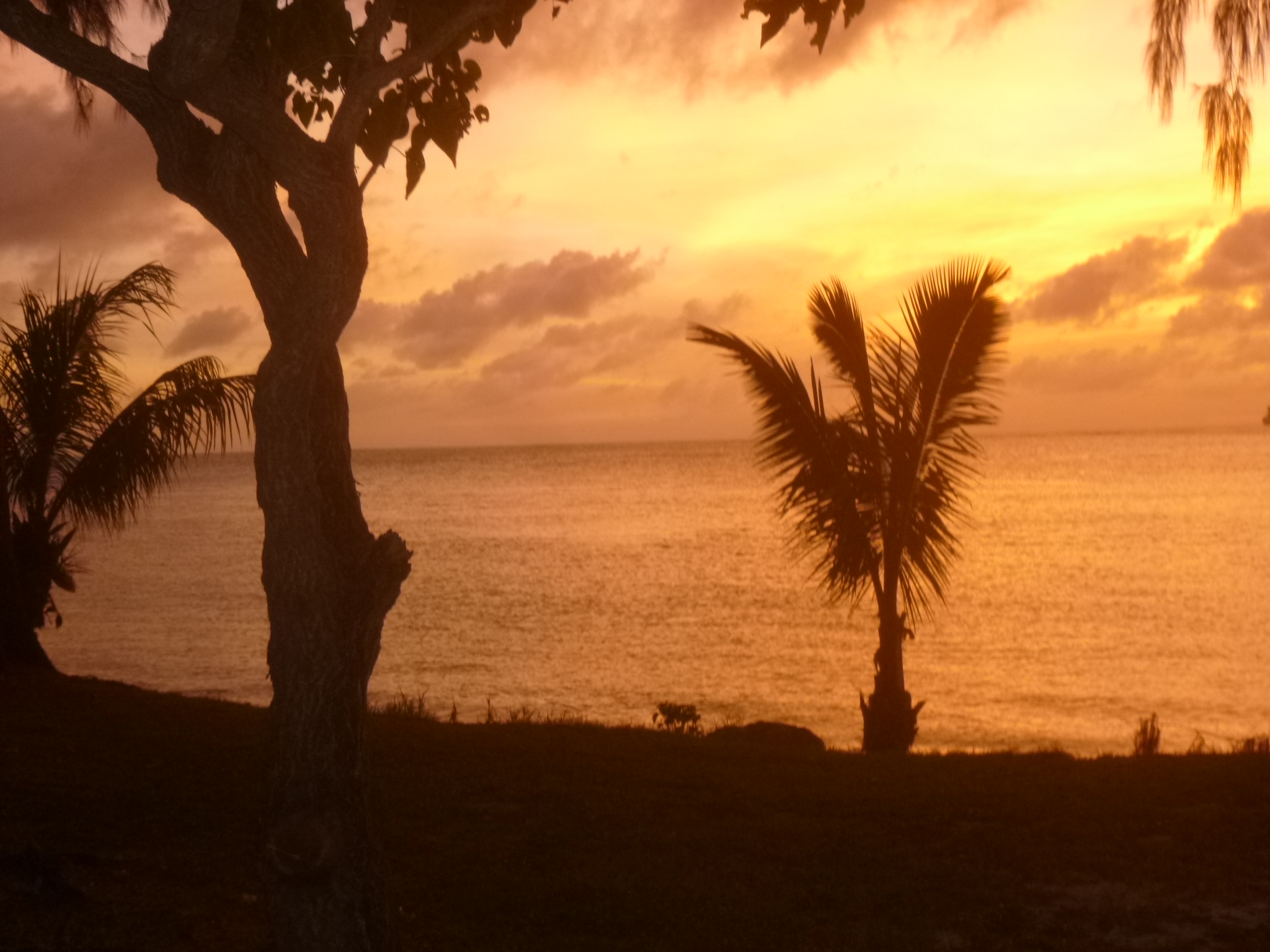
I wanted to walk my last few miles in Saipan along my favorite path by the sea, and timed it for sunset. I’m feeling very bittersweet about leaving – it’s been a special week and I’ve met a lot of good people. I imagine part of it is realizing the whole Pacific territory adventure is nearly over (I have one more day on Guam) and that I’ll probably never be back.
Once the sun was down, I made a quick trip back to one of the markets for a couple more souvenirs, and dashed back to the hotel to change. Then I met up with Clarissa at one of her favorite little Philippine restaurants. I took her recommendation for dinner, and did not understand the order, but we ended up sharing a huge bowl of some kind of soup that had big pieces of pork in it, and green vegetables and it was in a delicious tamarind broth that was so flavorful it made the appetizer soup seem bland. They served the soup (I’m not sure what it was really called – not sure soup is right!)with rice on the side, and the broth was good with the rice too. Clarissa told me a bit about growing up in the Philippines and the crowds in her home town of Manila – she prefers the more peaceful island of Saipan! She also told me that up until 9-10 years ago, Saipan had had a big garment district and many of the big designers had their clothes made on Saipan – but they moved ther operations to Asia where the labor was cheaper. Needless to say, that left a hole in Saipan’s economy. And we talked about traveling – she hopes to go on a long backpacking trip in Asia someday. It was a wonderful dinner.
Then it was time to deal with the dreaded packing for a morning flight back to Guam. It was hard to believe that just 7 days ago I had landed on Saipan not knowing anything about it, and since then I had found my way around the island; walked all 56 miles; met a lot of wonderful people; and made all 7 donations – the American Memorial National Park, the Karidat food pantry, the Guma Esperansa Women’s Shelter, Guma Yo’ Ase (Salvation Army House of Mercy), the Red Cross, MINA, and Friends of the Arts. What a week it was!





Saipan – Sunday, February 10
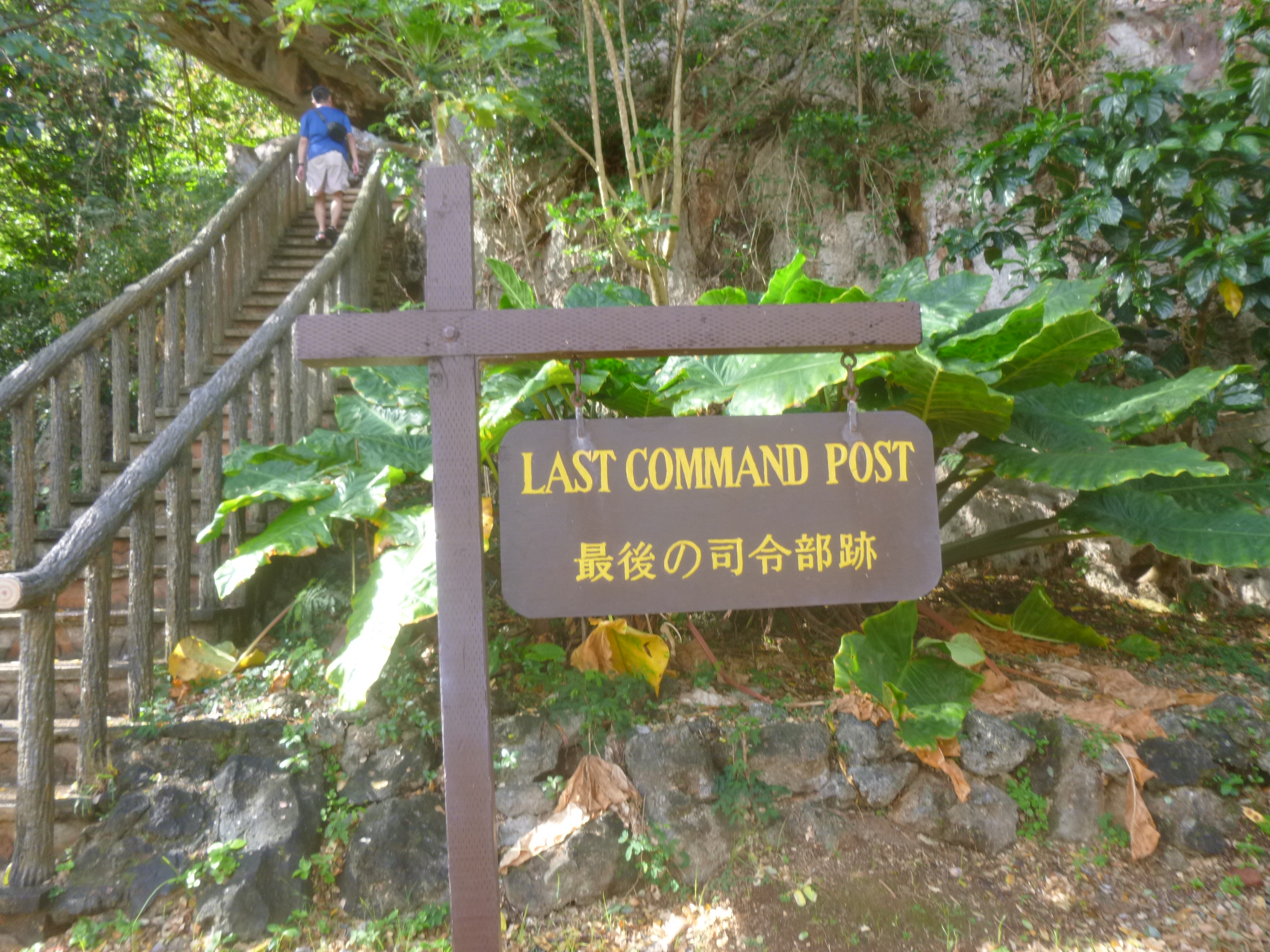
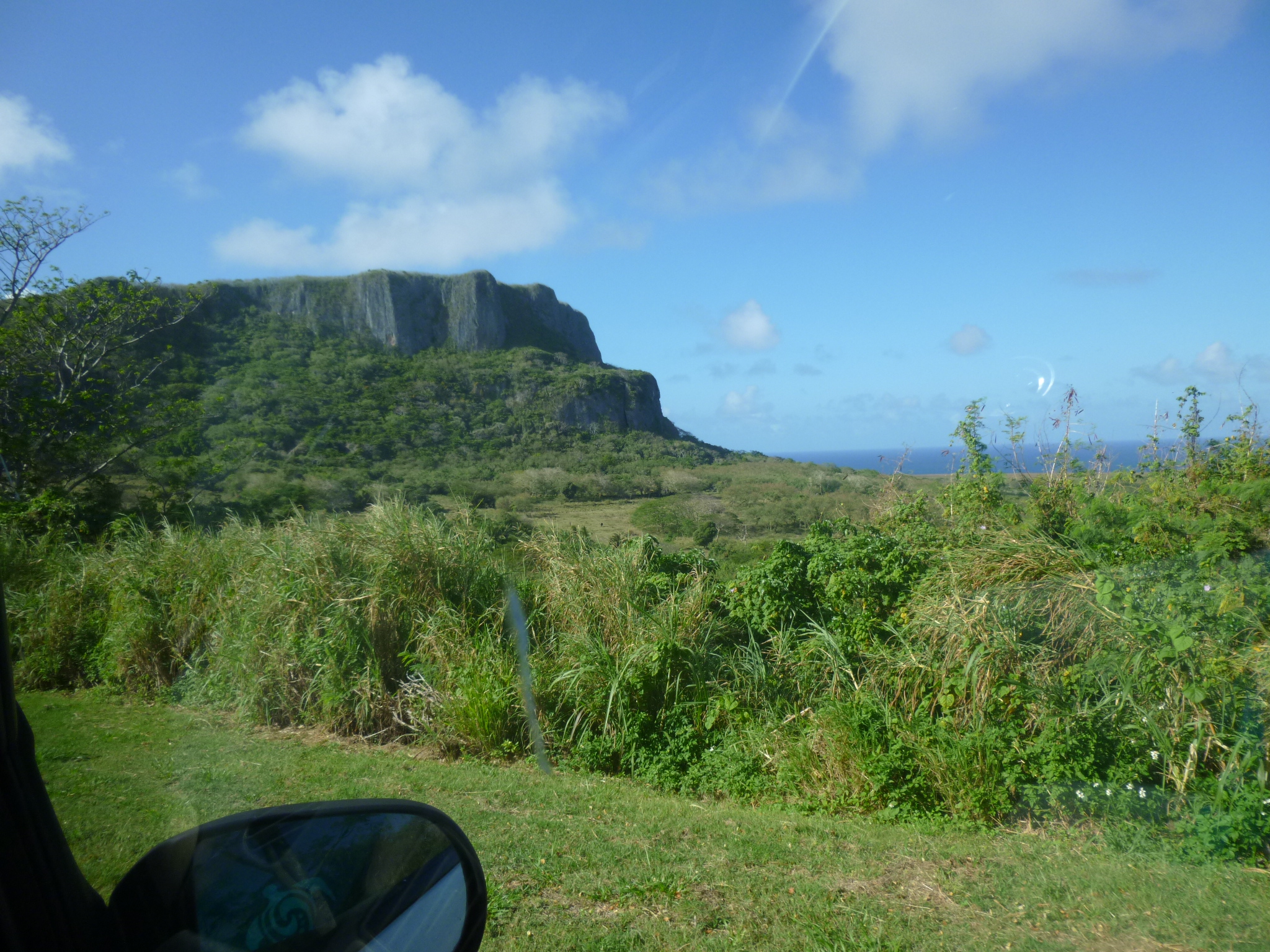
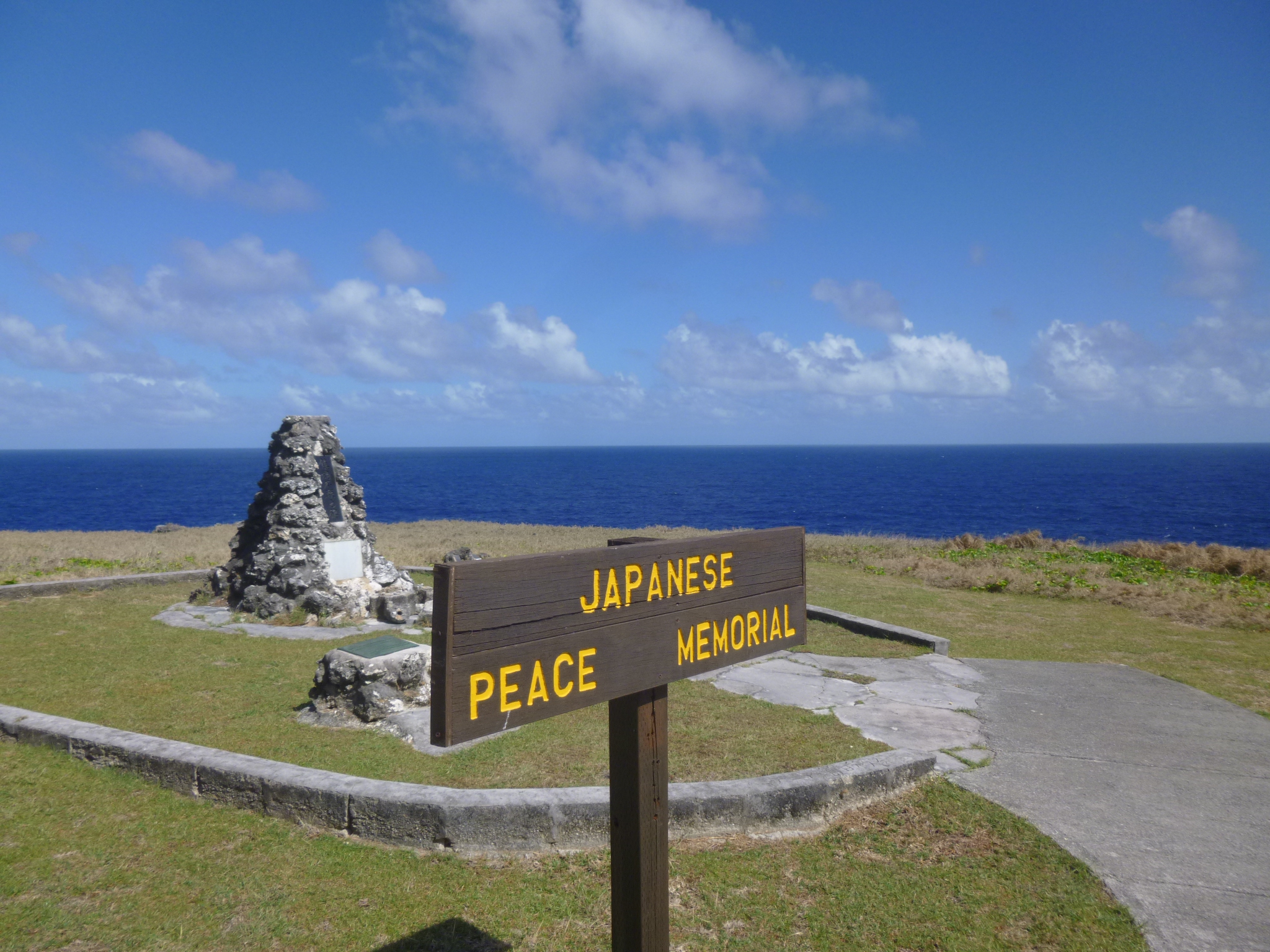
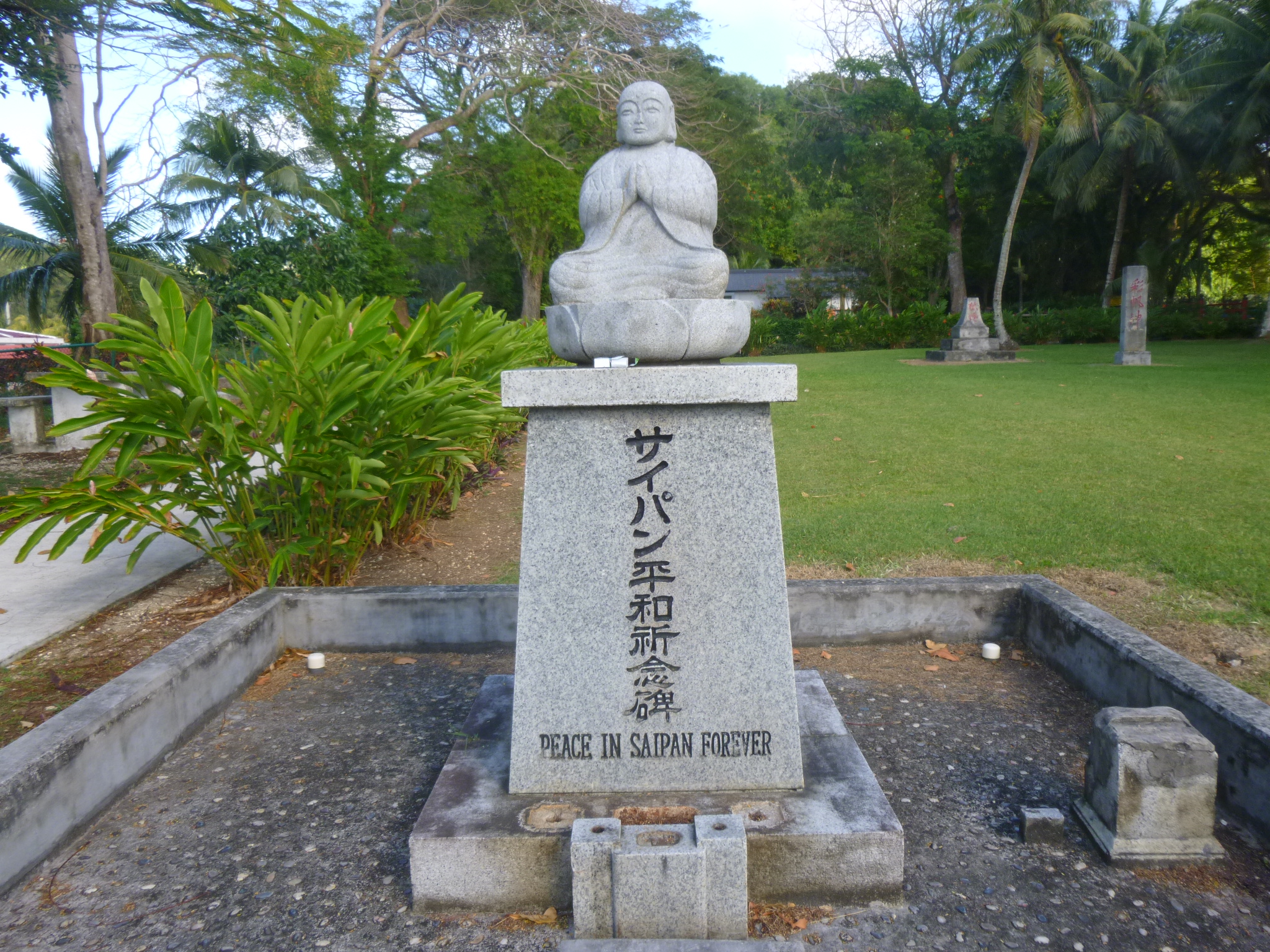
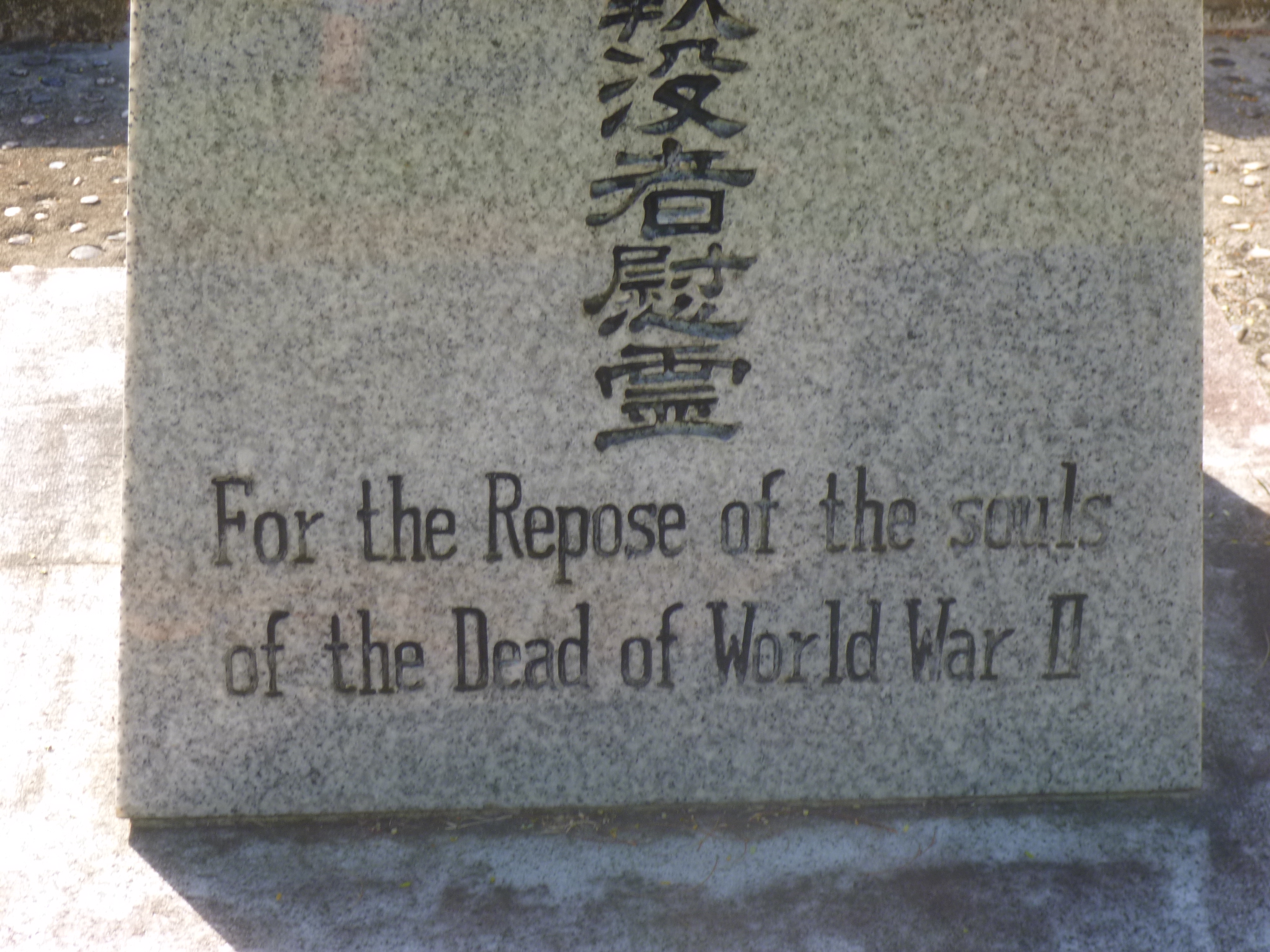
The car rental people were down in the lobby first thing this morning, so I was able to head out to explore on my own – and it felt good to be in a car again. Thanks to yesterday’s tour with Annie, I knew where I wanted to go, and headed for the north side of the island, where I stopped again at some of the memorials, and a US veteran’s cemetery, The Last Command Post for the Japanese, and then on to Banzai Cliff. There were a lot of memorials lining the road on the way to the cliff – some honored specific groups, and some simply were in honor of everyone who died, regardless of where they were from. And there were monuments for peace. Before the Japanese commanders had killed themselves, they had ordered their soldiers to take 7 lives before ending their own. The Japanese, who knew that death would be the end result, armed themselves with whatever they had left – even stones, sticks and spears – and went on a final rampage with such determination and recklessness and ferocity (the very definition of banzai), that they broke through the American ranks and managed to kill a number of them. Nearly all of the attacking Japanese soldiers ended up dead, and some of them had jumped off a cliff onto the rocks in the sea, which is why that cliff is named Banzai Cliff. Other soldiers and civilians went up to an even higher cliff, overlooking Banzai Cliff, and threw themselves off of that onto the ground below. There had been so much propaganda against Americans during the years of the war, that the Japanese viewed death as a better alternative to being taken prisoner. The soldiers were forbidden to be captured alive, and the civilians had been convinced that they would share the same elevated status of afterlife as the soldiers if the ended their lives in honor of their emperor. Despite interpreters (a couple of the few Japanese soldiers taken alive) and US soldiers telling them over loudspeakers they would be treated humanely, and given meals and water, and that they would be returned to Japan after the war was over, 800-1000 people still leaped off the cliff that later became known as Suicide Cliff. It’s difficult to understand how a leader can be so persuasive that people end up doing things they would never consider otherwise. Some of the mothers leaped off holding their children, and other families lined up from youngest to oldest child – the youngest child would be pushed off the cliff by the next oldest child and so on, and then the mom would push off the oldest child, her husband would push her off, and then he would turn around backward (don’t know the significance of that) and jump off. It’s such a horrible part of history.
After visiting Banzai Cliff, where I had seen a lot of turtles again, I walked for miles on a pathway along the road that I had seen yesterday. I didn’t know exactly where it went, but it was climbing up, and I began to wonder if it was circling up to the top of Suicide Cliff. But it was taking the long way up, and there were some beautiful views back down to the harbor on the other side of the island. After about 3 1/2 miles, I turned around and walked back – it was hot and I was getting tired and I wanted to make sure I had enough water for the walk back. Then I got in the car and drove along the same road, and discovered the path did indeed lead to the top of Suicide Cliff and I had walked up to within about 1/2 mile of it. There was a guard by the cliff just keeping an eye on things, and there were a couple memorials – again, honoring everyone; the Americans, the Japanese and the Chamorros who got caught in between. And there was a plea for peace, and learning from past mistakes. It was actually peaceful up there, and there were doves flying around, which seemed sort of symbolic. As I looked over the cliff way down to the ground, it was simply incomprehensible thinking about what happened. I was glad the doves were there.
There is very little evidence left of all the activity that once happened on that end of the island. Many of the old roads and things have been overgrown, and that helps it seem sort of peaceful despite the history. I could still see faint traces of where roads had been, but there weren’t really any buildings or anything left – it’s just all green. After a while I drove back to the motel, and had a bite to eat before returning to the national park visitor center before they closed. I watched the video again, and this time it was in English, and it made even more sense now that I’d been around more of the island. I wish this park, and the one on Guam, could be magically transported to the US, so that more people could visit and learn about some of this powerful history in the Pacific. One of the Chamorro rangers has parents who are still alive who survived the war, and she said they never spoke badly of either the Japanese or Americans. And Annie, who drove me around yesterday, told me her mother, who was about 18 at the time, had to hide in one of the many caves, and she became sick, and while her dad (Annie’s grandpa) was trying to comfort her, he was shot by an unseen American – who had thought Japanese soldiers were in the cave. So the war is still close to people on the islands.
I had to spend Sunday evening doing laundry – it had been a long time, so I drove to one of the bigger laundromats and took care of that. While waiting, I was knitting a couple dish cloths as small little thank-you gifts for both Annie and the lady on Guam who tracked me down to be able to return my passport. Some school-age girls were watching curiously – they may not have seen anyone knitting before!
I didn’t make a donation today, so tomorrow will be busy as I catch up with 3 of them. I have 4 ideas, and 3 donations left, and none of them were open on weekends, which is why it all had to wait until Monday. But with a car, I can take care of them!



Saipan – Saturday, February 9
The first thing I did today was make arrangements to rent a car for Sunday and Monday. Since my driver’s license was found on Guam, they were able to fax a copy of it to the National Car Rental on Guam, and they in turn faxed it to Saipan. So I’ll have wheels tomorrow!
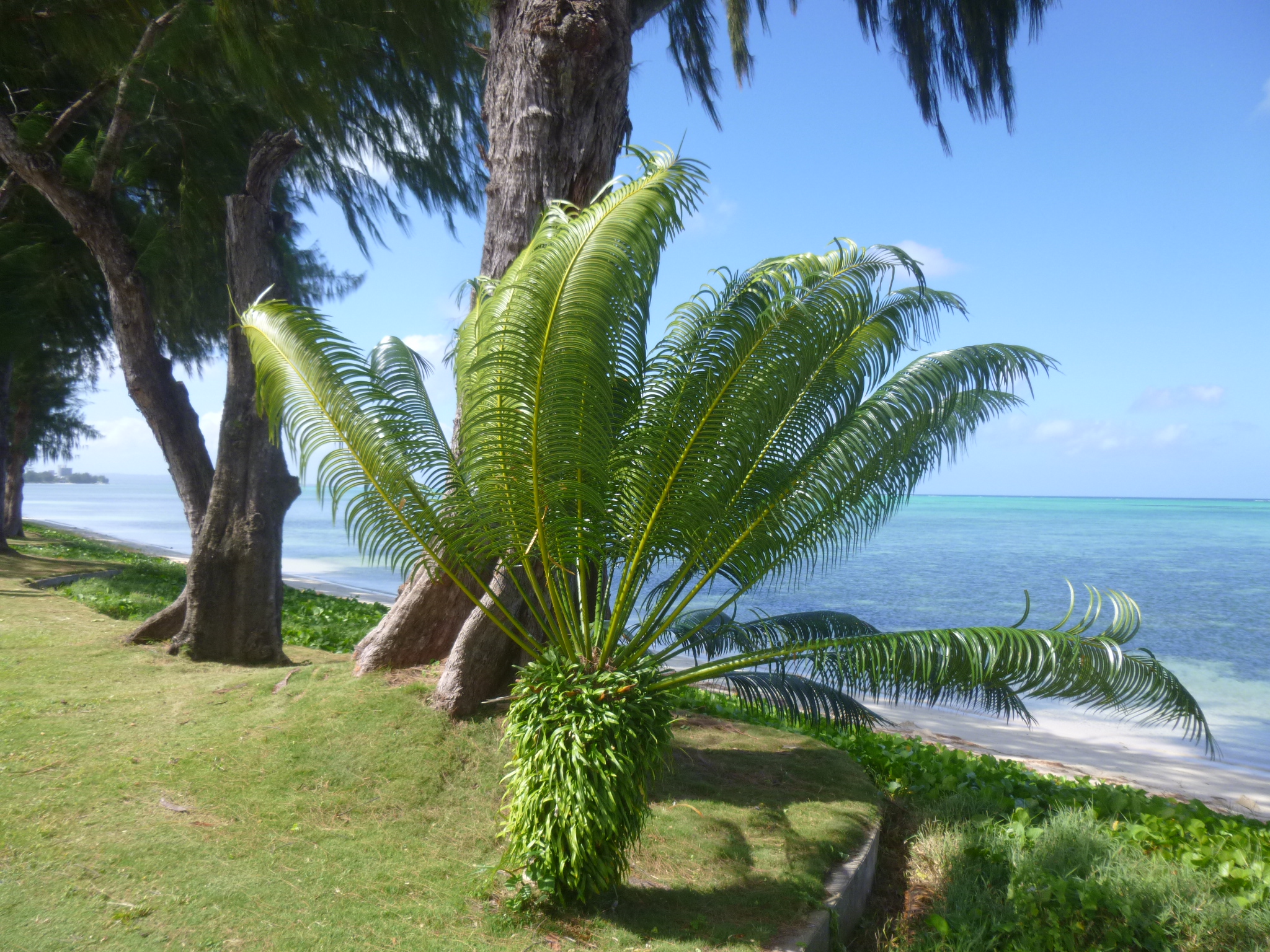
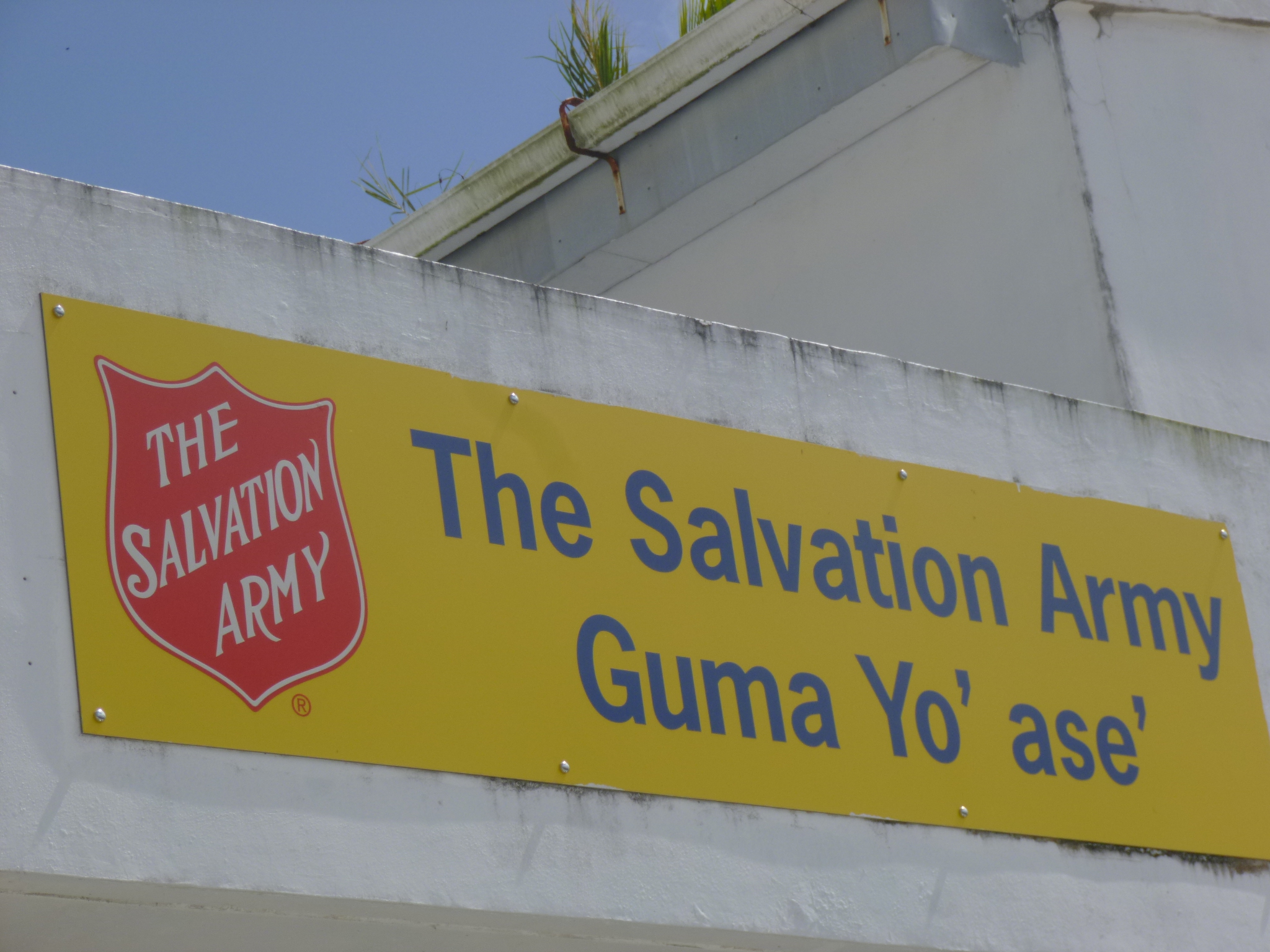
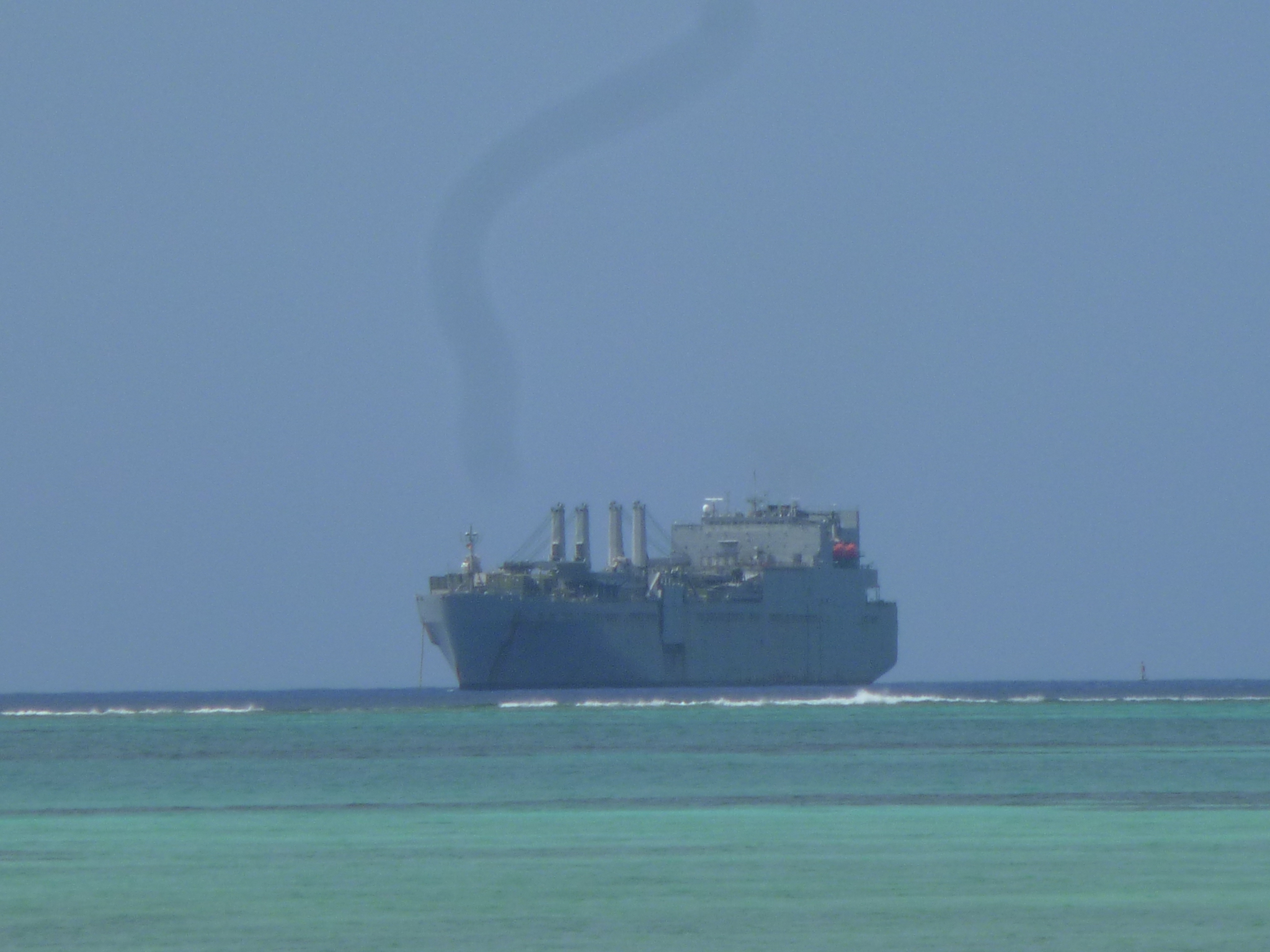
Today my plan was to walk about 5 miles to the Salvation Army building, which offers free lunches 3 days a week to anyone who needs a meal. It’s called Guma Yo’ Ase, which means House of Mercy. Thanks to my new National Park friends, I knew this was the only soup kitchen type place on the island, and I wanted to be sure to get there today since this was a day they were serving meals. It was another hot day, so I armed myself with sunscreen, hat and water and set out. The first 4 miles were familiar, and the walkway along the sea is probably something I would walk on every day if I lived there. There has been a huge navy ship anchored out beyond the reef the entire time I’ve been here, and I started asking people what it was doing, and how long it was there. It turns out there is always a ship there, and sometimes 4-5 of them. This is on the west side of Saipan, which is the Philippine Sea, and because of the proximity to all the Asian countries, the ships are apparently there keeping an eye and ear on American interests. They have several ships and crews that rotate in and out, but there’s always at least one ship anchored off the coast. Sometimes training exercises are also held on Tinian – the Department of Defense actually leases 2/3 of Tinian, and there has been talk of building a military base there. Despite their small size, these islands are geographically important, and there could be increased military activity in the future due to “re-balancing” forces in the Pacific.
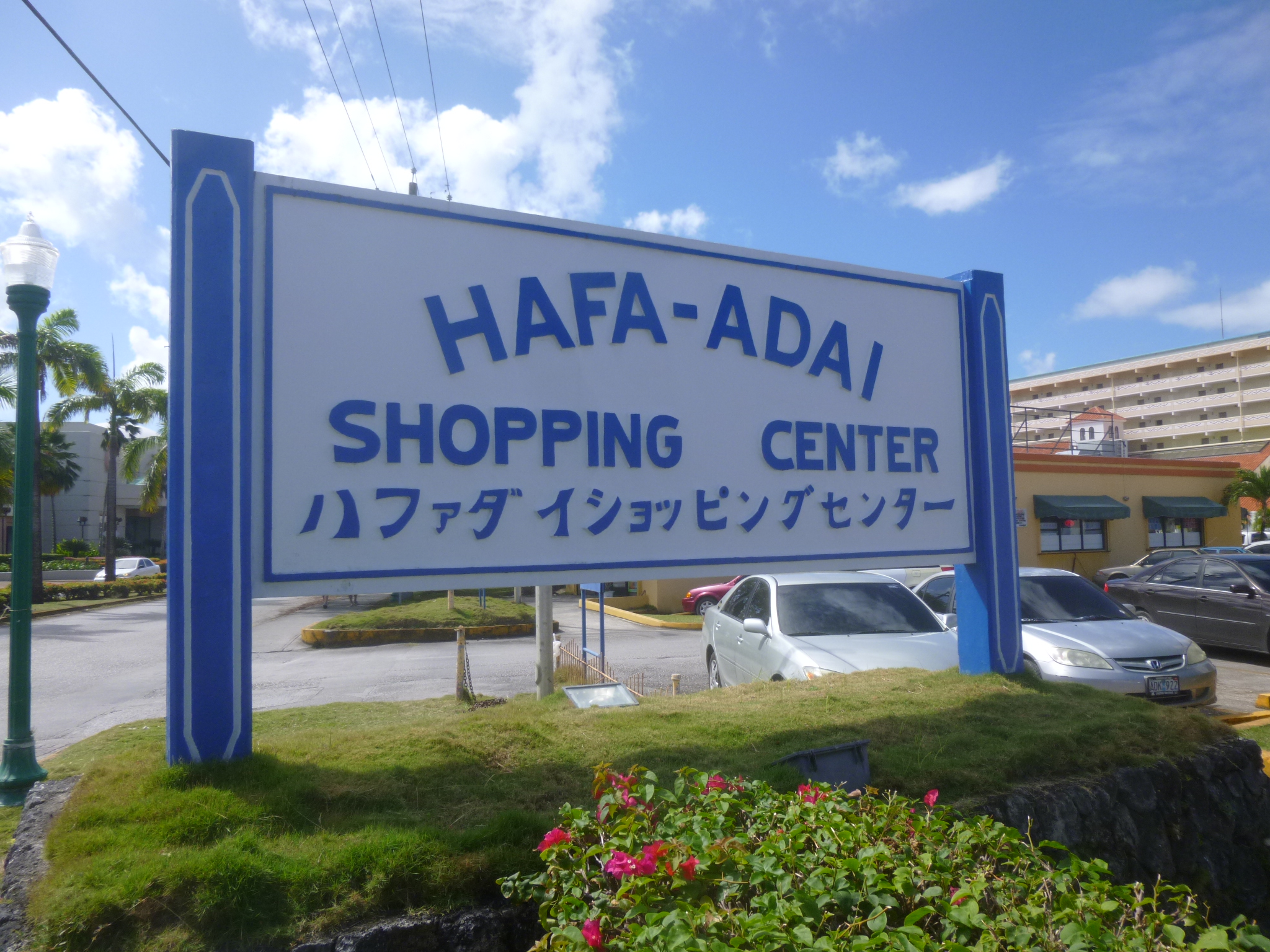
Anyway, I walked on – and made a stop at Western Union for some cash from my brother since I have to leave a deposit with the rental car company. It is very strange using cash for all transactions – I’m not used to carrying much around, and I don’t like it! The last mile or so to the Salvation Army was not very pleasant – by this time the walkway by the sea was gone, and I was in kind of an older, congested part of the island, with a lot of small shops and buildings and parking lots full of puddles and traffic. There was no sidewalk and I was happy to finally see the Salvation Army building! Not only was the soup kitchen open, but the connected thrift shop was too. The thrift shop is open whenever the soup kitchen is, and the proceeds from the thrift shop help support the soup kitchen. I talked to a few people about making my donation, and someone went to find Annie, who is the director of the place. She and her husband are both pastors, and run both the food program here, and one in the central part of the island. We chatted for a while, and I told her what I was doing. People were surprised I had walked all the way there in the heat, but I told them I’m used to it. But I was glad to stop for a while! Annie was about my age, and since they were near the end of the soup kitchen hours, she offered me lunch, and since I didn’t have other plans for the rest of the afternoon, she not only offered to drive me back to the hotel when clean-up was done, but she offered to show me around the island a bit! I told her that wasn’t necessary at all, but she was very kind about it and wanted to do that. So I sat down in the soup kitchen and had some soup, mac and cheese with spam, and a ham sandwich – I had worked up an appetite. There were quite a few volunteers, including a couple of her granddaughters, and they were very efficient. This facility doesn’t have beds for an overnight shelter, but they are able to offer shower and laundry facilities to some of the homeless people. They work very hard to do what they can to help those in need.
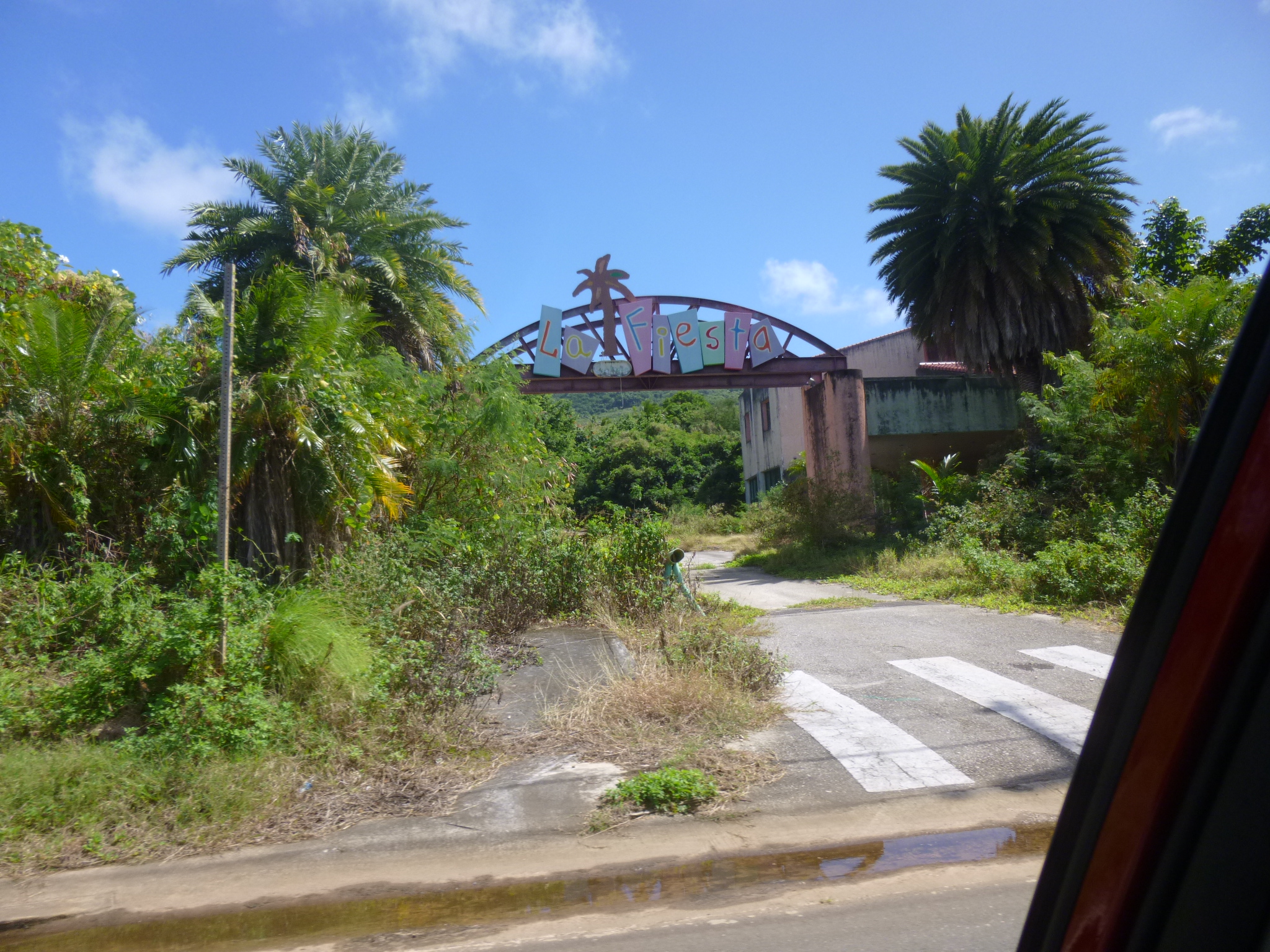
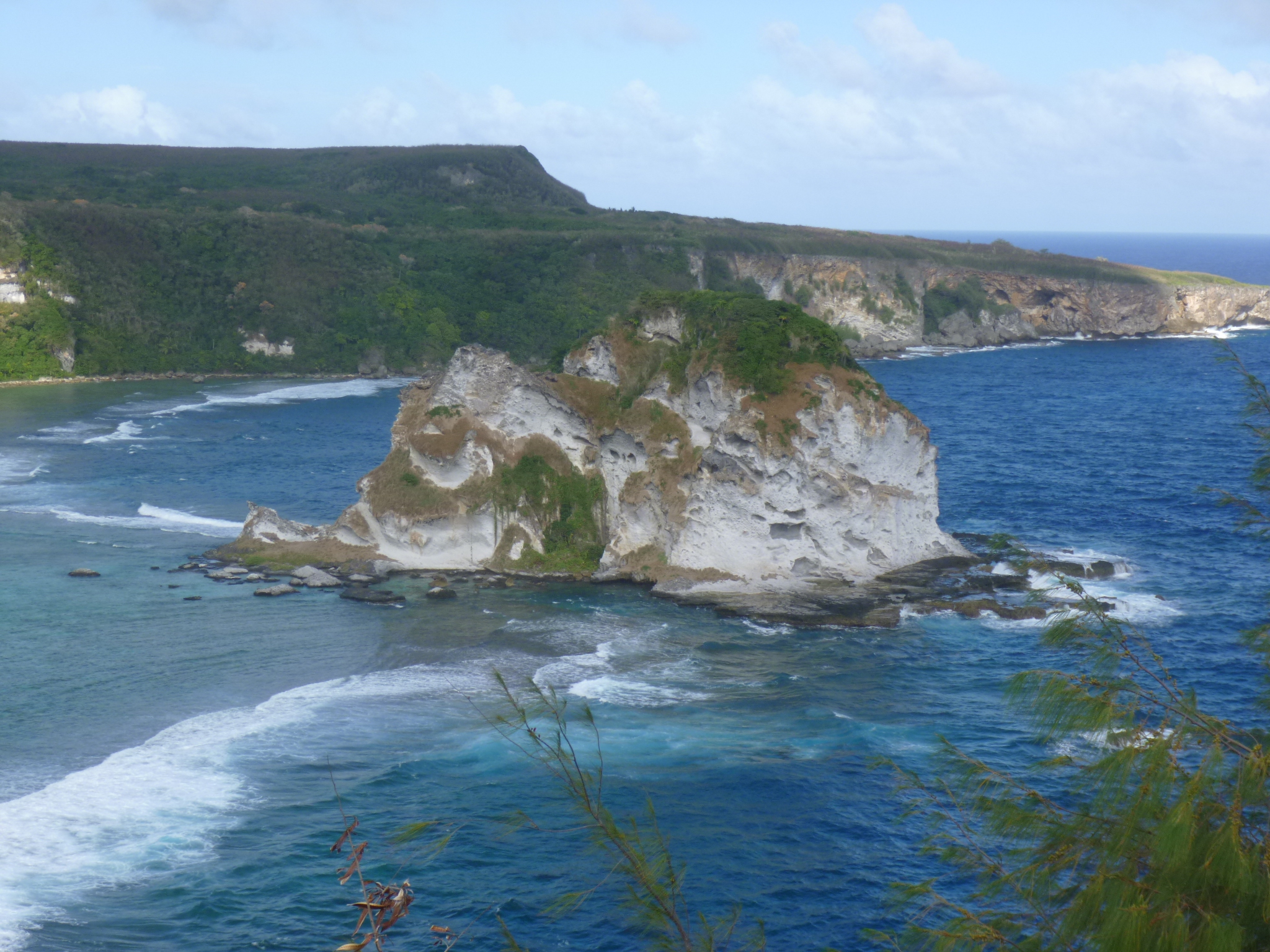
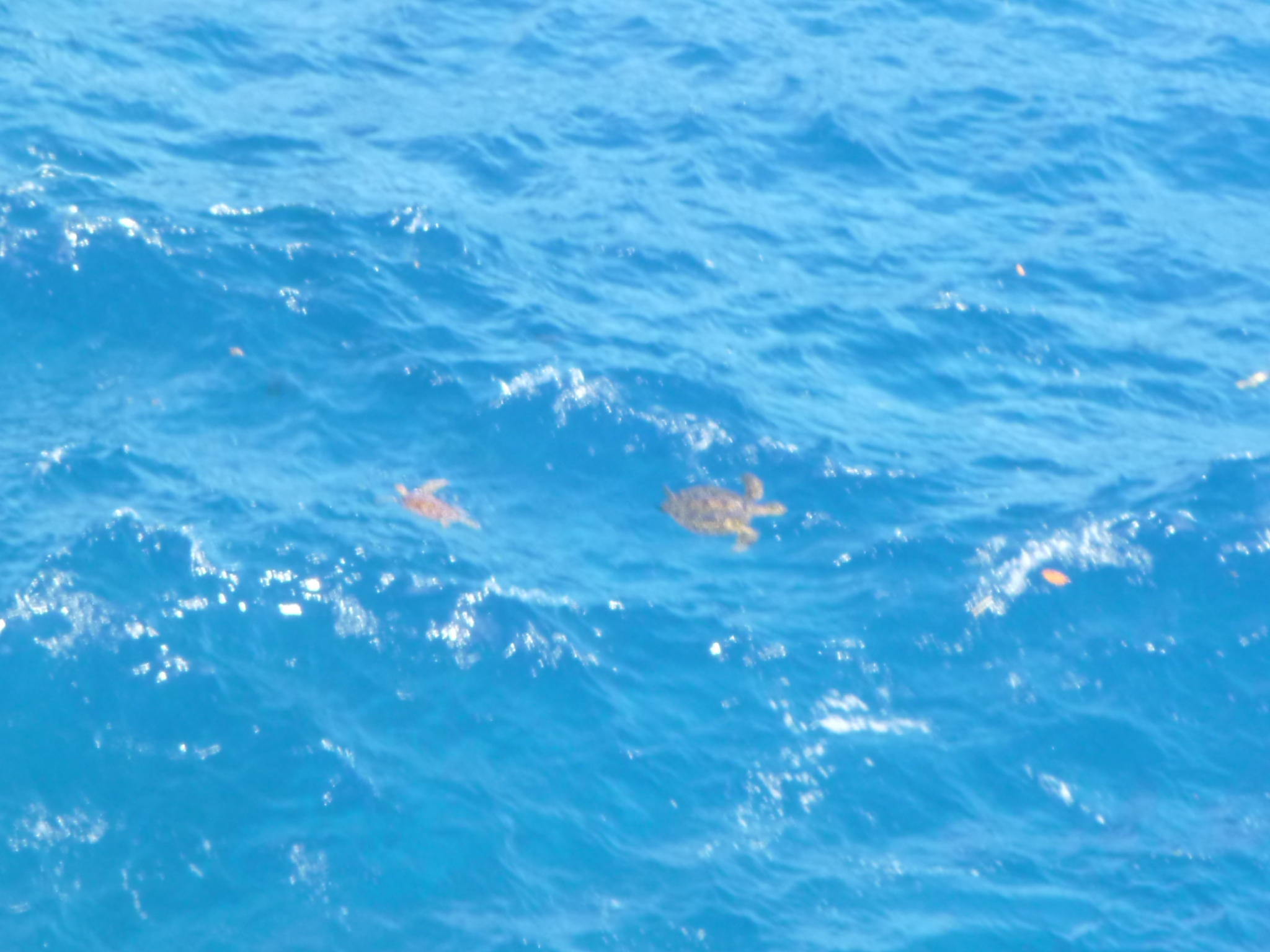
Annie and I set off in her van with a couple of the grandkids. It’s wonderful being shown around by someone who knows so much about the island. We drove up to the north end of the island, and she pointed out lots of things along the way. We made short visits to some of the memorials and Banzai Cliff and she pointed out Suicide Cliff – giving me a good idea of where to head tomorrow. She drove down to some remote local beaches that I never would have found on my own, and then we stopped to look at Bird Island and a grotto. We were lucky to see about 8 sea turtles swimming in the water – usually they only see 2-3 at a time! That was pretty cool! I asked why there weren’t any neighborhoods or many businesses on that side of the island and she said it’s just too far away from where most people live. There was a big shopping center that had simply been abandoned years ago, and Mother Nature is in the process of reclaiming it. It looks strange to see such a big complex being overgrown like that – it’s a little eerie. It was a wonderfully interesting afternoon – both with what I saw of the island, and in listening to some of what Annie’s done in her life. Back as a teen, she won the Miss Northern Mariana Islands pageant, and toured lots of America with her first husband who was an Elvis impersonator, and she met lots of the famous older entertainers. But in the end, she seems to find most fulfillment back on her island of Saipan, helping the needy. And she and her husband also sponsor family days for their volunteers and families. The grandkids were hungry, so we all had dinner together at my hotel – I tried to treat them as a thank you for the wonderful afternoon, but she wouldn’t have any of that!
Once again, I never know what a day is going to hold!


Northern Mariana Islands – Friday, February 8
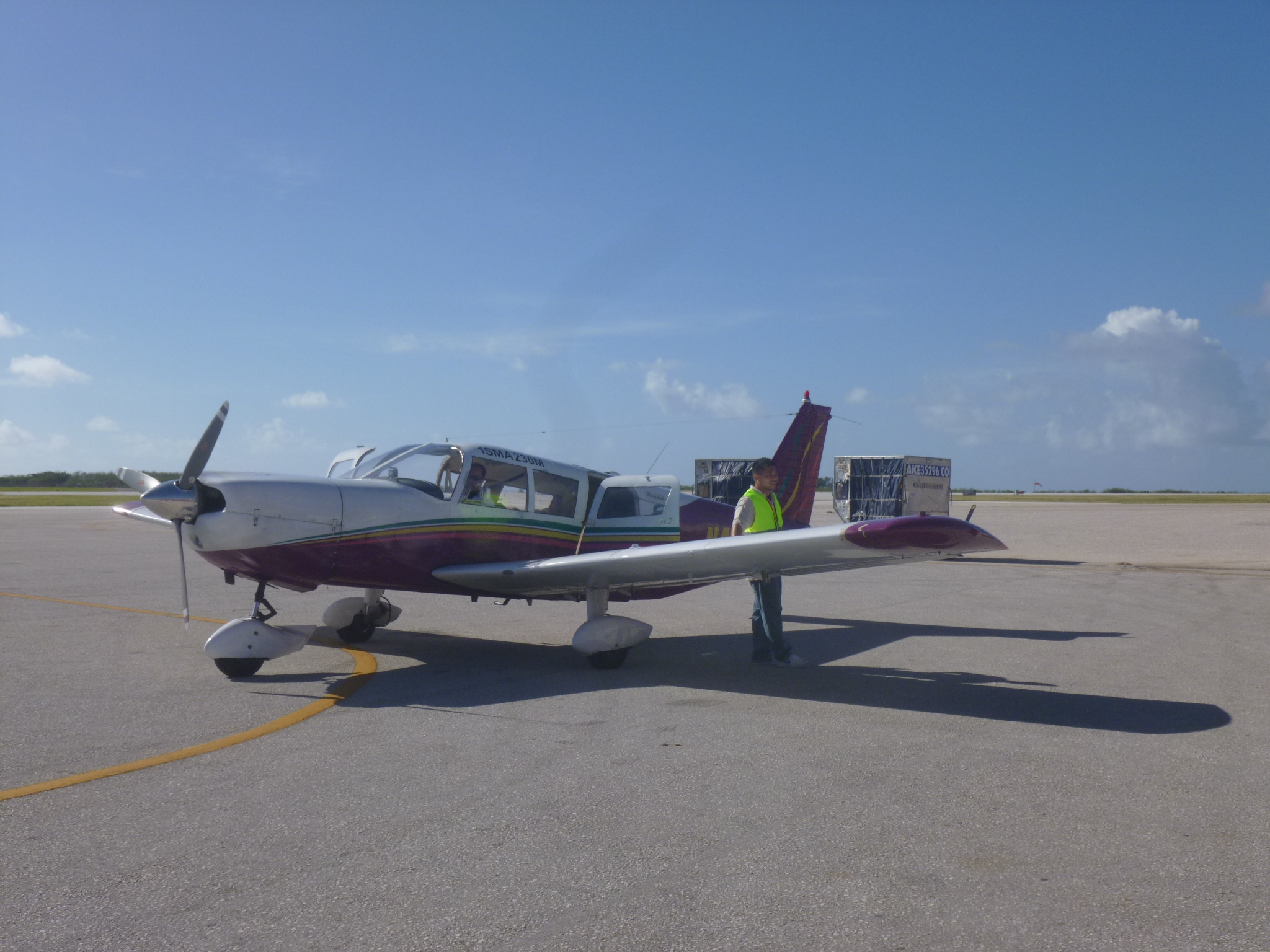
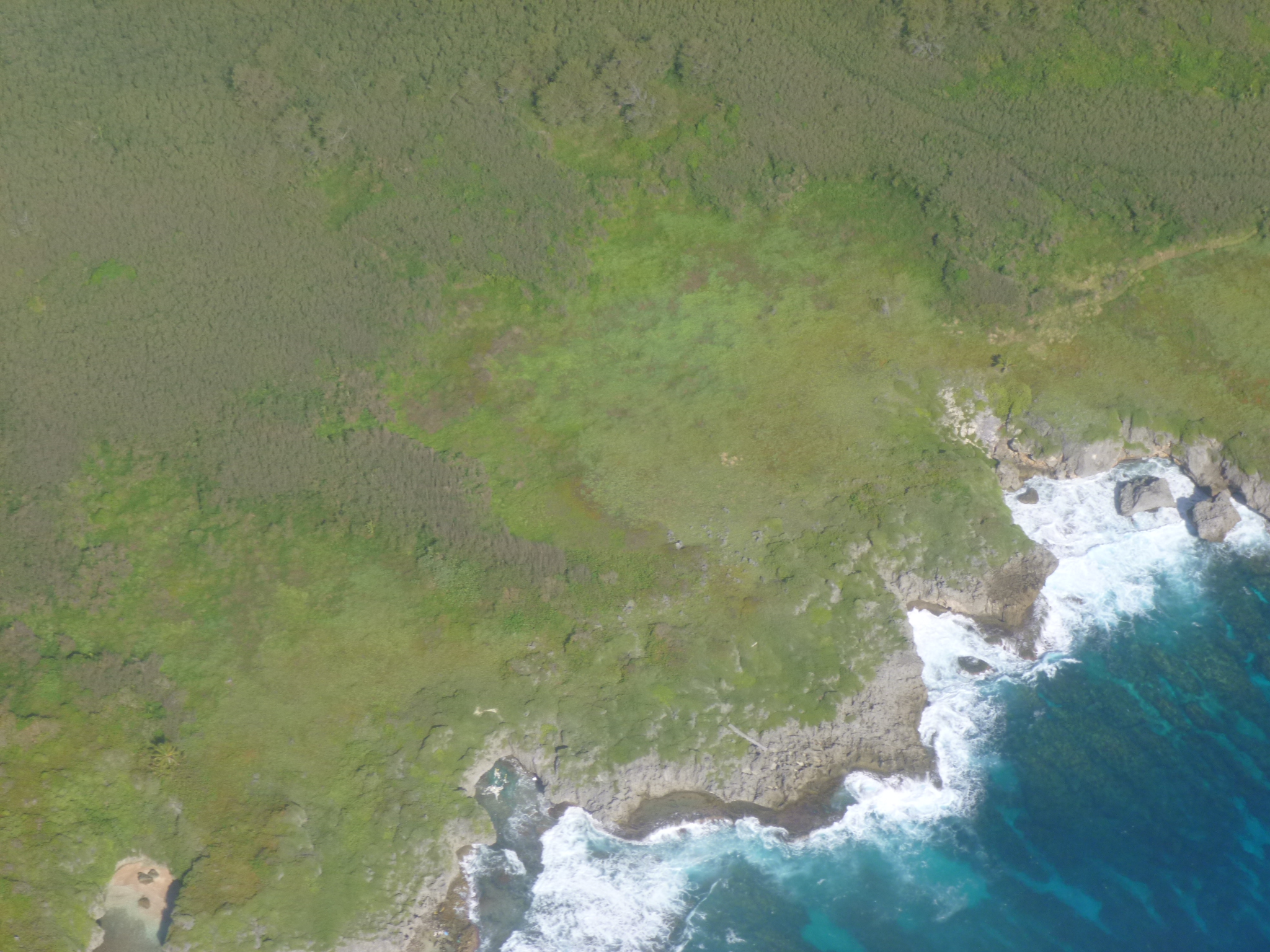
When I was back on Guam, several people had told me that there were ferries between the islands of Saipan and Tinian. And I was happy to hear that because I wanted to see more of the Northern Mariana Islands. But when I got to Saipan, I found out the ferries had stopped running quite a while ago, and the only way to get to Tinian was to take a commuter plane. And that turned out to be something the people at the front desk were able to arrange for me, for $49 round trip – the islands are only about 5 miles apart. They had made arrangements for a 9:00 flight, so I took the hotel shuttle to the airport, and there was no issue with identification on the little commuter planes – it was all very casual. There were quite a few little planes coming and going – carrying people, chickens, cases of food and beer, new auto tires, etc. Everything has to fly in, which makes things more expensive. I didn’t have a plan for the day, and no one had maps of Tinian, but I knew there was a visitor center there, and I had been told that the big hotel on Tinian sends a shuttle out to get people, even if they’re not staying at the hotel. I flew over in a 4 seater plane, and loved the short flight. It was fun to see the islands from the air – we didn’t go up high because it was such a short flight, so I really felt like a bird.
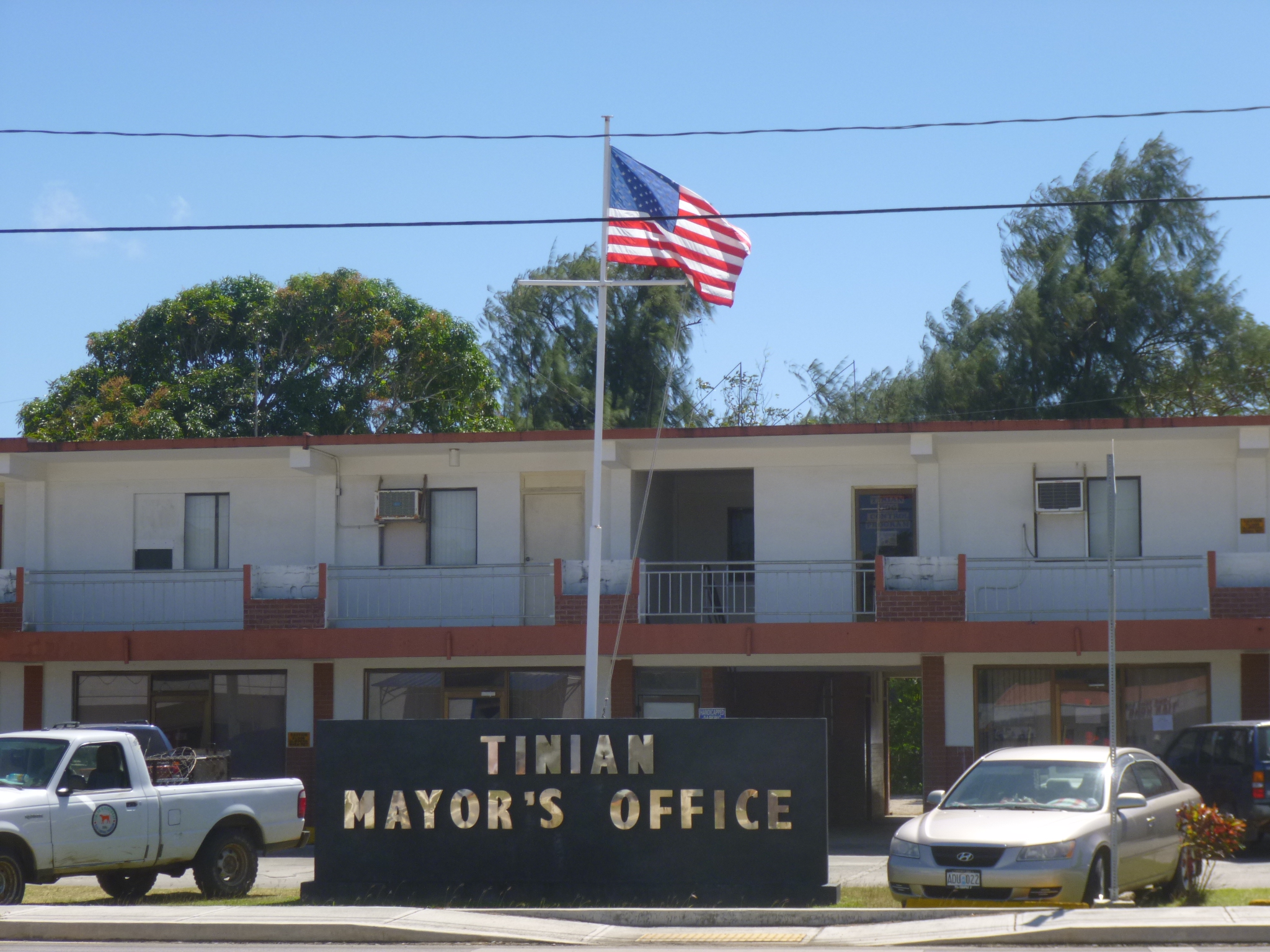
The airport on Tinian was small, and I used the courtesy phone to call the Dynasty Hotel – a big casino hotel on Tinian. There’s only one town on Tinian, and most of the houses and shops are modest, and the Dynasty hotel looked very big and ostentatious and out-of-place. It sounds like Saipan had had some luck attracting tourists with their poker houses, and Tinian wanted to cash in on some of that, so they built this big casino and hotel. I went in to make a phone call and hardly anyone was around – it was kind of strange.
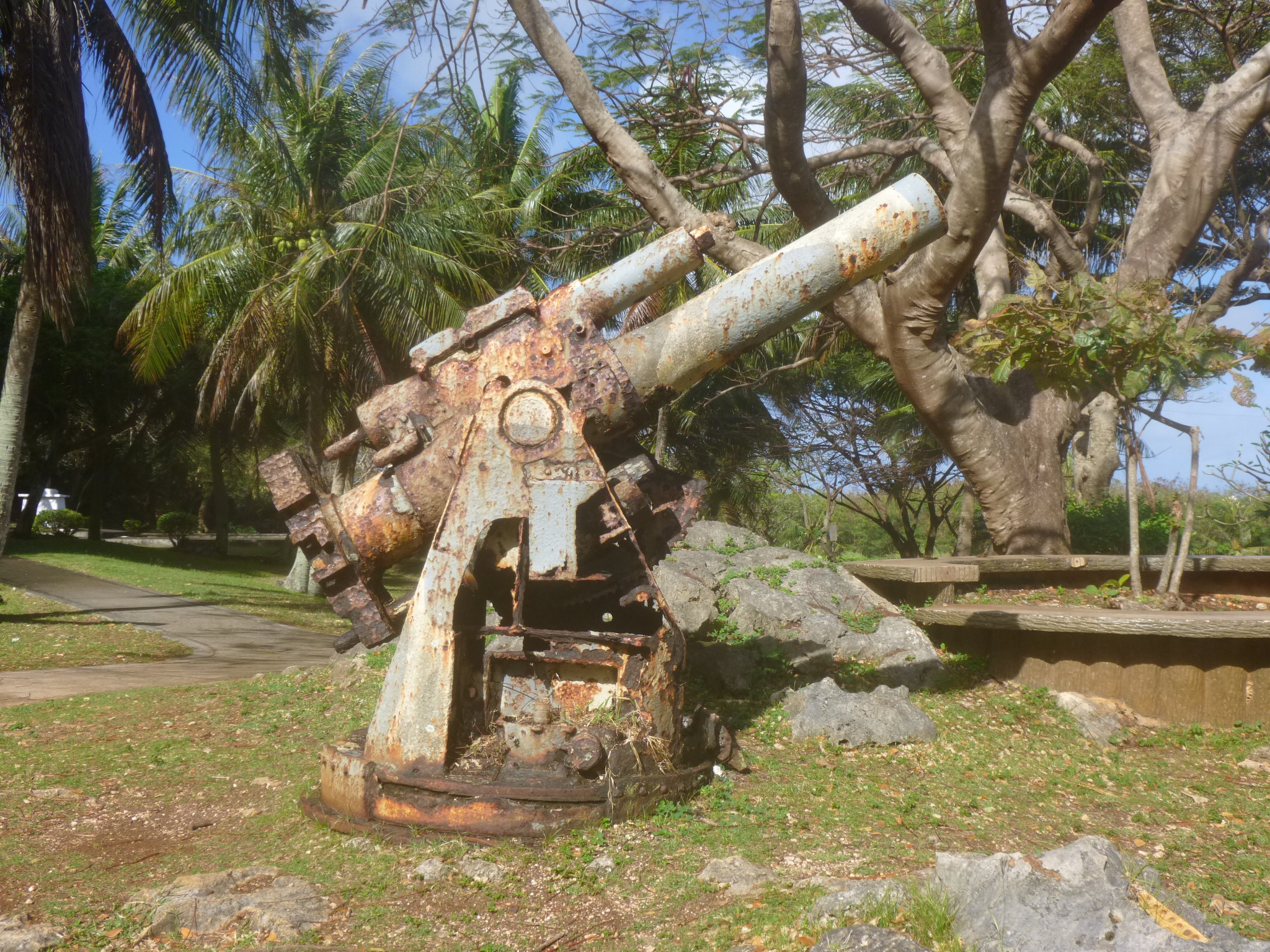
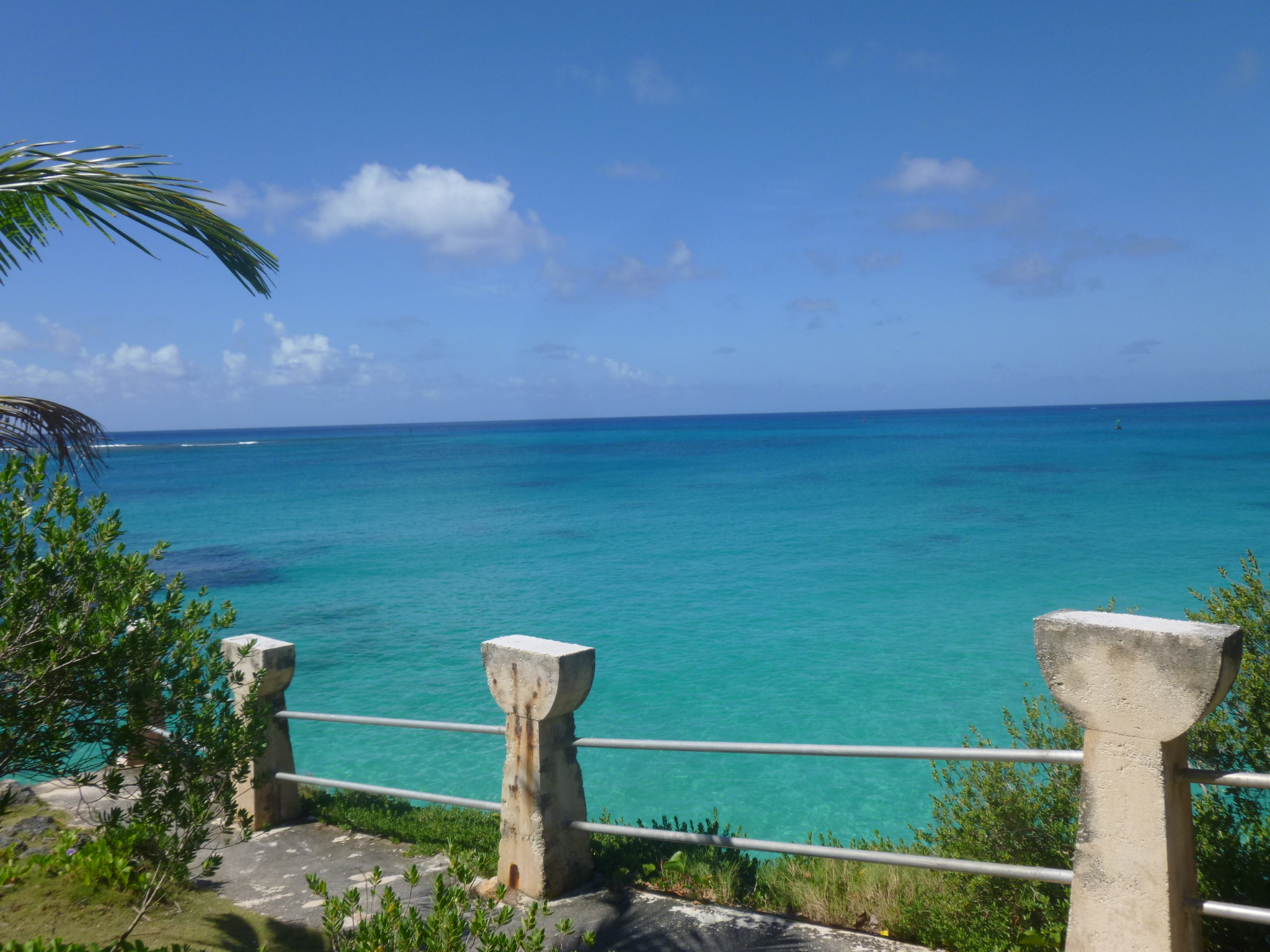
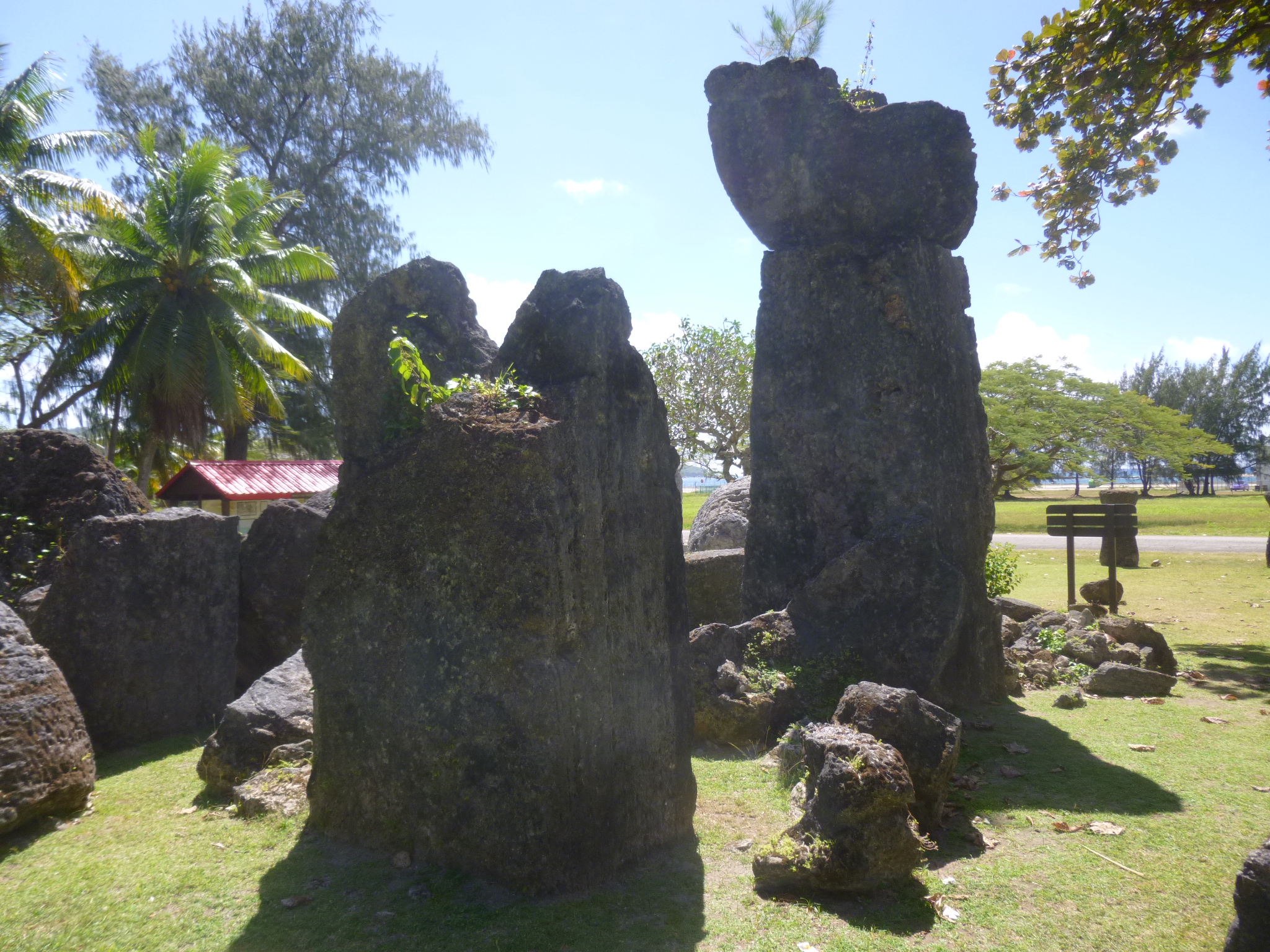
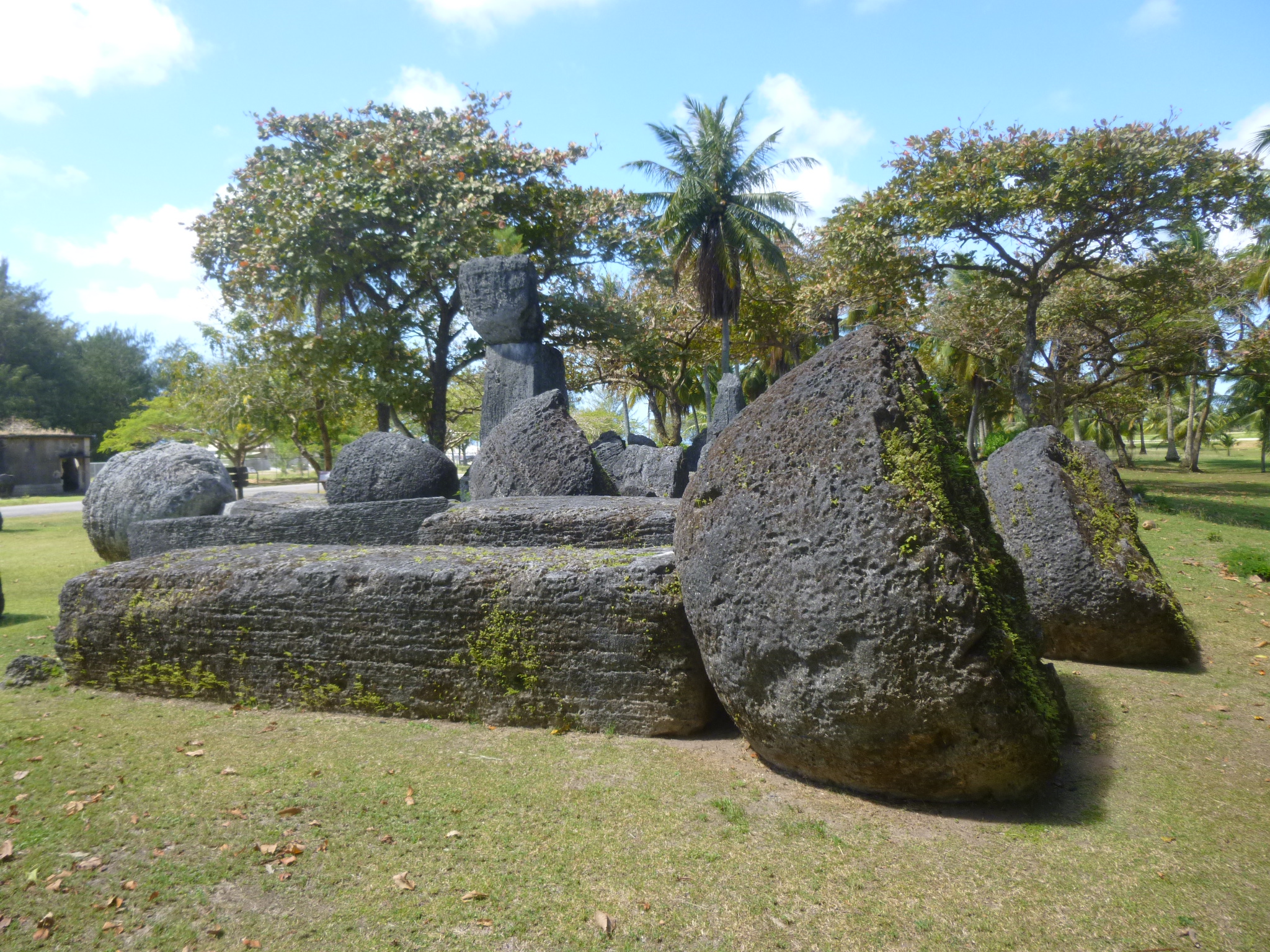
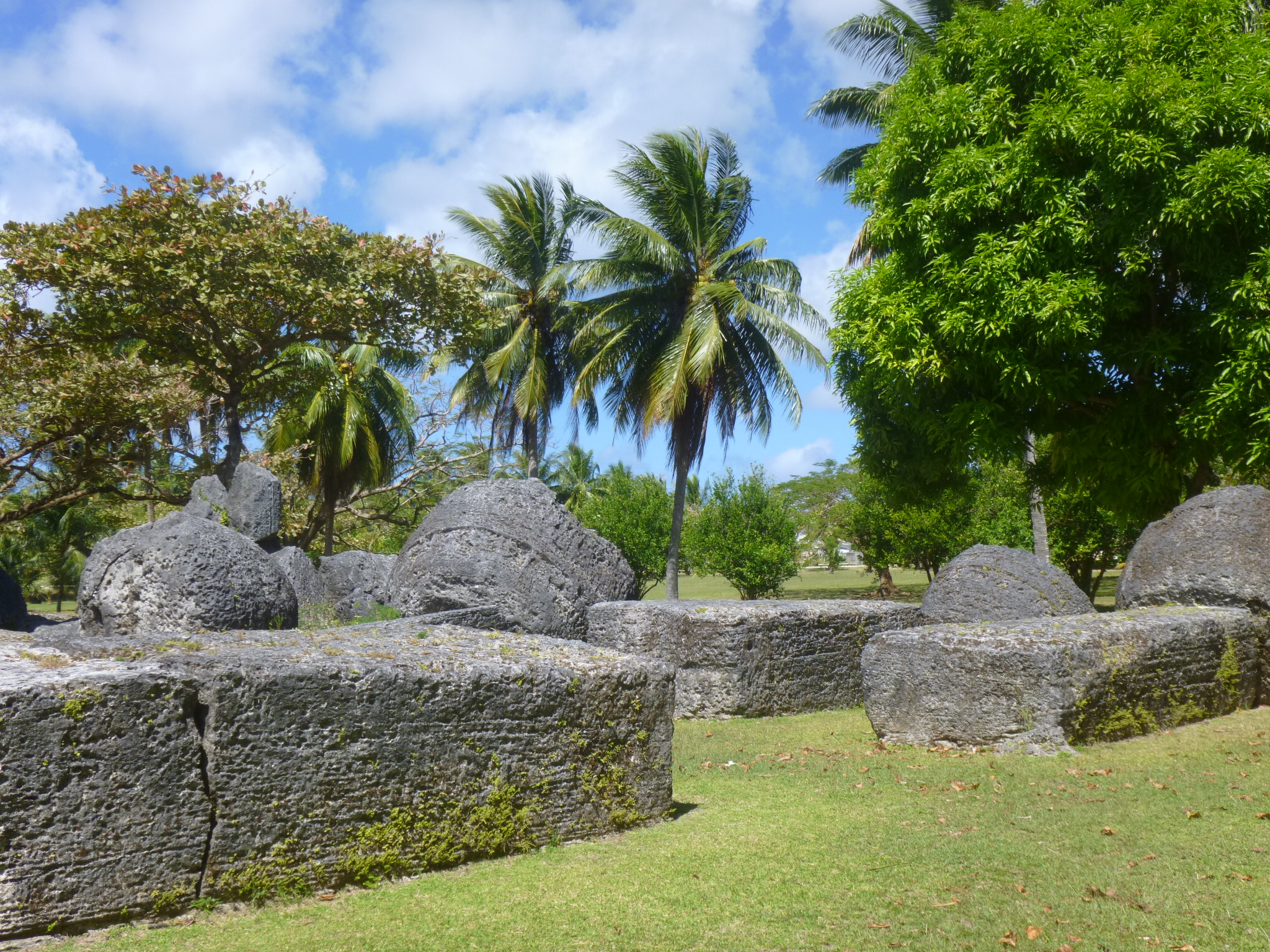
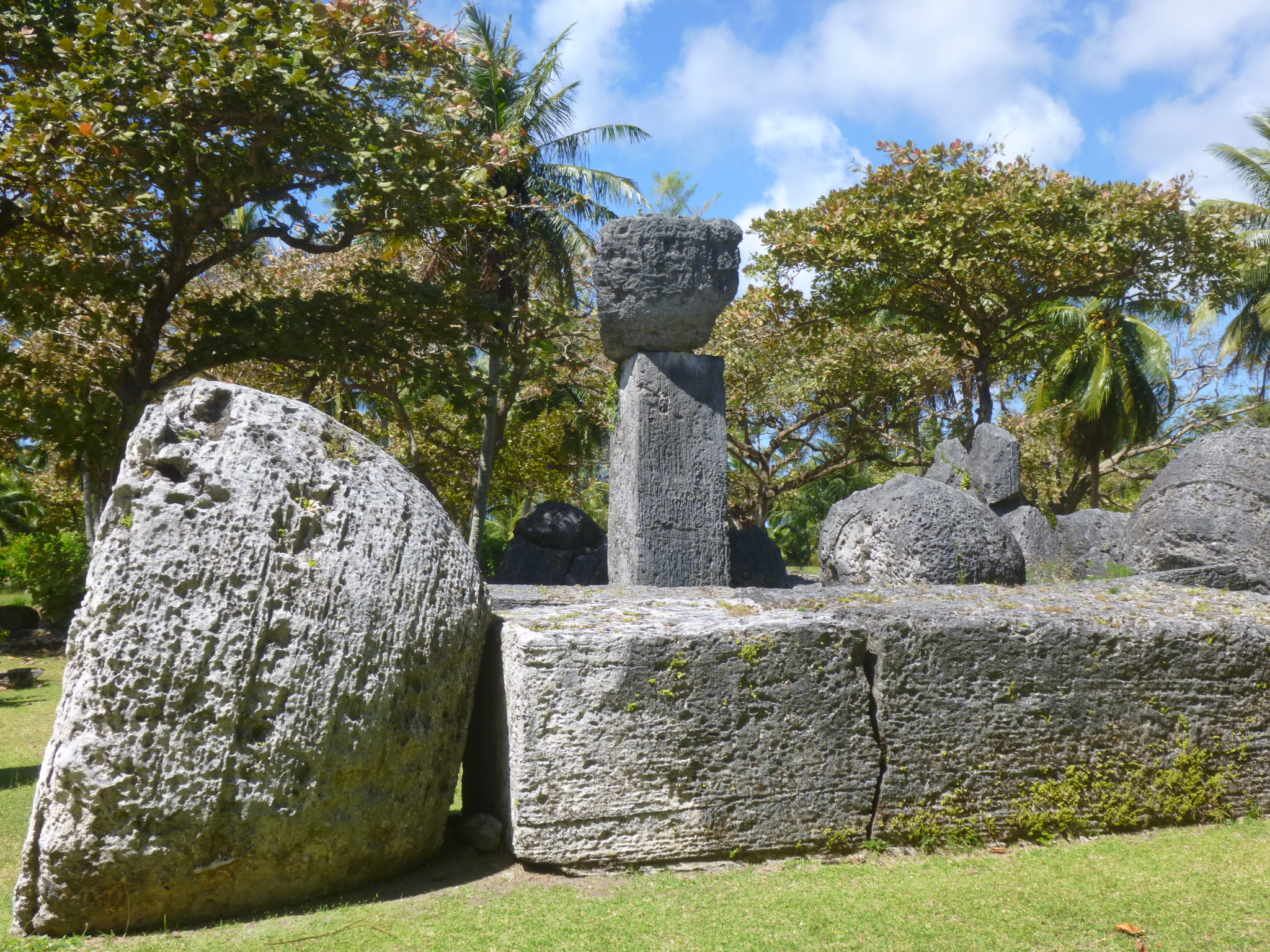
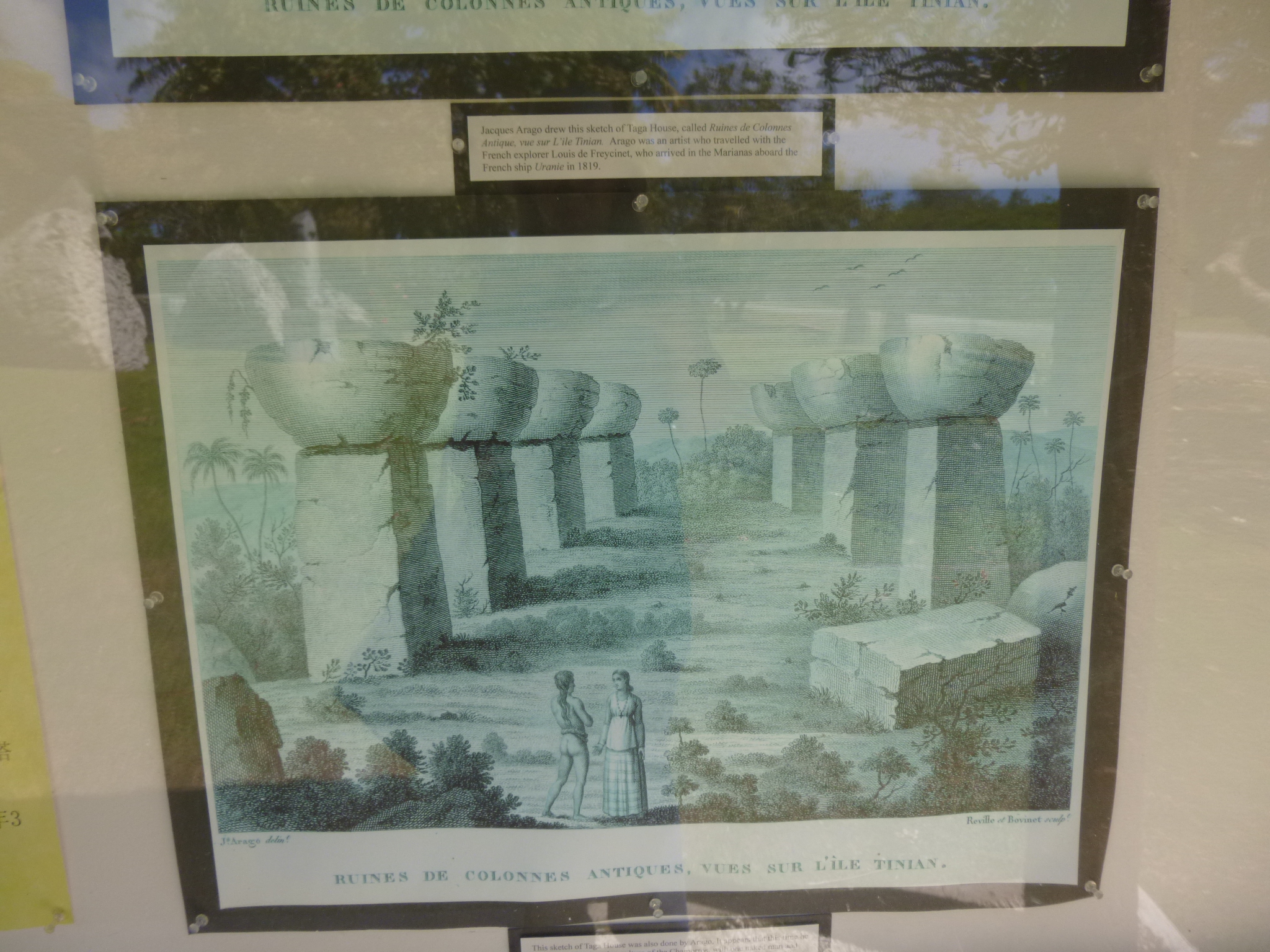
I walked about a mile to the visitor center and got a map. The little town and the beachfront walking trail were within walking distance, but I also really wanted to get to the northern end of the island to see the old airfields from WWII. A lady had called me at the airport this morning about a possible driving tour, and we had tentative plans to meet at the hotel at 2:00. In the meantime, I planned to do most of my walking and go see the latte stones. I walked back to the hotel and from there found the beach path without trouble and it was another beautiful walk – with water that seemed even more sparkly and blue than on Saipan. I wish pictures would do it justice. There were a few places where rusty old pieces of equipment from WWII just lay in the shallow water. There were a few small groups of people out by the beaches but overall it was pretty quiet. After that walk, I walked to the House of Taga where all the old latte stones are. Latte stones are unique to the Mariana Islands, and I have seem them on Guam also (Guam is the southernmost of the Mariana Islands, but apparently big enough to be its own territory). They are big stone pillars that have 2 parts – a column, and a half-sphere that is balanced on top of the column. They were used about 800 years ago in pairs of 6-12 to support important structures. There is a legend connected to the House of Taga about a giant, and these are really big latte stones. Only 1 of the latte stones at the House of Taga was still standing, but the others all lay neatly on the ground where they toppled over centuries ago. Even in the 1500s when the Spaniards were exploring the area, only 7 of them were still standing. This was in a shady area, and it was nice to just sit on one of the stones for a water break, and to think about it all.
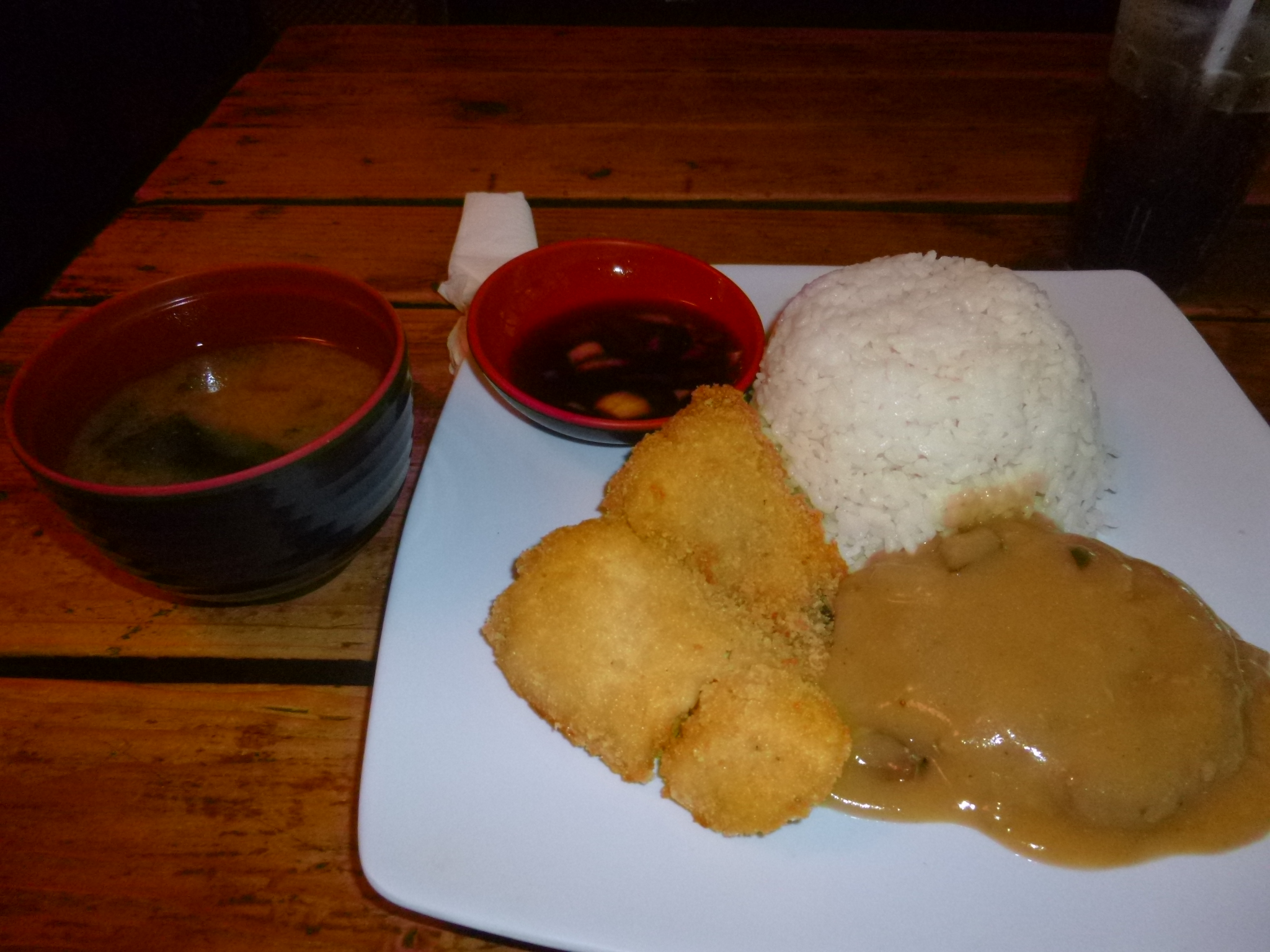
From there I walked back into town in search of some lunch – it was a hot day and I had walked miles. The choices were very limited, but I found a Japanese cafe, and went inside. The menu was mostly Japanese and confusing, so I just asked for their lunch special which turned out to be some kind of soup with tofu, rice (I’m beginning to get a little tired of rice!), a hamburger patty covered in gravy and some kind of fish with a dipping sauce. It filled me up and I headed back to the hotel to see if the tour lady was there. This time there were quite a few Asian people hanging around in the lobby, and they eventually all got on a big bus. No one showed up for a tour so I went to see if there was a message, and found out someone else would be taking me on a tour instead since the other lady had missed the afternoon plane from Saipan. My tour guide turned out to be a local person who seemed to know every inch of the island, and it was a great tour. We went to Tinian’s version of the Suicide Cliff, where Japanese soldiers and civilians jumped into the sea to avoid being captured alive by the Americans. They didn’t all die though because there was just water below – not rocks like on Saipan. Other groups of soldiers gathered in a group and blew themselves up with a grenade. This was still considered an honorable way to die; honoring their Emperor and therefore enjoying an elevated afterlife status.
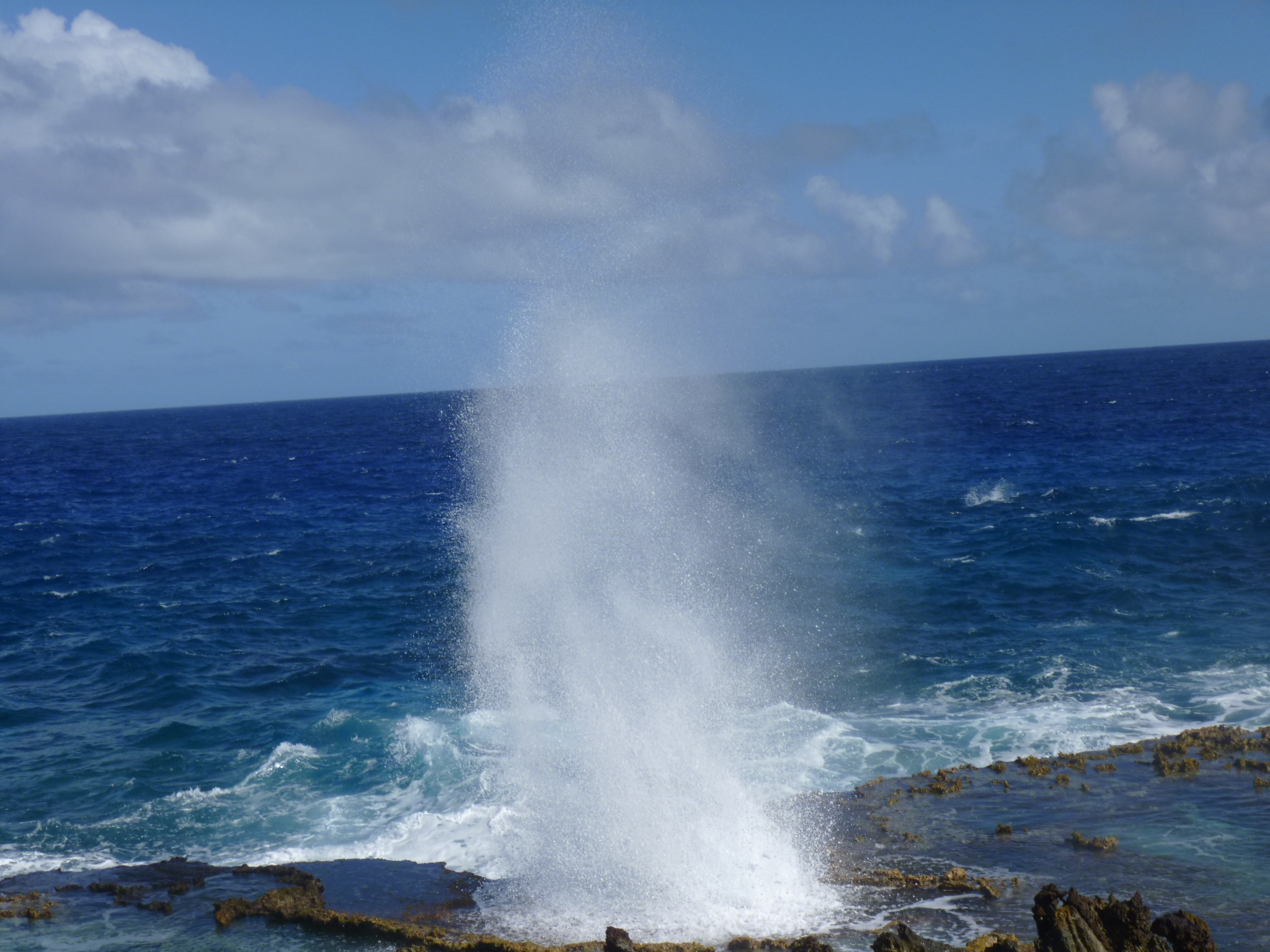
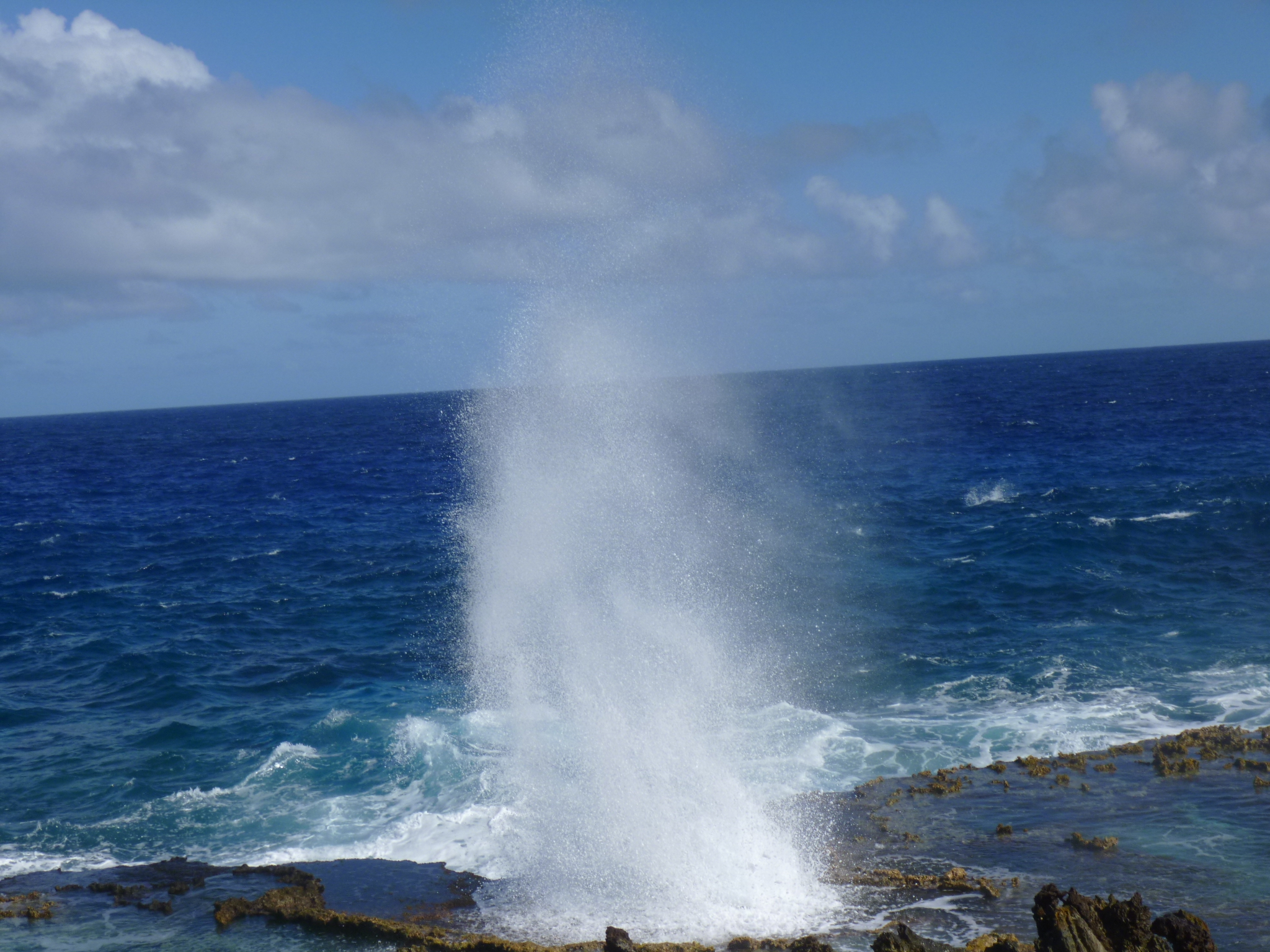
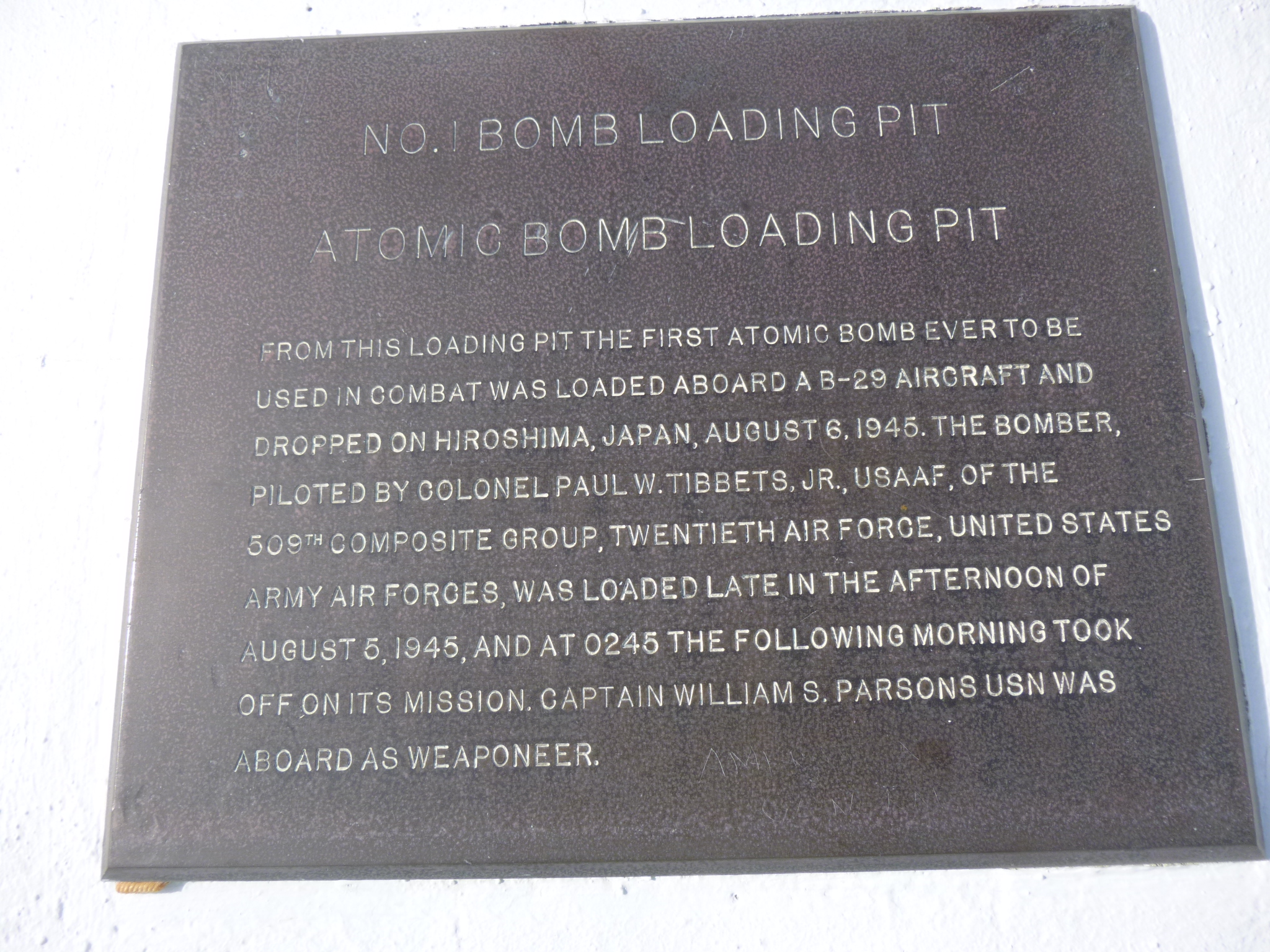
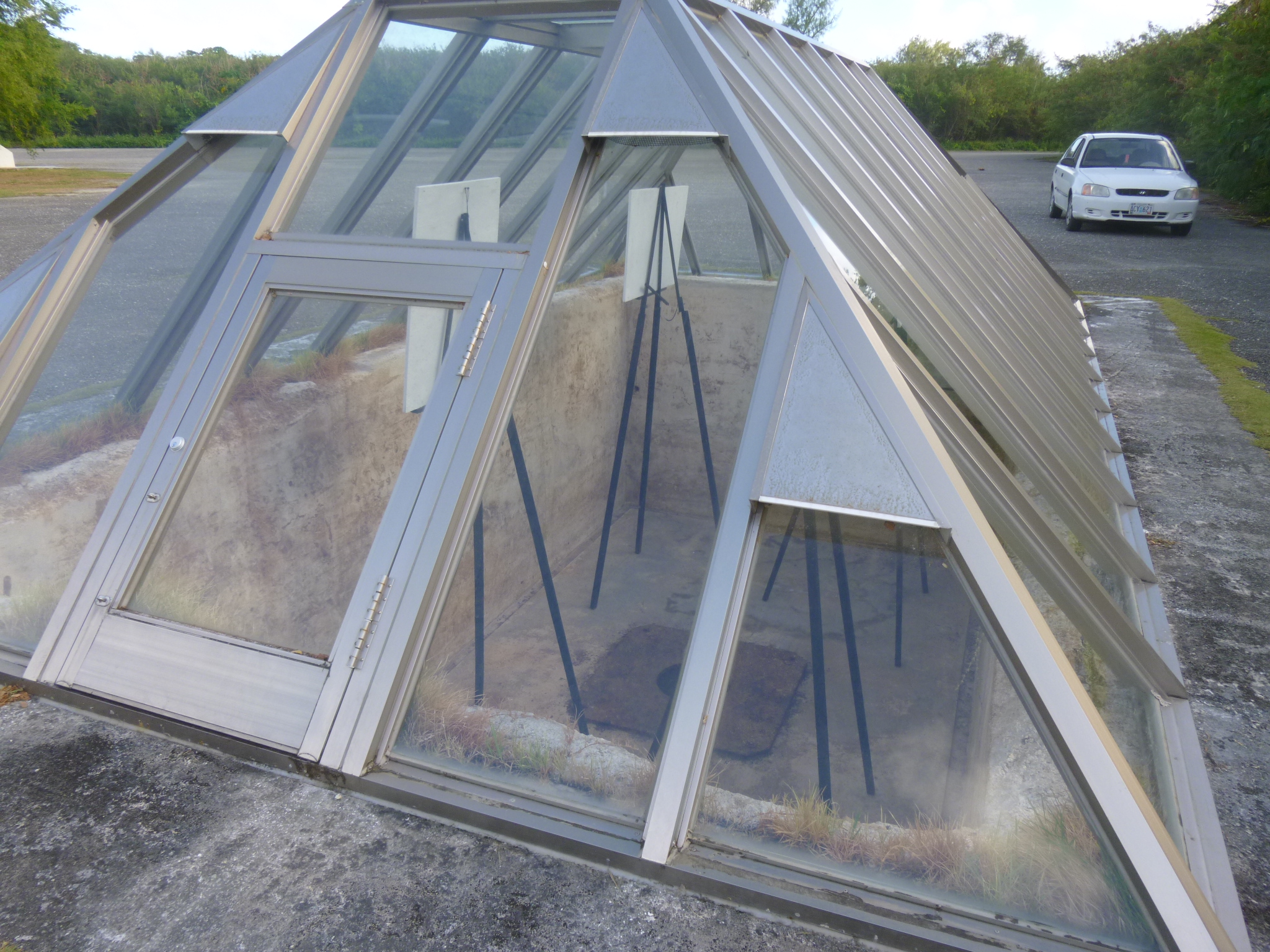
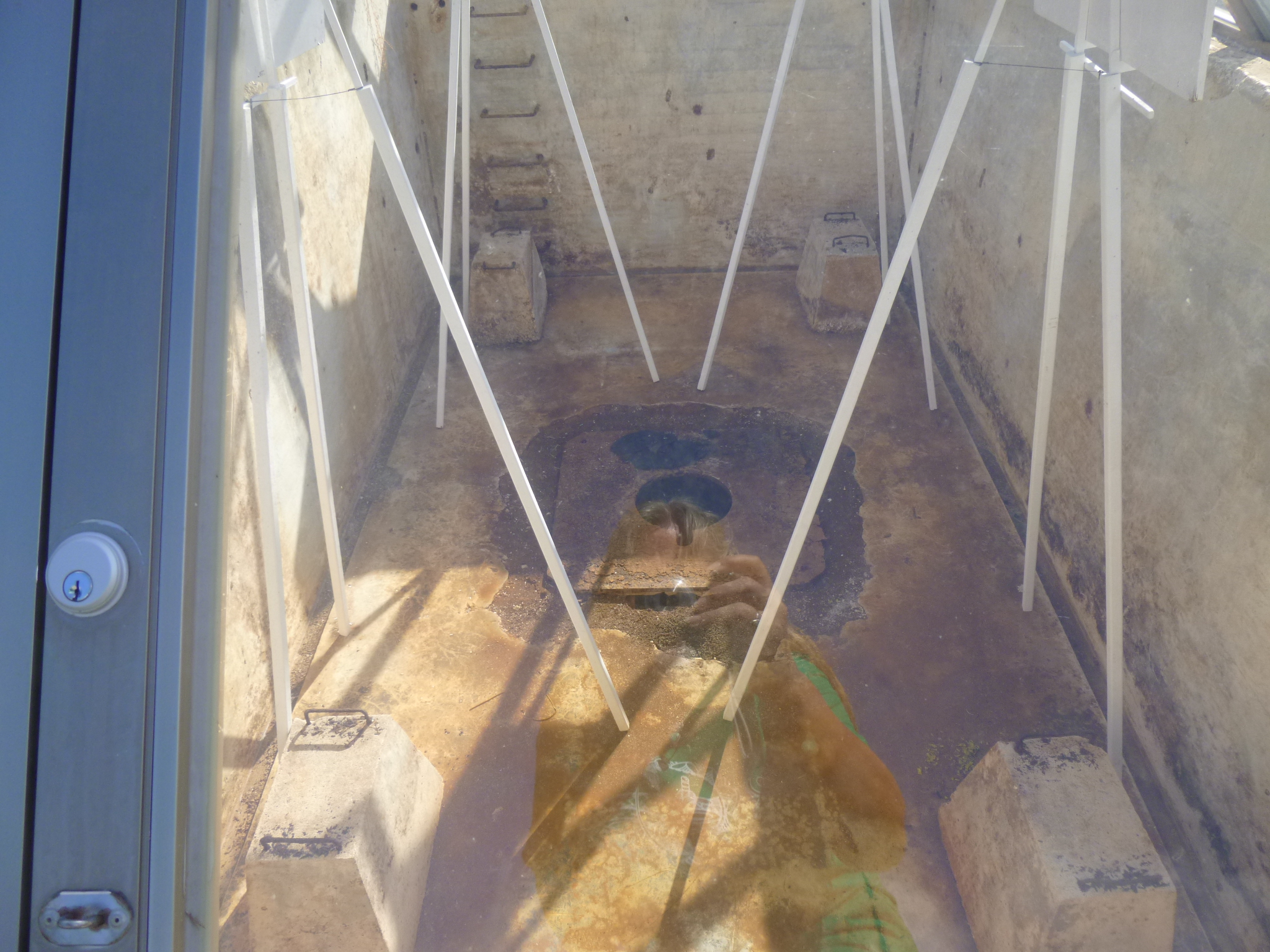
Then we headed to the north side of the island, but first my driver pulled into an old lot behind the old buildings that the hotel workers live in to show me the replicas of the atomic bombs “Fat Man” and “Little Boy”. A third atomic bomb, “Thin Man”, had also been built and that was the test one. These replicas were built to be a part of the 50th anniversary memorials, and were going to be placed in the atomic bomb pits, but they caused too much controversy, so they were just taken away to this old parking lot, and many people don’t seem to have a chance to see them. The atomic bombs weighed about 4 tons, which is why they needed special pits to be loaded from – they were too heavy for conventional methods. Their size would never suggest they were that heavy – they looked like they would fit into the back of the van with all the seats out. On the way to the other end of the island, we stopped at a place where the ocean waves crash against the rocks, and they’ve made a hole through one of them, and when the waves come in underneath, the water spouts up like a whale’s blowhole.
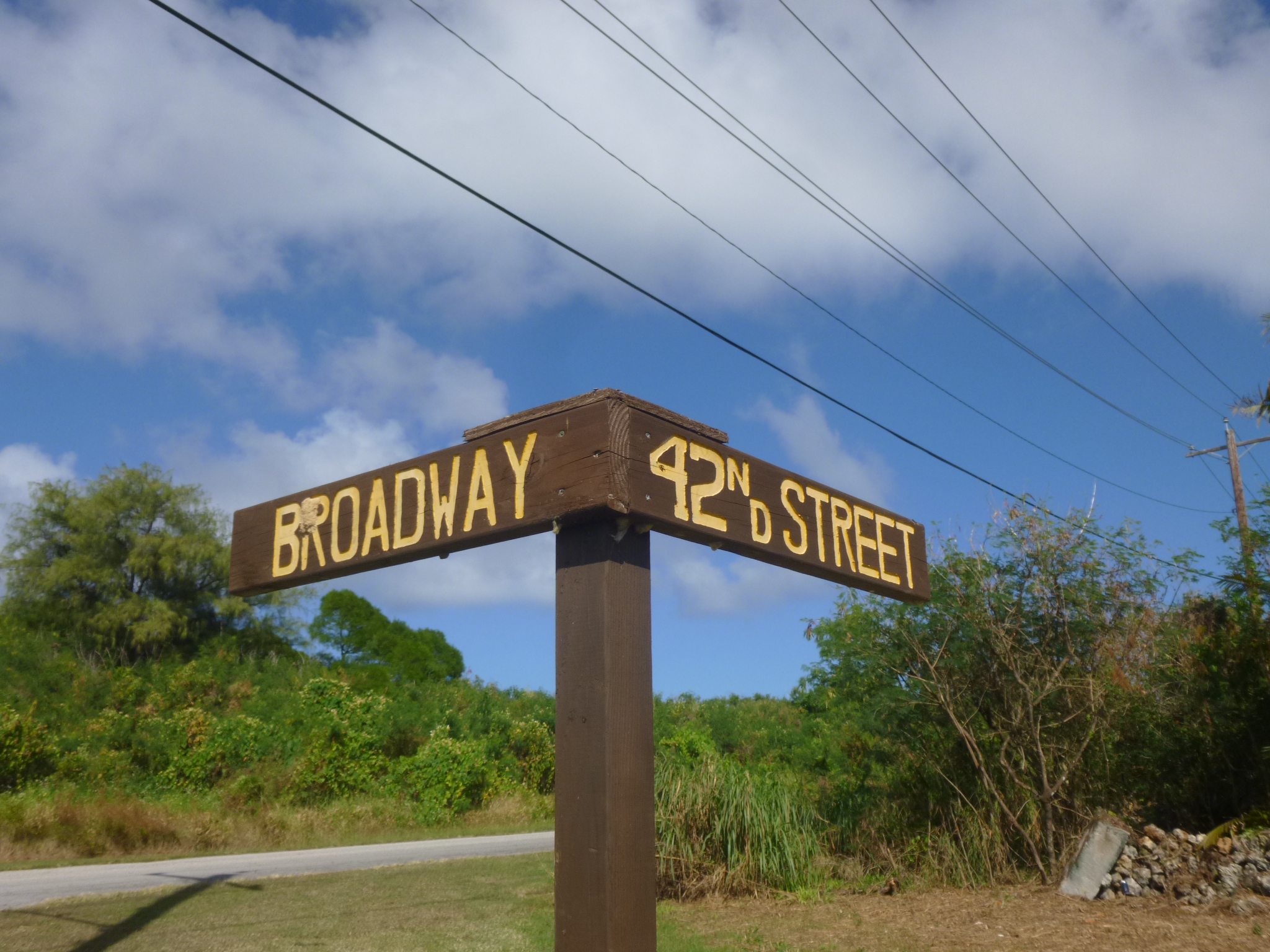
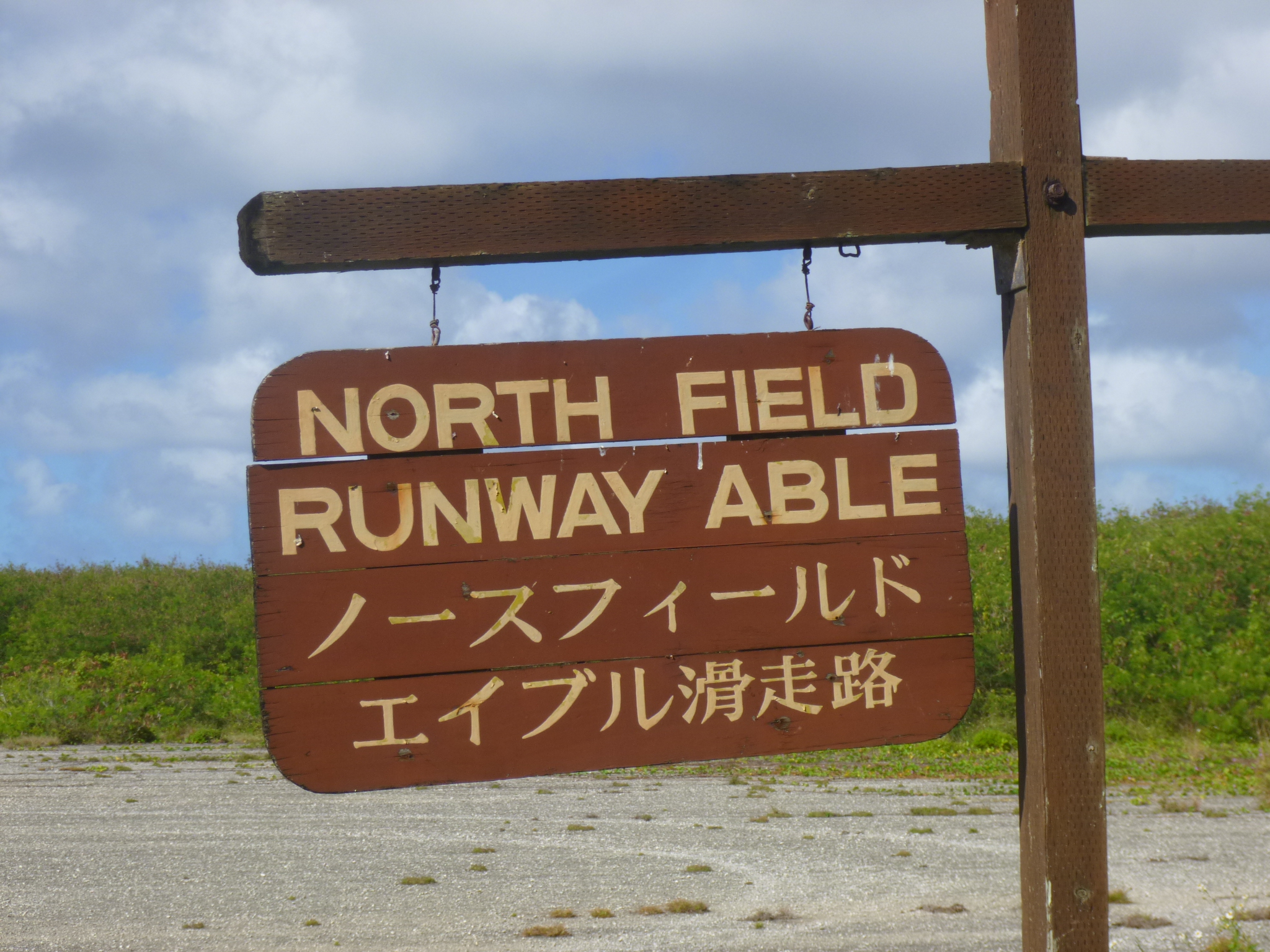
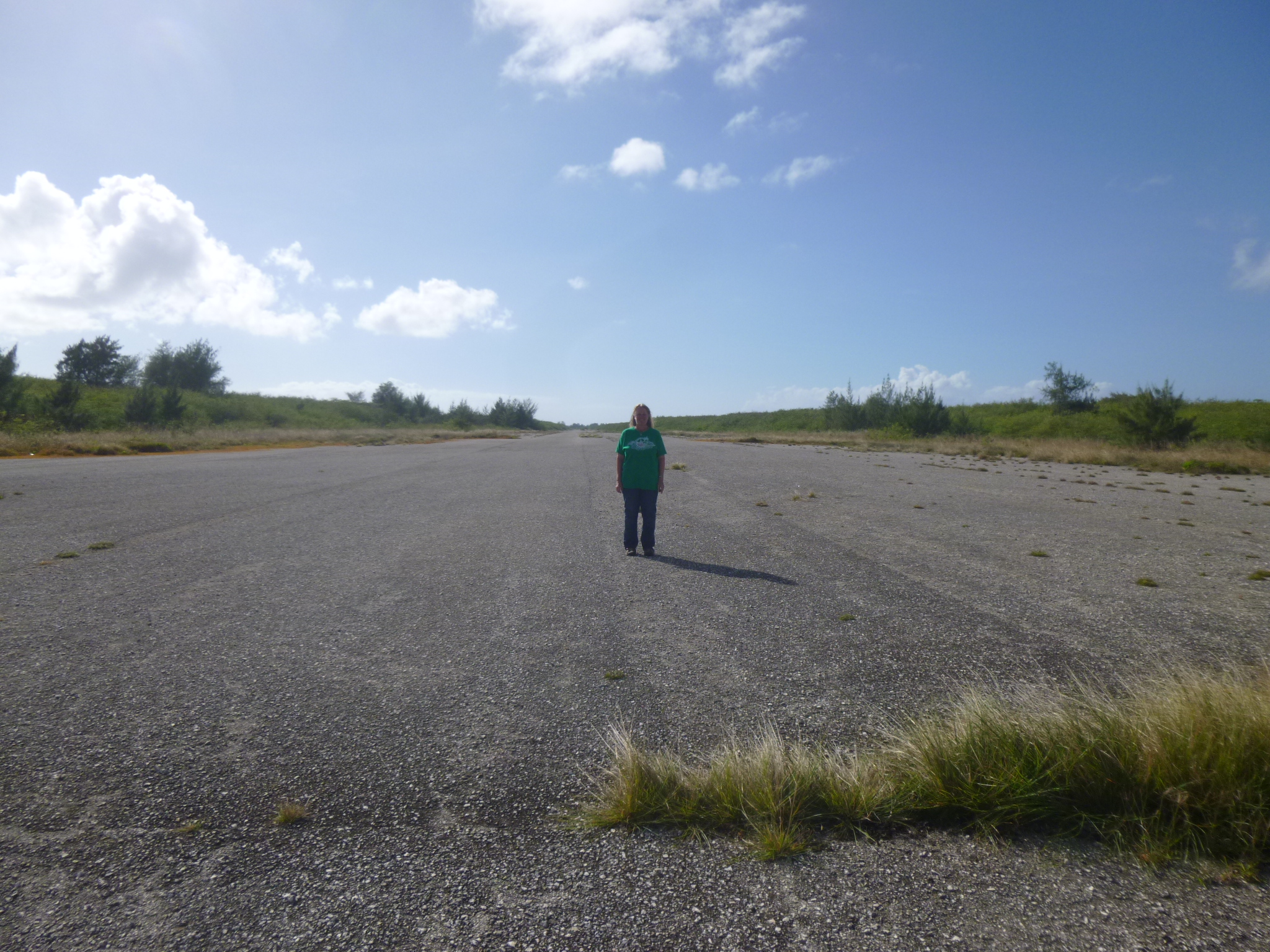
The road across the island was built in 1944 by the navy to haul goods from the harbor in the south to the airfields in the north. Apparently some of the soldiers building the roads were from New York, and they were homesick, and since Tinian is similar in shape to Manhattan, they named the roads Broadway, 42nd Street, Canal Street, Wall Street etc – just like back home. I didn’t expect to stand at the intersection of Broadway and 42nd Street today…such as it is! The airfield was very interesting. Back in 1944 and 1945, the small island of Tinian had the biggest and busiest airfield in the whole world. There were 4 long runways, specially built to accommodate the new B-29 Superfortress bombers. The first runway, which is the only one that hasn’t been overgrown, is the one that was used by the Enola Gay bomber to take off with her deadly atomic bomb, which helped end WWII. Many other planes and many other bombs took off from both Tinian and Saipan, and Japan had no way to defend herself once the US secured these islands that were so close to Japan, yet so far from America. America had a very well-organized supply system with both the navy and the merchant marines, and that made a big difference. I was also able to see old fuel storage buildings, and I went into a Japanese air raid shelter. I walked along a good part of the runway, and we drove along the whole thing. The atomic bomb pits are now covered with glass shelters, but there were posters inside showing the process of loading the bombs. The bombers needed every bit of the mile and a quarter length of the runways to get off the ground with their heavy loads. Everything is so quiet and overgrown now – it was kind of difficult to visualize what this place must have been like nearly 70 years ago.
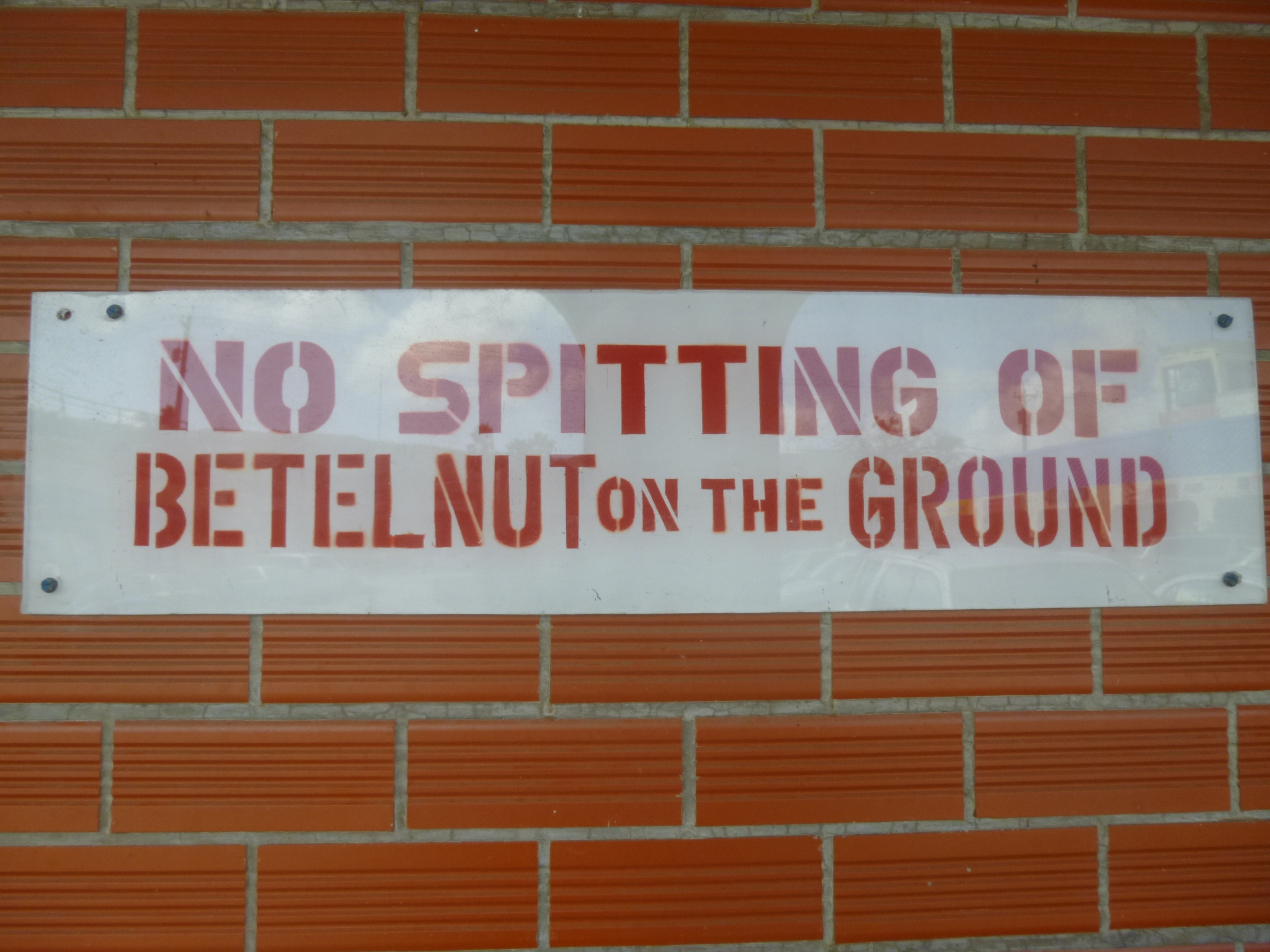
We stopped at a couple other memorials on the way back to the airport – again, a lot of history to soak up for the day! At the airport there were a lot of signs both inside and out, asking people to not chew betelnuts in the vicinity. There are also quite a few signs on Saipan. At one of the markets, one of the vendors told me that betelnuts are very mildly intoxicating, and it’s kind of a nasty habit – similar to chewing tobacco I think. People chew on the nuts, but don’t really swallow them, and they require a great deal of spitting. And they stain teeth – from the looks of it, quite a few people, men in particular, chew betelnuts! Betelnuts make me think of the Bloody Mary song in the South Pacific musical! The flight back to Saipan was really pretty with the sun going down.












Saipan – Thursday, February 7
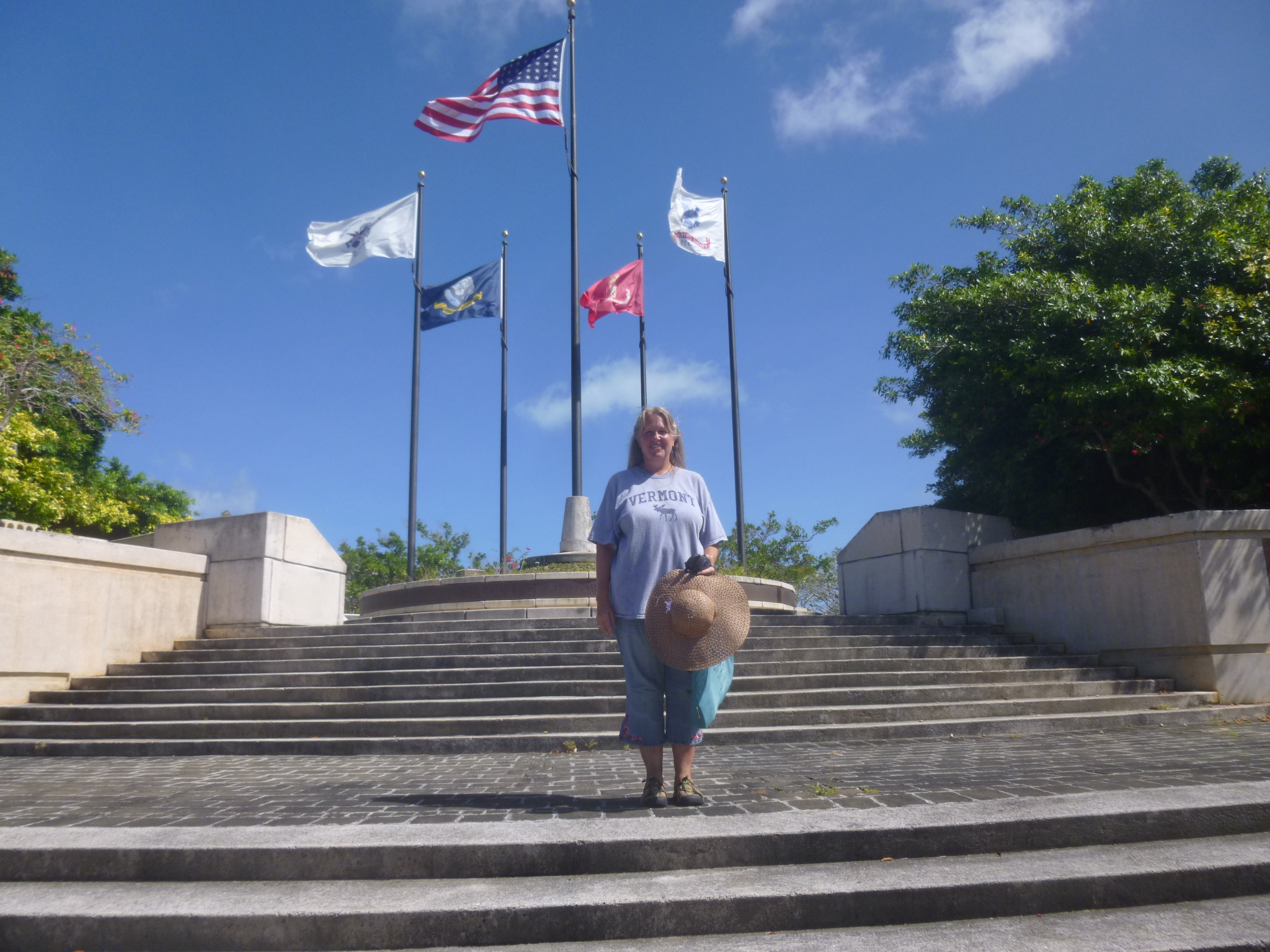
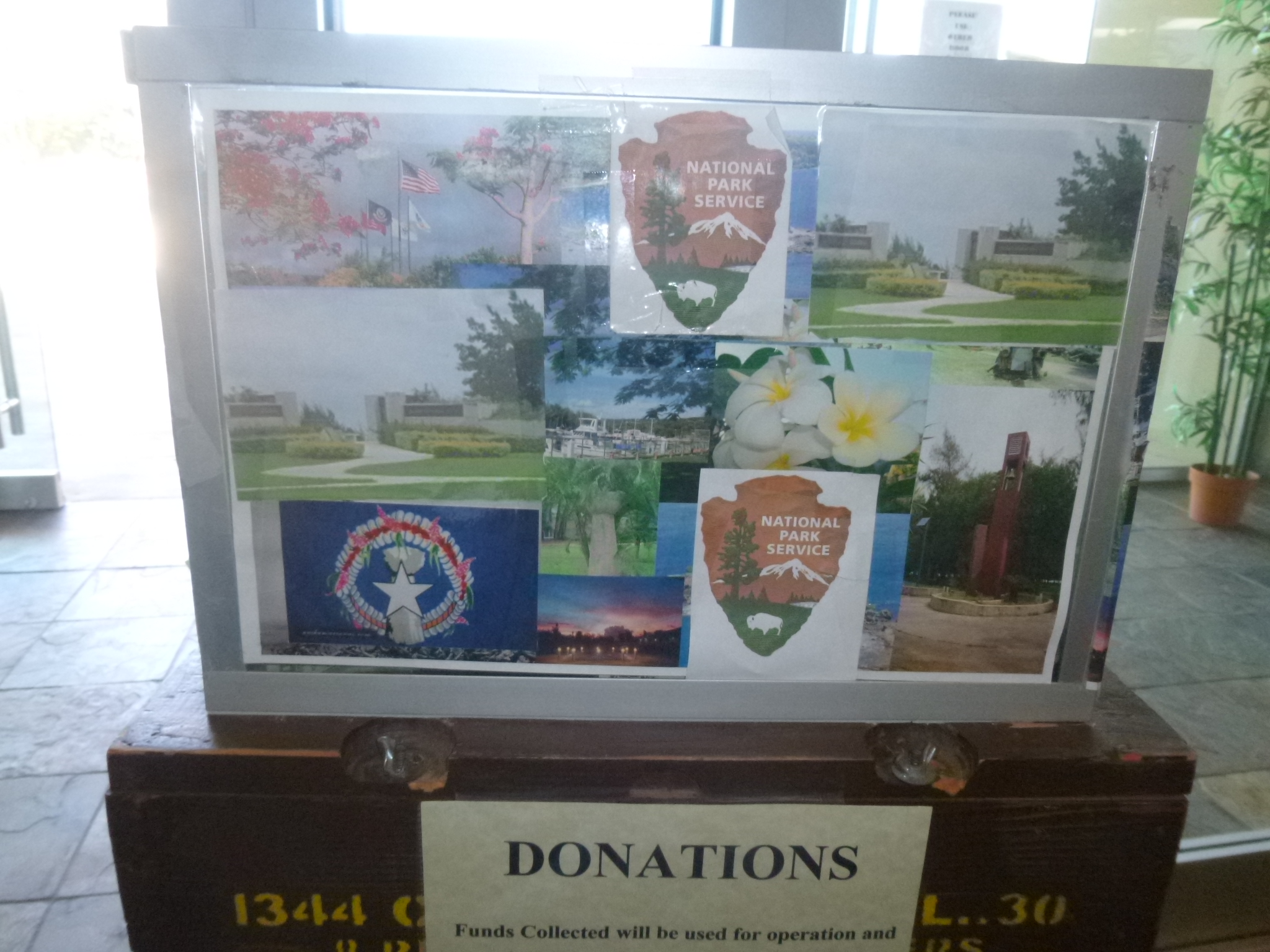
Today I was looking forward to visiting the American Memorial Park – the US National Park on Saipan. This park is a memorial to the American and Marianas people who lost their lives in 1944 during World War II (about 5,000 Americans and Chamorros, compared to about 30,000 Japanese – all on this tiny island). There’s a beautiful circle of flags of all the military units, and there’s also monuments that list the names of all the people who died. The grounds are very pretty, and I saw a trail that I’d walk on later. Then I headed to the Visitor Center to see what I could learn. I asked one of the rangers, Susan, about the park, and we got to talking…a lot. I explained what I was doing, and the rangers were wonderful about coming up with suggestions for donations. I started out with a donation to the National Park, as I had done on American Samoa and Guam – and I learned so much here. I feel like I’ve learned more history in this month on these Pacific islands than I have for the last couple of years! Susan even offered to drive me down to the Karidat Food Pantry place after lunch so I didn’t have to walk all the way back down there again. I looked through all the exhibits, and read a lot of first hand accounts. With occasional flashes of light and the sounds of gunfire in the background, all the displays become a little more real. And then I watched the 20 minute video about the Battle of Saipan, and it was so well done that I knew I’d come back to watch it again. The national park seems to be getting a lot of Chinese visitors, and when I watched the video, it was in Chinese with English subtitles, because I was the only American watching. They told me to try to come back on Sunday when it’s less busy, and then I could watch in English. The video explained how vicious and savage the 3 weeks of fighting were, and how crucial it was for Japan to maintain control of the islands, but it was clear pretty early on that was not going to happen, because they had no way to get replacement troops or supplies to the island – Japan’s empire had become very large, and she was unable to defend all of it. And the Japanese warrior’s code forbade surrender, so when defeat was imminent, their commanders committed suicide in a cave, and that was just the beginning of hundreds of Japanese soldiers and civilians leaping to their deaths from the cliffs by the ocean that are now called Banzai Cliff and Suicide Cliff; a very disturbing event at the end of the battle. More on that when I visit those places.
At this point I enjoyed getting out in the fresh air for a couple miles of walking – the trail in the national park went through a pine forest and back out by the sea. There were a lot of windsurfers out – I’m not sure if there was a race or something going on, but they were really zipping along! Then I went back to the Visitors Center where I enjoyed a bite of lunch, compliments of the rangers, and while I was out walking, Susan had called one of the newspapers about my story. We headed out in a national park vehicle to the Karidat Food Pantry, and stopped at a newspaper office for a photo first. The Karidat also oversees the Guma Esperansa Women’s Shelter (House of Hope) and it’s the only one on the Mariana Islands. I made a donation to both groups, and was very happy to have learned about them. The lady at the Karidat liked what I was doing, and wondered if the newspapers had been contacted, and apparently she proceeded to contact the other paper, because when we got back to the Visitor Center, a reporter was there – a charming young lady originally from the Philippines named Clarissa. We sat down for an interview even though I’d only been on Saipan for 2 1/2 days and she recorded the conversation and took a bunch of notes. She told me she’ll let me know when the article comes out!
By then, the Visitor Center was closing up for the day, and I headed out to walk to the Thursday evening Street Market. This time I was hungry, and many booths were offering 5 and 6 choice dinners for $5, and they’re not shy about proportions! I had to walk around to all of them to find what looked most appealing – many had BBQ on a stick, and fish dishes, and everyone had rice and noodles. There were some good looking vegetables and some unusual looking desserts. I ended up with several veggies and some chicken and pork, and fried rice and noodles – all eaten (or slurped!) with chopsticks – it was a good thing the rice was a little clumpy so it would balance on the chopsticks! People were eating on bleachers while waiting for some entertainment, and a couple singers came out, but it wasn’t holding my attention. Knowing it was going to be kind of a dark walk back to the motel, and it was starting to sprinkle, I decided not to hang around for some of the cultural dancing that was going to be performed later by some local studios – it was just going to be too long to wait. So I headed back after a very full day, and was glad I did, because it started pouring shortly after I got back.
So it was great day, and I met a lot of nice, helpful people, and got caught up with donations, and I’m loving Saipan!



Saipan – Wednesday, February 6
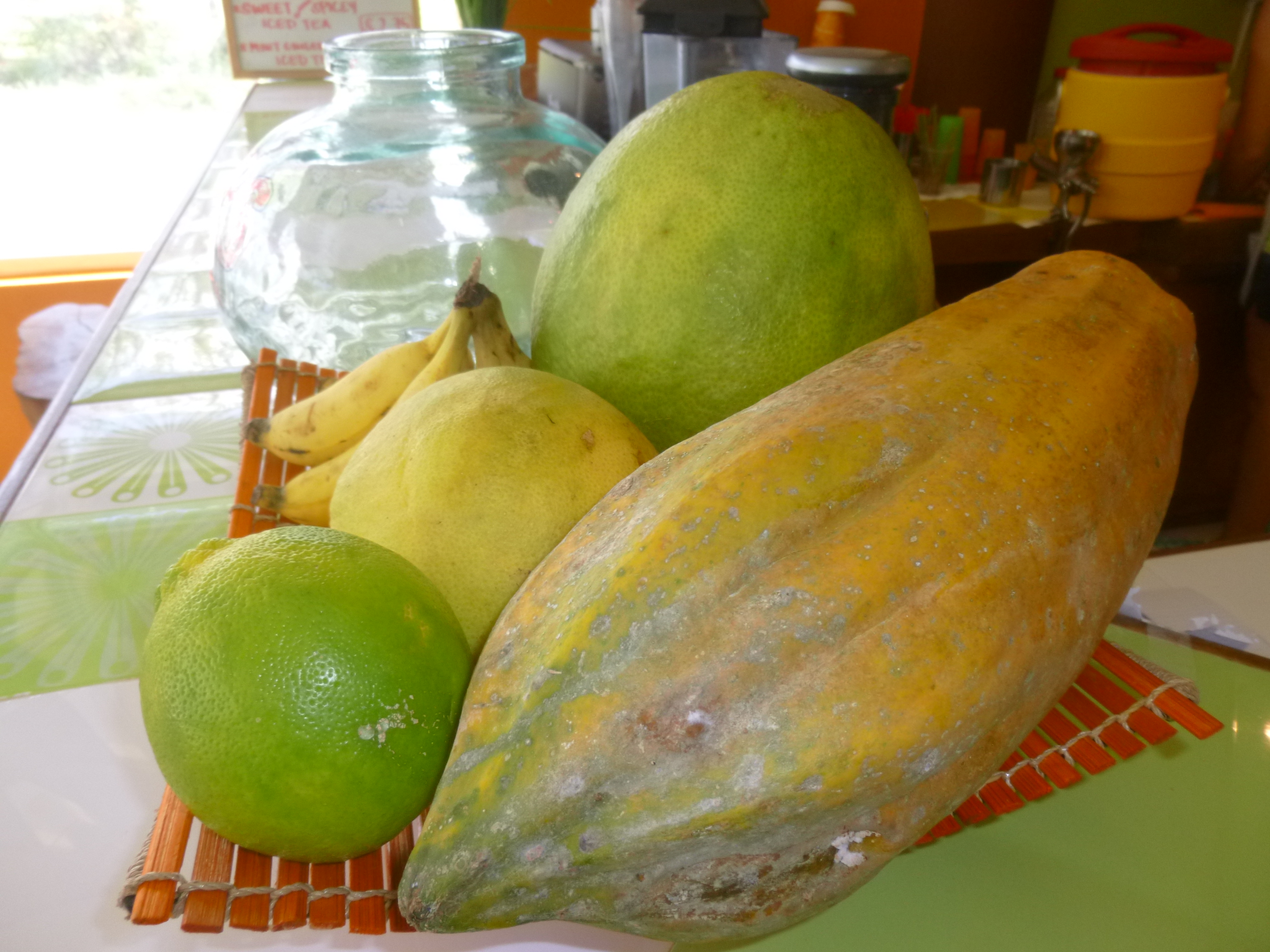
I felt much more refreshed after a normal night’s sleep, and I was ready for more walking today. I was going to head to the grocery store the soup kitchen lady on Guam had told me about, to try to talk with her relatives about possible donations, because she knew they would know of some places. But first, I knew I had cold sliced fruit waiting in the fridge and I opened the juicy bag and popped a big piece of mango in my mouth…mmmm….ugh, it was peppery and garlicky!! And not at all what the taste buds were expecting! Clearly I had missed something on the paper signs when I got these last night – and this wasn’t good at all. Luna bar to the rescue!
After a bit, I headed out, and the front desk guy offered me an umbrella – I was confused since the sky was already a hot blue, and I asked if it was supposed to rain later. He said no, the umbrella was for sun protection, and I told him my hat was in my bag, and I thought it was very kind to offer me an umbrella. And actually, a lot of ladies do use umbrellas for sun protection – we’re close to the equator and that sun is hot. A few guys do too, and some just hold papers over their head if they don’t have a hat.
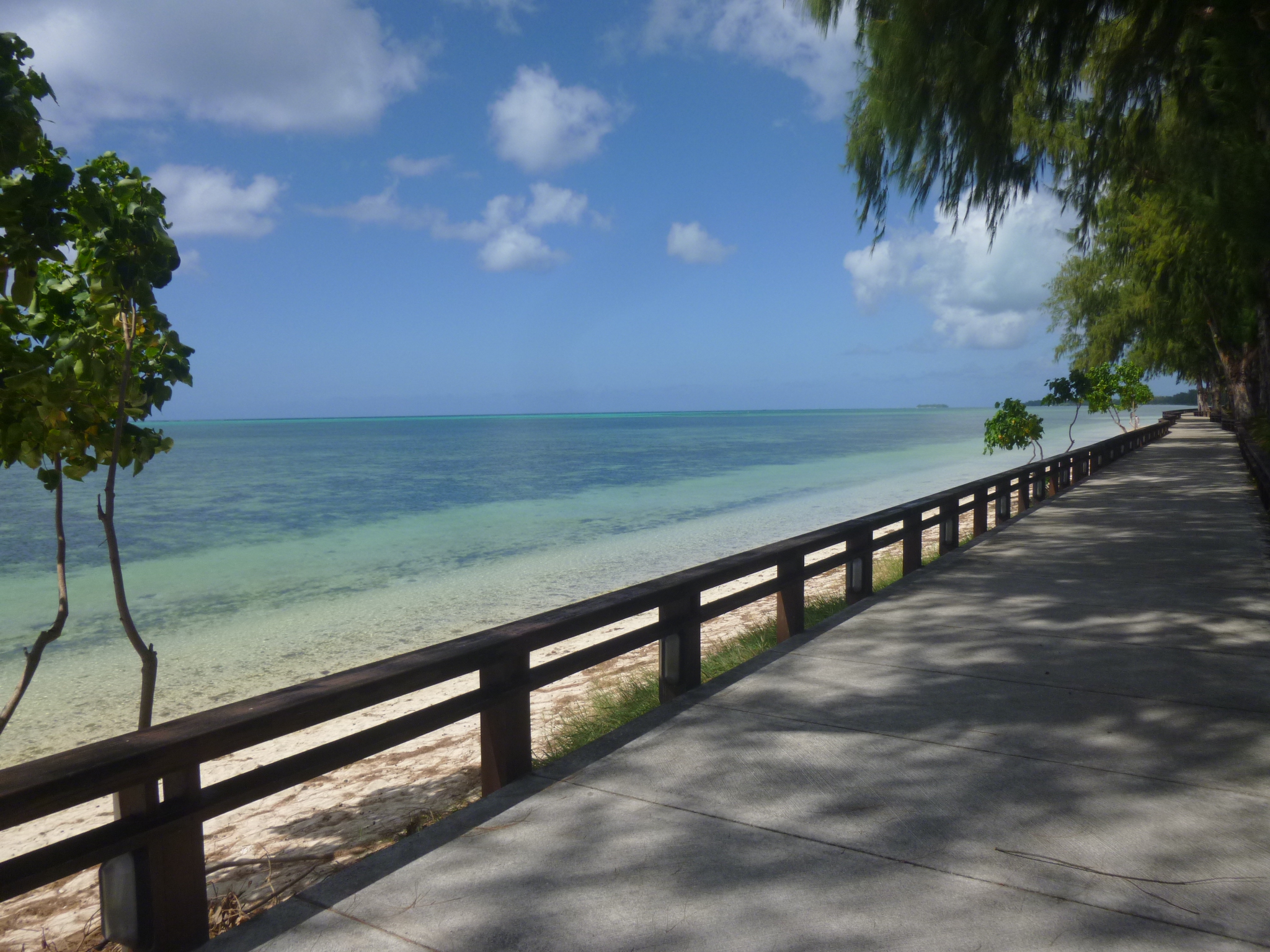
I had directions to the Joetens Market, and it was less than a mile away, but when I got there and showed them the paper with the names on it, they told me those people worked at the main store about 4 miles down the road, and I thanked them and said I would just walk, and they thought it was too hot to do that. But I assured them I was used to a lot of walking, and now that I was familiar with the path by the sea, I was looking forward to the walk, and re-reading some of the signs along the way. It’s all very peaceful and serene and beautiful now, but this path is on the west coast of Saipan, by the Philippine Sea, and it’s where the US Navy invaded the island back in 1944, and it turned into one of the most savage US/Japanese battles in the Pacific. Before actually landing, the navy spent days relentlessly shelling the island, trying to force the Japanese to move, and there are some excerpts from Japanese diaries on little plaques along the way. One unknown Japanese POW wrote “Caught in…naval gunfire, the wounded and dead…increase(d)…most feared…was the naval shelling, which…reach(ed) the obscure mountain caves where….CPs were located…The feeling of everyone is ‘if they would only stop the naval shelling’.” An excerpt from a diary of an unknown Japanese soldier read “At 05:00 there was a fierce enemy air attack. I have at last come to the place where I will die. I am pleased to think that I will die calmly in true samurai style. Naval gunfire…was too terrible for words…Toward evening the firing died down, but at night naval gunfire continued as before.” To die honorably for their Emperor was the highest expectation they seemed to have. Thinking about all of this gives one a lot of food for thought.
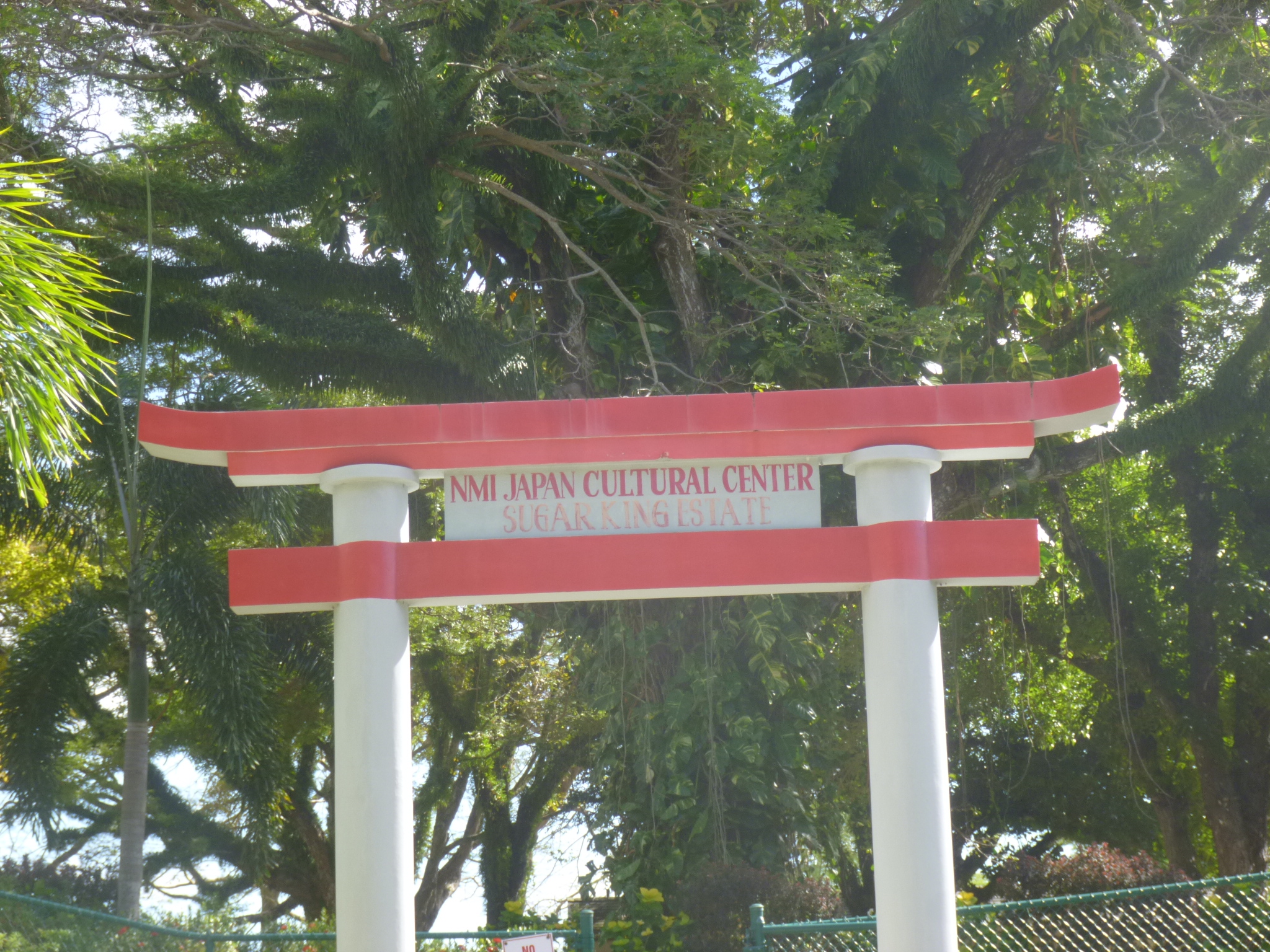
I finally made it down to the other Joetens store, and this was a pretty big place – kind of like a Kmart. The people I wanted to see were out to lunch, and the manager wasn’t sure when they’d be back. I browsed around a bit, but they still didn’t return. I asked the manager if he knew of any food pantry or soup kitchen or meals-on-wheels sorts of places, and he told me the Office on Aging took care of the senior citizens, and that office was back in Garapon, where I’d just walked from! So, I walked the 4 miles back. I was going to go into a little market for another bottle of water when I happened to see a smoothie store, and got a pineapple, lime juice, mint lemonade smoothie that was about the best thing I’d ever tasted (or I was just really really hot and anything cold would have been good!). Recharged, I finished the walk up the hill to the Office on Aging, and explained to them what I was doing. They thought it was a wonderful idea, but since they were a fully-funded federal program, they thought the Karidat food pantry, back in Susupe (4 miles back where I just came from!), would be a better recipient because they could use whatever anyone gave them. I just couldn’t walk another 4 miles back to where I’d already been earlier – this is one of the times I wished I’d had a car! It would have to wait until tomorrow. Hopefully by then, the lady in the mayor’s office back in Guam would return to work, and would be able to fax my driver’s license to the National Car Rental in Guam (they can’t fax to Saipan) and then they could get my license to the National Car Rental on Saipan! So I decided to head back to the hotel, but along the way I passed the Japan Cultural Center, which was an outdoor park, and I wandered in to look around – the were little paths all around and in full bloom the landscaping would be really pretty. This park had a memorial to the guy who helped make the Northern Mariana Islands a relatively prosperous place in the early 1900s – he was a Japanese man who figured out that the islands were ideally suited to growing sugar cane, and a good part of both Saipan and Tinian (the neighboring island) were turned into sugarcane farms. There was even a little railroad to haul things around, and the sugar cane plantations provided jobs for countless Japanese people, who lived on the island before WWII days. The Japanese people were not native to this island originally, and all this farming seemed to take over the land of the native Chamorros, who really got caught in the middle of everything. There were also some Japanese tombstones and then I walked up a short path to a beautiful little building called International House of Prayer. It was locked though.
Then I walked the long way back to the hotel – I had put on 12 miles all over the place today, and with an extra mile and a half yesterday, I’m ahead of the game as far as walking, but I’m behind with my donations, so I knew I’d really have to make some headway with that tomorrow. I was really hungry so I went to the restaurant downstairs for dinner, which is quite big with a diverse menu, modeled after its namesake on Guam. There were things on the menu like beef tripe in beef bile, pig legs and feet with liver sauce, underbellies of fish, and other stuff I couldn’t quite picture. I settled for a cashew chicken dish with their famous fried rice, and it was delicious.
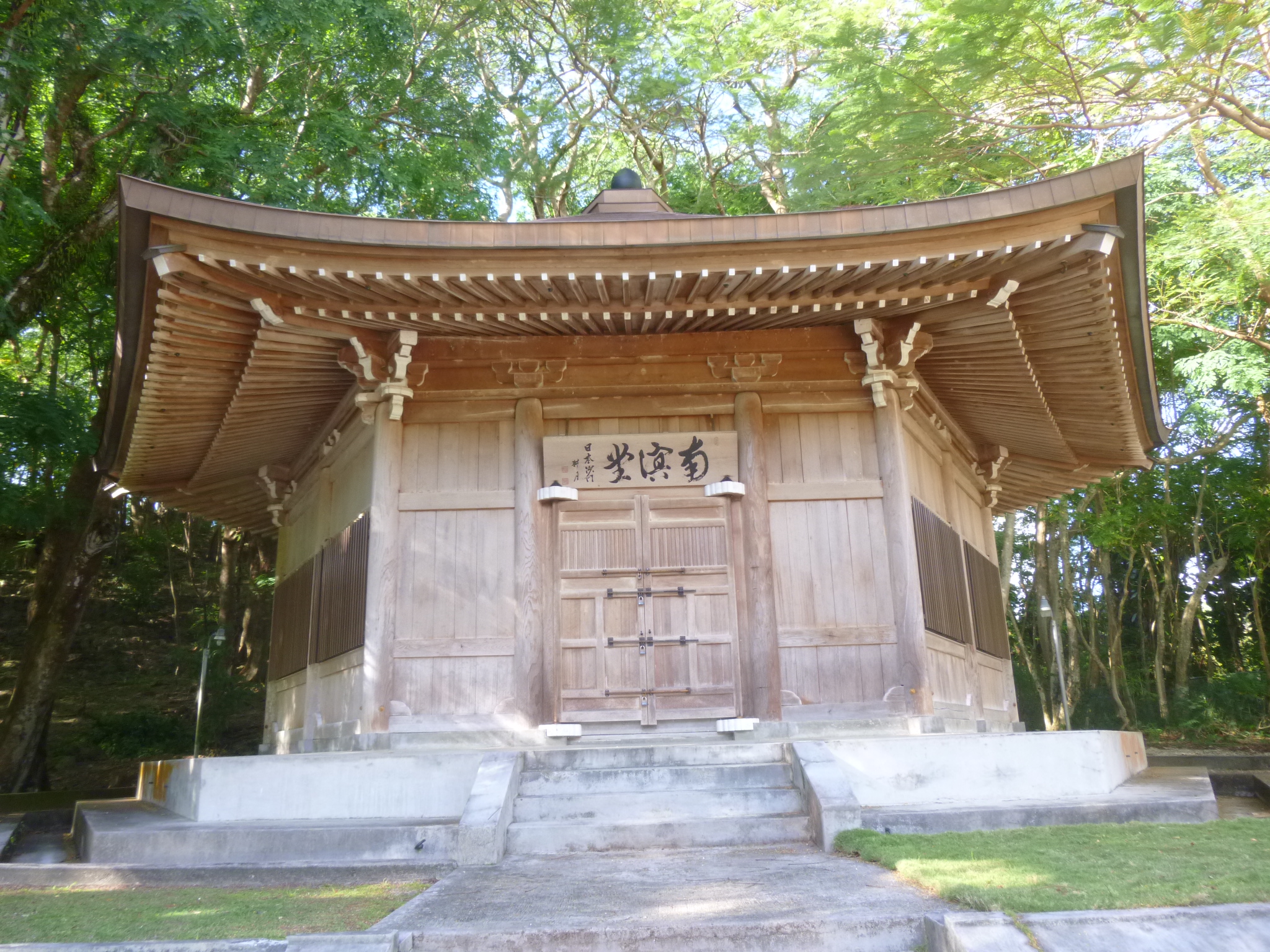
Saipan – Tuesday, February 5
Wow – Saipan! Up until January 2010 I had no idea Saipan was a U.S. territory – I had heard of it, but thought it was some exotic Japanese place! And I had never heard of the Northern Mariana Islands (Saipan is the biggest of them) until I saw the state quarter come out of the old drink machine at the studio. And now I’m here – unsure of what to expect. I don’t think most of my family knows exactly where I am either!
I actually felt a little apprehensive about this week. I’ve never aspired to travel to Asia, and I knew this island was going to seem very foreign. I just hoped there’d be enough English spoken that I could get by! And it didn’t help that I was arriving in Saipan still very conscious about what I’d lost in Guam. In fact, I canceled my car rental reservation because, as my brother pointed out, it was unlikely that anyone would be willing to rent a car to someone with no identification, no driver’s license, and no credit card. So I had arranged for the hotel shuttle to pick me up instead, and they were very kind in waiving the typical fee (they are not close to the airport) because of all my troubles. In the end though, Betsy, the TV broadcaster from Guam, had a friend who worked for National Car Rental, and when she heard what happened, she was willing to let me rent a car as long as I provided her with some information. So I know I should be able to get a car later in the week.
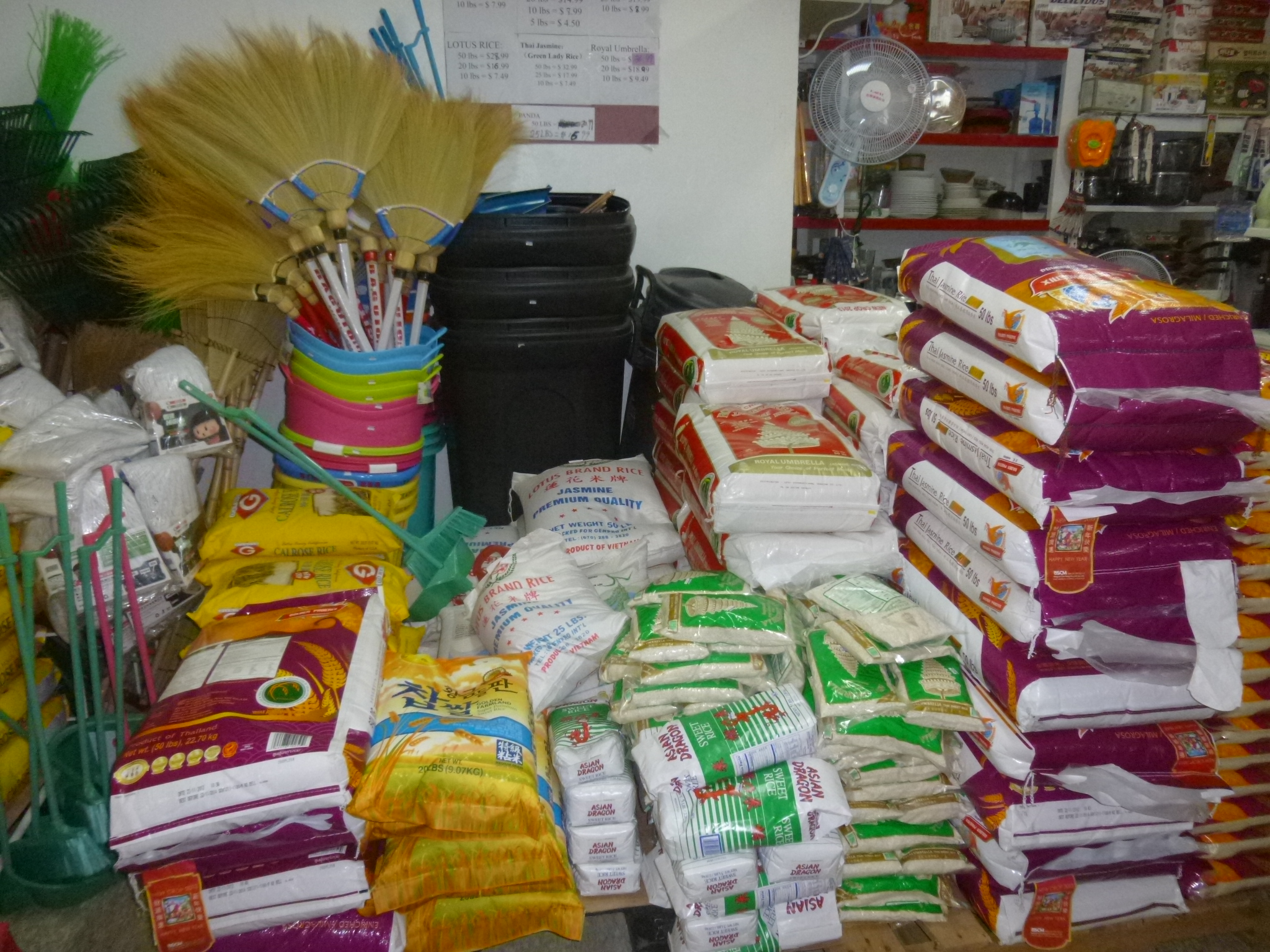
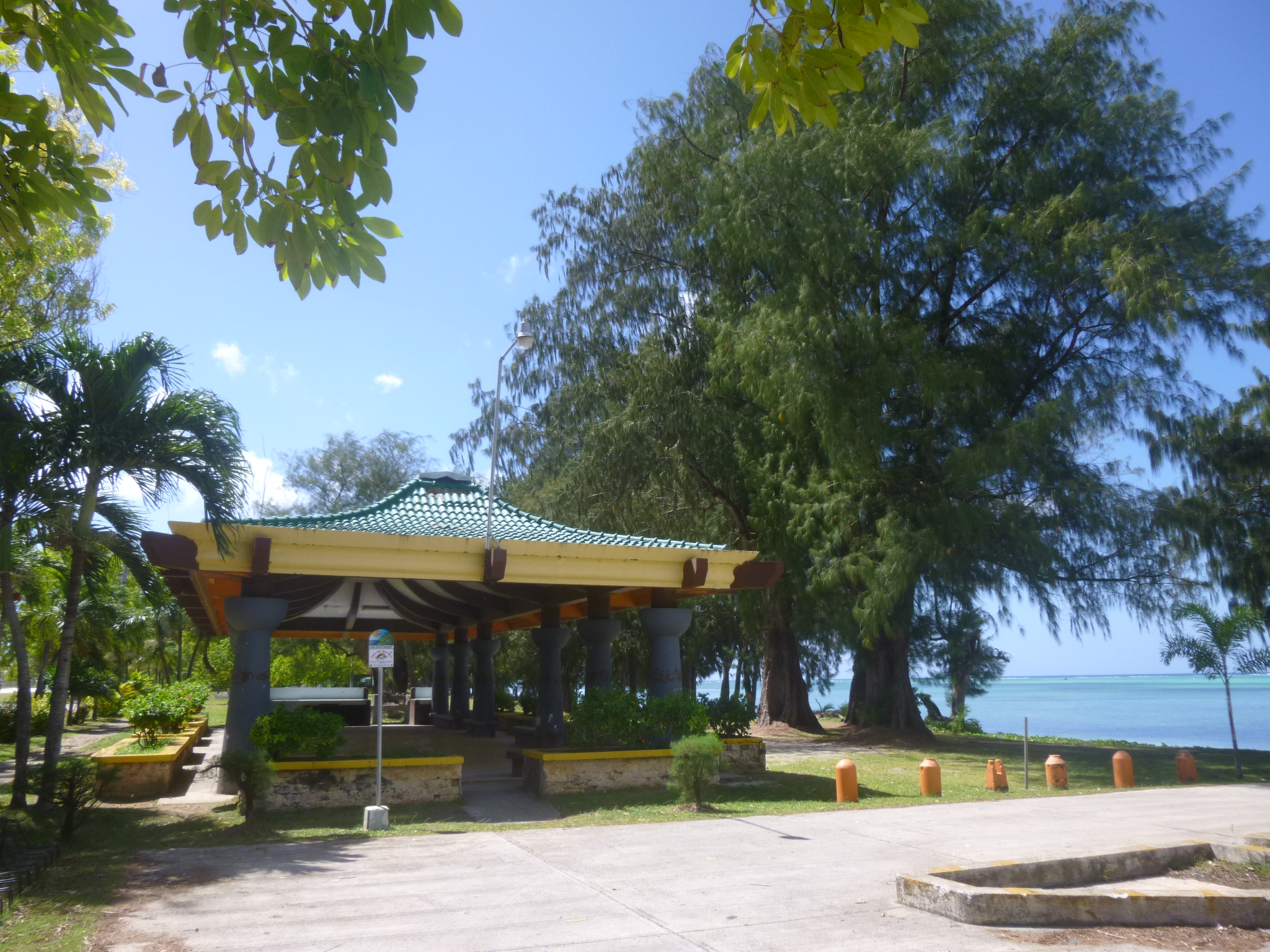
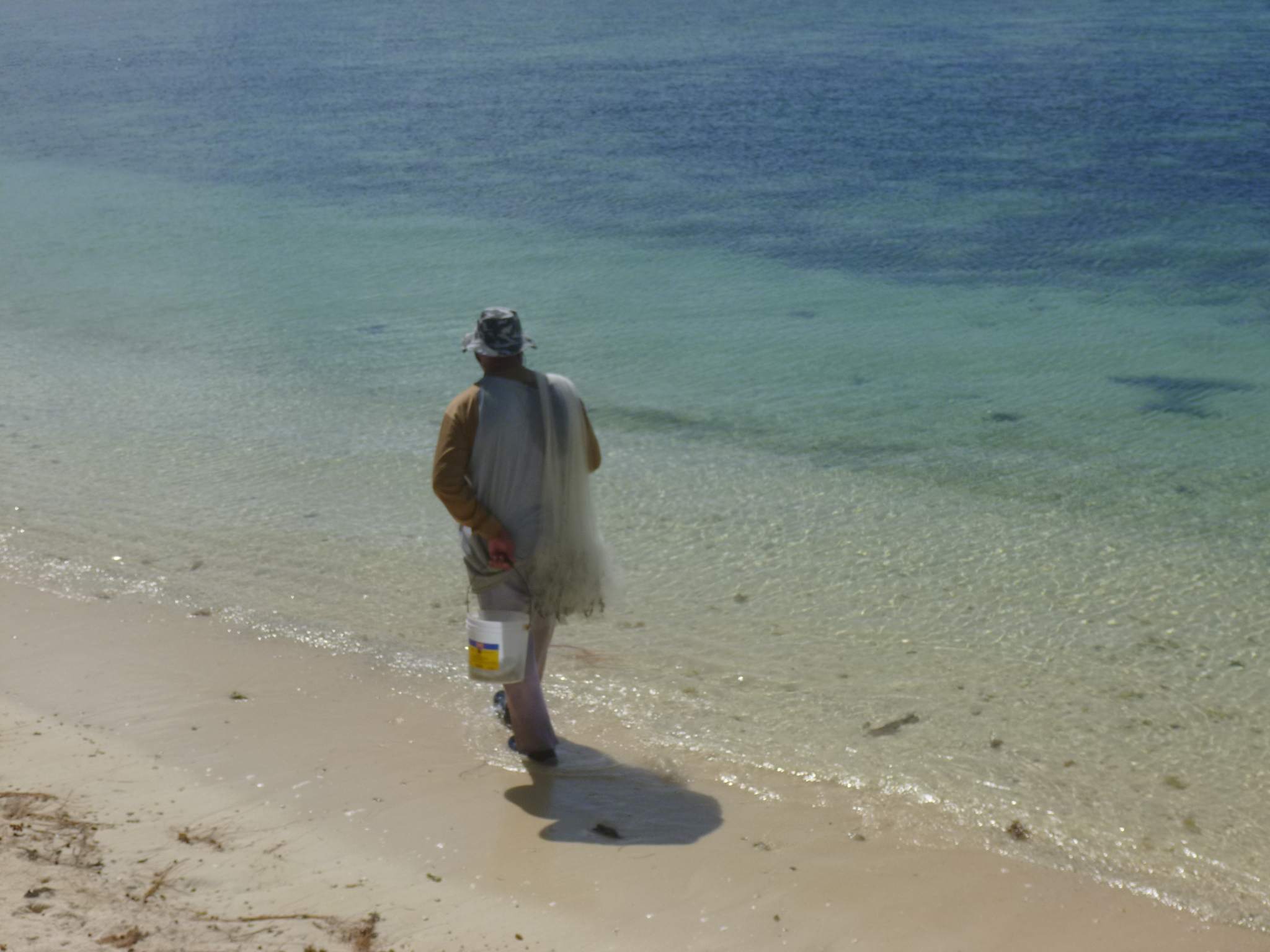
I arrived in Saipan in the middle of the night, and the shuttle picked up me and one other person. I couldn’t really see anything on the 20 minute drive to the hotel, and didn’t even have any sense of direction, or where the hotel was in terms of the layout of the island. About all I could see were lots of poker places! It was after 4:30am by the time I got checked in and ready for bed, so I slept til about 10:30 and I felt like I’d slept half the day away! The first thing I had to do was figure out how to call the lady in Guam who might have some of my things. The people at the front desk told me I could get a phone card in the adjoining poker room, which was full of cigarette smoke. Then when I figured out how to use it, I thought I’d look out my window to see where I was, and all I could see was rusty corrugated rooftops! Between the smoky poker room and the rather dismal view out my window, I did begin to wonder what I’d gotten myself into! But then I called Guam, and spoke with the woman who had my passport and driver’s license and quite a few other things – that made my day. She works for the mayor of Dededo, and assured me my things would be safely locked up until I was back in Guam. So with that good news, I went downstairs to the restaurant that’s part of the hotel lobby, and got a good late breakfast. Then I studied a map, asked some directions, and set off to get my bearings, and find the beautiful walking/jogging path that several people had told me about. I had heard it was a path that ran for several miles along the coast, but I had a little trouble finding it. The hotel was about 1/2 mile from the ocean, but there were still a bunch of shops and buildings. I found some dirt road that went closer to the ocean, but it was just a private road. I got back on the sidewalk that was right next to the busy street, and could only see a glimpse here and there of the ocean. But as I continued on, the buildings disappeared, and the sidewalk turned into a wide path that got closer to the ocean, and then I was on it – an endless sidewalk next to a picture-postcard turquoise sea, with palm trees and ferns and a gentle breeze on a hot day. It was wonderful, and I walked and walked until I’d gone about 4 miles, and the trail seemed to end in a park. I was out in the heat of the day, so I was happy some of the trail was shady, and I got a cold drink and just sat on one of the benches and admired the calm view. There must be a reef about 100 yards out, because the waves were breaking way far out, and the water in between was shallow and full of shades of blue that don’t seem to exist anywhere else. There was also an enormous ship anchored out there – it looked like some kind of navy ship. I walked back, feeling more comfortable now that I knew I had a good place to walk, and had figured out the hotel was kind of in the middle of the island, and I wandered into a couple of the Japanese markets just to look around and people spoke English! I’ve never seen rice sold in such quantities – huge sacks of many varieties of rice stacked up like pet food displays, and so many kinds of soy sauces and other sauces! Back at “my” end of the trail, people were setting up a farmer’s market and hot food booths. I had also seen people selling fresh fish at makeshift stalls in several places along the beach – all in big stacks of coolers, and quite a variety of fish – lots of it for under $3/lb. I wasn’t quite ready for dinner but I bought some more little bananas, and it occurred to me that I have bought bananas from a farmers market on the first day of each of my island visits! I wish we had the variety of bananas that the islands do! The farm market was only about 3/4 mile from the hotel, so I knew I’d come back later to try a few things.
I was tired and hot from my 8 mile walk, and was happy to just get unpacked and a little more settled in. I started researching some donation opportunities, but there weren’t very many things popping up. I knew I’d eventually find some places, but the computer wasn’t going to be a big help.
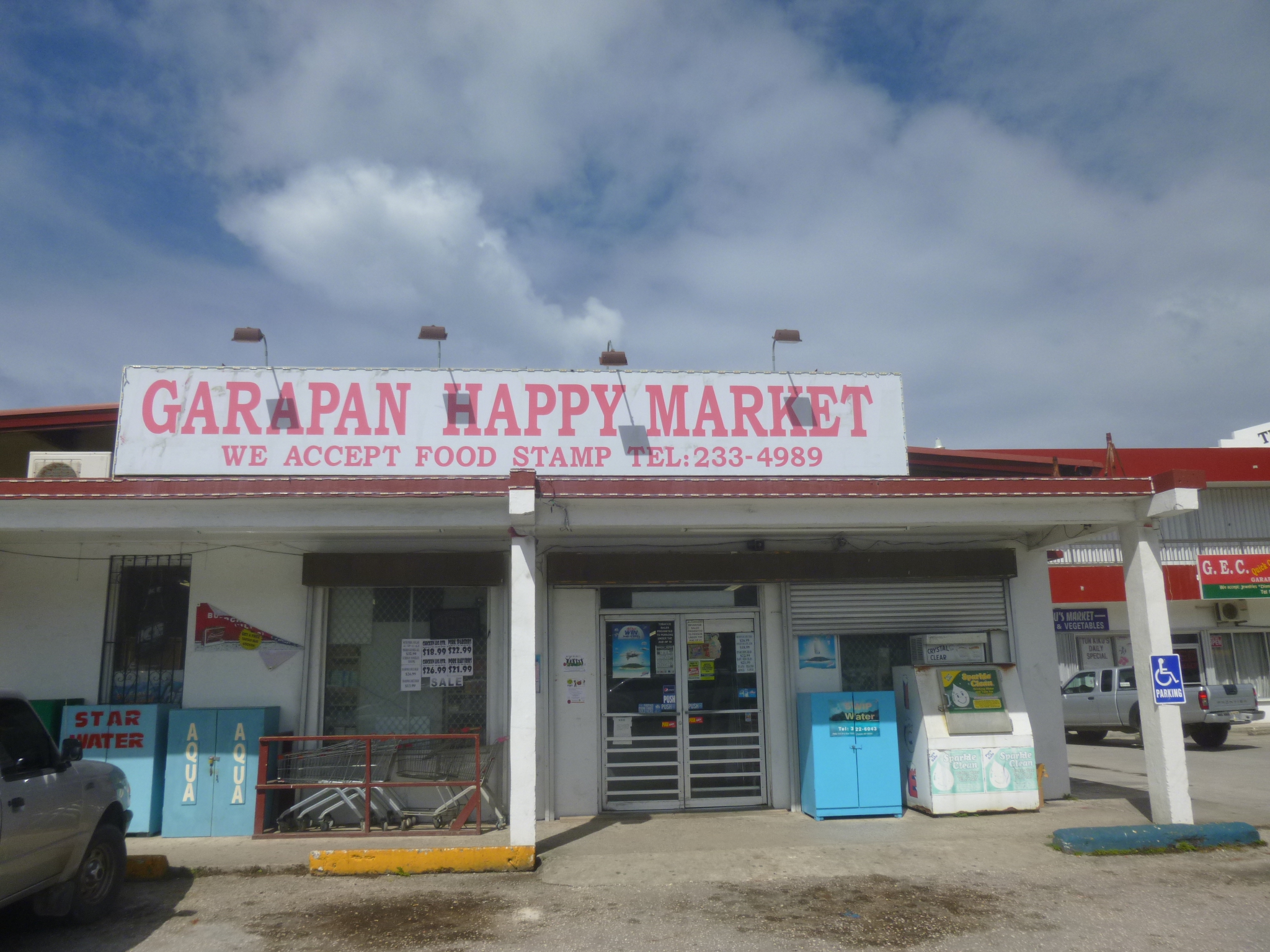
As it was getting dark, I decided to wander back to the farm market. The fresh roasted corn was gone, but there was still a plentiful supply of things to choose from, and it was very similar to the farm market in Guam and I was happy about that because there were other things I wanted to try. I got BBQ-on-a-stick – very popular both here and in Guam. Then I tried some thick tortilla-like bread that was slightly sweet and had little pieces of corn in it – very good. And then there was a tapioca/coconut mixture that was spread on a green leaf and roasted – it was warm and kind of chewy and not quite what I expected. I wasn’t hungry enough to try the big meals, but luckily there’s another farm market on Thursday. I bought a couple bags of sliced mango and papaya and knew those would be tasty first thing in the morning. It was dark by the time I had to walk back to the hotel, and they do not have a lot of street lights, and the shops that were still open didn’t use much light outside. Since there were still lots of people out and about, I didn’t feel too uncomfortable, but it was kind of strange to not have a little more light at night in a busy area. I had discovered there were little markets on both sides of the hotel – one was called the Happy Market, and one was called the Lucky Market. Lots of shop names seem to start with Happy, Lucky and Pretty!
So I ended my first day in Saipan feeling much better about everything – some of my stuff had been recovered on Guam, I liked my hotel and the staff had been helpful with my questions, I now had a basic idea of where I was, and there was good stuff to look forward to. I was more than ready to call it a day after the short night last night!

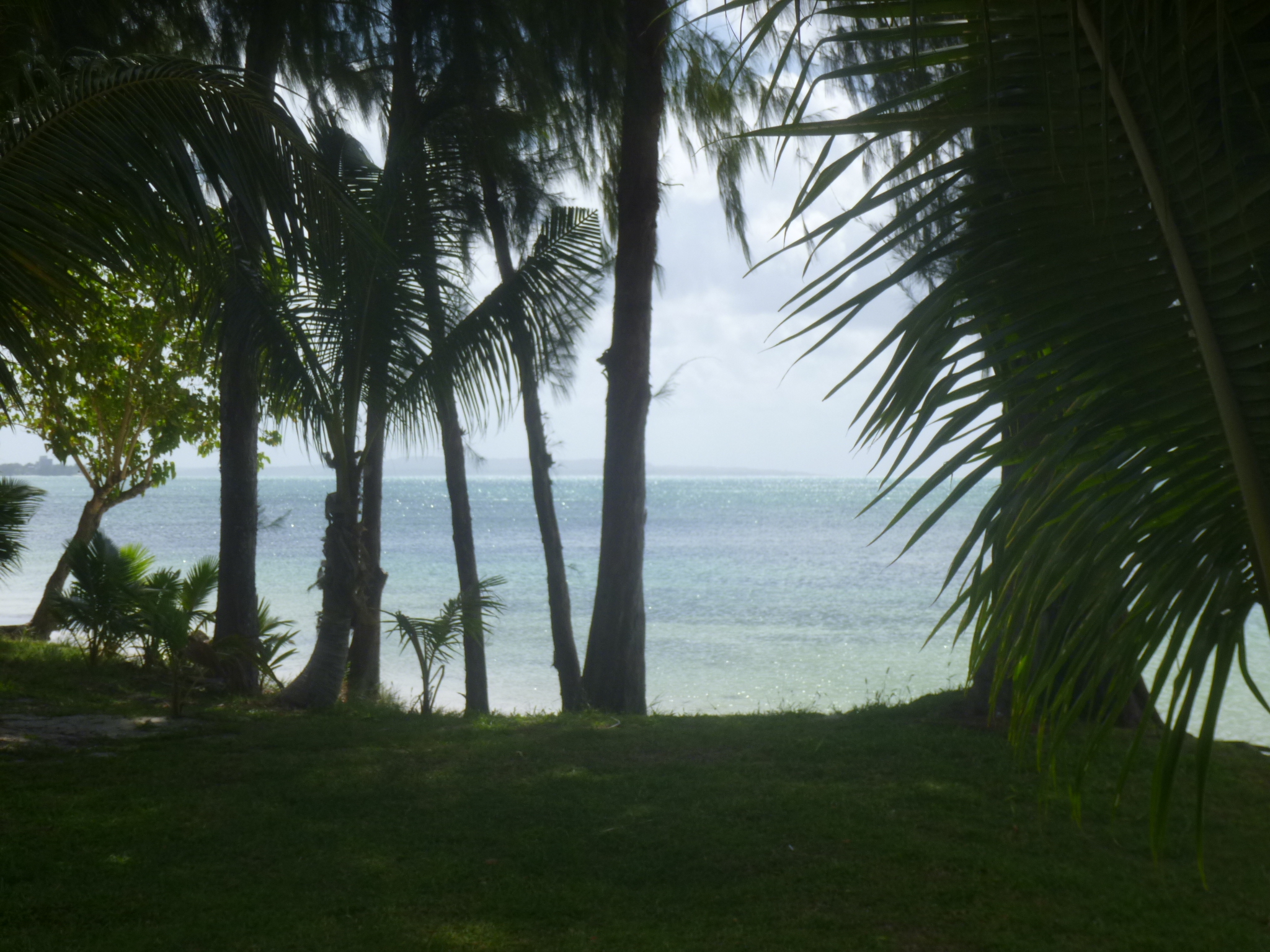
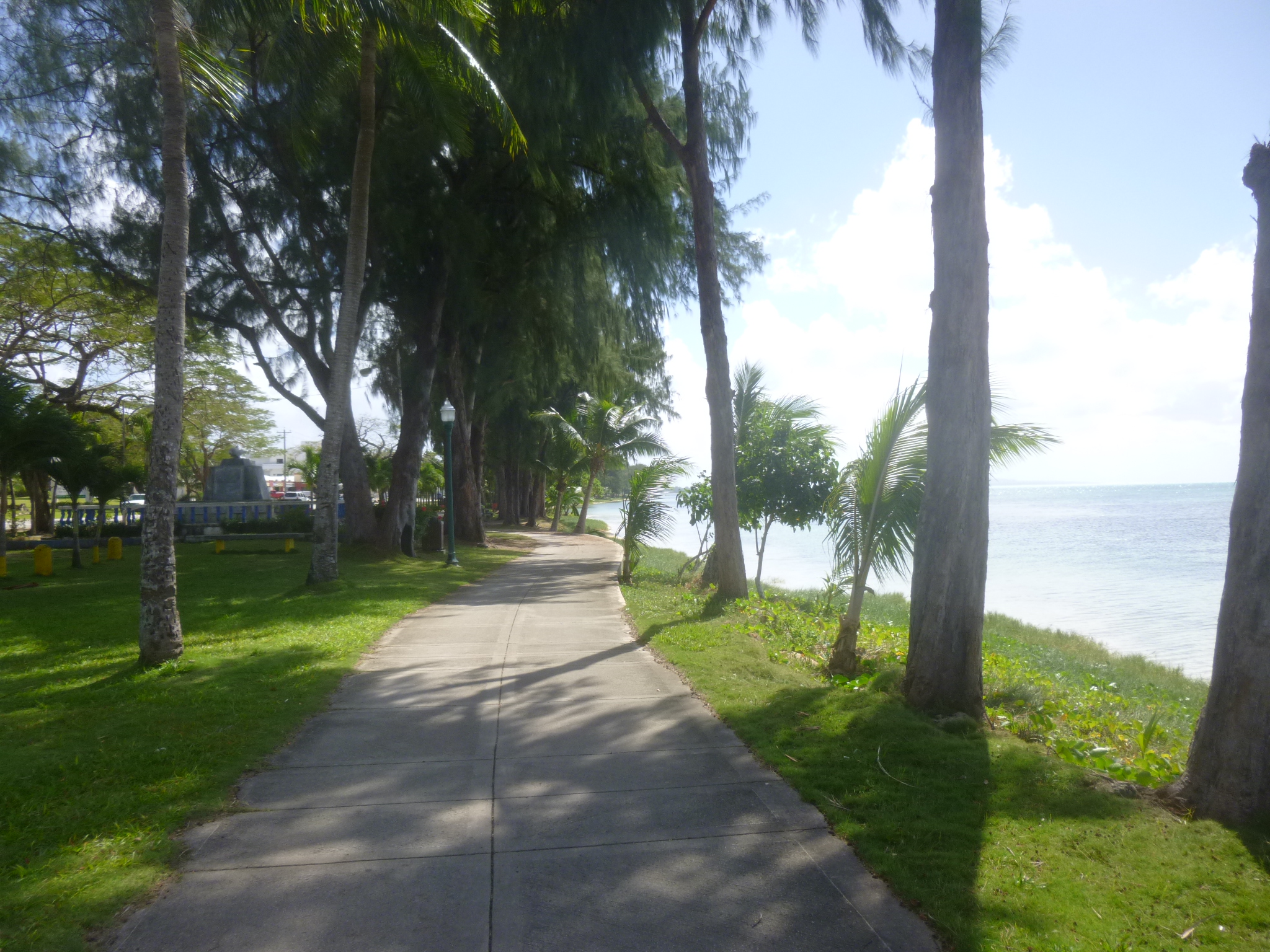


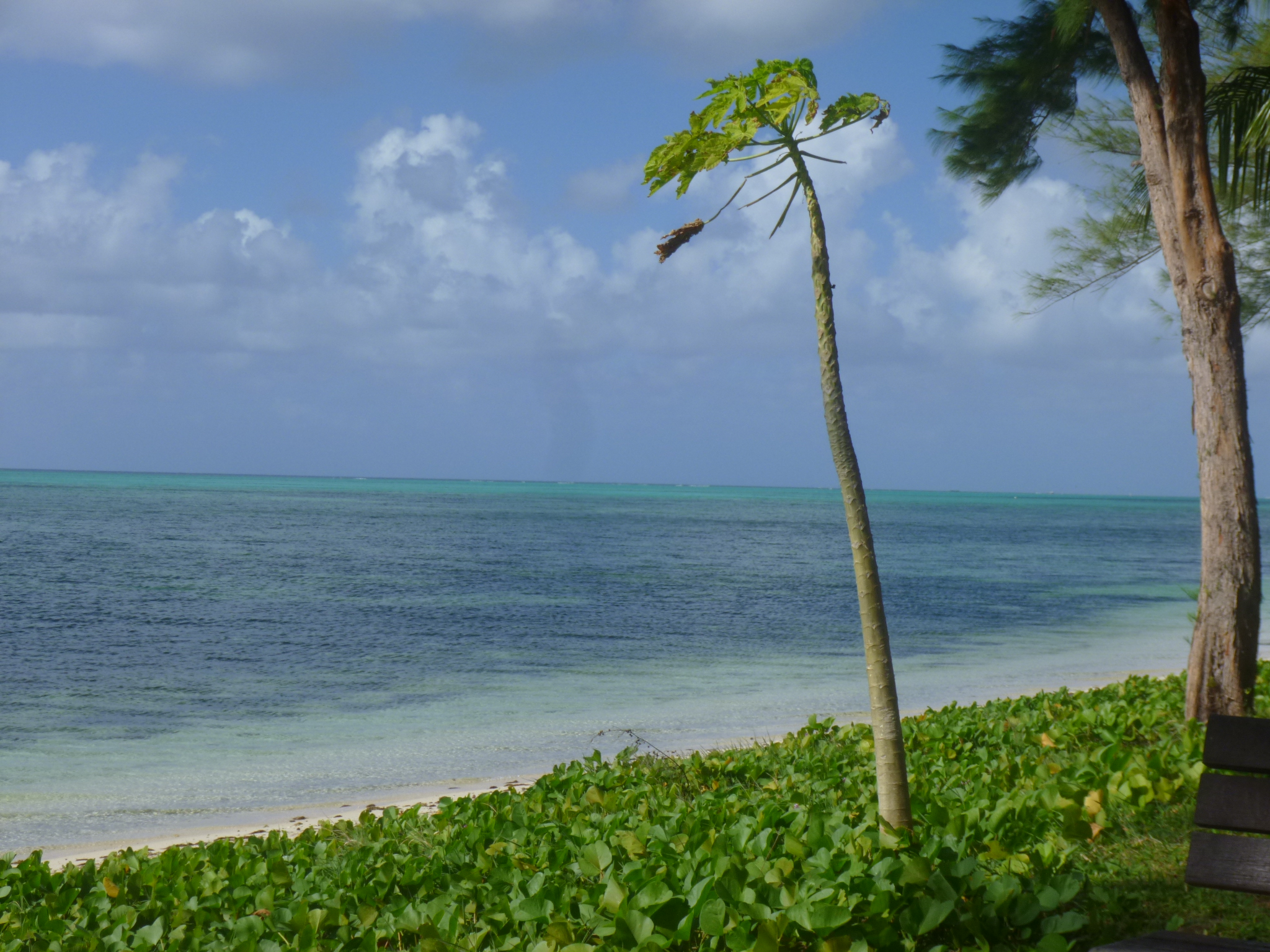


I’ve added pictures to the rest of the posts that are currently done. I’m glad to have that done, and now I can get on with new posts! Saipan’s coming up!
For anyone who’s interested in a few pictures to go along with the posts from territories, I have now been able to add some photos to the posts dated January 15 – January 26, which includes the first leg of Hawaii, all of American Samoa and another day in Hawaii. I should be able to get rest of photos added on in next day or 2, then get caught up with posts.
 expedition56