Guam – Monday, February 4
I was in line at the tax and passport building before they opened this morning. The police officer thought this would be a good place to start as far as sorting out the possibility of flying to Saipan late tonight. The office takes care of a lot of things and there was a long line, but once I was in, not too many people were headed for the passport area. There was not much they could do. They gave me a passport application form, and didn’t seem to understand I couldn’t really stay on Guam for 6 weeks while waiting for a new one. I decided to simply go to the airport to talk with the airline and security about my flight.
The airport was quiet, and there was only one person at the United counter. I explained my predicament. I had no photo ID, but had brought along everything I could with my name on it – old boarding passes, car rental papers, flight reservations etc. She took that stuff and went back to talk with her supervisor for a while. Eventually she came back, and said if I could get TSA approval to fly, they would be happy to issue a boarding pass. I went upstairs to talk with TSA and luckily it was quiet up there too. I talked to several of them, and then they went and got a supervisor. I explained my story again, and the supervisor was very helpful, although she couldn’t do anything at the moment since my flight was scheduled during the midnight shift. She did make notes, and told me I wasn’t the first person who wanted to fly with no identification, and that TSA had access to a huge database of information which could help them prove I am who I say I am. She gave me the names if the 2 supervisors on the night shift, and said she would email them about my situation, and asked me to be there nearly 4 hours early, which I was happy to do. So it sounds promising. I was worried about being able to fly to Saipan – it would be so disappointing to be only a 45-minute flight away, and not be able to get to the last Pacific territory on my journey. I went back downstairs to update United with what TSA said, and the midnight supervisor happened to stop by, so he knows what’s going on, and they’re set to let me fly assuming everything goes well with TSA.
I felt better as I headed back to the hotel. I had been playing phone tag with a news reporter who wanted to do a story, but we still couldn’t connect. I was scheduled for a short interview at the local TV station, but had emailed them about the need to take care of flight problems first. After a few more phone calls, I headed to the TV station. The broadcaster was a fellow Northern Michigan University graduate (nearly 30 years after me!) and it was funny to think that 2 people who went to school in Michigan’s Upper Peninsula were now doing an interview thousands of miles away in Guam. Small world! The interview went well – I just sat at a table, and responded to her questions, but no matter what the camera man says, it’s hard to pretend that big camera isn’t right there! After we were done, they wondered if they could come along while I made my next donation, which was going to be for the Rigalu Foundation at the Governor’s Complex. Apparently they are no strangers to doing stories there! That was fine with me, but I didn’t expect the camera man to ride in the passenger seat of my car with his big camera! They filmed me driving and walking up the steps to the Governor’s Complex, and talking with them and writing out the check. It was going to be on the news tonight, but I won’t have access to a TV, so Betsy sent me a link when the story was done.
The Rigalu Foundation is one that Andrea at the Habitat for Humanity had told me about. It has several goals – one is to improve bus stop safety for the many students who have to wait on busy roads; another is to continue working to provide a safe foster home for kids who temporarily need to be taken away from bad situations at home; and another is to promote sports and tourism in Guam. It sounds like an ambitious organization that was started by the governor’s wife, and has many volunteers and people helping to fulfill its goals. When I called last Friday to see about making a donation, I spoke with the First Lady’s photographer. He had passed my story along, and her staff asked if I could come back later in the afternoon to maybe meet the First Lady, so I said I would.
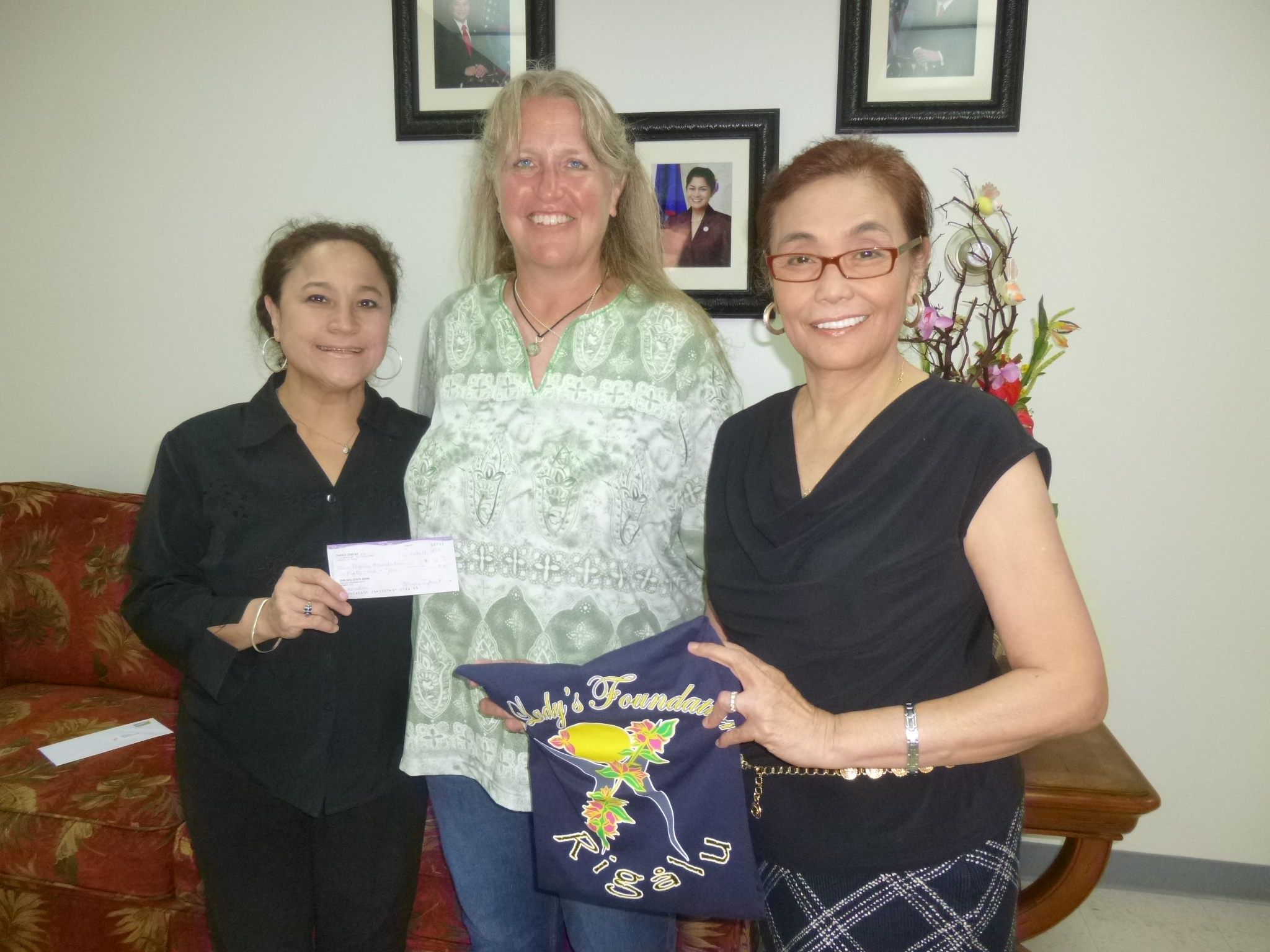
In the meantime, I went back to the motel to finish packing and check out. Then I got in about 4 miles of walking by the bay, and then went back to the Governor’s Complex. The First Lady was still tied up with business but she sent some of her staff down and it was fun meeting them. I learned more about the foundation and they treated me to some banana lumpias from the snack cart (bananas that are wrapped in a light egg-roll type shell and then fried – tasty!) and they gave me a t-shirt and took a photo.
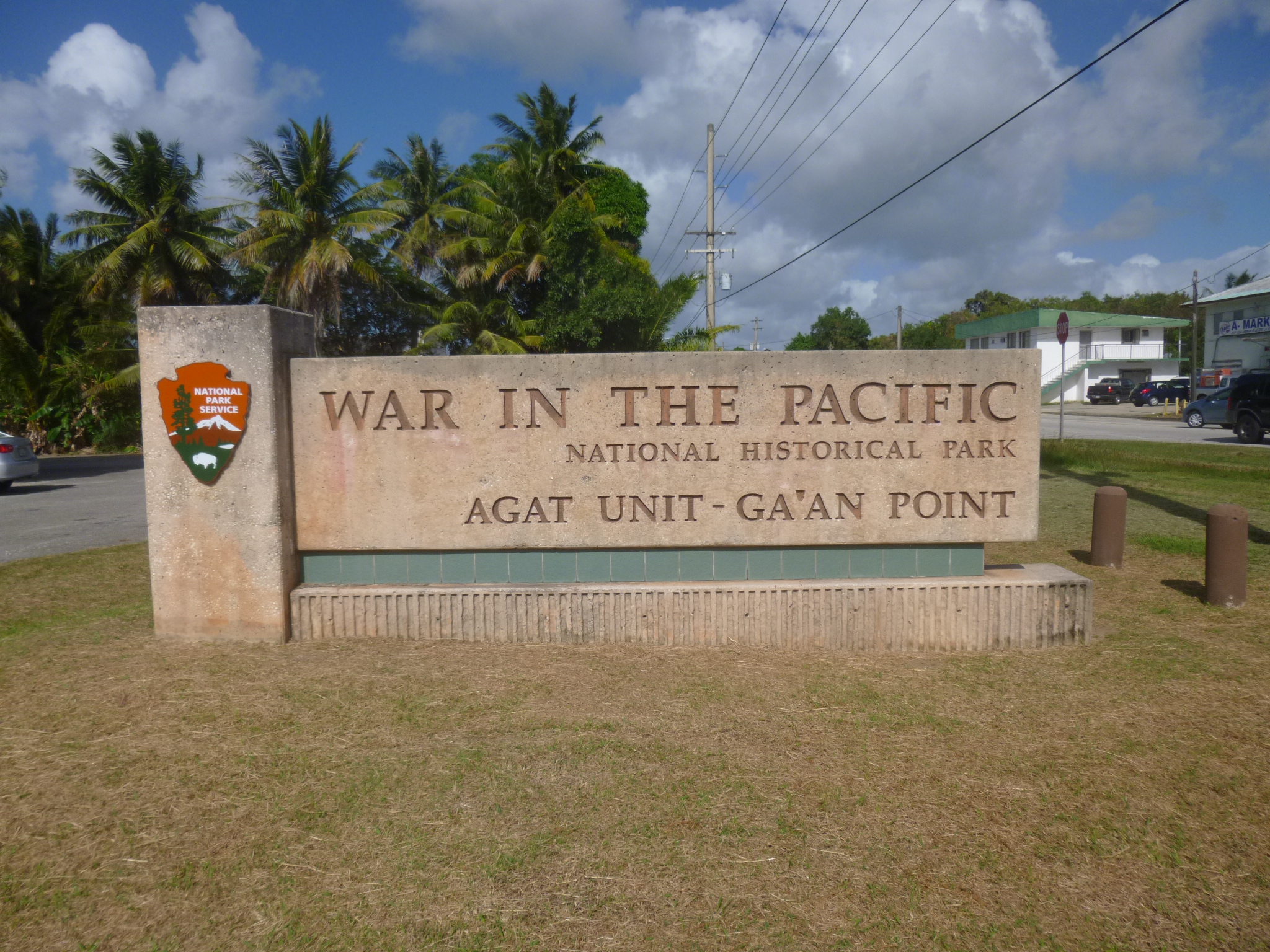
Then I finished off some walking at the national park site by the ocean. I had to go back to the car rental place – we’re still waiting for the formal police report to proceed with payment for damages to the window – Discover should still cover that, but we have to figure out paperwork, and the lady is being very kind about working me with all this.
I drove around a bit more, sightseeing before the sun went down. Then I got a bite to eat, and went back to the hotel lobby to use their wi-fi service until it was time to return the car and head to the airport. Just as I was closing down the computer, Toni sent an email about receiving a phone call saying someone had found my passport on a street! She gave me the number and I called immediately, but no answer. I waited a few minutes and called again. I let the police know there was now at least a phone number and they asked me to come back to the station. It was also time to be at the airport, but I wanted to pursue the passport too. By the time I got to the police station, they had traced the number to the mayor’s office in a town north of where we were. And considering it was after 11pm, no one would be answering until morning. So I decided to go ahead with my flight (hoping I could go)and follow up with this in the morning from Saipan. I was feeling mildly hopeful that my passport really was recovered, and maybe my driver’s license and other stuff too, since it seemed to be a promising phone number.
I turned in my car, and we decided to deal with the window damage when I returned to Guam for a day after my week in Saipan. At the airport, I went to security and waited while they went through their shift change and briefings and a short meeting. Then the TSA supervisor came and got me and we went to a quiet place where he called the “command center” which has access to lots of personal information as far as motor vehicle records, business records, etc. etc. the command center relayed questions to the TSA supervisor who relayed them to me and so on. After about a half dozen questions they were convinced I was me, and then he accompanied me downstairs to approve my boarding pass, and then had to personally okay my passage through security, and after waiting a couple hours, I was allowed to board the plane for the 45-minute flight to Saipan!! Whew! The flight left at 2:45am which seems to be a very strange time for flying, but this seems to be good times for connection flights for Asian travelers, and there’s a lot of them!



 Guam – Sunday, February 3
I didn’t sleep very well last night – still bothered by what happened. But I tried to look at the bright side – I would rather have my cell phone stolen than my iPad; I would rather have my real passport stolen (replaceable) than my National Park passports with 15 years of stamps and memories (irreplaceable); I would rather have my credit cards stolen than my camera; and I would rather have cash stolen than my checkbook with all its records. So in the end, I still have stuff that’s important and special to me.
I had to take care of a few more phone calls, then I ventured over to the Western Union store where Taryn had wired some cash to me. None of my kids or I have ever used Western Union, so this was a new experience. I found the store, only to hear that they no longer do Western Union transactions, and the next closest place isn’t open on Sundays. A minor bump in the road. I went back to hotel and gathered up a few things and packed a peanut butter sandwich for lunch, and figured I’d set out on a leisurely drive around the southern end of the island, which I was oing to do yesterday afternoon. But first I got online again, and Taryn and I both thought I should be able to pick up my money at any Western Union office on Guam. And I found a couple that were open on Sundays.
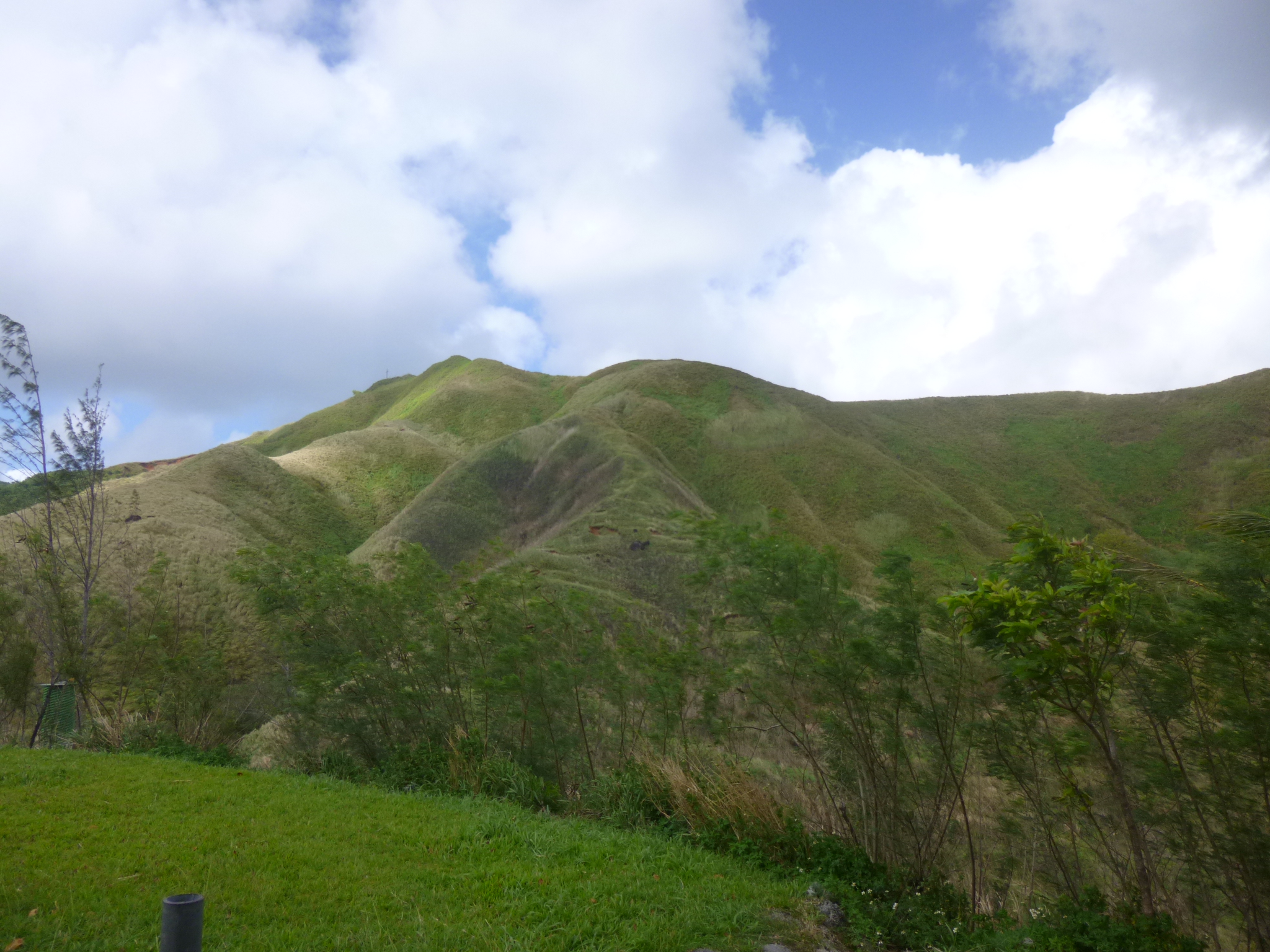
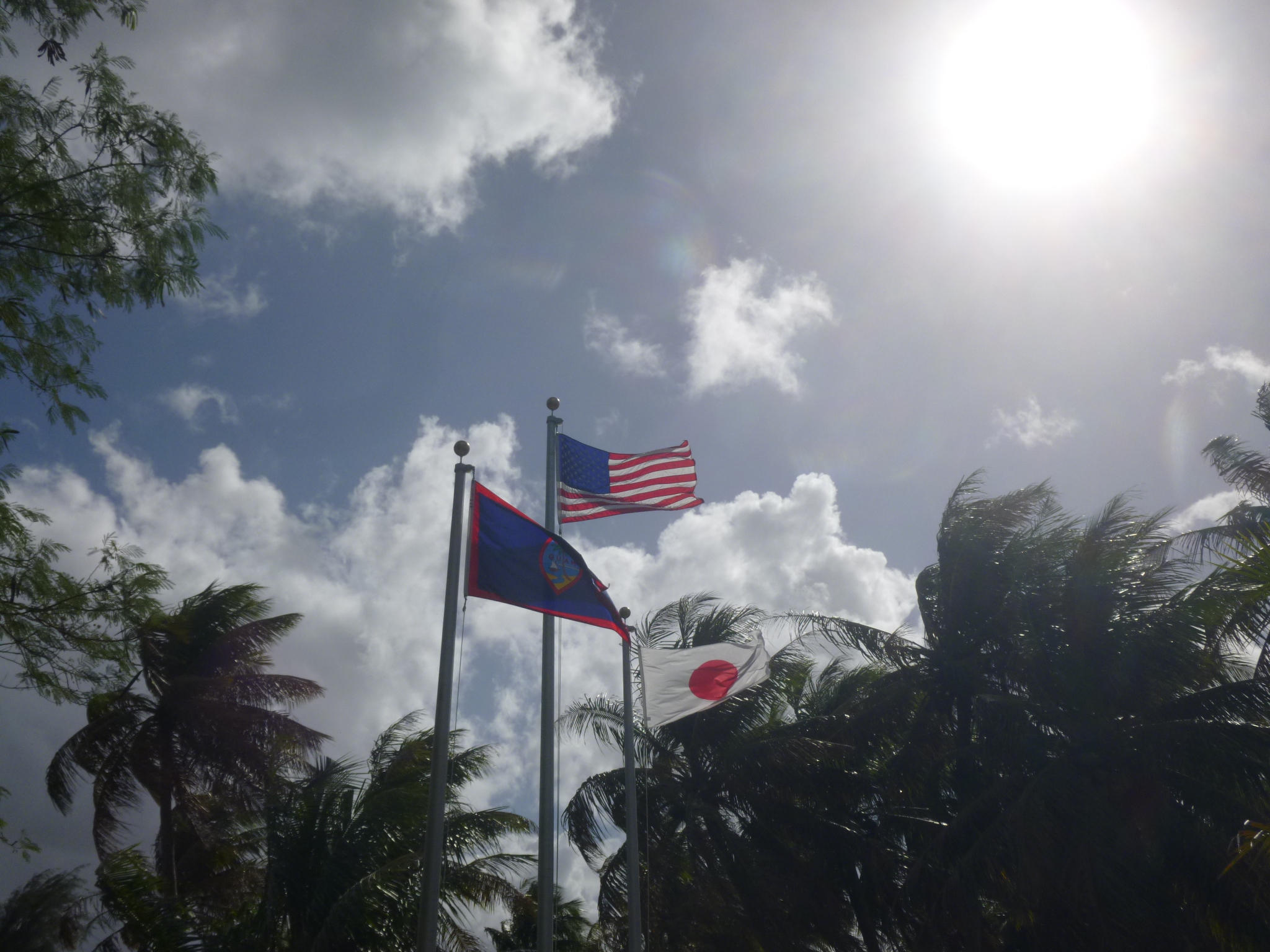
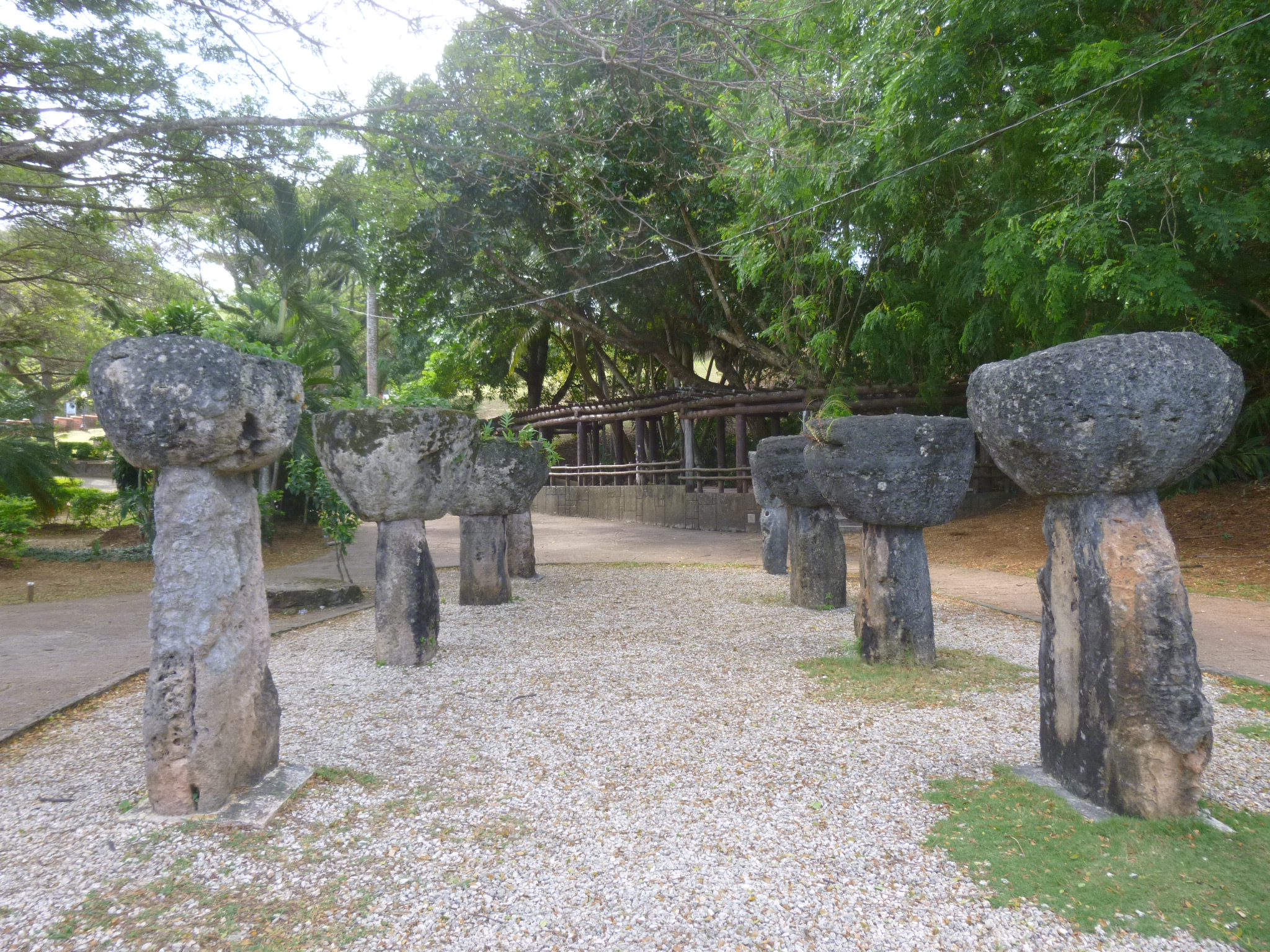
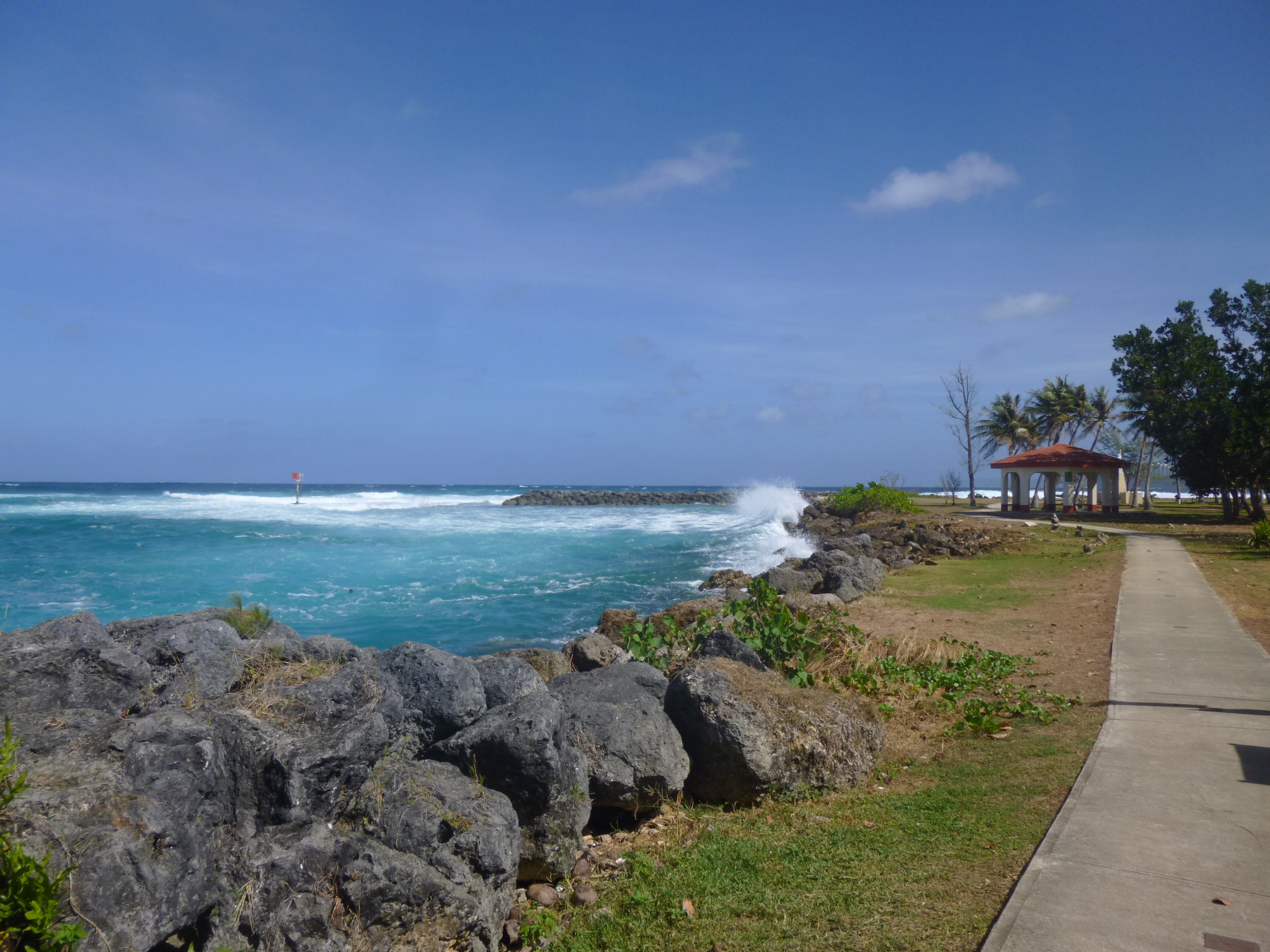
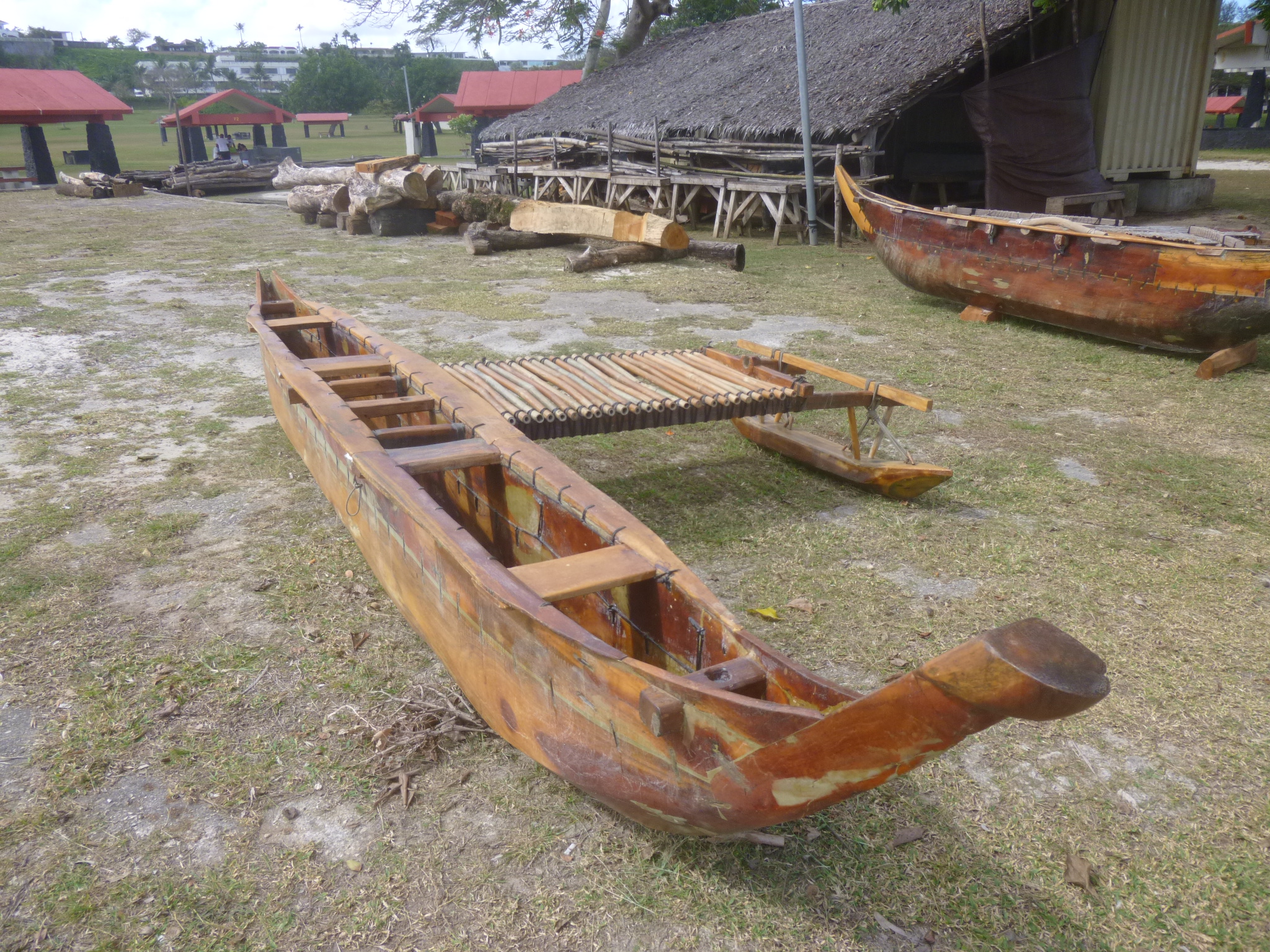
So I set off in the car into the Guam countryside, and driving in the peace and quiet in the hills of central Guam was very relaxing. It was a good day to do this. After a while I came to an IGA market that had a Western Union sign. We had a IGA market near us where I grew up, and it was unexpected to see one here. I was eventually able to complete the transaction, because Taryn had added a security question in there. Without ID of any sort, they weren’t going to just hand over the money. I was expected to know both the security question and the security answer. In the end, I walked out with the expected cash, and felt good at least having a little money. I continued my short way across Guam and drove around the southern end of the island. The interior of the island is mountainous, and is only lightly populated. There are some rugged hikes back in there, and that’s where the brown tree snakes are. I guess they’re nocturnal, and they hang out in the trees, and some people blame them for power outages. I admired the scenery from afar, but wasn’t going to go walking around on rugged trails by myself with snakes. I got out and walked when I could, but had been told there wouldn’t really be many good walking places except for occasional sidewalks in small villages. I drove along some pretty beach areas on the east side of Guam, but the water is rough on that side, and the coast is rocky – none of the beautiful blue shallow waters that are on the other side! There were a quite a few beachside pavilions and since it was a Sunday, there were numerous groups of families out BBQing and socializing, and a few brave people were swimming. I passed a bay and a memorial to Magellan who first discovered Guam back in the 1500s. The Chamorros (the native people) spent a long time under Spanish rule, and many were converted to Christianity, and then the US acquired Guam in some treaty with Spain, and then Japan came in later, and then the US took the island back from Guam. Apparently no one stopped to think that this was neither a Spanish, U.S. nor Japanese island, and the Chamorros just kind of got stuck in the middle of it all.
I continued my drive at a slow pace, with the ocean on one side, and the deep green of the interior mountains (not as volcanically rugged as Samoa) on the other side. There were a couple small villages, and lots of chickens running around. Many of the homes and shops on Guam are small concrete structures with flat roofs. The concrete is often painted. Concrete is the preferred building material since it holds up better in earthquakes and typhoons than wood or metal. I did see some structures made out of corrugated aluminum, and they definitely didn’t look sturdy. Those are the sorts of places that Habitat for Humanity is trying to upgrade. I got some walking in, but not as much as I would have liked.
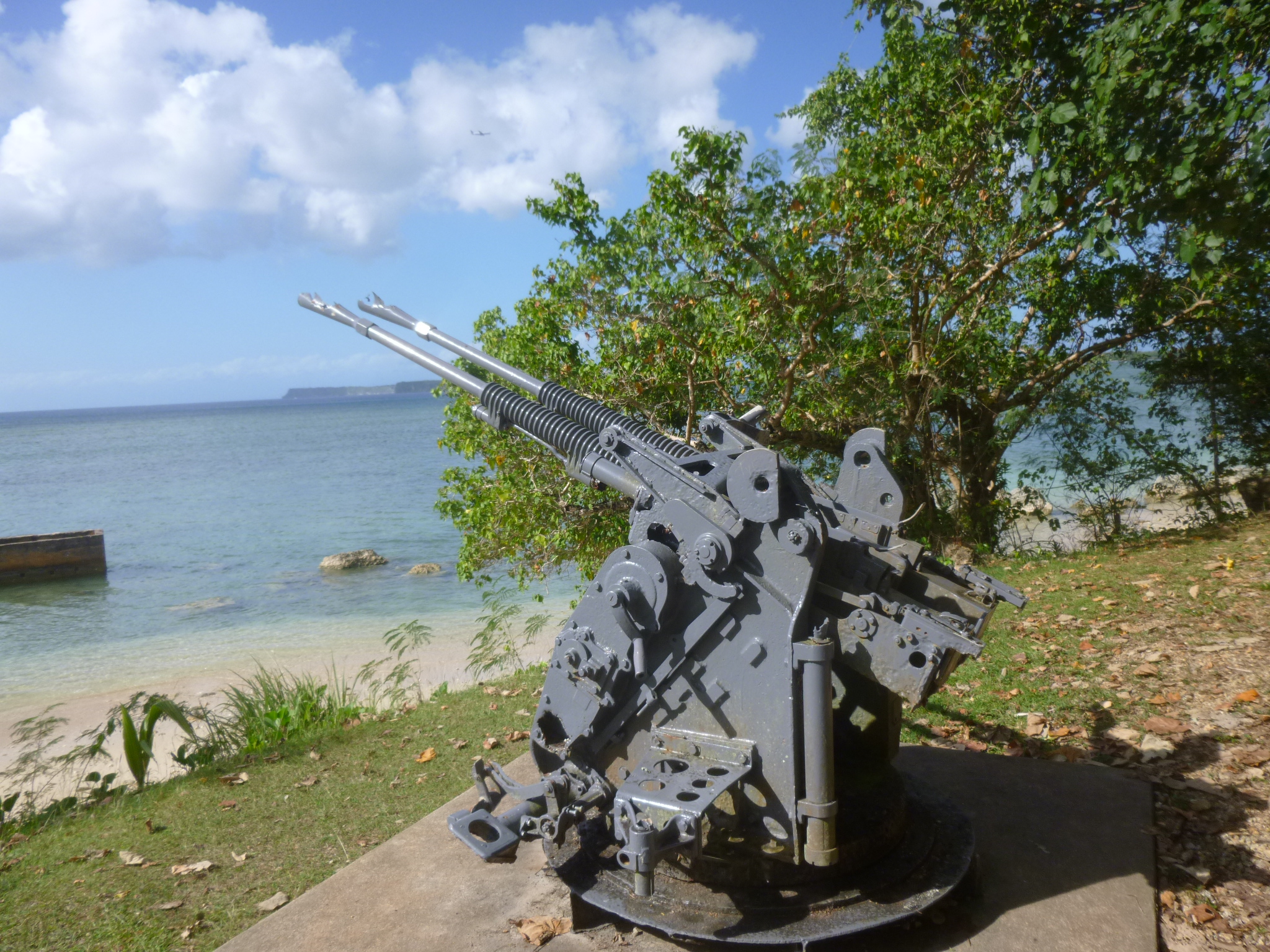
I drove around the southern tip Of the island, and started making my way north again. I came to another section of the national park, and got out to look around. There were a couple old Japanese anti-aircraft guns and machine guns mounted on the old landing beach that were used to fire on the Americans storming the beach in their amphibious tanks. There was a college age Japanese guy standing behind one of the anti-aircraft guns while the girlfriend took a picture – he was pretending to swivel the gun around and was making loud firing noises and laughing. I couldn’t help but think that he and I were seeing and hearing totally different things. The Japanese took over the whole island when they arrived as they were expanding their empire, and they mistreated the local people, forcing them into slave labor and and shoving them all into “camps”. When the Americans arrived, it was a bloody long horrible battle, but in the end, the Americans secured the island, and they freed the Chamorros and gave them food and water, but life was sill anything but normal for them with the Pacific war still going on.
I did some more walking at the other National Park site by the bay, and then walked downtown a bit more to finish my walking. I picked up a noodle dish to take back to the motel, where I dealt with some more emails and got ready to be at the passport office first thing in the morning as the police officer had recommended. I was really tired – mentally and physically, and had an early night.
Guam – Saturday, February 2
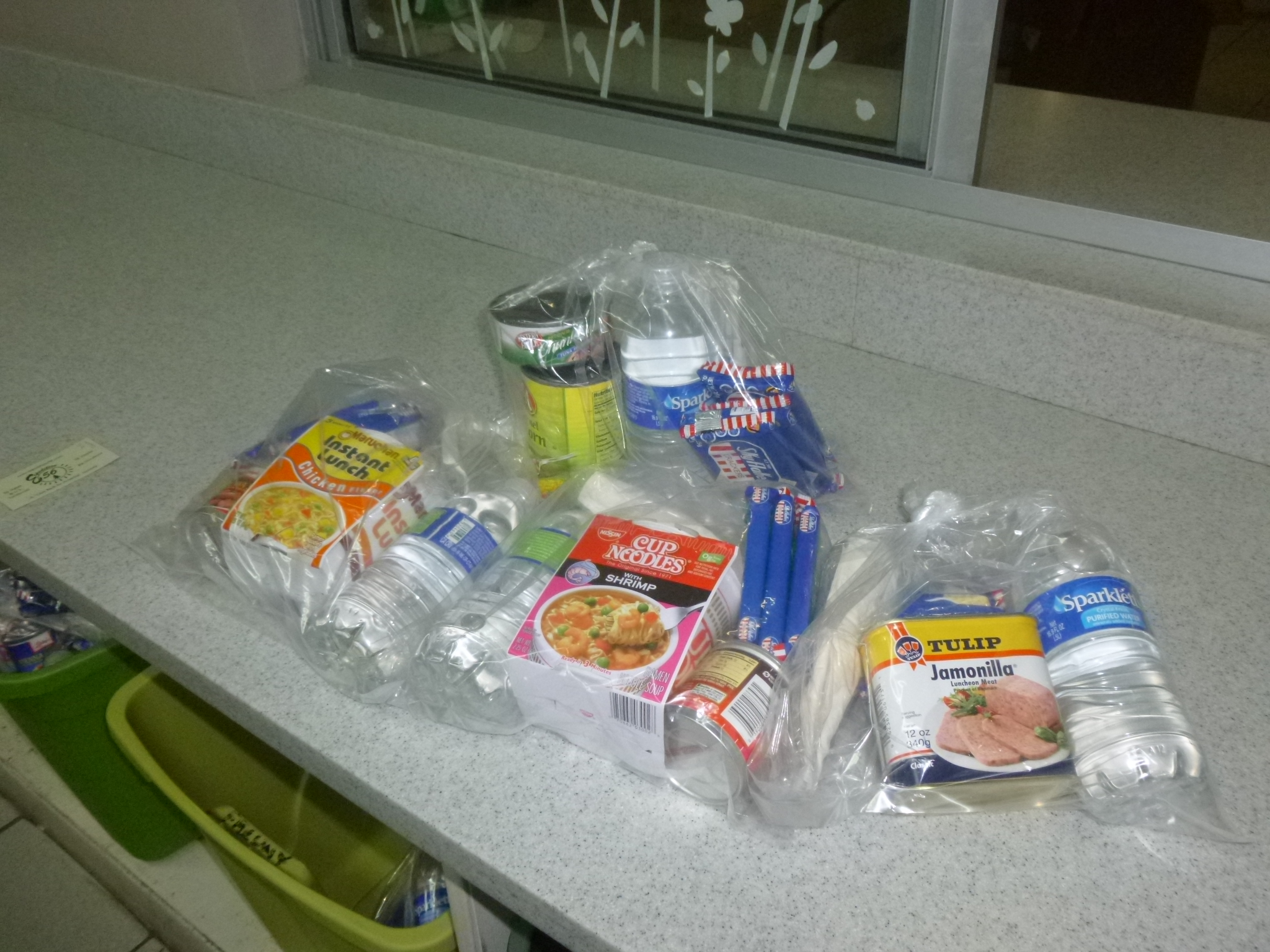
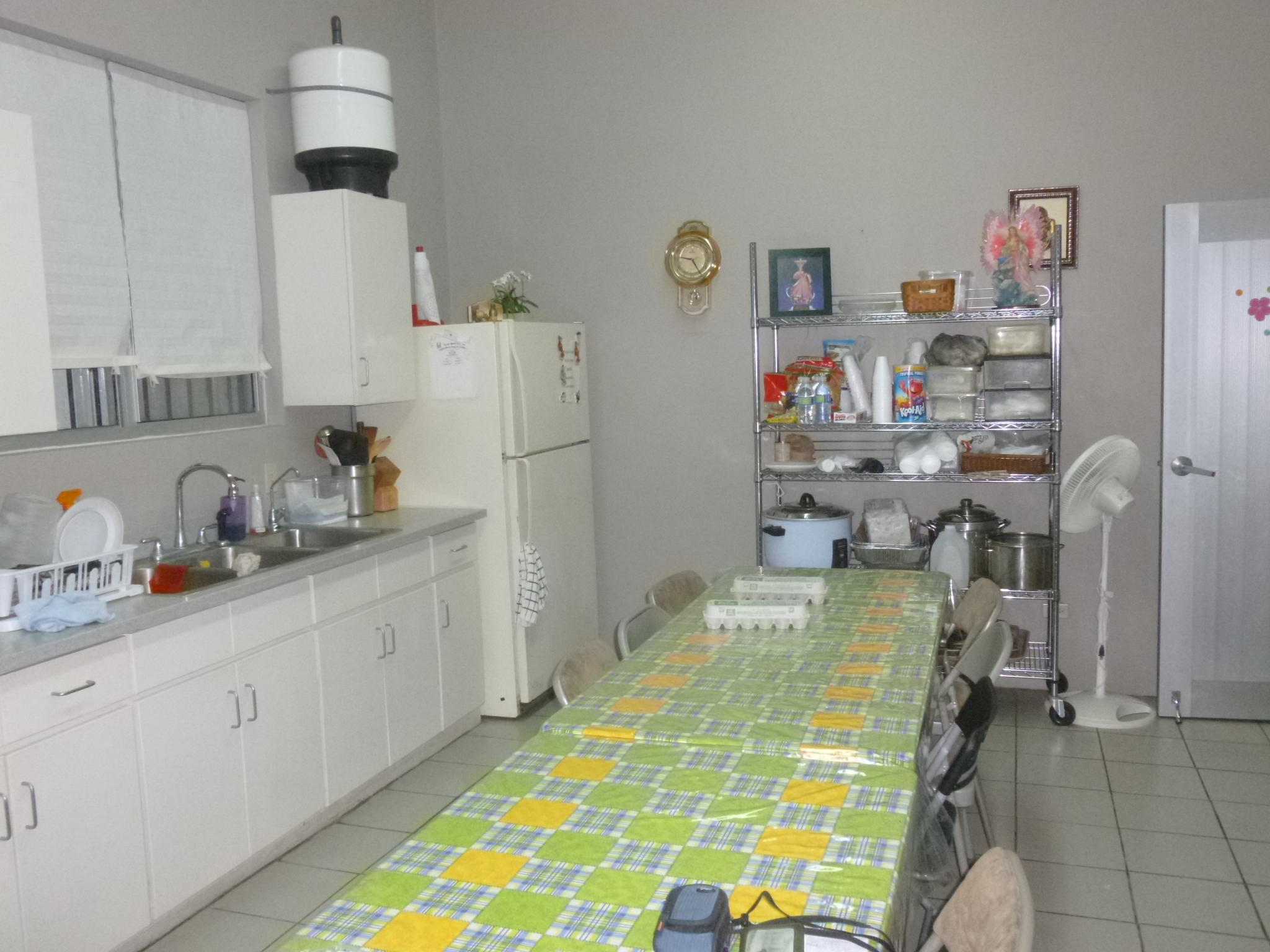
My day started off wonderfully well. I was headed down to a rummage sale sponsored by the Kamalen Karidat, and the proceeds from their rummage sales help support the local soup kitchen that provides a meal every day to those who need it. It was nice to see a number of people at the sale. I went indoors to talk to Maria, one of the ladies who runs the soup kitchen and to make my donation. She showed me around the facilty which includes plenty of space to set up things like a rummage sale, and then it turns into a dining room. The kitchen area was pretty spacious and they’re very well organized – not only do people get a free meal every day, but they’re also sent back with enough food and water to get them through the next day until they can get another meal. They are not federally funded, and rely entirely on donations from individuals and businesses, and have never run out of food. Maria also gave me a contact name in Saipan if I need it.
Since I was in Hagatna, I thought I’d walk around the town a bit more and follow their History Trail – it led past an old Spanish government complex, a big church, monuments and up to a couple of old cannons on a hill when the bay needed to be defended. Then I walked out into a park on a peninsula that jutted out into the ocean and found a couple treasures to bring back. By this time it was nearly noon, and I’d walked 4 miles, and thought I’d go back to the bay area to get one more mile of walking done before setting off to drive around the southern part of the island. A lot of family groups were out BBQing and swimming, and it was just a pretty day to be outside.
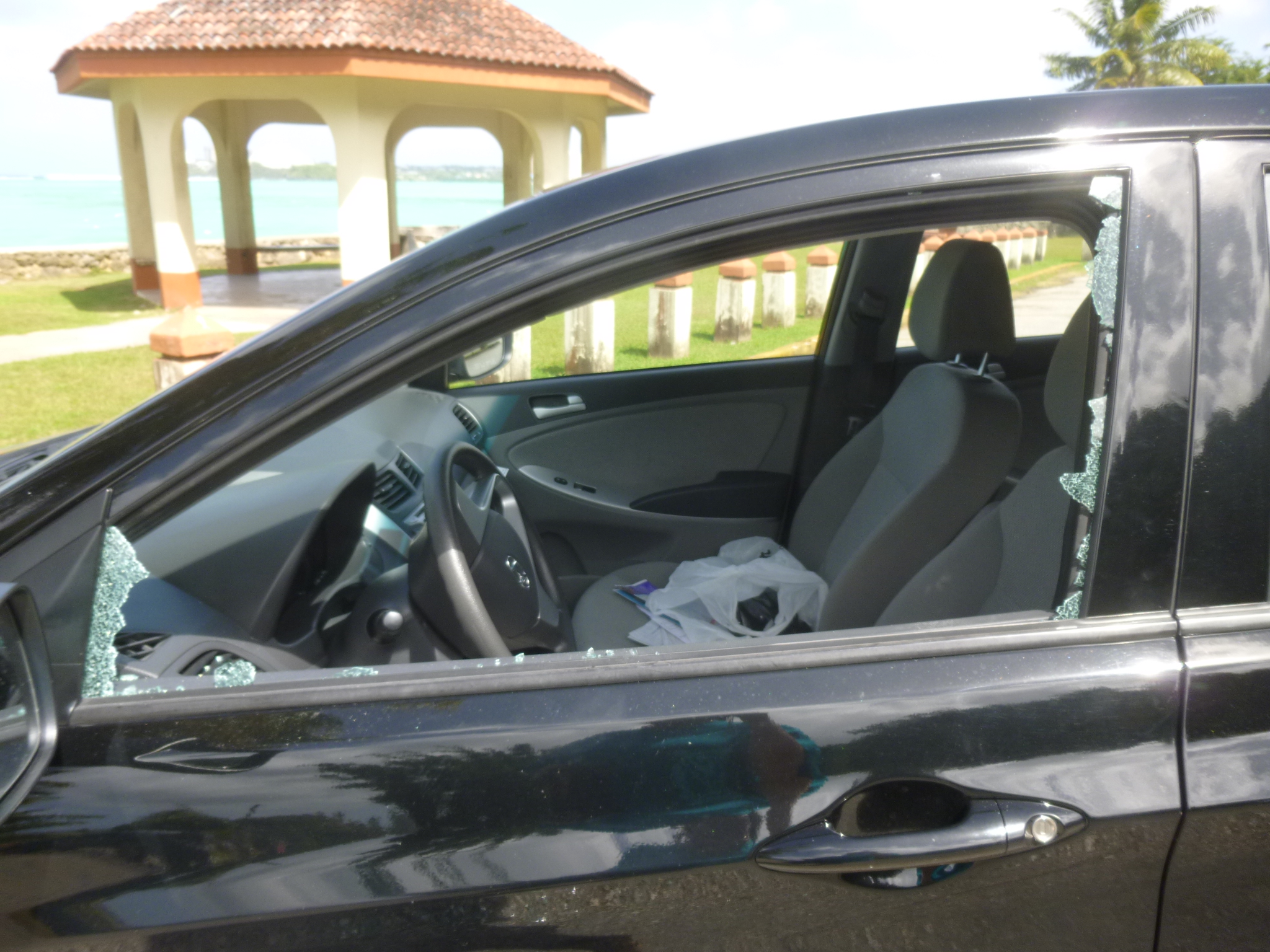
I walked back to my car in the little parking lot by the water….and saw shattered glass everywhere. Someone had bashed in the driver’s side window of my rental car, and glass was all over the seats, floor, parking lot…and my purse was gone. Robbed in broad daylight. My purse had cash (not much – I was due for a stop at the ATM), credit cards, drivers license, passport and cell phone. Gone. Far away from home without a penny, no identification and no phone. I was just frozen in shock, and couldn’t imagine how someone had had the guts to do something like that in a relatively busy area. I had left my purse on the floor under a map, but the map was no doubt an indicator of a tourist – not to mention I don’t look like a local person. Since I had recently made a donation, I had taken my checkbook out of my purse along with my camera, and those 2 things were still on the front seat of the car. I did feel very lucky to at least have those. With my laptop problems, I hadn’t been very good about uploading pictures to the computer frequently, and I would have been so upset to lose my pictures of the territories. And still having the checkbook means my donations can continue on, so that was a good thing too. But I was still upset and shaking. There was an Asian couple nearby and I tried to ask if they saw anything, but they didn’t speak any English. I knew I needed to call the police and reached in my pocket for my phone, then remembered once again that I no longer have a phone. And I didn’t know how to call them anyway – 911 in Guam? I walked down to a Japanese fish shop which was open and the lady was kind enough to let me use her phone to call the police. It took them a little while to arrive, but then he looked at the car, and we sat down to do a pretty thorough report. I had been shaking, and it did me good to sit down, catch my breath, and realize that I was perfectly fine, and things could be replaced. Deep breath, and the show goes on! I was worried about the rental car, but the police officer said that could wait while I returned to the hotel to start canceling credit cards. The hotel staff was really nice, and let me use the long distance phone as much as I needed to contact the credit card companies, going off memory and looking up contact info on the iPad as I went. The thieves were quick – there was already a charge at a gas station for nearly $50 on one of the cards. It took quite a while to take care of all that, and to deal with the phone. I actually had a list of contact info for my credit cards back in my van in Florida and eventually I called Toni and woke her up in the middle of the night – but I needed her to check the list. I realized I had no money for food and the front desk staff found a couple granola bars, and I had peanut butter and a couple rolls in my room. As far as things like my drivers license and passport, it was Friday night back home, and those places would all be closed til Monday. And I had my flight to Saipan in the middle of the night on Monday and I worried whether I could fly without any identification.
Then I had to take the car to the rental place. I was sitting on a notebook because I hadn’t been able to get all the glass shards off the seat, and I brought them back a very messy car. I figured they wouldn’t give me another one. They were really nice about it all though – made sure I was okay, and I had a case number from the police that they would use to obtain the actual report in a few days. I had paid for my card with my Discover card which offers accident protection with rentals, and although I don’t know about the process, I think Discover will cover the cost of cleanup and a new window. And they brought out another car for me to use the remaining 2 days. And up in my room I discovered my camera case had $20 in it, so at least I had a little cash.
By now it was evening, and I just needed to get out and walk and get some fresh air and clear my brain. I went down to the Tumon Bay area where there was lots of light and lots of people out walking and jogging. I was conscious of people walking behind me and didn’t think much of it. My destination was a Japanese noodle shop called FujiIchiBan (not sure of spelling) which had caught my eye the other day, and I was going to go in to look at the takeout menu and prices, but not eat since I didn’t have money on me. A lady who had been walking behind me for quite a ways also turned in at the noodle shop, and we both had to stop and wait for a passing car and she made a comment about both of us walking quite a ways and turning in at the same place. She was from the mainland, and on her own, and I made some comment about how it would be fun to compare notes about Guam but I wasn’t actually eating because I didn’t have my money on me. After I looked at the menu and started walking out, the lady invited me to join her and said I could pay her back after dinner. I assured her I did have a bit of money back at the hotel. So we enjoyed our noodles together and talked about what we had done on Guam – she was there on Air Force business and was then heading to Australia. I told her about what I was doing and what had happened earlier that day, and in the end she treated me to dinner and refused my offer to return with payment. It was a wonderful gesture of kindness after a very trying day, and she was just kind of like a guardian angel who showed up at just the right time. Thank you again Donna! I returned to the motel and tried to relax enough to sleep – I knew there’d be more things to deal with in the morning.





Guam – Friday, February 1
I was up early again, but I made good use of the time, and tracked down a couple more places to call about donations. A little later I got in touch with the lady in charge of the local Senior Citizen’s Nutrition program, which is pretty much like a Meals-on-Wheels program. She gave me some detailed directions and said her location wasn’t far away from where I was. And then I called the Habitat for Humanity office, and the lady there also gave me very detailed directions – using only one road name and landmarks!
I visited the Meals on Wheels place first, and found them upstairs in a building behind a restaurant. The volunteers were busy cooking the lunches and it smelled good! I spoke with Betty, the director of the program, who’s been working there for 14 years. She said they deliver almost 1200 lunches all over the island every day. Plus they have about another 700 senior citizens who are able to come in on their own for a meal. Feeding 2000 people a day on a small island is way more than I would have expected. She told me part of the reason so many senior citizens need help is the high cost of food, and the fact that younger family members sometimes leave the island to see if they can make a better living elsewhere, and that sometimes leaves the older people in a situation where they need assistance.
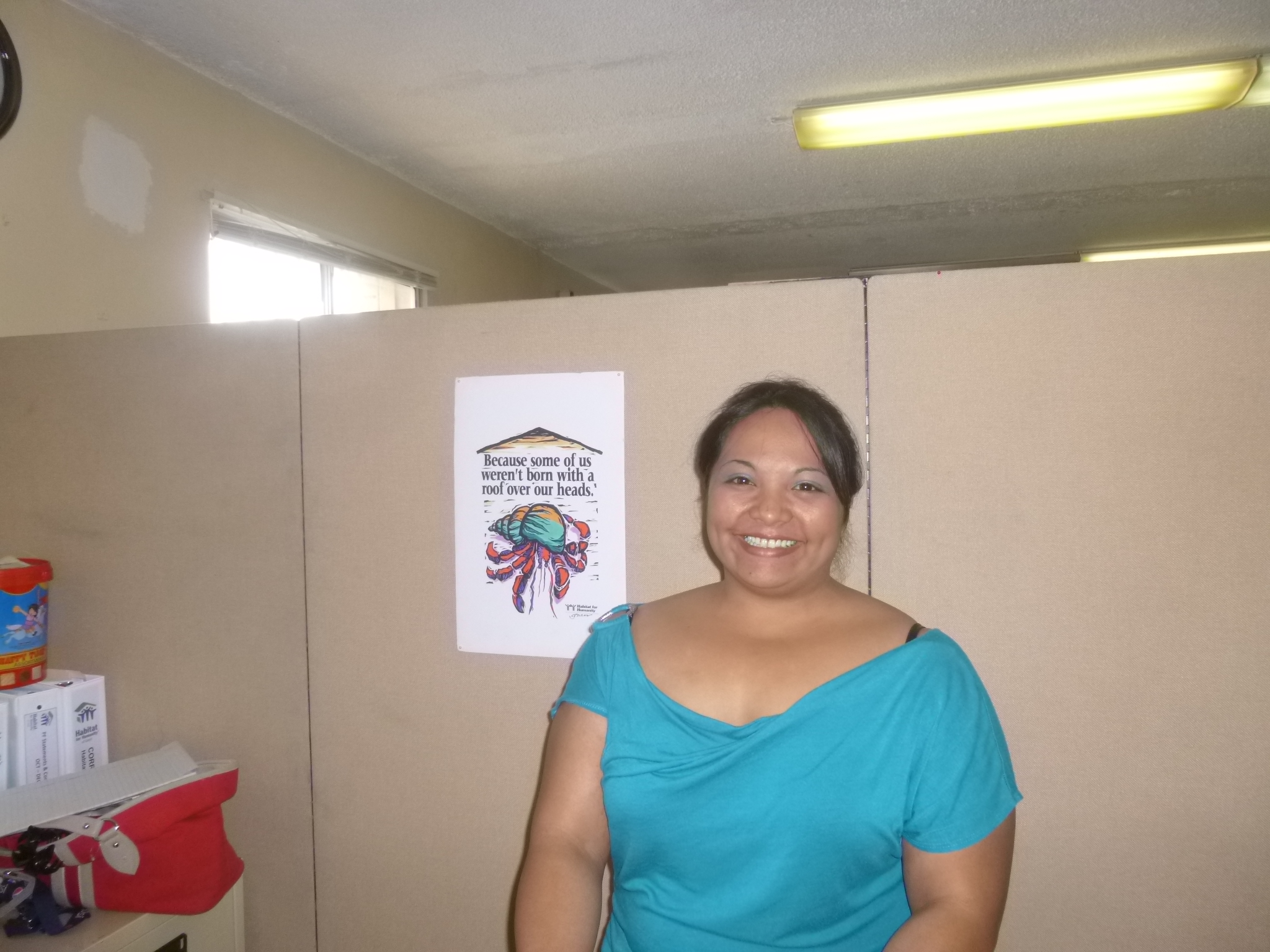
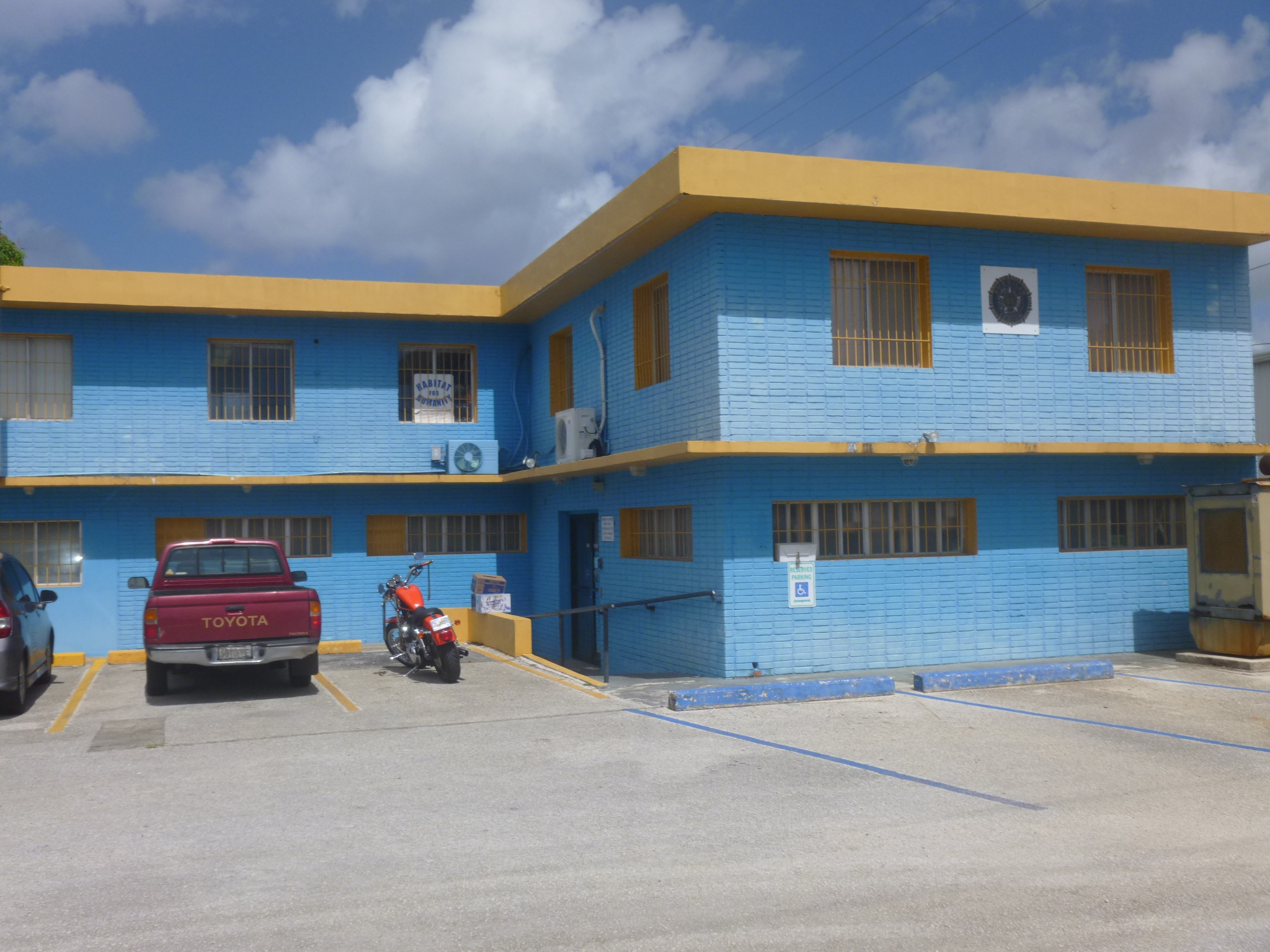
Then I made my way to the Habitat for Humanity office, and met Andrea, who has a lot of enthusiasm for helping numerous non-profit organizations. When she found out what I was doing, she was happy to share her knowledge of local non-profit aid organizations, and I got some good leads of groups who can use some help, but don’t have a website, so I wouldn’t have known anything about them if I hadn’t stopped here. I was really happy to get some of this information, and a couple of the organizations appealed to me right away. The local Habitat for Humanity doesn’t have a lot of funding, but over the years they have built about 25 houses. They are now starting to do some teamwork with another organization which should greatly increase the numbers of houses they can build. There are many families who live in sub-standard housing, and bit by bit they’re trying to help. Concrete homes and stores are the preference here – concrete can withstand the earthquakes and typhoons better than wood homes, or older ones made with corrugated aluminum. The concrete can be painted, so there’s a variety of colorful buildings. Andrea also told me about the need for safer bus shelters, which are also better if they’re concrete, and she’s helped with painting some of them, and has helped clean up school areas and stuff. I spent quite a bit of time there, and learned a lot, and got some good leads for future donations.
Since I was meeting my friend Lisa from Samoa for an early dinner (she had to come to Guam on business for a week after Samoa), I decided to postpone my drive around the southern end of the island until tomorrow. But I had to get some walking in, so I set off along the pretty Tumon Bay area again (there’s a shortage of sidewalks in many other areas and I’m not trekking through the steep jungle terrain by myself where the snakes are!) and passed all the hotels and resorts, and then I went around a bend in the road where I’d turned around before, and discovered the sidewalk went on and on, and there was another whole part of the town I hadn’t seen! I was astonished to find that stretch of the road was home to just about every designer store I could think of – Gucci, Prada, Chanel, Louis Vuitton, Hermes, Coach, Rolex, etc. etc. I found out later that Guam doesn’t charge any tax, and is duty free, which makes prices for all these designer items lower than they are in many other places. It was just kind if unexpected to see all of this after spending the morning hearing about so many local people who are in need of food assistance and adequate housing. Guam is far away for North Americans and Europeans to come shopping, but the Asian countries are only 3-4 hours away, so it’s a convenient flight for them. That all made for a good long walk, and then I went back to the hotel and found a message waiting for me from a newspaper person, and an email from a TV reporter! I played phone tag with the newspaper person (Andrea from Habitat for Humanity apparently used to work for a newspaper) and set up a time with the TV reporter for Monday (she’s married to one of the national park rangers I met on Wednesday – also originally from Michigan).
Then I drove to Hagatna (pronounced like Aganya – I had some pronunciation troubles here again!) to meet Lisa and we had some good salad and lasagna and then got frozen yogurt for dessert. It was fun catching up with her again and comparing notes about what we had seen and done, even though she’d been busy with work and I’d only been on Guam for a couple days. We chatted for quite a while, and then she had to pack for her flight home, and I went back to the motel to get organized for a donation visit in the morning and then a drive around the island.



Guam – Thursday, January 31
I still woke up pretty early but it gave me some time on the computer to research some donation opportunities. I made a list of what I saw – many of them seem to be affiliated with the same agencies. Local calls are free from the phone in my room (and all of Guam is local) and there’s also a phone in the lobby for hotel guests to use to make free long distance phone calls to the mainland. Pretty generous of them! And it’s very helpful since my phone is expensive to use out here, and I should not have been texting back in American Samoa, but I had been given some incorrect information, and luckliy AT&T had a record of that, so they are reversing those charges. Calls and texts are free in Hawaii, but not the other Pacific territories.
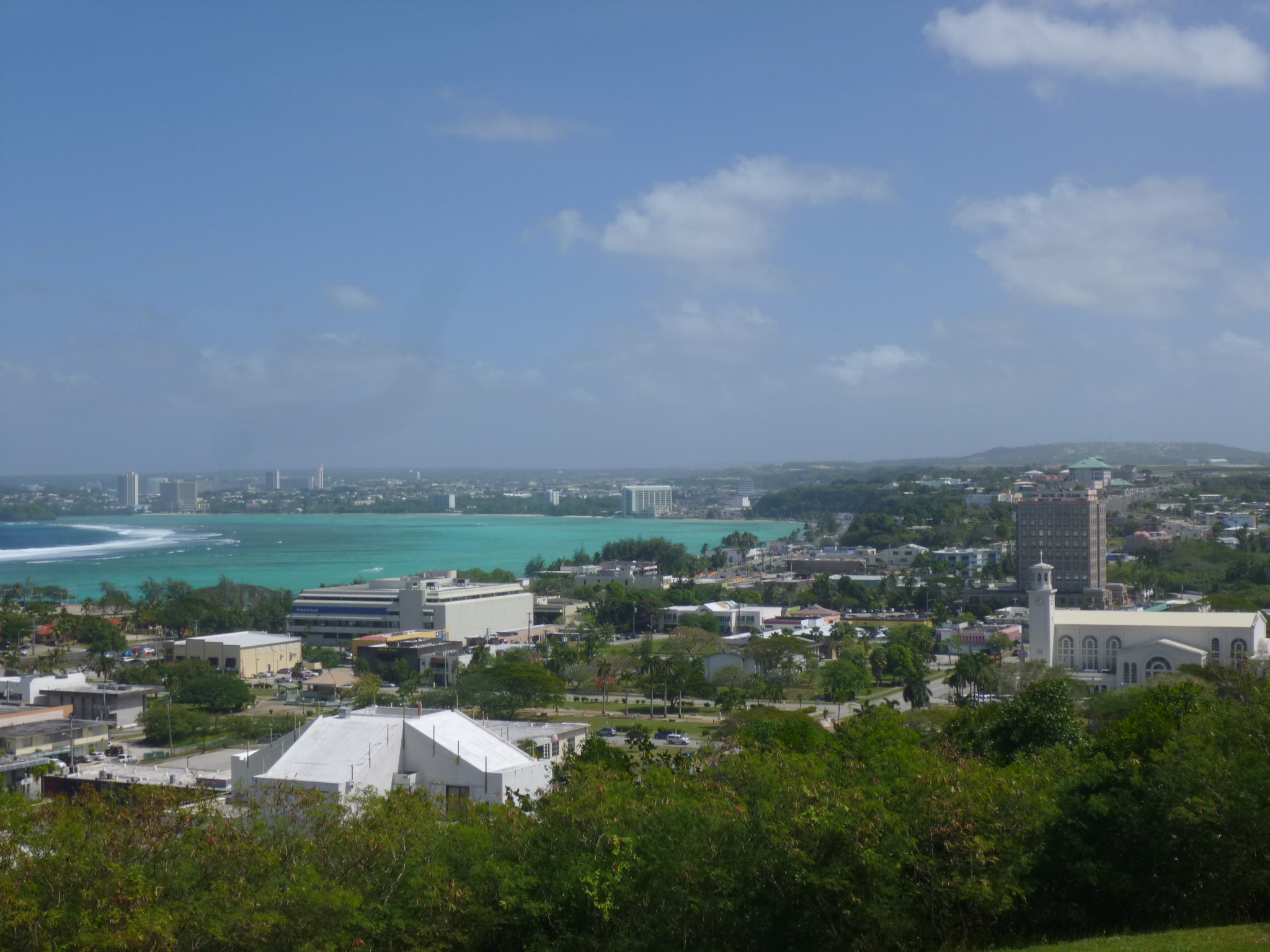
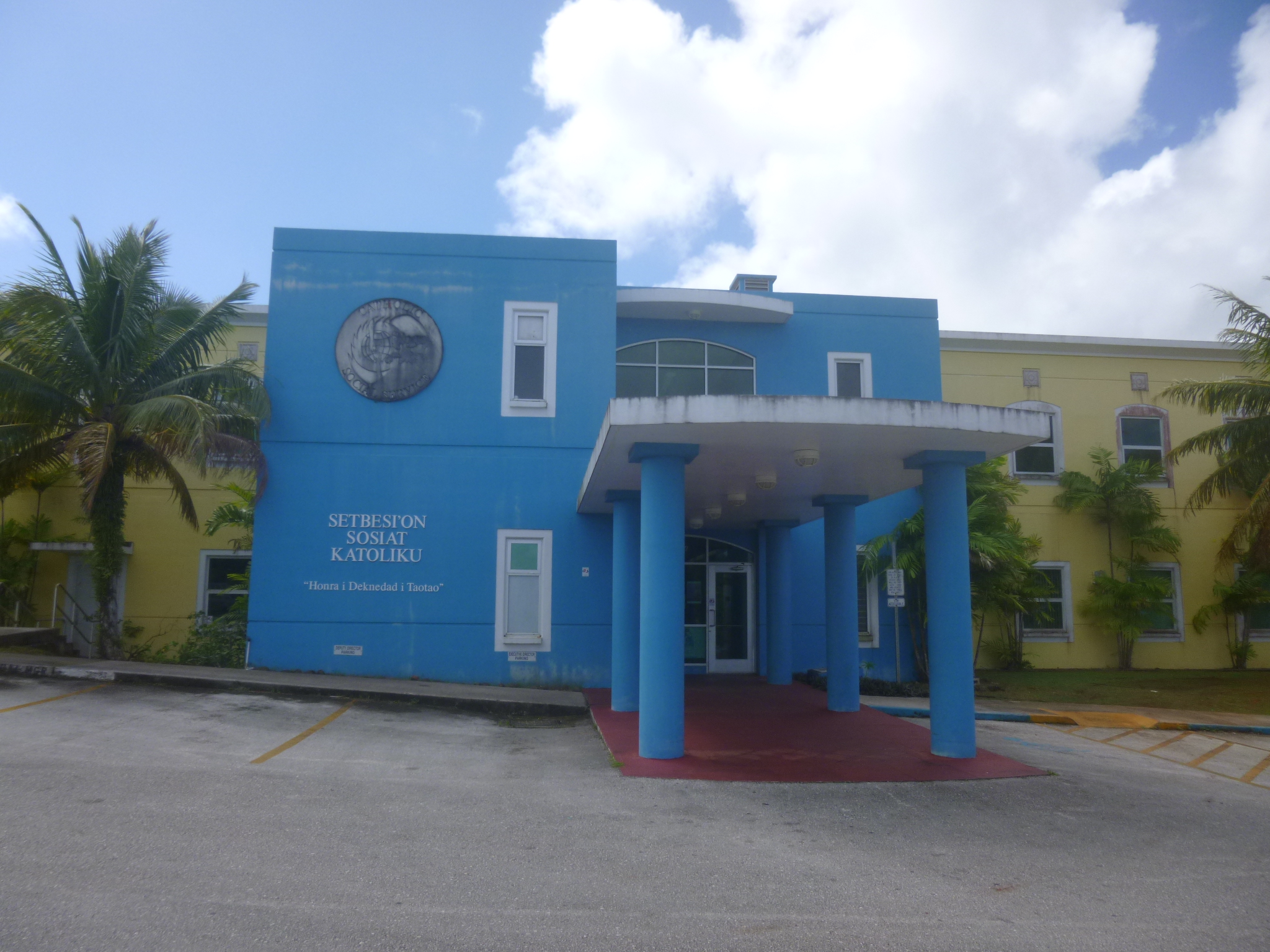
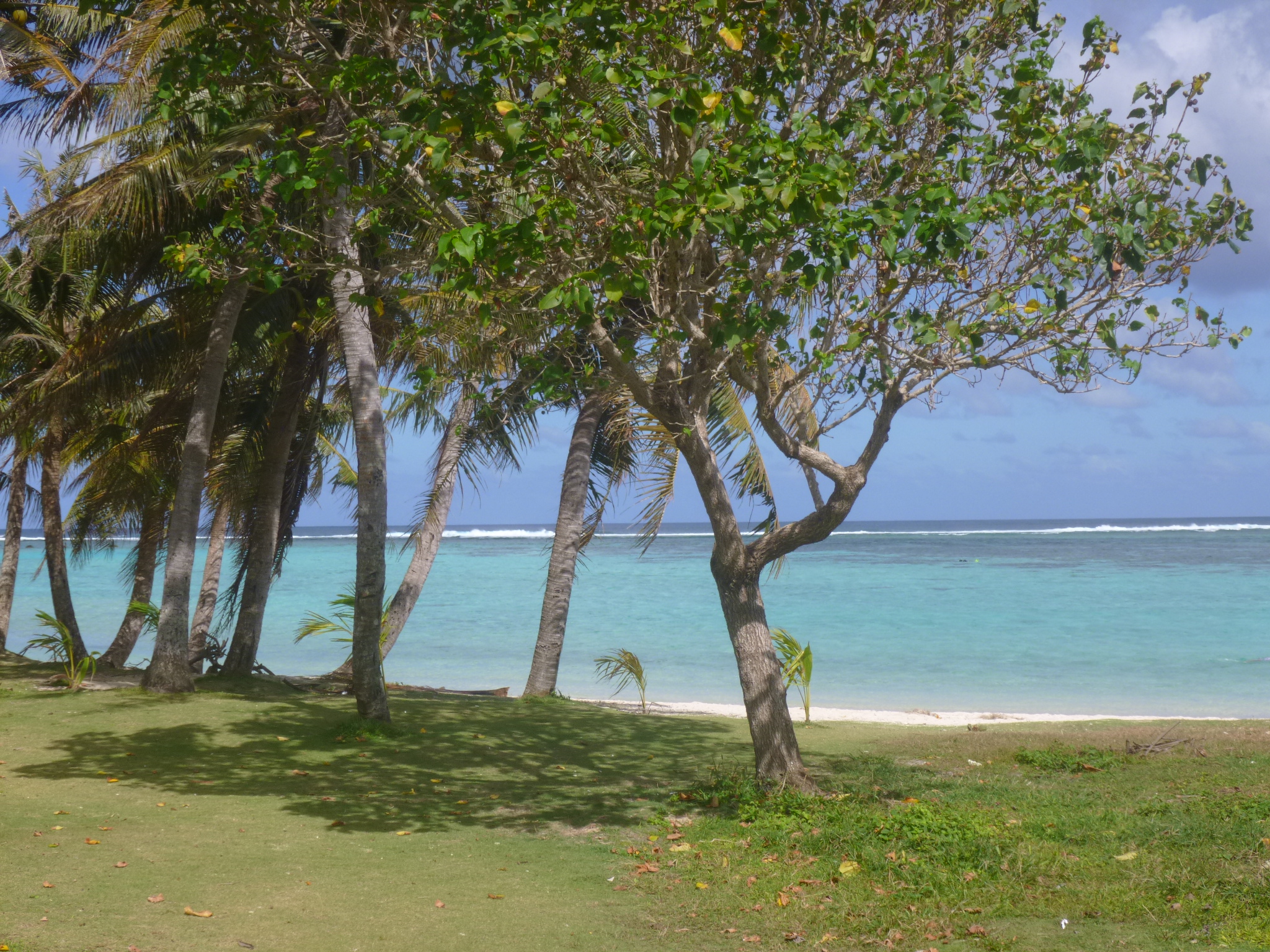
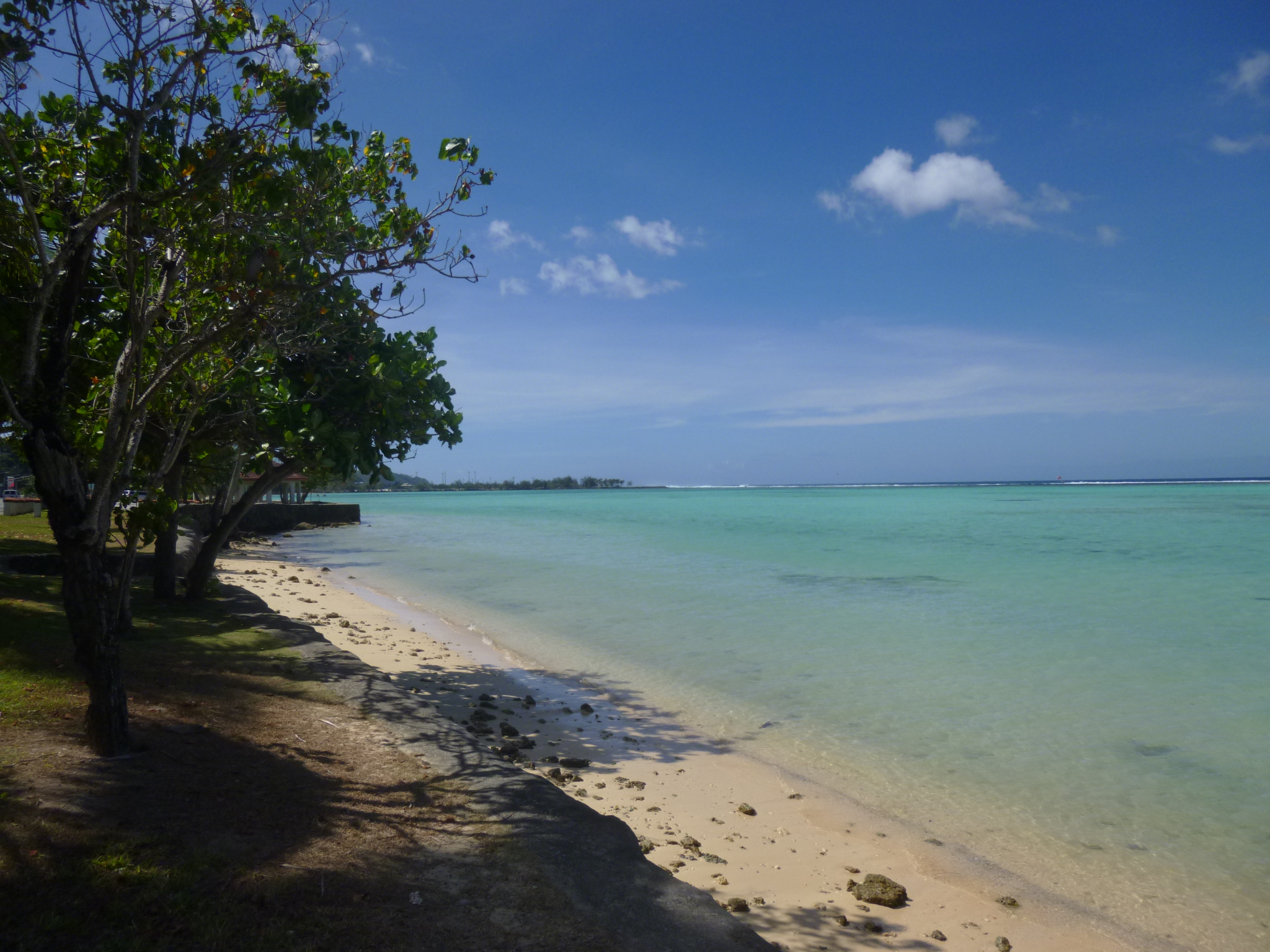
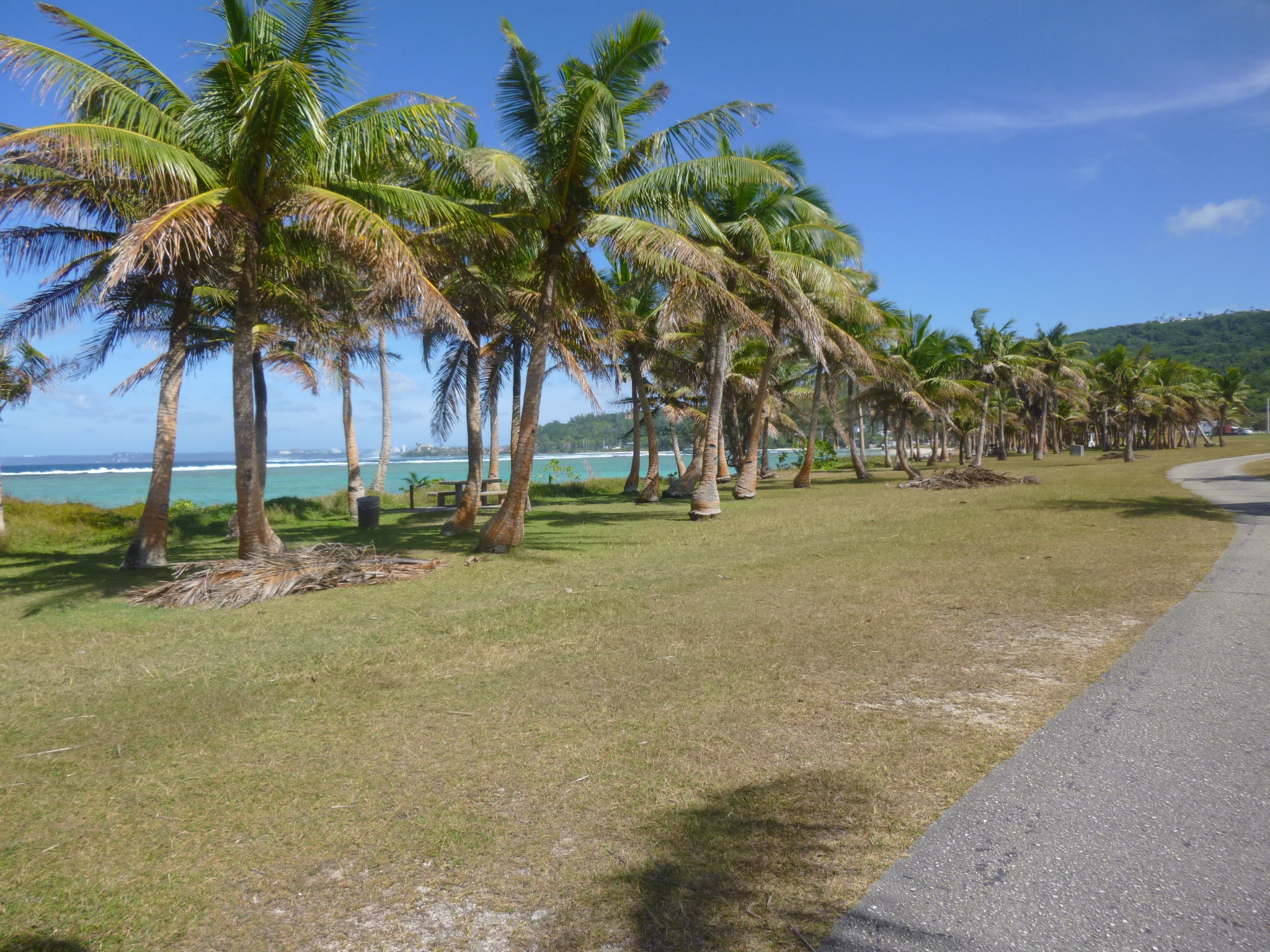
I found a food pantry that was affiliated with a big Catholic social services organization, so when it was a respectable time for phone calls, I called to see if they were open, and to find out exactly where they were located. They gave me directions from my motel using landmarks, not street names. Apparently streets are not well marked and it’s easier to use landmarks that people are familiar with (except new visitors who are still finding their way around!) I also got directions from the nice front desk people, and set off to find these landmarks. In the end, with a bit of trial and error, the directions made sense, and they weren’t really all that far away. I talked with the lady about some other possible donations, and she had a phone number of a place that does some meals-on wheels-type deliveries that she sometimes refers people to. Finding this place helped me get my bearings a bit more, and I’m learning my way around the middle part of the island, which is the busiest part of Guam. Even though it was late morning, I was craving eggs and hash browns, and there was actually a Denny’s sort of close to the motel. So I enjoyed a late breakfast(they have a separate Chamorro menu, but I can’t eat a fish and rice for breakfast!), and then returned to the beautiful Tumon Bay area for some walking. The water in the bay is a vivid turquoise and very very shallow and clear. The coral and rocks are all visible on the bottom. There are a number of public beaches that often have lifeguards on duty. There must be a reef or something that protects the bay because there’s a big line of rough surf way far out that divides the deep blue waters of the ocean from the shallow turquoise waters of the bay. It almost looks like 2 separate bodies of water! I extended my walk a little farther in the opposite direction from yesterday, and chalked up 5 1/2 miles in some pretty good midday heat. I wasn’t at the part of the bay where I was right along the water all the time, but there were some nice breezes. In fact, the breezes started to pick up and it started to sprinkle right as I got back to the car. I still had a little walking to do for the day so I headed back to Asan beach which is a beautiful walk, and I wanted to go on one of the trails the rangers had told me about that I had missed. The sprinkles came and went and the strong breeze felt good. I found the trail the rangers told me about (don’t know how I missed it yesterday) so I climbed up the hill and tried to think about enemy soldiers potentially popping out anywhere like they did when the marines landed, and it’s not a comfortable feeling. There was a cave and all sorts of places where anyone could hide. The view from the top was beautiful – the whole expanse of the bay from the tourist end at the far side, to the national park lands on this side. It made me wish there was a bench up there! When I walked back down, I came across some old concrete that looked like it had been part of a landing area during the war, and then I walked around the whole path in the lark a couple times. The wind was really blowing by now, and some of the palm trees were beginning to lean. It was pretty – but rain was coming.
When I finished walking, I figured this rainy evening would be a good time to go to the local Kmart (only one in the islands I think)for a few things. But there were tourist buses there too. There was an enormous chocolate candy display – counters and counters, and lots of the Asian tourists were buying 4-6 boxes at a time. Lots of it was macadamia nuts and chocolate, and I just wondered why they were selling so much chocolate. It wasn’t cheap. Maybe they don’t make chocolate in Japan??? They also had a lot of other souvenir sorts of things and I browsed through some of that. I got the other stuff I needed, and was beginning to tire out again (I’m not sure I like this waking up at 4:30 or 5am and feeling tired in the early evening!). There was a Little Caesar’s Pizza right inside K-mart, and considering the rain and the fact I just wanted to get back to the motel, I just got a couple pieces of pizza to go.
I was happy to sit down after another busy day, and I fell asleep early listening to the rain.


Guam – Wednesday, January 30
I was awake before dawn, and eager for the sun to come up so I could see where I was! I knew the visitor center was close, and that was going to be my first stop once it was open. When the sun came up, I could see a little market across the street, and when it opened, I wandered over to stock up on some water and see what I could find for a bite to eat until I figured out what else was around. The little market was full of some strange looking Asian food, but the clerk pointed out some pumpkin tart type pastries, so I got one of those.
After a little while, I was able to get directions to the visitor center, which wasn’t far away, so I found that and got a bunch of literature, including a map in English! The lady told me about a Chamorro Market that is held in the old Chamorro village every Wednesday evening, with local food and crafts, so I knew I’d be heading there later. The visitor center was in a nice area right near a pretty blue bay, so I walked down to have a look at the beach and water, which is a brilliant turquoise, then came back to the wide sidewalk and walked for about 3 miles. This was in a tourist area – lots of big hotels and resorts, and nearly all the tourists were Asian. There were bus loads and bus loads of young Asian college-age kids – made me wonder if they were on some sort of break!
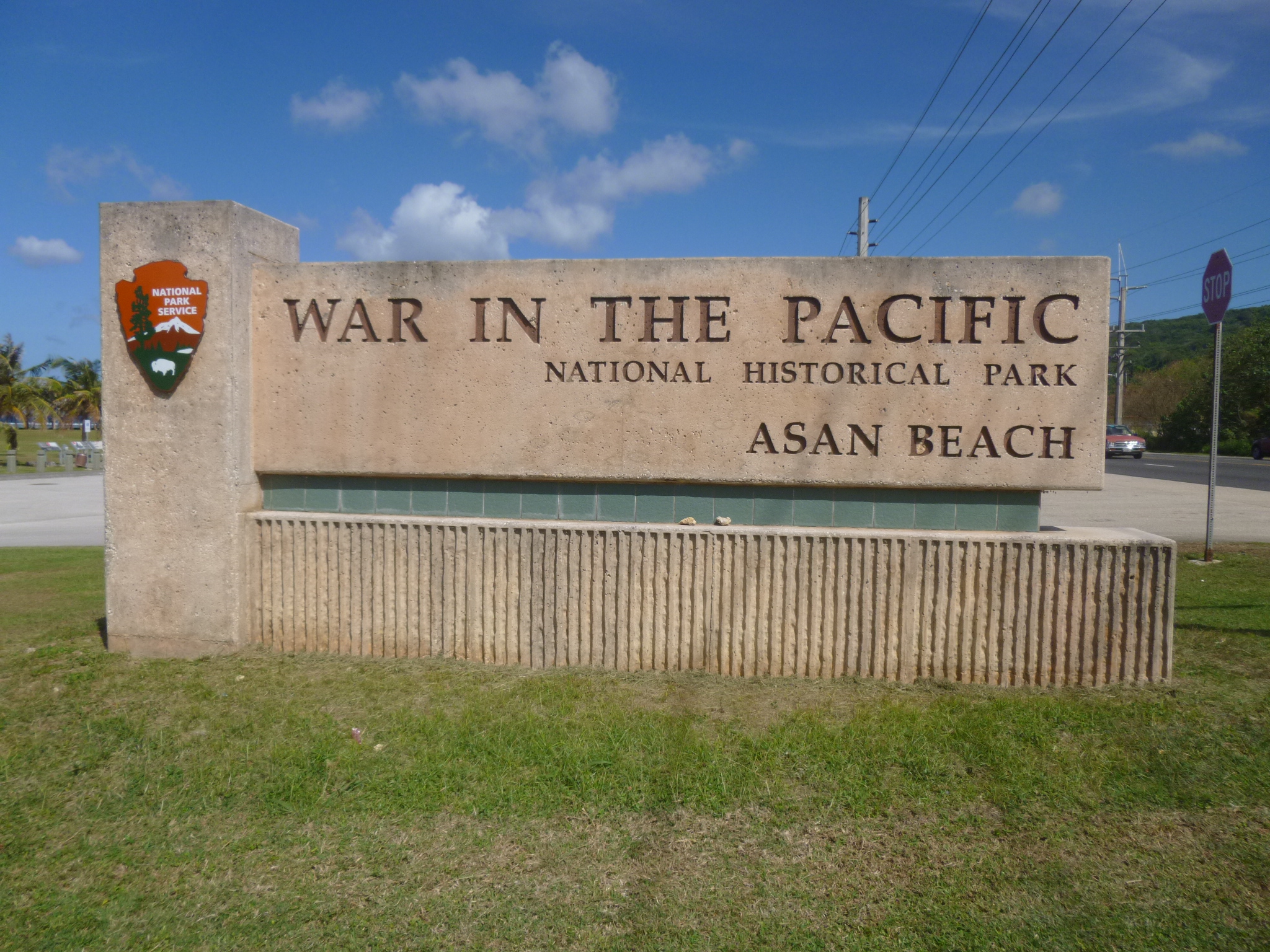
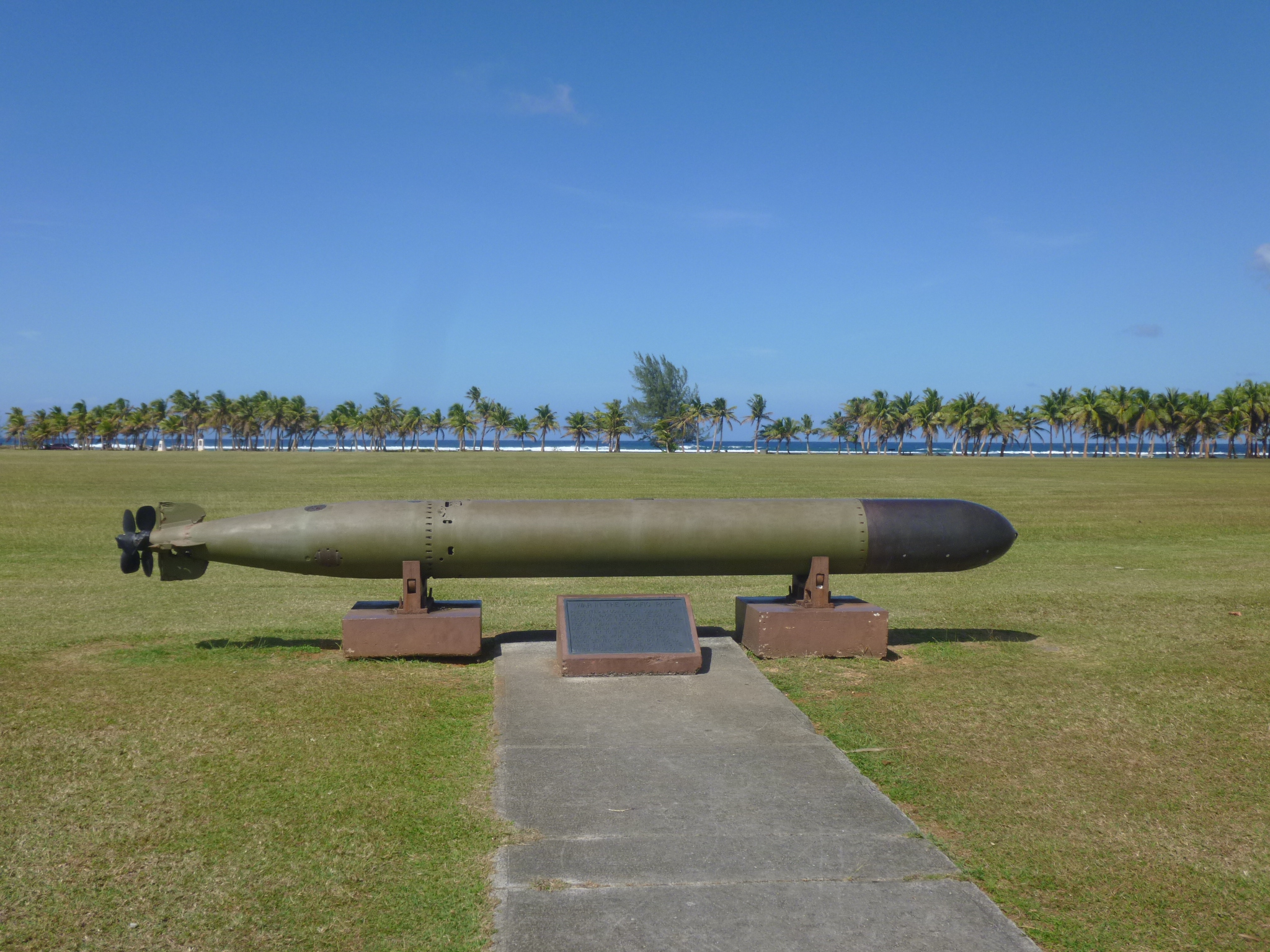
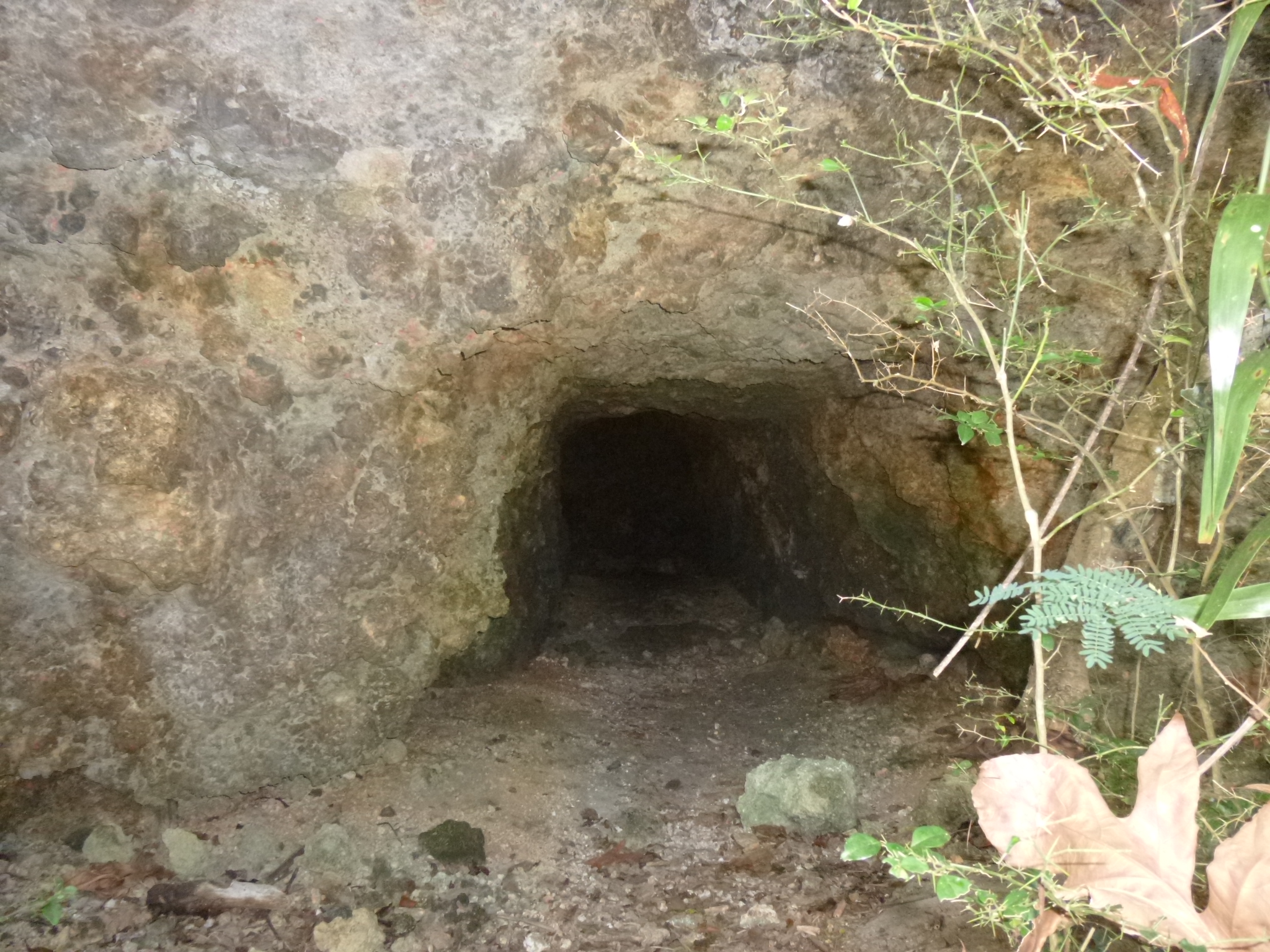
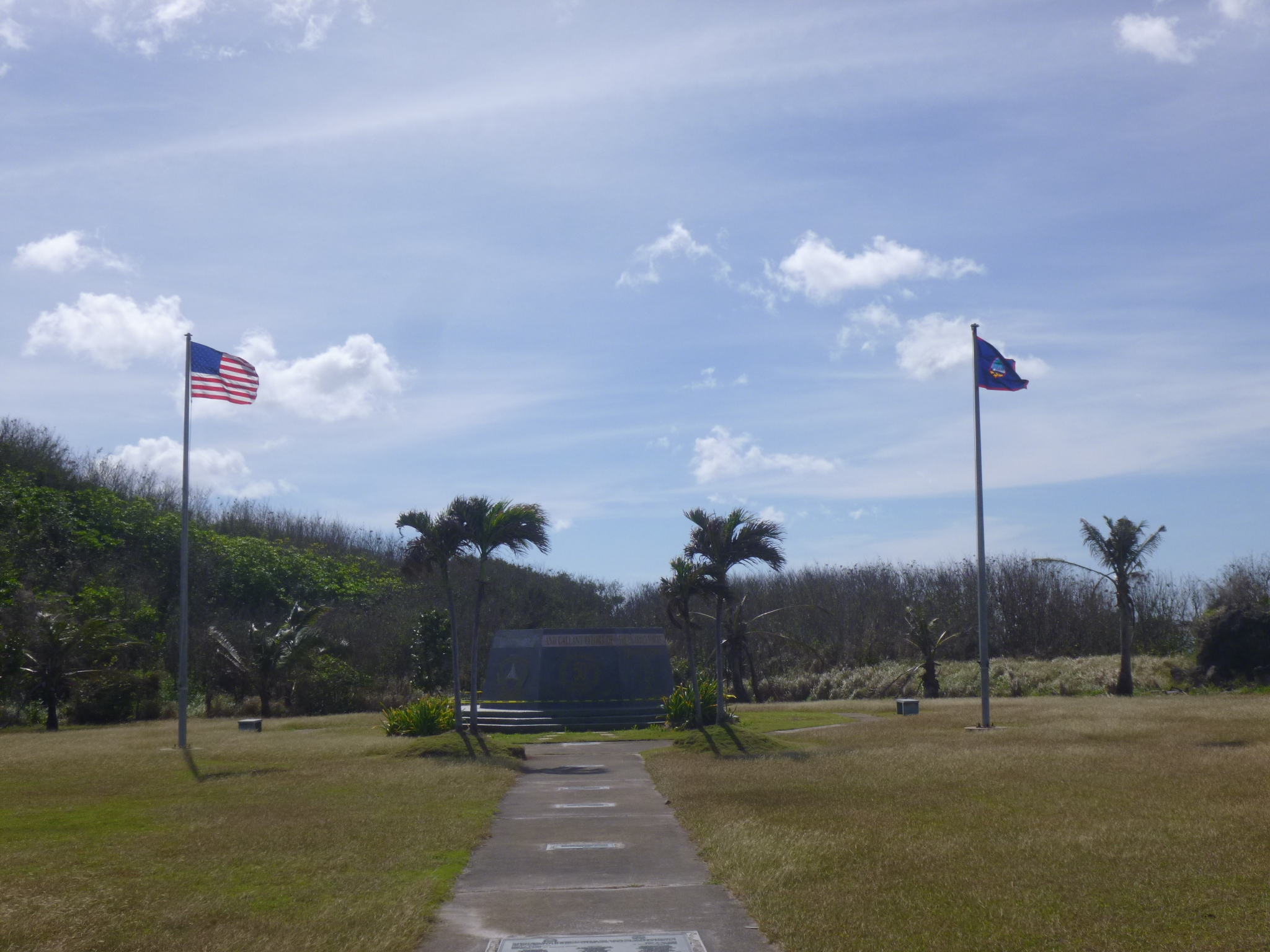
From there I headed south a bit along the main road. I saw some other nice sidewalks along this part of the bay, and got out and walked in a couple more of those areas. I was slowly making my way toward the War in the Pacific National Park for a touch of familiarity as I get my bearings in Guam. I came to part of the National Park although the visitor center was still 5 miles ahead. This part was called the Asan Beach, and it’s where the Marines landed in the summer of 1944 to take Guam back from the Japanese. Before the Marines landed, the Japanese had herded most of the Chamorro people (the local, native people)into slave camps and their conditions were deplorable. As the Marines were landing, the Japanese fired down on them from their caves and tunnels that they dug out of of the limestone in the mountains. It was a horrible, bloody, epic battle that lasted for weeks – longer than anyone had anticipated, and in the end the American flag was flying. They freed the Chamorros and helped them with food and shelter. National Park signs warn against going in the caves, and remind everyone that this was a heavily used battlefield, and to notify someone immediately if anything that looks Like live ordnance is found either on land or in the sea. It’s a good diving area with all the ships and other things that sank during the war.
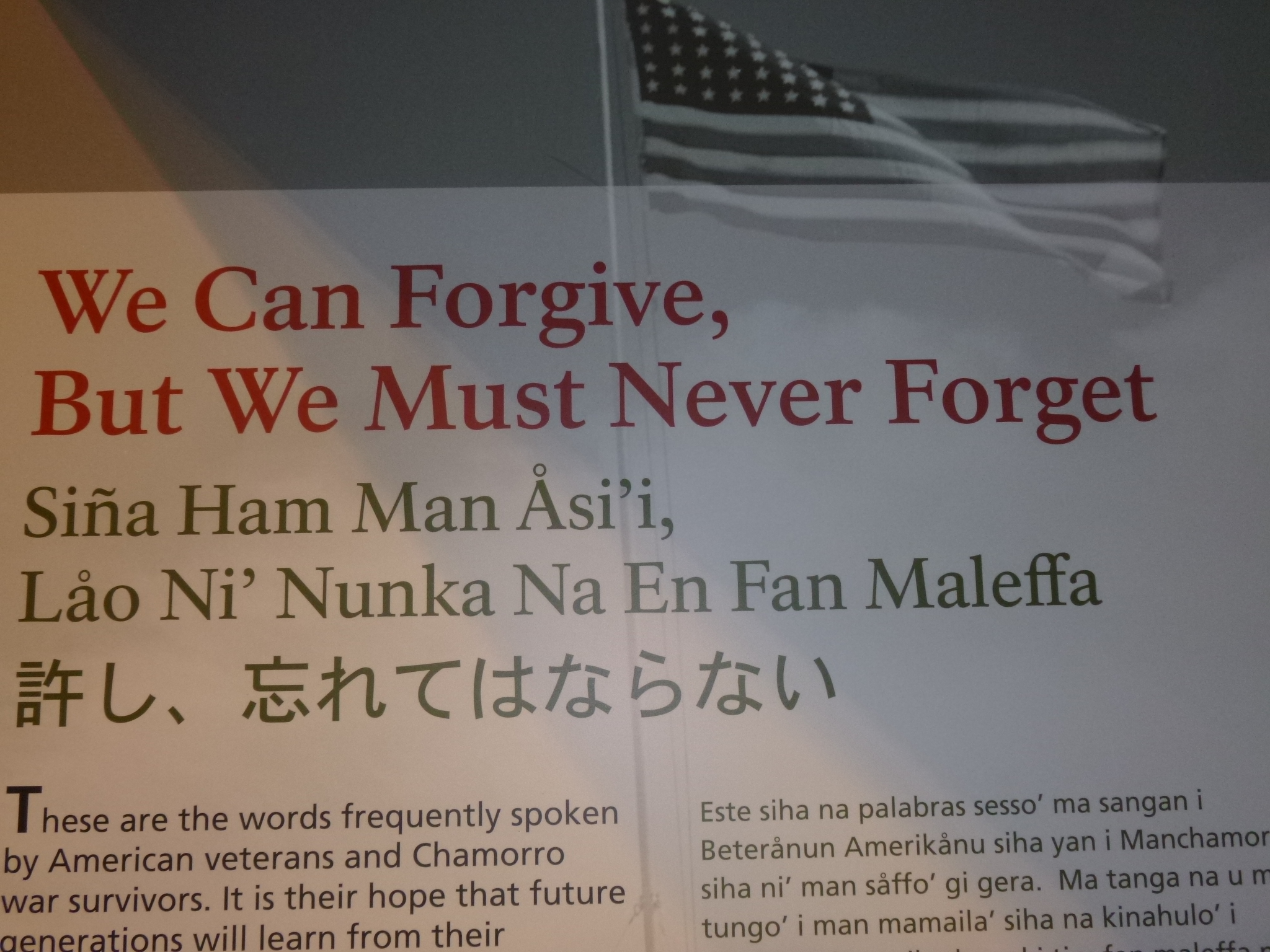
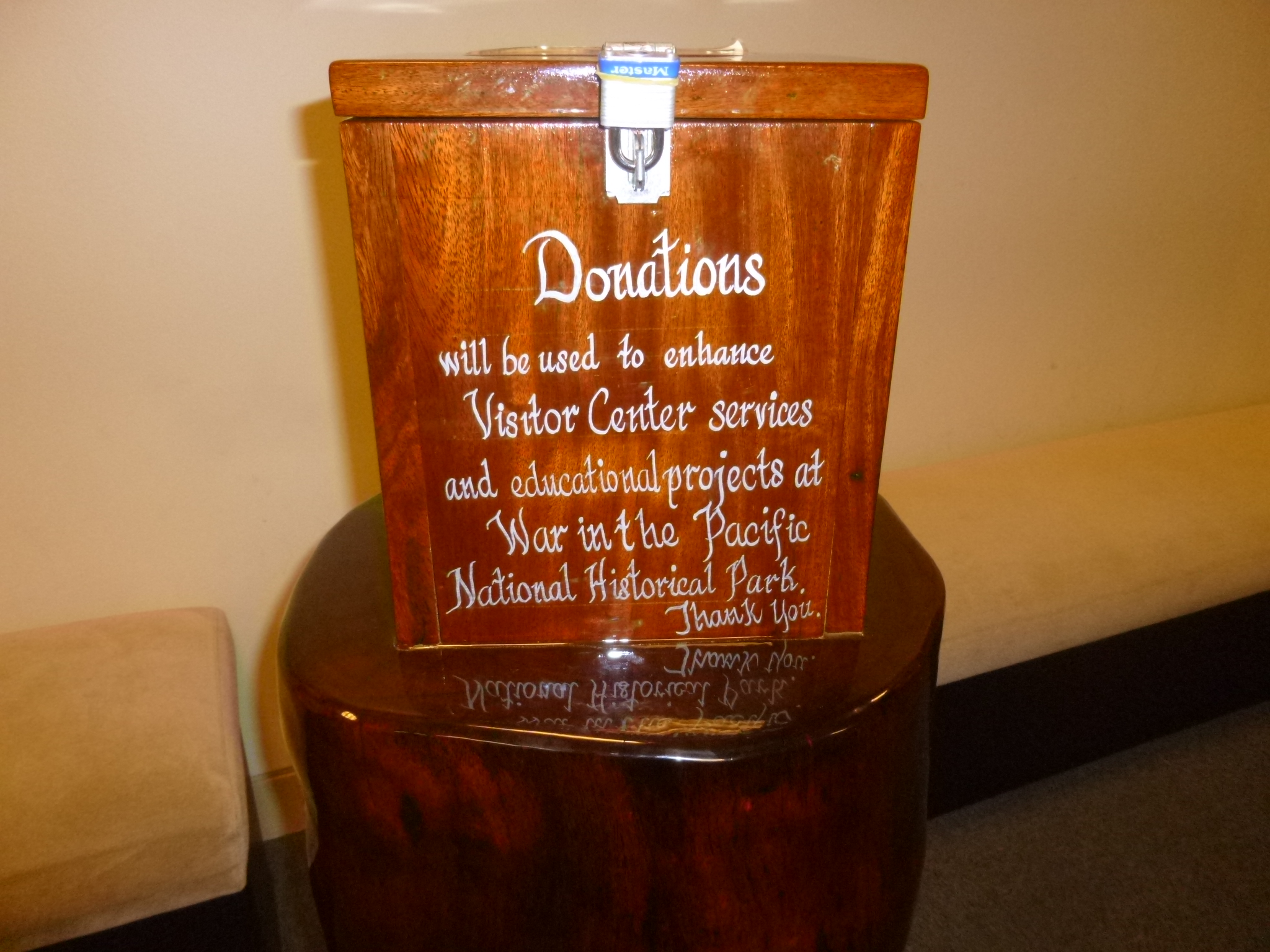
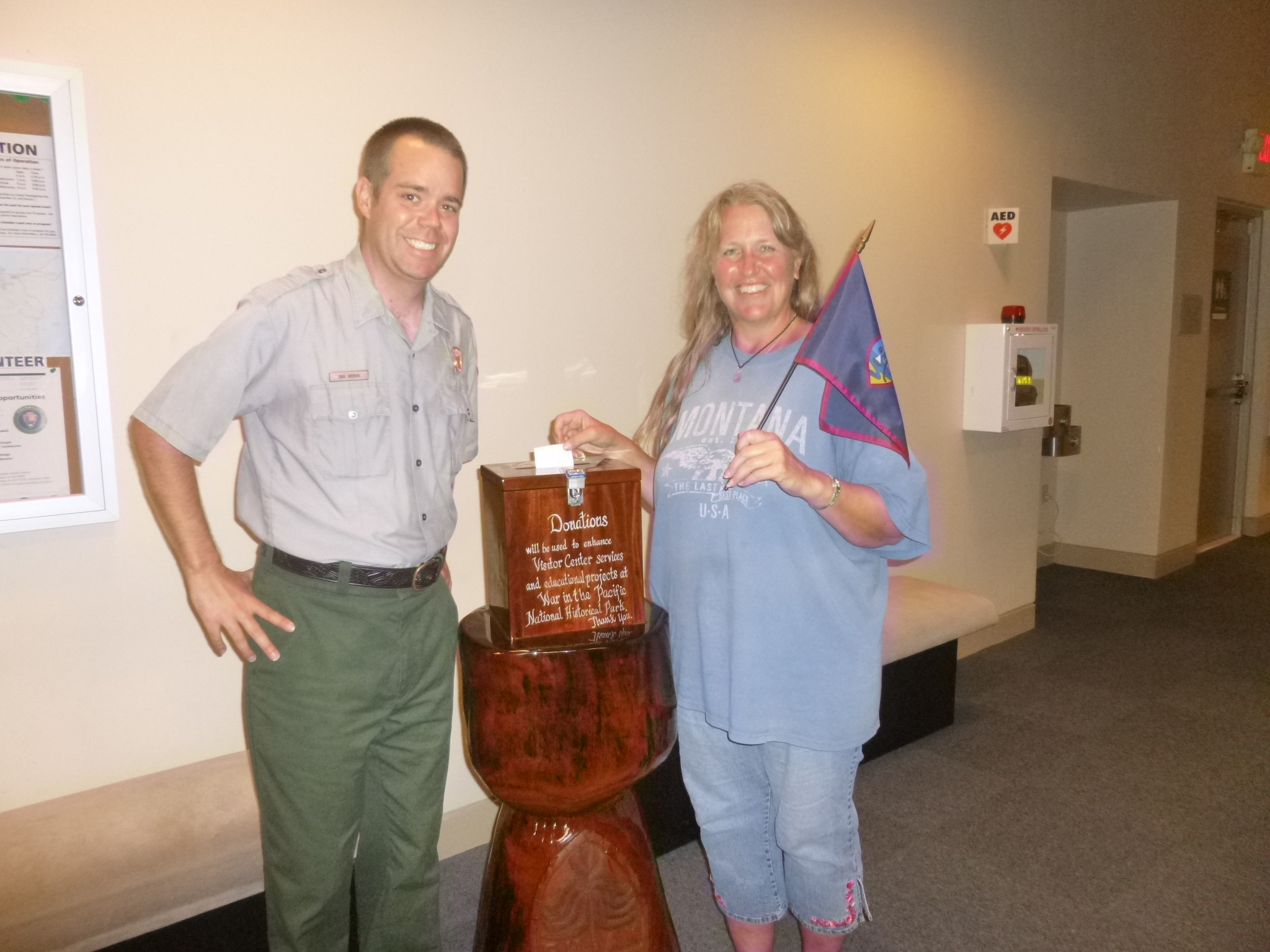
Walking around the paths in the national park was sobering – trying to imagine dozens of ships in the harbor and thousands of soldiers storming the island, and non-stop firing of weapons…so tough to comprehend. I saw one of the many caves – the Japanese went underground to try to improve their strategy. Now Asan Beach is a beautifully peaceful place, with a nice memorial. I drove up to the visitor center, and was surprised to see a couple buses there. It turns out the park had several bus loads of students from Japan – visiting Guam to get a different point of view with some of their history education. It seems Japan still pretty much presents their own view. The students were all in watching a video, and while I was waiting to see it, I enjoyed looking at all the exhibits and reading about those weeks in the summer of 1944, and watching a good technological display of the battle. Having already walked on the landing site made it seem more real. When it was my turn for the video, the ranger told me they often just play the 10 minute version, but there was also a 30 minute version. I asked for the long version – I had come all this way, so I figured I’d see whatever I could! I really enjoyed the video and it emphasized everything I had already learned that day. It helped me understand why Guam was such a crucial island in the control of the Pacific part of WWII. By the time the video was over, the students were all gone, and I wanted to make a donation to the War in the Pacific National Park. When I was making the donation, I started talking with the rangers there – Dan and Catherine. It turns out Dan had lived in Marquette, where I went to college! Small world. Both Dan and Catherine were helpful with suggestions about things to see and do in Guam and I enjoyed talking with both of them. They also mentioned the Chamorro Market. By this time, it was well past closing time for the national park, and I made my way back to find the Chamorro Market. I was hungry, and curious to see what was there.
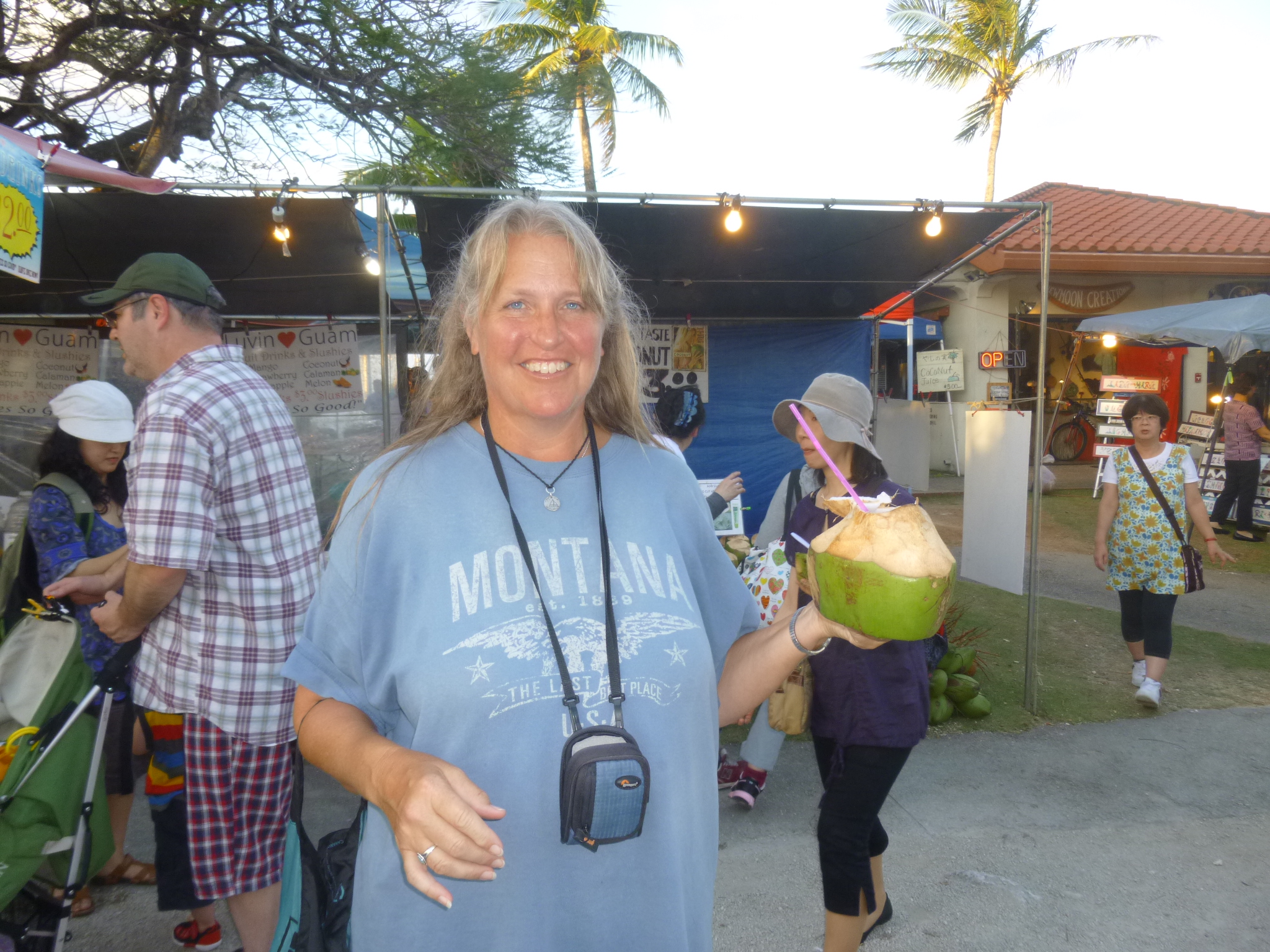
The market was easy to find, and crowded. I found a place to park, and police were on hand to help people cross the road. The old Chamorro village was a grouping of small buildings, and they were all open – selling food and crafts, and later there would be some singing and local dance performances. There were also a lot of other tents and booths set up, with a vast variety of food and drinks. The first thing I got was a coconut to drink. The guy simply used a small machete to hack off the top of a coconut and stuck a straw in, and there was a drink of coconut water! There was a great deal of BBQ chicken and pork on skewers, and lots of fish and squid, and meals including rice and/or noodles. There were so many booths with smoothies and other drinks that looked like shakes. I ended up getting a combination plate with a couple ribs and BBQ chicken on skewers, and the rice and noodles. After I ate, I looked around in the craft and shop areas. A couple places were selling betel nuts, which one lady said were mildly intoxicating. Lots of people chew on the nuts, but it almost sounds like a chewing-tobacco sort of thing, and people need to spit, and they don’t swallow the nuts, and I think it eventually discolors teeth. Despite my curiosity about betel nuts (from the Bloody Mary song in the South Pacific musical) it wasn’t something I wanted to try! I bought a few little treasures, and then watched a local dance performance. The place had been getting more and more crowded as the evening wore on – lots of those tour buses again – and after looking around a bit more, I suddenly had enough, and was tired and knew it was time to head back to the motel. I didn’t stay awake much longer – still kind of early for Guam time!

Guam – Tuesday, January 29
The flight from Hawaii to Guam is about 8 hours. I left Honolulu at 3:15 Monday afternoon and landed in Guam at 6:30 Tuesday evening. I lost a day going over the international date line, and there is no Monday night the 28th or Tuesday morning the 29th in my life, but I will have 2 Wednesday the 13ths to make up for it on the way back!
Hawaiian Air treated us well on the flight to Guam. We had a dinner choice of BBQ chicken or a pasta dish and it was pretty decent. A lot of people seemed to doze off after the meal. About halfway through the flight, they came through with ice cream sandwiches, and they frequently offered water. They gave everyone blankets and pillows too. I enjoyed my Kindle, and some crossword puzzles, and a short nap. Then about an hour and a half before we landed, they came through with a sandwich, chip and cookie snack. The flight actually seemed to go pretty fast.
I had reserved a car and eventually found the shuttle to get me there. I knew my hotel was pretty close to the airport, and the car rental lady had to draw me a map, because all of their maps were in Japanese. At first I thought I would take one just to see all the roads, but it was confusing with all the Japanese characters all over it! The hand-drawn map was good, and I got checked in at the Days Inn, and the room was very comfortable – probably the nicest Days Inn I’ve been in. I unpacked a little, but I was asleep by 9:00 Guam time! Guam is 15 hours ahead of the Eastern time zone.
Hawaii – Monday, January 28
I had pretty much packed up last night, because I had to head back to the Hilo airport this morning for the short hop back to Honolulu to catch my long flight to Guam. I turned in my car, and it was a pretty flight over the water back to the island of Oahu. There I had a 4 hour layover until leaving for Guam. I had hoped to try to get my computer issues straightened out with a good wi-fi connection at the airport, but on these islands I can never seem to get a good wi-fi connection simultaneously with a good phone connection, and once again, plans were foiled (thanks for trying, Mike!) I’m happy I’m able to get any kind of wireless service so far away, so I’m not going to complain – it should be a relatively easy fix once I’m back in the states, and then I can add photos to these posts.
My visit to Hawaii was split in 2 since I missed that first Samoa plane 2 weeks ago, but in the end I was able to spend time both on Oahu and the big island of Hawaii, and I did all my walking, and finished all 7 donations – the USS Arizona Memorial at Pearl Harbor, the Ka Liko O Kapalai cultural dance group, Feeding Hawaii Together, The Food Basket, Rainbow Friends, Volcano Art Center, and Ola’a First Hawaiian Church. I had a lot to reflect back on as I boarded the huge plane for Guam on Monday afternoon!
Hawaii – Sunday, January 27
I planned to head back to the national park again today. At one point, I had thought I’d try to drive up to Kona, on the west side of the island, but that’s a 5 hour round trip, and then I would miss some of the other things I wanted to see at the national park. Pele got hold of me good, and I was finding it hard to leave!
But first I had to go to the 7-11 that was several miles away in the wrong direction. That’s how limited food choices were – but I knew I could get more yogurt and a banana there. On my way, I saw a big sign by the road that said something about free meals at some church on Saturdays. I thought I would stop and check it out on my way back. As I made the turn to head toward the church, I realized it was Sunday, not Saturday! But I continued on because I thought maybe someone would be at the church to talk with about the free Saturday meals, unless the service was going on. The church was a wonderful little white building with a small porch area out front. There were 3 men standing out there talking, so it didn’t seem like a church service had started yet, so I decided to go talk with them. I was not dressed for church – I was dressed for hiking in a national park! But they started to hand me a program and welcome me to their church. I told them I had stopped by for a different reason – to help support their Saturday meal program. And they became very intrigued. It turns out one of the guys was the pastor. The pastor told me that by the end if the month, money becomes very tight for a lot of people, and that’s why they offer a free meal, and they would be happy to accept my donation. I could hear someone playing an ukulele inside the church, and some people were already sitting down. David, Bob and Ronald the pastor had questions about what I was doing, and where I had been, and I worried that I was holding up the start of the service. But they said there’s always some music and singing before things get underway. And the service couldn’t start without them, since it was the lay readers and pastor who were outside! We talked a bit more, and then I headed for the car to write a short note about what I was doing, and to wrote the donation check. I had told them I would just leave it on the back table. I was tempted to stay for the service, but again, there are just not enough hours in a day to do everything. By the time I finished writing the note and the check, I was surprised to still see the guys standing outside. The pastor asked if I would please come inside to share my story with the congregation. Gulp! He led me in, and I was happy to see it wasn’t a huge group of people – mostly older Hawaiian people, and I saw later that a good deal of the service was in Hawaiian. Other than being in my usual jeans and a tshirt, it actually wasn’t that difficult to talk to them about my journey. I kept it short, and they all clapped when I was done. They had a couple questions, and were thankful for the donation, and some people even got out of the pews to hug me on the way out. And one of the lay readers gave me a shell lei, which I wore all day. It ended up being an absolutely wonderful, unexpected stop. I had headed out for yogurt and ended up talking to a small congregation at an old Hawaiian church. Talk about a special start to the day! The church was established back in 1835 in the sacred Ola’a forest, way before Hawaii was a state. And a lot of the church program is written in Hawaiian, along with the Lord’s Prayer.
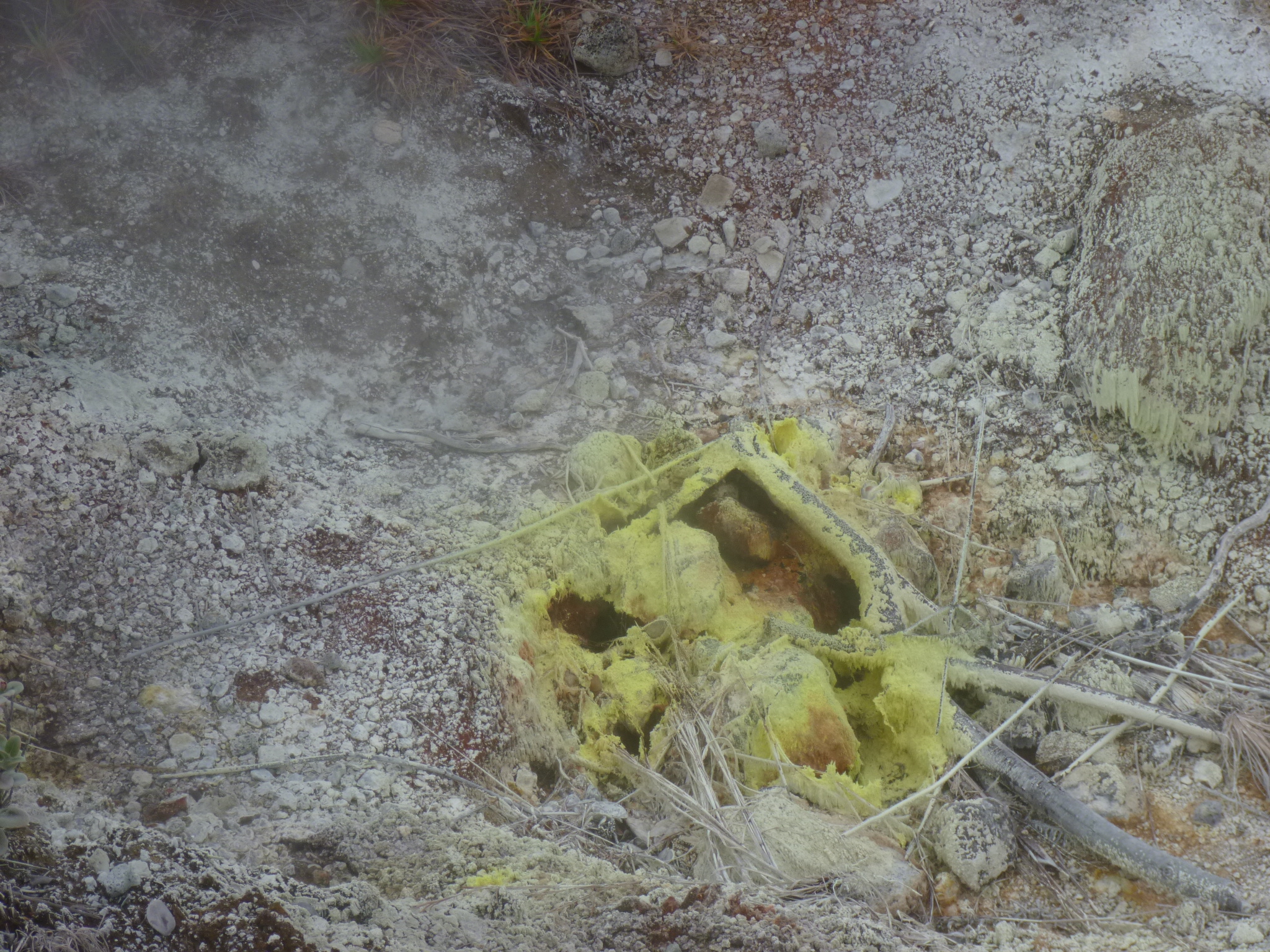
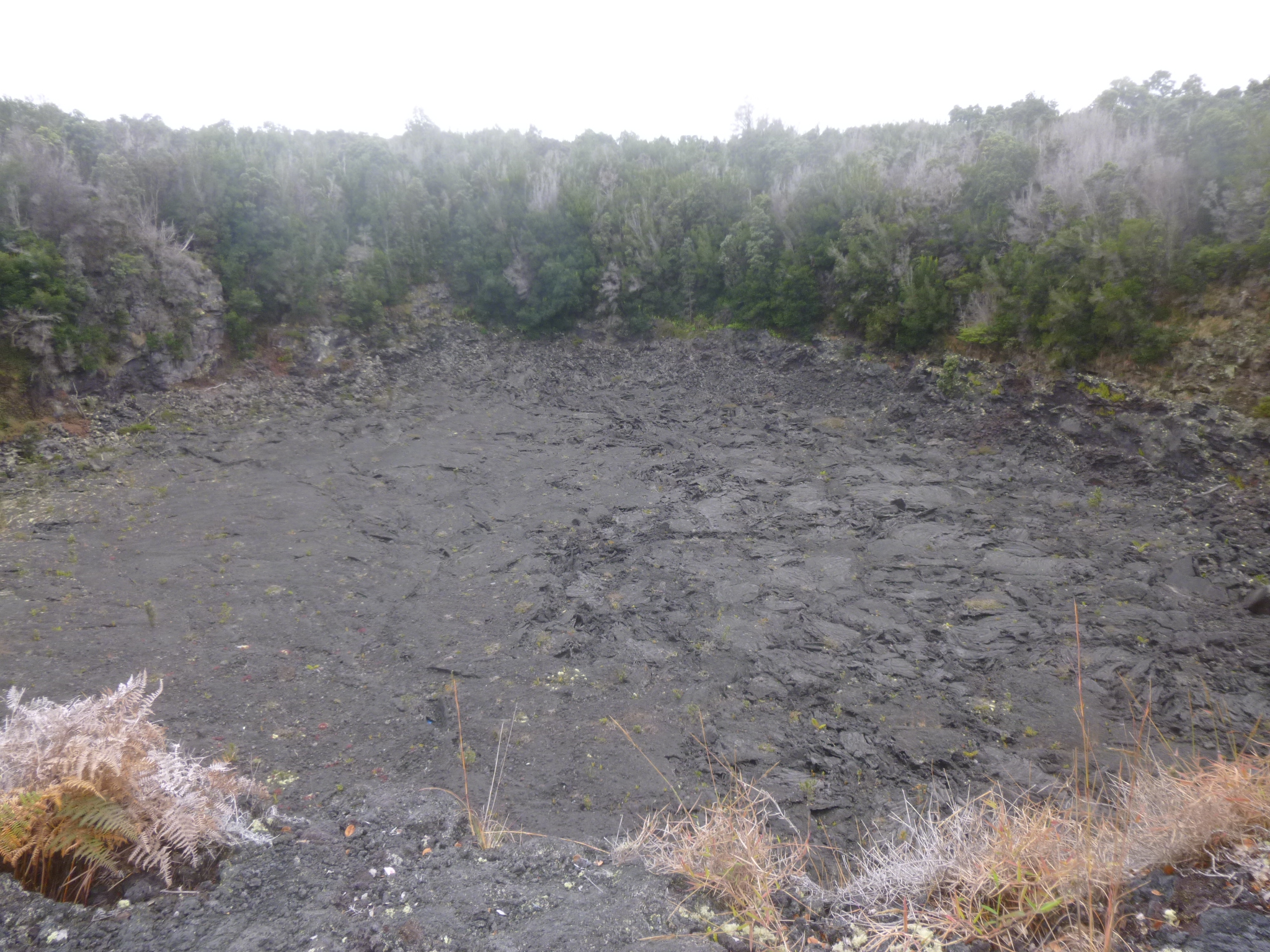
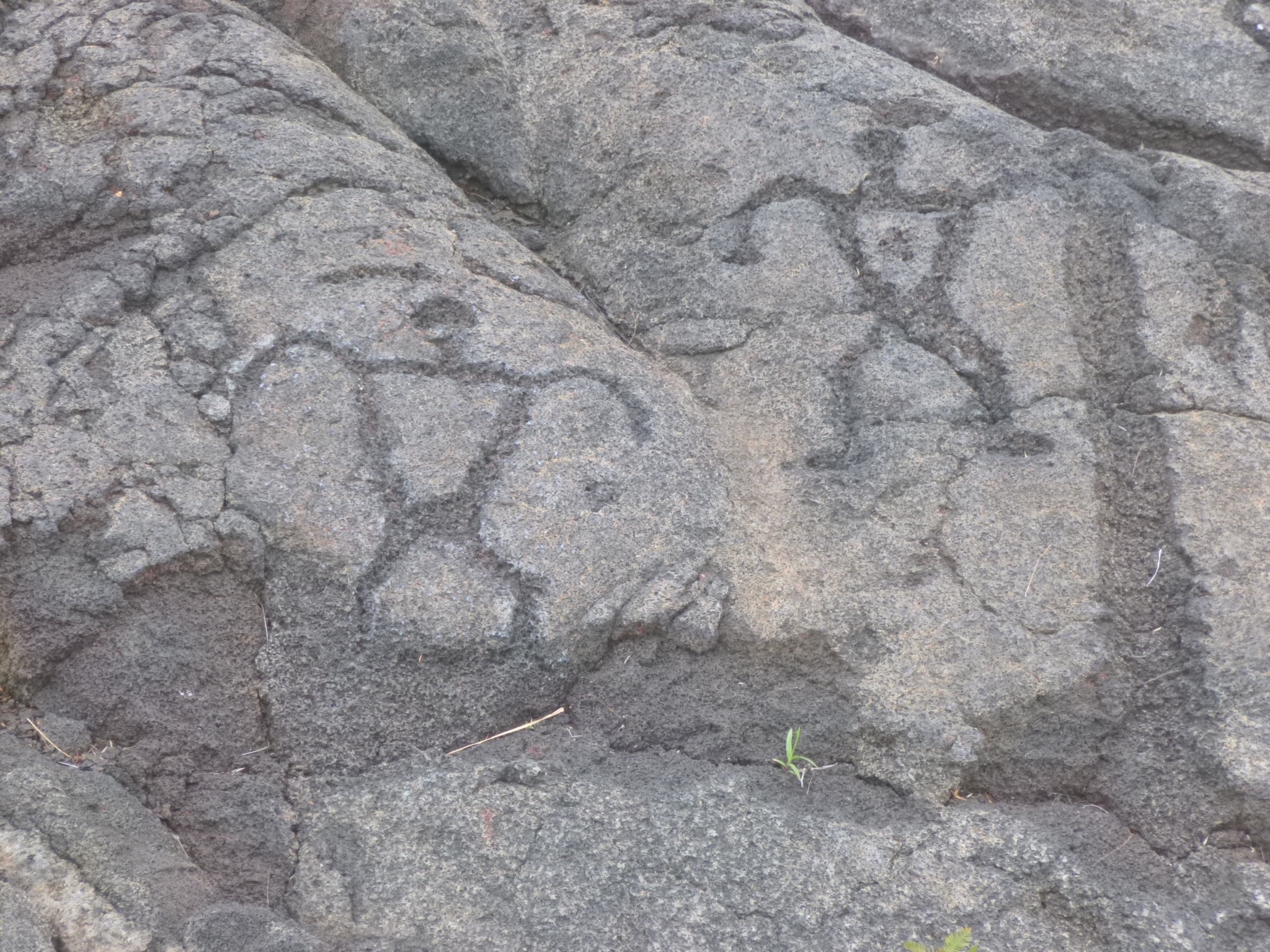
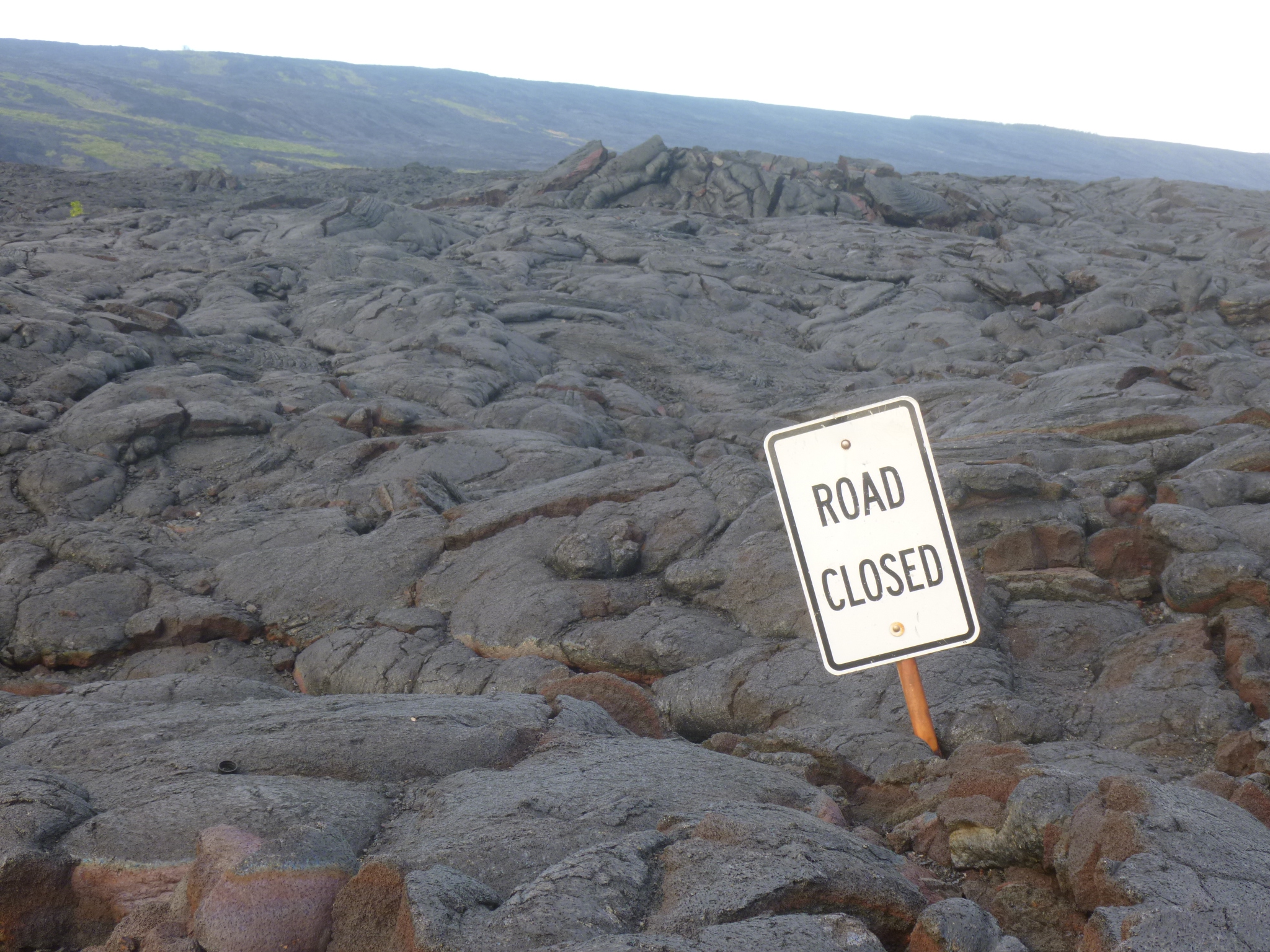
I soaked all of that in while I was driving back to the national park, and then things began to get a soaking outside as it started to rain hard. When I got to the park, I just found a dry spot to wait until the rain let up. Since I was a little later getting there than planned and it was raining, I changed my mind about what walks to do. I was going to do another crater walk similar to what I did yesterday, but didn’t want to be on the steep parts of the trails when they were wet and slippery. Once the rain let up a bit, I headed out to walk the part of the Crater Rim trail that was still open. It led past an area with a lot of steam vents, and in the drizzle, the warm steam felt good. It gave the whole area a foggy, misty feeling. Then I wanted to drive down the Chain of Craters road all the way down to the sea. It’s about 35 miles each way, descending all 4000 feet on the way down. There were numerous stops and walks along the way – Devastation Trail which went through a moonscape area where nothing seemed to be living, and lots and lots of lava fields from several eruptions – some going back to the 70s. There were several old craters to see too – it took a long time to drive the 35 miles with all the stops! Near the bottom there was a 3/4 mile trail that led to an area of old petroglyphs, and a boardwalk to walk on to view them without damaging them once we got out there. The walk was not an easy one – very rough ground, and the trail was marked by stone piles, and it wasn’t always clear. The few people who were out walking made better markers! Then down by the ocean there was an area to watch the waves crashing into cliffs, and then the road was closed off, and a good half mile down I could see yet another lava field. It was a beautiful evening out so I walked down to that lava field too. It’s so strange to see a normal road, and all of a sudden it’s blocked by lava. People were climbing all over the lava, which stretched out about as far as I could see. I walked out on it a ways, and actually came to a ‘No Parking’ sign sticking out of the lava – I think it’s a pretty popular sign for photos!
I walked back to the car, and enjoyed the 35 mile drive back up to the top. Earlier in the day, I saw one of the gift shops had a nice selection of salads, but I just missed – they closed about 10 minutes before I got back. So I headed back to the general store for a sandwich again. Since I had seen so many lava fields today, I wasn’t going to drive back down to where I was last night – it was too dark anyway. I just wanted to end my Hawaii stay with some time looking at the orange glow from the volcano. The full moon added to the colors of the night – it wasn’t right over the volcano, but close enough to be in the same field of vision, so on the eve of my flight to the farthest away part of my journey, I’m once again treated to a full moon and a fiery glow – just like when I began my journey nearly 5 months ago!







Hawaii – Saturday, January 26
I slept like a rock last night – it ended up raining a bit, and the room actually got a little cool – I was happy to find an extra blanket because there was one little window sort of thing I couldn’t close all the way.
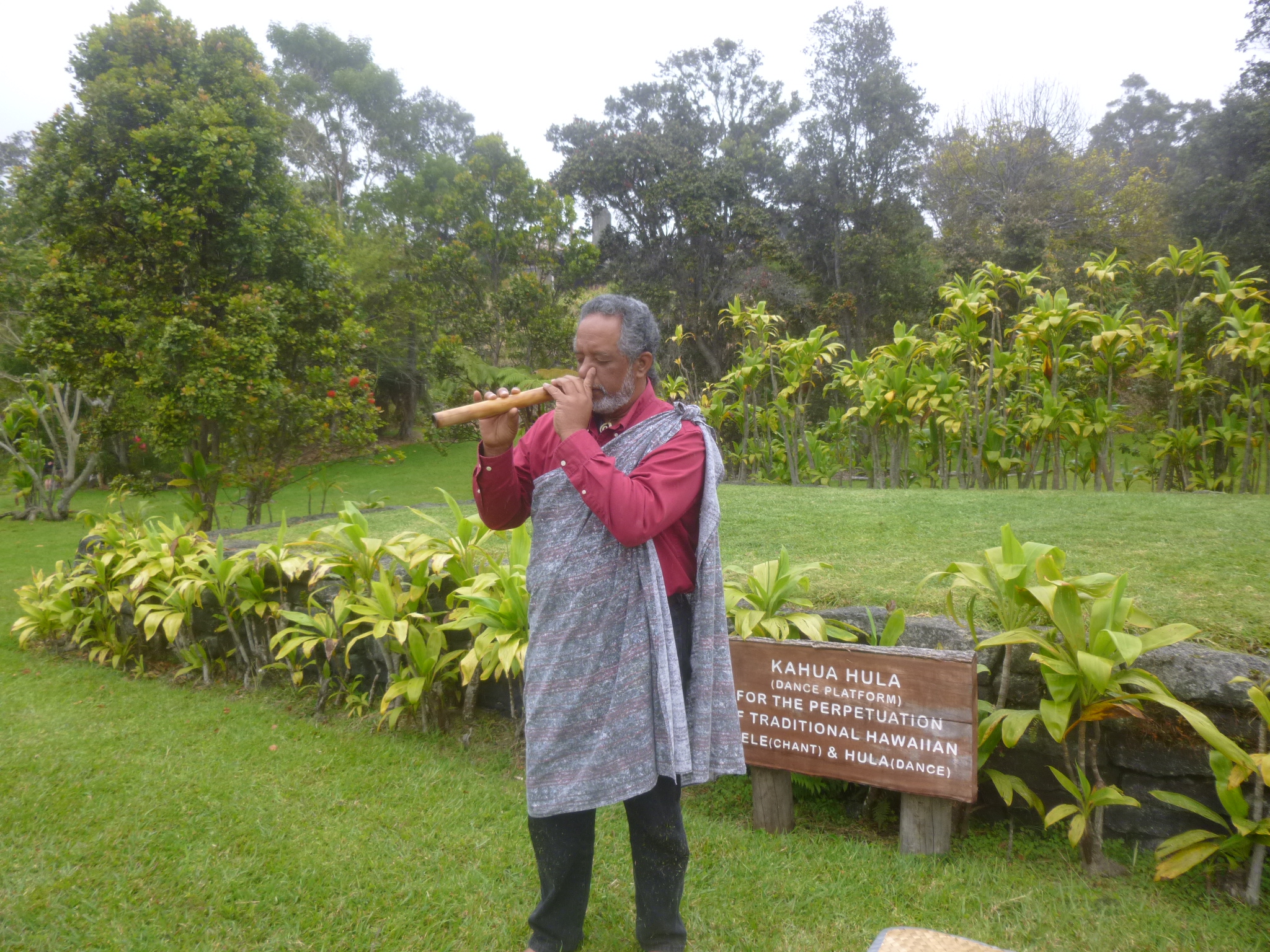
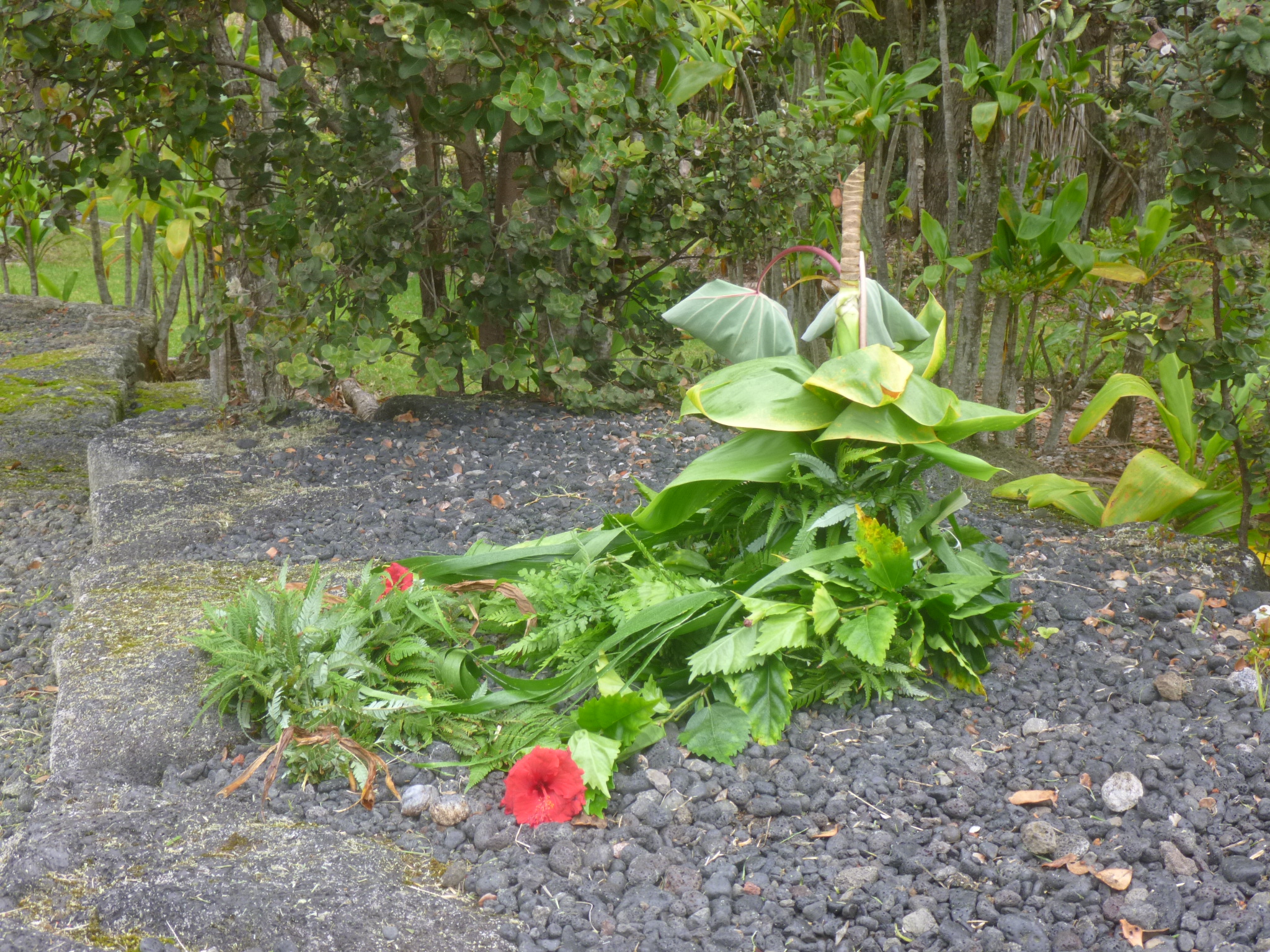
I gathered up some food and stuff for the day and headed back to the national park. Along the way, I stopped at the general store in Volcano Village because I wanted to get some more water. There’s a few small villages in this area, otherwise it’s pretty undeveloped. It’s pretty to drive through although there’s quite an elevation change along the way. I think the hostel was at about 1000 feet – maybe 1500 – and the national park is about 4000 feet. Most of it is just a gradual long hill. The general store had a banner tied to their front porch that said something about ‘Hula at the Volcano’ with today’s date, starting shortly. I wasn’t sure what it was, but scurried along to the national park to find out. I parked at the visitor center and went in to ask where to go. They directed me to another building, and they in turn directed me to an outdoor grass stage where something was just beginning. It turned out to be the beginning of an amazing story and dance – an older married Hawaiian couple were going to demonstrate the makings of the traditional head, arm and ankle accessories for dancers, and they were also going to make and wrap a traditional offering to Pele, the goddess of the volcanoes – all out of natural things they find in the forest. Then they were going to perform the hula of the forest. The husband played a beautiful flute that he made out of bamboo, and some drums and did some of the narrating. The wife made the accessories, wrapped the gift and danced. The accessories were made of big leaves and vines that could be braided and twisted to the correct dimensions. The braided vines are so strong they can pull 2 adults to their feet without coming close to breaking. I missed just a little part of this because I ran back to the car for my camera – I hadn’t thought to grab my stuff when I originally went into the visitors center. The making and offering of Pele’s gift was fascinating, and taken very seriously. The grass stage faces the volcano. The offering for this occasion was salt. Salt is a cleansing agent, and is also used for preservation, and in this case, it represented the preservation of local lore and knowledge and ties to the earth. The lady told me afterward that salt is always a good gift, because of the symbolism, if you don’t know what else to offer. She poured the salt out of a small wooden bowl onto a leaf, and proceeded to wrap up the leaf like a little envelope. That was the offering, but it had to be wrapped. They started with a thick vine that had about 8 leaves hanging from it. The long green leaves were spread out and the salt envelope was placed in the middle and alternating leaves were pulled up until they were all held in one hand at the top of the package. Before the gift was tied shut with a braided vine, another sprinkle of salt was added for good measure, and then the gift was decorated with a green leaf braided “ribbon” with a red flower (hibiscus) at each end of the ribbon, adding just a small bit of color. The offering was then set in a corner of the stage in preparation for the chanting and dance that would accompany the offering. The lady tied on a new skirt she had just made, in colors of gray that she thought would be pleasing to Pele, representing the colors of the smoke. There’s a precise process to putting on the skirt, and seems like one would need about 4 hands. Then she put on all the green accessories, and took out the chopstick that was holding her hair in its bun, and her hair fell down nearly to her ankles! We learned a little bit about the history of the hula, which was originally performed by men, and had its origins in some if the martial arts movements. The 2 grandfather hulas are the Hula of the Temple, and I simply can’t remember the second one. The 2 grandmother hulas are the Hula of the Common People and the Hula of the Forest. Then the story and the chanting and the dance began, describing the connections between man and earth and nature. I thought it was beautiful. Afterward, all accessories were removed, and placed in the corner next to the offering. And there it would remain, hopefully untouched, until it begins to decay a bit, and then the park rangers remove it to a special place.
They were happy to talk to people afterward, and I eventually went up to let them know how much I enjoyed the morning, and to see about making a donation to their dance school (she says if girls don’t grow up with the hula and history in their households, it could take 20 years for a non-Hawaiian to learn and earn the rights to wear all the accessories and perform all the traditional historical dances.) She suggested I make the donation to the Volcano Art Center, which had arranged for them to come out, and said the art center offers a lot of different programs. The Volcano Art Center was next to the visitor center, so I went in there and met one of the young ladies, who was so wonderfully enthusiastic and supportive of my journey. It was fun to talk with her. She showed me around a bit – the building used to be part of the Volcano Motel, but has undergone numerous changes from when it was first built. There was some nice artwork in there. I was happy with the donation – I knew I wanted to do something volcano-related and this was a fun one.
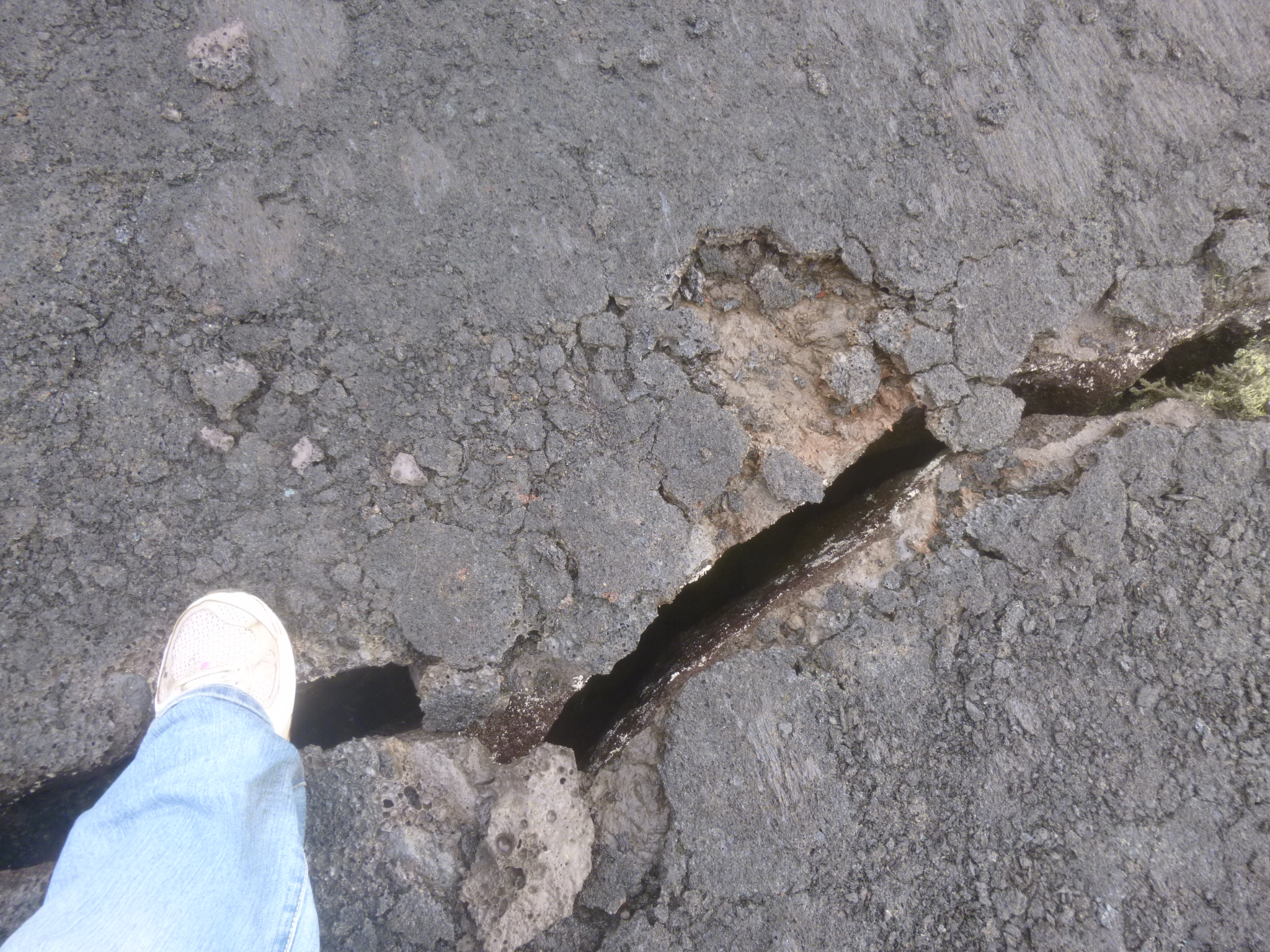
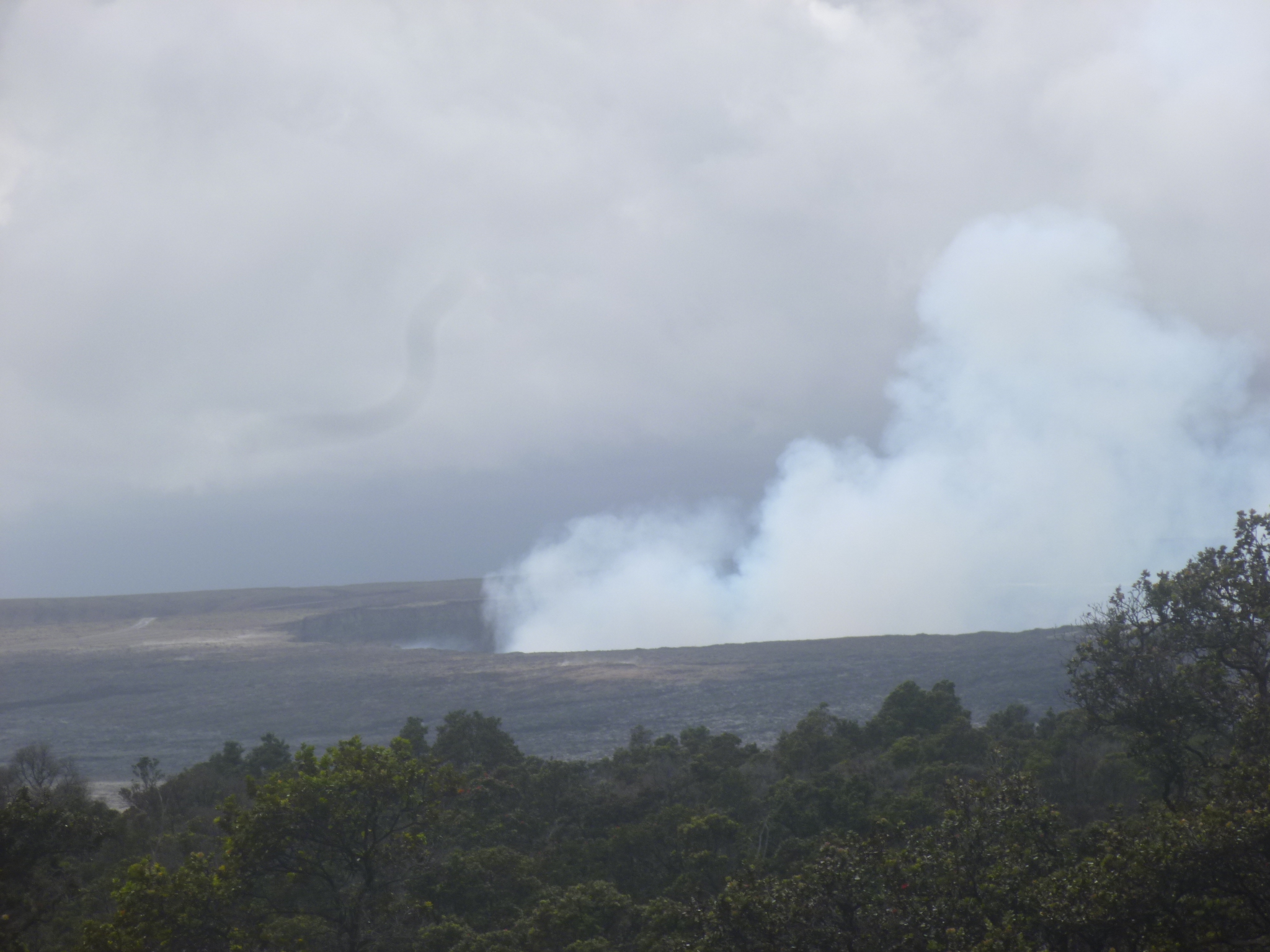
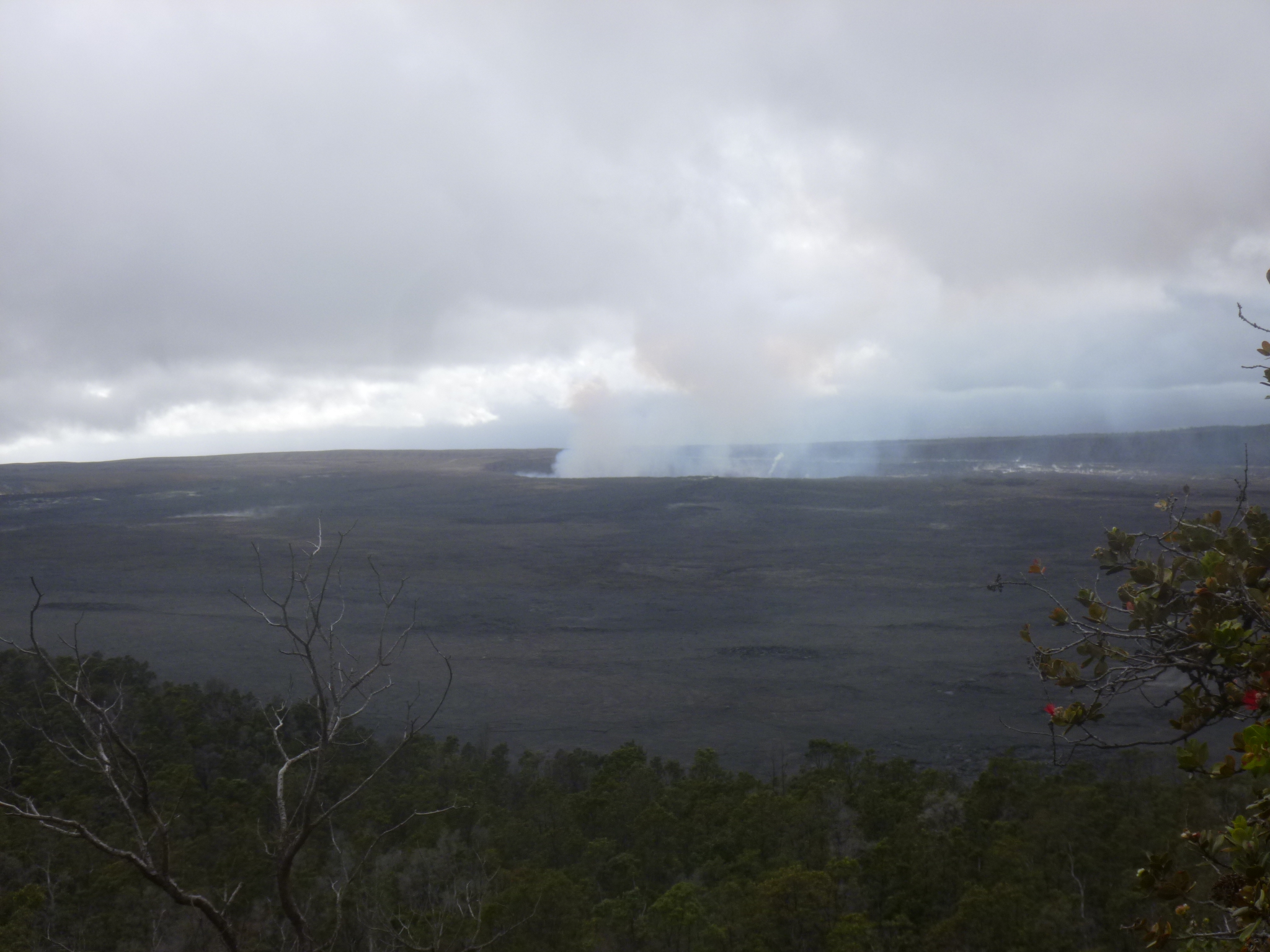
When I was done at the Volcano Art Center, I headed over to the visitor center to get some hiking info. And there was a group of hikers getting ready to leave on a ranger-led hike to the caldera floor. I managed to dash back to the car to get my walking shoes on and grab the camera and water and was back before they left. It was an awesome hike, and I learned so much about some of the vines and ferns and trees in the rainforest. The volcanic soil isn’t conducive to many of the trees and plants, so there are ferns that get to be 6-8 feet tall and then they fall down and been to decay and become “nurseries” for other plants, eventually providing a rich soil for them. And then the fern magically begins to re-grow itself about 6 feet away from where it fell down. Pretty amazing. Then we came to a steep part of the trail and ended up descending about 400 feet to the floor of the volcano. It was like being in another planet – all flat, black, cracked lava. There are some tiny, fine fibers that formed when the lava was cooling, and it’s called Pele’s hair, and it looks like hair but it can be broken. The caldera was about 2 miles wide and 3 miles long, and of course we could not go at all near the actual crater. The rangers all carry gas meters that can detect even minute amounts of harmful gases, and the readings today were zero, although it is a constantly changing situation. There are scientific instruments at many locations throughout the park to detect temperatures, gas levels and even the tiniest bit of bulging in the ground that could indicate potential harmful activity – these volcanoes are heavily monitored, but it’s done unobtrusively. We had about 20 minutes to wander around down there, and then we began the steep climb out and started back toward the visitor center.
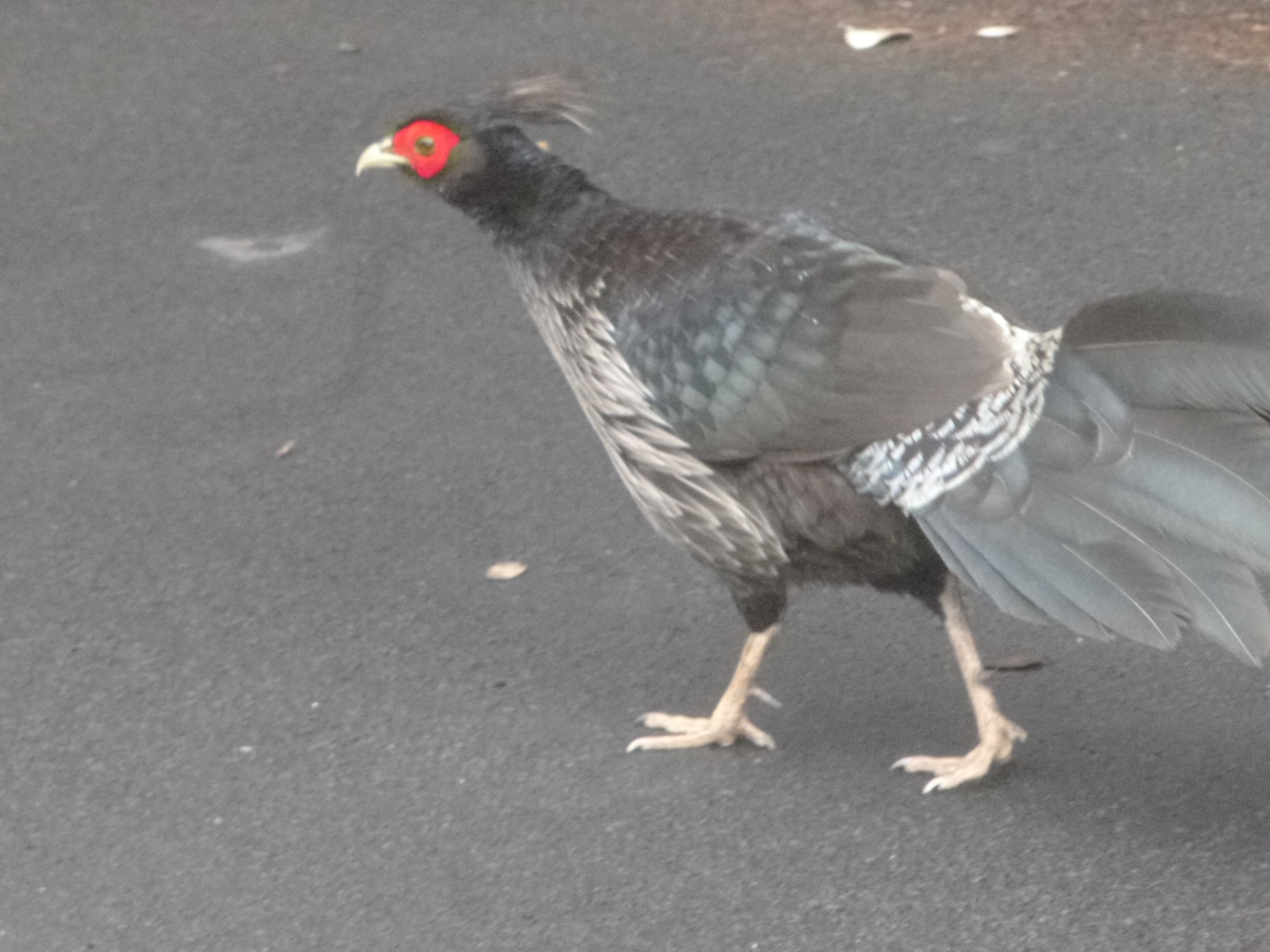
Once we were back on flat land, we were free to leave the group if there were other hikes we wanted to do. I figured I had just about enough time to do the 4 1/2 mile round trip hike to the Thurston Lava Tube. People can drive down to a closer parking lot, but I wanted to walk. I enjoyed that hike too, and saw lots of birds that kind of looked like chickens with a red mask. The lava tube was created during an eruption – the surface lava would cool relatively quickly, but rivers of lava would continue to flow underneath, creating little “tunnels” of lava. When the lava stops flowing, the tubes empty out, leaving just the shell of the outer tube, and that’s what I was able to walk through. It wasn’t very crowded this time of day. I walked back to the visitor center, then decided to head out of the park to drive about 45 miles to where the road ends (blocked by lava) at a place where people can walk out across a lava field to see the lava flowing into the ocean, depending on weather conditions. By day apparently you can see steam; by night you can see the red hot colors of the lava flowing. I had heard they don’t allow any more cars in after 8, and I got there just in time. My information on this place was a bit iffy, and it was only briefly mentioned on national park brochures because it is off NPS property. I walked along the road to where the most recent eruption had blocked the road. I started walking out on the lava field by the light of the full moon, but there was no clear evidence of a path (and there was a good mile or 2 to walk). There were people around, going out just about as far as I did, and there were other people coming back from the end of the trail with different reports about what they saw. The lava stretched as far as I could see – it hasn’t been that many years since the last eruption, and the lava spared some houses, and destroyed some others. It looks like it had been a neighborhood of very nice homes for a time. For a few minutes, I was the only one standing on the lava field, surrounded be a sea of lava and the full moon, and behind me the shell of a destroyed house. It was kind of surreal. The lava was difficult to walk on – very uneven and chunky, and even if there was a clearly marked trail, I wouldn’t have attempted the walk without a really good light. Some people headed out with weak flashlights and I wondered how far they would get. Once I had my fill of lava in moonlight, it was time to head back to the hostel. Even though I’m the only one staying there, the manager left a lot of welcoming lights on. A pleasant end to a good day.






 expedition56