Hawaii – Friday, January 25
I didn’t get much sleep on the plane, but at least I got a little. We left American Samoa a little before midnight, and landed in Honolulu about 5:30am but we gained an hour. I had made a reservation to fly to the big island of Hawaii to finish off my week in Hawaii that started back in Oahu. My choices for Hilo had been either 7:15am or 11:15. I picked the later time originally because I thought it was cutting things a bit close going through customs and immigration – which we have to do even though American Samoa is a territory. But we were waved through quickly, and I decided to make a dash for the inter-island terminal to see if I could maybe catch the earlier Hilo flight so I wouldn’t have to sit in the airport. They had room and I was able to make the switch – just barely. It was a short hop from Oahu to Hawaii, but my rental car wasn’t quite ready since I had arrived earlier than planned. At first I thought I’d have to sit around in this airport for 4 hours until I could get my car, but the agent had my phone number in case one came back early. I started researching some donation possibilities, and soon enough my car was ready. I got a map and good directions, and I set off for The Food Pantry, which was open on Fridays and wasn’t too far away. I found the street with no trouble, but try as I might, I couldn’t find the food pantry. I was in kind of an industrial area, but I saw a vet clinic on the corner, and figured they might know where the Food Pantry went. The first thing I saw when I walked into the vet clinic was pamphlets about the Rainbow Friends Animal Sanctuary and a couple of donation jars pretty full of cash. It made me think this was a place people liked, because they were supporting it. The receptionist told me that the Food Basket had just moved up the road a ways where they would have more room. I took a Rainbow Friends pamphlet on my way out, and thought it was coincidental that I stopped for directions at a place where I would be led to another donation opportunity.
This time I found the Food Basket, and the young lady who showed me around had just come back from making a food delivery. Construction crews were getting the new space fine-tuned for their needs. The Food Basket participates in several programs – I chose to have my donation go to their ‘backpack program’ which helps provide school kids with food on weekends.
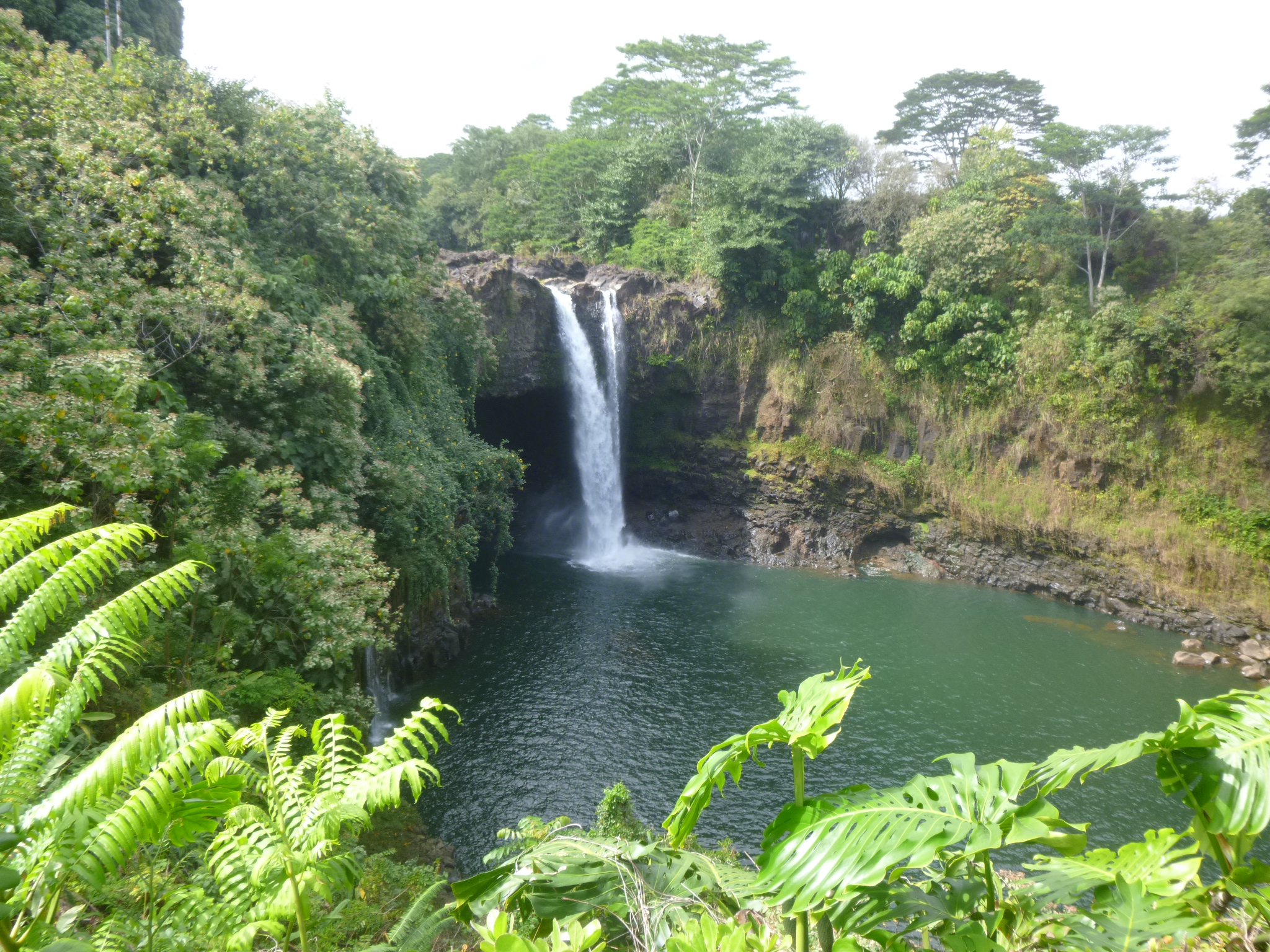
Then I drove into Hilo and parked outside of town and wandered all around. I was tempted to visit the Pacific Tsunami Museum, but knew it deserved more time than I had now. Hila hasn’t turned into a big touristy resort type city, which made it more fun to walk around. As I was making my way back to the car, I walked through a farmer’s market and got some bananas and tomatoes. The bananas are different from the ones back home and they’re yummy. I got some sweet apple bananas to try. It’s fun seeing all the different stuff at the markets – I don’t recognize everything! Then I drove out to Wailuku State Park to see Rainbow Falls. I wasn’t there at the right time of day to see a rainbow, but the falls were still pretty. I also drove out to the ‘boiling pots’ area, but didn’t see anything that looked like boiling mud pots!
From there I drive to the Rainbow Friends Animal Sanctuary. I called them to get directions and it was quite a ways off the beaten path, but was very pretty. The lady I met showed me around the property and I saw some of the dogs and cats they have. They provide a nice place for unwanted animals, and do their best to adopt some if them out.
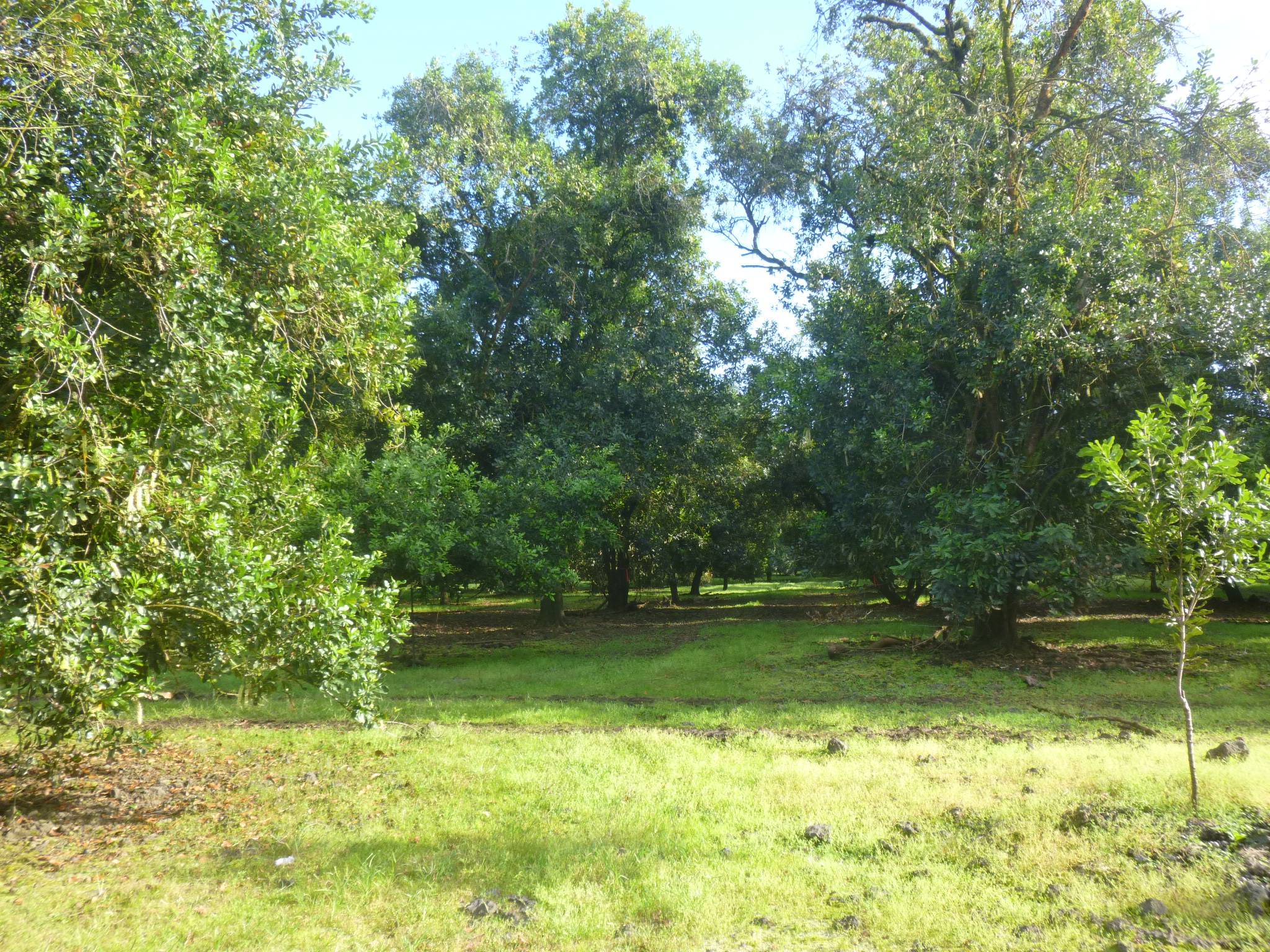
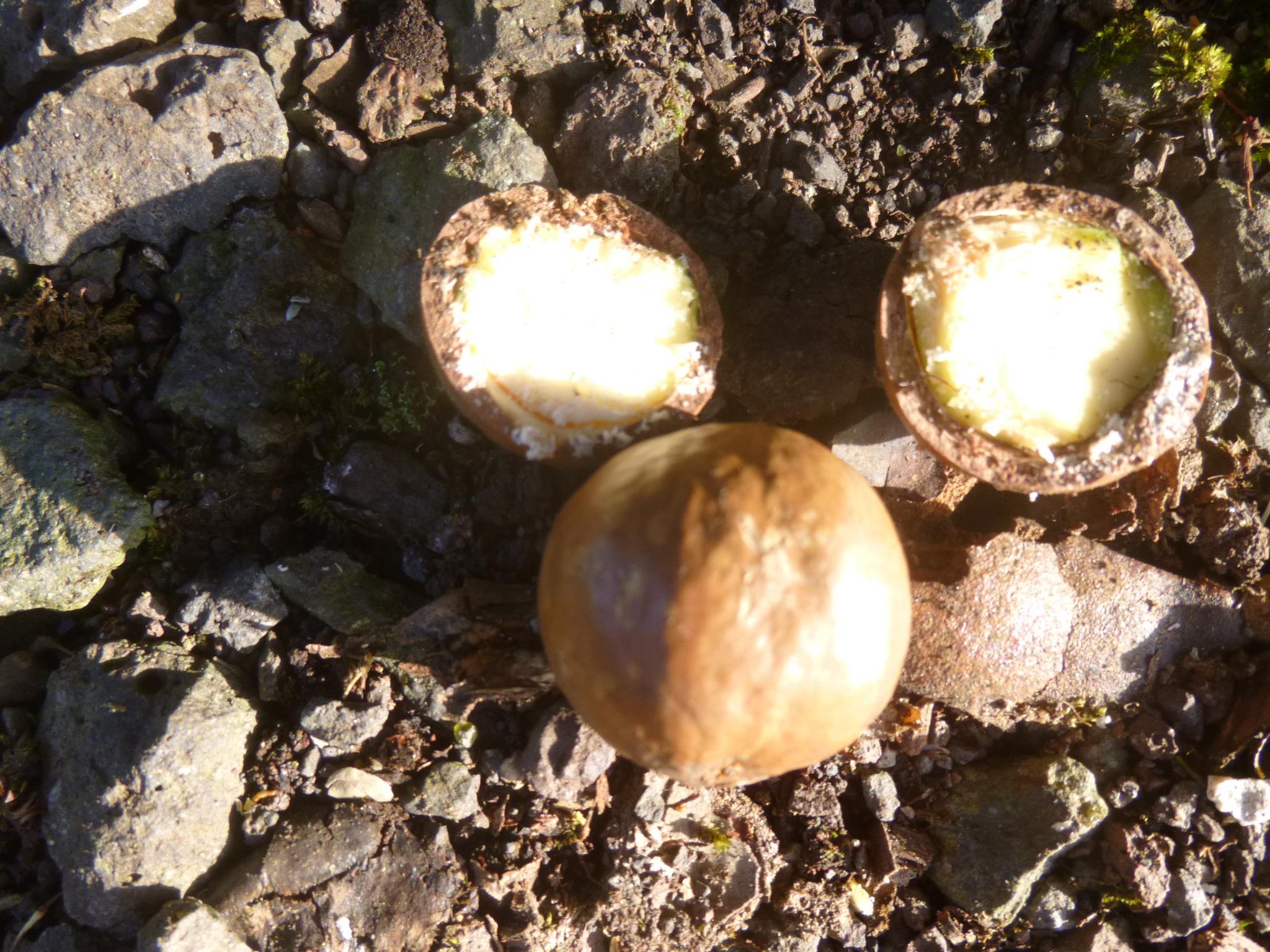
Then I headed to the Mauna Loa macadamia nut plantation and factory. Their macadamia nut orchard consists of 250,000 trees, and all the nuts have to picked up off the ground by hand – they’re not fully ripe until they fall off the trees on their own. I took the little factory tour and it was interesting. It’s a very labor-intense production. The shells require a great deal of pressure to crack and then they have to spend a lot of time drying, which they do with a furnace powered by their own shells. Then they’re sorted several times, and salted, or dipped in chocolate, etc. and packaged in a variety of ways. I sampled nearly all the different kinds in the gift shop, and bought a small can to munch on later. My favorites are simply the salted ones – the chocolate seems to overpower the nut in my opinion! (But they’re still good!) I walked a couple miles along the driveway through the orchard – had to take advantage of walking through a macadamia nut farm!
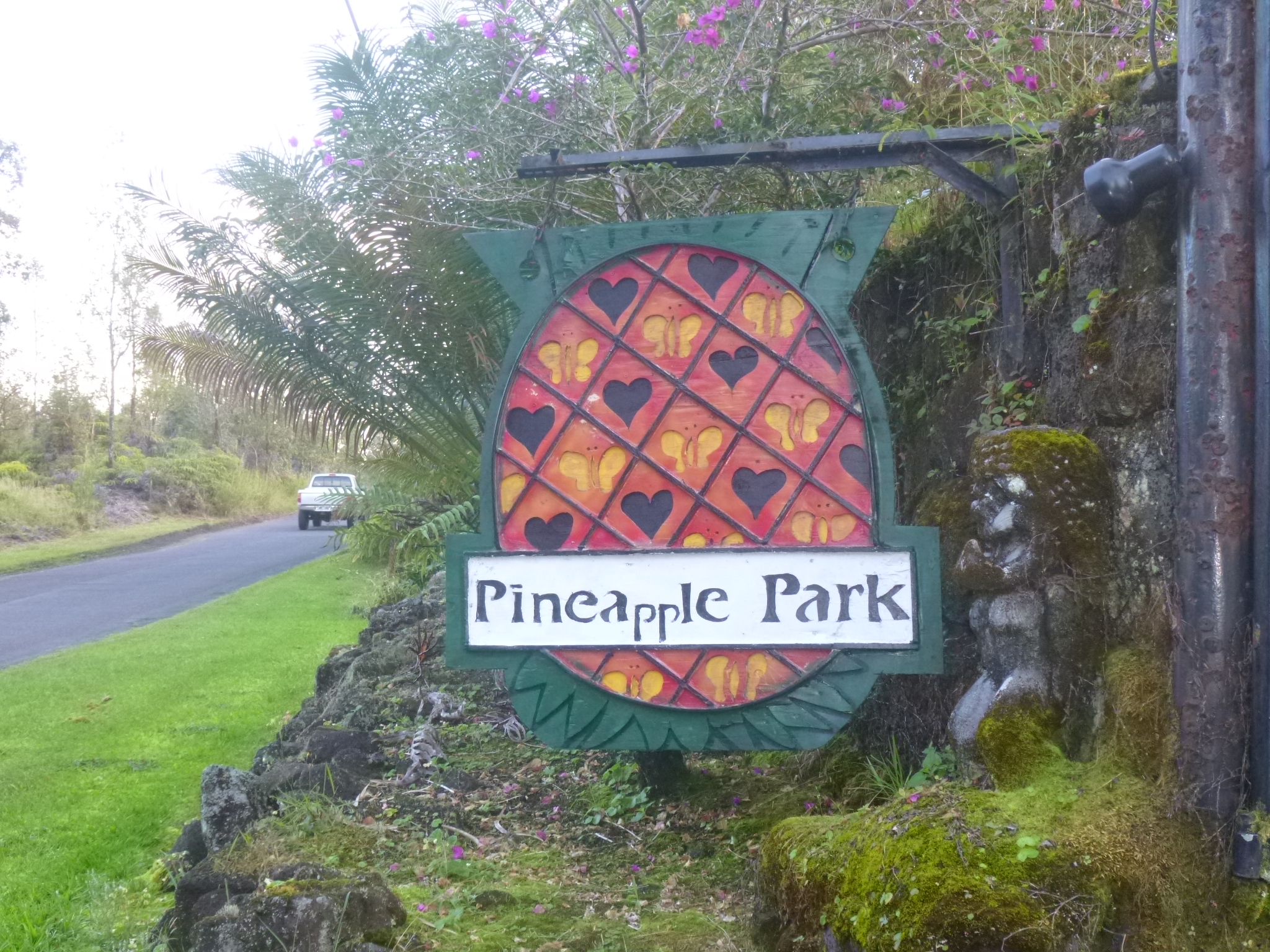
Then I headed for the Pineapple Park hostel near the Volcano National Park. There weren’t any signs or anything, so I called for directions and again, found myself off the beaten path. I had reserved a private room with a shared bath, but I ended up being the only guest in the huge hostel – a big group of college kids had just left, so maybe that was a good thing. At first I thought it might be kind of strange to be the only one there, but I wasn’t going to be spending much time there, and it was convenient to the national park. It’s actually a nice place, although being in the rain forest kind of makes things seem ever so slightly damp. I noticed that on Samoa too – the heat and humidity sometimes make for a feeling of dampness that kind if lingers. Anyway, the hostel had a big outside porch area that can accommodate several groups of people, and right inside the door is a huge living room/family room kind of sectioned off in 4 areas. There were card tables with cards available, book shelves, maps and games. Outside there was a BBQ area, a fishing pond, volleyball net etc. It’s a bit out in the sticks without restaurants and stores nearby, but with some planning ahead, it’s kind of a nice little spot.
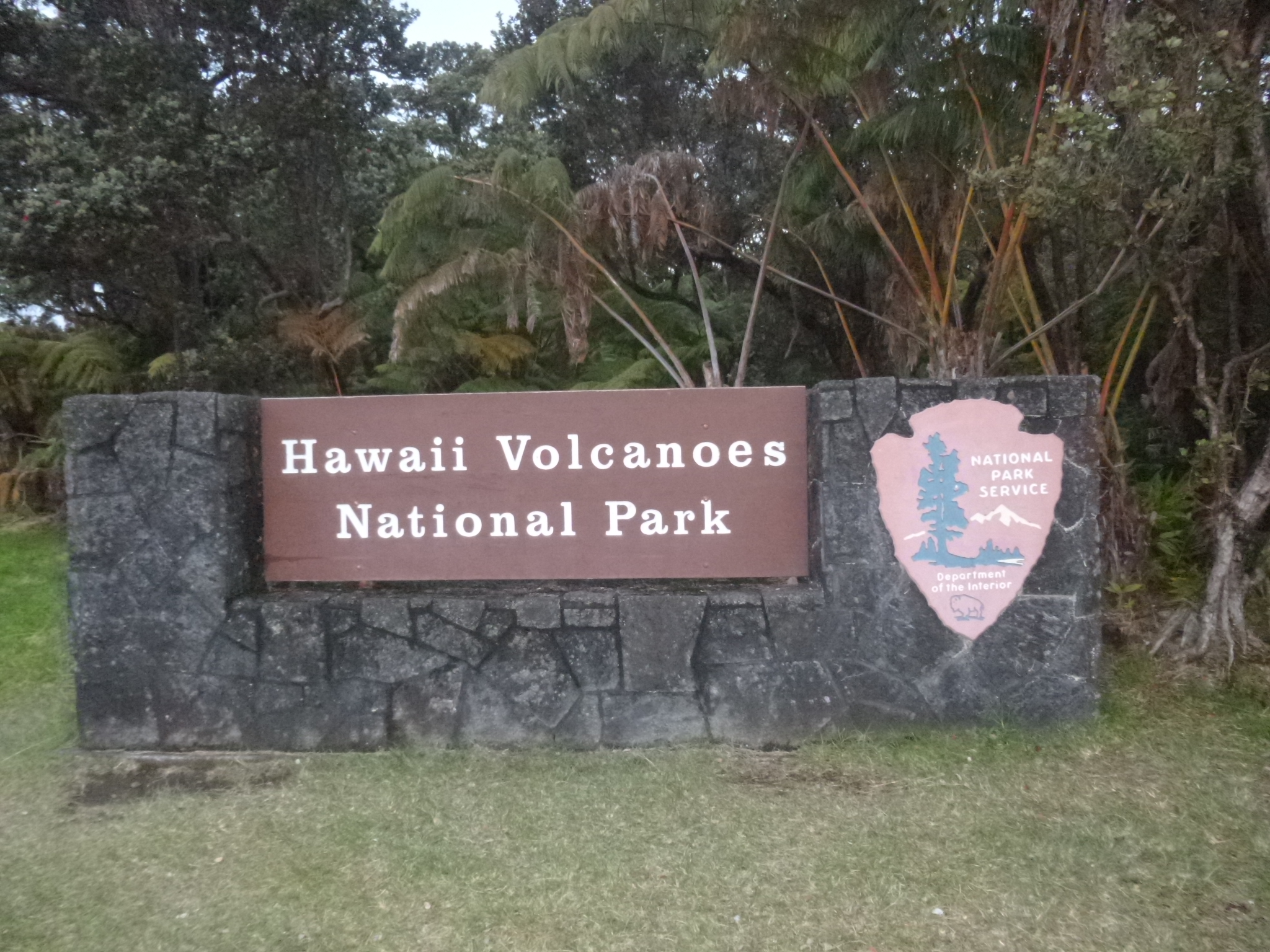
Once I carried my stuff in, I couldn’t resist heading to the Volcano National Park to get my bearings there and walk my last couple of miles for the day. The park stays open 24 hours a day so people can drive up to the observation point in the dark to watch the steaming orange-red smoke from the lava lake inside the Kilauea Volcano. I walked along the Sulfur Banks trail in twilight – strange to see so much steam pouring out from countless vents in the ground. It didn’t smell as bad as I thought it would. I was pleasantly startled to run across 3 nene geese – some of Hawaii’s endangered birds. It was getting dark when I turned around to walk back through – all misty and ghostlike. I drove up to the museum where there’s a big area to just watch all the glowing, steaming, colorful activity from the crater. There used to be a drive around the whole crater, but it’s been closed off for about 5 years after an earthquake damaged the area. I stayed up there for a while – it’s a view that’s pretty unique!
And then I was more than ready to head back to the hostel – after a short night on the plane last night, and a full day today, I was worn out!



American Samoa – Thursday, January 24
I had to spend the first part if the morning packing up after a week on the island. The flight out is late – when the flights come in twice a week, there’s just a little turnaround time and then the plane leaves back to Honolulu again on an overnight flight. It doesn’t stay on Samoa very long. I carried my stuff down to the office, where they’ll keep it until the shuttle comes late tonight.
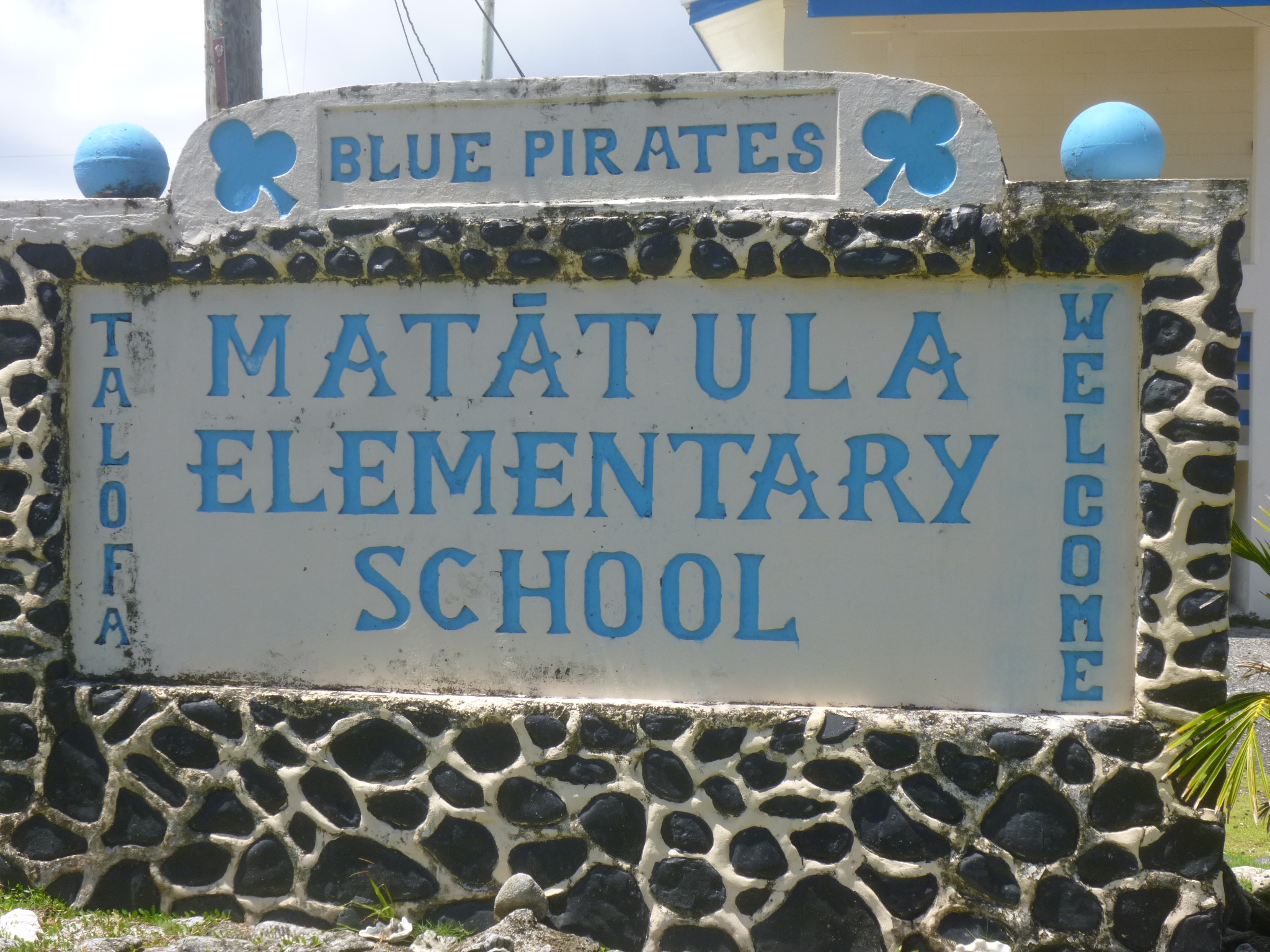
The only donation I hadn’t physically handed out was the one for the elementary school in Tula. Teri from the newspaper said if I couldn’t get out there again, she knew someone who worked at the school, and could make sure they got it. She said the island doesn’t really have mail delivery – most people use a post office box. But since the east side of the island was my favorite part, I wanted to take one more bus ride out to Tula, and deliver the donation in person, and take my last walk in American Samoa out along the ocean.
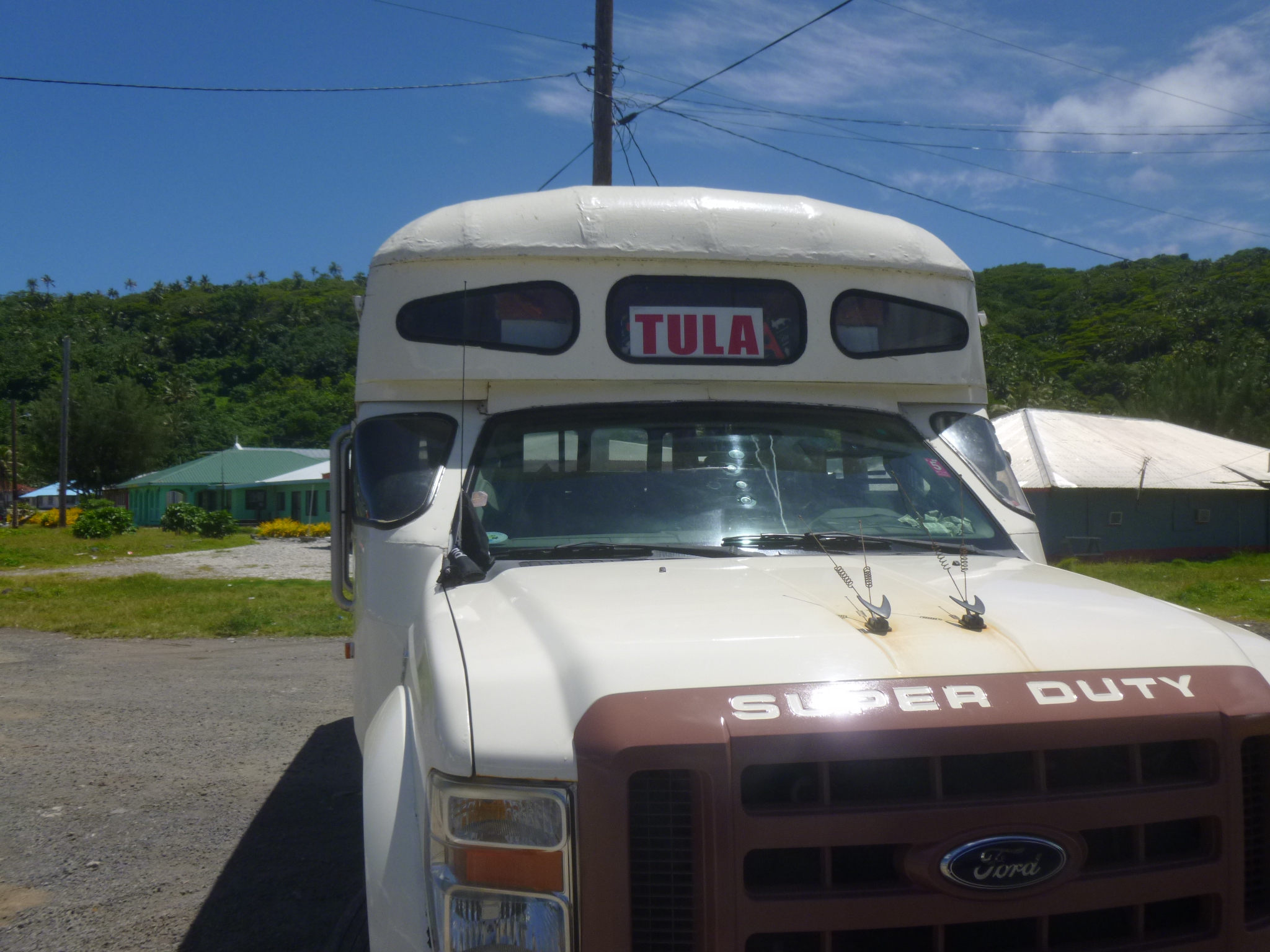
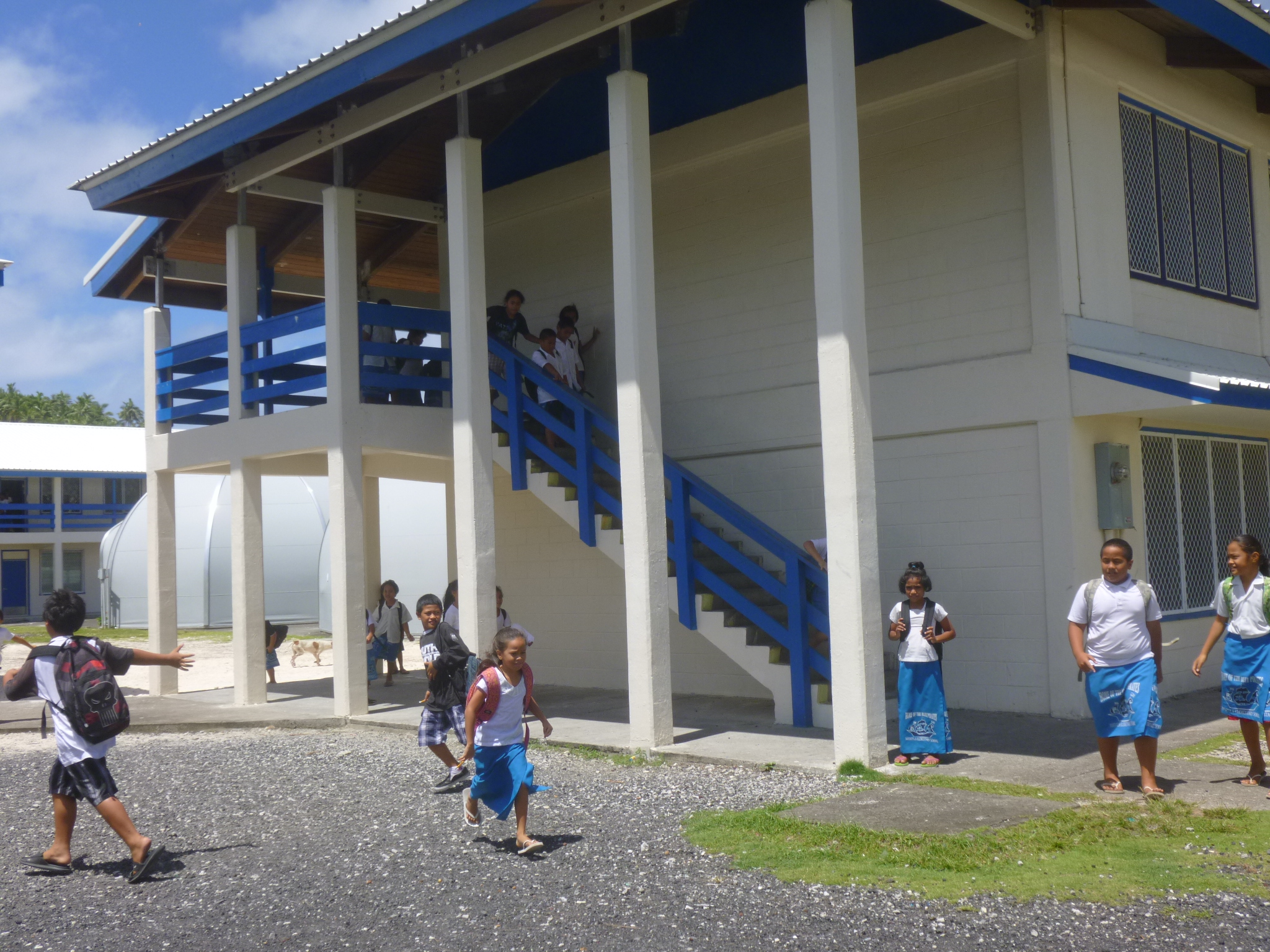
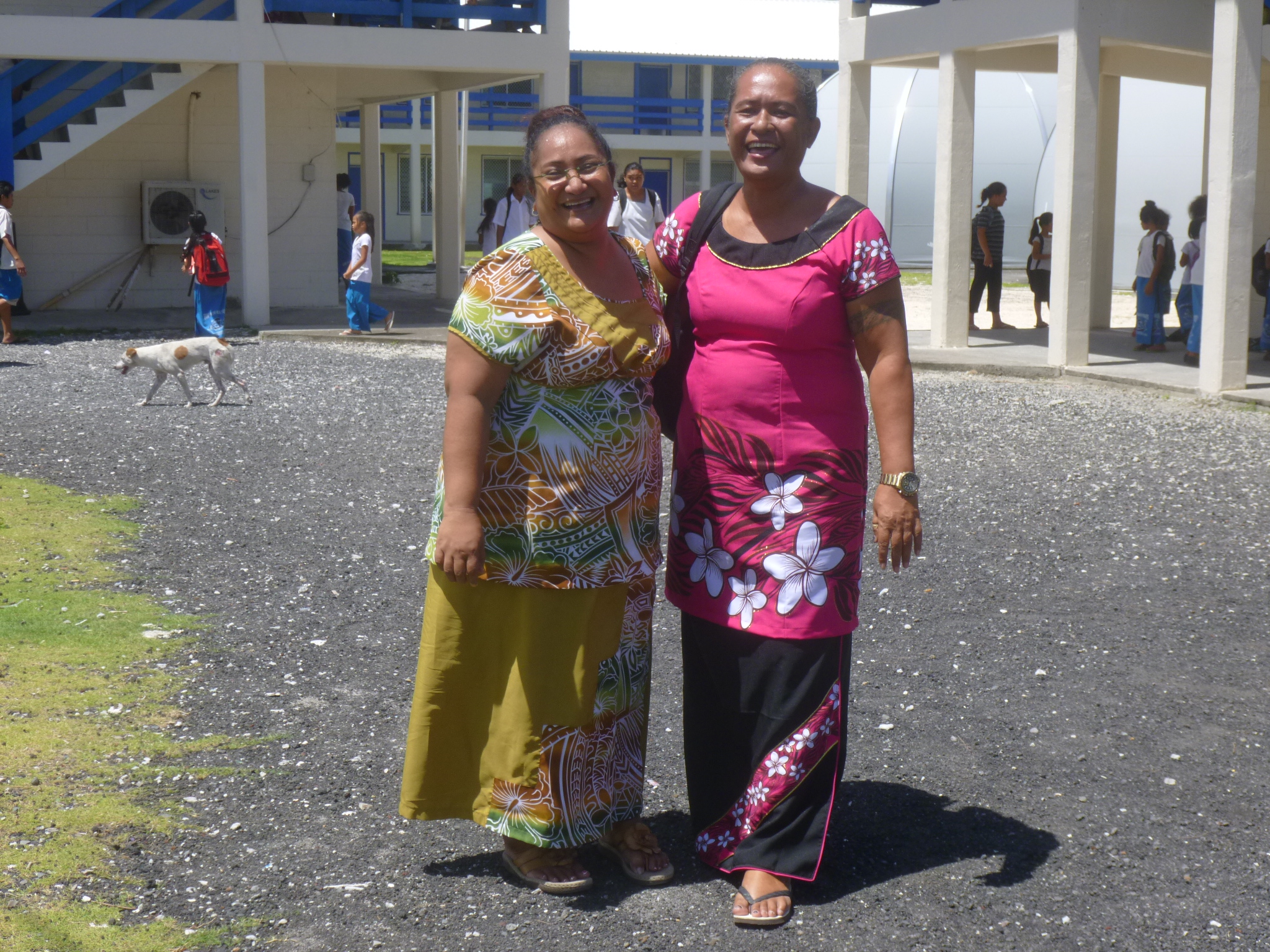
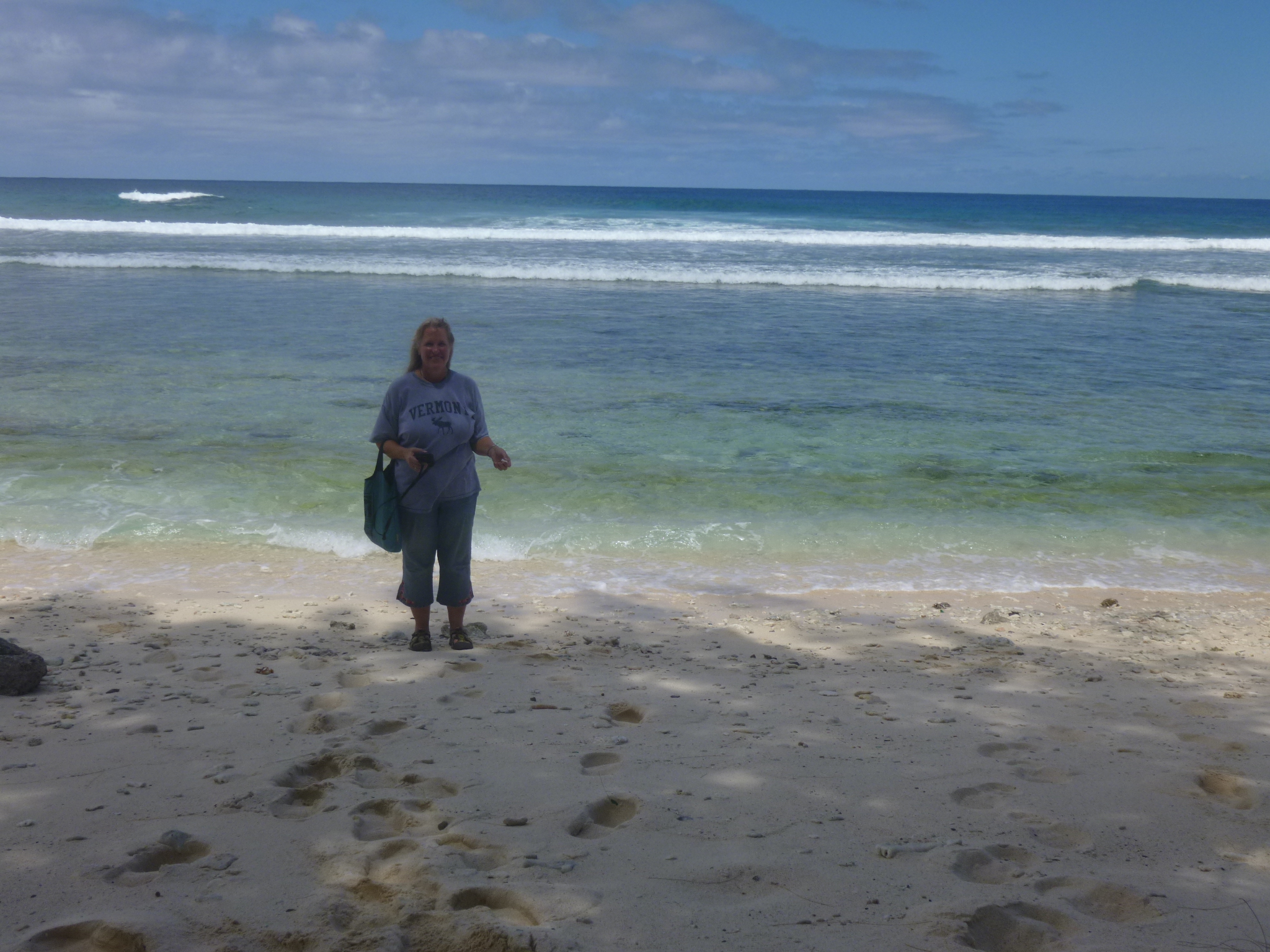
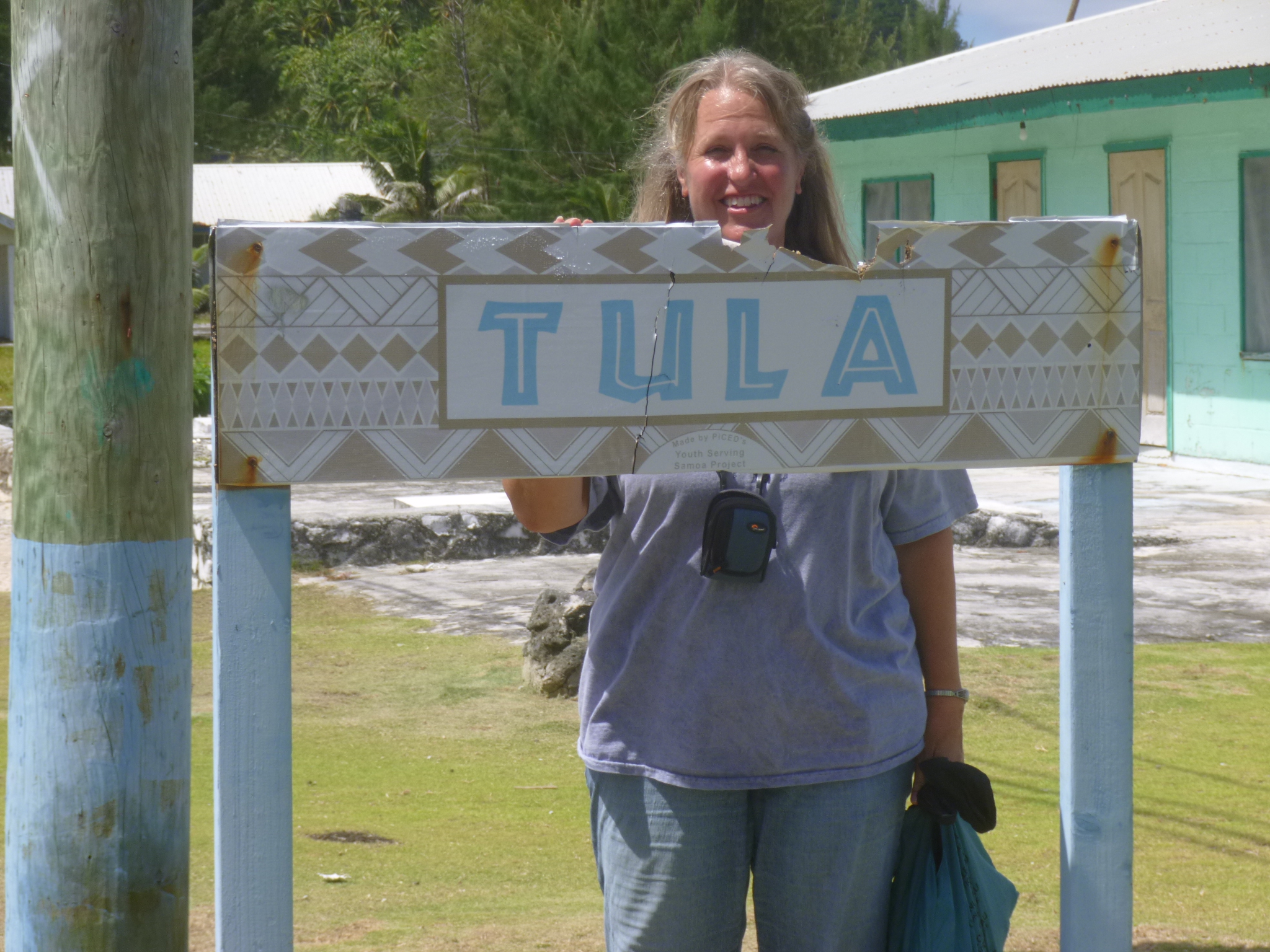
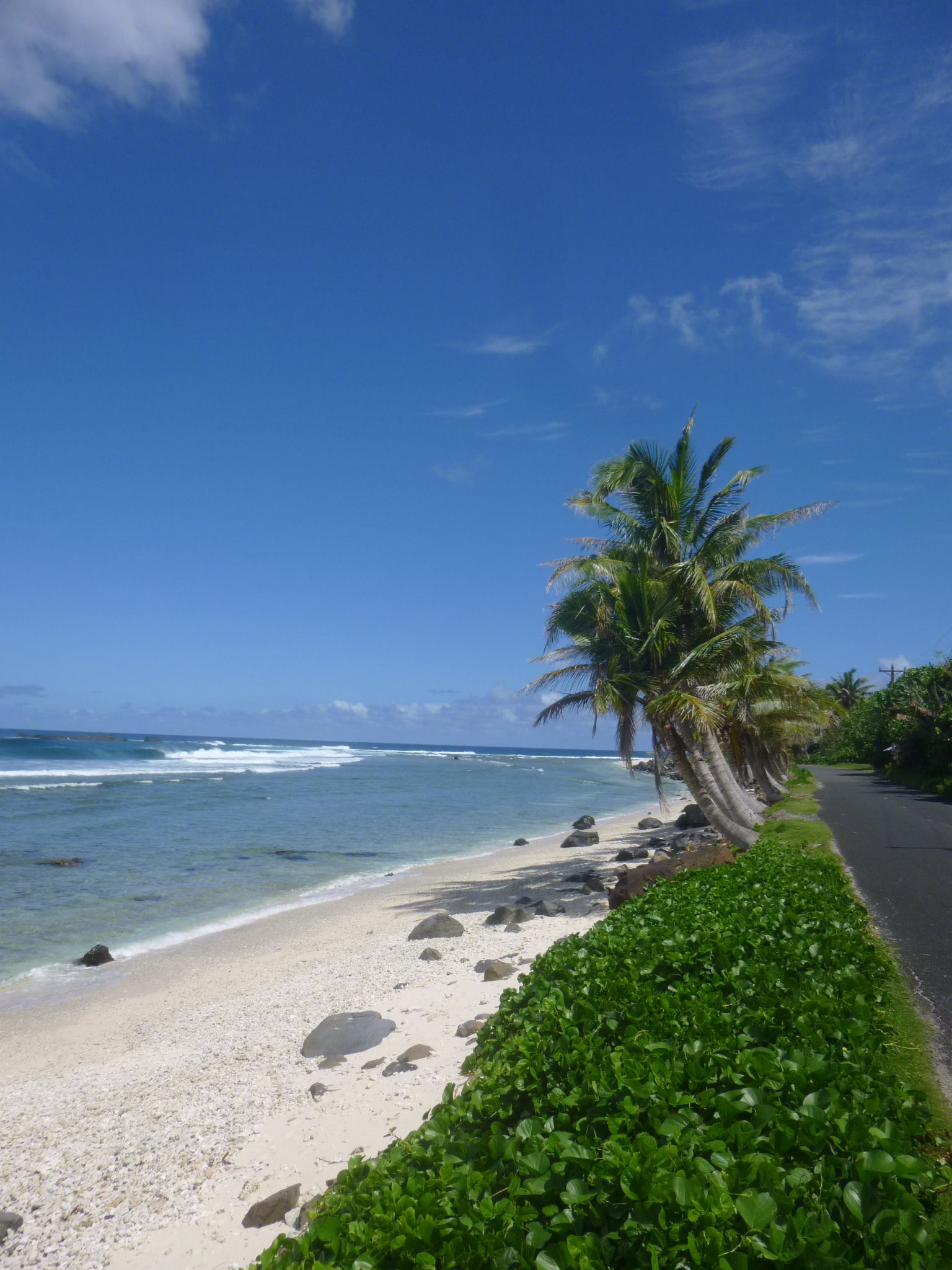
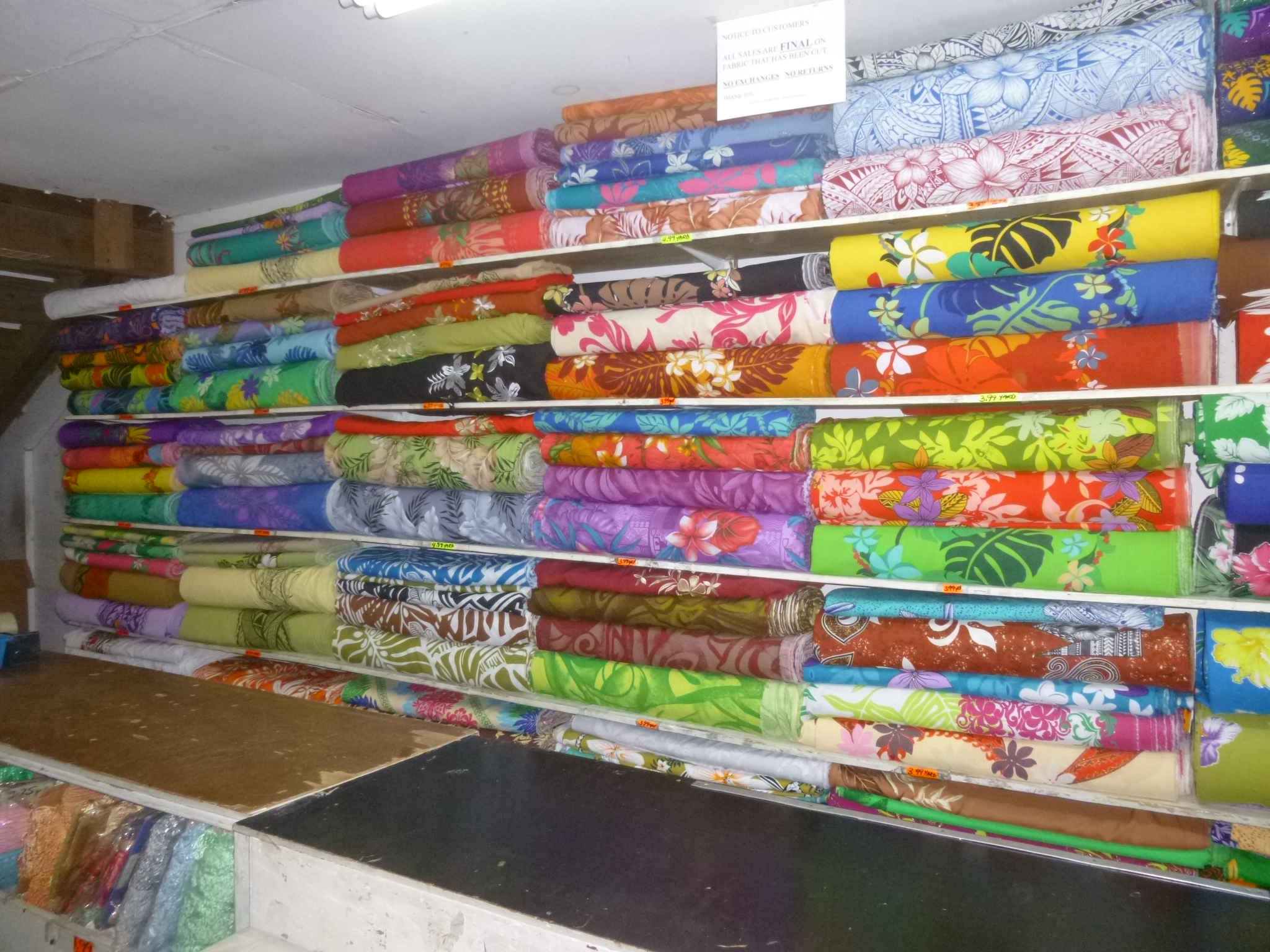
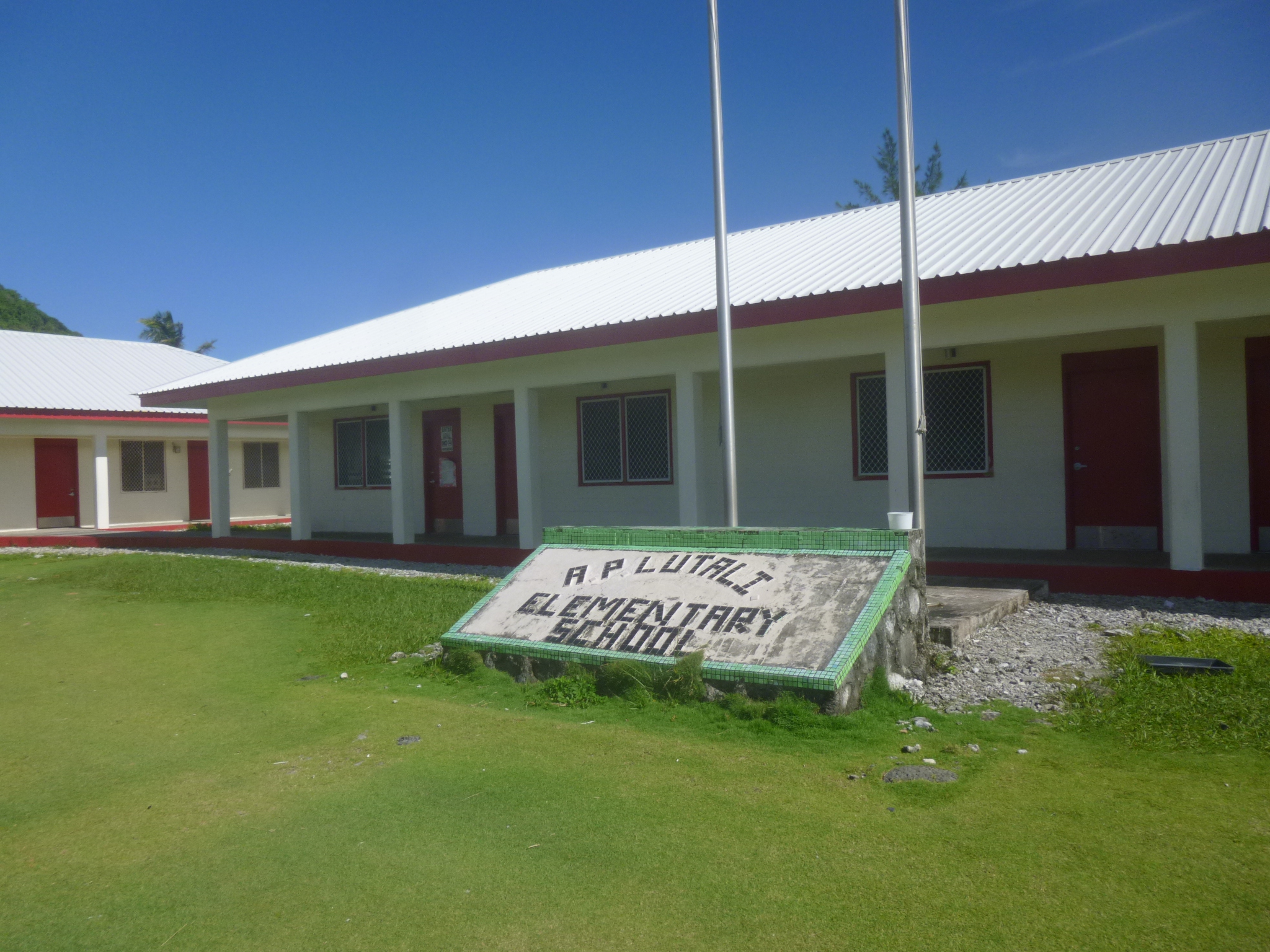
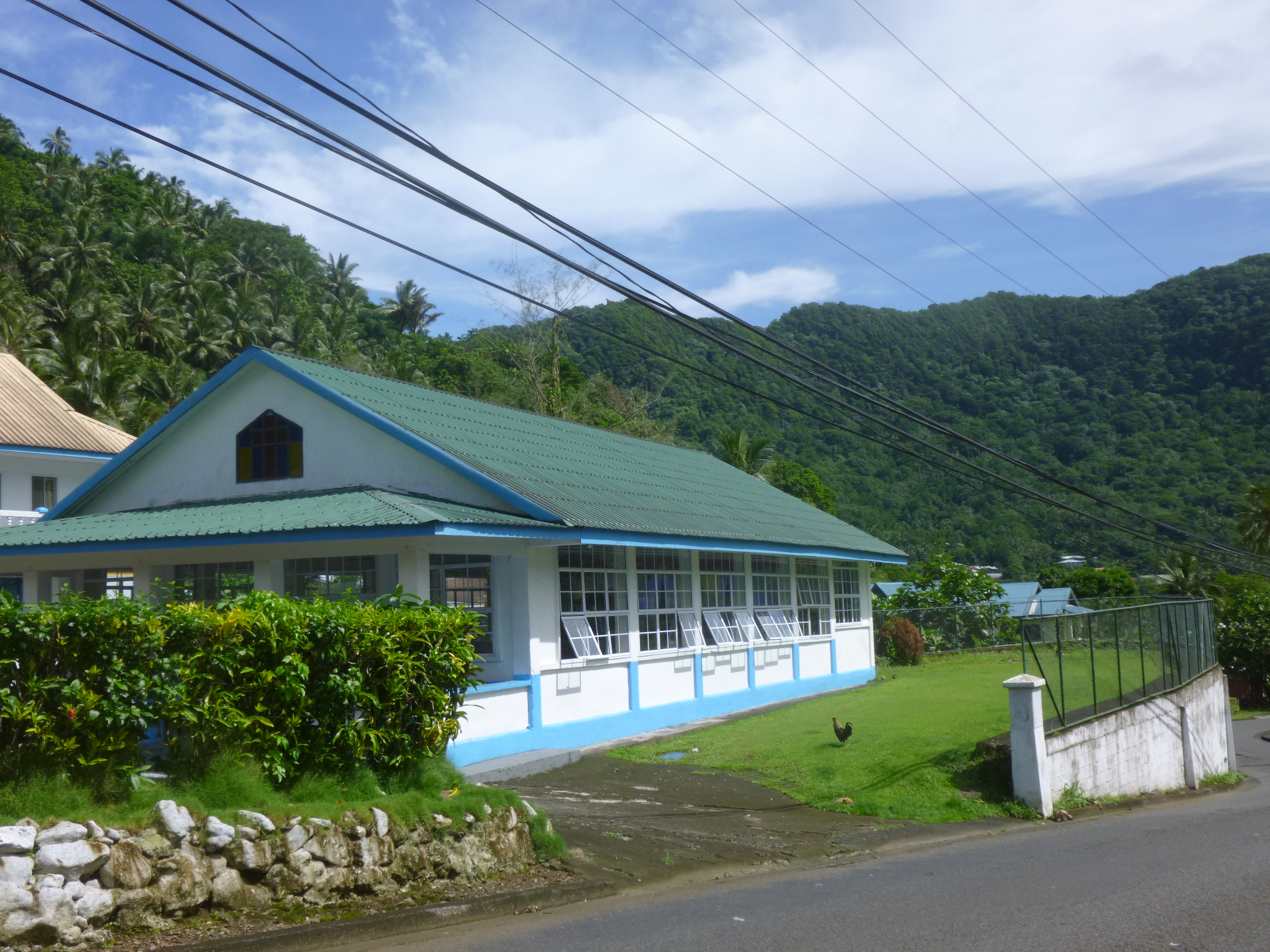
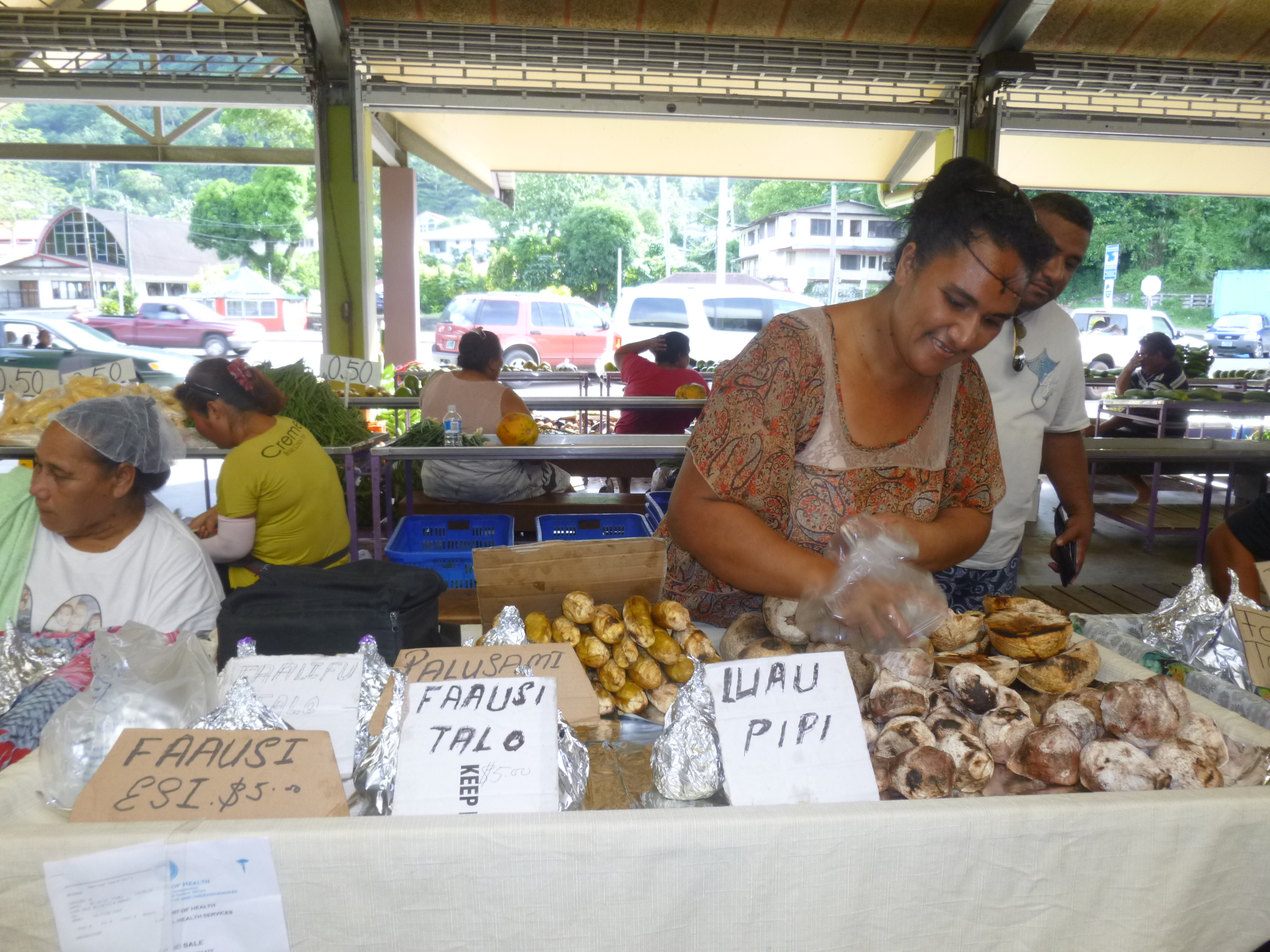
When I was in the office, I bumped into Lisa, a new acquaintance from Virginia, and she was just finishing up her work, and since she hadn’t ridden in any of the little buses yet, or been to the east side of the island, I asked her if she wanted to come along. So we set off for the marketplace to wait for the Tula bus. First we wanted to get a bite to eat, and the market had a rice/coconut dish that was good, and then some banana-fried-pancake-ball things that were really good too. The bus came and was kind of crowded but we found room, and then the farther out we went, the more the people cleared out. Even though I’ve done it a couple times, I still think its a pretty ride out there. We got off in Tula, and one of the students pointed out the principal’s office. So we went inside and met the vice-principal and the secretary, and it was really fun talking with them. They were delighted with the donation, and we took pictures and they told us there’s over 100 students and they come from a few villages. The school is pretty – all white with blue trim and right on the ocean – beautiful location. We asked about the temporary buildings in the center of the school yard, and found out they were the FEMA structures still there from the 2009 tsunami. I guess FEMA will be coming back soon to pick up some of those temporary structures. Tula is my favorite village on Samoa, and it’s not just because my dog is named Tula! It’s in such a pretty location, right on the curve of the island, and there’s also an air-quality monitoring instrument there (I guess they’re located in numerous locations around th world to monitor air quality, and Tula has good clean air!) The little village has a nice market and lots of the open-air community pavilions – just a lovely seaside village on a tropical island. When we were done talking with the vice-principal, the school day was nearly over. They get out at 2:00, but start at 7:30, partly to beat the heat. Instead of ringing a bell to signal the end if the day, she licked up a bat sort if thing and hit it against a long heavy metal weight. I see some if these placed periodically along the coast, and the sound travels pretty well, and I meant to ask if that was the purpose – some sort of weather warning system or something. Lisa and I wandered down by the sea and waded and picked up some shells and rocks, then started walking along the little sidewalk out of the village along the ocean. The bus was theoretically going to be coming back by in about 1/2 hour, but we probably missed that one, and just kept on walking. We eventually came to a bus shelter and waited with a young lady who was on her way to work. She told us when the bus should arrive, but they don’t always keep to a schedule, and since they make so many stops, people have to be conscious of leaving themselves plenty of extra time to get to work. The bus finally came, and for a while the 3 of us had it to ourselves. Then groups of kids started getting on – with backpacks – heading to some event. Then more kids got on, and more kids got on, and I’ve never seen so many people on a little bus. They would just plunk down onto the laps of people sitting on the outside of a seat, and I seriously don’t think that bus could have held another person! And then everyone would have to shift around at bus stops to let people off. When we passed the big Starkist tuna factory, there were literally a couple hundred people around – lots in line to start a shift I think, and others finishing up or on break. The fishy smell was especially pungent. Whew! Soon after, the kids all got off at the same place, so something extra was going on. There’s little cords near the ceilings of the buses that people pull on, and it rings a buzzer so the driver knows where you want to get off. Or if there’s no cords, they knock loudly on a window, and somehow the driver hears that above the loud music. Lisa and I got off at the national park visitor center to get a few more postcards. Then we were near a shop I wanted to poke my head in – it was partly a fabric shop, and I was astonished at the huge variety and colors of fabrics that were for sale, and locals were busy choosing out dress fabric to take to one of the many little sewing shops dotting the island. I think the seamstresses can get the tunics and skirts made pretty fast. We had seen some wedding photos too where the ladies wear the traditonal dress, and they’re so wonderfully elegant – and all custom made. There were actually lots of different white fabrics too for the Sunday clothes. They had other stuff too, and we both got a few things. Then we walked the rest of the way back to the motel. I just put my stuff in Lisa’s rental car, and we headed toward the airport, but stopped at a little restaurant she had found for dinner and yummy banana cream pie for dessert. They cook a lot with bananas, and I enjoyed all of it!
Then it was time to head to the airport. There were a couple short power outages, and lots of people arrived to meet the incoming plane, and little kids were running all over the place (with many people hoping they weren’t going to be on the outbound flight!) We met up with the lady who had come out to visit her daughter and it was fun to compare notes. She had visited her daughter’s school a couple days, and said they have to deal with some of the same discipline issues that everyone else does. Plus she said there seems to be a bit of a lack of motivation with their schoolwork since many of them just sort of assume they’ll end up doing what their parents are doing. And many of the islanders got aid money to rebuild their homes after the tsunami, but with a stipulation that the replacement home not be built in the same spot. Which is sort of a logical request, but not entirely practical since the people are so connected to their villages, and there’s a lack of flat land to build on, so I’m not sure if it’s entirely feasible to rebuild elsewhere. As a result, apparently a lot of people bought nice new pickups instead. It makes me wonder if anyone who controlled that aid money actually visited the island to look at practical rebuilding issues.
Anyway, when it was almost midnight, it was time to walk out onto the airfield and say goodbye to an amazing week in American Samoa. I don’t know that I’ll ever be back, but I’m so glad I included the territories in this adventure. When I remember back to landing in the dark and the rain a week ago, not knowing what to expect, I could never have imagined what a special stop this would become, and I’ll have a lifetime of memories of all the people I met and the things I did and saw on this faraway tiny island in the middle of the vast Pacific Ocean.





American Samoa – Wednesday, January 23
Tisa called me first thing this morning to let me know that although there won’t be enough people for dinner to do the Samoan umu meal, she can still fix a nice Samoan dinner from all natural, local food that’s in season – sounded good to me! So I’ll be stopping by there on my way back from Aunu’u Island later. After doing some computer stuff in the motel office, I met up with Teri the news reporter for a late breakfast. She had a lot of questions, and managed to type on her laptop and eat breakfast more or less at the same time! She was raised in California, and married a Samoan 30 some years ago, and has lived on the island for more than 25 years. When her husband passed away, people thought she would return to the mainland, but the island is her home! It was fun to chat with her and she took lots of notes about my journey. And when we went to pay for our meal, we found out one of her longtime friends had already taken care of our bill! That was a pleasant surprise!
I didn’t make a donation today since I made 3 yesterday.
Then it was time to pack some stuff up to go catch a bus for the east side of the island where there’s apparently a small boat harbor with several boats that run back and forth between the “big island” (Tutuila) that most of us are on, and little Aunu’u Island. I walked down to the marketplace, and didn’t have to wait long for the Tula bus – the boat harbor is almost all the way back out to the east end.
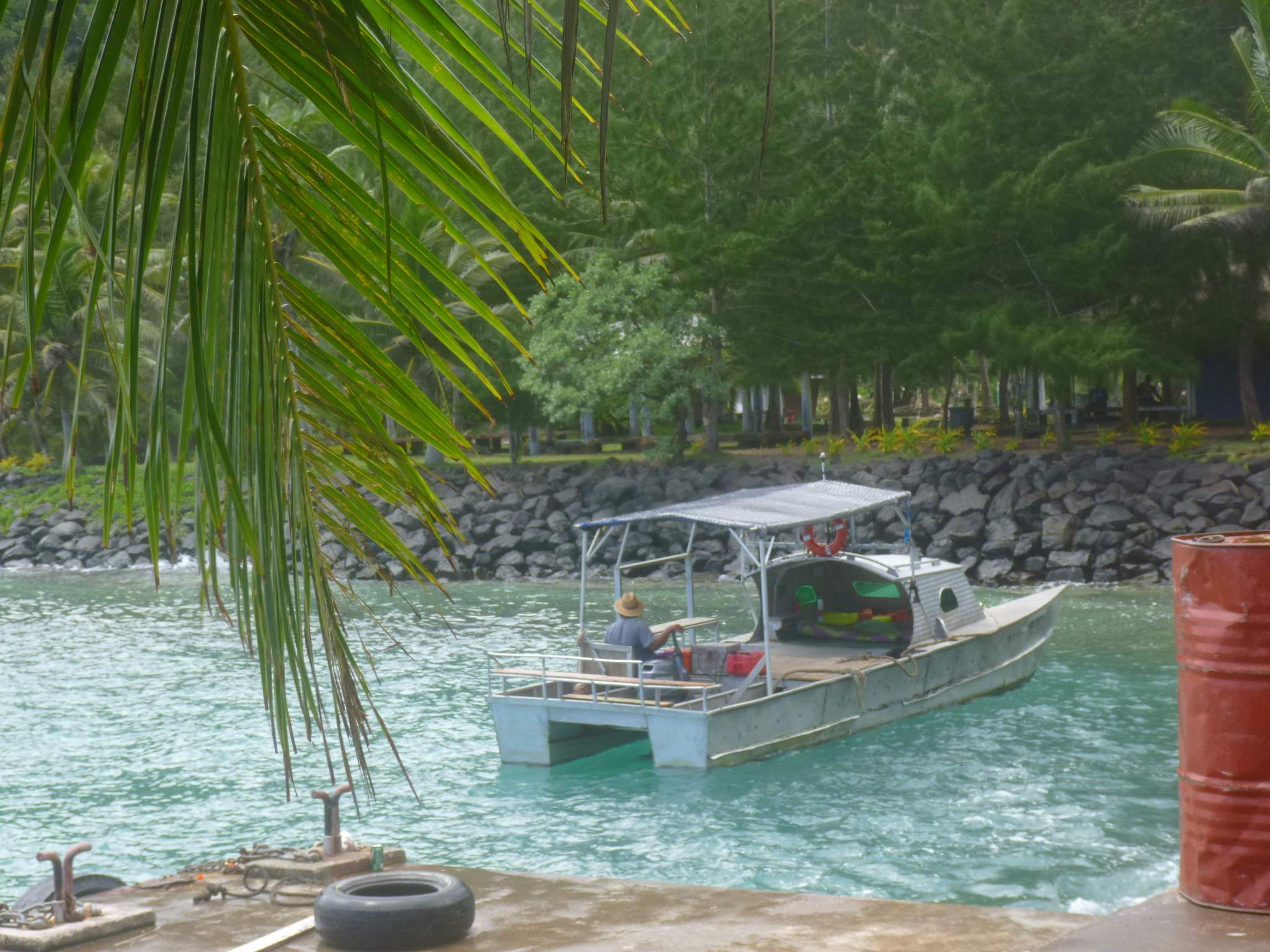
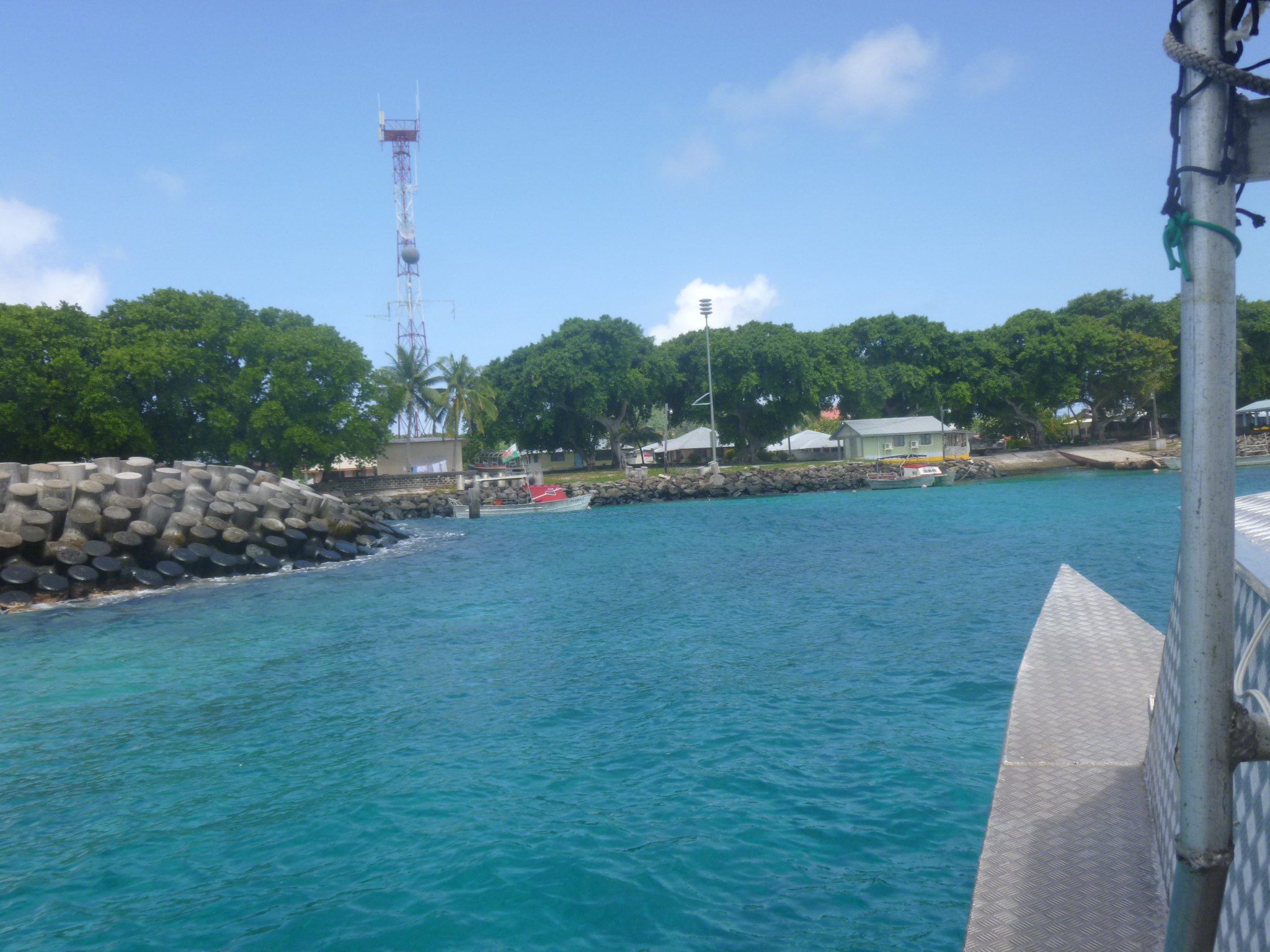
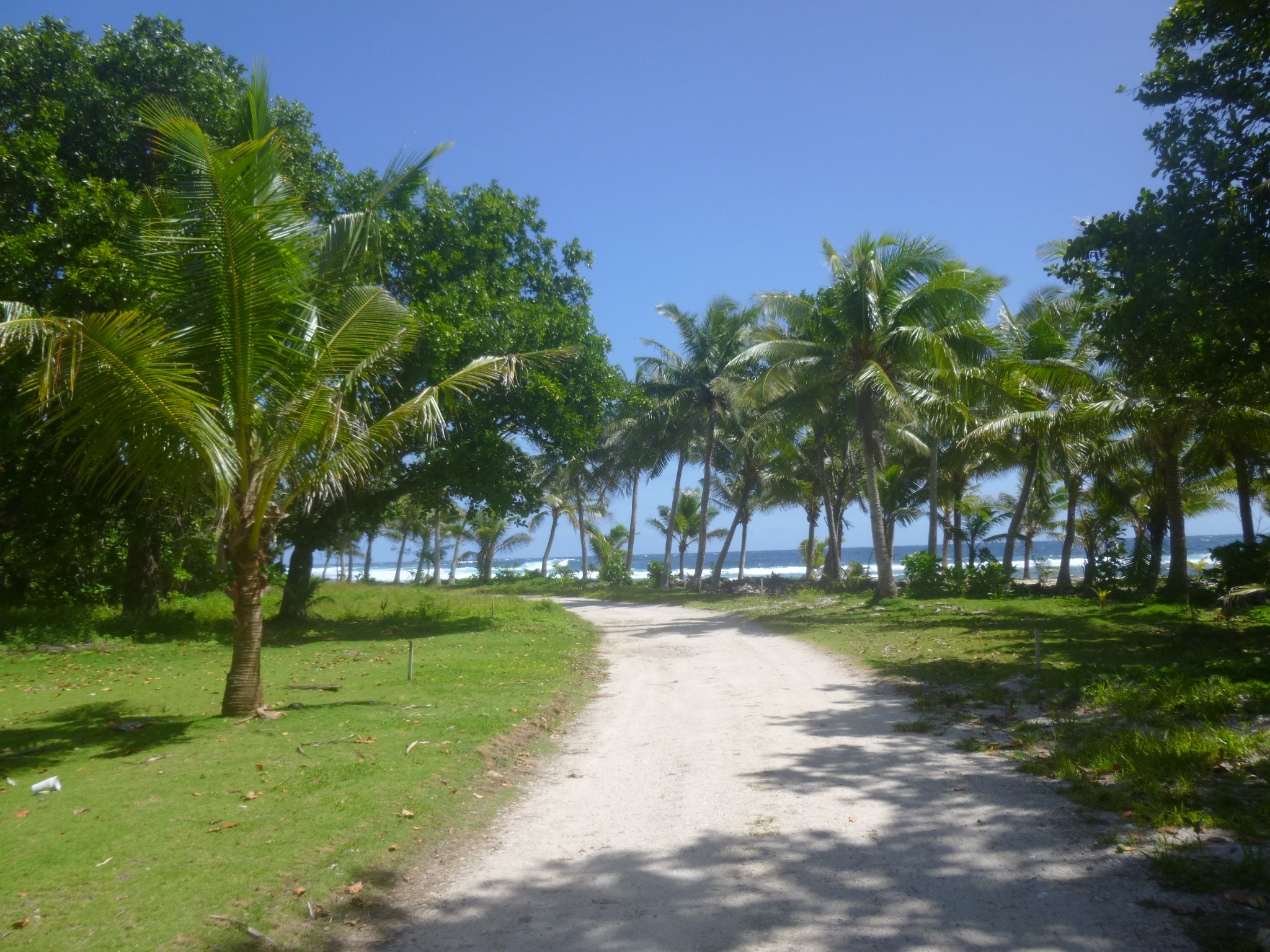
I mentioned to the bus driver that I’d like to get off at the boat harbor, but he forgot, and I totally missed it because the boats were out making their runs! They told me I could ride to the end of the route, and get off at the harbor on the way back into town, but I told them I didn’t mind a short walk, and got off at the next stop. It wasn’t far at all, and would have taken so much more time to just stay on the bus. Another family arrived to make the crossing – and there was a grandma and a young boy in the group. And that was kind if reassuring because when I saw the boat far off between the big ocean swells, it didn’t look like it was big enough to be out there! The boat sort of looked like a large wooden rowboat on top of catamaran hulls, with a tarp across the back half for some shade. There was a bench along the side, or people stand and hold on somewhere or sit under the tarp. In the end, the boat seemed well suited for its job, despite its size. It rode the waves well and was a pleasant 15-20 minute ride. The fare used to be $1, but it just recently went up to $2. The other family had done a bit of shopping, and the boat is the only way for them to transport everything. When we got off on Aunu’u Island, the first thing I noticed was a church. Then there were a couple clusters of small houses, and just a few vehicles. I’m not sure how the vehicles get over there! I headed off along a path on one side of the island, and I eventually came to the elementary school. It was bigger than I would have thought, considering the size of the island. There was a wide, well-trimmed path up the side of the mountain, past a couple banana and coconut plantations. I got to the top, and then the path down the other side wasn’t as well marked, and heeding some warnings about previous careless tourists, I went back down the safe way I went up! I walked past the school again and spoke briefly to one of the teachers. She said the kids go to elementary school on the island, but have to go over the big island for high school. And speaking of education, American Samoa has a community college, and there is an education program, and I believe graduates can teach on the island after completing their associate’s degree. I had taken a little longer than I thought in walking about, and then had to wait quite a while for the next boat to come, and then was a little concerned about time, since buses stop running back to town around 5. A couple kids came up to talk while I was waiting for the boat, and the 8 yr old girl seemed quite concerned that I was traveling by myself, without a husband and all my kids along! It was quite sweet! She also went into bloody detail about the accident on the rocks that “the other white people” had – I had even heard somewhere else that one of them may have fallen to his death – alcohol was involved. This 8 yr old girl has never once been off her little island – and it didnt seem to bother her in the least! Anyway, the boat finally came back and I was the only passenger. It was fun talking to the driver – his name sounded like Ellic. He wondered what I was doing in Samoa, and we talked about his boat and how high the seas get before the boats stop running – 6 foot waves seem to be the limit for those boats. He makes many trips back and forth a day.
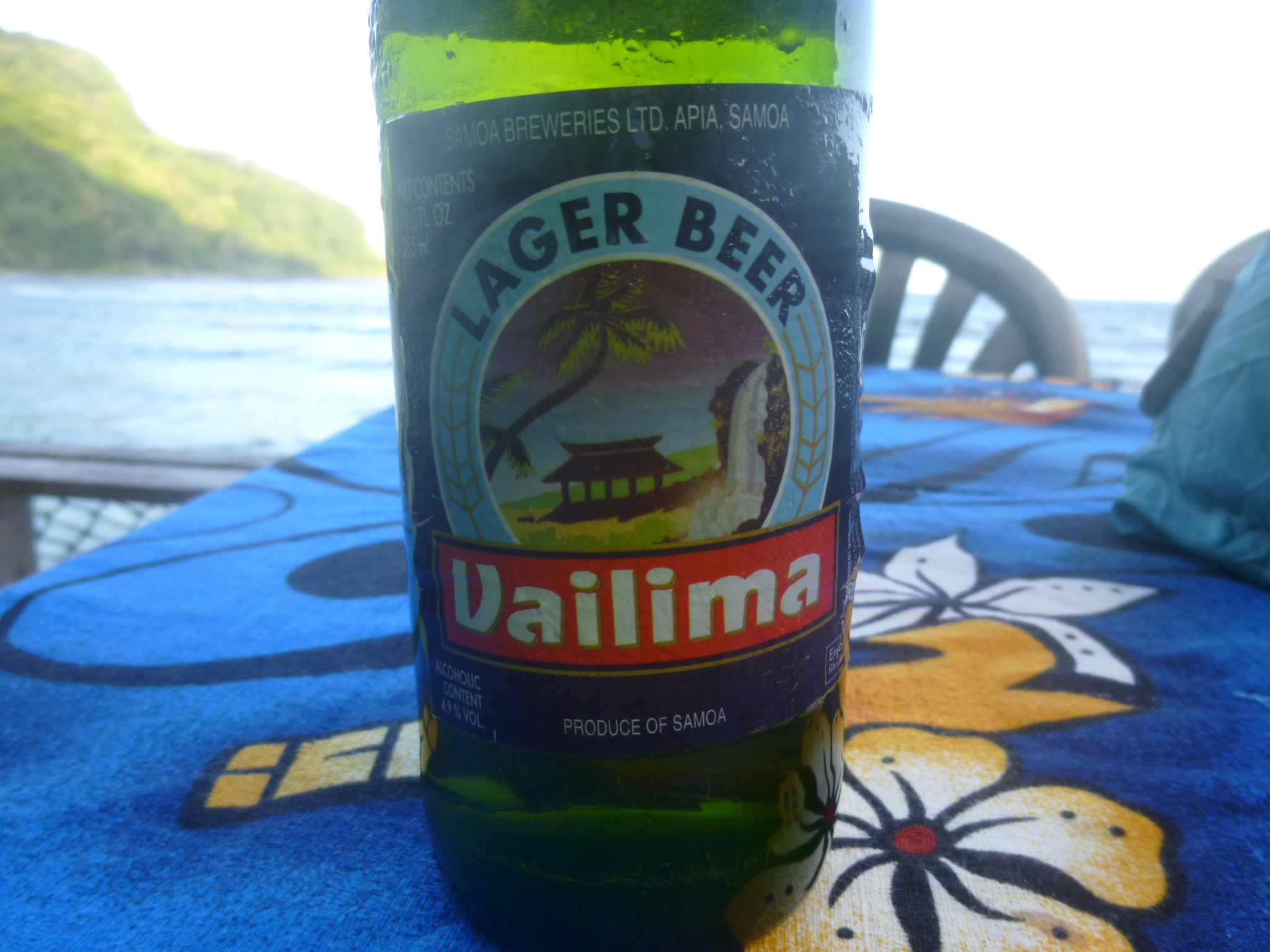
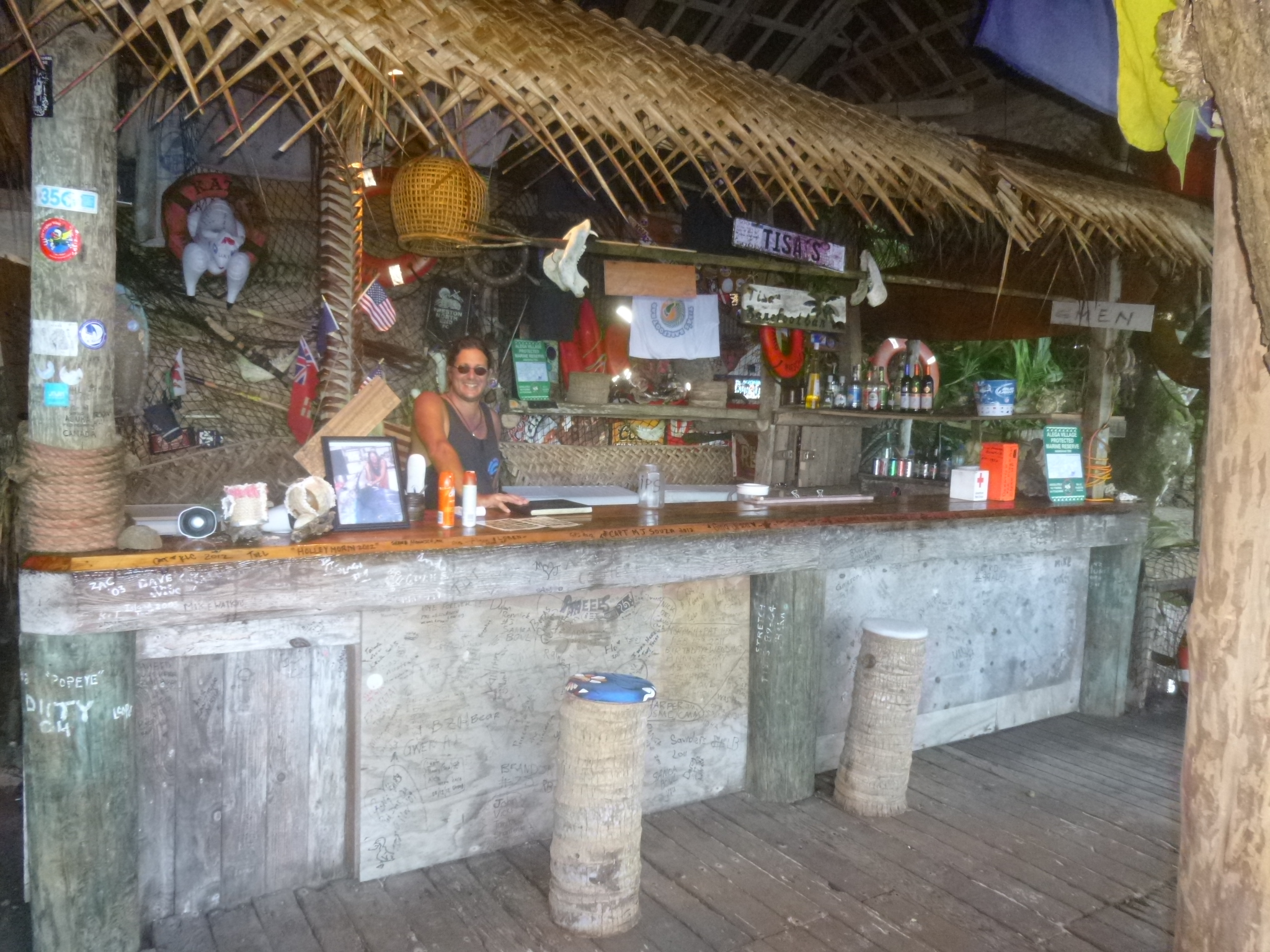
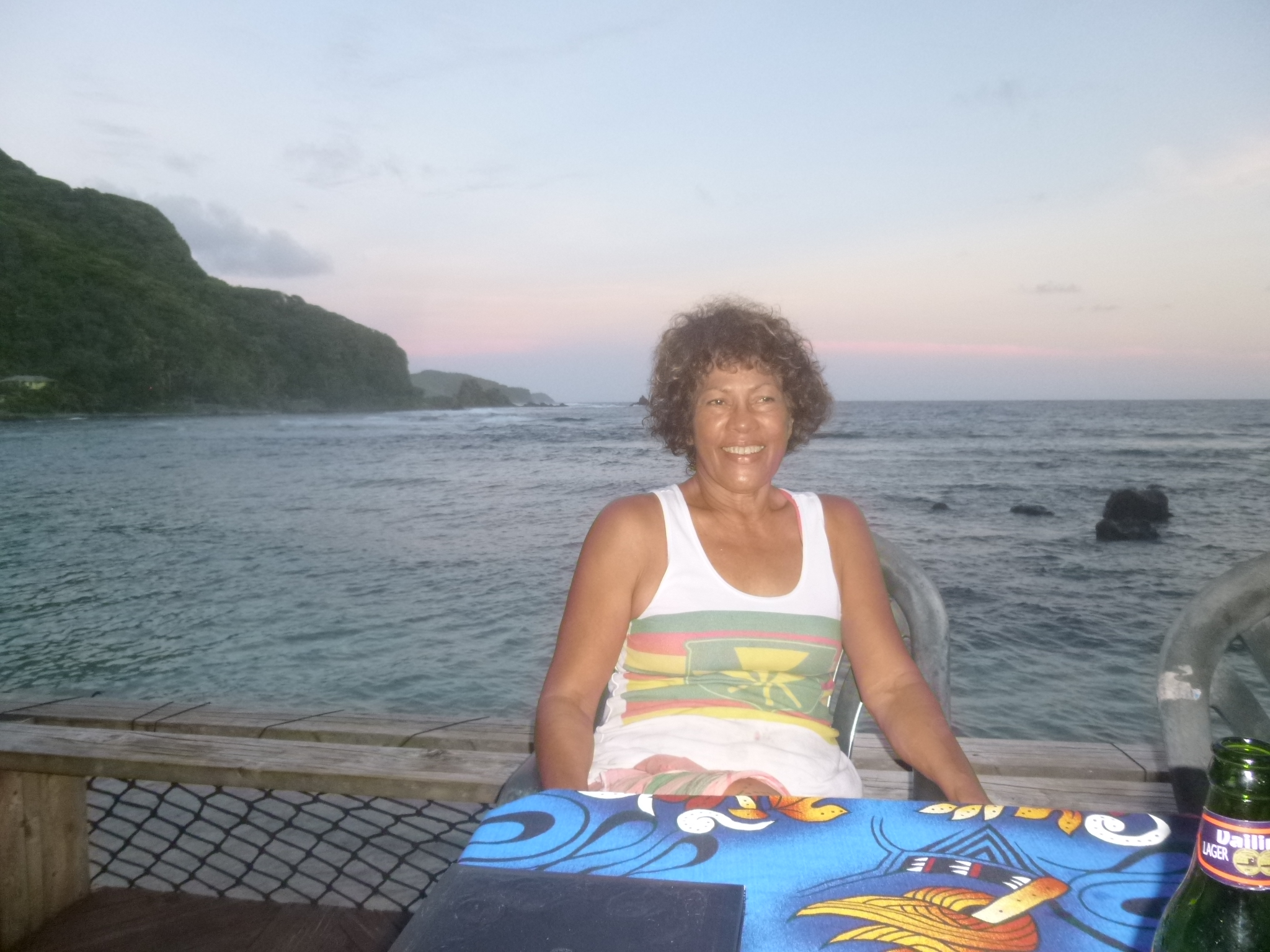
Even though there was a bus stop by the boat harbor, it was nearly 5:00 once I got back on the big island, so instead of waiting, I figured I better start walking. One lady thought the last bus had gone by, but other people were quite certain there would be one more. I walked 2-3 miles and still no bus. It was still light out and a pretty evening so I didn’t really mind, although it was still quite warm. I walked a little more, and figured I was going to miss my nice dinner at Tisa’s. I was already later than I had expected to be. I walked a little more, and then a black SUV pulled up and a very kind-looking lady asked if I needed a ride. Her college age niece was with her and they were so concerned about my walking, and possibly missing the last bus, that I had no qualms about getting in the car with them. And it was so much fun talking with them that I wished the ride could have been longer. She wondered how long I was on the island for, and would have like me to visit them and see their plantation – I would have liked that too! But time runs out. They dropped me at Tisa’s and even waited to make sure I could still get dinner. So thank you, thank you kind people – your names are in my phone, which I no longer have (that story will come later). I’m not sure I would have noticed the place on my own – there was just a little wooden sign by the road, and I walked through a little path, and down some steps, then this wonderful open-air wooden bar appeared, along with deck space over the water with room for about 4-6 tables. It looked like it belonged in a tropical paradise picture book! Despite my being later than I thought, I was still the first person there, and they brought me an icy cold local Samoan beer – it hit the spot! The bar/restaurant has been there for 24 years, and has been through 2 hurricanes. The design improves after each hurricane. They brought me their guest book, and it was signed by people from literally all over the world, and by people who were doing solo flights around the world, dropping down here and there to re-fuel, and groups like Greenpeace – it was really interesting. Tisa brought my dinner out – she didn’t want me waiting any longer for the others – it’s a very casual place. The dinner was all local food straight from the earth and sea – there is no menu; she serves whatever is in season. Tonight’s treat was swordfish that someone had caught and given them, marinated overnight and BBQ’d – delicious! It came with the Samoan version of sweet potatoes – not orange like ours, but thick slices of big whitish potatoes with a yummy coconut cream sauce. The vegetable was kind of a Samoan version of cabbage, and it looked sort of like spinach, but didn’t have a bitter aftertaste. I can’t remember what it was called. There was a little carrot and something else in their too, and another little dollop of the coconut cream sauce. Then there was a big piece of the best papaya I’ve had, already diced in its skin for easy eating. It was all served on a big green leaf (banana leaf i think), which made it very colorful. The fish had just been caught the day before, the potatoes and veggies came from their garden, and the papaya came from their plantation across the street – absolutely delicious. A couple other people arrived just as I got my meal, and a couple more after that. It was a good thing I got my dinner first, because even with time for a drink before their dinner, I still finished at the same time as everyone else. Yes, I’m a slow eater! When we were all done visiting, a couple of the people were driving all the way back to the west side of the island, and they dropped me off on the way. Tisa had told me earlier that taxi service was available from her place for those of us without a car, but I was lucky to get (another) free ride back! A wonderful way to end my last full day on Samoa.







American Samoa – Tuesday, January 22
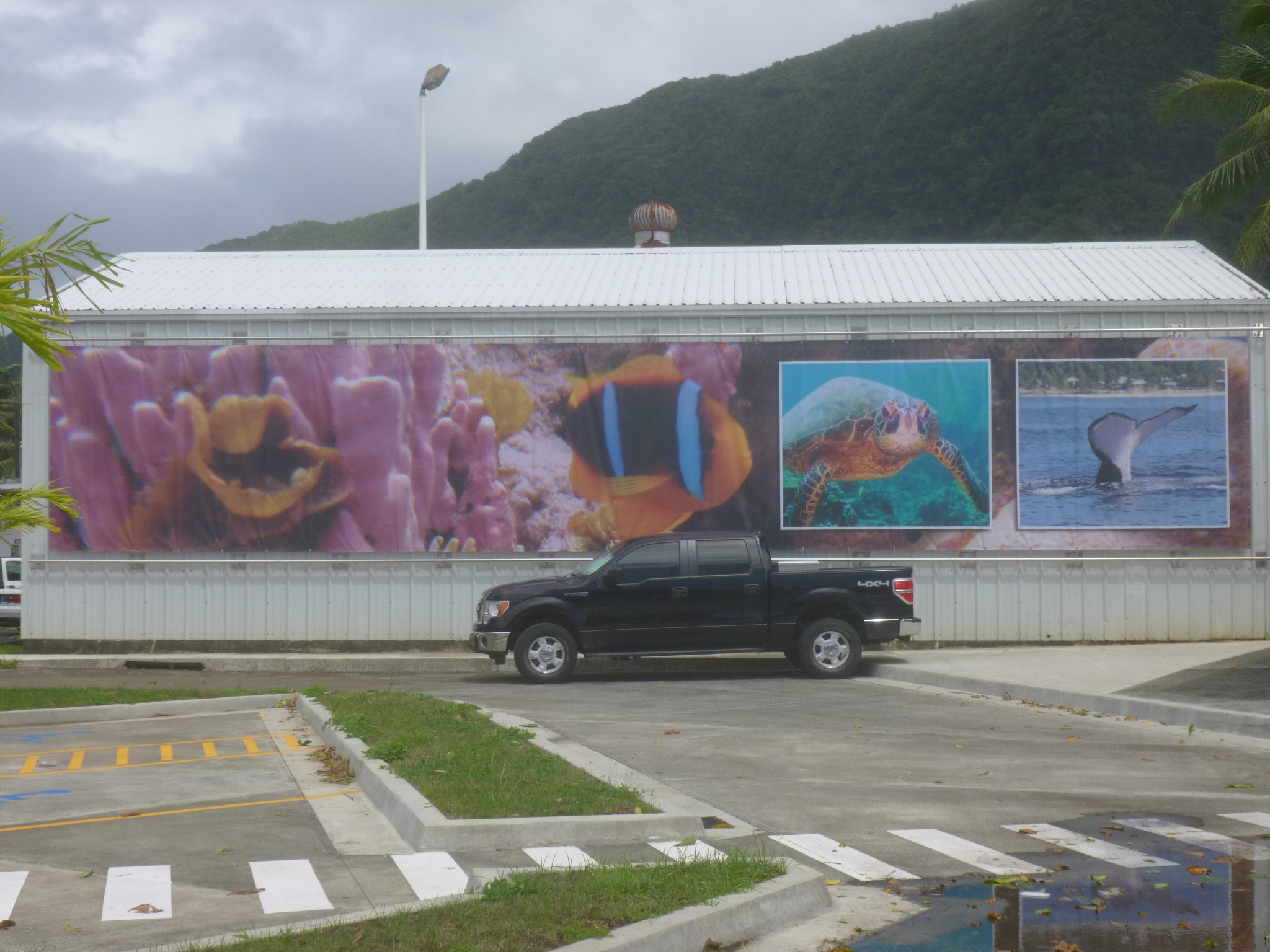
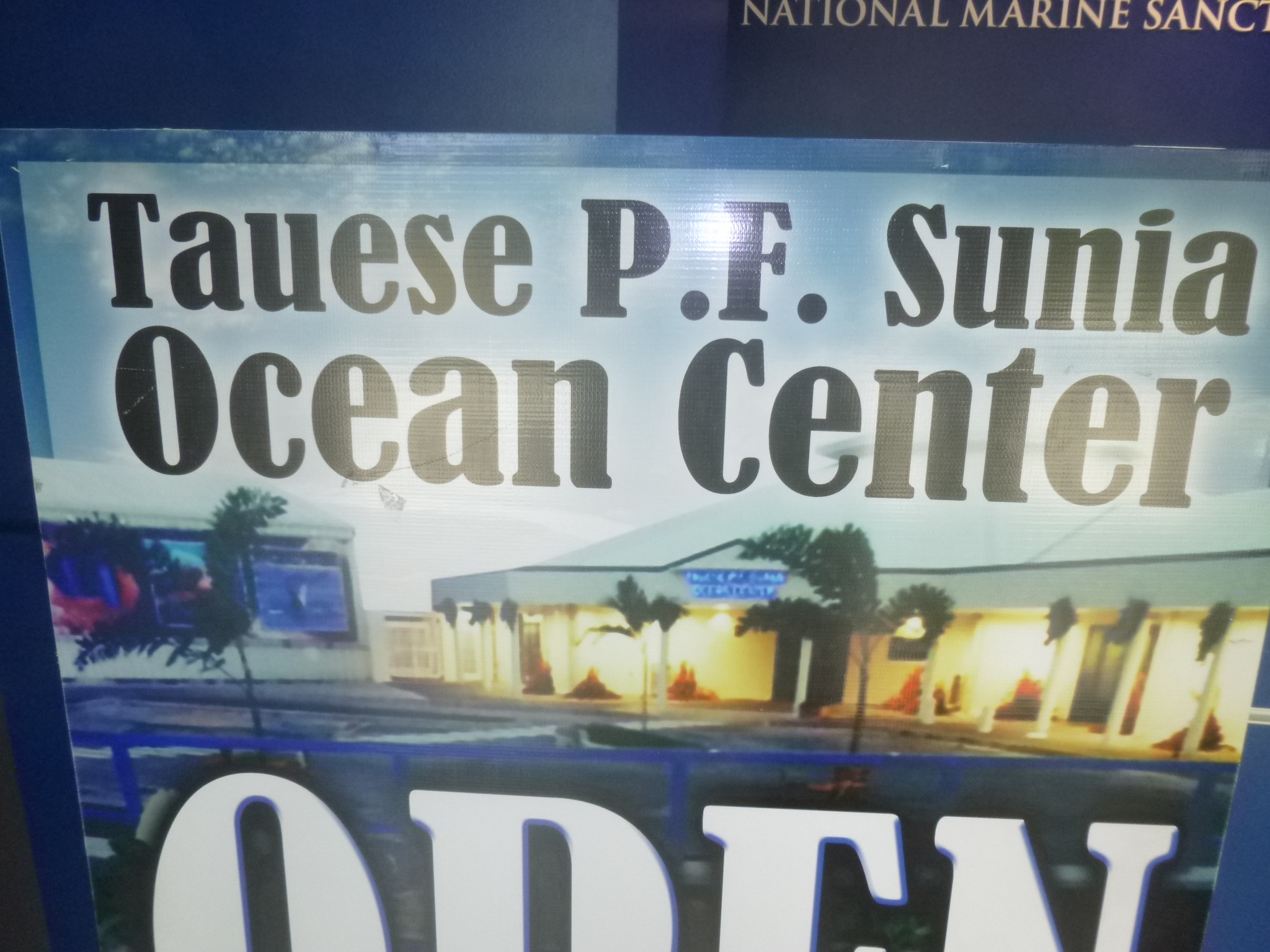
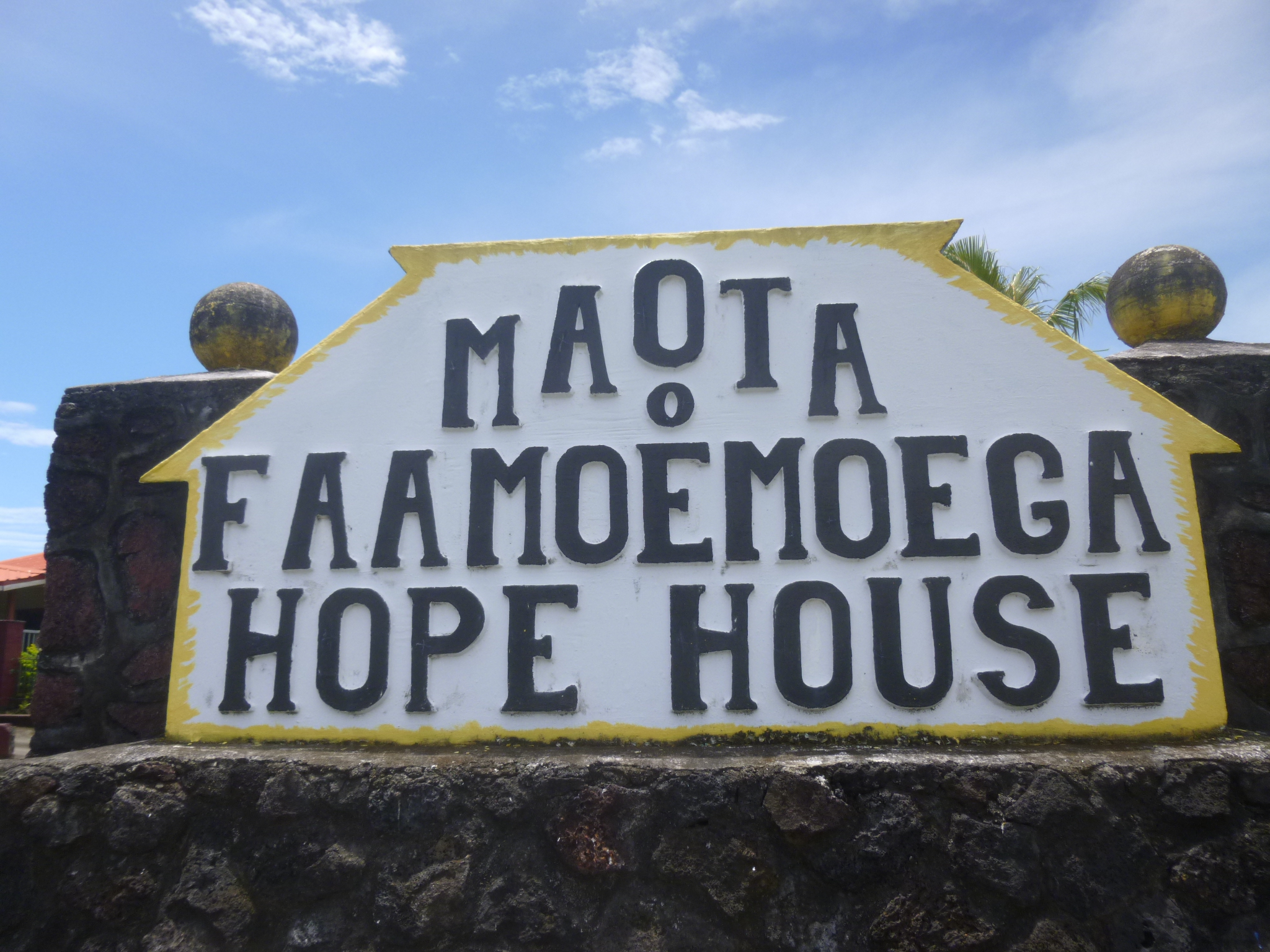
I took care of turning in the car, then got my stuff together for a day of walking and riding the buses. The first thing I wanted to do was head back to the Hope House to make my donation. I had to walk the opposite way back up to the marketplace where the buses gather to find one heading to Tafuna. But I took a little detour – every time I walk up that way, I pass by the Ocean House, and I had been wanting to see what was in there, but they had been closed the last couple of days. This time I saw people around, but then found out that half of the building would be closed while it was being repainted. But, I had heard that this would be a good place to visit, and would possibly be a good donation place also. I heard this from a woman I met while we were in line waiting for customs when we arrived in Samoa – she was coming to visit her daughter who was teaching in Samoa for a year. Knowing that many schools and churches could use a little donation for supplies (that came from my Samoan taxi driver in Honolulu), I told the lady I would be more than happy to make a donation to her daughter’s school if they needed anything. I gave her my contact info, and a couple days later, the daughter emailed me, and said her particular school is pretty well-funded, so she suggested the Ocean House instead, and that’s part of the reason I ended up there. The room that wasn’t being painted was kind of the map room. There was information about all of the islands and atolls that make up American Samoa, and the guy who came in to explain things to me was from the family who owned one of the smaller islands. Although his family visits the island, they can’t live on it because there’s no fresh water supply. He was a very enthusiastic young man, and seemed proud to point out that American Samoa had gone from have the least amount of protected marine areas in the NOAA to having quite a large percentage of it as of last October. I guess the NOAA has protected marine areas in 11 locations in the US. He’s also the guy who told me about the coconut crabs, and he told me about taking a boat over to Aunu’u Island, which which is close and has a village and churches and all. I knew I would enjoy that! To show my support for preserving coral reefs and marine life, and educating people about it, I made a donation to them, which will count as my animal-related donation for the week, because preserving coral also is good for many sea-life habitats. I couldn’t think of any other animal-related donation on the island – there is obviously no humane society or animal shelter on the island with all the stray dogs, and I certainly couldn’t start feeding them, and one of the islanders said there’s no longer even a vet on the island. It is a big problem, but not one for me to tackle.
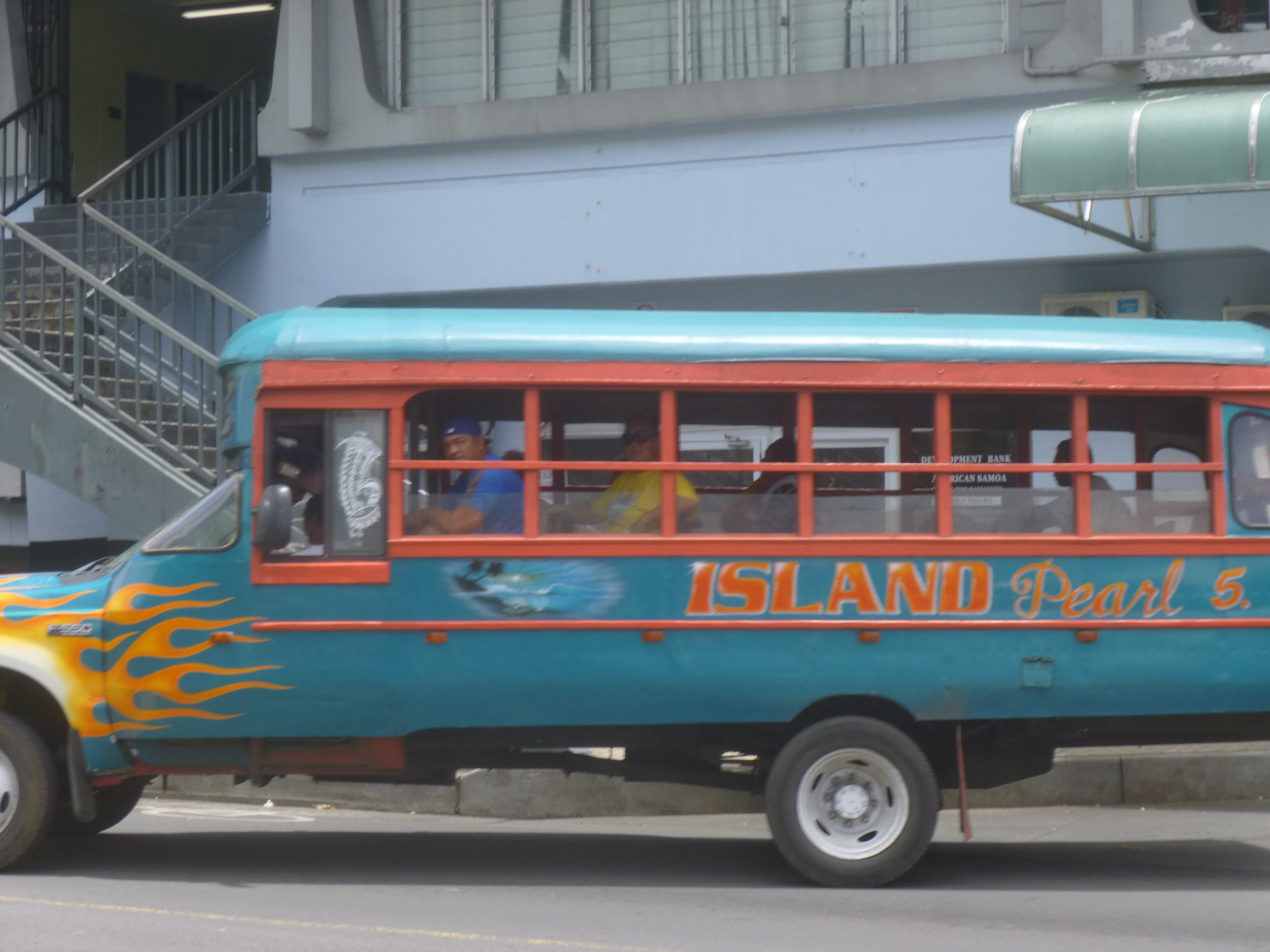
After the Ocean Center, I finished walking to the marketplace. There’s actually a lot more buses going to the west side of the island than the east side, simply because it’s bigger and more businesses are there, and more people live there. So I didn’t have to wait very long. I had been told that the bus drivers are happy to drop people off in out-of-the-ordinary stops if you just ask, and my bus driver said he’d be happy to take me up near the Hope House, even though I think that’s in the next village over. I offered to pay an extra $1, but he said no. So far, I’ve always been the only white person on these little buses, which hasn’t bothered me, and the only people who seem to look twice are little boys around the age of 7 or 8! One in particular kept turning around in his seat to look at me, and when I’d smile at him, he’d hide his head in his sister’s shoulder. And another one just kind of gazed at me as though I was some sort of odd specimen – which to them I probably was! There aren’t many white people around at all, but there are some Asian visitors. I read that the Samoans are the most full-blooded race in all of Polynesia. There isn’t a lot of intermarriage with other islanders, and it has kept the Samoan bloodlines pretty pure. I imagine a lot of that is due to their relative isolation, and their emphasis on family and preserving traditions, although I personally met 2 white ladies who had married Samoans.
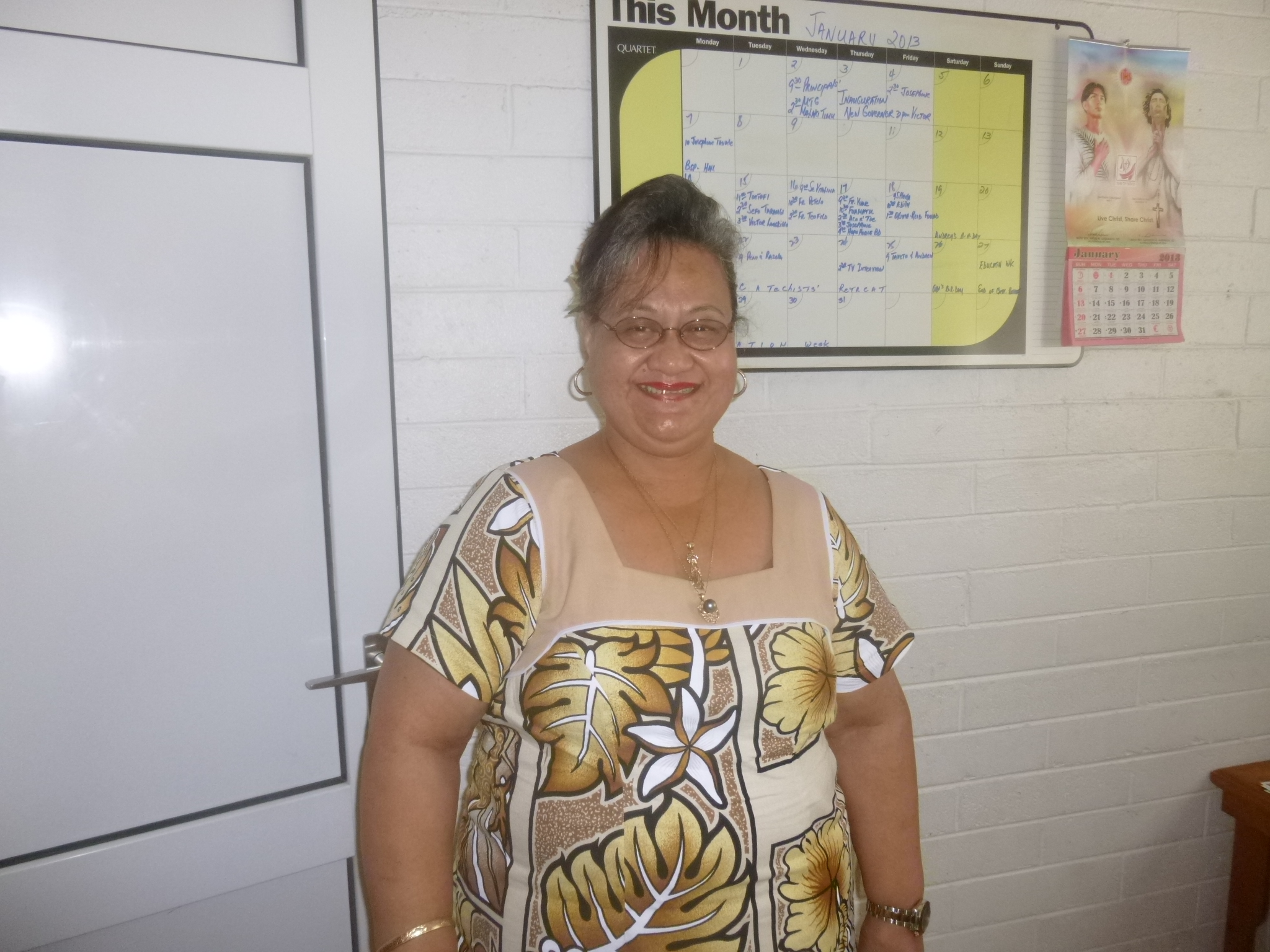
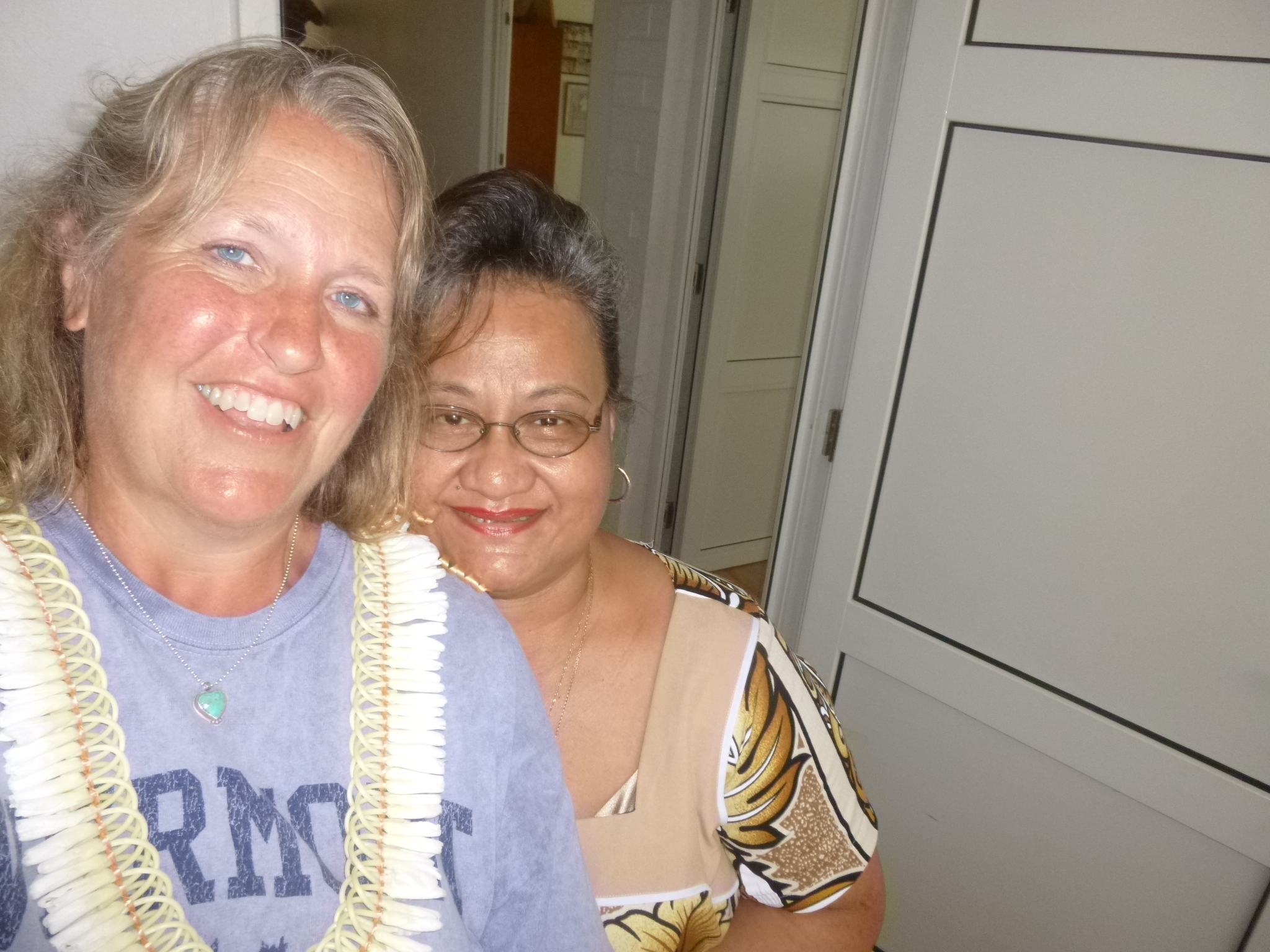
Anyway, it was a pretty long ride into Tafuna, but I do like the stretch along the ocean. The waves were still pretty big – enough so that I heard the boats back and forth to Aunu’u Island weren’t running today (good thing I didn’t head in that direction!) and lots of the kids had the day off school, based on the big storm potentially hitting the island last night, which it didn’t do. The driver dropped me off a couple blocks away from the Hope House, and this time there were people around. I was supposed to ask for a person named Mele, so I asked around and was told to go into the big cathedral and her office was in the back. Mele was away for lunch, so I ended up talking with Ivona, a delightful lady about my age. It turns out she is the secretary to the bishop, and very involved with the church and its programs. She was so pleased about the donation for the old people’s home, and told me how there have been some big changes recently – there used to be nuns helping with the program, but they were getting older, and there were no younger ones to take their place, so just a few weeks ago the nuns retired back to the Phillipines, where they had originally come from. So now “lay people” are helping out. But it is an adjustment as they deal with the changes, and my little donation came at a good time. Ivona took me out into a huge hall to show me some local artwork – paintings and some beautiful woodwork, and as we walked back into her office was talked about our families. She has 10 kids and numerous grandkids, and she showed me a big family picture. There were family pictures all around, and I saw some in uniform. It turns out 4 of her 10 children are serving in the military, and one is flying missions in Syria and she doesn’t hear often from him. We chatted about that a bit, and to make a long story short, I ended up giving her my military-based donation of the week so that she could send one or all of them a little care package. Ivona had to dab tears away. That was so much more of a personal connection for me instead of stopping by the Veterans Affairs office. And I think when you have family members in the military, you can send packages for free, unlike when I send them I have to pay $13.55. So I’m very happy to know that somewhere an American Samoan soldier will be getting a care package! Before I left, Ivona took off the beautiful white ginger lei she was wearing (I thought it was a pretty accessory attached to her dress because the colors matched so well!) and put it on me, and I proudly wore it the whole rest of the day, and into the next as well! It smelled so good – better than any perfume! She also gave me a CD of Samoan music and a calendar. What a special visit!
From there I knew the Samoan visitors center was only about a mile away, so I walked there to make sure I wasn’t missing anything I would want to see while I was here. I had stopped by yesterday, but they were closed. I did find out that every Wednesday night, if there’s enough people, a place called Tisa’s Barefoot Bar puts on a traditional umu-cooked Samoan dinner along with some Samoan dancing. I was going to call them the minute I got back to the motel! From there I decided to just walk back into Tafuna – it was nearly 2 miles and not a scenic walk since it went past the airport and all, and was very flat and non-descript, but it gave me some miles. It was hot out, and a lady pulled over to ask if I needed a ride somewhere. I told her I enjoyed walking, so I was fine. I’ve seen very few people out walking, and only one person out jogging the whole time I’ve been here. It doesn’t seem to be something the local people do. As I came into Tafuna after several miles of walking in the heat, I was hungry and thirsty for a cold drink (my water was very warm at this point!) and there was a cluster of fast food places, and chicken at KFC sounded good – I needed some protein! So chicken, cole slaw and a cold pop revived me, and I set off for one of 2 souvenir type stores to see what they had. That was another long walk, but it was a good store to browse around, and I got a few little things. There’s only a few places that sell souvenir-type things because there just aren’t enough tourists to support much of a trade. I had heard that one of the rare cruise ships that stops in Samoa was coming in on Thursday, and locals all flock to the harbor with things to sell, so I was looking forward to that – although it turned out to be a week from Thursday, so I was out of luck with that!
When I was done shopping at that store, I was going to take the bus back to my part of the island. But I had heard of one other mini- mall, and I asked a lady at the bus stop how far away it was. She pointed down the road and said its too far to walk. Someone else told me the 2 places weren’t that far from each other, so after the lady got on her bus, I headed off down the road again, and it was only about 1/2 mile away! Too far to walk?!?! While I was there, I ran into the lady I’d met at the airport and her daughter, and we compared notes about what we’d been doing. They told me about a good ice cream place near the motel. After I finished up there, I caught the bus back to the motel, and immediately called Tisa to have her add me to the list for a Wednesday umu dinner. She only had 3 people, and needs at least 10 to put the umu to work, so I crossed my fingers. She said she would call back in the morning. There was also a message from Val’s (Red Cross guy) newspaper friend, and she was wondering about meeting for dinner, but when I called her, she thought I was staying on the west side of the island where she lives, and transportation became an issue since the buses stop running around 5 or 5:30, so we decided to meet for breakfast in the morning instead. I wandered down to the ice cream place and got one scoop of ice cream and had to eat fast because it melts fast in the heat! I don’t know how anyone can get more than one scoop and not have it turn into a mess! And this wasn’t even the middle of the day! I took a quick dip in the bay right by the motel since a few other guests were swimming, and that was a refreshing way to end the day!


American Samoa – Monday, January 21
Today is Martin Luther King Day, and since American Samoa is a US territory, it’s a federal holiday for them as well, and the kids have the day off school. I do have to wonder how many of them actually know who MLK is?!?! So it meant a number of places were going to be closed again today.
Last night when I was in the small lobby of the motel trying to get on the computer, the lady at the front desk asked what I was doing in Samoa. I told her briefly and she was intrigued, and had a really nice suggestion for a donation. She told me about The Hope House, which is the only place on numerous islands for old people to go if they have no family left to help care for them. Here in American Samoa, families do not put their elders into nursing homes – they look after them as long as they need to, so there are no nursing homes here. But, there are people who find themselves getting older with no family left, and the Hope House gives them a place to go. I definitely wanted to make a donation there. The lady at the front desk drew me a map and gave me good directions – she was quite certain they would be open on MLK day since the residents were there. This place is located at the flat end of the west side of American Samoa, where there’s enough flat space for the airport, and a couple small neighborhoods and some little strip malls, and schools and churches and all. It’s kind of a congested area because the flat land is scarce on the island.
To get to that end of the island, I had to drive the curvy road between the steep mountains and the sea. There’s a sidewalk that runs for miles and miles along the road, and it’s a beautiful place to walk. Sometimes when you look ahead to the next base of a mountain, it looks like the mountain just drops right into the sea, and that there couldn’t possibly be room for a road. There were small villages here and there along the way, and there were lots of kids out doing yardwork. They may have had the day off school, but they were outside working. There was lots of trimming and raking and sweeping going on – I imagine the rain forest would quickly claim back untended land, so there seems to be a lot of work in keeping a neat yard. I even passed a few places where adults were doing trimming (with machete like knives) and burning along the steep hillsides. And, in a few of these villages, I would see little houses perched up high on the side of a mountain – I don’t know how people get up there! And there were clothes hanging out to dry everywhere. There was still talk of a big storm that could hit later this evening, but if it did, it was going to hit the other end of the island, and there was some talk of the storm beginning to veer away. It was quite windy out, and the waves were still spectacular. I would drive a bit, then pull off at a small park area, and walk a couple miles, then move on and do the same. So I did quite a bit of walking before I got to the town of Tafuna.
My directions to the Hope House used landmarks, not street names, but I only got turned around once, and while driving around, I saw a Red Cross office, and a Veteran’s Affairs office, which I just tucked into the back of my mind for future donations. And that reminds me – when I was driving through the pretty villages on the east side of the island yesterday, someone had put up a nice sign asking for peace for their American Samoan soldiers. I think on the mainland, we tend to forget that there are soldiers from these far-flung island territories also serving America. Anyway, I eventually found the complex that has the Hope House and a Montessori school for young kids, and there was an enormous cathedral there, and on the other side were some of the buildings for the social services programs. But it was all strangely quiet. I went into the cathedral which was beautiful but silent. There were lots of buildings and I wasn’t 100% sure where to go. I tried a couple of offices, but they had signs on them saying it was lunch break and they’d be back by 1. It had finished drizzling so I just walked through an adjoining area of little townhouses. At 1:00 I went back and still didn’t see anyone. I asked a lady out working in a garden if I was at least in the right place, and she pointed to a different building. I finally saw some people, and there were volunteers helping the older people with lunches. I could see into a few of the rooms, and they looked like small dorm rooms. I at least had the name if a person to ask for, and the volunteers just said none of the staff was around since it was a holiday, so I’d have to come back tomorrow. But at least I’ll know where to go, except I won’t have a car anymore, so I’ll be back on the buses!
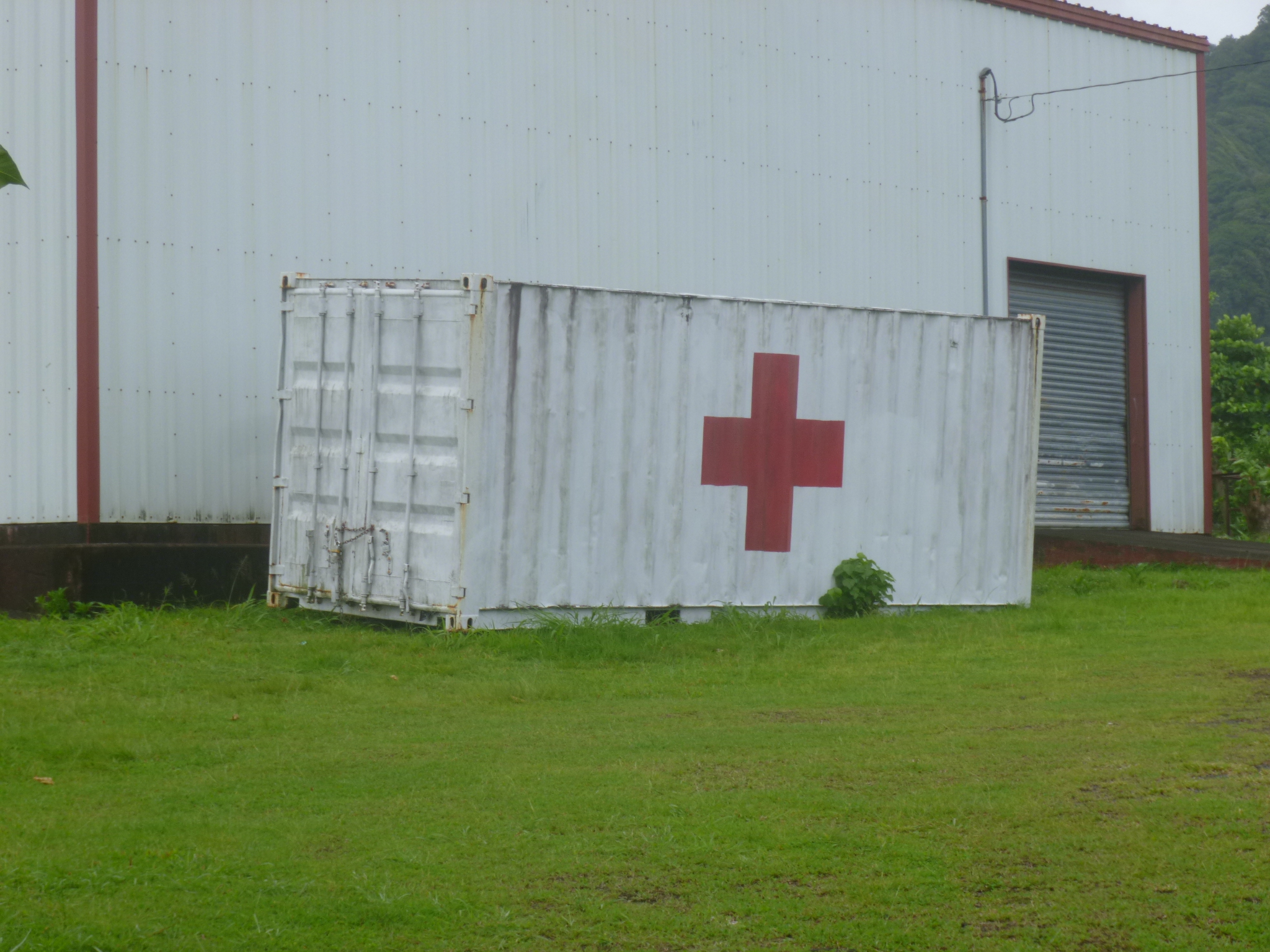
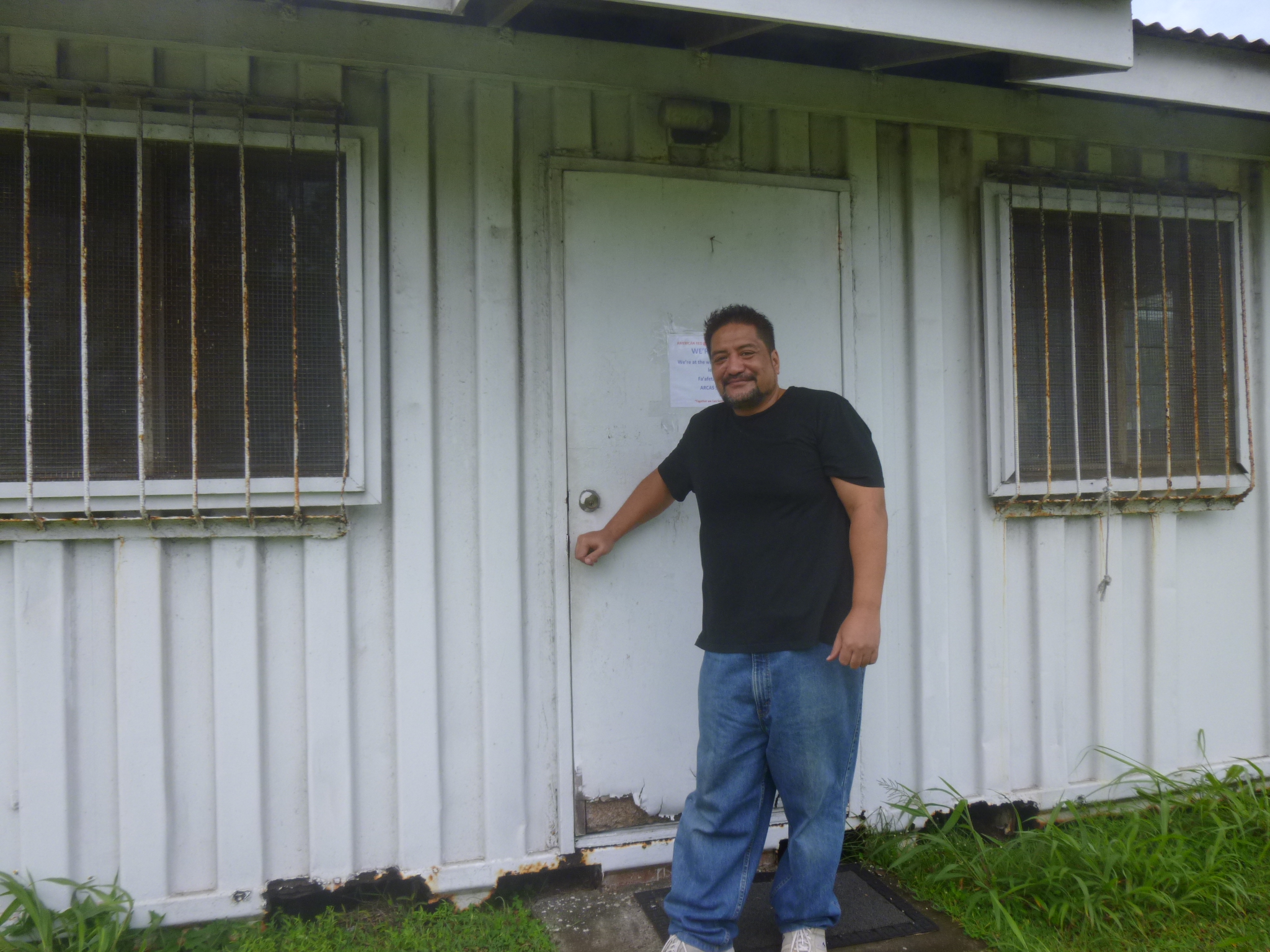
As I headed back into the village of Tafuna, I passed the Tradewinds Hotel, which is the biggest of the 3 hotels on the island, and it’s right by the airport. And there’s even a golf club there. I went by the little Red Cross area, and decided to stop to see if anyone was around. I was taking a couple pictures first, and then someone came out of the office. So I met Val, and he ended up telling me a little bit about how things work in the event of a disaster. At the moment, they were doing some preliminary work, like stockpiling water and some clothes, just in case this storm did hit hard. If that were to happen, the Red Cross people have to take cover like everyone else. Then, when it’s safe to be outside again, they can assess the situation and call for assistance if necessary. When help is on the way, they let the incoming people do their work, while providing the logistics as far as getting around the island and all. It was interesting to hear about it. That morning they had already helped a man who’d had a tree limb fall on his roof because of the wind. Val was interested in what I was doing, and said he would like to mention my story to a newspaper friend of his, which I said would be fine. I made my donation and went on my way – happy to be able to help a tiny bit, especially since there was questionable weather around!
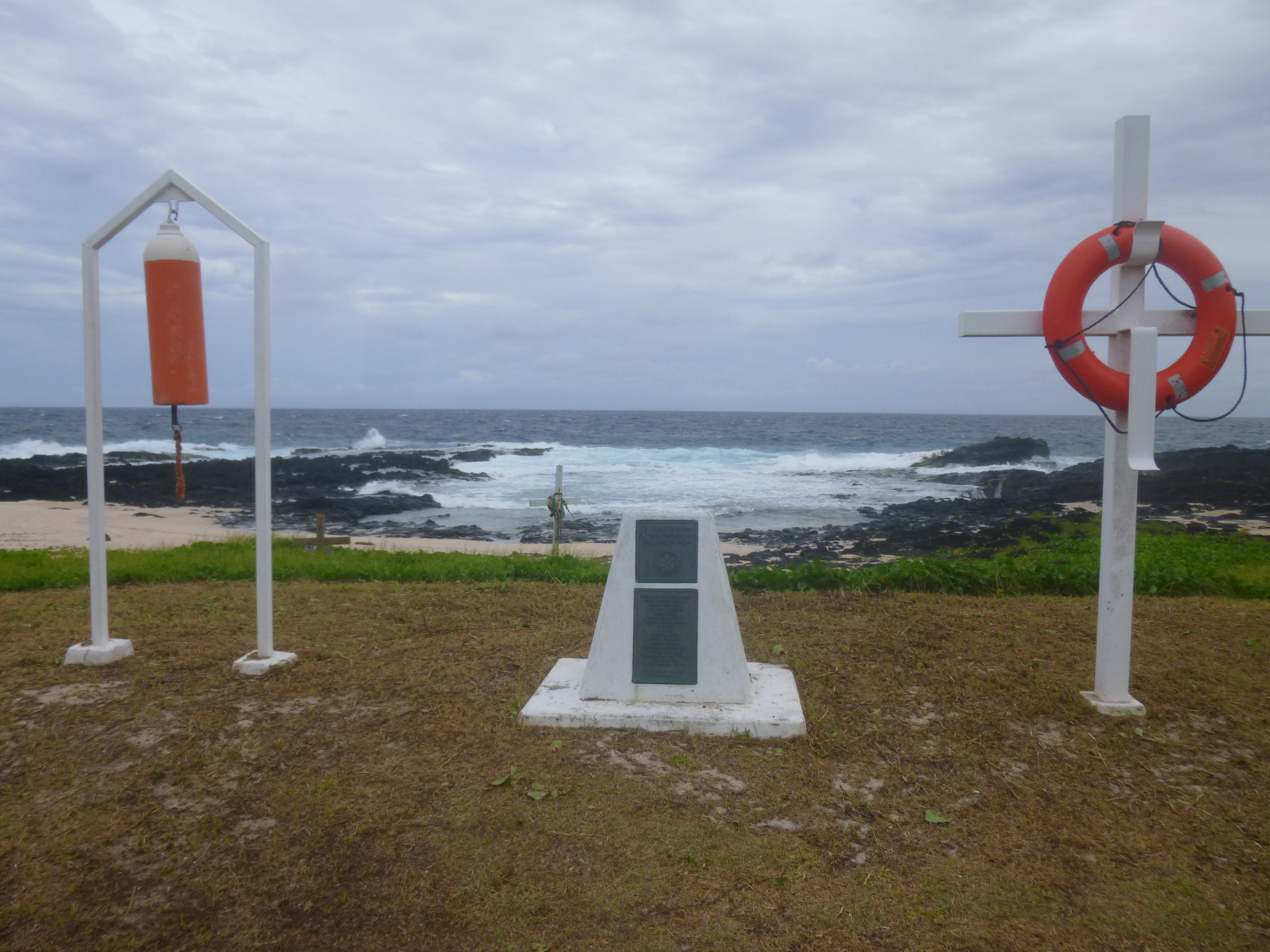
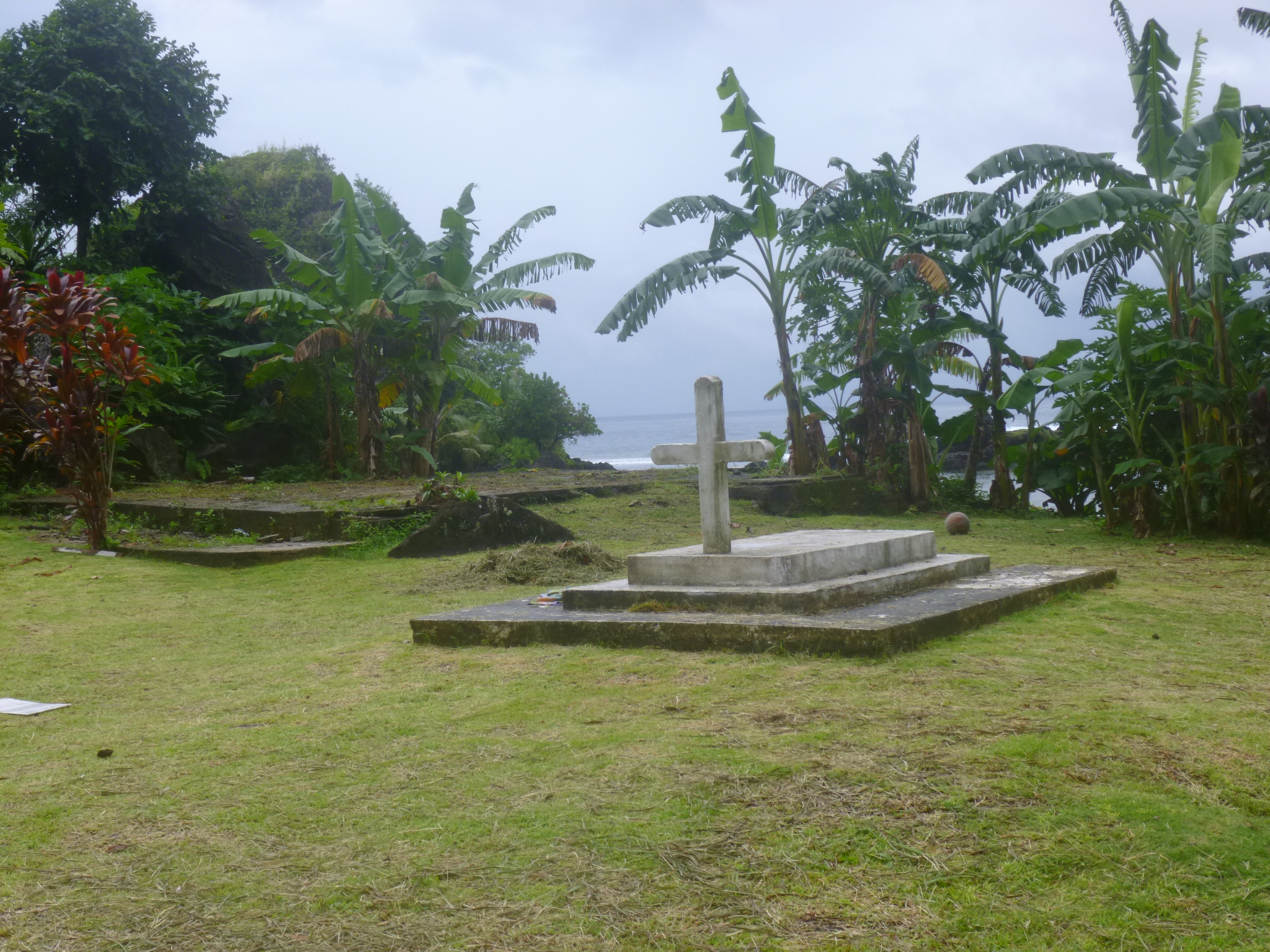
From there I backtracked a bit to a place where I’d seen a road leading to the sea where there was a legend of a turtle and a shark. I didn’t know what this legend was, but if it was on the map, I wanted to go find out. it was kind of a bumpy drive down, but I got to the ocean, and saw a memorial sort of thing, which I thought might tell me something about the legend. But it was a memorial to some people who had drowned, and there was a very nice marker about a Ring of Hope, symbolized by a lifesaving ring to throw out to someone in trouble. I didn’t know where the shark and turtle thing was, and I saw more kids out working in the yard, but one was taking a break under a tree, so I asked her if I was in the right place. The girl said I should go talk to her grandma, and she took me over to her – she was doing something with some tree branches. I told the grandma I was curious about this turtle and shark legend, and not only did she tell me the legend, but she walked me out to the cliffs overlooking the ocean, and proceeded to sing a chant in Samoan for a good 10 minutes, hoping to call in the shark – who apparently frequently shows up! But the waves were very rough, and pounding against the cliffs – we got sprayed hard by one. It certainly wasn’t calm enough to see any turtles, and the shark didn’t appear, but I had absolutely no doubt it was nearby! The lady’s name was Sena and she loves her place in Samoa by the sea – it was incredibly special to meet her. She said when the sea is calm, you can dive from the rocks (although she still swims, she doesnt dive anymore!) She pointed out the tombs of her in-laws, which are in the front yard, and they’re decorated with Christmas lights this time of year. Many Samoan homes have tombs right near the front door our out in their yards – keeping their loved ones nearby. The legend as she told it,in a nutshell, was that long ago, during a time a great famine up in the mountains, there was absolutely no food to eat, so an old blind lady asked one of her family members to lead her down by the sea where they could surely find some food. The old lady couldn’t go by herself because she was old, and needed to have someone help guide her. They made their way down a mountain, and could smell someone cooking something wrapped in leaves. The old lady was ready to eat. Then her companion saw that they had been tricked, and that the food someone had cooked was a rat, and the companion told the blind lady she couldn’t eat the rat. People are supposed to respect their elders, and the old lady was very discouraged to be deceived by this trick. The old lady felt if she was going to be deceived and tricked, then her time on this earth was over, and she asked her companion to leap off the cliff with her. So they jumped into the sea. The old lady turned into a turtle, and the younger one turned into Fonowea the shark. The chant is about calling Fonowea back and asking to see the turtle (who doesn’t seem to have the name), saying how much their family here on earth misses them, and how beautiful they are, and so on and so on. Sena told me she forgot to bring leaves to throw into the sea, which the shark and turtle can use for clothes. It was a wonderful place to stop, and if kids had been in school, I probably wouldn’t have met the grandma! I imagine there are slightly different versions if the legend – one has it that after the grandma and granddaughter flung themselves into the sea, they were indeed transformed into a shark and turtle, and swam around to many places looking to find a new home. They finally found a place they liked, and these villagers were compassionate, and through magic they were turned back into their human forms. But they couldn’t resist the call of the sea, so they thanked the people of their new village for their kindness, and transformed back into a turtle and a shark. But they told their new people that in exchange for their kindness, they could sing the chant, and the turtle and shark would always appear when they heard it. And this is the chant that’s been sung for generations.
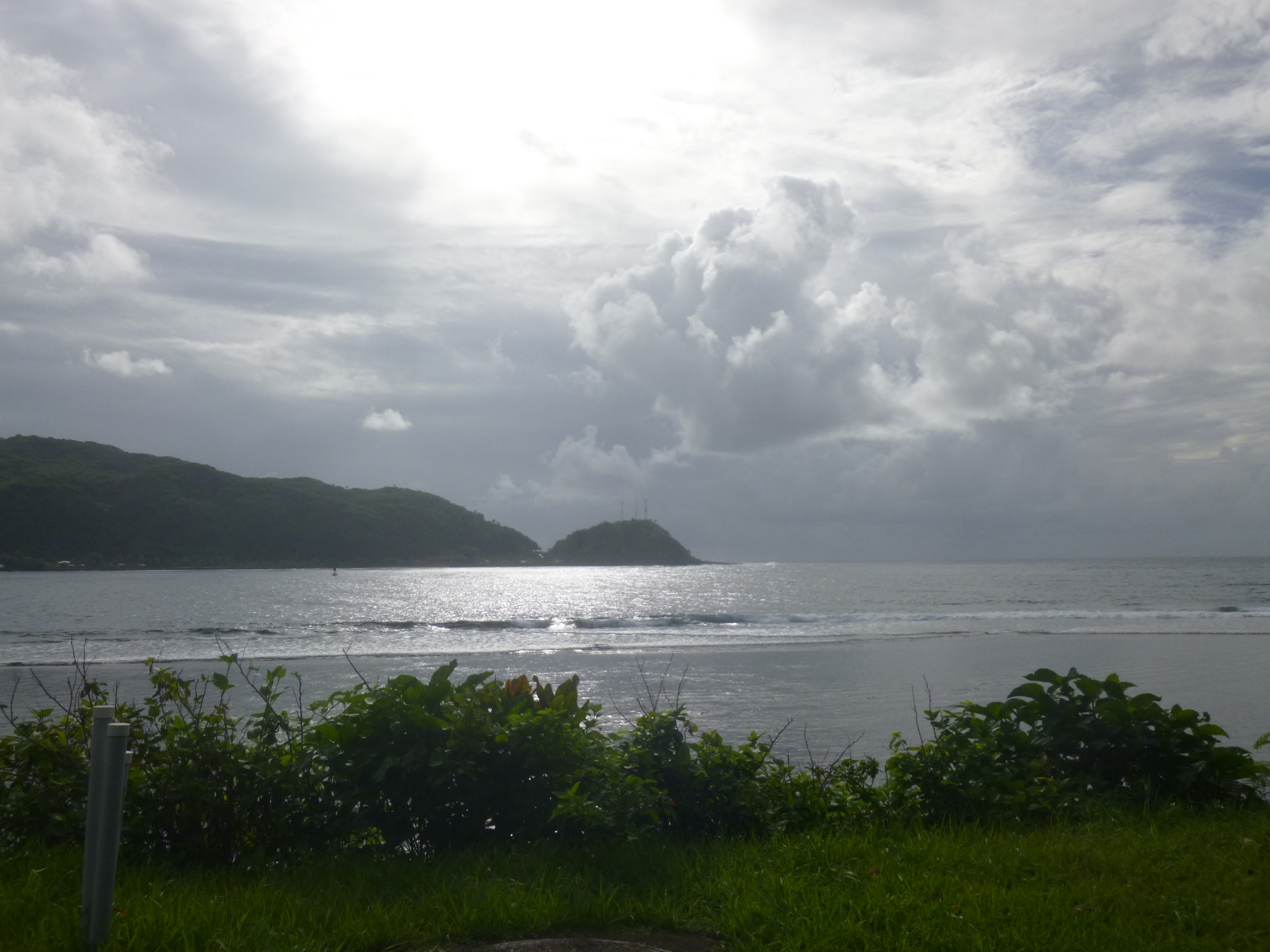
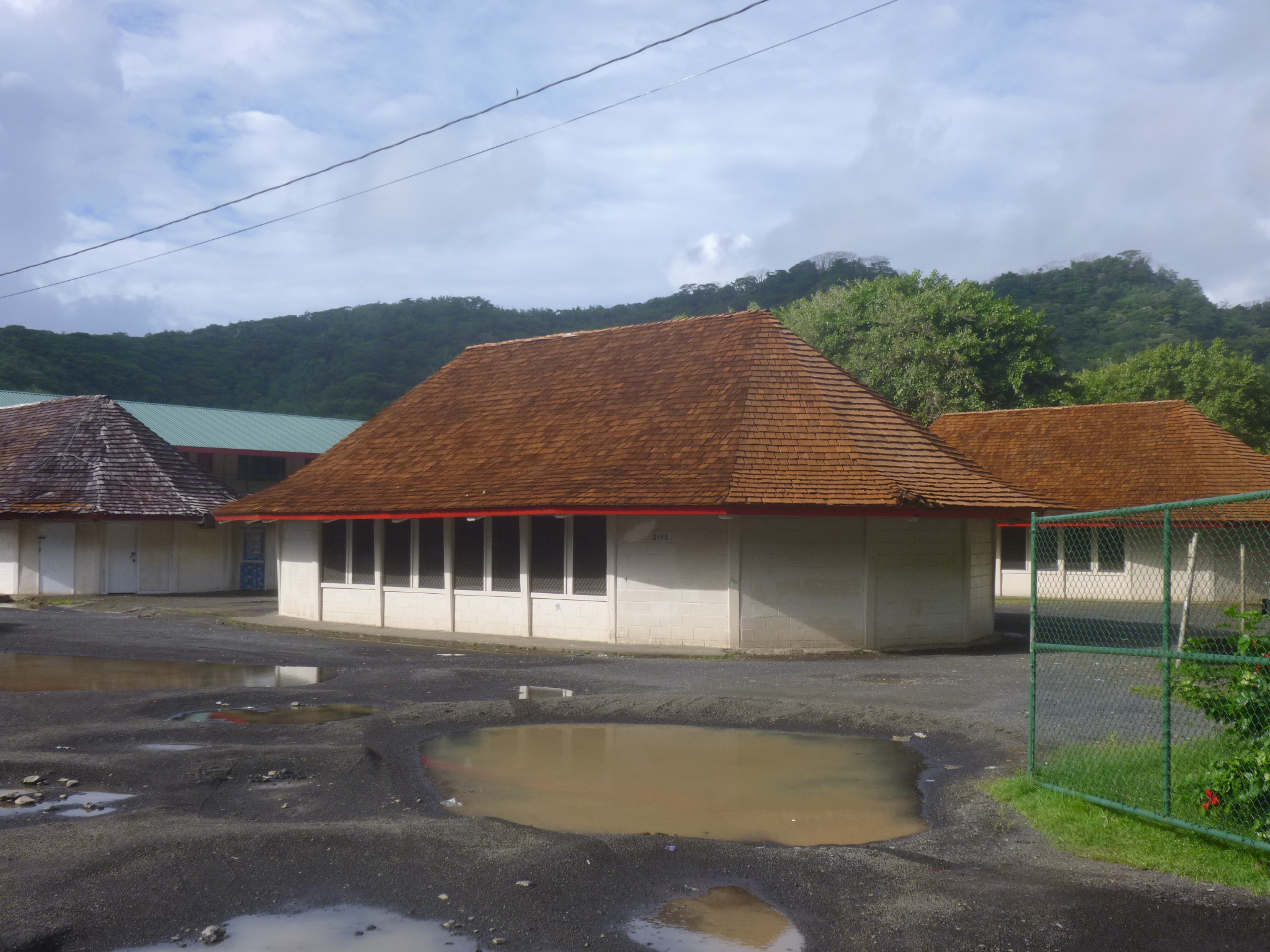
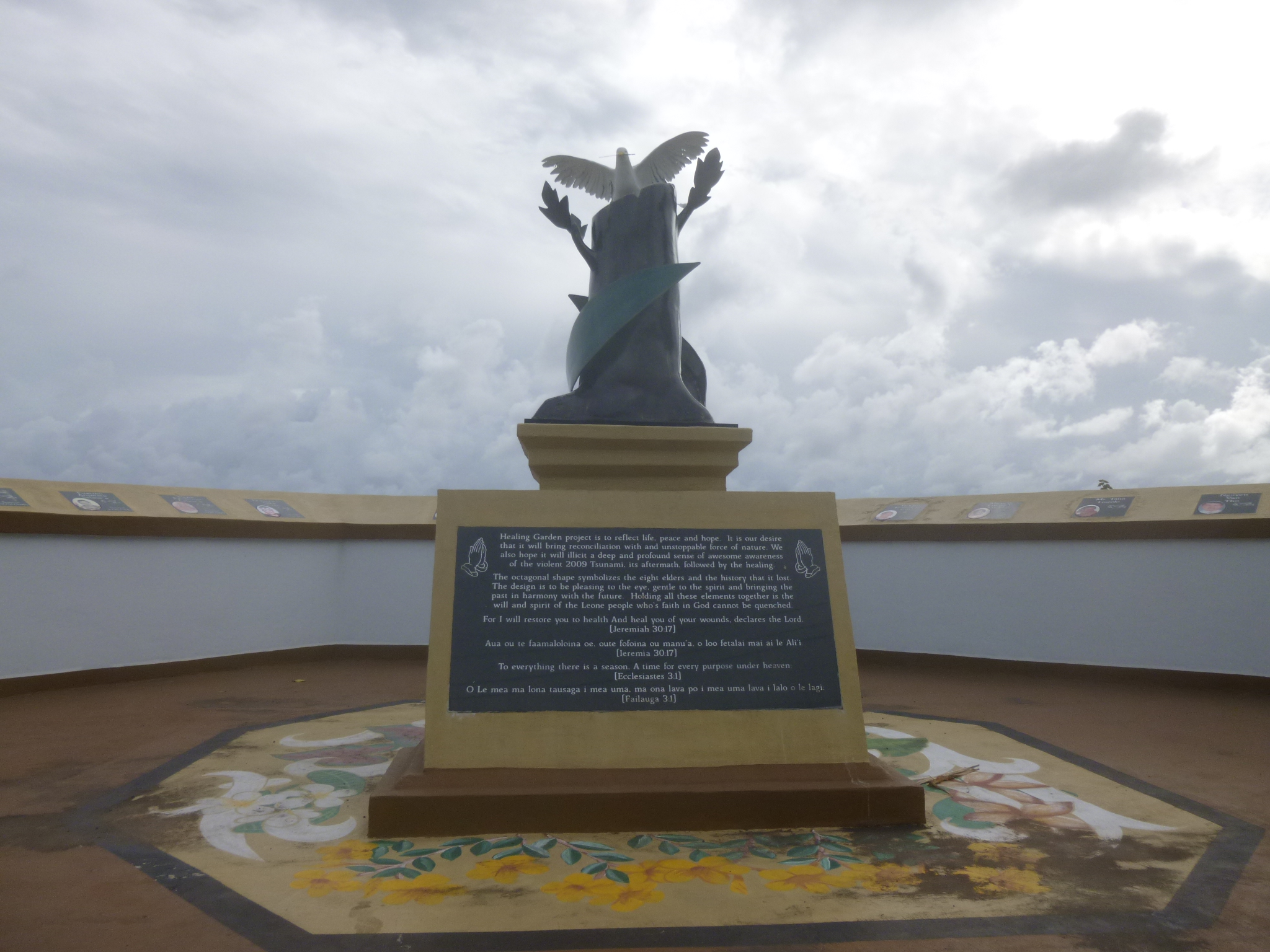
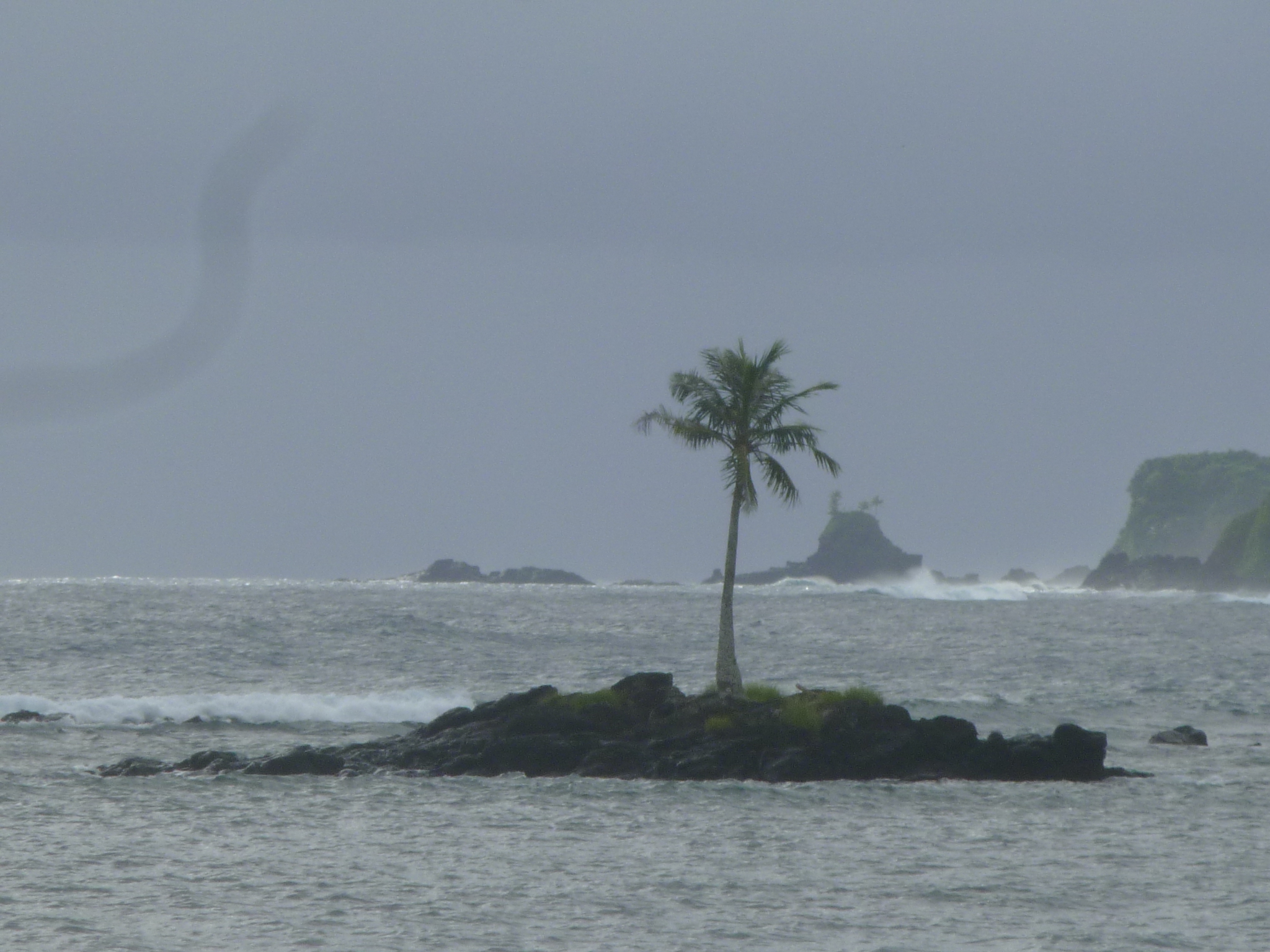
Then it was time to head to the village of Leone on the far west side – I wanted to see the Tsunami Memorial. It was a crowded drive there, and some construction work was going on, but the memorial was very pretty. There were pictures of the victims, and instead of calling the day they were born their birth date, they called it their sunrise date. Then I wanted to follow the road to its end, through the steepest of the mountains, winding around the northwest corner of the island. I don’t think I ever got above 10mph. The road was not much of a road in places – there was grass growing out of cracks, and I thought about how isolated those few villages were. I pulled off to one village which looked nearly abandoned – lots of destruction still apparent from the 2009 tsunami. Although there were some FEMA tents still standing, and laundry hanging out, so I think someone was still holding on to the place. At long last, I made it all the way to the very last village where the road just deadended. There were a bunch of people in one of the community gathering places, and I didn’t want to interrupt anything, so I just turned around and made my way back. It was evening time now, and work for the day was over, so in nearly every village I drove through, there were big volleyball games going on, or games of cricket being played in the street, and kids swimming in shallow protected areas of the ocean, and other groups of kids just sitting together and talking. It seemed like everyone was outside even after the sun set – no TVs and computer games! Even though the clouds were out, the sunset was still pretty, backlighting tiny little islands that only had a couple trees growing on them.
It took a while to make my slow way back to the motel, and get gas for the car. The storm swung away from the island, so it was a good day all the way around.







American Samoa – Sunday, January 20
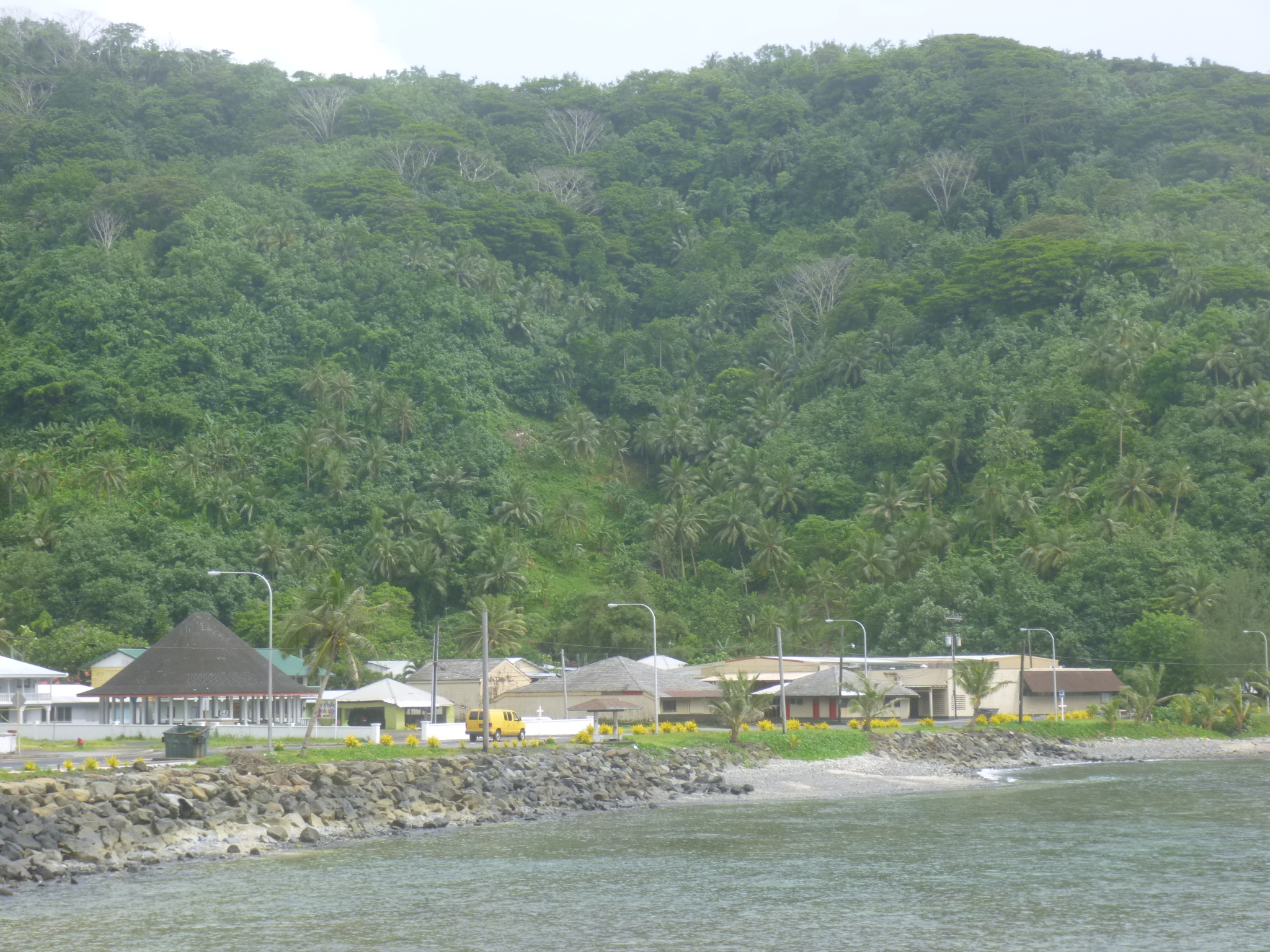
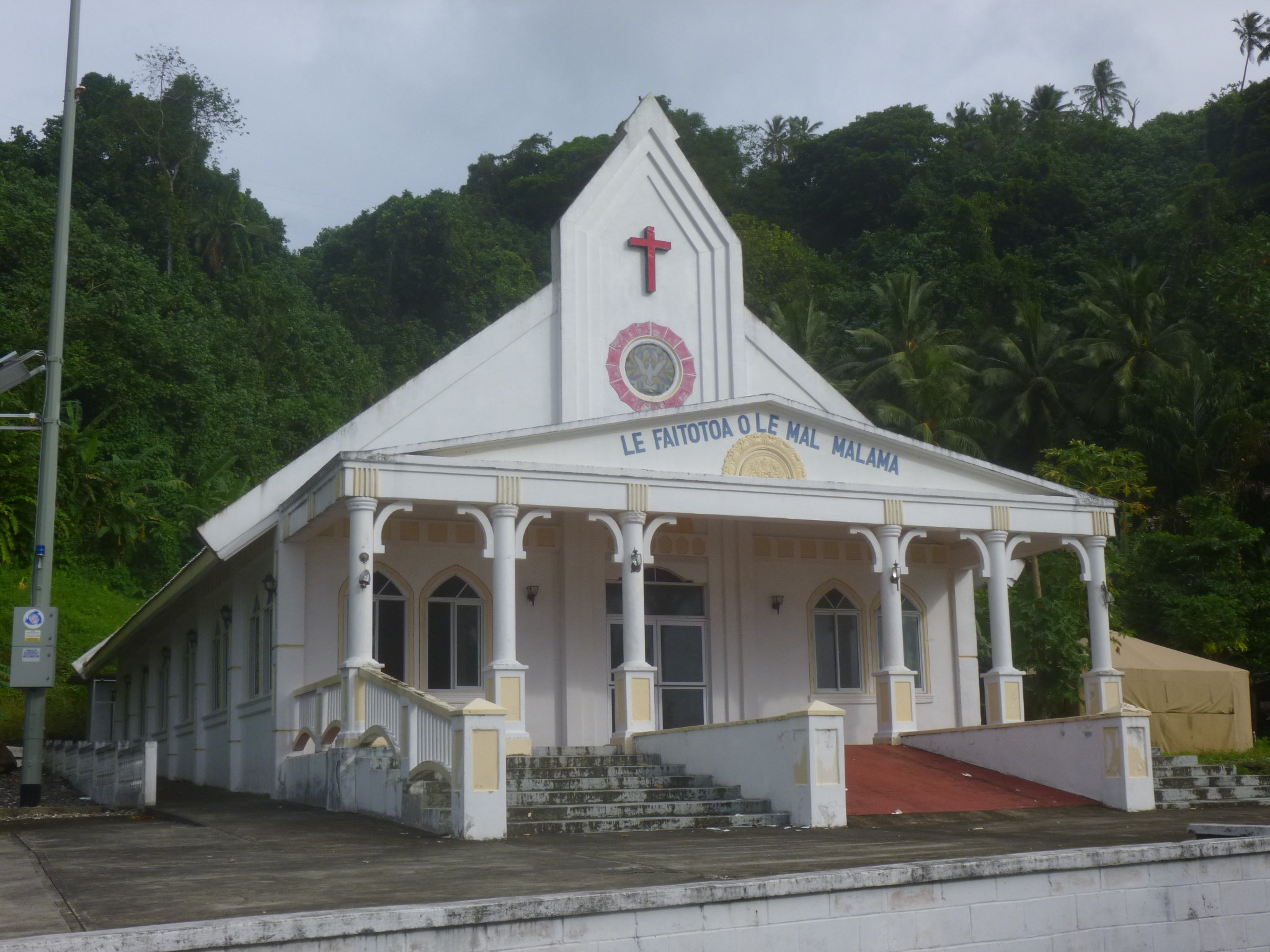
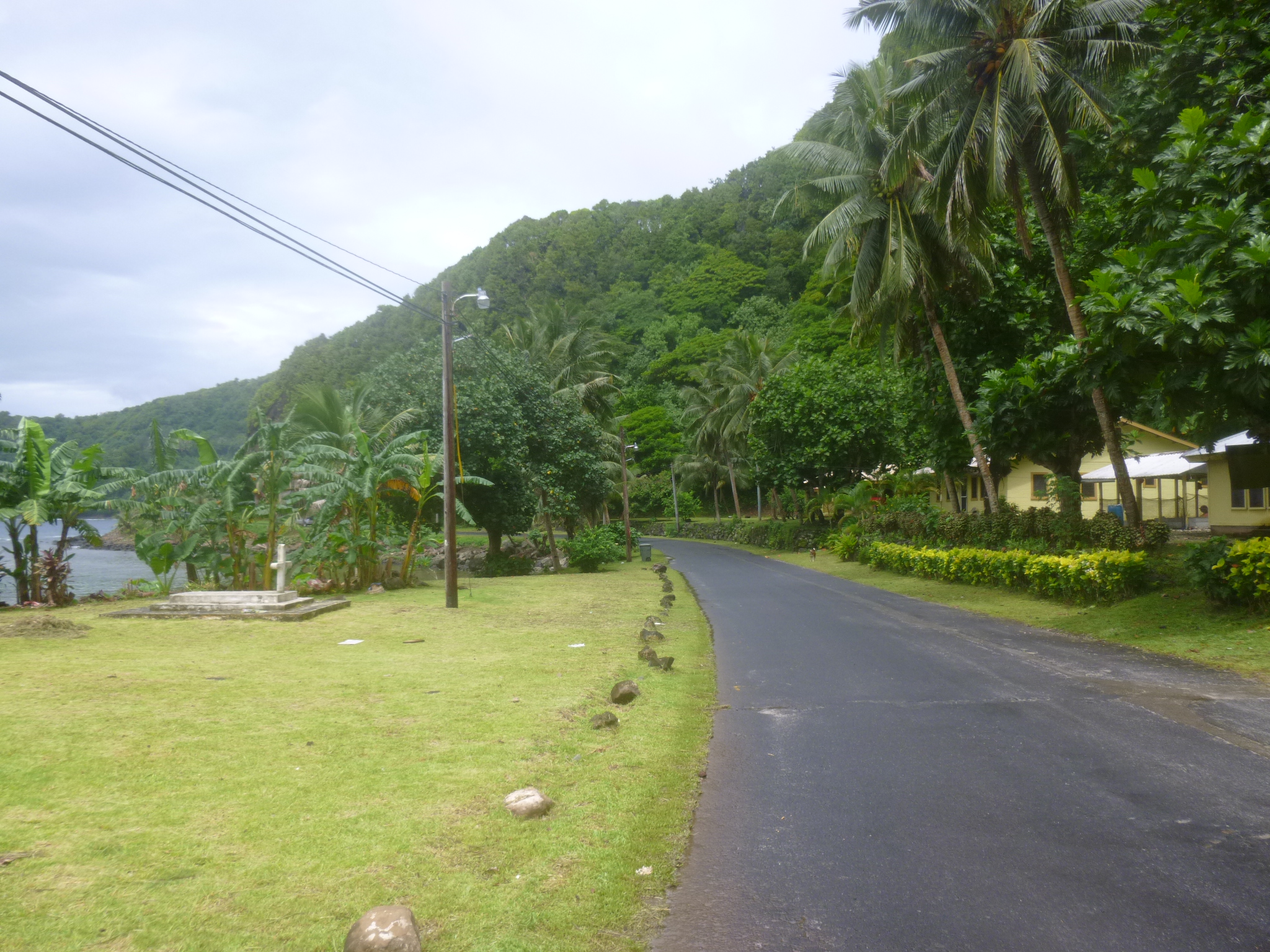
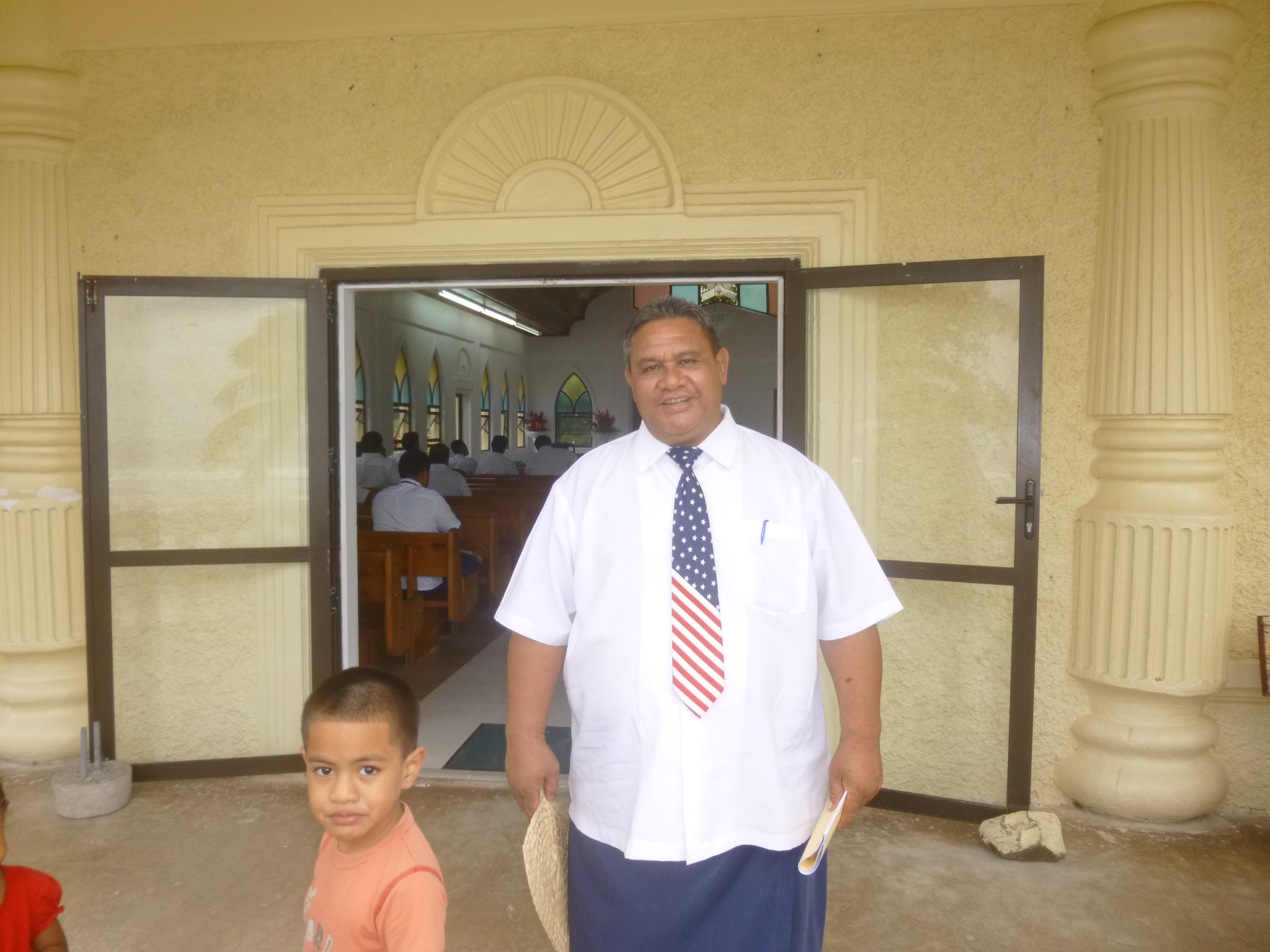
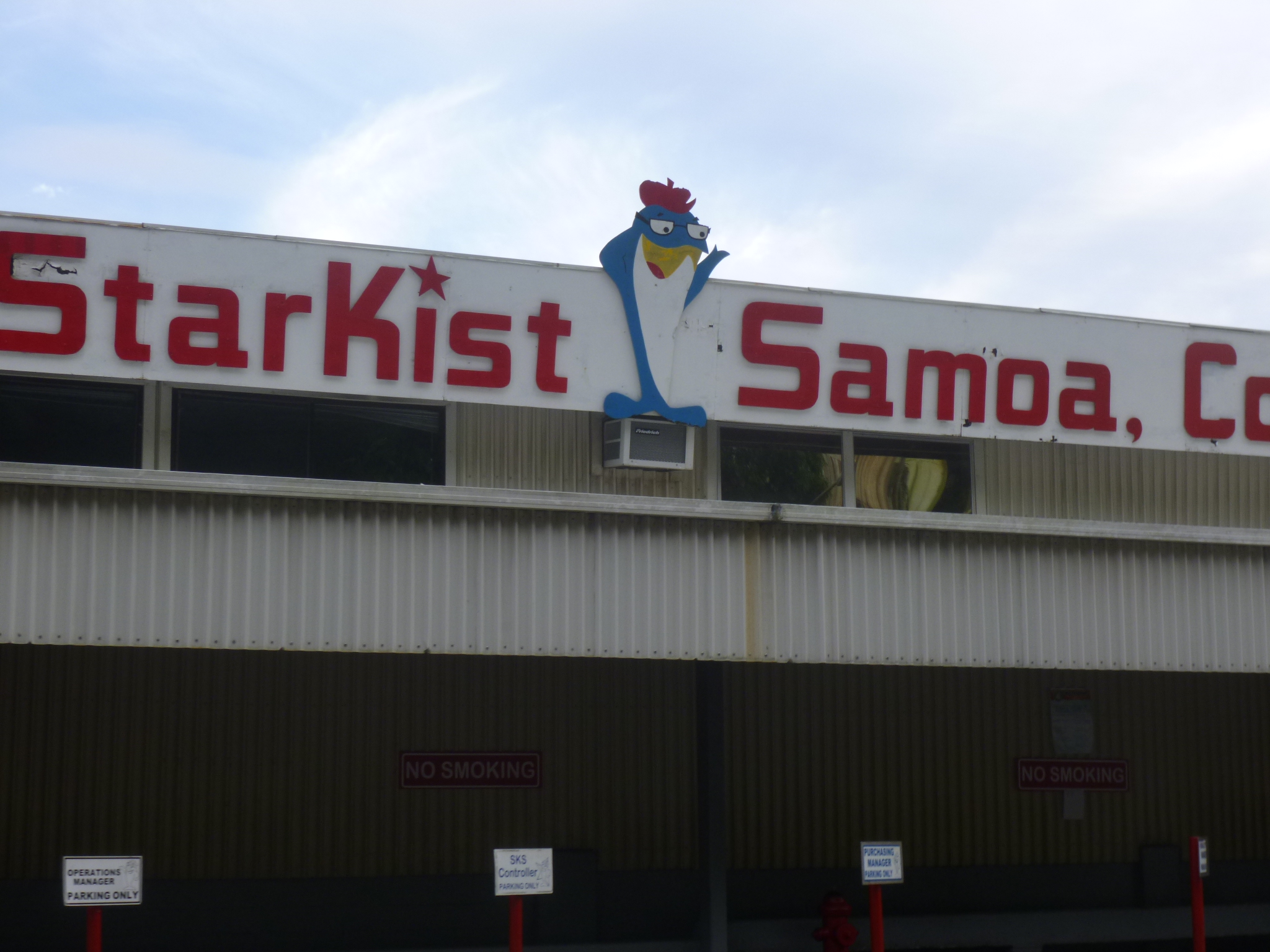
I was able to rent a car for today and tomorrow, so I could cover a little more ground. My goal today was to explore the less crowded east side of the island, and then cover the west side of the island tomorrow. Today was Sunday, and the people of Samoa are very religious, and nearly all businesses are closed for the day, and the buses do not run. So I packed up a sandwich, bananas, carrots, water and even brought along the ice bucket from the motel to help keep things cool. And I set off with the intention of pulling over whenever I found a good walking place. The center of the island, where I’m staying, is usually quite busy, especially with the port here. It took a bit of time to drive past the area I’d already walked around, and then I came to a huuuuge Starkist tuna factory. It wasn’t running today, but it’s a very long building right along the water, and looks very industrial and would not be an area I would feel comfortable walking by. Later I found out that the tuna factory and the government are the 2 biggest employers in the island. Once I got past the tuna factory, I was utterly charmed for the whole rest of the day. I drove through numerous little villages that were all very similar – groups of mostly small, colorful square homes with a church or 2 kind of dominating each village. And since it was Sunday morning, everyone was flocking toward church. Samoans have large, close-knit families and everyone I saw was going to or coming from church. Most people were dressed all in white – the women in the 2-piece tunic and long skirt outfits (I never quite understood the Samoan word for them) and the men in white shirts and ties, and many wore the lava-lava “skirts” and some had a sports coat on too. Many carried umbrellas, which I think they frequently do anyway – the island seems to be prone to frequent short showers and I got wet on my first walk! But everyone just looked so fresh and white – it was all very attractive, even though they had to dodge mud puddles in all that white! The churches are all similar – rectangular buildings with an ornate front, and the windows are made of horizontal glass slats and all windows were open, so I was able to enjoy beautiful singing as I was walking by. The Samoans like to sing! And i also heard part of a sermon in Samoan. It made me feel a little guilty to be out walking when so many people were in church! But it also made me want to make a donation to a church, but I wasn’t quite sure how to accomplish that because I certainly wasn’t going to interrupt anything, and I figured it was family time afterwards, but the day was young.
I didn’t make a donation yesterday – I’m having to look at other options than what I often do because there are no food pantries, soup kitchens or homeless shelters on the island – the people take care of their own, and I heard this several times. If someone is hungry, someone else will make sure they get something to eat. And there is a lot of natural food around with all the bananas and coconuts and taro root. I heard the only people who might be out wandering around are a few with mental challenges, but even they’re looked after. And while there might occasionally be someone who sleeps on a bench at a bus stop, it isn’t a typical thing. The island is small; the families are close; and they seem to take care if each other – and that is wonderfully refreshing. But, it isn’t all idyllic – I heard a surprising number of sirens, and there is a correctional facility on the island, and there’s also a big Catholic social service organization on the more-crowded west side of the island to help people with alcohol and drug issues and domestic violence and that sort of thing, so there are social services available when necessary. But all-in-all, I’m approaching my donations from a different angle, and will look toward churches and schools and see what else I run across.
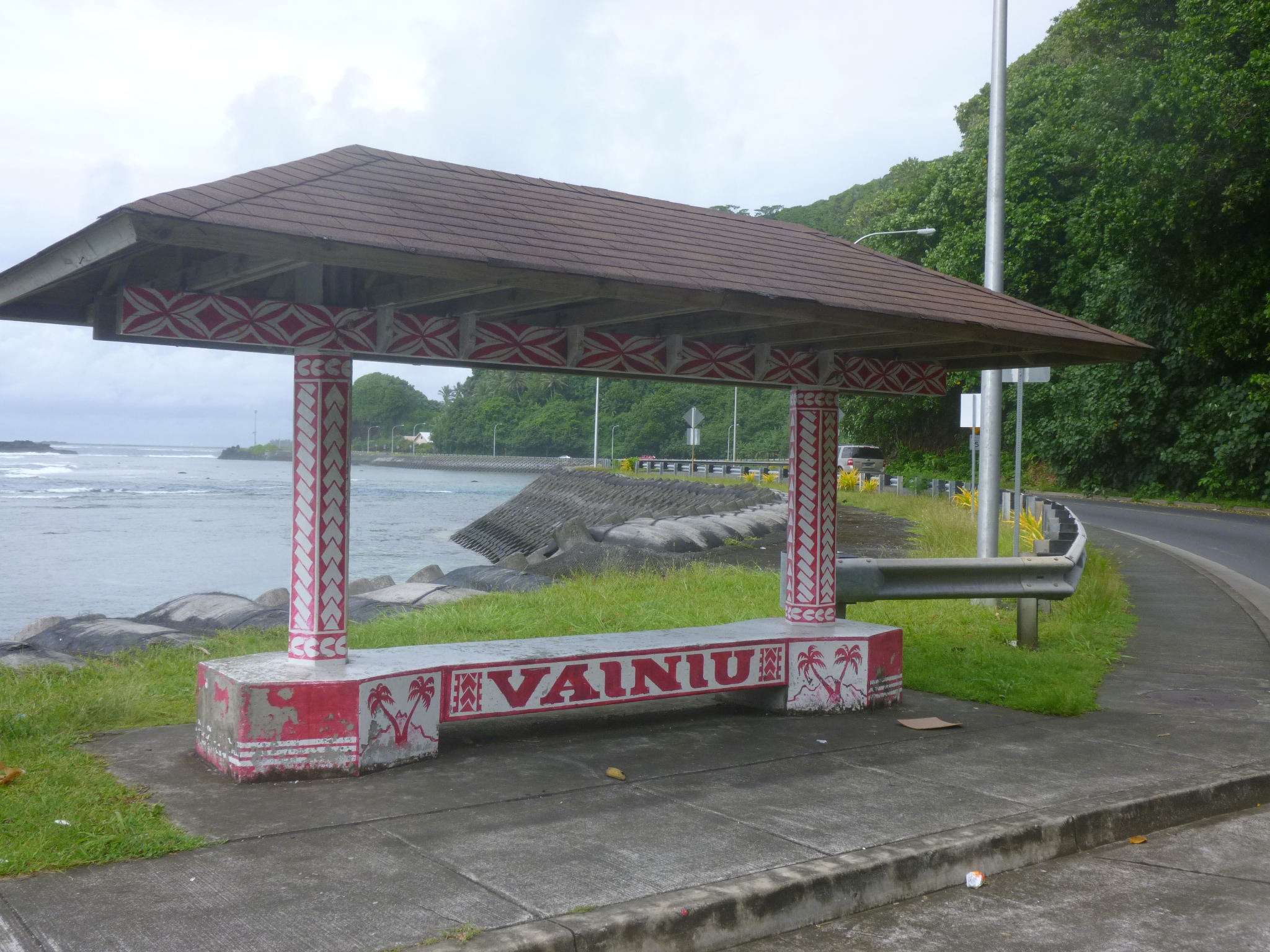
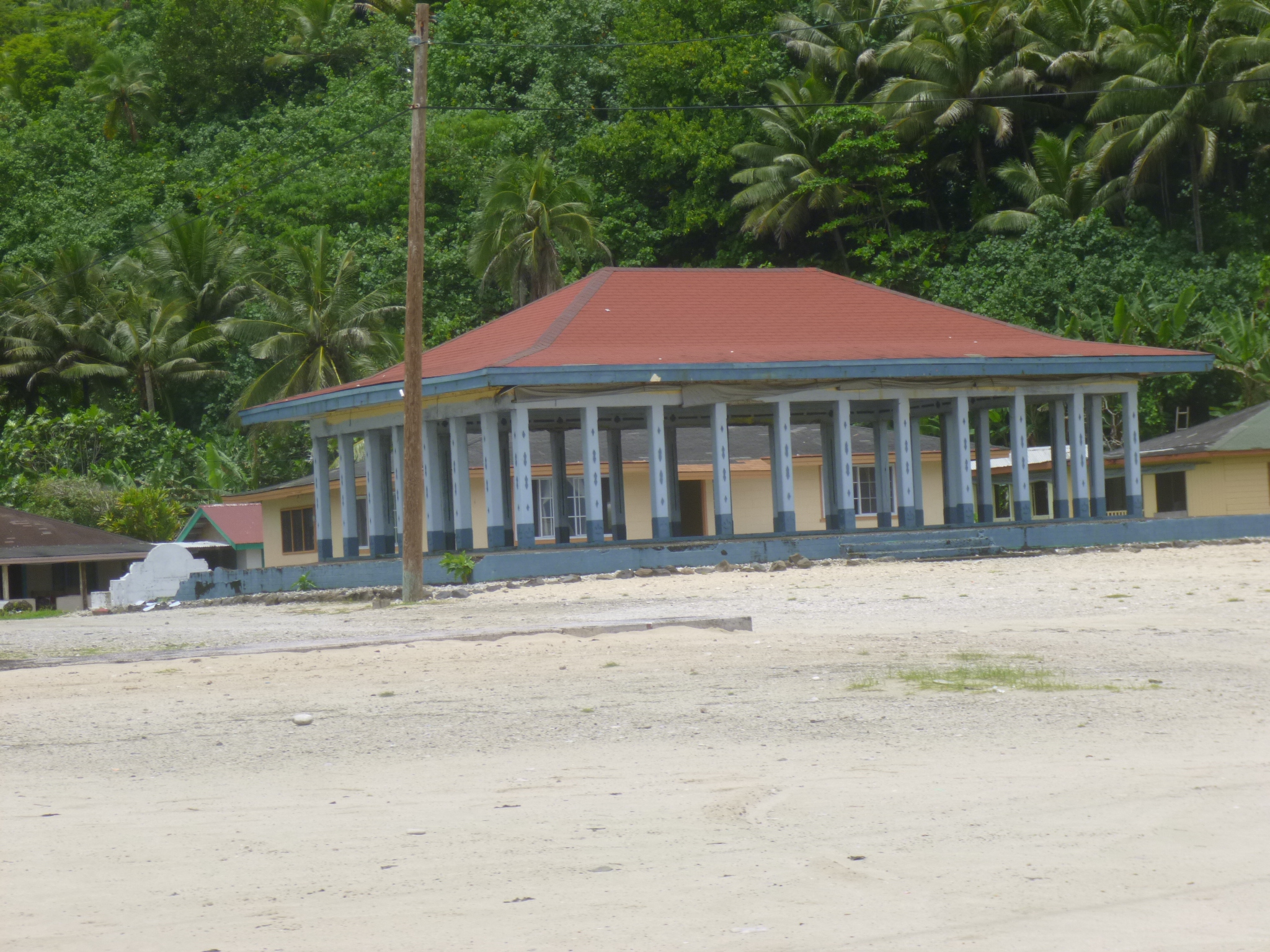
I continued my drive along the one road on the east side of the island – through villages with names like Atu’u, Aua, Aumi, Avaio, Afulei, Pagai, Fofa’au – they begin to all look alike! The villages are small and often less than a mile apart. In addition to the homes and churches, most villages had a small general store, a bus stop, and my favorite – numerous outdoor community gathering places that looked like large rectangular gazebos with open sides. Groups of people could gather in them – the roofs would keep them out of the glare of the sun, but the sides were open to the ocean breezes. Many of these buildings were right near the churches and I’m guessing they could also be decorated for weddings and other special events. I liked the whole idea of these places. Some were big enough that kids could play some sort of ball game in them. As morning wore into afternoon, I could see more and more people spending time outside – this is not a place where people keep there noses glued to the TV or a computer!
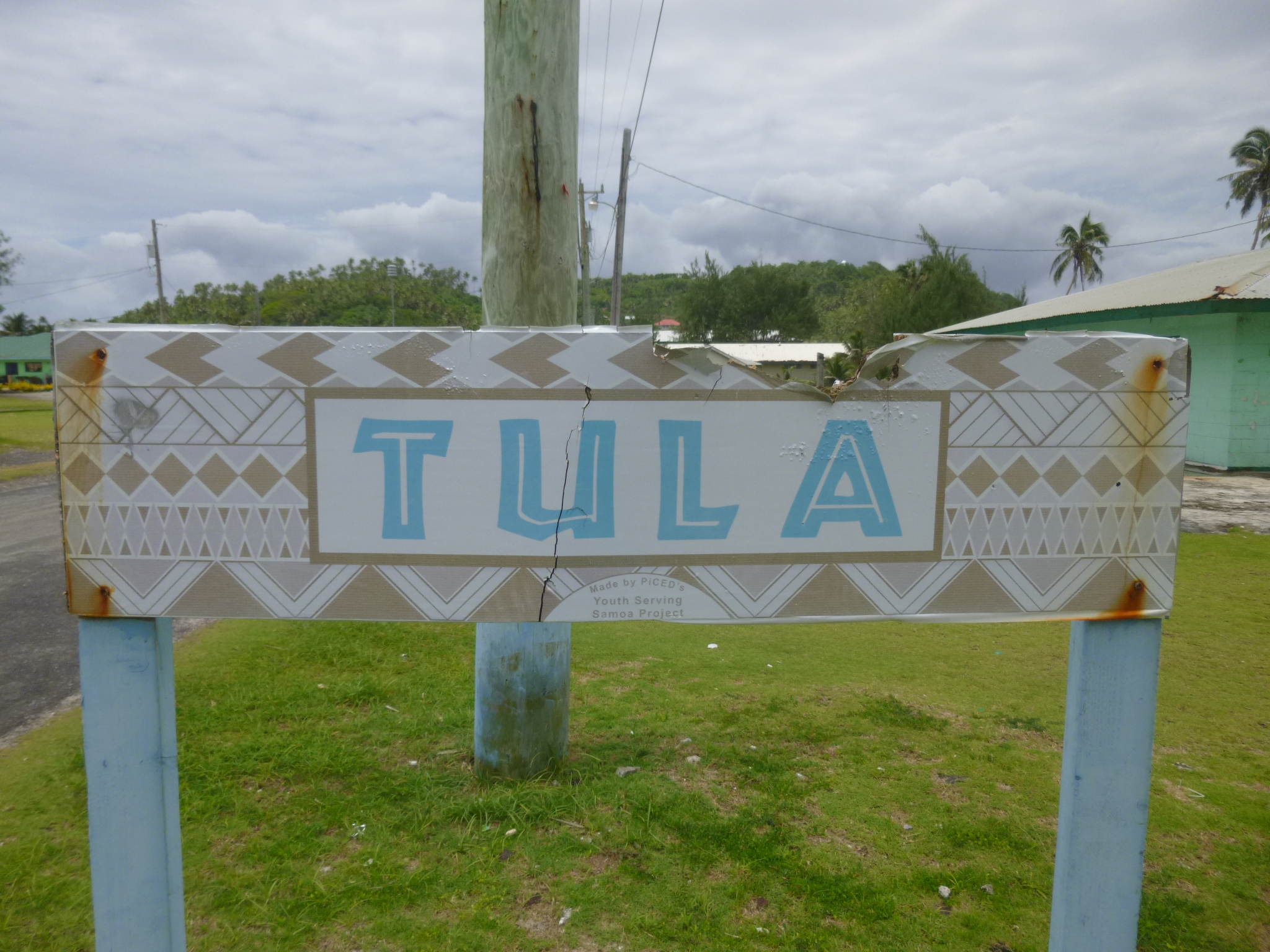
And then I came to my favorite village on the farthest east side of the island – Tula! Who knew my dog would have the same name as a small Samoan village! It was a pretty village – a bit larger than some of the others. There was a nice elementary school, and a narrow sidewalk out of town along the sea. I loved it. I knew I’d be making a donation to the elementary school in honor of my dog! I’d been stopping to walk 2 1/2 – 3 miles at a time along the drive east, which is about all I’m comfortable with in this heat. And then it was always nice to get back in the car with the a/c, but I was out during the heat of the day too. My walking was just along the road which paralleled the coastline – it seemed almost like a wide walking path instead of a road, and not very many cars were out and about. The coastline near Tula was especially pretty, with magnificent huge waves. But…that was because a major storm was heading this way, and they were predicting gale warnings would go out tomorrow. It was quite windy, which helped with the heat, and the waves were a front runner of the storm. They were very spectacular.
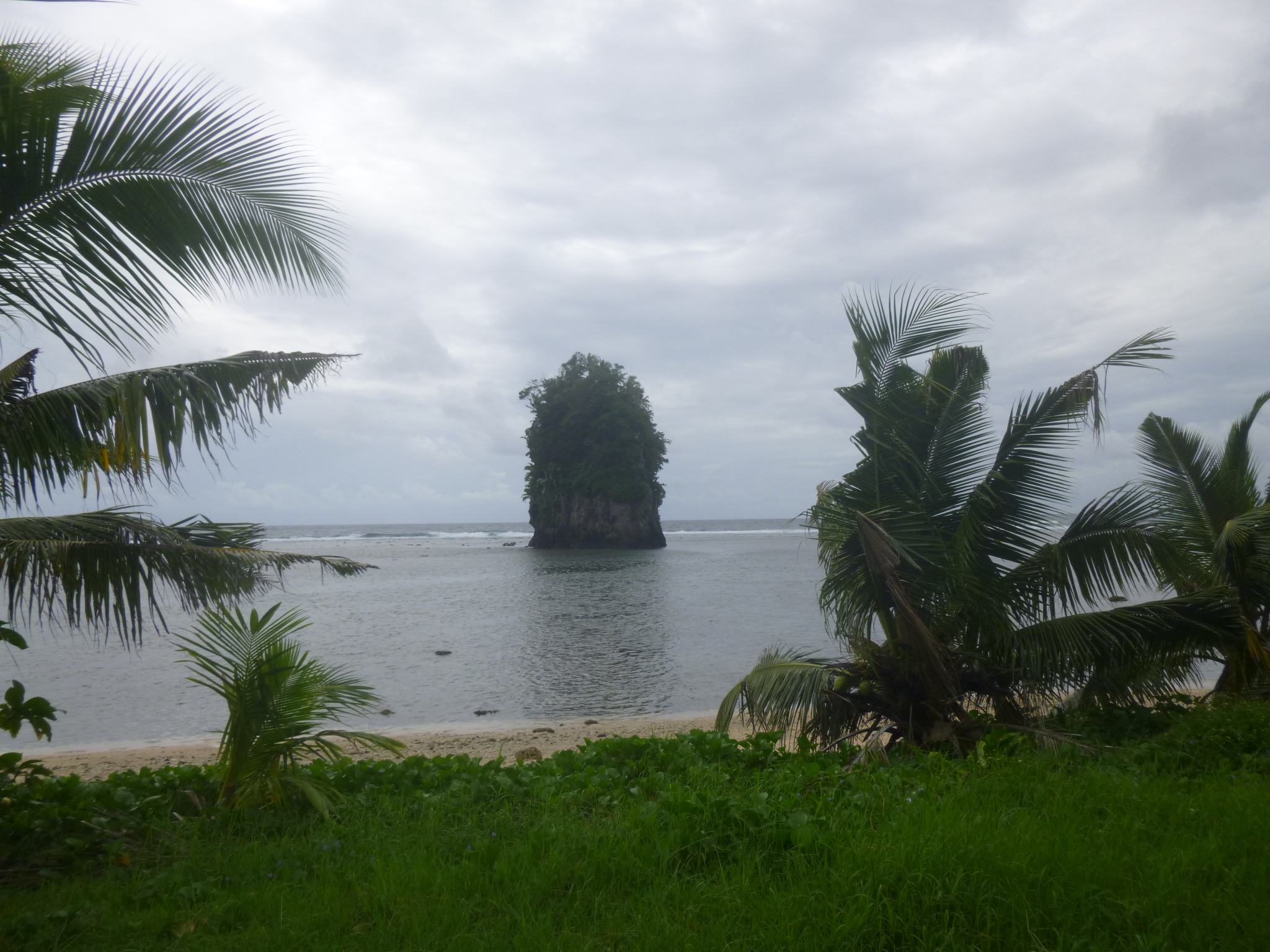
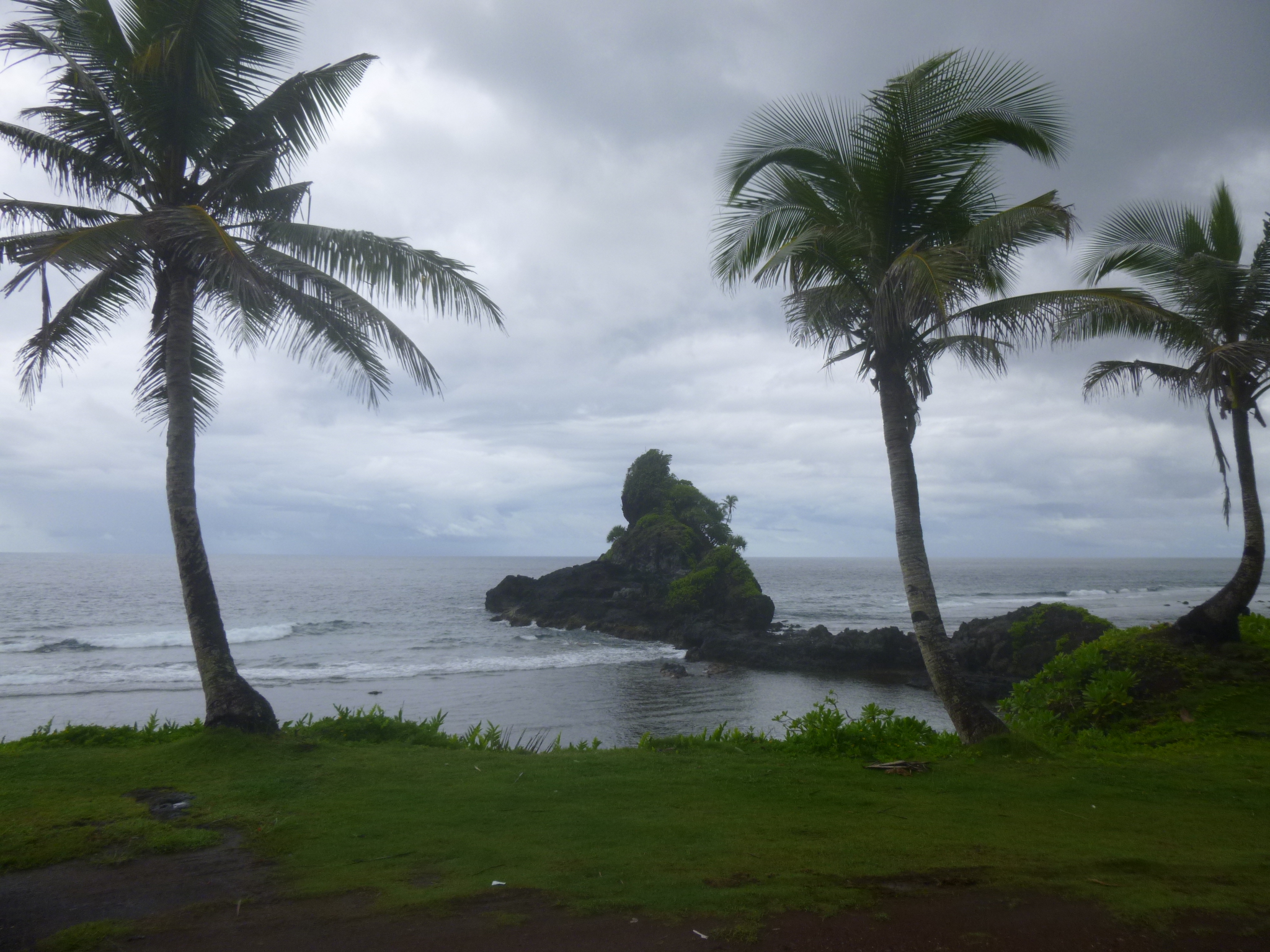
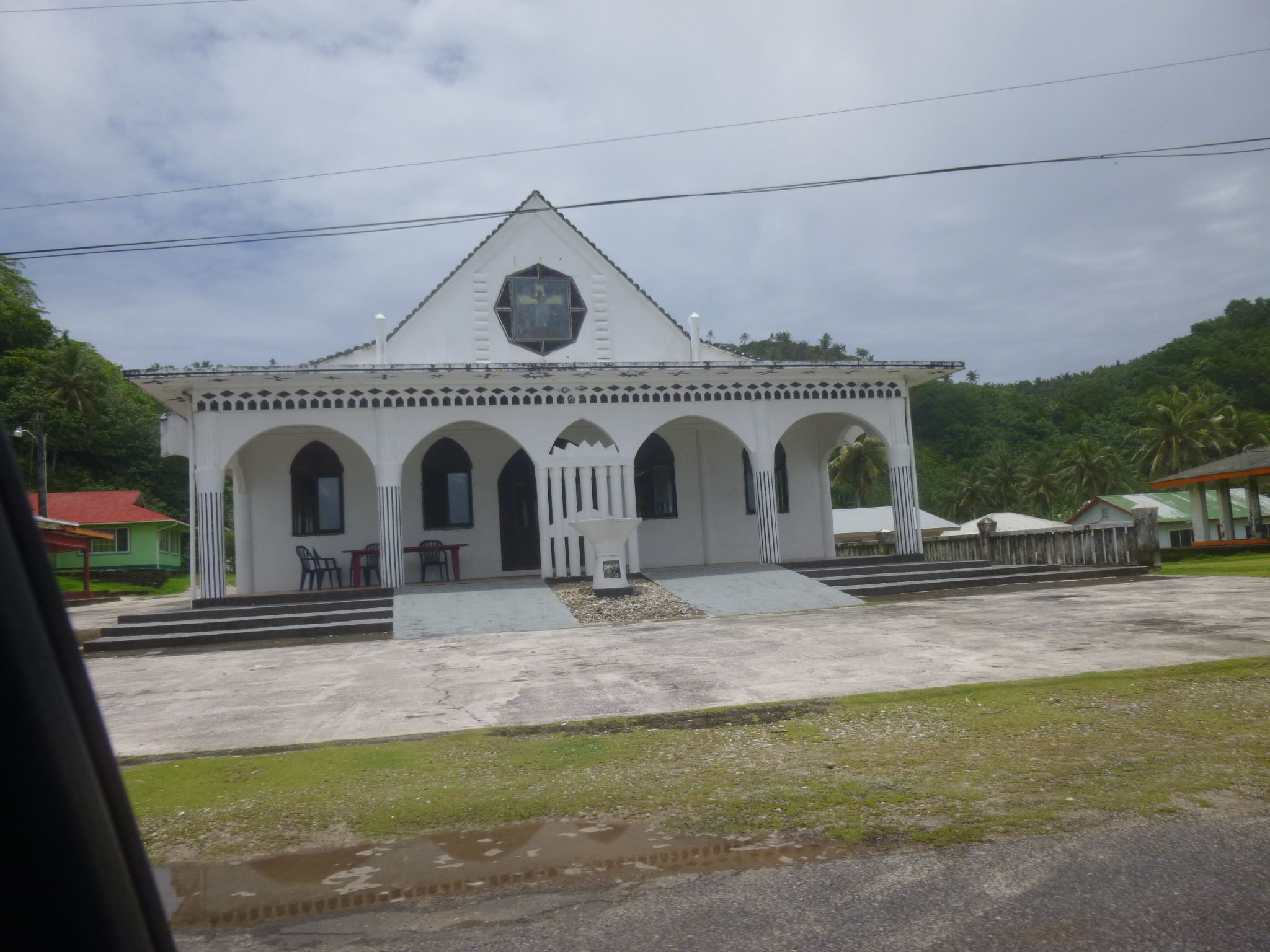
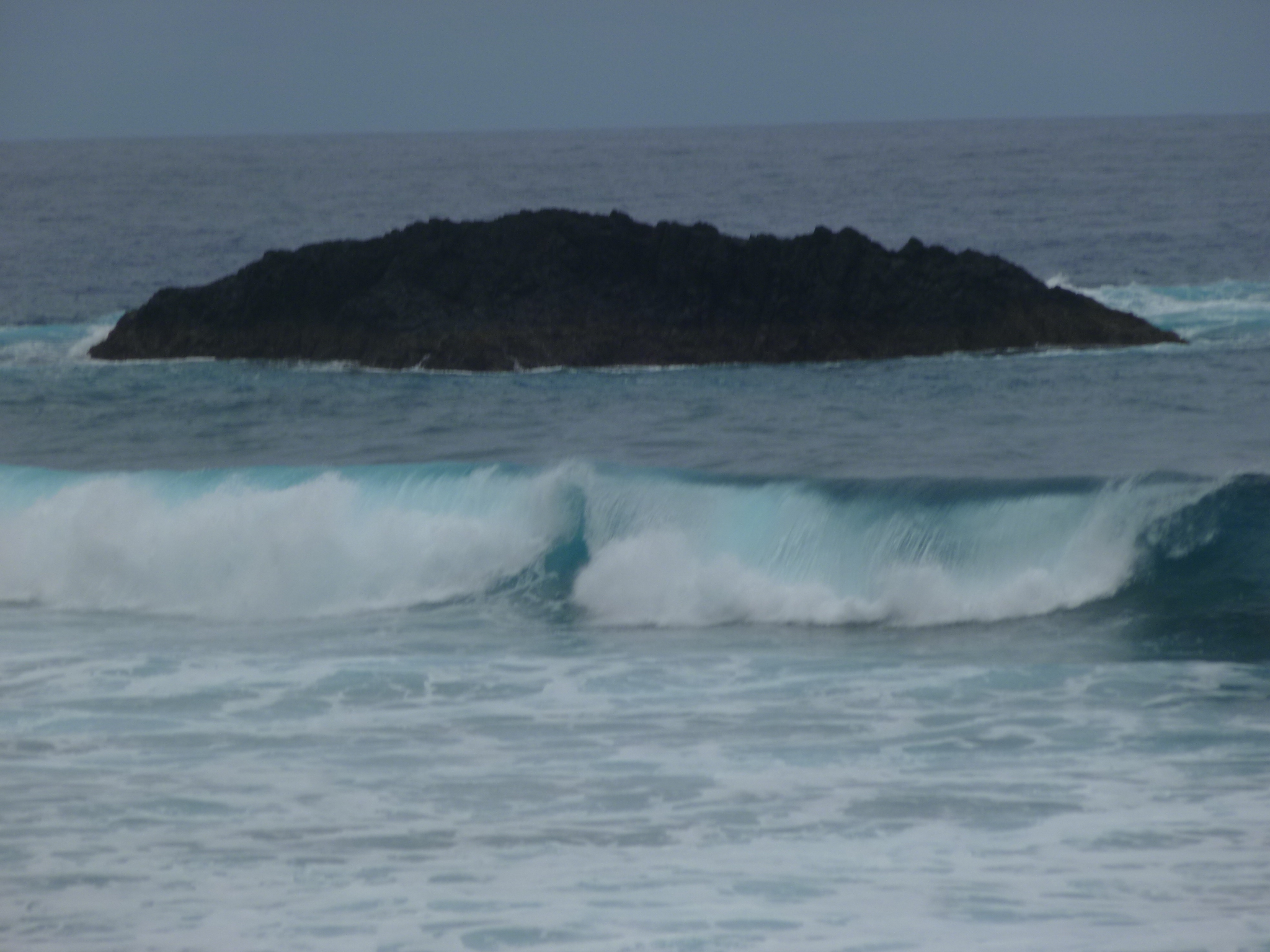
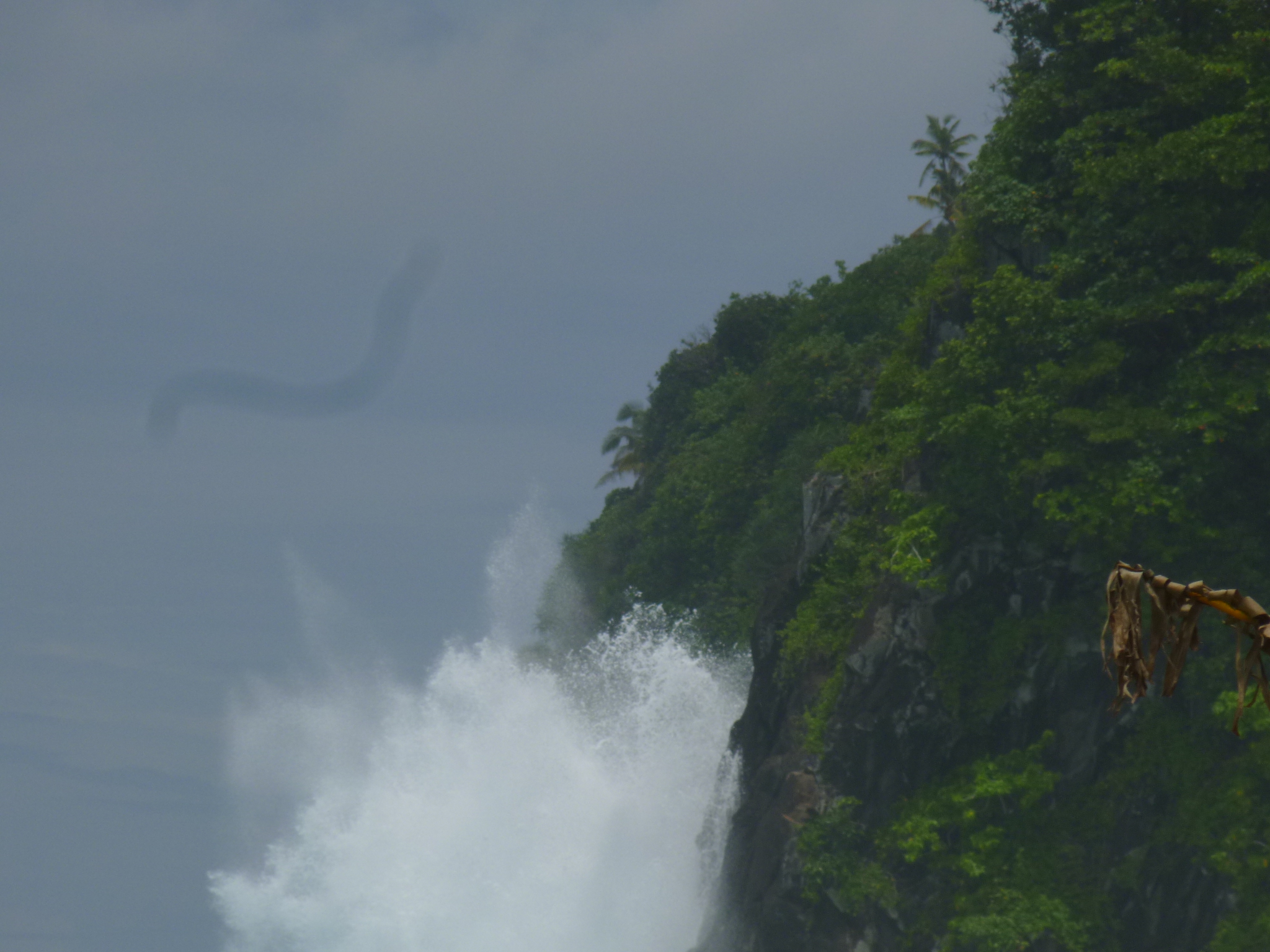
It was getting to be late afternoon now, and there were only 4 more villages to drive through as I rounded the northeast side of the island to the literal end if the road. And I wanted to drive to the end. Then I started making my way back, and decided to take the pass through the mountains to one of the north side villages. It was a steep climb up and down, but had great views of the bays and ocean. I came to the village of Sa’ilele, and again was struck by the power of the waves on this shire also – smashing onto some of the rocky little “islands” just offshore. The road ended in Sa’ilele and I parked the car for one last short walk by the water. There was a pretty church right across where I parked, and the doors were wide open, so I thought I’d go inside and take a look. Some kids who were near the water came up to me and asked to see the pictures I had just taken with my camera. And then they asked if I had any money! I went into the church and then a couple of adults showed up, and I thought I might have committed some faux-pas by going insie the church. But they were there for an evening event that would start in a while. They wondered where I was from, and I told them a little about what I was doing. It seemed like a good idea to mention a possible donation, and the guy said I should talk to the pastor who lived right next to the church (as do most of the pastors). We went to the front porch and the pastor came out and I started explaining what I was doing. He stopped me and went to get some chairs so we could sit at the table on the porch – I thought he felt bad for me, maybe looking hot and tired since I’d been out all day! I told him I was fine and he didn’t have to bother moving chairs, but he said it was a sign of disrespect to stand during a conversation like this. And his little son brought me some ice cold water. In the end, it was a very interesting conversation and they were very pleased to be included in my journey, although it would have to be approved by some of the other church people – the pastor doesn’t makes decisions all on his own – he likes to include other people which is really nice. I wrote out a short note that he could share, and gave them my check. He was proud of his village, and told me the governor and lieutenant-governor both came from this village, although their terms had just ended. I could see people beginning to arrive at the church for an evening event, and I didn’t want to hold him up any longer. Even though he needed to go, he still offered me some kind of cooked banana dish if I wanted it, but I declined because I didn’t want to keep him from church. As we walked back toward the church, the people inside had already started singing, and it was a really pretty way to end the day, along with a quiet drive back to the motel.


American Samoa – Saturday, January 19
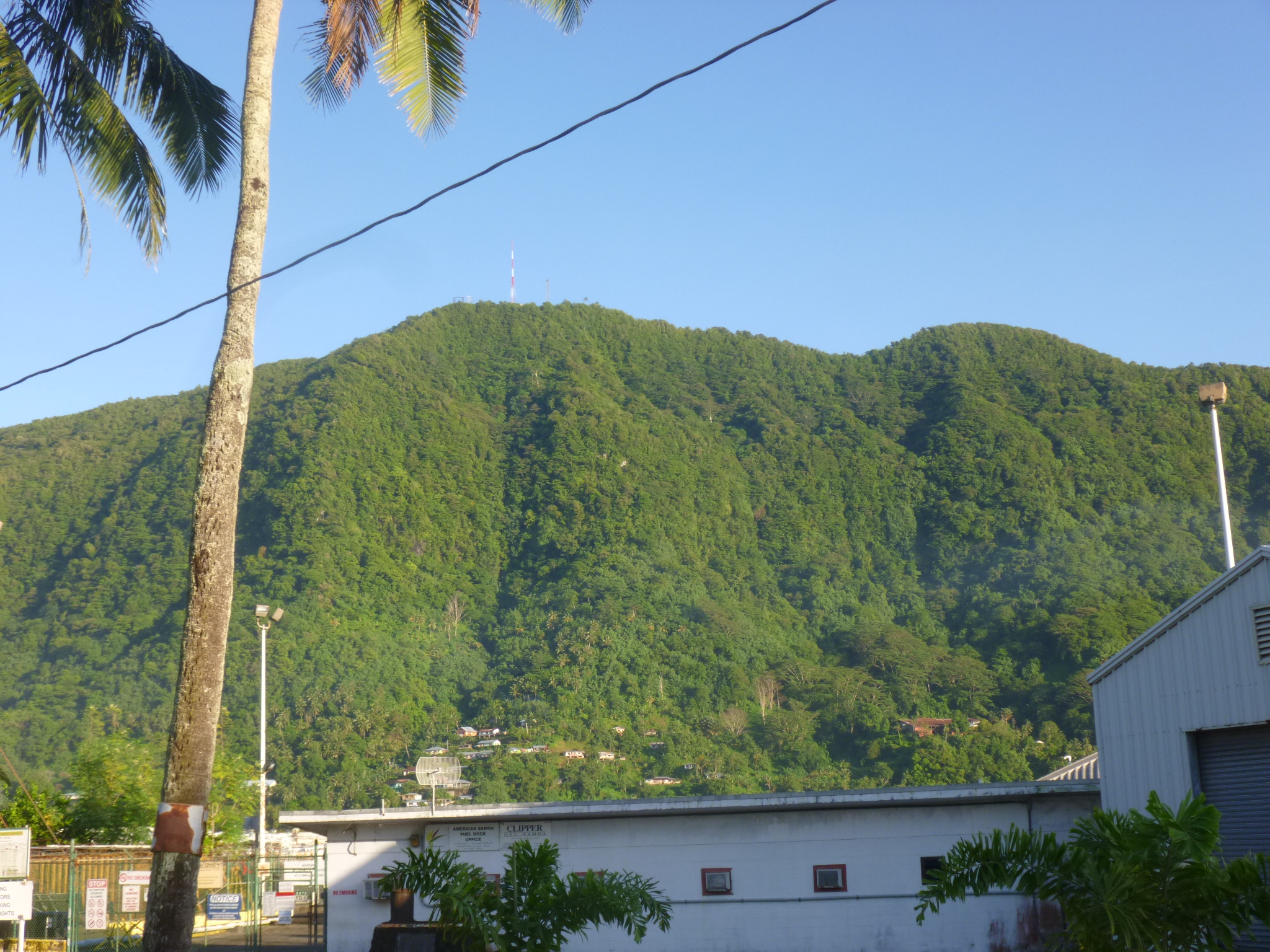
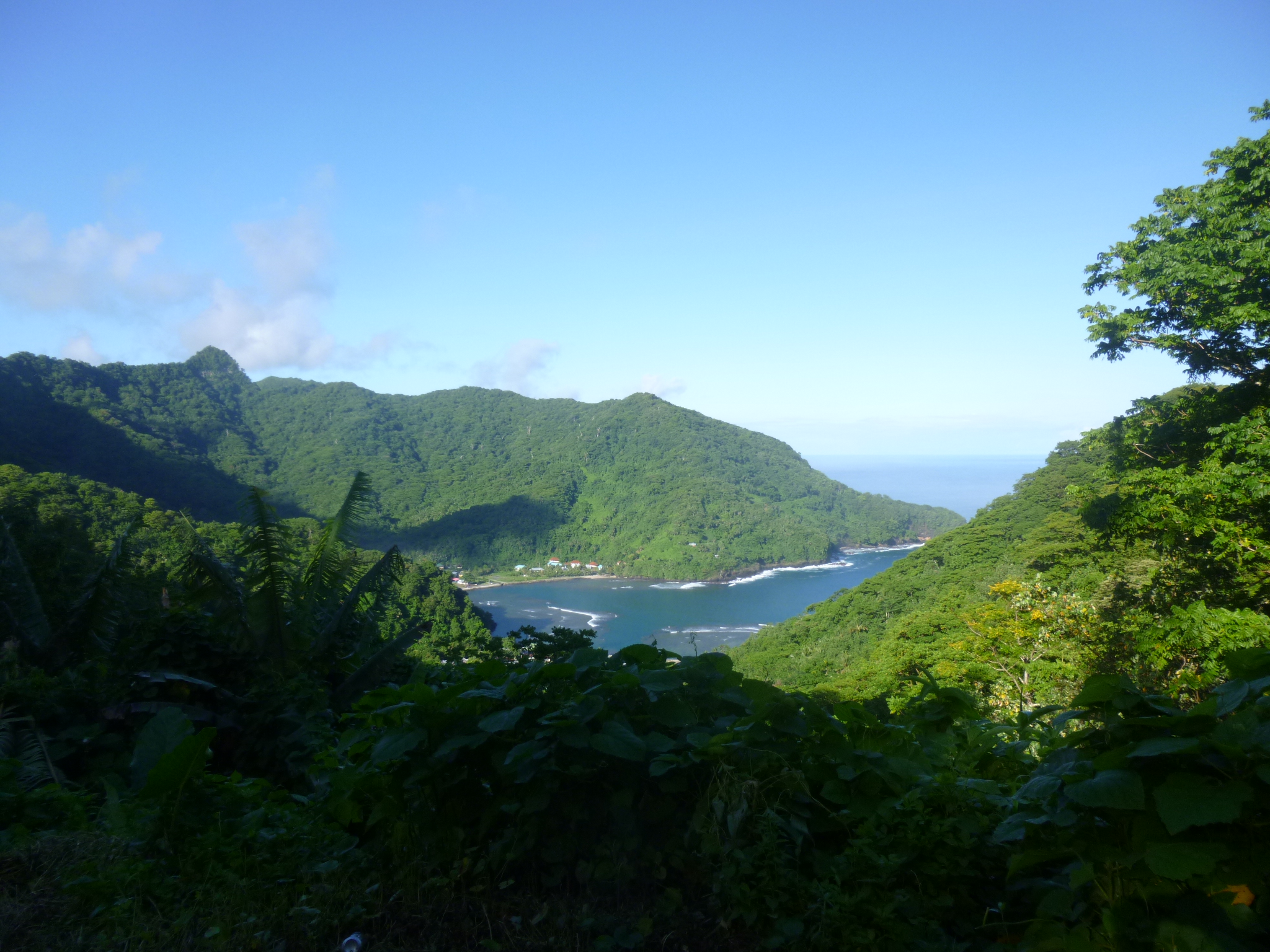
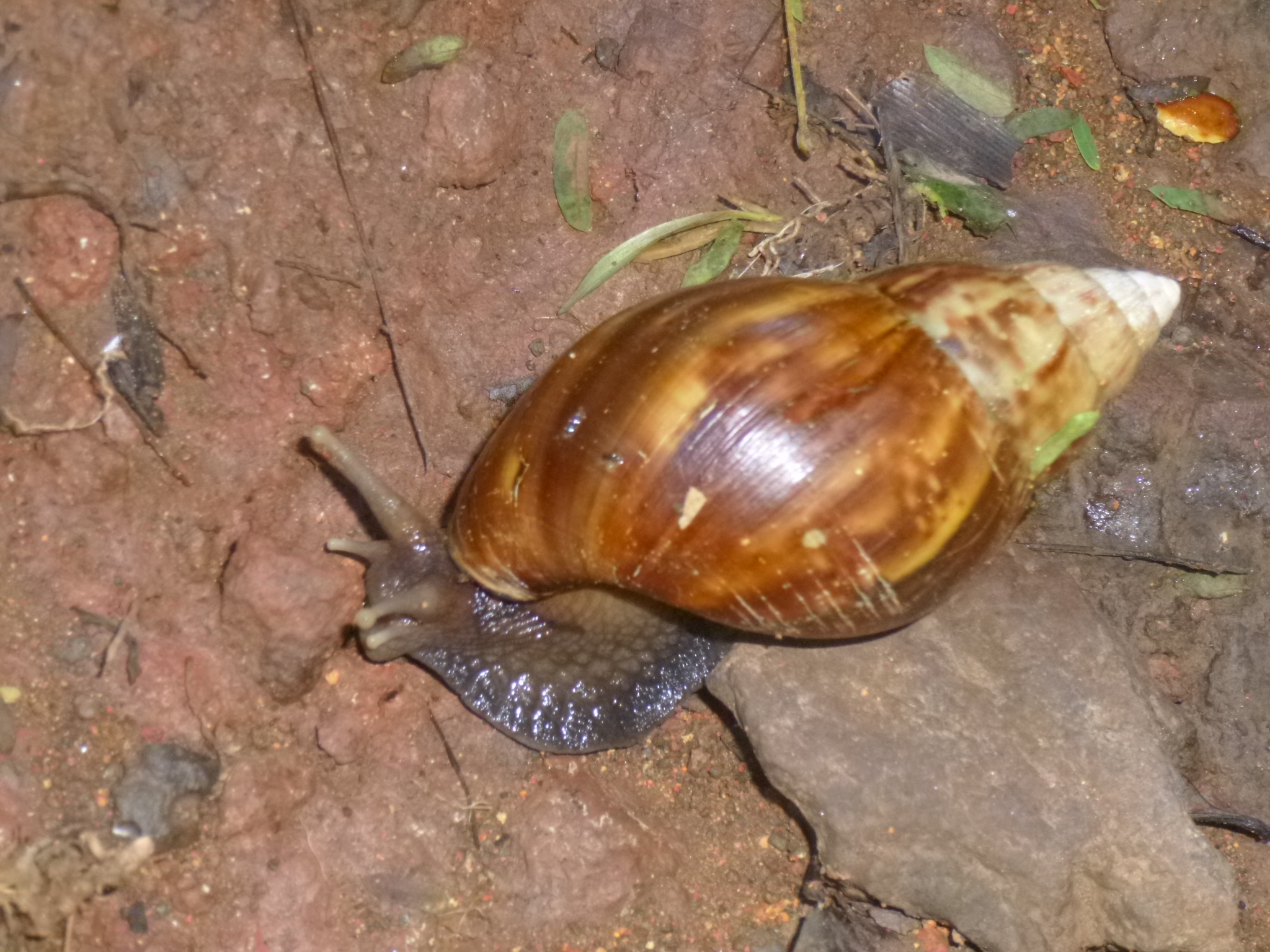
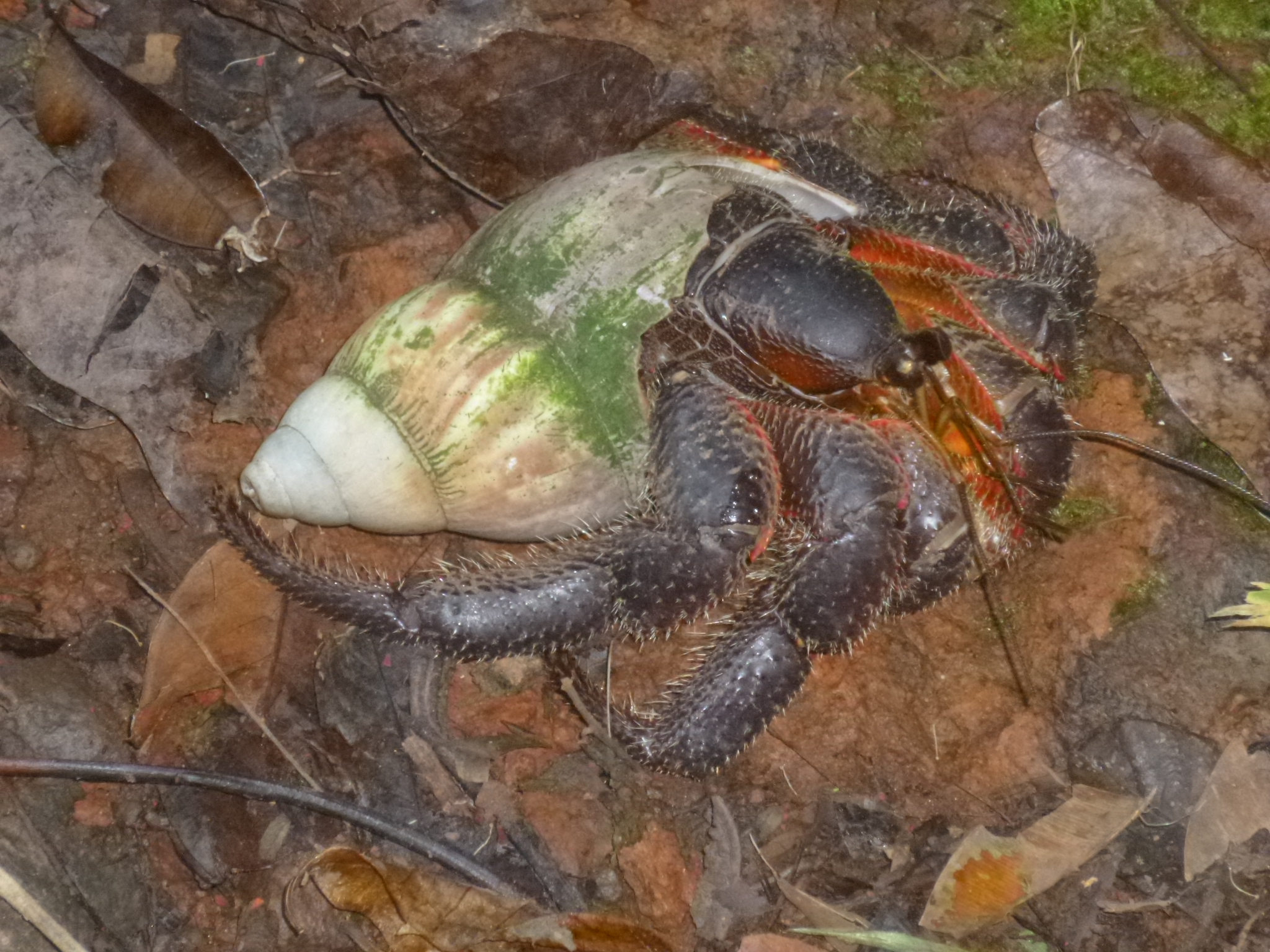
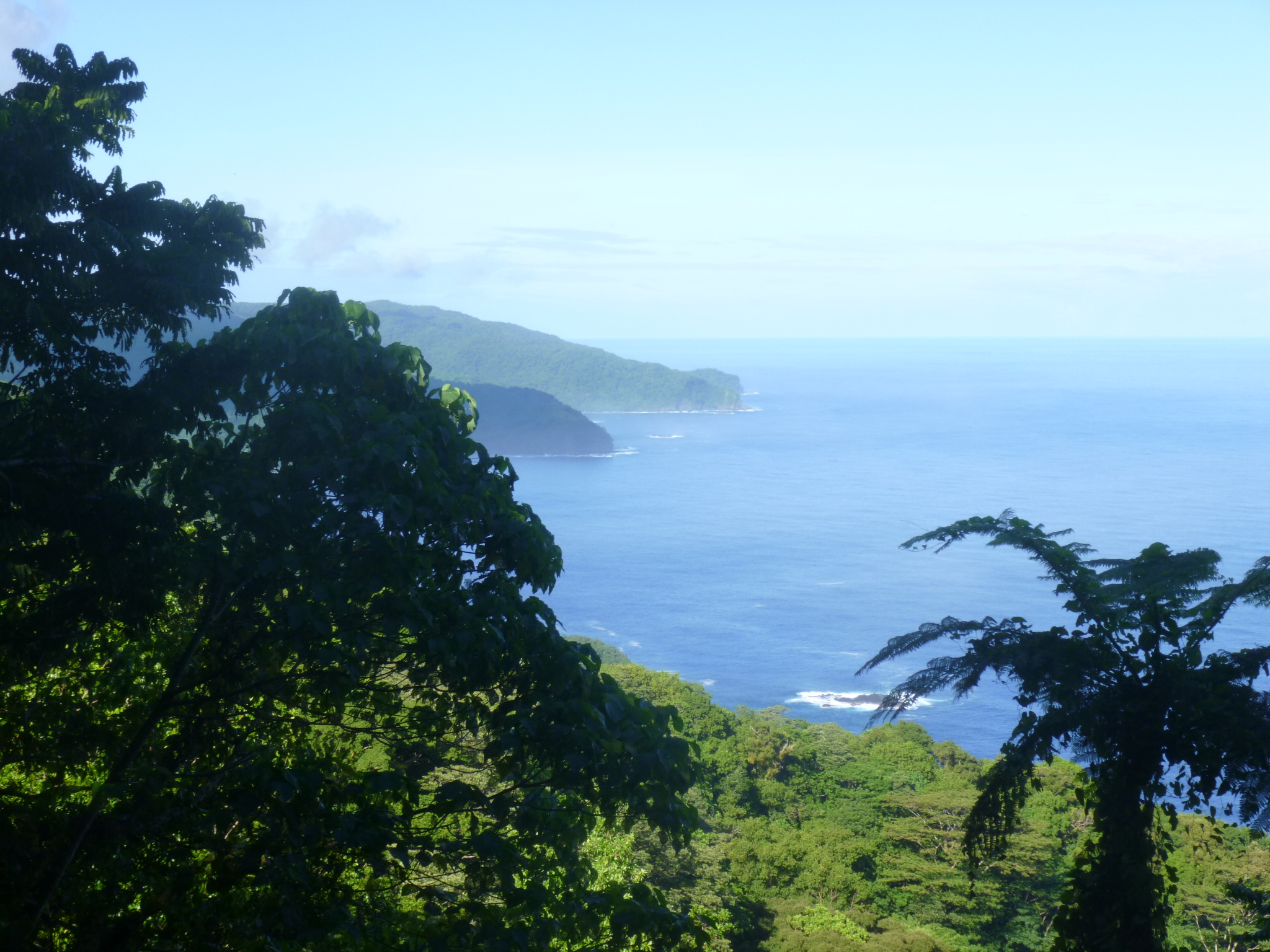
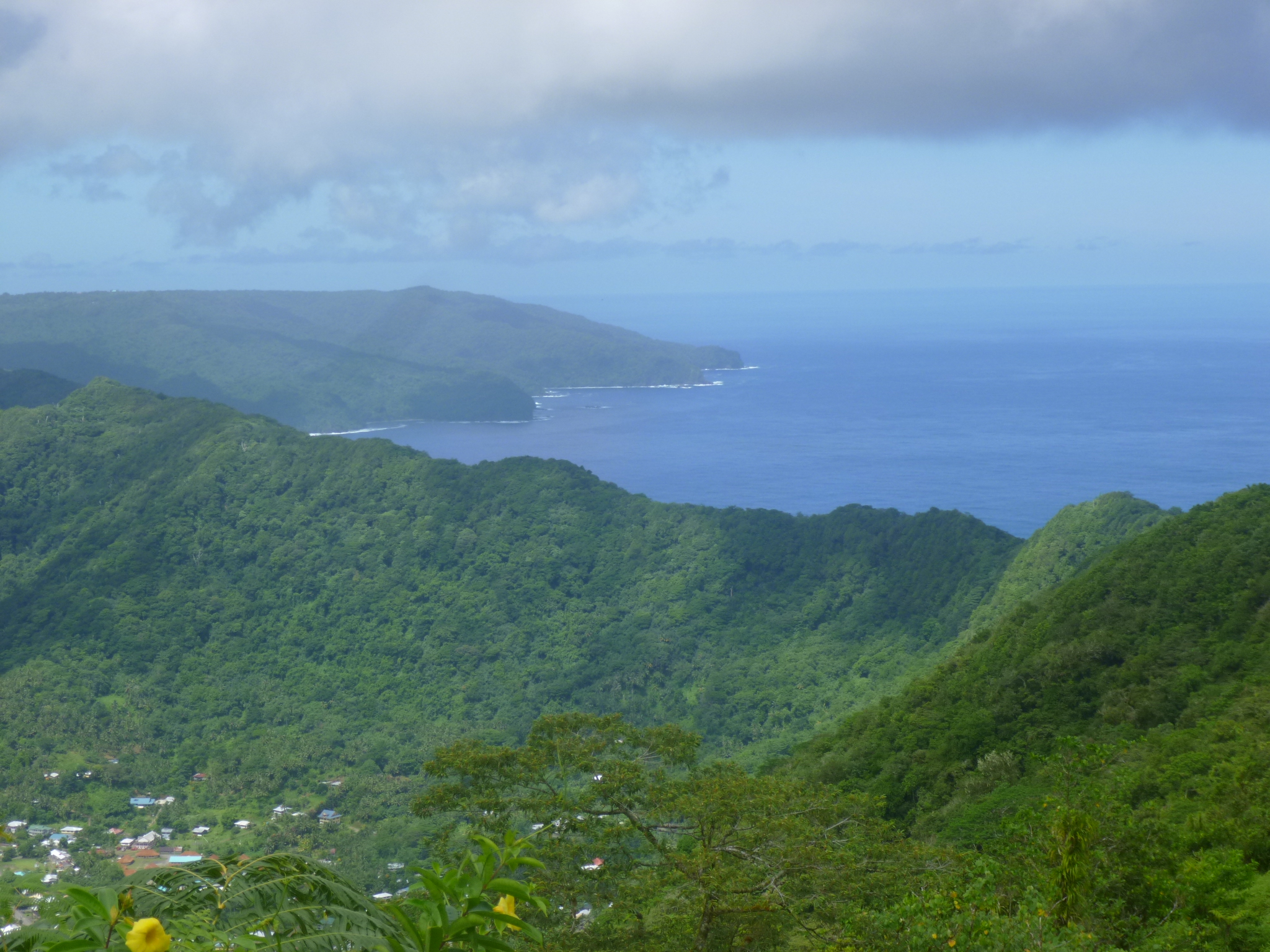
I was out the door by 7am to head for my 7 mile hike in the rain forest. First I walked up to the marketplace, and had to ask around to figure out which bus was going over the pass where the trailhead is. I did not pronounce the name of the village correctly, and quickly learned that many times where there’s a “g” in a word, it often has a “ng” sound. Plus different syllables are accented than what I would think – and there’s lots of vowels and they all need to be pronounced! So I went to the wrong bus stop first; talked with someone else and they sent me back across the street (which seemed logical to me); and then someone told me I’d be looking for the only white bus on the island. I had to wait quite a while, but a white bus pulled in and was going where I needed to go. The bus fare is inexpensive – adults pay $1 when they get off, and students seem to pay 50 cents and young kids pay 25 cents and the little ones don’t pay anything. The buses are small – maybe 8 or 10 rows of wooden seats (some have thin cushions)and they have a little storage space up in the front if people are bringing groceries or packages home. They also seem to be used as a delivery service – we made an extra stop where a lady was waiting for a box. We got up to the pass and there was already a beautiful view of the bay down below. It was about 8am when I started my hike – armed with lots of water, a sandwich for the top and some trail mix. It was already hot out, but since I was going to be walking up the ridge in a rainforest, I was in shade most of the time, which was a relief. I don’t think I would have done this hike if it was in full sunlight the whole way. There were lots and lots of birds, but because the foliage was so dense, I couldn’t see any of them! I could hear whirring of wings, and lots of different bird calls, but didn’t see one bird! Of course, lots of the time I was keeping an eye on my footing – it was muddy in places and a bit rocky in places, plus I had my hat on which restricts my view just a bit. The trail was wide enough for a vehicle to fit through, although no vehicle could have gone up that trail today. It was grassy in places and I would get tantalizing views of the ocean and little islands. The trail had some steep parts too where I would have to stop and catch my breath – up and up and up! I almost stepped on a pretty shell and discovered there was a big snail in it! And a little farther in I saw a good-sized crab in a shell scuttling along! That surprised me because I thought crabs needed to be near water (later I learned about coconut crabs – they live on coconuts and do not need to be near the water – the adult crabs can open coconuts with their claws, and no human can open a coconut with their bare hands, so those claws are very very strong.) I kept going, passing old banana and coconut plantations, and enjoying the views. I was heading to the second tallest peak and there are radio towers up there. It took me nearly 2 1/2 hours to climb the 3 1/2 miles, but the radio towers came into view, and there was a long metal stairway up to the last national park plaque, describing my view, and it was magnificent. I could see the ocean on both sides. One of the brochures had said there would be a traditional Samoan resting hut at the top, and I was looking forward to sitting a spell and eating my sandwich and banana, but there was no hut. Only the metal staircase, and next to that some sort of pulley system to maybe haul supplies up the last steep part. I took a good 20 minute break up there, feeling like I was on top of the world! There was no shade at the very top (which is why I could see so far) and I felt like I was beginning to bake, so it was time to head down. It took me almost as long to get down as it did to climb up. I think I actually prefer climbing up steep spots rather than going back down them. I took my time to not slip in the muddy parts – its easy to get going a little too fast. I didn’t have to wait long for the bus to come by again and even though it’s not a usual stop he picked me up. He continued into the little village of Fagasa on the other side if the pass. There were the usual homes and a church, but I also saw several big, sturdy-looking tents, and wondered if they were just some extra living spaces. I found out later that those were FEMA tents – provided after the tsunami of 2009. Which reminds me, there are dozens and dozens of tsunami signs – warning when you’re in a potential tsunami-prone area at lower elevations, and then signs at the appropriate elevations when you’re out of the tsunami threat area, and even some signs for tsunami gathering places. I can’t imagine the chaos of only having a few roads that go up and over the mountains (which is where everyone would flee)and having the vast majority of islanders living down by the water.
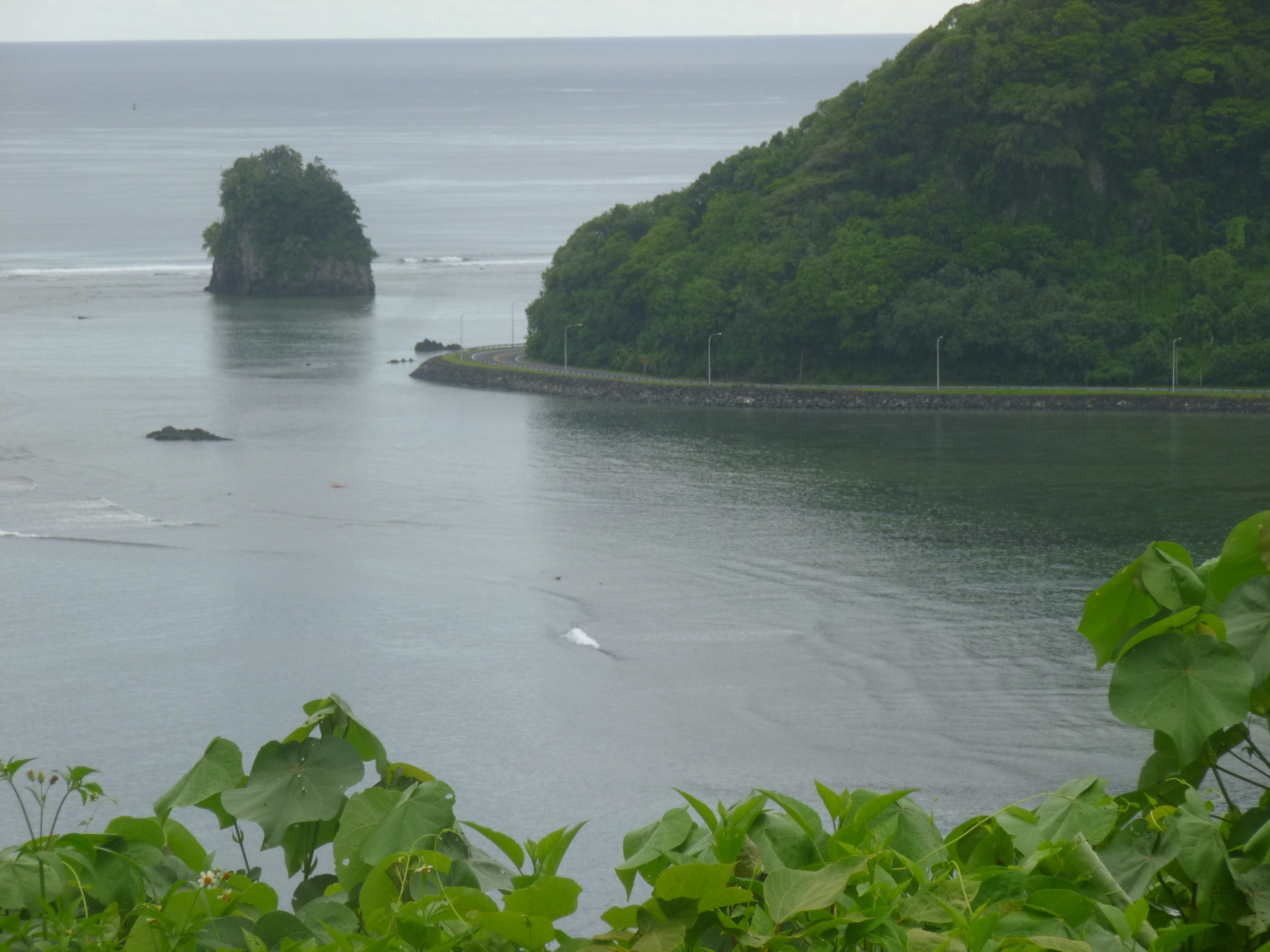
It was about 1:30 when I got back to the motel – and I was hot and tired. There’s a pool area out in the back, near the little private beach, and it sounded like some sort of high school party was going on. Kids were playing games, and swimming (mostly in their clothes), and I asked one of the handymen what was going on. It was a Tatou, which is like a party where people can get “live” tattoos (which I guess means have them done in front of the gathering)- lots of Samoans have traditional Samoan tattoos, get some food and listen to music. This had started a while ago, and I didn’t see anyone getting a tattoo (not sure that’s something I’d want to watch anyway!), but I was able to get a good BBQ meal right before they closed up – I think this was a lunchtime event, and I got in on the tail end. It was kind of like an early dinner for me! But I had some good grilled fish (mahi mahi I think), and chicken and sausage, and lettuce and tomatoes, and a couple things I couldn’t quite identify. One might have been raw tuna in a coconut milk sauce. It was okay, but the texture was strange – I just don’t think I’m a raw fish sort of person! So that revived me, and then I read a bit until the sun wasn’t quite so hot, then I got a second wind, and headed about a mile down the road to walk on a short national park trail by the sea, to see where an old cannon from WWII days was. I thought the trail would be flat since it was by the ocean – silly me! Of course they would want the cannon up high to help protect the harbor. Pago Pago harbor is one of the deepest natural harbors in the South Pacific, and although American Samoa didn’t turn into a WWII battleground, there was still a big American military presence as they guarded the bay, and it was a good re-fueling location for other maneuvers in the south seas. That wasn’t a long trail, but I ended up with another 10 miles of walking for the day. I went back to the motel and took another quick dip in the ocean to cool off, then tried to do some stuff on the computer, but I’m finding I need to be in the office for the wi-fi to work, and this is when I began to have problems with the laptop – Firefox crashed, and Internet Explorer was being temperamental. So I decided that was enough for one day, and hoped the computer would work in the morning!








American Samoa – Friday, January 18
I woke up early and saw a bright blue sky out. Since I really didn’t have much of an idea where I was, the first thing I wanted to do was to go outside and take a walk, and see what the island looked like, and get my bearings. I needed to get my sense of direction in place, and get a feel for where I was. There was a brochure in the front office, and the lady there was helpful in pointing out which village I was in, and told me since there was really only one main road on the island, there was no way to get lost. I saw that I was kind of in the middle of the island, and that seemed to be a good place to be. I walked out the door, turned right, and began my walk.
A short history – around the turn of the last century, the Samoan Islands were divided, due to international rivalries. The western islands went to Germany, and the eastern islands went to the United States. They were called Western Samoa and Eastern Samoa respectively. Somewhere along the way, it was decided that Western Samoa would simply be known as Samoa, and Eastern Samoa would become American Samoa. American Samoa is one hour behind Hawaii’s time zone; Samoa (Western) is on the other side of the international dateline, so they are a full day behind American Samoa, which seems a bit odd for the same group of islands. Several islands make up American Samoa, and Tutuila is the main island, where the vast majority of people live. The island is only about 25 miles long from west end to east, and less than 10 miles wide (and a good deal less than that in places.) I wondered how and where I’d get my walking done!
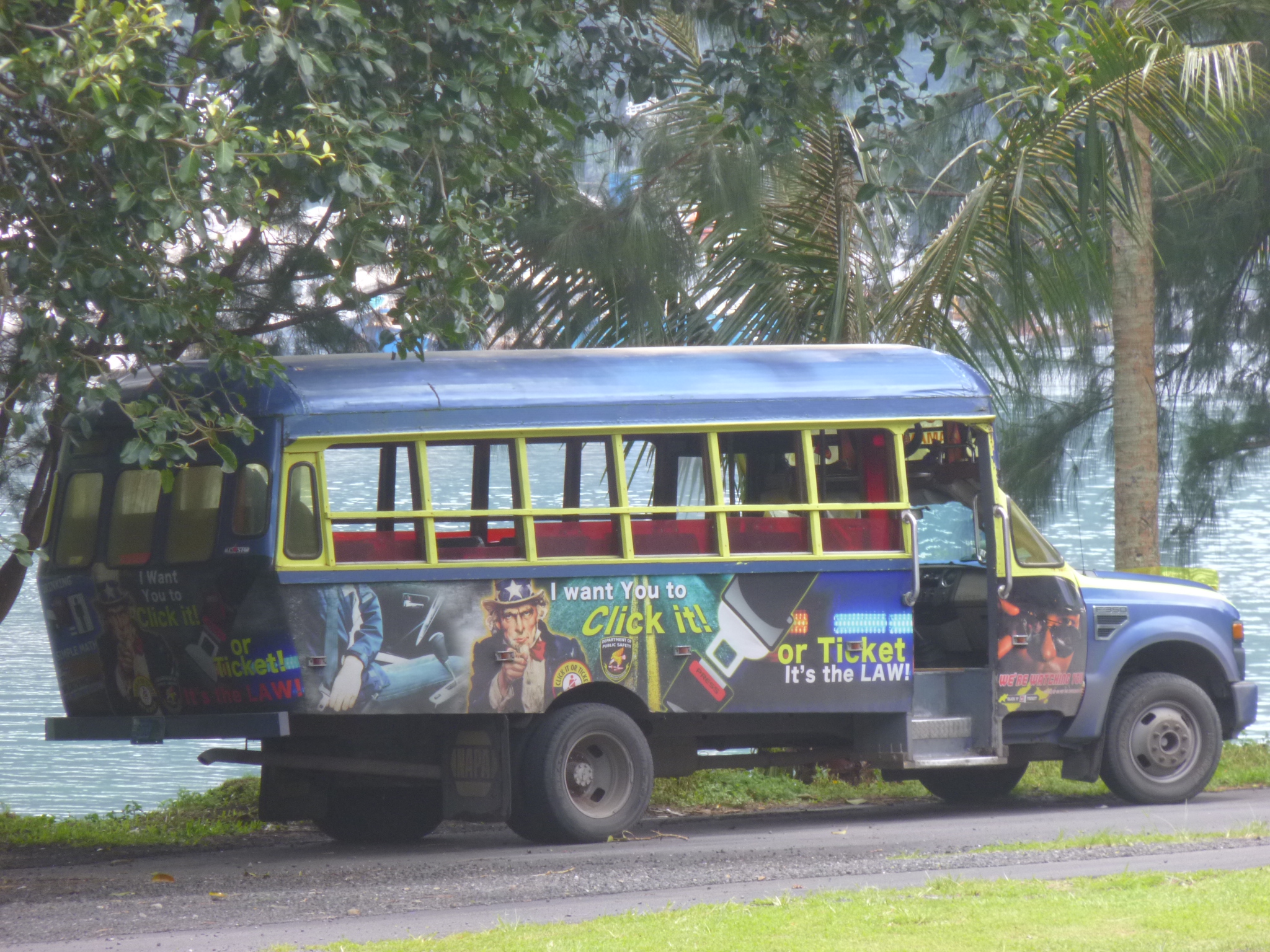
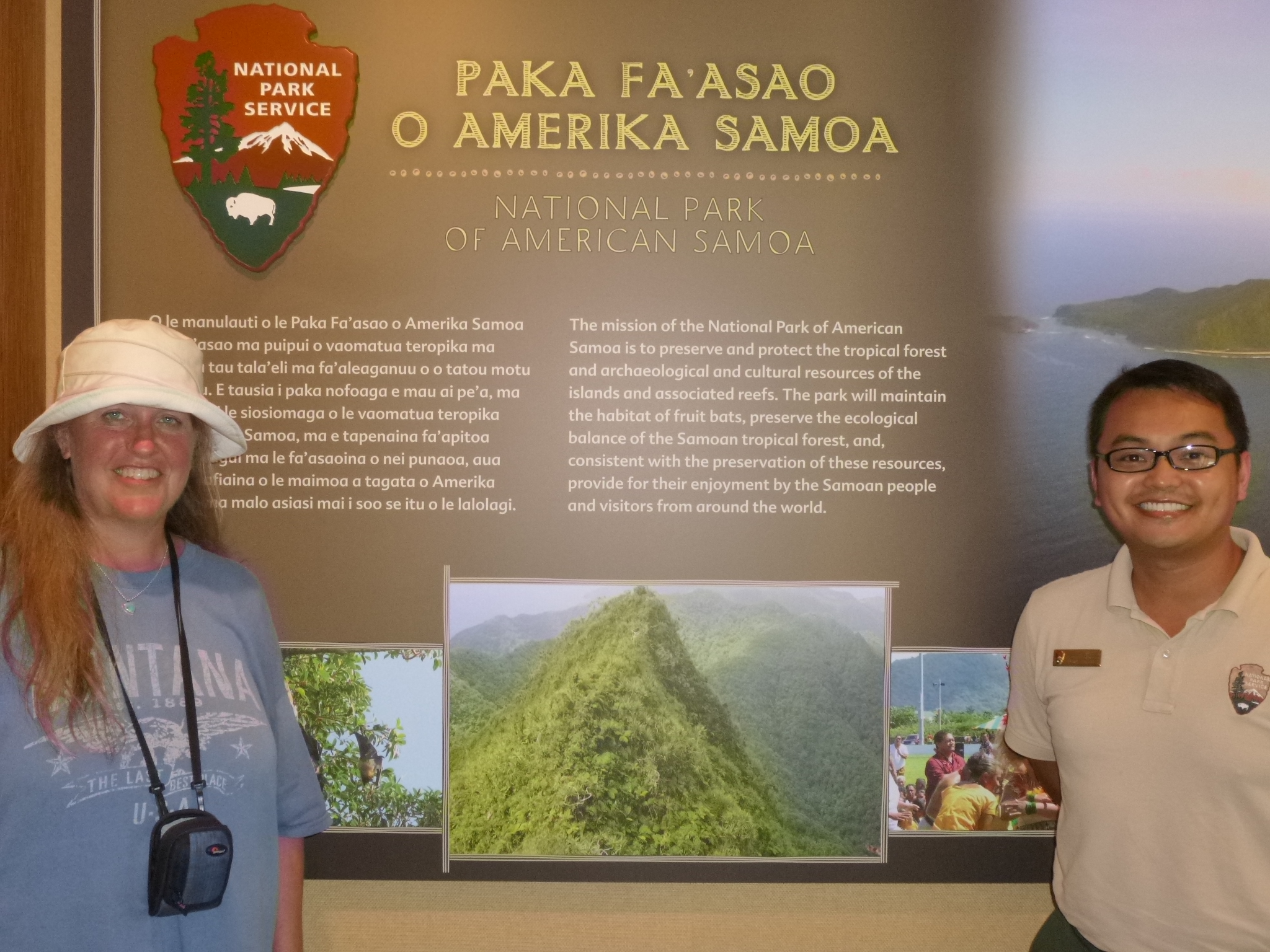
As I began that first walk, I had the Pago Pago (pronounced Pongo Pongo-learned the hard way!) harbor on one side of me, and the steep, rugged, volcanic mountains on the other side of me. It was already hot and humid. The main road runs the length of the south side of the mountains. The mountains looked nearly impenetrable, and they don’t leave much room down at sea level for roads, businesses and homes! And they’re so steep that there are only a few roads that cross a pass to a few villages on the north shore. There is no road running along the north shore – a village might only be 3 miles away from a neighboring village as the crow flies, but it’s an effort to get there by car or bus. The street was noisy and busy, and there were lots of small, colorful local buses, with maybe 8-10 rows of seats. It seems to be the way many people get around. The buses congregate at a marketplace, and they have little signs in their windows that tell you which village they’re headed for. Some of the buses look a bit rickety, and a few seemed to have smaller front tires than rear tires. No two look alike, and windows are always down (no a/c) and music is usually blaring. I knew I’d be riding them before my week was up! As I walked a bit farther, I saw a national park sign, saying the visitor center was 3/4 mile up the road. That became my first destination – the comforting familiarity of the National Park Service! I love those brown signs! But I walked right past it, absorbed as I was in my surroundings. In addition to the heat, and the bustle of the street, was the one thing that bothered me most on the island – all the stray dogs. They’re everywhere, and many of them don’t appear to be the healthiest of dogs. They’re in the roads and everything, and I worried I was going to see them get hit. But they know the streets and get out of the way. They do not seem to be pets, and although some bark and give chase for a while, many seem to ignore people. I was happy they weren’t going to try to come up to me for attention. As I walked on a bit, realizing I’d walked more than 3/4 mile, I saw another National Park sign, pointing up one of the roads that goes over the mountains. I was a little confused, but started up the hill. I passed a banana plantation (I would call it a small banana orchard, but they all seem to be called plantations here) and some people out selling fruit in their yards. After I trudged up the side of the mountain for quite a ways, I passed a lady on her way down the mountain and I asked her about the national park. She said I was heading for one of the trailheads, and that I had passed the office back in the village. I walked uphill a bit more, then decided to turn around. I bought some bananas from one of the ladies, and made my way to the visitor center. American Samoa National Park is, of course, one of the least-visited national parks. They are preserving a great deal of rainforest land on the north shore, as well as some of the surrounding reefs and underwater habitats. They don’t get a lot of visitors from the United States, and they were very happy to answer my questions, and tell me about the park and its trails. They had some good maps too, and they had a roomful of exhibits and information. I decided to make my first donation there since I support their efforts to educate people about their surroundings ( and also partly because they were so welcoming and helpful to me in unfamiliar surroundings!) I didn’t have either my checkbook or my national park passport with me since I hadn’t planned on running across the Visitor Center, so we made plans for me to return later in the afternoon. They’re not open on weekends, and Monday is Martin Luther King Day, so all federal offices in American Samoa will be closed. (The kids were going to get the day off school too, but I have to wonder how many if them know who MLK is!) I started the walk back to the motel, and popped into one of the numerous local markets to pick up sandwich fixings, carrots, diet coke and water. Most of the villages have a little market, and although there’s not a lot of choice, they have the basics. Prices are a bit higher for many groceries, but getting them into the island no doubt accounts for that! I had walked nearly 6 miles on this first excursion out, and was tired and dripping sweat – definitely not used to this weather! I was happy to get back to the motel to have a bite to eat (I actually have a fridge and microwave)and to hide out from the sun during the hot part of the day. I got unpacked and organized. A drenching rain shower came through and I thought that might help with the humidity. But when I went out later, it seemed even more humid!
I walked back up to the Visitor Center in the late afternoon, and a bunch of high school kids were there. The national park is trying to get an internship program going for them, to help generate some interest in their island. Both the guys and girls were dressed very similarly – white shirts and long wrap-around skirts (called lava-lavas) with their school emblem down by the hem. I had noticed a lot of men wearing these wrap-around “skirts” – usually a solid color for them with a patterned Hawaiian type shirt. I had read that the Samoans were a modest people – no 2-piece bathing suits, not short skirts or shorts, and no bare bellies. And the guys don’t wear pants that are halfway falling off of them! And many of the ladies wear an outfit that consists of a long tunic top over a long skirt – they’re custom-made in one of the dozens of “sewing shops” on the island. They all have long hair and wear it in a bun or a topknot, frequently with a flower (real or fake), and no bangs and very little makeup (why bother – it’ll just melt off in the heat!).
I got distracted – back to the national park. I bought a few things and made my donation, and we talked about the hikes once more. I had decided on a long one for tomorrow, and was assured it was very well marked, and I couldn’t get lost! I walked back to the motel, and then kept going a little farther in the other direction, where I found another market that seemed to have a wider selection of items. I passed a couple public beaches and families were out enjoying a swim. This is the quiet side of the motel – the road eventually leads to the crowded western side if the island, but it twists and turns along the sea, and there’s a sidewalk the whole way, so I knew I’d be able to do miles of walking there.
I got back to the motel and ended up with 10 miles for the day. I took a quick, refreshing dip in the ocean – the motel has its own little beach, and somehow it seems like the water is saltier here because it was so easy to float and it was almost hard to duck completely under – I just bobbed right back up! I was kind of worn out, and just decided to fix another sandwich, and to start the book I bought from that retired colonel that I met back at the Alabama Battleship Park.






Hawaii – Thursday, January 17
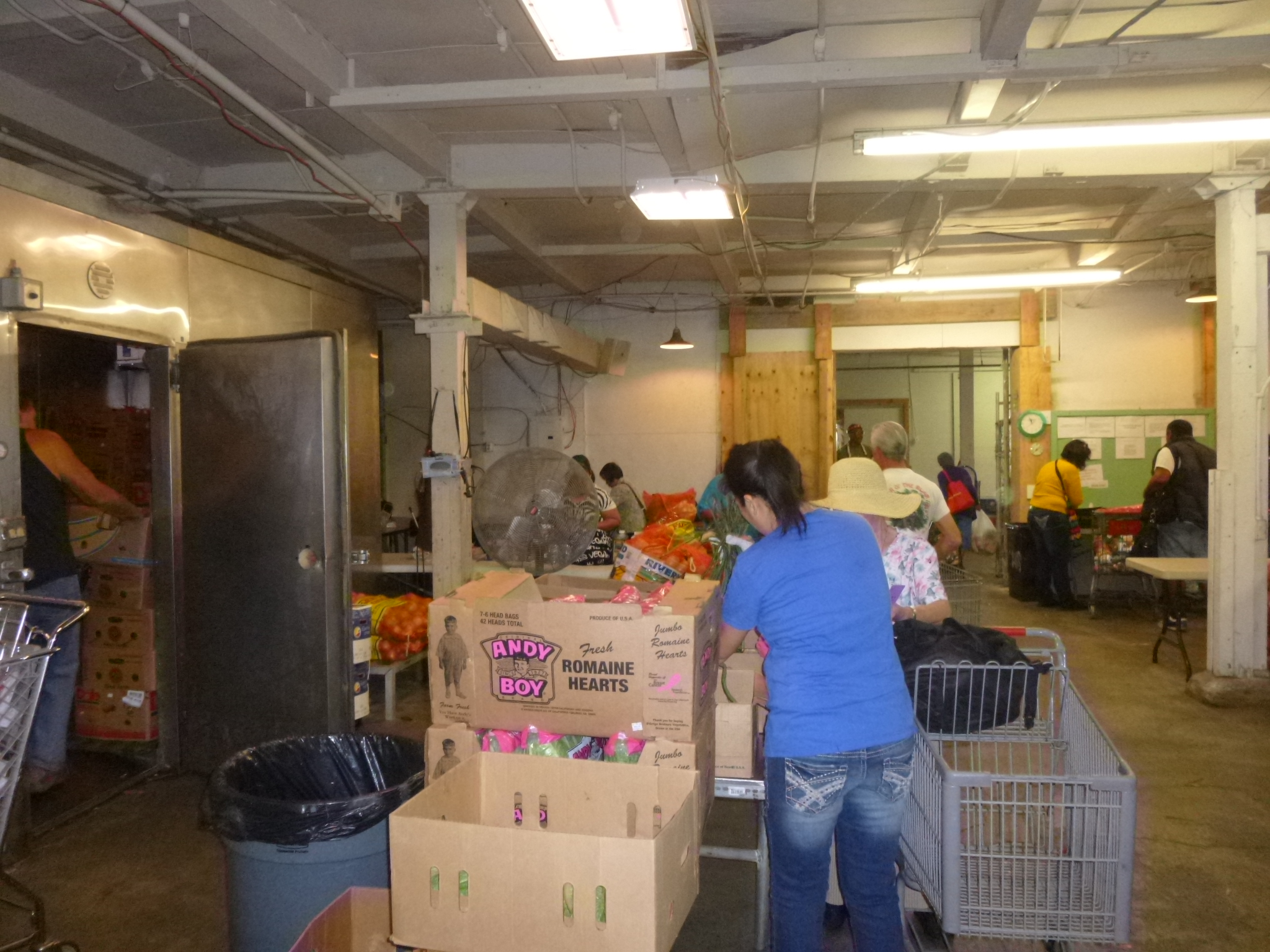
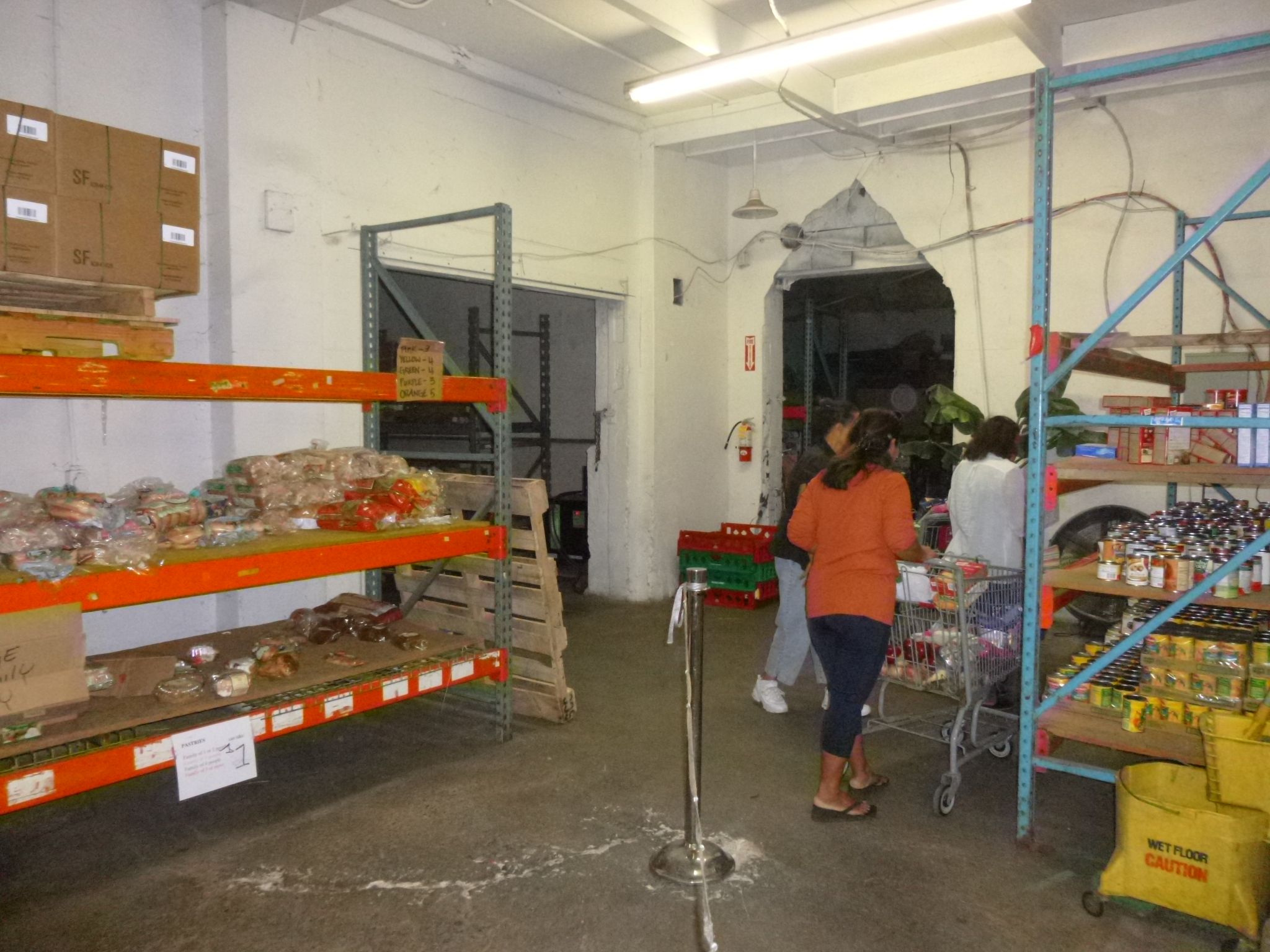
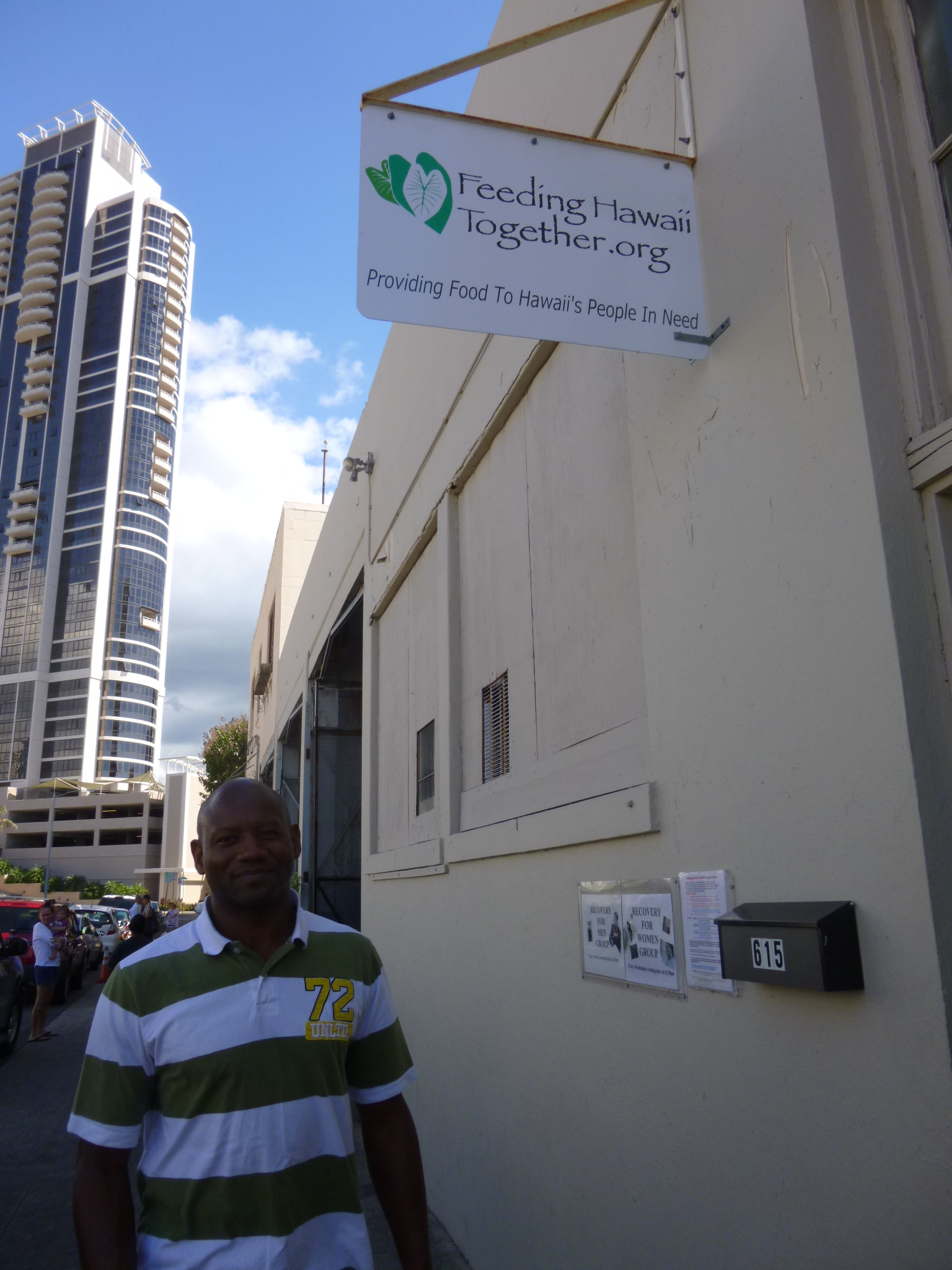
I wanted to do a food pantry type donation today since I haven’t done one in Hawaii yet, and there are quite a few food pantries in Honolulu and its environs. My challenge was to find one that was open today within walking distance or reasonable bus distance. So I spent a little time on the computer trying to narrow the search down, and then the front desk people were helpful as far as streets and locations, and The Giving Tree (one if the first places that caught my eye because I liked the name!) ended up being only about 2 miles away, and they were open on Thursday mornings. The front desk people printed out directions from Mapquest and I was on my way, after checking out of my room and storing my bags. Fortunately I have become somewhat familiar with the streets around my hotel, but I still find them confusing with all the vowels and Ls and Ks! I found the Giving Tree, and they had recently changed their name to Feeding Hawaii Together. This was a busy place! The waiting area is outside – its part of the building and under a roof, but no need for walls in that part with the balmy temperatures, and there were people of many nationalities waiting. I found one of the volunteers, Adam, and told him I’d be happy to make a donation if they needed it. And yes, they would like that! It was just going to be a financial donation because without a car (and there were no grocery stores nearby) it wasn’t feasible to shop for a food donation. Adam told me a bit about their program, and then he introduced me to Carl, who showed me all around and told me how they run their program, and wanted to hear any thoughts I might have since I’ve seen so many food pantries on the mainland. Carl has also written a software program to track the volumes of food coming in and out, and it sounds like other states are interested in the software. This food pantry is actually one of the bigger ones I’ve seen, and they do not limit the numbers of visits per year – people can come once a week for years if they need to-and many have. The volunteers seem to know many if them by name. When I asked about people trying to become more self-sufficient and maybe find work instead of depending on the food pantry, he said for some people there is a genuine barrier as far as language and customs – Honolulu is such a melting pot of so many cultures that some people do have difficulties. I know if I was suddenly dumped in China and told to go find work in a Chinese business so I could buy food, I’d end up at a food pantry, totally overwhelmed!
The people sign in when they arrive and get a number, and then have to wait their turn to shop. Some if them are impatient! When it’s their turn, they get a shopping cart, and wheel it thru the fresh produce area, then the canned goods area, the refrigerator/freezer area, and then I think there’s a place for bread. There are volunteers in each area to help with selections based on the size of the family, so that it doesn’t become a free-for-all. It’s very orderly. The clients have to bring their own bags and boxes – this food pantry is trying to go green as much as it can. They also have a thrift shop next door where the clients can choose out some clothes if necessary. I told Adam about some of the thrift stores I’ve seen that are open to the general public, and have low prices, and the sales also help support the food pantry. I enjoyed talking with them, and seeing their food pantry.
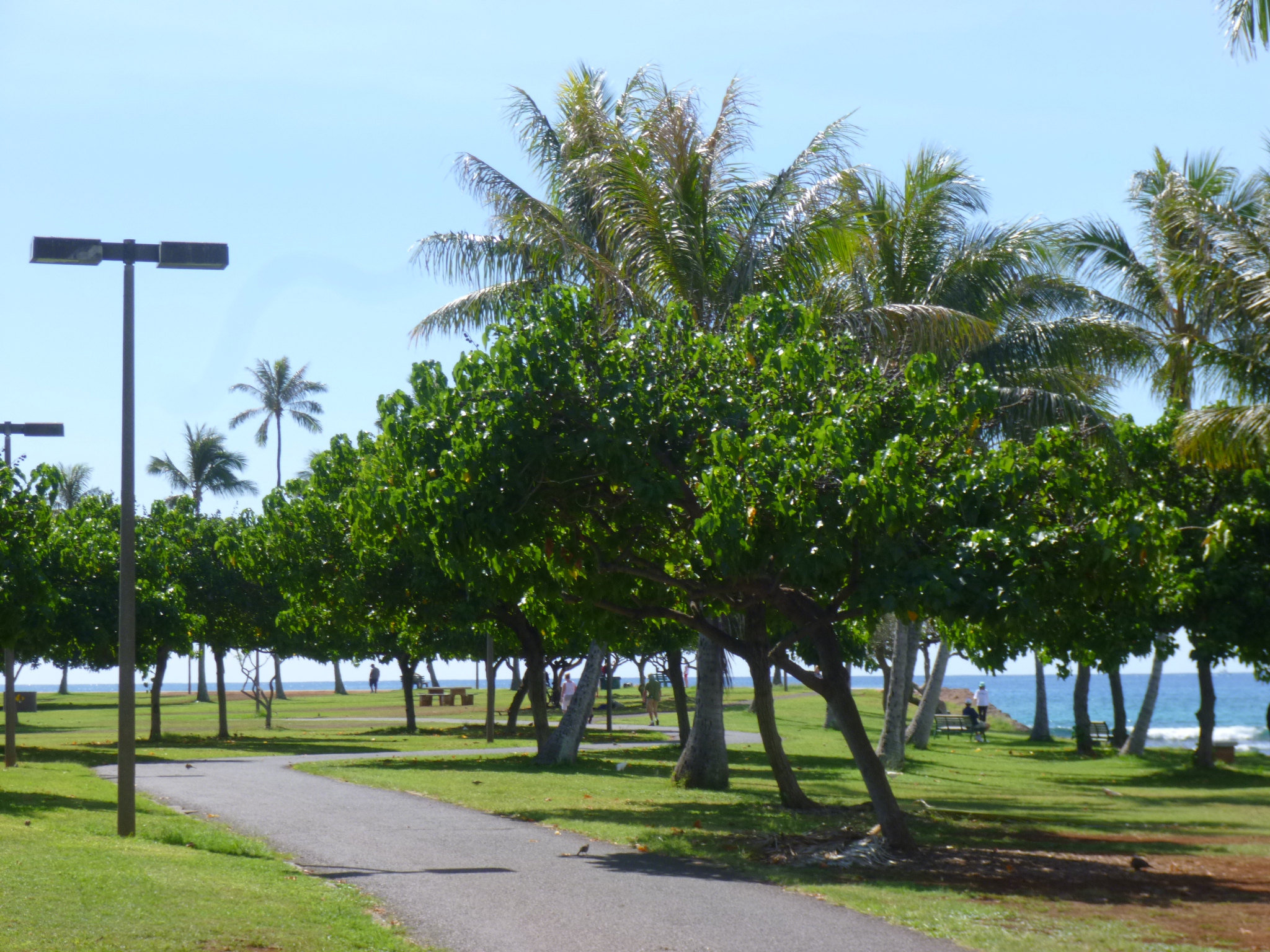
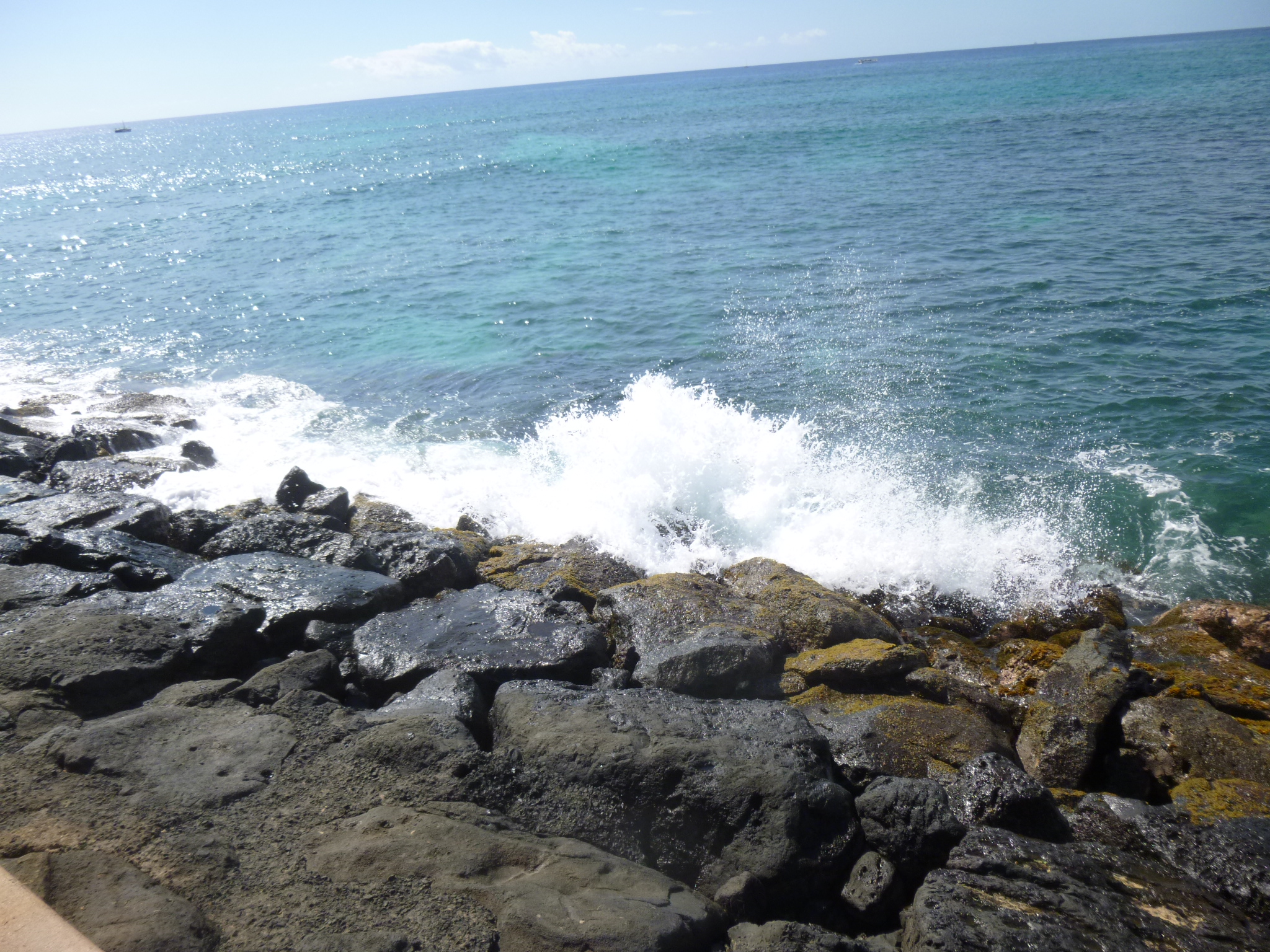
I headed back to the hotel out along the ocean instead of the back way, and came upon a huge park, where I was able to walk for miles on walkways by the sea, and beaches. There were lots of trees, and it was just do beautiful – just the sort of place I’d been imagining in Hawaii! I think this beach area is bigger and prettier than Waikiki, especially without all the commercial stuff and all the hotels. It wasn’t crowded at all – just acres and acres of green grass and trees, and paths and sandy beaches and blue sea and skies! I walked nearly 4 more miles all around the area before heading back to the hotel to get the taxi to the airport.
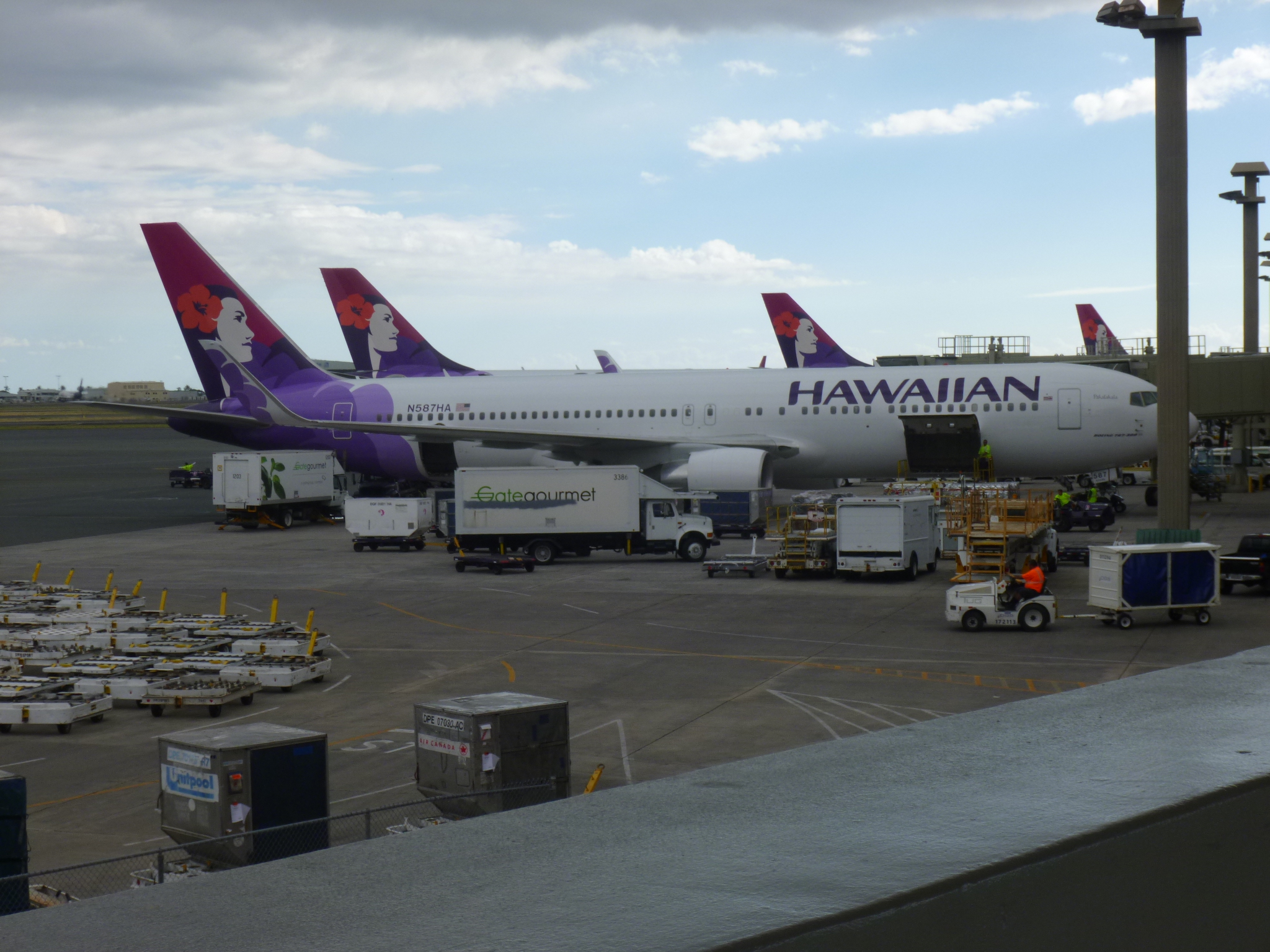
I had a voucher from American Air for my taxi back to the airport, and I was going to get there very early to not miss the Samoa plane! My driver was Vietnamese, and we started out fine. Then we ran into some major construction and he got a little dramatic about that, and the possible delay. That made me a little nervous. We waited in traffic for a while, then he veered off in a different way, and we ran into a bit more traffic, and about the time I became more concerned, I could see the airport. Whew! I got checked in and all went well. I had to wait a bit – some of the waiting gates for Hawaiian Air are sort of open-air – like buildings with ceiling and halls, but they’re big enough that they don’t always need walls, so you can feel the nice breezes. It’s just kind of different from the airports back on the mainland!
The flight to American Samoa left on time, and Hawaiian Air was very nice. The seats were comfortable, and they served us dinner – chicken and rice in a sauce I couldn’t identify, and brought water by several times. It was kind of chilly on the plane, but they supplied blankets and pillows too. It was about a 5 1/2 hour flight – mostly south over the equator, and a little west. American Samoa is the only US territory south of the equator. They’re 6 hours behind east coast time. When we got off the plane about 9:00 at night, we were immediately hit by the heat and humidity. Wow! And it was raining a bit. We had to go through customs and immigration, and the motel I was staying at said they would send a shuttle – all I had to do was watch for a white van with the name on it. Lots of Samoan families were at the airport picking people up – whole families would arrive and there were lots of loud, happy, joyful greetings. I saw right away that a lot of people were driving pickups, and with the rain letting up a bit, lots of people were just climbing right into the backs of the trucks to ride. And I saw that all week. Some people even put lawn chairs in the backs of their pickups, and it’s not unusual to see them full of half a dozen people. As I learned later though, the speed limit is never higher than 25 mph – the roads are not in great shape and have lots of potholes, and they’re also quite curvy. So it’s not really possible to go much faster anyway. I never saw my van and the place was clearing out, and I was able to call the motel. She said the driver had been there, and he was nearby and she would ask him to come back, which he did. Apparently he had sent someone into the airport with a sign and had parked in a different place. But I got to where I needed to go. I had absolutely no sense of where my motel was in relation to the island, and couldn’t see anything in the dark on the way there, except a lot of stray dogs. It started raining again, and it was really strange not seeing or knowing much about my environment and where I had ended up. Boy, did that change in a week!

Hawaii – Wednesday, January 16
I was up bright and early again and ready for the snorkeling pick-up at 7:15. It was about 72 degrees out, but the locals thought that was a bit chilly and they had jackets and hoodies on. At that hour of the morning, it did seem a little early to be heading for a swim in the ocean, but I knew it’d be good once we got there. I was the first person to be picked up, and she had a full load, and had full loads all day – I was indeed glad to be getting to Hanauma Bay with the early birds. Traffic was congested leaving Honolulu, but once we cleared that, it was only about another 20 minutes. Our driver did not work for Hanauma Bay, which is a marine preserve, so she had to drop us off about 1/2 mile from the entrance. She passed out the masks, snorkels and fins and had a good supply, and they were in good condition. Once we were in the preserve, there was a mandatory video that everyone had to watch before being turned loose on the beach and in the water. It was educational, and mostly talked about not damaging the coral, and about some of the fish we would see. I guess there are octopus around, but I didn’t see any, although they are masters of camouflage. I headed straight for the water, and it did feel chilly! But I got right in and soon was comfortable, and I started seeing fish right away. The water was pretty shallow throughout the whole bay, and sometimes there was barely room to skim over the coral. There were big fish, little fish, and lots of sea urchins hiding in the rocks. So many colors and patterns – it never fails to fascinate me! And they get close – they must be used to people invading their territory. They had warning buoys out at the limits of where they felt it was safe to be out in the bay – and since there were lots if rocks closer in that the fish like to hang out in, there was no need to go out by the buoys. I pretty much hung out and floated around the rocky areas, and quickly lost count of how many different kinds of fish I saw. I finally began to feel a bit chilled, so I got out and discovered I’d been in the water for about an hour and a quarter. I sat on the beach to warm up, and then walked along the whole beach area. People were constantly arriving – they looked like ants filing down the long hill from the top. There was still a little time before we had to catch the van back, so I got back in the water and 45 more minutes passed quickly. By then, I was waterlogged and ready to warm up! We had to walk back down the road to meet up with our driver, and there was another extinct volcano to look at. The ride back to Honolulu went fast.
I took time to have a quick bite and get changed, then I wanted to take the bus up through the middle of the island to the Dole Pineapple Plantation. This time I knew which bus to catch where, partly from trudging around to find the first bus yesterday! I knew it would be a pretty long ride – nearly an hour and a half each way – because of frequent stops, but I had my Kindle (thanks again to my dance staff!) and a crossword puzzle book (thanks to my mom!) And of course, there was scenery to look at once we were out of the city. It wasn’t as spectacular as driving along the coast, but still pretty to see. After swimming all morning, it didn’t even seem like that long of a bus ride. Plus I had a window seat. Lots of people use the bus – to cover the miles I did round-trip for $2.50 is indeed a bargain…if you have the extra time.
I learned a lot about pineapples, which was the goal of this excursion. There is no fee to actually get onto plantation grounds, but they get you everywhere else, and it’s a pretty commercial venture. I wanted to go out to see the actual pineapple fields, and one has to buy a ticket on the “pineapple train” to do that. But it was fully narrated, and well worth it. Pineapples are grown year-round in Hawaii so that there is always a fresh supply. To this day, they are all planted by hand – after the field has been plowed and black plastic strips have been laid down in rows. The workers use a special knife to cut right through the plastic (which helps with weed control, and to retain moisture) and plant the green crown of an old (?) pineapple. It only just now occurred to me to wonder where the green crowns come from??? They take a really long time to grow – more than a year, and there is a “first cutting” and then many months later, a “second cutting” from the same plant, and then the field is plowed and the process is started all over again. We saw fields in several stages of growth. The little growing pineapples were cute. When it comes time to harvest them, it is again done all by hand. There’s a machine that pulls along a huge conveyor belt, and the workers move in long lines through the field, cutting each pineapple by hand and putting it on the conveyor belt, which eventually gets the pineapples to the sheds where they’re sorted. Even on the hottest of days, the workers have to be completely covered up because the pineapple plants are thorny. I think I’ll have a new appreciation for pineapples when I eat them! There used to be a big pineapple cannery right on the grounds, but that is now located somewhere else. I believe they said more pineapples are sold fresh than canned.
Once back at the huge gift shop (where one can buy anything one can think of in the shape of a pineapple!) there was a little demonstration in how to choose a good pineapple and how to core/cut one simultaneously with their handy-dandy new gadget (but the young lady doing the demonstration had to work so hard to push the gadget through the pineapple that her arm was shaking!). I have to wonder how many of the gadgets they sell. I learned the 2 things I thought were important in buying a pineapple (color and smell) don’t really matter, and 2 other things do! Once a pineapple is picked, it will not ripen any further. So they told us to instead look for even rows of uniform “eyes” – the little diamond-shaped “thorny” parts on the outside. The color does not matter – if it’s a little green or yellow, that’s not important. The other thing to look for is at the stem end, where the pineapple was cut – should be light-colored and firm, not brownish and soft. Lesson learned! I then went back outside to get a couple more miles of walking done in the Dole Guinness Book of World Record’s largest maze – nearly 3 miles of narrow pathways through all kind of tall native Hawaiian shrubbery. It has to be one of the more unusual places I’ve walked, but I did cover nearly 2 1/2 miles – trying to hit all sections of the maze, but I could have been going in circles for all I know! I stayed there until the plantation closed, then went back to the bus stop for the long ride back. It was almost dark, so couldn’t enjoy the view, so I simply read instead and the ride went quickly. The bus dropped nearly everyone off at the giant mall near my motel, which is also a transfer point. I did a little more walking since everything was lit up so brightly, then went in to the food court area, where the majority if the food was Asian. There was a huge variety, and it was very crowded. I got some Chinese food to take back to the hotel – I made a wrong turn leaving the mall area, and ended up walking nearly a mile out of my way, but it didn’t really matter. It was nice to get back to my room at the end of another full day.
I didn’t make a donation today – I tried to at Hanauma Bay since it was a nature preserve, but they seemed very confused with a check donation instead of cash (and they were asking for donations!) and didn’t know who it should be made out to, and thought they better not take it. And I don’t carry that much cash. And I didn’t see anything at the pineapple plantation – sometimes places like that raise money for good causes. But I had made 2 donations yesterday, so all is well.
I’m still having computer and picture issues – but hope to add photos soon… I’m out and about all day, and the office closes earlier than i wish it would, and it’s the only place my iPad works, so posts are coming slowly. Life on an island…

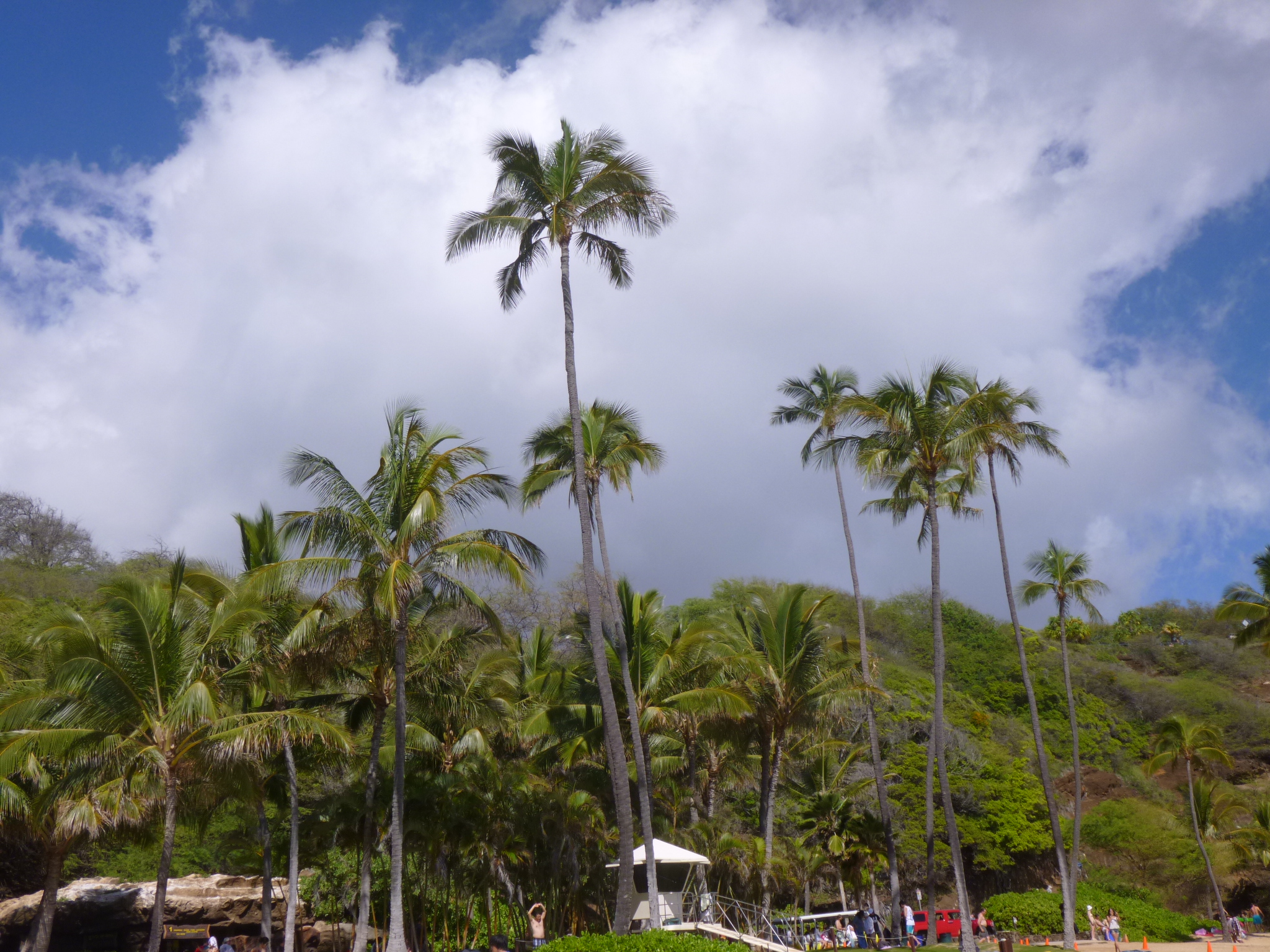


 expedition56